Thailand or Vietnam? Which country should you visit?
Thailand welcomed 32.97 million international visitors in 2025, while Vietnam received nearly 21.2 million. Both are major Southeast Asian destinations, but traveling through each country can be a very different experience.
Written by Tụi mình mê biểnUpdated
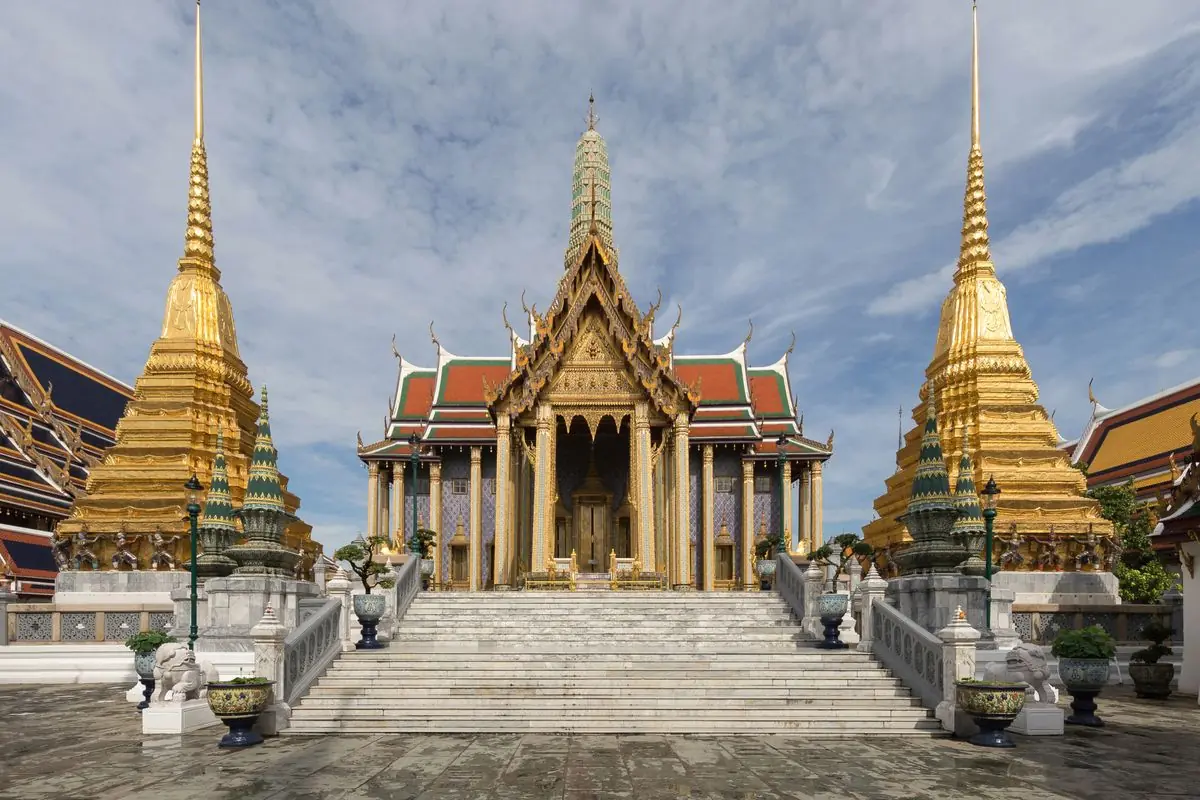
Photo: Basile Morin
Thailand is often the easier choice for first-time visitors to Southeast Asia, especially those looking for beaches, shopping, and convenient transportation. Vietnam is worth choosing if you care more about affordable travel, regional food, dramatic landscapes, and exploring several different places in one trip.
Neither country is better in every category. A week at a resort in Phuket is nothing like ten days traveling between Hanoi, Ninh Binh, and Hoi An. Before choosing, look at your travel dates, the number of days you have, and how much you actually want to spend.
Thailand vs. Vietnam: a quick comparison
| Category | Thailand | Vietnam |
|---|---|---|
| Travel costs | Affordable, although popular islands and resorts can be expensive | Generally cheaper, particularly for local food and smaller hotels |
| First-time visitors | Well-developed tourist services and convenient transportation | Easy to navigate in major cities, with more planning needed for remote areas |
| Beaches and islands | Phuket, Krabi, Phi Phi Islands, Koh Samui, Koh Tao | Phu Quoc, Nha Trang, Cat Ba, Con Dao, Da Nang |
| Mountains and nature | Chiang Mai, Chiang Rai, Khao Sok | Sapa, Ha Giang, Ninh Binh, Phong Nha |
| Culture | Buddhist temples, royal palaces, night markets | Historic towns, traditional villages, regional cultures, historical sites |
| Food | Bold sweet, sour, spicy, and salty flavors | Diverse regional dishes, noodle soups, herbs, and grilled foods |
| Transportation | Bangkok has an extensive urban rail network | Domestic flights, trains, buses, and ride-hailing services |
| Families with children | Particularly convenient for resort vacations | Good for combining beaches, nature, and cultural experiences |
| Solo travelers | Large hostel scene and plenty of group activities | Good value for longer independent trips |
| November and December | Bangkok, Chiang Mai, Phuket, and Krabi are usually good options | Hanoi, Ninh Binh, Ho Chi Minh City, and Phu Quoc are worth considering |
This table shows general differences. Bangkok does not represent all of Thailand, just as Hanoi does not represent all of Vietnam.
A trip to Chiang Mai may cost less than a holiday in Phu Quoc during peak season. Likewise, a week in Da Nang outside major holidays may be considerably cheaper than a resort stay in Phuket.
Is Thailand or Vietnam cheaper?
Vietnam is generally cheaper than Thailand, but the difference depends on how you travel.
Hostel stays and inexpensive local food keep the gap quite small. With beachfront resorts, restaurants, and island excursions, your accommodation and activities will have a much greater impact on the final cost.
Average travel costs in 2026
Two different estimates provide useful starting points.
Here are the 2026 estimates for budget travelers.
| Expense | Thailand | Vietnam |
|---|---|---|
| Average hostel dorm bed | €7/night | €4/night |
| Very tight daily budget | €22 | €19 |
| More comfortable backpacking budget | €32 | €29 |
These estimates include basic expenses at the destination, such as accommodation, food, some activities, and local transportation. They exclude international flights, insurance, and transportation between destinations.
For a seven-day solo trip, using the €32 daily estimate for Thailand and €29 for Vietnam produces a difference of just €21.
One domestic flight or island tour could easily change which trip ends up costing more.
€29
per day in Vietnam on a backpacker budget
€32
per day in Thailand
€21
difference over seven days
Another comparison uses spending reported by travelers. The October 2026 figures give these average daily costs:
- Vietnam: Approximately $66 per person per day.
- Thailand: Approximately $95 per person per day.
These averages cover travelers using different types of accommodation and services. They are not minimum daily budgets.
You should not directly compare the $66 average with the €32 backpacker estimate. The two figures measure different travel styles and use different methods.
Food and hotel costs
Some reference prices for visitors in Vietnam:
- Sidewalk coffee: around 25,000 VND.
- Street food meal with iced tea: around 45,000 VND.
- Budget hostel: around 300,000 VND per night.
- Mid-range hotel: around 700,000 VND per night.
These are general reference prices for 2026; rates at individual restaurants and hotels will vary.
Prices in central Hanoi, Da Nang, and Phu Quoc's resort areas can be considerably higher.
Thailand also has inexpensive street food, guesthouses, and public transportation, particularly in Bangkok and Chiang Mai.
Costs tend to rise when you move to Phuket, Koh Samui, or accommodation directly beside popular beaches.
One advantage of Thailand is the range of established tourist accommodation. Within the same destination, you might find a basic hostel, a small family-run hotel, and a large resort with several swimming pools, restaurants, children's facilities, and airport transfers.
Vietnam also has excellent resorts in Da Nang, Nha Trang, Phu Quoc, and Ho Tram.
For a given budget, travelers may be able to afford a larger room or leave more money available for meals and sightseeing.
What about entrance fees?
Consider two specific attractions.
In Bangkok, the Grand Palace and Wat Phra Kaew charge foreign visitors 500 Thai baht per person (2026 price).
Tickets are sold from 8:30 a.m. to 3:30 p.m. Opening arrangements may change for royal activities or special events.
In Hoi An, the Ancient Town has two sightseeing ticket options in 2026:
- 80,000 VND: Access to the Japanese Covered Bridge or Quan Cong Temple, plus two selected cultural sites.
- 120,000 VND: A broader ticket including additional heritage sites and museum options.
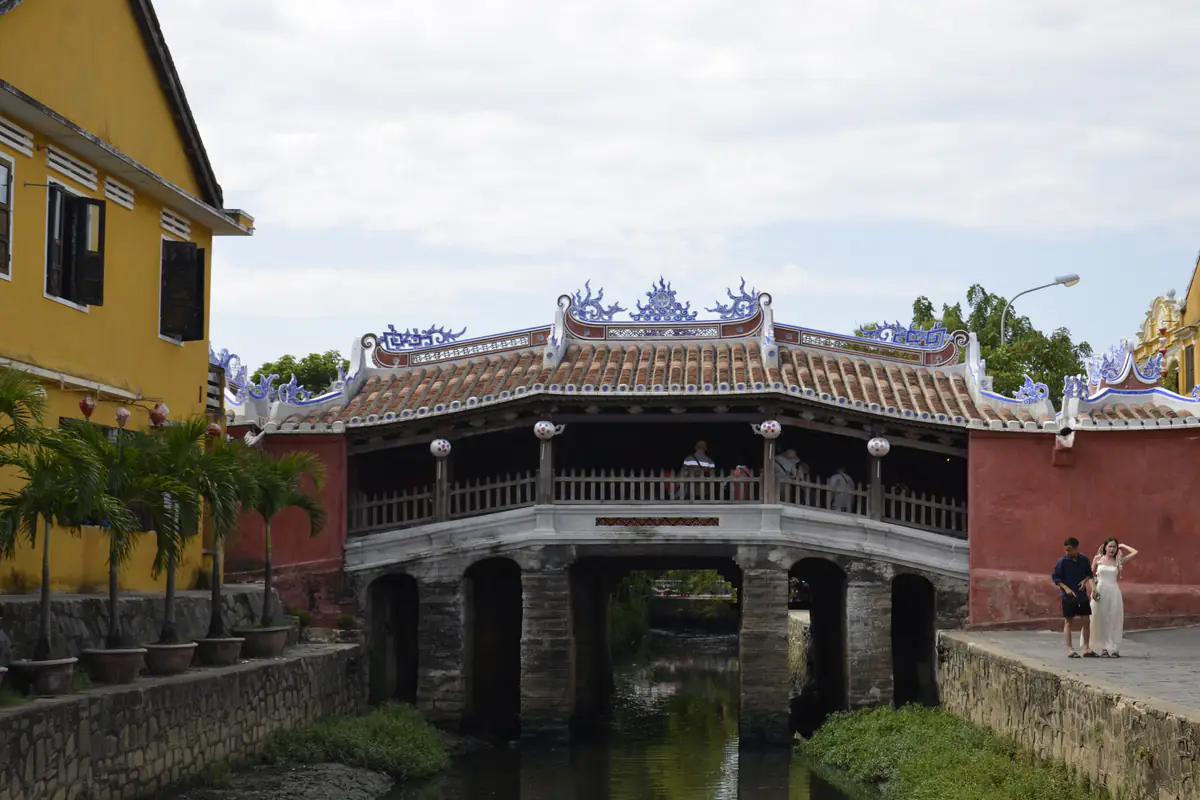
Photo: YukioSanjo
These are different attractions with different experiences. Comparing the ticket prices alone does not tell you which offers better value.
For budget travelers, Vietnam has an advantage in activities such as walking through historic neighborhoods, visiting markets, enjoying natural scenery, and trying local food.
Thailand also has plenty of free activities, but days that include royal palaces, island excursions, or major theme parks can quickly increase your expenses.
Which country should budget travelers choose?
Choose Vietnam if you plan to travel for ten days or longer, stay in smaller hotels, eat at local restaurants, and explore independently.
Choose Thailand if flights to Bangkok or Phuket are significantly cheaper from your departure city, you have limited vacation time, or you find accommodation that fits your budget.
Which country is easier for first-time visitors?
Thailand is easier for travelers visiting Southeast Asia for the first time, especially when starting in Bangkok.
Vietnam is not difficult to travel around, but choosing a sensible route matters. The country stretches a long distance from north to south, and many well-known natural attractions are located outside major cities.
Thailand: easy to plan a short vacation
Bangkok has two main airports: Suvarnabhumi Airport (BKK) and Don Mueang International Airport (DMK).
Check the airport code when booking because they are in different parts of the metropolitan area.
From Suvarnabhumi Airport, the Airport Rail Link connects travelers with the city through stations such as Makkasan and Phaya Thai.
Bangkok also has the BTS Skytrain and MRT subway systems, which are useful for shopping, restaurants, and sightseeing in central areas.
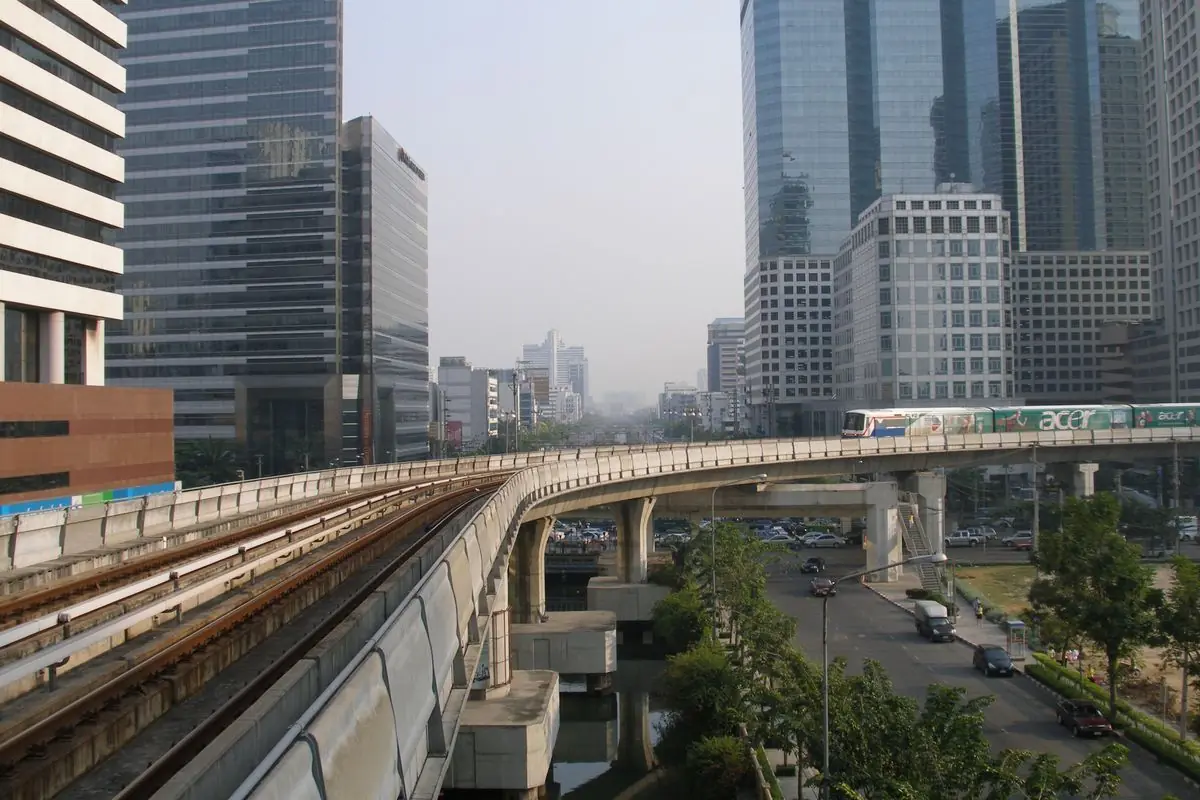
Photo: Vyacheslav Argenberg
For example, if you want to visit the Grand Palace, one option is to take the MRT to Sanam Chai station and continue on foot or by local transportation.
Another option is to travel along the Chao Phraya River and use Tha Chang Pier to reach the palace area.
Public transit and river boats cover an entire three-day stay in Bangkok without a private car.
From the capital, travelers can fly to Chiang Mai, Phuket, or Krabi. Domestic flights make it relatively straightforward to combine a large city, mountains, and a beach destination.
Some islands require an additional road transfer and ferry or speedboat journey after you land.
For example, visitors traveling to the Phi Phi Islands usually take a boat from Phuket or Krabi.
Rassada Pier in Phuket and Nopparat Thara Pier near Ao Nang are among the departure points you may encounter when comparing services.
Check the exact departure pier on your ticket, as operators may use different locations.
Vietnam: easier when you organize your trip by region
Vietnam's major international gateways include Noi Bai Airport in Hanoi, Tan Son Nhat Airport in Ho Chi Minh City, and Da Nang International Airport.
Cam Ranh International Airport is the main airport serving Nha Trang.
For first-time visitors, three routes are particularly practical:
- Northern Vietnam: Hanoi - Ninh Binh - Ha Long Bay.
- Central Vietnam: Da Nang - Hoi An - Hue.
- Southern Vietnam: Ho Chi Minh City - Mekong Delta - Phu Quoc.
The Da Nang-Hoi An route is good for travelers who do not want to change hotels constantly.
You can stay in Da Nang, spend one day exploring Hoi An Ancient Town, and reserve another day for Hue.
In northern Vietnam, travelers can take a train from Hanoi Railway Station to Ninh Binh Railway Station.
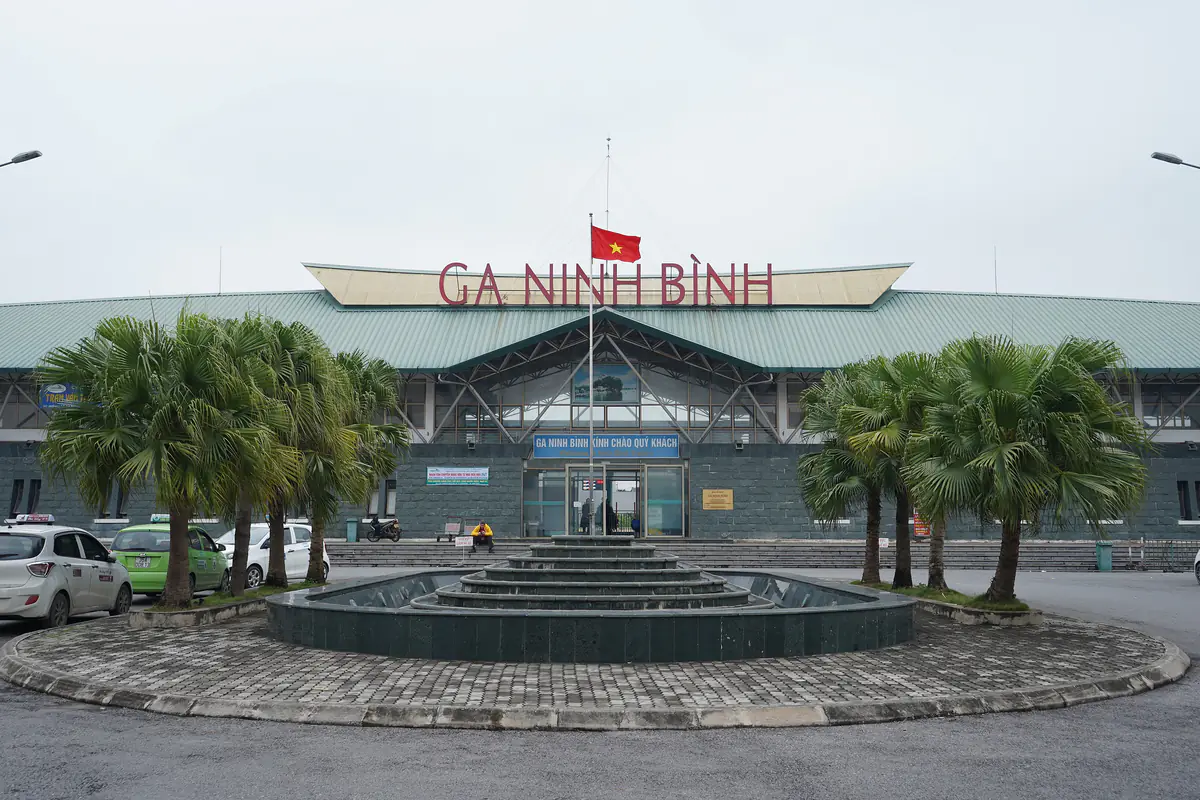
Photo: Yhxc57082
Visitors going to Ha Long Bay or Cat Ba typically use road transportation, sometimes combined with a boat or ferry depending on their destination.
Vietnamese trains are worth considering if you enjoy watching the landscape and have enough time for the journey.
For long overnight trips, a sleeper train can also give you more room to stretch out and move around than an overnight bus.
Covering several long distances by train still takes considerably more time than flying.
On a seven-day vacation, trying to visit Hanoi, Hue, Hoi An, and Ho Chi Minh City entirely by road or rail would create a rushed itinerary.
Thailand makes it relatively easy to build a vacation around two distinct destinations, such as Bangkok and Phuket.
Vietnam is especially rewarding when you have enough time to experience several landscapes and regions, but it is easy to overfill the itinerary.
Thailand or Vietnam for beaches and islands?
Both countries have plenty of coastline, but they offer different types of beach vacations.
Thailand is known for turquoise water, sandy beaches, limestone cliffs, and a well-developed island-tour industry.
Vietnam has a long coastline, lively beach cities, limestone bays, and islands suited to both relaxation and nature-based activities.
Thailand's beaches: best for island-hopping and sea activities
Phuket is an accessible choice if you want a wide selection of hotels, restaurants, shopping, and boat tours.
Patong is busier and has more nightlife, while Kata and Karon are worth considering if you want to spend more time at the beach.
Krabi suits travelers who enjoy dramatic limestone scenery.
You can stay in Ao Nang, take a boat to Railay, or join an island excursion when weather and sea conditions allow.
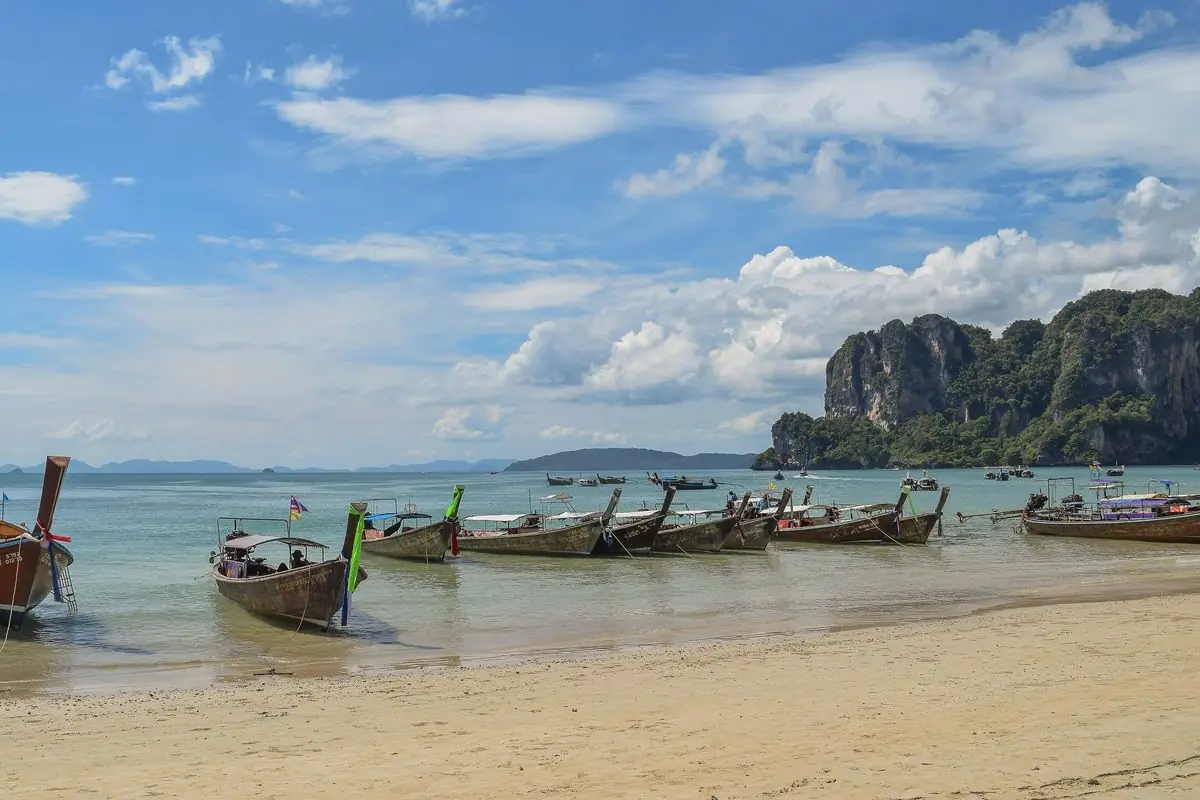
Photo: Krzysztof Golik
Koh Phi Phi has some of Thailand's most recognizable coastal scenery, but popular attractions can become crowded during peak season.
If you prefer a quieter experience, staying overnight and choosing departure times outside the busiest day-trip periods may help.
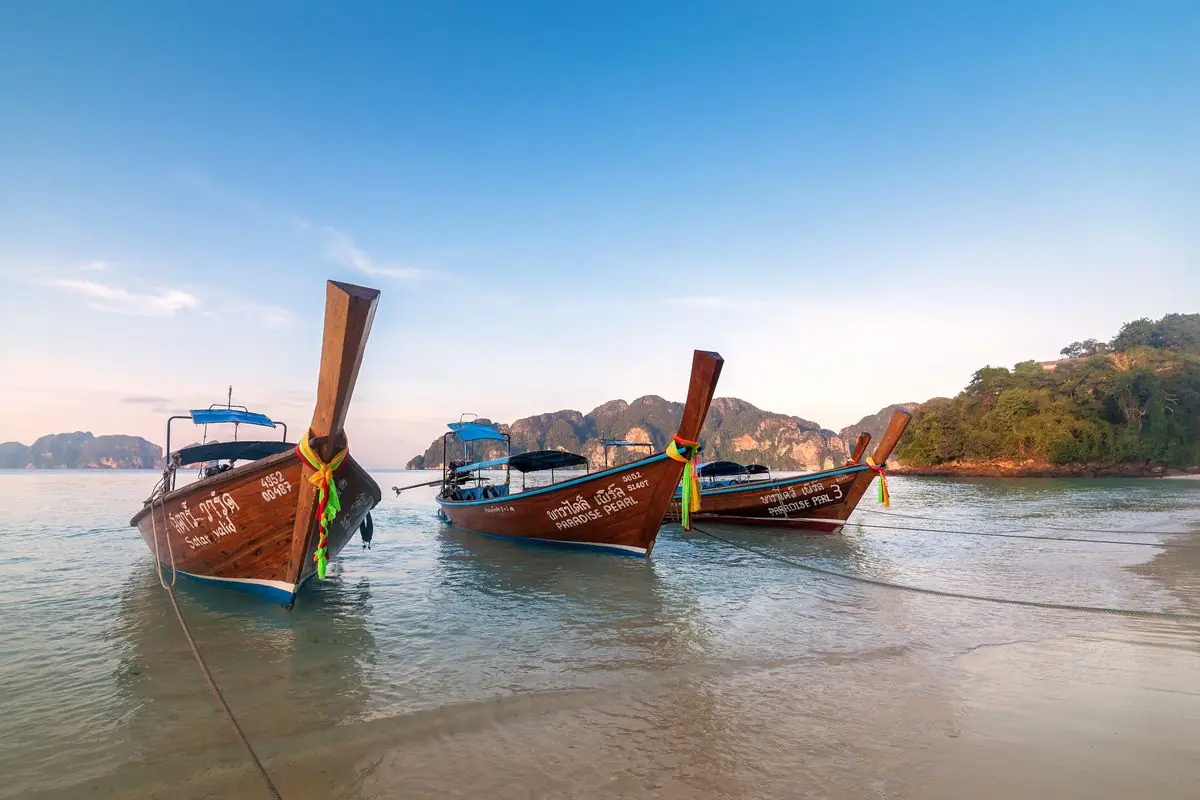
Photo: Anton Zelenov
Koh Samui is a good option for resort vacations, with plenty of accommodation choices.
The rainy season around the Gulf of Thailand, though, does not follow exactly the same pattern as Phuket and Krabi.
This matters when choosing an island.
Thailand's Andaman coast, including Phuket and Krabi, is generally more favorable from around November through April.
The Gulf of Thailand islands, including Koh Samui, Koh Phangan, and Koh Tao, can experience wetter conditions from September through December.
Traveling to Thailand in November does not mean every island will have the same weather.
Vietnam's beaches: choose according to the month
Phu Quoc is a good choice from approximately November to April, when the island has drier weather.
You can stay near Long Beach for convenient access to tourist services or choose a resort farther from the main areas for a quieter holiday.
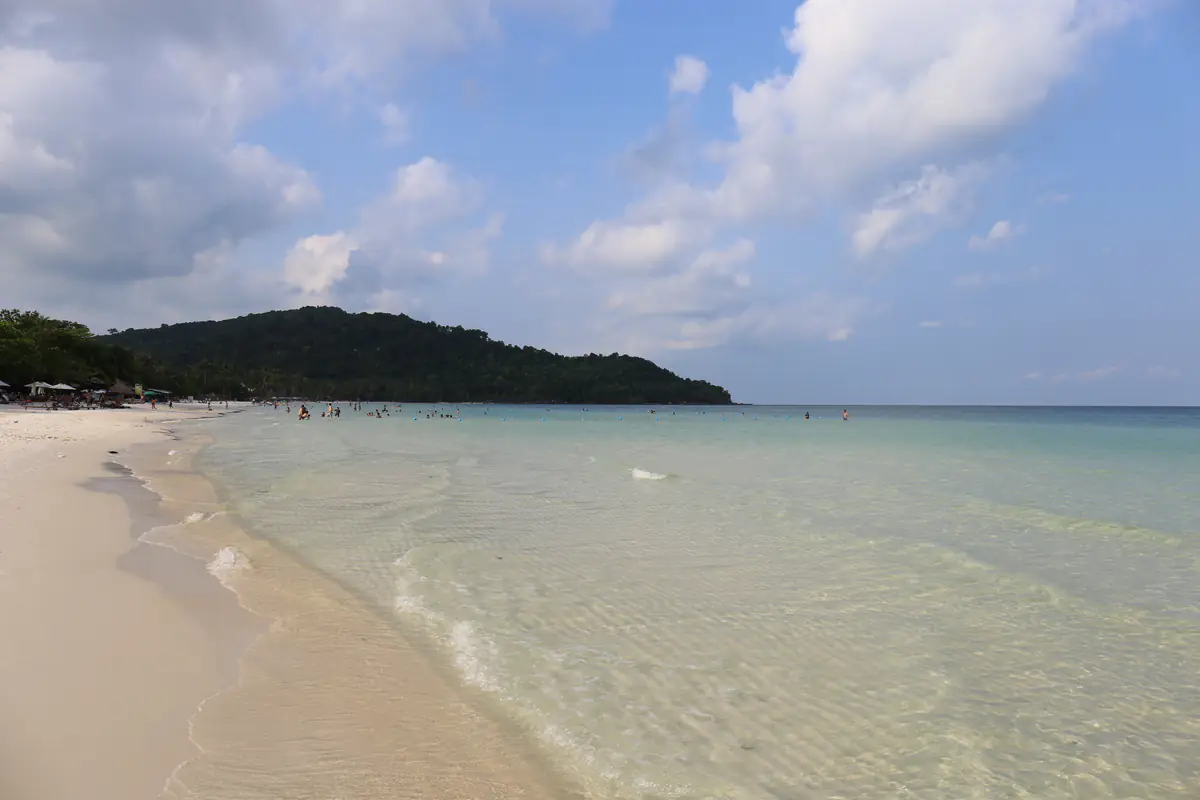
Photo: Vnecofriendly
Nha Trang is usually better for a beach-focused vacation from around February through August.
Its advantage is convenience. Many hotels, restaurants, cafes, and sections of the city beach are relatively close together.
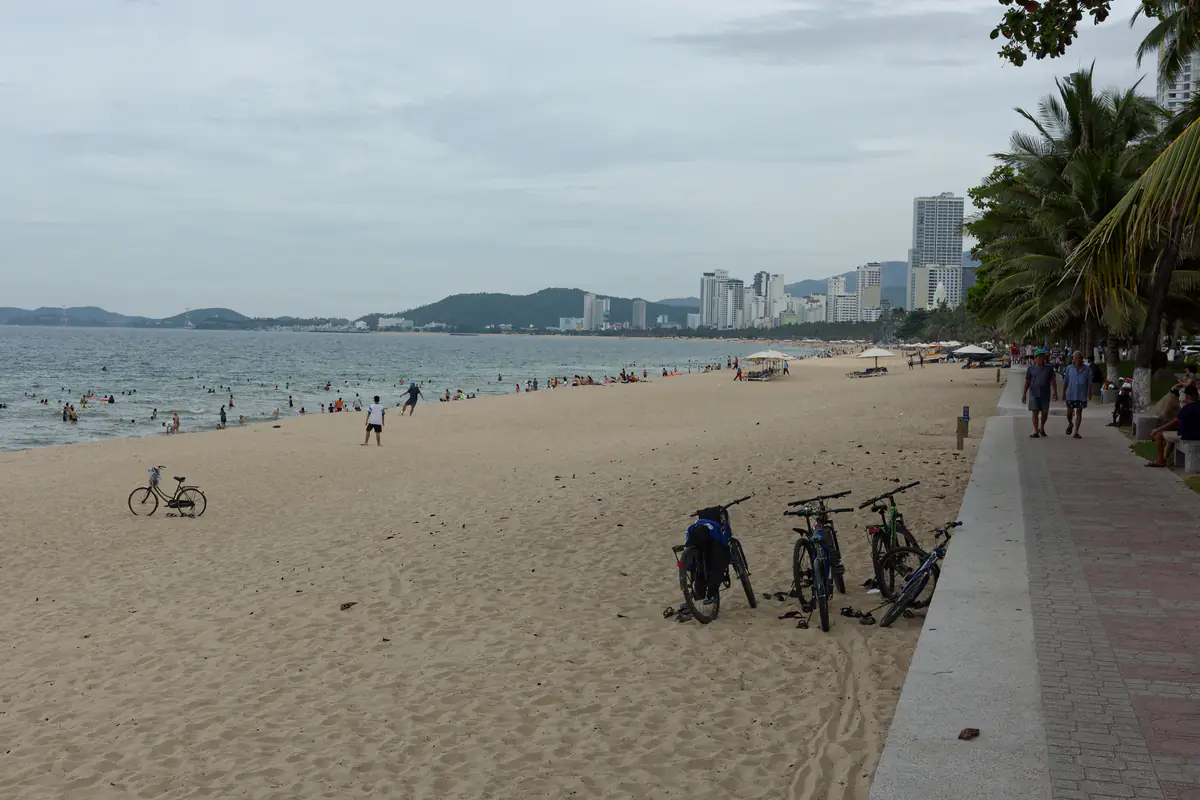
Photo: Leonid
You can also add a day trip to Hon Tam or other excursions around Nha Trang Bay.
Da Nang works well for a combination of beach time and cultural sightseeing during spring and summer.
You could spend the morning at My Khe Beach and travel to Hoi An later in the afternoon.
Cat Ba and Lan Ha Bay are known for limestone islands, kayaking, and boat trips.
These destinations are better suited to exploring natural scenery than a conventional Phuket-style beach resort holiday.
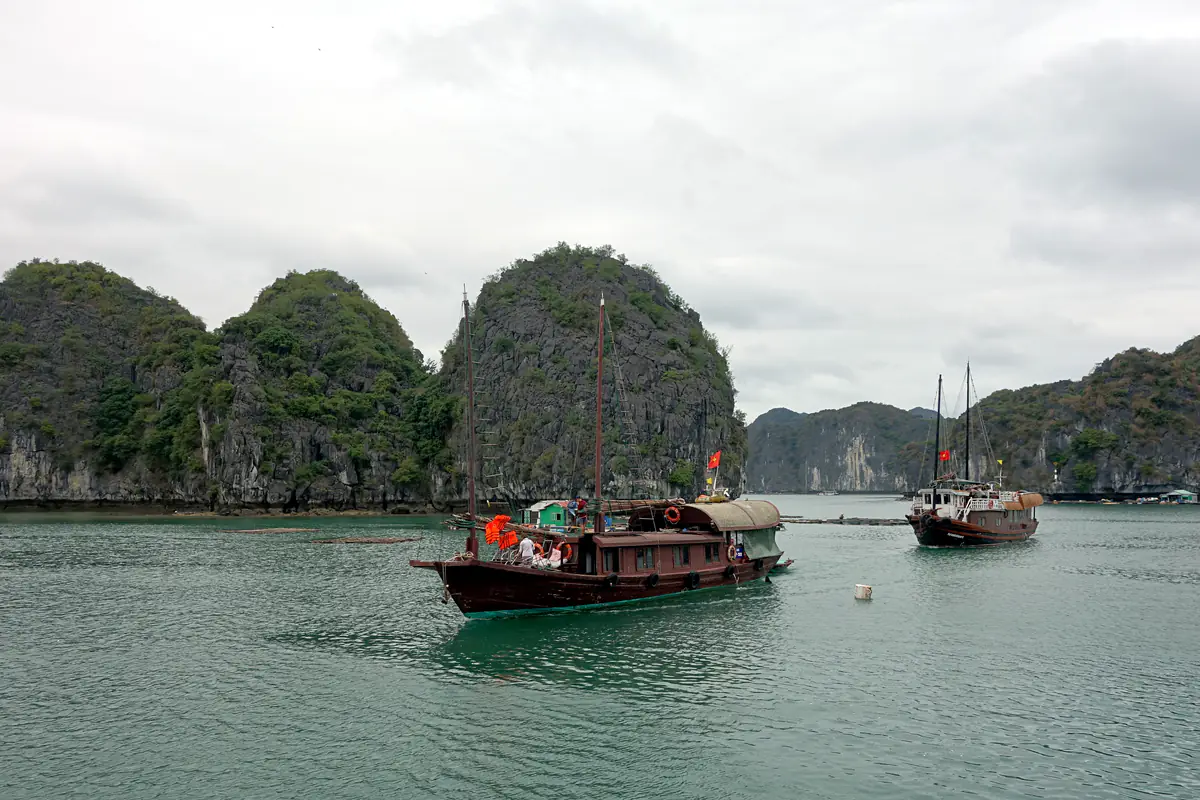
Photo: Velvet
Con Dao appeals to travelers interested in island scenery, nature, and Vietnamese history.
Getting there and arranging boat activities may require more planning than staying in a major beach city.
Which beach destination should you choose?
If you want a week at a resort, island excursions, snorkeling, and photographs of traditional long-tail boats, Phuket or Krabi should be high on your list.
Nha Trang and Da Nang put beachfront hotels, seafood restaurants, cafes, and city attractions close together.
For a tropical beach holiday combined with a trip through southern Vietnam, consider Phu Quoc.
Thai food vs. Vietnamese food: which is better?
Food is a good reason to visit either country.
Thai cuisine often combines strong sour, spicy, sweet, and salty flavors.
Vietnamese food varies considerably between regions, from lighter broths in the north to richly seasoned dishes, fresh herbs, and seafood in central and southern Vietnam.
What should you eat in Thailand?
Popular dishes worth trying include pad Thai, tom yum, som tam, green curry, khao soi, and mango sticky rice.
In Bangkok, Thipsamai, at 313-315 Maha Chai Road, is a well-known place to try pad Thai.
The restaurant specializes in different versions of the dish, including shrimp pad Thai wrapped in a thin layer of egg. It also operates other locations, so check the address when planning your visit.
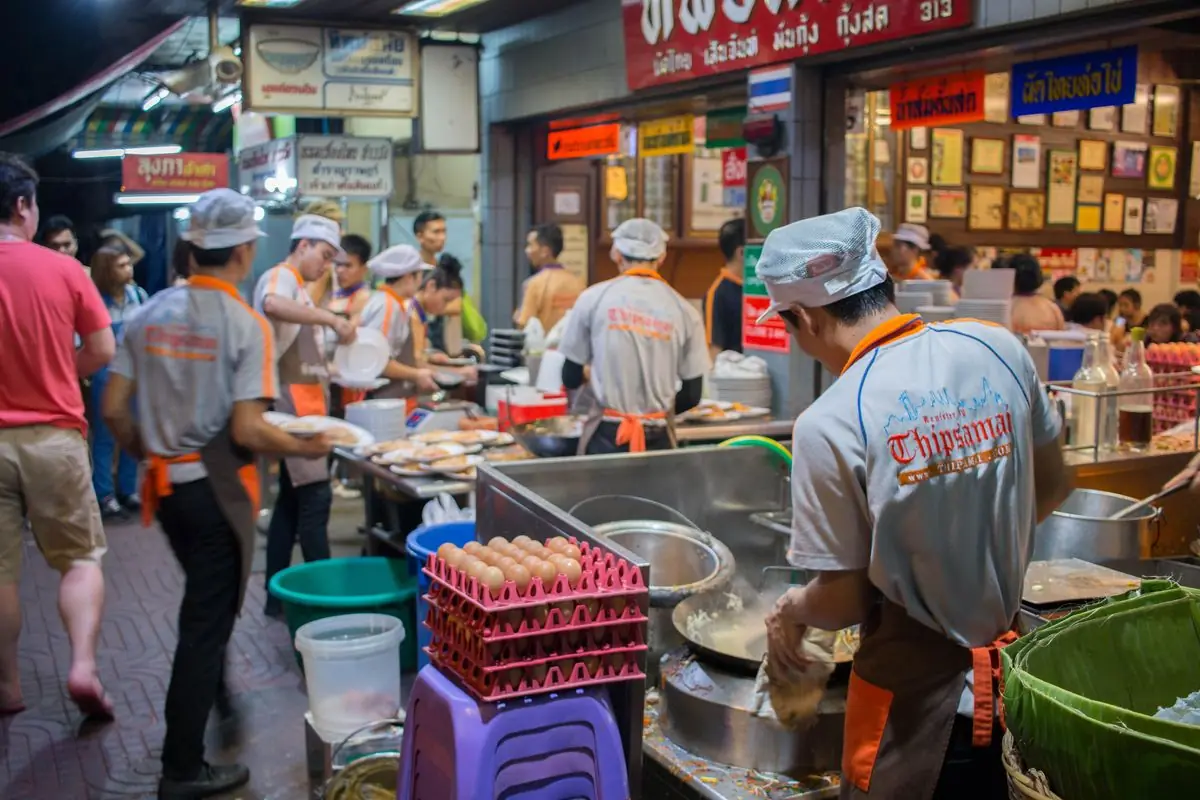
Photo: LWYang from USA
In the evening, Yaowarat Road in Bangkok's Chinatown offers many street-food choices.
This area suits travelers who want to try several small dishes instead of spending the entire evening at one restaurant.
When visiting Chiang Mai, try khao soi, a northern Thai curry noodle dish served with crispy noodles.
It is quite different from the pad Thai commonly associated with Bangkok.
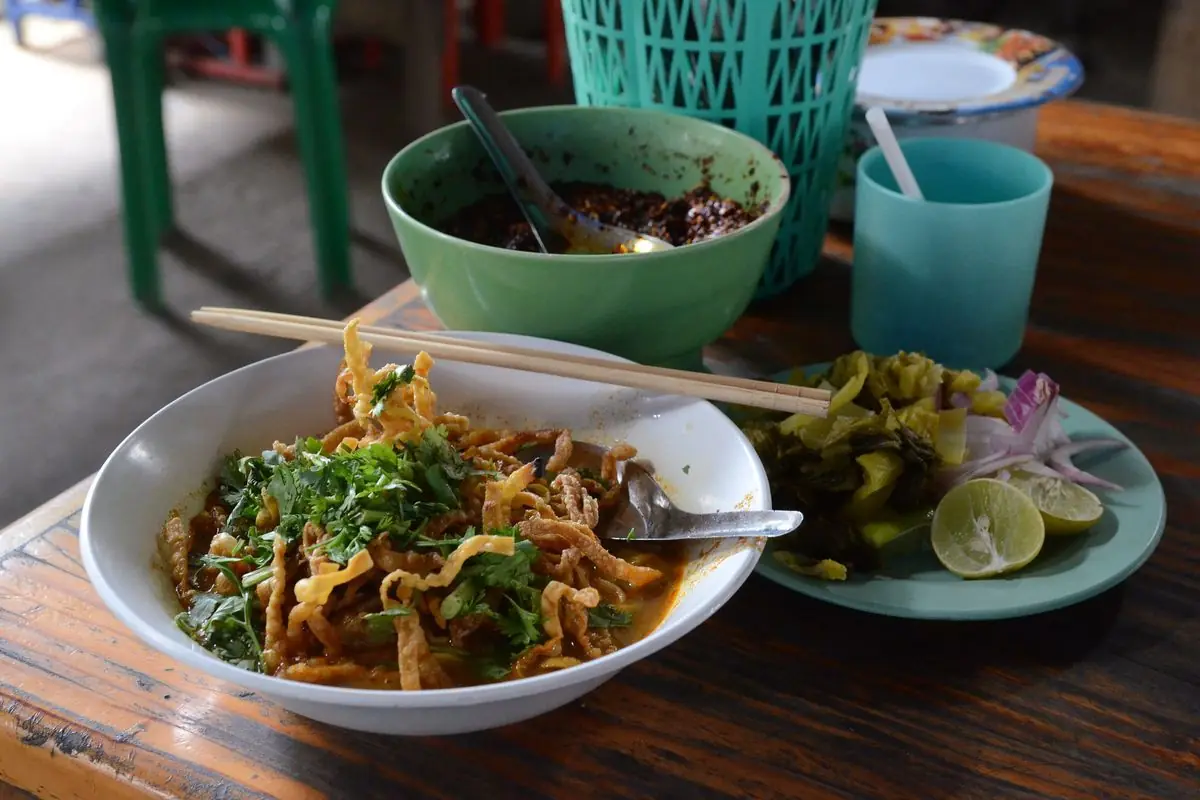
Photo: Takeaway
Not all Thai dishes are spicy. However, some salads, curries, and soups can contain a considerable amount of chili.
You can ask for less chili when ordering.
What should you eat in Vietnam?
In Hanoi, you might start the day with pho bo or bun rieu, have bun cha for lunch, and spend the evening trying small restaurants around the Old Quarter.
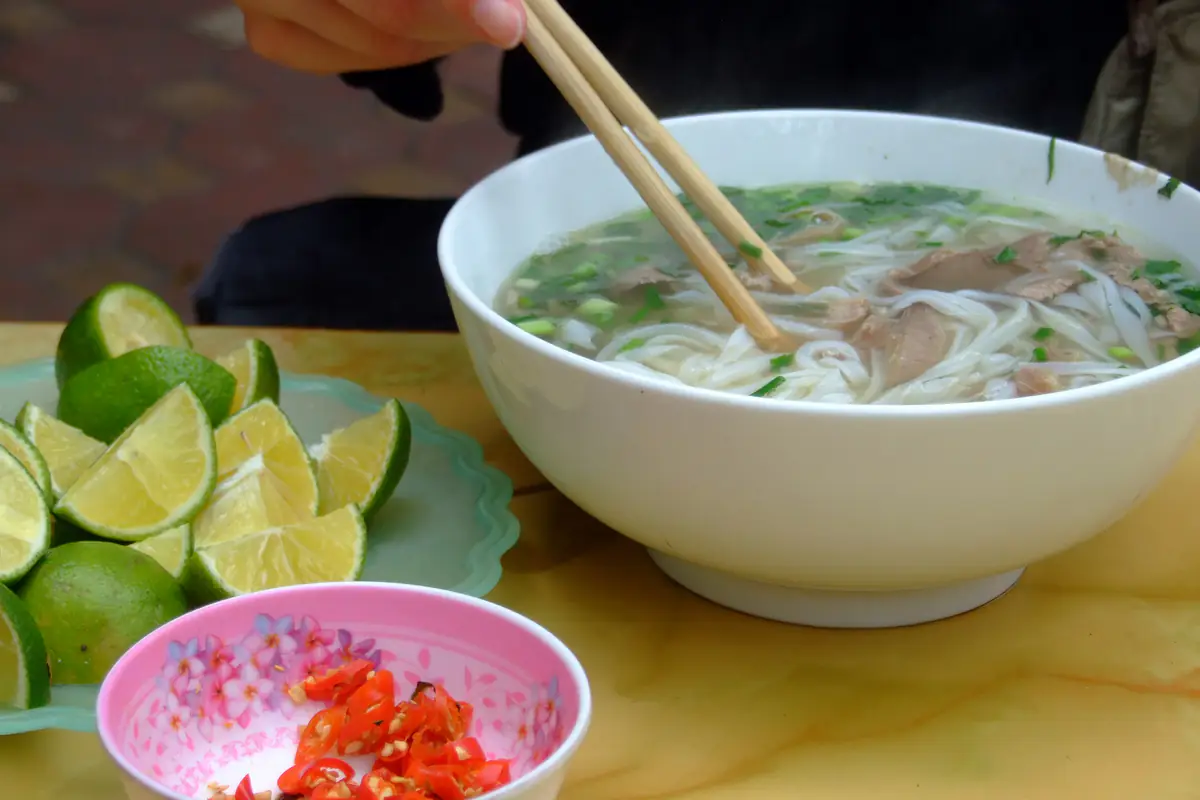
Photo: Codename5281
In Hue, bun bo Hue, com hen, and banh beo are worth looking for.
In Hoi An, cao lau, chicken rice, and banh mi are among the best-known local dishes.
Banh Mi Phuong, at 2B Phan Chu Trinh Street, is one familiar option for visitors.
If you want a more relaxed sit-down meal, look for a restaurant serving cao lau or chicken rice in or near the Ancient Town.
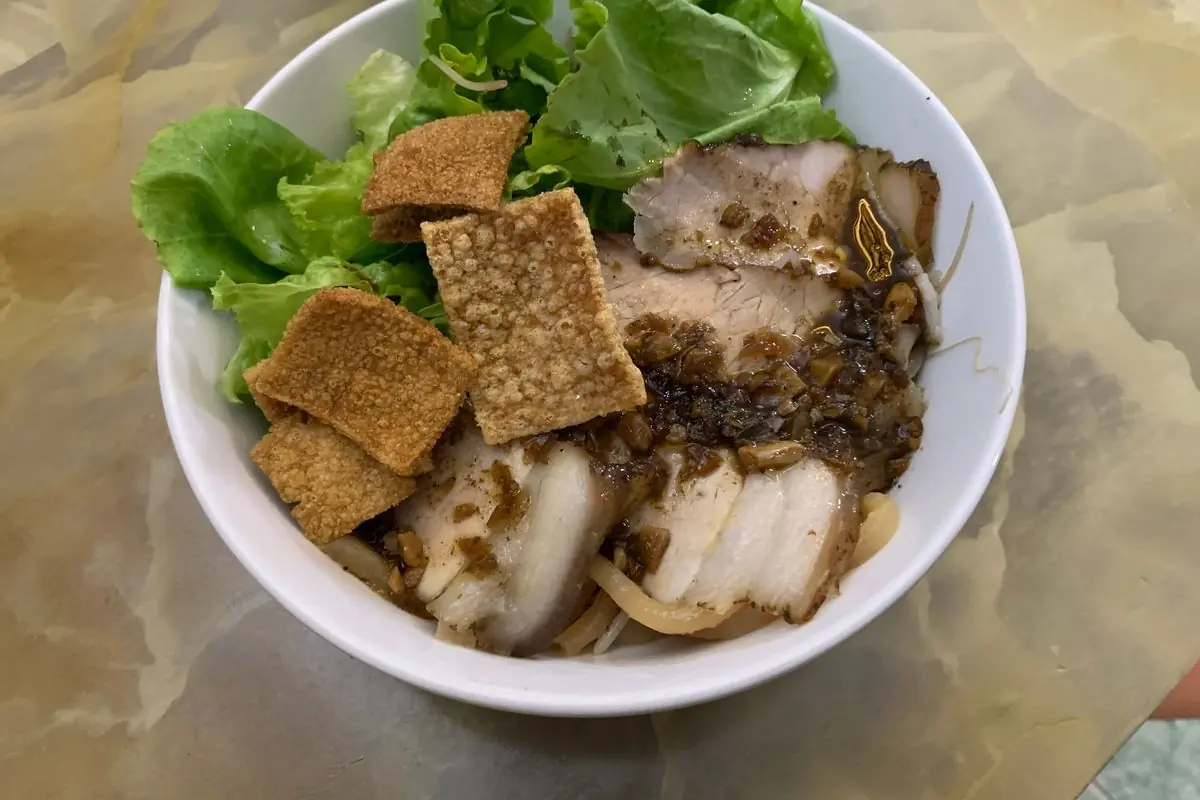
Photo: Chainwit.
In Nha Trang, breakfast could be bun cha ca, a fish cake noodle soup, or bun sua, a noodle soup with jellyfish.
For dinner, seafood is an easy choice for couples, groups, and families who want to share several dishes.
One convenient feature of eating in Vietnam is that many meals can be quick.
You can walk into a pho restaurant, order a bowl, finish breakfast, and continue sightseeing.
Com tam, banh mi, and bun thit nuong are also useful options when you do not want to spend a long time in a restaurant.
Which country is better for food lovers?
Choose Thailand if you enjoy bold seasoning, curries, grilled foods, and street markets with many different dishes.
Choose Vietnam if you want to discover how cuisine changes between regions, try noodle soups and fresh herbs, and adjust sauces or seasonings to your taste.
For families with children, both countries have rice, noodles, grilled meat, eggs, and other relatively simple dishes.
Choose clean restaurants, order thoroughly cooked food, and clearly request non-spicy dishes when necessary.
Thailand vs. Vietnam visa requirements in 2026
Visa rules depend on your passport nationality, even if you live somewhere else.
Thailand visa requirements
Thailand revised its visa exemption policy effective September 15, 2026.
The previous 60-day visa exemption scheme was revoked and replaced by revised entry arrangements.
Under the updated rules, passport holders from 60 eligible countries and territories may visit Thailand without a visa for tourism for up to 30 days.
These include travelers holding ordinary passports from the United States, the United Kingdom, Germany, France, and many other countries.
Other nationalities may qualify under separate bilateral agreements or different visa arrangements.
For example, Vietnamese ordinary passport holders qualify for a stay of up to 30 days under a bilateral visa exemption agreement.
Vietnam visa requirements
Vietnam offers visa exemptions to eligible passport holders under national policies and bilateral arrangements.
In 2025, Vietnam expanded its 45-day visa exemption arrangements to additional European countries.
Travelers from countries including Germany, France, the United Kingdom, Spain, Japan, and South Korea may qualify for visa-free stays under the applicable rules.
For visitors who are not eligible for visa exemption or need a longer stay, Vietnam offers an electronic visa.
A Vietnamese e-visa can be valid for up to 90 days, with single-entry and multiple-entry options.
The government fees are:
- Single-entry e-visa: $25.
- Multiple-entry e-visa: $50.
These are government application fees; third-party agencies add their own service charges.
Vietnam's official electronic visa portal is operated by the Immigration Department.
Which country has easier entry requirements?
For a short trip of fewer than 30 days, travelers whose passports qualify for visa-free entry to both countries will generally find the procedures manageable.
Vietnam has an advantage for visitors planning longer stays because its e-visa can cover up to 90 days.
Thailand has established arrival procedures for international tourism, but travelers should no longer rely on older articles describing a general 60-day visa exemption.
Before booking nonrefundable flights, confirm the latest requirements for your passport, intended entry dates, and number of entries.
Thailand vs. Vietnam weather by month
Weather can matter more than price when deciding between Thailand and Vietnam.
Thailand's conditions differ between the north, Bangkok, the Andaman coast, and the Gulf of Thailand islands.
Vietnam also has distinct regional weather patterns. In particular, central Vietnam's rainy season often comes later than the wet season in southern Vietnam.
Best destinations by month
| Month | Thailand | Vietnam |
|---|---|---|
| January | Bangkok, Chiang Mai, Phuket, and Krabi are generally favorable | Cool in Hanoi; Phu Quoc and Ho Chi Minh City are in the dry season |
| February | Favorable weather in many major destinations | Phu Quoc, Da Nang, and Hoi An are good options |
| March | Good conditions on the Andaman coast; Bangkok and the north become hotter | Hanoi, Ninh Binh, Hue, Hoi An, and Da Nang are worth considering |
| April | Hot across much of the country; Songkran celebrations | Central Vietnam is favorable; northern Vietnam warms up |
| May | Rainy season begins in many regions | Da Nang and Nha Trang can still be good beach destinations |
| June | Rain and rough seas are possible around Phuket and Krabi; consider Koh Samui | Nha Trang and Da Nang are generally good for beach activities |
| July | Koh Samui may be preferable to the Andaman coast | Nha Trang and Da Nang offer plenty of beach activities |
| August | Monsoon conditions may still affect the Andaman coast | Central Vietnam often has sunny days; rain is common in the north and south |
| September | Wet conditions continue in many areas | Hanoi, Sapa, and northern mountain destinations become appealing |
| October | Bangkok can still be rainy; Phuket enters a seasonal transition | Northern Vietnam is pleasant; Hue and Hoi An can experience heavy rain and flooding |
| November | Bangkok, Chiang Mai, Phuket, and Krabi are strong choices | Hanoi, Ninh Binh, and Phu Quoc are worth considering |
| December | Popular season for Bangkok, Chiang Mai, Phuket, and Krabi | Phu Quoc, Ho Chi Minh City, and the Mekong Delta; northern Vietnam is cooler |
These are typical seasonal patterns; check the forecast for your actual dates.
Thailand or Vietnam in November?
Thailand has an advantage in November if you want to combine Bangkok, Chiang Mai, and a beach holiday in Phuket or Krabi.
November marks the transition into cooler or drier conditions in many major Thai destinations.
You can spend several days sightseeing in Bangkok before flying south for a beach vacation.
Vietnam is also worth visiting in November, but destination choice matters.
Hanoi, Ninh Binh, and other northern locations generally become more comfortable than during the hottest summer months.
Phu Quoc begins moving into its more favorable beach season.
However, Hue, Da Nang, and Hoi An can experience heavy rainfall, flooding, or unfavorable sea conditions.
Avoid building a central Vietnam itinerary that depends entirely on outdoor activities during this period.
Thailand or Vietnam in December?
In December, Thailand remains an attractive choice for Bangkok, Chiang Mai, Phuket, and Krabi.
In Vietnam, Phu Quoc and the south are generally better options for travelers looking for warm weather and beach time.
Hanoi may be chilly, cloudy, or misty.
Sapa can be considerably colder, especially at night.
December is also a busy holiday period at many popular resorts. Prices may increase around Christmas and New Year's.
The fair beach comparison is Phuket with Phu Quoc, while Bangkok pairs with Hanoi.
Which country is more crowded with tourists?
International visitor arrivals in 2025:
- Thailand: Approximately 32.97 million international visitor arrivals.
- Vietnam: Nearly 21.2 million international visitor arrivals.
Thailand receives more international visitors overall, but national arrival numbers do not mean every Thai destination is more crowded than every destination in Vietnam.
Bangkok, Phuket, and Chiang Mai have neighborhoods and attractions that draw large numbers of international tourists.
Patong Beach, popular Phi Phi Island excursions, and famous temples can become particularly busy during peak season.
Vietnam also has heavily visited places.
Hoi An Ancient Town, the area around Hoan Kiem Lake in Hanoi, the Ha Long Bay cruise terminals, and popular attractions in Ninh Binh can all become crowded.
Changing your arrival time does more to avoid crowds than changing countries.
In Bangkok, visiting the Grand Palace near its 8:30 a.m. opening time is usually more sensible than arriving around midday in the heat.
In Hoi An, you can explore the traditional houses and assembly halls in the morning, then return in the evening to see the lanterns.
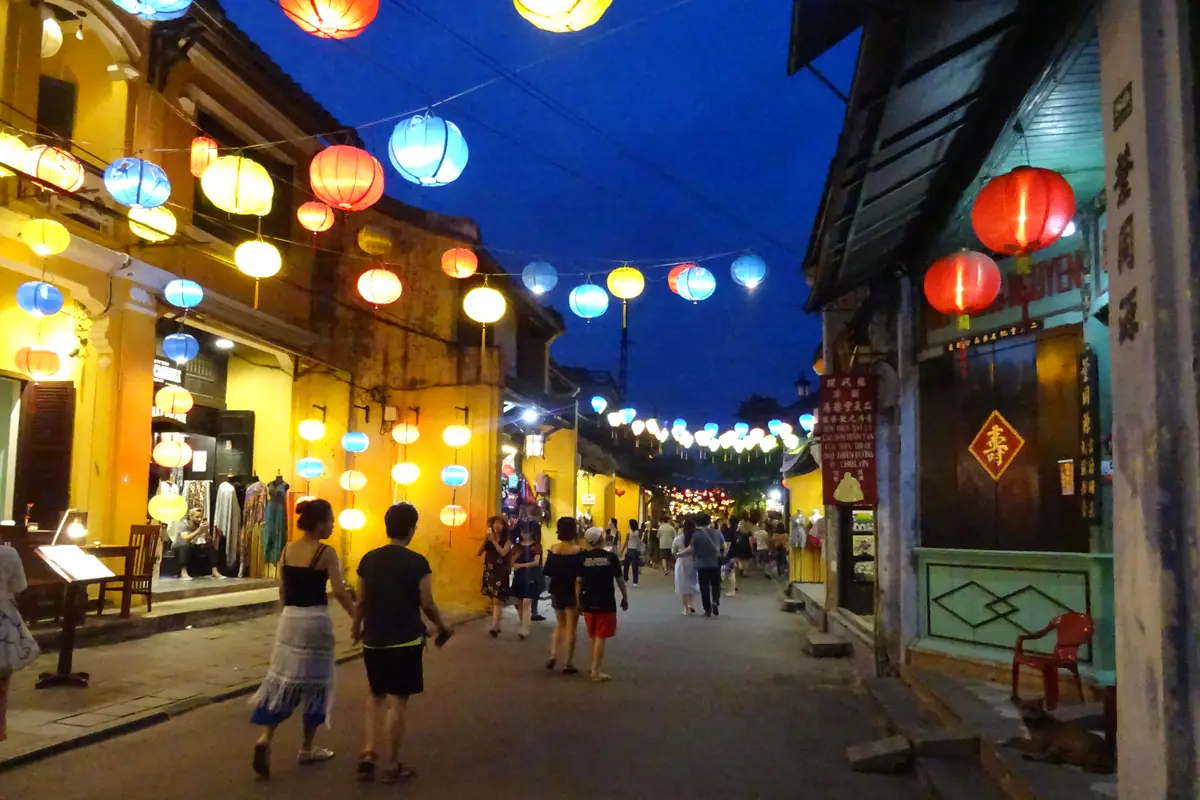
Photo: Christophe95
For island excursions, consider smaller boats, alternative routes, or departure times that avoid the busiest day-trip groups.
Thailand has an advantage in the number of established services catering to international visitors.
Vietnam offers opportunities to explore destinations that receive fewer foreign tourists, although transportation and accommodation can become simpler outside the main tourist routes.
Who should choose Thailand, and who should choose Vietnam?
First-time international visitors to Southeast Asia
Thailand for a short trip, Vietnam with ten days or more
Thailand is a sensible first choice if you want an easy introduction to Southeast Asia on a relatively short vacation.
Bangkok offers many transportation options, hotels, restaurants, shopping centers, and cultural attractions.
You can visit temples and palaces, explore markets, and then move to a coastal resort.
An eight-day Bangkok-Phuket itinerary provides both city sightseeing and beach time without too many changes of location.
Vietnam is a good option for first-time visitors who are especially interested in local culture, natural landscapes, and regional differences.
It becomes more attractive when you have ten days or longer.
A Hanoi-Ninh Binh-Ha Long Bay itinerary combines limestone scenery, historic sites, local food, and boat excursions.
However, road transfers and connections need to be included in your schedule.
Couples
Beach resorts in Thailand, old towns and cafes in Vietnam
Both countries work well for couples, but the right choice depends on the kind of vacation you want.
Choose Thailand if you want a beachfront resort, swimming pool, spa, restaurants, and island excursions.
Phuket, Krabi, and Koh Samui have plenty of accommodation aimed at couples, but each has its own best months.
Choose Vietnam if you prefer spending the morning at a cafe, exploring an old town in the afternoon, and trying regional dishes for dinner.
Hoi An, Hue, Da Lat, and northern Vietnam offer good possibilities for this type of trip.
With a mid-range budget, Vietnam may allow you to spend more on a comfortable room, a private activity, or one night at a higher-end resort.
Families with young children
Fewer hotel changes, especially with children under five
Thailand is often easier for families looking for a resort vacation with entertainment and convenient services.
Bangkok has shopping malls, indoor attractions, and numerous family-oriented hotels.
In Phuket or Hua Hin, you can choose resorts with children's pools, restaurants, and activities on-site.
Vietnam is a good choice for families wanting to combine beach time with culture and nature.
Da Nang is particularly practical because it has an airport, beachfront hotels, restaurants, and relatively straightforward connections to Hoi An.
Nha Trang is another option for families who want to stay near the beach, eat in the city, and choose activities one day at a time.
For children younger than five, consider limiting hotel changes and long boat journeys.
Six days at a resort may be more relaxing than six days spent moving between three cities.
When booking accommodation, check room size, extra-bed policies, children's breakfast charges, and airport transfer costs.
These details can make a significant difference to the total price.
Solo travelers
Group activities in Thailand, longer trips in Vietnam
Thailand works well for travelers who want to meet people, join group activities, and stay at hostels along popular tourist routes.
Bangkok, Chiang Mai, and the main beach destinations have many options for independent visitors.
Costs still vary considerably between regions and seasons.
Vietnam is particularly attractive for travelers who want to spend several weeks exploring without increasing their budget too quickly.
You can stay in Hanoi for a few days, continue to Ninh Binh, explore northern mountain provinces, or travel south toward central Vietnam.
Budget restaurants and small hotels make solo travel reasonably flexible.
In either country, choose transportation providers with clear contact details, check recent accommodation reviews, and keep emergency contact information available.
Arrival times matter even more on overnight buses or trains when you are alone.
Thailand or Vietnam based on your trip length
If you have 5-7 days
Choose one region, or at most two destinations with convenient connections.
Thailand: Bangkok for 3 days, Phuket for 3-4 days.
This itinerary works for travelers who want sightseeing first and beach time afterward.
Vietnam: Da Nang for 4 days, Hoi An for 2 days.
You can fly into Da Nang and arrange a road transfer to Hoi An without needing another domestic flight.
Another option is to spend the entire vacation in Nha Trang or Phu Quoc.
If you have 8-10 days
You have enough time to combine two or three destinations without making the trip excessively rushed.
Thailand: Bangkok for 3 days - Chiang Mai for 3 days - Phuket for 3 days.
This route involves two domestic flights.
Expect several different experiences and a few hotel changes.
Vietnam: Hanoi for 3 days - Ninh Binh for 2 days - Ha Long Bay for 2 days - Hanoi for 1 day.
These destinations can be linked by road transportation.
Allow additional time before your international departure, especially if you plan to spend a night on a Ha Long Bay cruise.
If you have 12-16 days
Vietnam becomes particularly appealing if you want to explore several regions.
A 14-day itinerary could include Hanoi, Ninh Binh, Ha Long Bay, Hue, Hoi An, and Da Nang.
Use an appropriate combination of transportation for longer distances rather than trying to complete everything by road.
In Thailand, 14 days is enough to visit Bangkok and Chiang Mai, then spend approximately a week in Phuket or Krabi.
That itinerary combines cultural activities with several relaxing days without changing hotels.
Do not try to visit every famous destination just because you have two weeks.
Your actual sightseeing time will be shorter once airport transfers, travel days, and hotel check-ins are taken into account.
Comparing real travel costs: look beyond the hotel price
To determine whether Thailand or Vietnam is cheaper for your particular trip, compare similar vacations.
Suppose you want seven nights at a hotel with a swimming pool near the beach.
In Thailand, compare Phuket and Krabi.
In Vietnam, compare Nha Trang, Da Nang, or Phu Quoc during their more favorable seasons.
Then calculate the complete cost:
- Round-trip flights from your departure city, including checked baggage.
- Seven hotel nights in a similar category, with comparable breakfast arrangements.
- Airport transfers and local transportation.
- Food, entrance tickets, and island excursions.
- Visa charges, travel insurance, taxes, and mandatory fees where applicable.
Comparing a hostel in Hanoi with a resort in Phuket does not establish how much cheaper Vietnam is.
Likewise, a discounted hotel room in Bangkok does not prove that Thailand is cheaper than Vietnam overall.
Families should calculate the total price for the whole group.
A hotel offering a large family room or favorable children's policies may be less expensive than booking two standard rooms.
Independent travelers should also leave some room in their budgets for weather-related changes, transportation adjustments, and unexpected expenses.
For island itineraries in particular, changes to boat schedules can affect the rest of your travel plans.
Important differences travelers often overlook
Road transportation
Thailand drives on the left side of the road, while Vietnam drives on the right.
Renting a car or motorbike means learning local traffic rules, licensing requirements, and insurance conditions.
Do not rent a motorbike simply because the daily price seems cheap.
In major cities, public transportation or a vehicle with a professional driver may be a more practical choice if you are unfamiliar with the roads.
Distances between destinations
Thailand has domestic flights connecting Bangkok with its major tourism centers, although some islands still require a boat or ferry.
Vietnam stretches a long distance from north to south.
Traveling from Hanoi to Da Nang or Da Nang to Ho Chi Minh City by train or bus takes much longer than flying.
However, road and rail travel allow you to see landscapes and towns you would miss on a domestic flight.
Language
In Bangkok, Phuket, Chiang Mai, and other major Thai tourist areas, English-speaking services are easy to find.
English is also widely used at international hotels, airports, restaurants, and tourist attractions in Vietnam.
Communication can become more challenging in rural areas that receive fewer international visitors.
A translation app can be helpful, and keeping your hotel's address written in the local language is useful when arranging transportation.
Money and payments
Thailand uses the Thai baht, while Vietnam uses the Vietnamese dong.
International payment cards are accepted at many hotels, shopping malls, and businesses serving tourists in both countries.
However, cash remains useful for markets, small restaurants, and some local transportation services.
In Vietnam, take a little time to learn the banknote denominations.
The number of zeros can be confusing when you first arrive, and some notes have similar colors.
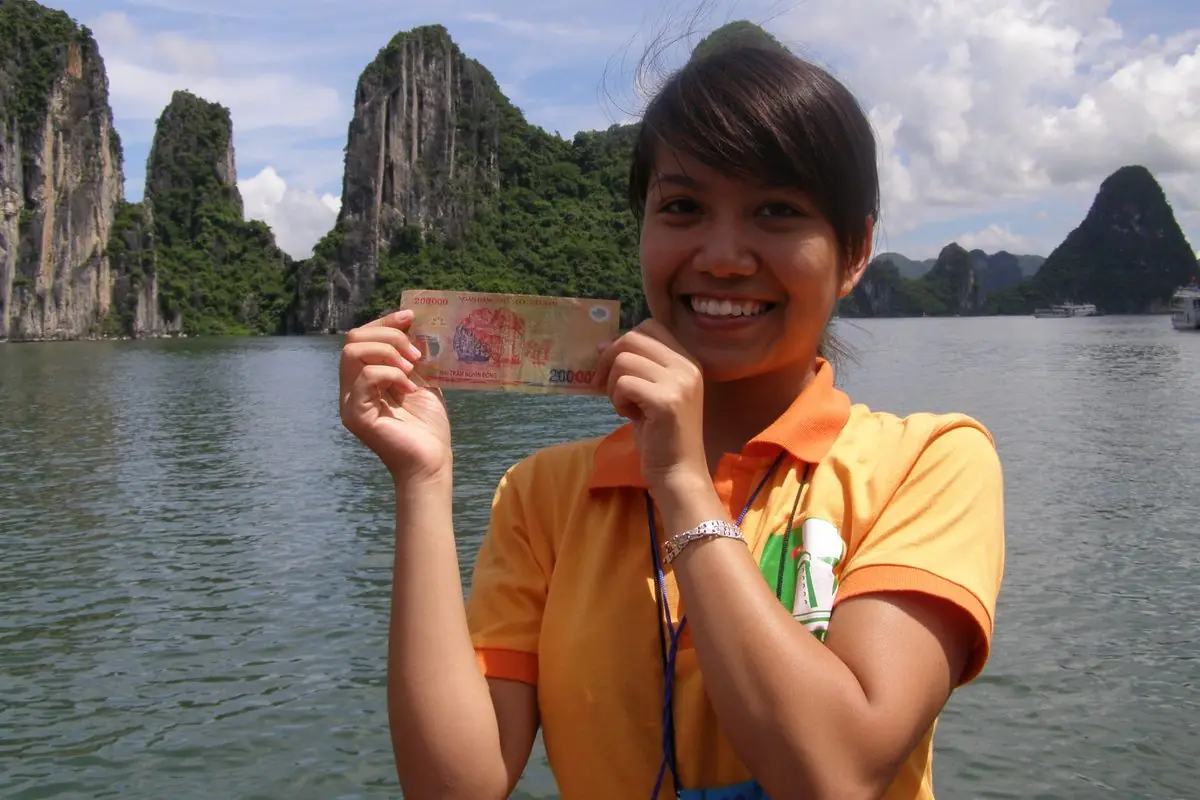
Photo: RG72
Holidays and peak travel periods
Thailand celebrates Songkran in April, traditionally around April 13-15.
It is an interesting time to experience Thai culture, but popular destinations and transportation routes can become crowded.
Vietnam celebrates Lunar New Year, known as Tet, in January or February, depending on the year.
Domestic travel demand increases during this period, some businesses change their operating hours, and transportation prices may rise.
During a major holiday, book important transportation in advance and check attraction opening schedules.
Thailand or Vietnam: which should you choose?
The easiest way to decide is to identify what matters most on your trip.
Choose Thailand if:
- This is your first trip to Southeast Asia and you want a straightforward itinerary.
- You enjoy beach resorts, island excursions, spas, shopping, and night markets.
- You are traveling between November and February and want to combine Bangkok with Phuket or Krabi.
- Your family prefers established tourist services and fewer transportation arrangements.
- You want to meet other international travelers and join group activities.
Choose Vietnam if:
- You want to manage your budget carefully, especially on trips lasting ten days or longer.
- You enjoy mountains, caves, rice terraces, historic towns, and varied landscapes.
- You want to discover regional cuisine and eat at local restaurants.
- You prefer combining beaches with cultural attractions and historic sites.
- You enjoy traveling by train or road and spending time exploring individual destinations.
With a longer vacation, or after visiting both countries already, there is no need to choose only one.
Bangkok and Hanoi can each serve as starting points for separate Southeast Asian adventures.
But for a first trip lasting just one week, choose one country and visit fewer destinations.
Seven days in Phuket can be a beach vacation, while seven days between Hanoi, Ninh Binh, and Ha Long Bay can be a journey through landscapes and local culture. The time is the same; the better choice depends on what you want those seven days to look like, and a travel ranking will not tell you that.
FAQ
Is Thailand or Vietnam better for first-time international visitors?
Thailand is generally easier for first-time visitors to Southeast Asia because of its established tourist services, Bangkok's transportation network, and wide range of resort accommodations. Vietnam is a good choice for travelers interested in culture, nature, and regional experiences who have enough time to plan transportation between destinations.
Is Thailand or Vietnam cheaper to visit?
Vietnam is generally cheaper. A typical 2026 backpacking budget is approximately €29 per day in Vietnam, compared with €32 in Thailand. However, international airfare, hotel choices, and sightseeing activities can change the total cost significantly.
Is Thailand or Vietnam better in November and December?
Thailand is a good choice for Bangkok, Chiang Mai, Phuket, and Krabi during these months. In Vietnam, Hanoi, Ninh Binh, Ho Chi Minh City, and Phu Quoc are worth considering. Check weather conditions carefully before planning a trip to Hue, Da Nang, or Hoi An, as central Vietnam can still experience heavy rain and flooding.
Is Thailand or Vietnam better for families with children?
Thailand is often more convenient for families looking for resorts, shopping, and indoor attractions. Vietnam is well suited to families who want to combine beach vacations with cultural sightseeing, particularly in places such as Da Nang and Nha Trang. With younger children, staying at one main hotel and limiting frequent transfers is usually the better approach.
Should I visit Thailand or Vietnam if I have 10 days?
With ten days, you could travel Bangkok - Chiang Mai - Phuket in Thailand or Hanoi - Ninh Binh - Ha Long Bay in Vietnam. The Thai itinerary combines a major city, temples, and beaches. The Vietnamese route focuses more on natural scenery, cultural sites, and local food. Consider the month of travel and airfare from your departure city before making the final choice.
Related posts

Guides
Plan a 7-day Vietnam itinerary: should you visit the north, central, or south?
Three practical 7-day Vietnam itineraries with transport, costs, and day-by-day plans.

Guides
Why should you choose just one major attraction for 2 days and 1 night in Nha Trang?
A practical 2-day Nha Trang itinerary with island tours, VinWonders, hotel areas, and estimated costs.
Guides
Hanoi to Nha Trang: flight or train - which is better?
Compare flights, trains, and buses from Hanoi to Nha Trang based on time, price, and comfort.