Plan a 7-day Vietnam itinerary: should you visit the north, central, or south?
With 7 days and 6 nights, you can explore Hanoi - Ninh Binh - Ha Long Bay, Da Nang - Hue - Hoi An, or Ho Chi Minh City - Can Tho - Phu Quoc. Each route has its own arrival airport, recommended overnight stops, and ideal travel season.
Written by Tụi mình mê biểnUpdated

Photo: lumoplank
The best way to spend 7 days in Vietnam is to explore one region, visit two or three destinations, and stay near your departure airport on the final night. First-time visitors should consider Hanoi - Ninh Binh - Ha Long Bay or Da Nang - Hue - Hoi An. Travelers who prefer busy cities, river life, and tropical beaches can start in Ho Chi Minh City and continue to Can Tho and Phu Quoc.
8-12.8M VND
northern route, with one night on a cruise
4.5-8M VND
central route
6-11.6M VND
southern route, with the Phu Quoc-Ho Chi Minh City flight
Where should you go in Vietnam for 7 days?
Vietnam stretches more than 1,600 kilometers from north to south. A flight from Hanoi to Ho Chi Minh City takes roughly 2 hours and 20 minutes, but getting to the airport, checking in, collecting luggage, and reaching your next hotel can easily take half a day.
Trying to fit Hanoi, Da Nang, and Ho Chi Minh City into a single week usually isn't worth it. You'll technically visit all three regions, but you'll spend too much time traveling and miss some of the experiences that make each place interesting.
These three routes work much better:
| 7-day route | Arrival airport | Overnight stops | Best months | Estimated budget per person |
|---|---|---|---|---|
| Northern Vietnam: Hanoi - Ninh Binh - Ha Long Bay | Noi Bai (HAN) | Hanoi 3 nights, Ninh Binh 2 nights, overnight cruise 1 night | March-April, September-November | 8-12.8 million VND |
| Central Vietnam: Da Nang - Hue - Hoi An | Da Nang (DAD) | Da Nang 2 nights, Hue 1 night, Hoi An 3 nights | March-May | 4.5-8 million VND |
| Southern Vietnam: Ho Chi Minh City - Can Tho - Phu Quoc | Tan Son Nhat (SGN) | Ho Chi Minh City 2 nights, Can Tho 1 night, Phu Quoc 3 nights | December-March | 6-11.6 million VND |
These are planning estimates based on 2026 prices, calculated per adult when two people share a room, stay in mid-range accommodation, eat at ordinary restaurants, and use the transport described below. The northern itinerary includes one night on an upscale Ha Long Bay cruise. The southern itinerary allows for a return flight from Phu Quoc to Ho Chi Minh City.
International flights, flights from your home city to the starting destination, visa fees, travel insurance, and personal shopping are not included. Solo travelers staying in private rooms should expect higher accommodation costs. Families with young children should check family-room rates, child admission policies, and private transfer costs separately.
Loading map...
- Hoan Kiem Lake: Where to stay in Hanoi
- Temple of Literature: Morning of day 2
- Trang An boat pier: A 2.5-3 hour boat trip
- Hang Mua: Go early to avoid the heat
- Tuan Chau: Check-in point for some cruises
- My Khe Beach: First stop on the central route
- Ngo Mon Gate, Imperial City: Afternoon of day 3
- Japanese Covered Bridge, Hoi An: Ancient Town
- Ben Thanh Market: Central Ho Chi Minh City
- Ninh Kieu Wharf: Where to stay in Can Tho
- Cai Rang Floating Market: Go around 5:00-7:00 AM
- Bai Vong Port: Where the Rach Gia ferry docks
Choose your route based on the month
Weather matters more than the number of attractions on your itinerary. Hanoi has a cool winter, Hoi An experiences a significant rainy season later in the year, and sea conditions around Phu Quoc change with the monsoons.
- January-February: Southern Vietnam is a strong choice, particularly Phu Quoc. Northern Vietnam is still possible, but Ha Long Bay can be cold and misty.
- March-April: All three routes are worth considering. Central Vietnam is often particularly suitable for combining beach time with historical sightseeing.
- May-August: Da Nang and Hoi An are attractive for beach holidays, although midday temperatures can be very high. Northern Vietnam may experience heavy rainfall.
- September-November: Northern Vietnam generally becomes more comfortable for sightseeing. Central Vietnam faces a greater risk of storms, flooding, and prolonged rain, especially in October and November.
- December: Southern Vietnam becomes particularly appealing for beach holidays. Northern Vietnam suits travelers who don't mind cooler weather.
These are seasonal patterns rather than forecasts for a specific travel week. Always check current weather reports and operating notices before booking boat trips, mountain excursions, or outdoor tours.
Northern Vietnam in 7 days: Hanoi - Ninh Binh - Ha Long Bay
Best for: First-time international visitors, travelers interested in history and local food, and anyone who wants to experience limestone landscapes and spend a night aboard a cruise.
Airport: Arrive at and depart from Noi Bai International Airport (HAN).
Overnight plan: Hanoi for the first 2 nights, Ninh Binh for 2 nights, Ha Long Bay for 1 night aboard a cruise, and Hanoi for the final night.
- Day 1
Arrive in Hanoi and explore Hoan Kiem Lake
From Noi Bai International Airport to Hanoi's Old Quarter, allow approximately 45-60 minutes by car under normal traffic conditions. The journey can take longer during rush hour.
Keep your first day simple after an international flight. Check into your hotel, walk around Hoan Kiem Lake, explore a few streets in the Old Quarter, and have dinner nearby.
For accommodation, look around Hoan Kiem Lake, Hang Trong, or Trang Tien. These areas are convenient for walking, arranging transport, and starting trips to Ninh Binh or Ha Long Bay.
For dinner, consider Bun Cha Huong Lien at 24 Le Van Huu Street. The restaurant serves grilled pork with rice vermicelli, dipping sauce, and fresh herbs.
In 2026, a standard serving of bun cha costs approximately 60,000-70,000 VND. Check the menu when ordering, as prices can change.

Photo: Trung geo
- Day 2
Temple of Literature and the Old Quarter
Start the morning at the Temple of Literature, one of Hanoi's best-known historical sites. It's a good place to learn about traditional Vietnamese education and architecture, away from the busiest streets of the Old Quarter. Afterward, choose one of two options.
History fans can visit the Imperial Citadel of Thang Long. To watch everyday city life instead, spend the afternoon around Dong Xuan Market and the surrounding streets, including Hang Dao and Hang Ngang.
The Imperial Citadel, Temple of Literature, several museums, and an evening performance won't all fit into the same morning. In the evening, you could watch a traditional water puppet show near Hoan Kiem Lake, or simply have dinner and return to your hotel. An early night is useful because you'll travel to Ninh Binh the following morning.
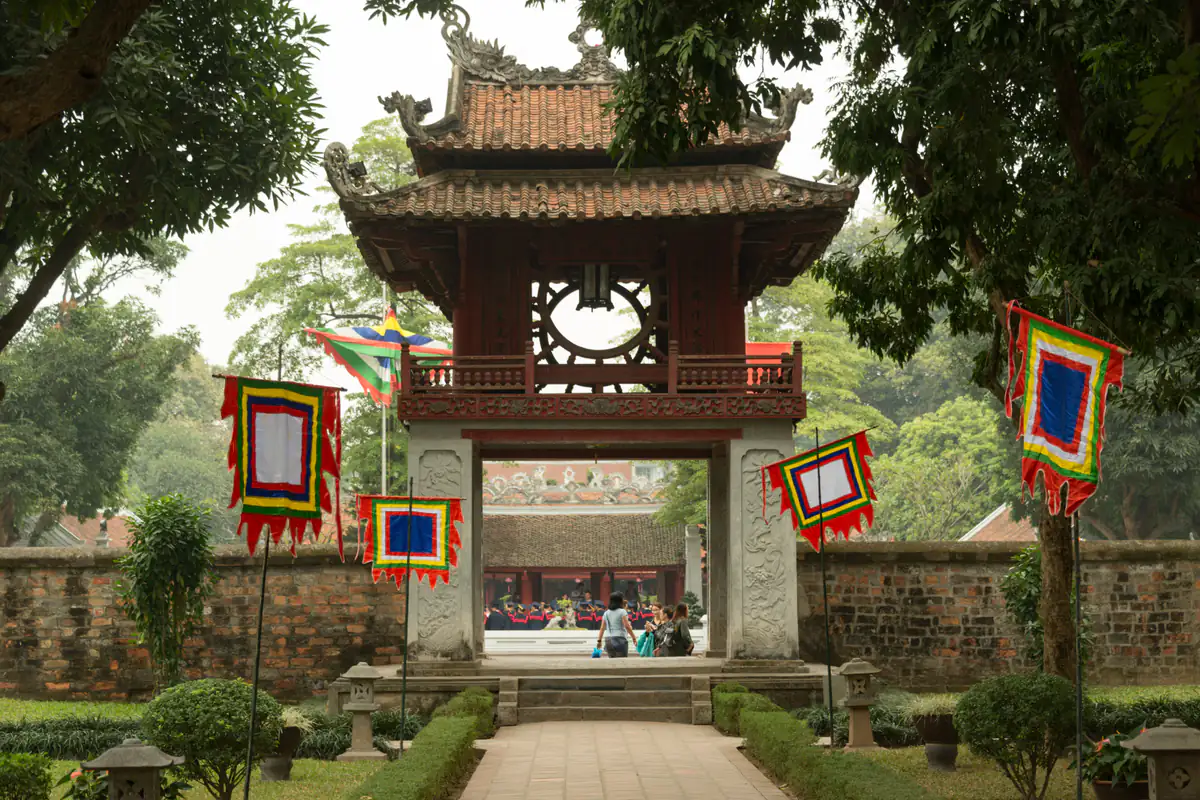
Photo: Xiquinho Silva
- Day 3
Hanoi to Ninh Binh and a Trang An boat tour
There are two practical ways to reach Ninh Binh from Hanoi.
By train: The journey from Hanoi Railway Station to Ninh Binh Railway Station takes approximately 2 hours and 10-15 minutes.
On the November 7, 2026 timetable, train SE5 departs Hanoi at 8:00 AM and arrives in Ninh Binh at 10:13 AM, with fares starting from 167,000 VND. Confirm the schedule and fare for your actual travel date.
By limousine van: This is more convenient if you have large luggage or want to be dropped near your accommodation in Tam Coc or Trang An.
For accommodation, Tam Coc is a good base if you prefer small hotels, homestays, and countryside scenery. Central Ninh Binh is convenient for the railway station, but it's farther from the main scenic attractions. Spend the afternoon exploring Trang An by boat.
A typical boat journey takes around 2.5-3 hours, passing through rivers, limestone mountains, and natural caves. The exact route depends on the operating program. From January 1, 2026, the Trang An adult boat ticket is 300,000 VND, and the child ticket is 150,000 VND for eligible children.
Check the applicable age, height, and concession rules at the ticket counter. Avoid arriving too close to the final boat departure. Confirm the last departure time and allow enough time to complete the full route.

Photo: Jakub Hałun
- Day 4
Climb Hang Mua and explore Tam Coc
You stay in the same hotel today. Visit Hang Mua in the morning, ideally before the strongest heat. The viewpoint requires climbing a steep series of stone steps, so it's better to start early and carry drinking water.
Travelers with knee problems or families with very young children don't need to climb all the way to the top. Return to Tam Coc around lunchtime for a meal and a break.
In the afternoon, rent a bicycle and explore the smaller countryside roads, visit Bich Dong Pagoda, or relax at your homestay overlooking the fields. Trang An and Tam Coc both offer boat rides through limestone scenery. On a short trip, choosing one main boat excursion is usually enough.
Using the other day for cycling, walking, and exploring the villages gives you a more varied experience.

Photo: lumoplank
- Day 5
Ninh Binh to Ha Long Bay, overnight on a cruise
This is the day when advance transport arrangements matter most. From Tam Coc or Ninh Binh to the Ha Long cruise port area, a limousine van generally takes around 3-4.5 hours, depending on pickup and drop-off points.
In 2026, Duy Khanh Limousine fares from Ninh Binh to Ha Long start at approximately 300,000 VND per person. Before booking, confirm exactly where your cruise departs.
Some cruises use Tuan Chau Marina, while others have different check-in locations. A drop-off in central Ha Long City may still leave you some way from your cruise terminal. As one example, the Paradise Elegance 2-day, 1-night cruise program checks in on Tuan Chau Island, with the boat picking up guests and starting the program from around 12:30 PM.
Depending on the scheduled itinerary, activities may include Ti Top Island, Luon Cave, or Sung Sot Cave. In 2026, Paradise Elegance Deluxe accommodation costs approximately 4,380,000 VND per person for the October 1-December 31, 2026 period at a distributor's rate, subject to the package's shared-cabin conditions.
Confirm current prices and exactly which services are included before paying. An overnight cruise is particularly worthwhile if you want to experience the bay in the late afternoon and early morning. If you mainly want a few hours of sightseeing on the water, a day cruise is considerably cheaper.

Photo: Vyacheslav Argenberg
- Day 6
Return from Ha Long Bay to Hanoi
Most 2-day, 1-night cruises finish in the late morning. After disembarking, take a car or limousine back to Hanoi. Allow approximately 2.5-3.5 hours, depending on the departure point and traffic.
Check into a hotel near central Hanoi for your final night. Skip any further long excursion. Spend the afternoon having coffee, shopping for souvenirs in the Old Quarter, or resting after several days of travel.
Staying in Hanoi on the final night has a clear advantage: your departure flight the next day won't depend on a road transfer from Ha Long Bay.
- Day 7
Depart from Noi Bai International Airport
Have breakfast, pack your luggage, and leave for the airport. For an international flight, plan to arrive at the airport approximately 3 hours before departure, allowing additional time to travel from your hotel.
How much does this northern Vietnam itinerary cost?
Estimated 2026 budget per adult, assuming two people share accommodation:
| Expense | Estimated cost per person |
|---|---|
| Hotels in Hanoi and Ninh Binh, 5 nights | 1.5-3 million VND |
| Ha Long Bay overnight cruise | 3.5-4.5 million VND |
| Train, limousine, taxis, and local transfers | 1-1.8 million VND |
| Meals not included in the cruise package | 1.2-2 million VND |
| Attraction tickets and miscellaneous expenses | 0.8-1.5 million VND |
| Estimated total | 8-12.8 million VND |
You can reduce the cost by choosing a cheaper cruise or staying at a hotel on shore instead of aboard a boat. However, the experience will be different.
Central Vietnam in 7 days: Da Nang - Hue - Hoi An
Best for: Travelers who enjoy beaches, architecture, regional food, and scenic train journeys, without spending heavily on domestic flights.
Airport: Arrive at and depart from Da Nang International Airport (DAD).
Overnight plan: Da Nang for 2 nights, Hue for 1 night, and Hoi An for 3 nights.
This route works well because the destinations are relatively close together.
Da Nang and Hoi An are roughly 30-45 kilometers apart, depending on where you're traveling from. The drive generally takes around 45-60 minutes.
- Day 1
Arrive in Da Nang and relax at My Khe Beach
Da Nang International Airport is close to the city center. Depending on traffic, reaching a hotel near My Khe Beach usually takes around 15-30 minutes.
For a first visit, look for accommodation along Vo Nguyen Giap Street or in the An Thuong neighborhood. Both areas have plenty of hotels, restaurants, and convenient beach access. Don't plan a trip to Ba Na Hills on your arrival day.
Check in, go to the beach if conditions are suitable, and have dinner nearby. For a local meal, try Mi Quang Ba Mua. One branch is located at 19-21 Tran Binh Trong Street.
The restaurant serves several versions of mi Quang, including shrimp and pork or chicken. Check the current menu for individual dish prices.
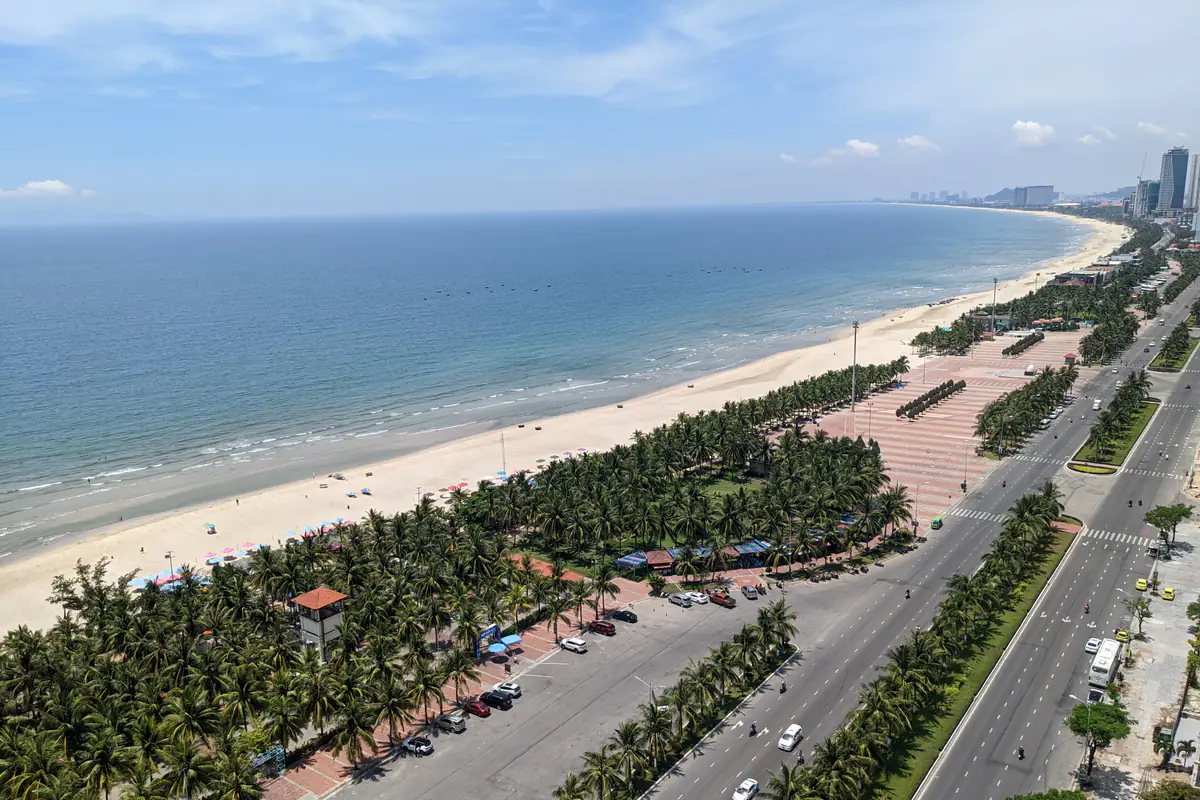
Photo: Jpatokal
- Day 2
Son Tra Peninsula or Marble Mountains
Spend the morning exploring Son Tra Peninsula, visiting Linh Ung Pagoda, and enjoying views over the coastline. Return to your hotel in the afternoon for a break, a swim, or a walk along the Han River.
Alternatively, visit Marble Mountains, where you can explore caves, temples, and viewpoints within the limestone hills. Go early in the morning or later in the afternoon to avoid climbing too many steps in the midday heat.
Don't try to combine Son Tra, Marble Mountains, Ba Na Hills, and Hoi An in one day. They're in different directions, and you'd spend too much of your time inside a vehicle.
- Day 3
The scenic train from Da Nang to Hue
Instead of booking a private car, consider taking the heritage train between Da Nang and Hue. On the November 2026 timetable, train HD2 leaves Da Nang Railway Station at 7:05 AM and arrives at Hue Railway Station at 11:03 AM.
Tickets start at approximately 234,000 VND per person, one way. Fares depend on the date and seat class. This is a train journey worth taking slowly.
The railway follows the coastline around Hai Van Pass, offering views of mountains, the sea, and Lang Co Bay. After arriving in Hue, leave your luggage at the hotel and have lunch.
Spend the afternoon exploring the Imperial City, entering through Ngo Mon Gate and visiting the historical buildings and exhibitions currently open to visitors. If you're interested in Nguyen Dynasty architecture, allow most of the afternoon for the Imperial City rather than attempting several royal tombs in a hurry.
In the evening, try bun bo Hue, com hen, or take a walk along the Perfume River.

Photo: Vyacheslav Argenberg
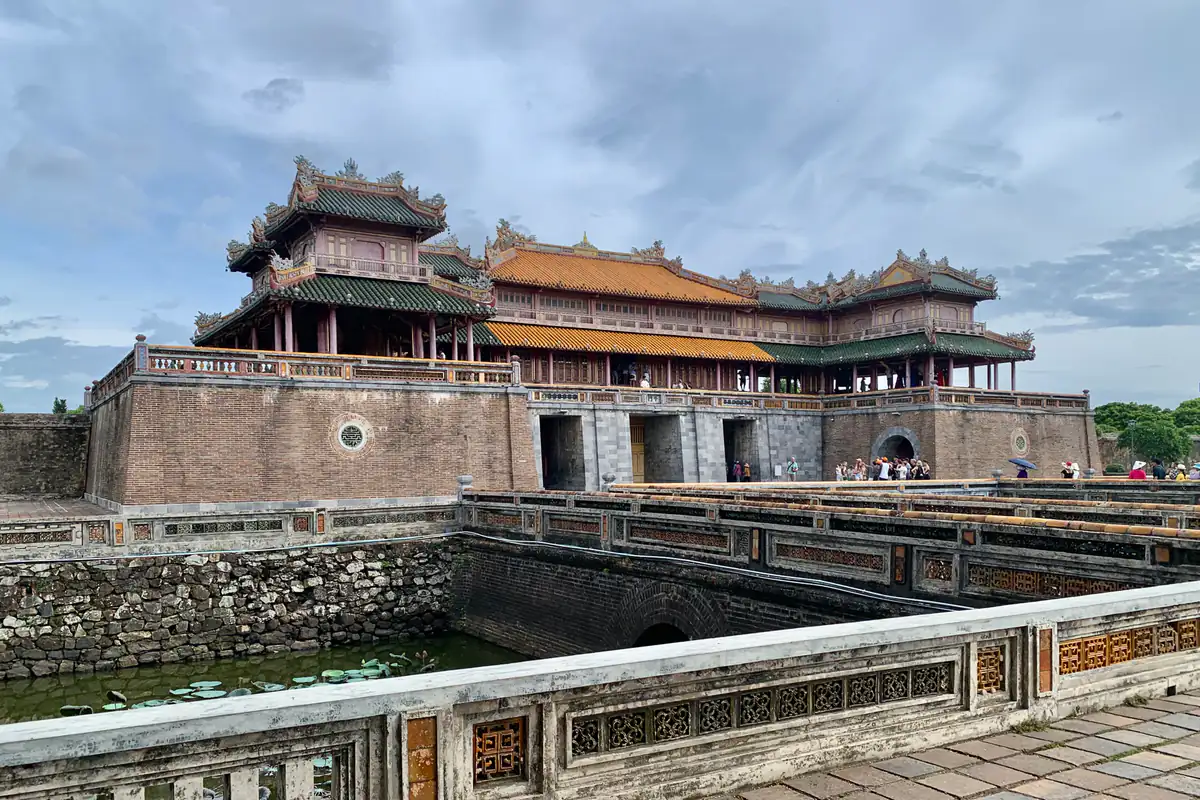
Photo: Chainwit.
- Day 4
Hue back to Da Nang, then on to Hoi An
Spend the morning visiting Thien Mu Pagoda or another attraction in Hue that you didn't have time for the previous day. After lunch, return to Hue Railway Station.
On the November 2026 timetable, HD3 departs Hue at 2:30 PM and arrives in Da Nang at 6:15 PM. From Da Nang Railway Station, take a car to Hoi An. The road transfer typically takes another 45-60 minutes.
You'll arrive in Hoi An in the evening, check into your accommodation, and have dinner near the Old Town. Avoid scheduling a major sightseeing activity tonight. You've already spent much of the day traveling.
- Day 5
Hoi An Ancient Town on foot
Dedicate your first full day in Hoi An to the Ancient Town. Start with a walk around the Japanese Covered Bridge, Tran Phu Street, Nguyen Thai Hoc Street, and the traditional assembly halls and historical houses open to visitors. In 2026, Hoi An Ancient Town has two sightseeing ticket prices:
- 80,000 VND: An Ancient Town sightseeing package covering selected heritage sites under the applicable ticket.
- 120,000 VND: A wider sightseeing package including additional museums and cultural buildings from the available selection.
These are sightseeing packages distinguished by what they cover. Don't assume the 80,000 VND ticket is exclusively for Vietnamese visitors and the 120,000 VND ticket exclusively for international visitors.
From August 10, 2026, Da Nang city applies a fee of 20,000 VND per person per building at cultural sites in the Hoi An old town; the package tickets and the per-building fee haven't been reconciled, so check the ticket policy displayed at the counter when you visit.
For lunch, try Com Ga Ba Buoi at 22 Phan Chau Trinh Street. This restaurant specializes in Hoi An-style chicken rice. In 2026, a standard serving costs about 35,000-45,000 VND, depending on the order and date.
Take a break during the hottest part of the afternoon. Around 4:30-5:00 PM, return to the Ancient Town to enjoy the lantern-lit streets, browse small shops, and have dinner.
Hoi An is best appreciated when you have enough time to wander through its streets, rather than rushing between dozens of photo spots.
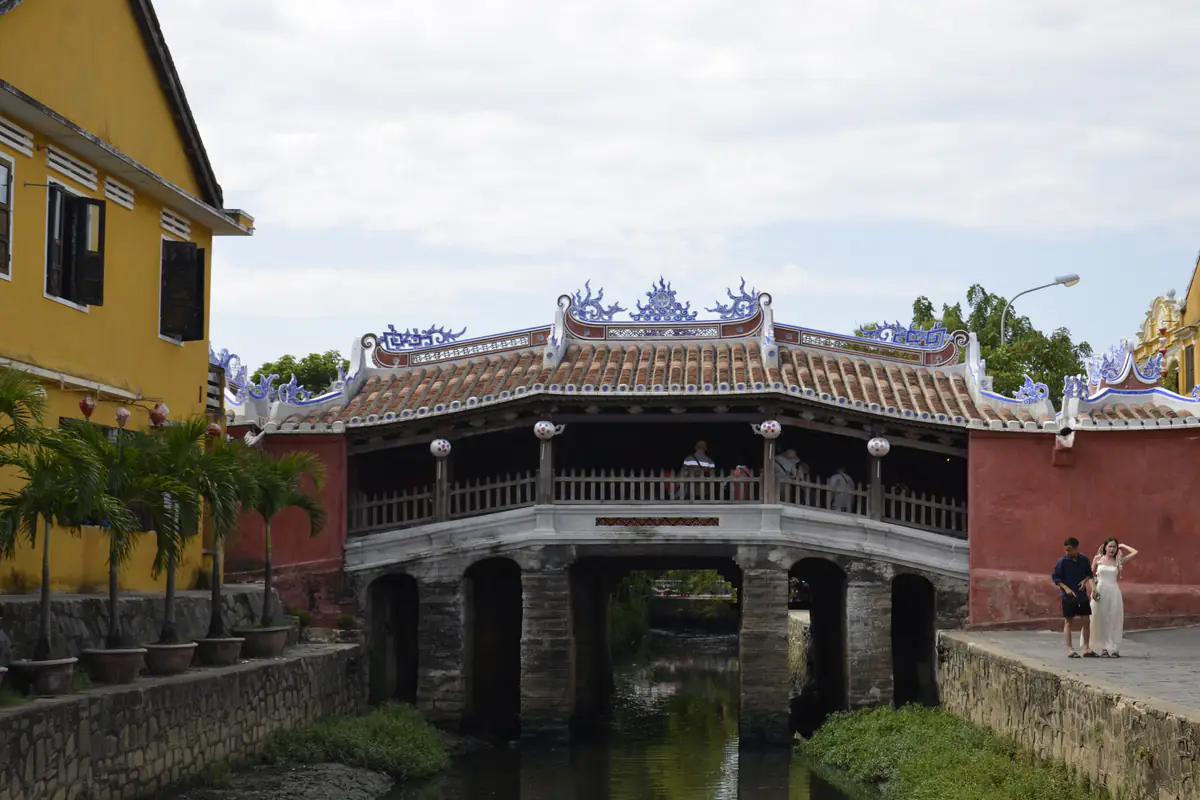
Photo: YukioSanjo
- Day 6
Tra Que Vegetable Village and An Bang Beach
In the morning, consider renting a bicycle and riding through Tra Que Vegetable Village. It's an easy way to explore the countryside outside the Ancient Town, with vegetable gardens, village lanes, and residential neighborhoods.
Afterward, continue to An Bang Beach, a short drive from central Hoi An. If you're looking for a relaxing holiday, spend most of the day by the beach.
For families with young children, a taxi or prearranged car is more comfortable than bicycles, especially in hot weather. Have dinner close to your accommodation and prepare your luggage for the following day's flight.

Photo: Christophe95
- Day 7
Hoi An to Da Nang Airport
Arrange a car from your accommodation to Da Nang International Airport. Allow approximately 45-60 minutes for the drive under normal conditions, with extra time during busy periods.
Don't schedule a Cham Islands excursion on your departure day. Island tours depend on weather, boat schedules, and fixed meeting times. A delayed return could interfere with your flight.
How much does this central Vietnam itinerary cost?
Estimated 2026 budget per adult, assuming two people share accommodation:
| Expense | Estimated cost per person |
|---|---|
| Hotels for 6 nights | 1.5-3 million VND |
| Return Hue-Da Nang train tickets and road transfers | 0.8-1.3 million VND |
| Food and drinks | 1.2-2 million VND |
| Attraction tickets and activities | 0.5-1 million VND |
| Local transport and miscellaneous expenses | 0.5-0.7 million VND |
| Estimated total | 4.5-8 million VND |
This budget doesn't include Ba Na Hills or other major entertainment attractions that you may decide to add.
Traveling with young children? Adjust the route
With children under six, skip the night in Hue. A simpler alternative is 3 nights in Da Nang and 3 nights in Hoi An.
Hue can become an optional day trip if your family feels comfortable with the journey, or you can skip it entirely and enjoy more beach time. The biggest benefit isn't saving money. You'll only need to change hotels once, carry luggage less often, and avoid taking trains on consecutive days.
During summer, schedule outdoor sightseeing before 10:00 AM or after 4:00 PM. Let children rest in an air-conditioned room around midday.
Southern Vietnam in 7 days: Ho Chi Minh City - Can Tho - Phu Quoc
Best for: Travelers arriving in Ho Chi Minh City who enjoy urban food culture, Mekong Delta river life, and ending their trip with a few days on a tropical island.
Airport: Arrive at Tan Son Nhat International Airport (SGN) and depart from Phu Quoc International Airport (PQC), or connect through Ho Chi Minh City.
Overnight plan: Ho Chi Minh City for 2 nights, Can Tho for 1 night, and Phu Quoc for 3 nights.
Pay particular attention to your return flight when booking this itinerary.
The route ends in Phu Quoc, with Ho Chi Minh City at the start.
- Day 1
Arrive in Ho Chi Minh City and explore the center
After landing at Tan Son Nhat International Airport, travel to your hotel in the city center. Choose accommodation around Ben Thanh Market or the central streets if you want to walk to restaurants and use ride-hailing services easily.
Start with the Saigon Central Post Office, Nguyen Van Binh Book Street, and nearby central landmarks. For dinner, try com tam, hu tieu, or banh xeo.
One well-known place for broken rice is Com Tam Ba Ghien at 84 Dang Van Ngu Street. The restaurant is in the Michelin Guide and is especially known for its grilled pork chop with broken rice. In 2026, a plate costs approximately 75,000-150,000 VND, depending on the portion.
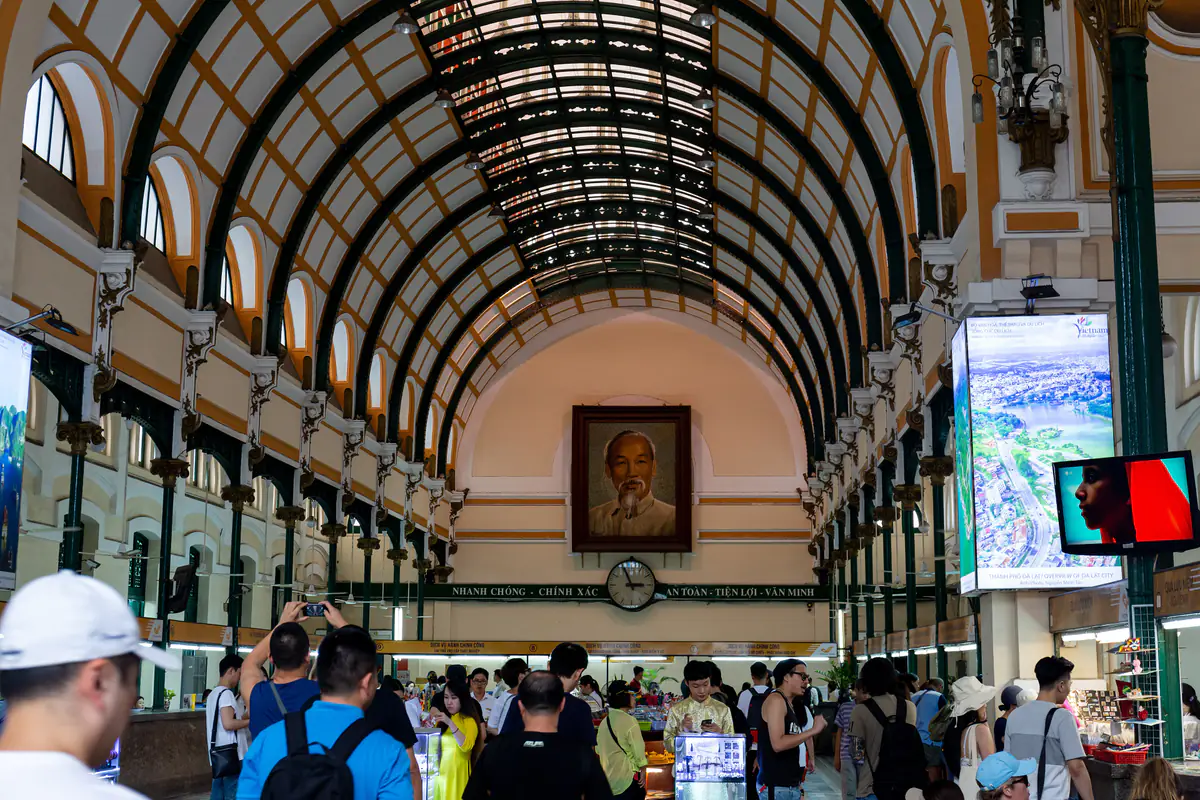
Photo: Balon Greyjoy
- Day 2
Ho Chi Minh City before the Mekong Delta
Visit the War Remnants Museum at 28 Vo Van Tan Street in the morning. From October 1, 2026, the museum opens 7:30 AM-5:30 PM daily, with ticket sales ending at 5:00 PM.
The general admission price is 60,000 VND per person, with exemptions or discounts available to eligible visitors. Some exhibitions contain disturbing images and artifacts relating to the Vietnam War. Families with young children should review the exhibition themes before deciding whether to visit.
In the afternoon, explore Ben Thanh Market, stop at a cafe, and return to your hotel. Don't try to squeeze the Cu Chi Tunnels into the same day.
Traveling from central Ho Chi Minh City to Cu Chi and back takes a substantial amount of time. You would have to shorten or remove most of your city sightseeing.

Photo: Diego Delso
- Day 3
Ho Chi Minh City to Can Tho
Take a morning bus to Can Tho. Several bus companies operate the Ho Chi Minh City-Can Tho route, including Phuong Trang, also known as FUTA Bus Lines.
In 2026, Phuong Trang sleeper-limousine services from Mien Tay Bus Station have some ticket types priced around 195,000 VND per person. The journey to the Can Tho bus terminal usually takes approximately 3-4 hours, depending on the service and traffic.
Book a morning departure so you can arrive before lunch. In Can Tho, choose a hotel near Ninh Kieu Wharf. This is a convenient location for evening riverside walks and arranging a boat to Cai Rang Floating Market early the next morning.
If time allows, visit Binh Thuy Ancient House in the afternoon. Otherwise, relax at your hotel and head to the riverfront when the weather cools.
Have dinner around Ninh Kieu Wharf and avoid staying out too late. You'll need an early start on Day 4.
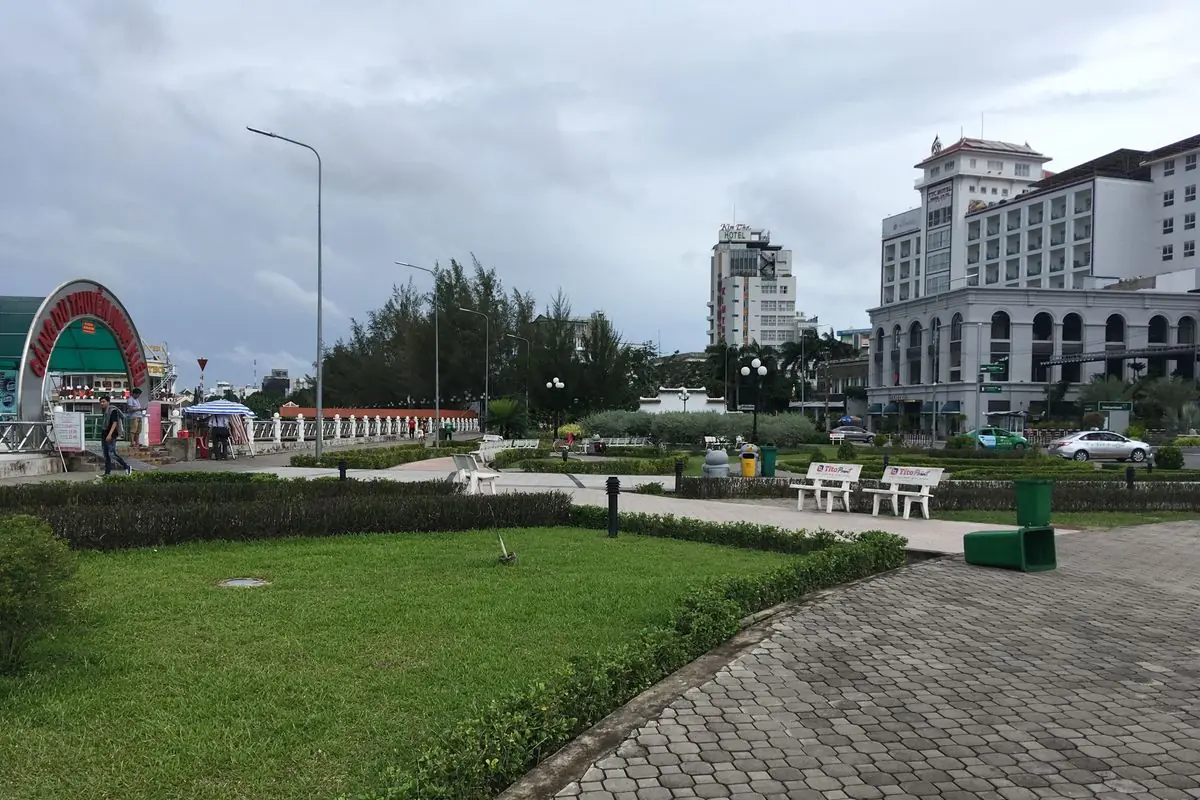
Photo: Christophe95
- Day 4
Cai Rang Floating Market, Rach Gia, Phu Quoc
This is the longest travel day of the southern itinerary. Visit Cai Rang Floating Market between approximately 5:00 AM and 7:00 AM.
The early morning is the time for observing river activities. A boat from Ninh Kieu Wharf typically takes around 30 minutes to reach the market. Arrange a short visit and explain to the boat operator that you need to return early for onward transport.
After returning to your hotel, collect your luggage and travel toward Rach Gia. In 2026, Vu Linh Limousine runs morning services from Can Tho to Rach Gia, including an 8:00 AM departure, with fares starting around 180,000 VND per person (reference schedule, changes by date).
These services generally drop passengers at Rach Soi Bus Station. You'll still need a taxi to Rach Gia Port, where the ferry departs. Confirm the total transfer time before booking.
Phu Quoc Express runs Rach Gia-Phu Quoc departures at 7:00 AM, 10:20 AM, and 1:00 PM (reference schedule, changes by date). The 2026 adult ECO fare is 315,000 VND one way.
If you visit the floating market in the morning, the 1:00 PM ferry may be a practical option. However, you must reach the port before the required check-in time and allow for possible road delays. The high-speed ferry journey takes approximately 2.5 hours and arrives at Bai Vong Port on Phu Quoc Island.
From there, continue by car to your hotel. Families with young children or substantial luggage may prefer to book a private car from Can Tho to Rach Gia Port immediately after the floating market tour. It costs more, but you control the pickup location and reduce the number of transfers.
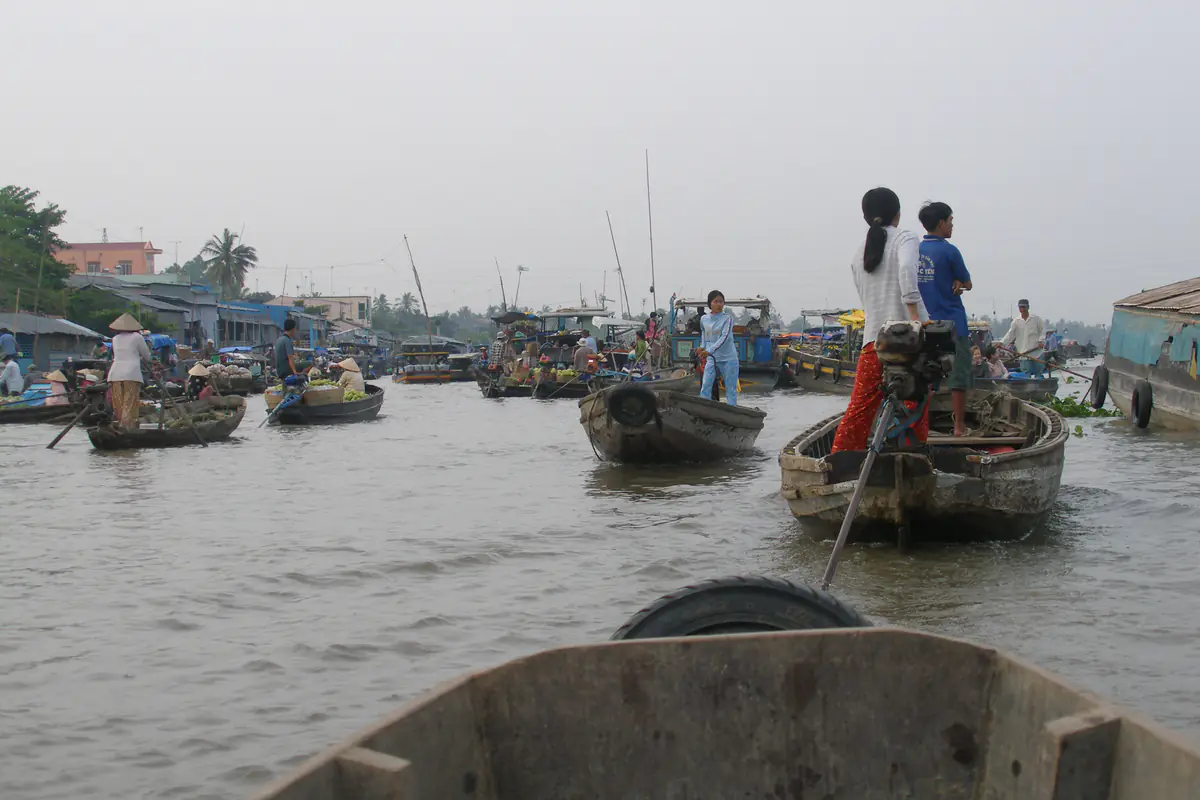
Photo: Vyacheslav Argenberg
- Day 5
Relax on Phu Quoc Island
Keep this day free for relaxation. For convenience, choose accommodation around Duong Dong or along Long Beach (Bai Truong). These areas offer plenty of dining options and relatively easy access to different parts of the island.
Families looking for resort facilities, swimming pools, and entertainment in one area may prefer northern Phu Quoc. However, remember to account for travel time to the airport and attractions in the southern part of the island.
Spend the morning at the beach and relax at your hotel during the afternoon. Save any four-island tour for later, after a long day involving a bus and ferry.
For a local meal in Duong Dong, try Bun Quay Kien Xay at 28 Bach Dang Street. Bun quay is made with fresh rice noodles, seafood or fish paste, hot broth, and a dipping sauce you can mix yourself.
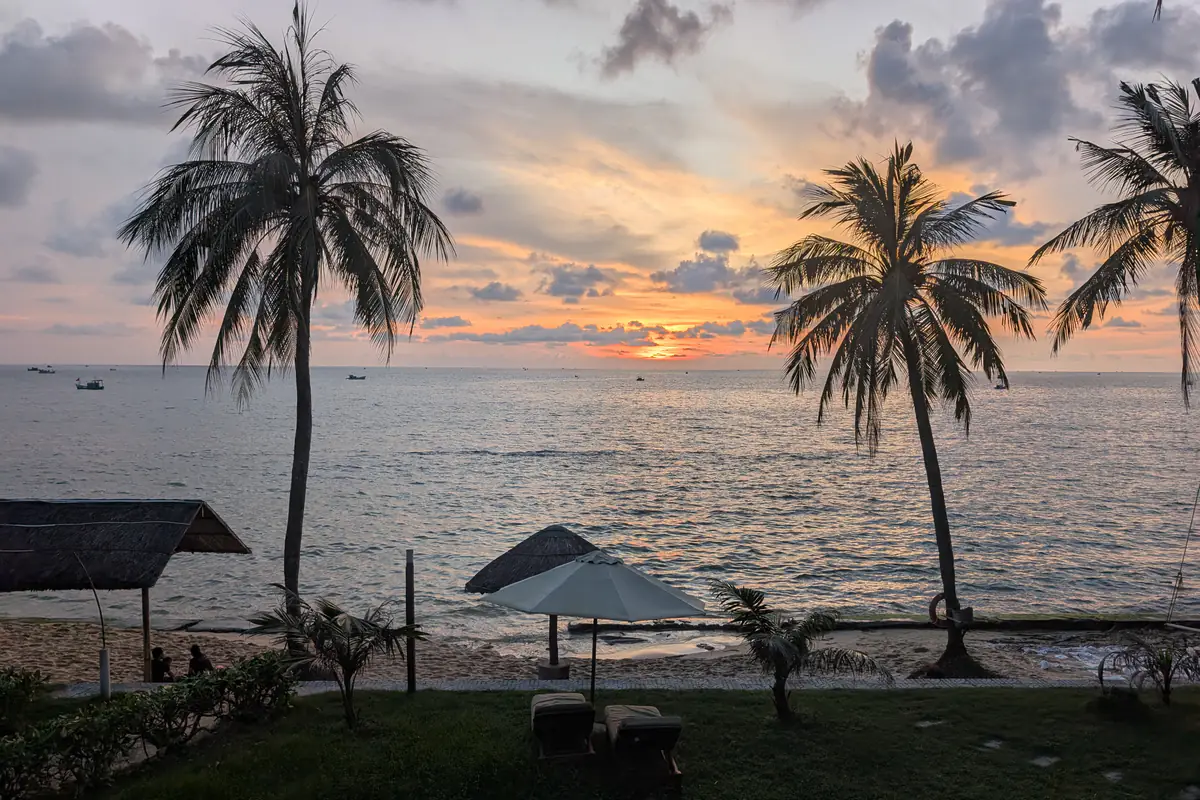
Photo: Elmschrat
- Day 6
One major activity on Phu Quoc
There are two good ways to spend this day.
Option 1: Take an island excursion.
Spend much of the day on a boat trip, snorkeling excursion, or visiting beaches, depending on sea conditions. Before booking, ask which islands are included, how long you'll spend on the boat, whether life jackets are provided, and what the tour price covers.
Option 2: Visit a theme park.
VinWonders Phu Quoc is a reasonable choice for families with children who enjoy theme parks and organized attractions. In 2026, admission to VinWonders Phu Quoc costs 1,050,000 VND for visitors measuring 140 cm or taller. Admission for children measuring 100 cm to under 140 cm, and eligible visitors aged 60 or above under the relevant policy, is 800,000 VND.
Combined tickets with Vinpearl Safari have different prices. A pure beach holiday can skip both options and spend the day at the resort. Not every day on Phu Quoc needs a paid tour.

Photo: lol1VNIO
- Day 7
Fly home from Phu Quoc
Phu Quoc has domestic flights to Ho Chi Minh City. The Vietnam Airlines flight between Phu Quoc and Ho Chi Minh City takes approximately 60 minutes.
You can fly from Phu Quoc and connect to an international departure at Tan Son Nhat Airport, but the connection time needs careful planning. If you purchase the two flights on separate tickets, leave a substantial buffer. Depending on baggage, terminals, and airline requirements, consider at least 4-6 hours or follow the connection rules for your actual booking.
You may need to collect checked luggage, change terminals, and check in again. If your international flight leaves Ho Chi Minh City early in the morning or around midday, don't rely on flying back from Phu Quoc that same morning. A safer option is to adjust your itinerary and spend the final night in Ho Chi Minh City instead.
How much does this southern Vietnam itinerary cost?
Estimated 2026 budget per adult, assuming two people share accommodation:
| Expense | Estimated cost per person |
|---|---|
| Hotels for 6 nights | 2-3.8 million VND |
| Buses, ferry tickets, and taxis | 1.1-1.8 million VND |
| Allowance for Phu Quoc-Ho Chi Minh City flight | 1-2 million VND |
| Food and drinks | 1.2-2 million VND |
| Attractions, activities, and miscellaneous expenses | 0.7-2 million VND |
| Estimated total | 6-11.6 million VND |
The flight allowance is a planning estimate; actual airfares change by date. If you choose a luxury resort, private island tours, or several ticketed entertainment attractions, your actual spending can exceed this budget considerably.
Can you visit both northern and southern Vietnam in 7 days?
Yes, but only if you're comfortable taking a domestic flight and reducing the number of destinations. For example, you could spend three nights in Hanoi and three nights in Ho Chi Minh City, flying between the two cities around the middle of your trip.
This allows you to experience two very different urban environments. An international flight into Hanoi with a departure from Ho Chi Minh City makes it especially practical.
The trade-off is that you'll have limited time for Ninh Binh, Ha Long Bay, the Mekong Delta, and other places outside the cities. A north-to-south itinerary may suit travelers who primarily want to experience Vietnamese food, city culture, and history.
If you prefer landscapes, boat trips, beaches, and having time to explore individual destinations properly, choose one of the three regional itineraries instead. Trying to combine Hanoi, Ha Long Bay, Da Nang, Hoi An, Ho Chi Minh City, and Phu Quoc in a single week is not recommended.
It involves too many transfers and leaves too little time at each destination.
How much does a 7-day trip to Vietnam really cost?
The budgets above provide a starting point for each route. To calculate costs more accurately for your own trip, separate the expenses you'll actually pay.
Accommodation
Budget for six nights
For a 7-day, 6-night itinerary, budget for six nights of accommodation unless you're deliberately spending a night on a train, plane, or another form of overnight transport. Two travelers sharing one double room usually spend less per person than someone traveling alone. Families of four should check maximum room occupancy, extra-bed charges, and family-room prices rather than assuming a standard double room is suitable.
Transport between destinations
One of the easiest costs to underestimate
This is one of the easiest costs to underestimate. A train ticket from Hanoi to Ninh Binh doesn't include the taxi from Ninh Binh Railway Station to Tam Coc.
A limousine ticket to Ha Long City doesn't necessarily take you to your cruise check-in point. Likewise, a bus ticket from Can Tho to Rach Gia may leave you at a bus terminal rather than the ferry port.
For every travel leg, include three separate parts: transport from your hotel to the departure point, the main journey, and transport from the arrival point to your next hotel.
Food and drinks
About 200,000-350,000 VND a day
For travelers eating at local restaurants and casual dining places, a daily allowance of around 200,000-350,000 VND can be a useful starting point. This is a personal budgeting allowance; actual prices vary by restaurant.
Meals at resorts or isolated tourist areas can cost considerably more. On a Ha Long Bay cruise, check which meals are included in your package so you don't budget for them twice.
Attraction tickets and tours
One major paid activity every two days
The three routes have very different sightseeing costs. Northern Vietnam includes a relatively expensive overnight cruise.
Central Vietnam has many walkable neighborhoods, beaches, and historical attractions with more moderate admission costs. Southern Vietnam can become significantly more expensive if you add island tours, large theme parks, or luxury resort activities.
A sensible approach is to select no more than one major paid activity every two days, then decide whether you really need anything else.
Emergency and miscellaneous budget
10-15% of your budget
Keep approximately 10-15% of your estimated trip budget separate for taxis, baggage fees, schedule changes, additional meals, and unexpected expenses. Don't spend your entire contingency fund on upgrading hotels. Routes involving ferries or connecting flights particularly benefit from having some flexibility.
What should first-time international visitors prepare?
Even a one-week trip to Vietnam requires a little preparation. Start by checking Vietnam's entry requirements for your nationality and passport type.
Visa exemptions and electronic visa eligibility are not the same for every traveler. If you need an e-visa, verify the permitted entry point, visa validity, and passport details before departure.
A local SIM card or eSIM with mobile data makes it easier to arrange transport, locate hotels, and contact bus companies. You generally don't need several separate data plans if one package covers your week.
Save important destination names in Vietnamese, particularly transport terminals that can easily be confused. Examples include Mien Tay Bus Station, Can Tho Bus Station, Rach Soi Bus Station, Rach Gia Port, and Bai Vong Port.
In larger cities, licensed taxis and ride-hailing services are practical for travelers unfamiliar with Vietnamese traffic. Only consider renting a motorbike if you have a driving license legally recognized in Vietnam for the relevant vehicle, understand the insurance requirements, and have suitable riding experience. Another practical detail is payment.
What should you book before your one-week Vietnam trip?
Most attraction tickets can wait, but some arrangements should be confirmed before departure.
Arrival and departure flights: Choose airports that match your route. Avoid booking a return international ticket from Ho Chi Minh City before deciding to finish your holiday in Phu Quoc without allowing for the extra flight.
Accommodation: Book at least your first and final nights in advance. During public holidays, Tet, or the summer holiday season, booking the entire trip earlier is advisable.
Ha Long Bay overnight cruise: Reserve your cabin, confirm the exact check-in terminal and meeting time, and review which meals and activities are included. Don't purchase transport from Ninh Binh to Ha Long until you know where your cruise departs.
Da Nang-Hue train: Select your travel date and verify the actual train number and available seats. Heritage trains run to fixed schedules, so hotel check-in and luggage arrangements should be planned around them.
Rach Gia-Phu Quoc ferry: Check sea conditions, sailing schedules, required check-in times, and cancellation policies. Avoid booking a bus that reaches the port only shortly before the ferry departure.
Across the seven days, leave at least one half-day free or easy to rearrange. First-time visitors often underestimate the time spent checking in, dealing with traffic, resting between activities, and moving luggage between hotels.
Common mistakes when planning 7 days in Vietnam
Changing hotels every night
Visiting three destinations in a week is already quite a full itinerary. Changing accommodation every night adds repeated packing, check-in, and check-out time, especially when you're traveling with large suitcases. Only change hotels when it substantially reduces travel time or provides a worthwhile experience, such as spending the night aboard a Ha Long Bay cruise.
Choosing a route that doesn't match the season
Booking Hoi An during a period of serious flooding simply because you found cheap flights isn't a sensible decision. Similarly, island tours in Phu Quoc can be disrupted by strong winds and rough seas.
Booking too many full-day tours
A week isn't long enough to take full-day tours every single day and still have time to get to know the places you're visiting. In Ninh Binh, one boat tour a day is plenty, even if you want both Trang An and Tam Coc.
In Phu Quoc, two consecutive island tours may feel repetitive. In Da Nang, a full day at Ba Na Hills can replace another sightseeing day, but it shouldn't simply be squeezed into an already packed schedule.
Scheduling long transfers on departure day
This is one of the most consequential itinerary mistakes. If you're traveling in northern Vietnam, spend your final night in Hanoi.
For central Vietnam, stay in Hoi An or Da Nang, close enough to make the airport transfer manageable. If you're finishing in Phu Quoc but flying internationally from Ho Chi Minh City, pay particular attention to the timing of your connection.
A final day consisting only of breakfast and a trip to the airport is still a well-planned day.
Final thoughts: which 7-day Vietnam route should you choose?
For your first trip to Vietnam, choose Hanoi - Ninh Binh - Ha Long Bay if you want dramatic scenery and cultural sightseeing. Families with young children, or travelers who prefer fewer transfers, will generally find Da Nang and Hoi An easier. If you're arriving in Ho Chi Minh City during the dry season and want a mix of river life and tropical beaches, choose Can Tho and Phu Quoc. Spending a full week exploring two or three places properly is more rewarding than rushing through all three regions.
FAQ
Where should I go in Vietnam for 7 days on my first visit?
Choose Hanoi - Ninh Binh - Ha Long Bay if you want a combination of Vietnamese culture, local food, and northern landscapes. Da Nang - Hue - Hoi An is a good alternative if you prefer beaches, historic towns, and shorter road transfers. For a first visit, focusing on one region makes the week more enjoyable.
Can I visit both northern and southern Vietnam in one week?
Yes. You can spend approximately three nights in Hanoi and three nights in Ho Chi Minh City, traveling between them by plane. However, you'll have limited time for attractions outside the cities. Visiting all three regions in seven days is not recommended for travelers who prefer a relaxed pace.
What's the best 7-day Vietnam itinerary starting from Ho Chi Minh City?
Spend two nights in Ho Chi Minh City, one night in Can Tho, and three nights in Phu Quoc. Travel from Ho Chi Minh City to Can Tho by bus, continue to Rach Gia by road, and take the high-speed ferry to Phu Quoc. Return home from Phu Quoc or connect through Ho Chi Minh City.
Which Vietnam itinerary is best for families with young children?
Da Nang and Hoi An are generally the most convenient combination. Spend three nights in each destination to minimize hotel changes and long travel days. You can skip Hue, enjoy the beaches, and schedule sightseeing around children's rest periods.
How much does a 7-day Vietnam trip cost?
For two adults sharing a room, a reasonable 2026 planning budget is approximately 4.5-8 million VND per person for central Vietnam, 8-12.8 million VND for northern Vietnam with an upscale overnight cruise, and 6-11.6 million VND for southern Vietnam including Phu Quoc. These estimates exclude flights from your original departure city, visas, and personal purchases.
Related posts
Guides
2-week Vietnam itinerary: north to south is the easier way to travel
A practical 14-day Vietnam route with daily stops, overnight stays, and transport options.
Places
What to do in Saigon in 2 days without wasting time in traffic?
A practical 2-day Saigon itinerary with attractions, ticket prices, evening activities, and routes that avoid unnecessary travel.
Guides
Phu Quoc 3 days 2 nights: 2 itineraries by area
Two practical Phu Quoc itineraries for couples and families, with costs, hotel tips, and rainy-day alternatives.