Is tap water safe in Vietnam? No, choose sealed or properly boiled water
Do not drink untreated tap water in Vietnam, even in major cities. Choose factory-sealed bottled water or water that has been boiled and stored safely, and take a little more care with ice, raw vegetables and seafood.
Written by Tụi mình mê biểnUpdated
A hotel bathroom tap and a sealed bottle of water might look equally convenient after a long flight. They are not equally good choices for drinking: open the factory-sealed bottle, or use water you have treated correctly. This advice applies in Nha Trang, Hanoi, Ho Chi Minh City and other major destinations, not only in remote villages.
The short answer: treat tap water as non-potable
For travelers, Vietnamese tap water should not be consumed straight from the tap. Municipal water may undergo treatment before it reaches a neighborhood, but that does not establish the quality of water after it has passed through a particular building's pipes, storage tanks and fixtures. You cannot judge microbiological safety from the fact that water looks clear or has no unusual smell.
The cautious rule for visitors is simple: do not drink tap water, including in large cities. It is a destination-wide precaution for visitors, whatever the state of a given water supply on a given day. A resident may have a trusted, maintained treatment setup at home; a guest staying two nights in an unfamiliar room usually cannot verify one.
Do not assume a modern-looking accommodation is an exception. A room with a bathtub, good reviews and a coffee machine could still have taps supplied by ordinary non-potable water. An apartment or hotel that provides filtered drinking water should be able to tell you which outlet supplies it and whether the system is regularly maintained. A vague answer means buying sealed water instead.
What water is safe to drink in Vietnam?
Sealed bottled water is the easiest default
Intact factory seal, sold in supermarkets and convenience stores
For a short holiday, commercially bottled water with an intact factory seal is the simplest solution. You will find bottles in supermarkets, convenience stores, small neighborhood shops and many hotels. Check the cap and tamper-evident ring before taking a sip. A bottle presented already open is not a good substitute, however clean the glass may be.
A small bottle fits easily into a day bag when walking along Tran Phu Street in Nha Trang or visiting the Po Nagar Cham Towers. A larger bottle is useful for topping up your own drinking cup in your hotel room, provided you keep the cup and bottle opening clean. Avoid sharing bottles when somebody in your group is already ill, and do not leave an opened bottle somewhere that hands, dust or other objects can touch the rim.
Buy whatever reputable brand is on the shelf; no one specific label matters. Reputable retail outlets, clear labeling and an undisturbed seal are more useful checks than marketing claims about spring water or minerals. Large refillable water dispensers in hotels raise their own questions: look at the dispenser nozzle and the way its containers are cleaned, not just the brand label on the container.
Sealed canned drinks and commercially packaged beverages are also practical options. Clean a dirty can top before drinking directly from it. Drinks served in an open glass introduce additional questions: was the glass clean, where did the water come from, and was ice added after preparation?
Boiled water can be safe, but the details matter
One minute at a rolling boil, three minutes above about 2,000 m
Properly boiled water is a reasonable alternative in an apartment or guesthouse with cooking facilities. Bring clear water to a full rolling boil for one minute. Above approximately 2,000 meters (6,500 feet), keep it boiling for three minutes. Let it cool, then transfer it to a clean, covered container. This kills common disease-causing microorganisms.
A kettle that briefly heats water until tiny bubbles appear has not necessarily met that recommendation. An electric kettle that switches off at boiling may not maintain a full minute of boiling. When precise treatment matters, a pot that lets you keep water at a rolling boil for the recommended time is easier to use. Factory-sealed water that is already known to be safe does not need boiling again.
The second half of the process happens after boiling. A clean pot of water can become contaminated again through an unwashed storage bottle, a shared dipper, an uncovered jug or dirty hands. Let water cool with a lid on. Wash containers regularly, including screw caps, seals and hard-to-reach drinking spouts.
Boiling has an important limit: it does not remove salt, heavy metals or many chemical contaminants. If the water smells like fuel, is unusually discolored, has been affected by flooding, or may contain chemicals, do not try to solve the problem by boiling it longer. Switch to sealed bottled water instead.
What about hotel filters and refill stations?
Ask about filtration, disinfection and servicing
A pitcher filter, refrigerator filter or charcoal cartridge may fall short of a complete water-purification system. Different devices address different contaminants, and the quality of treatment depends on proper maintenance. For travelers, it is reasonable to ask the hotel whether its drinking-water outlet has an appropriate filtration and disinfection process and how often it is serviced.
Freshly boiled water used to make hot tea or coffee is generally a safer choice than lukewarm water poured from an unknown jug. Watch the serving temperature: a drink described as 'hot tea' may have been brewed earlier and left at room temperature. You can let a freshly prepared hot drink cool yourself, but cooling does not make an unsafe drink safe after it has already been contaminated.
The same caution applies to water used in baby formula and food preparation. Families with infants should follow their clinician's formula-preparation guidance and use water they know is safe. When there is uncertainty, ready-to-feed formula may reduce preparation risks.
1 minute
at a full rolling boil
3 minutes
above about 2,000 meters
115
Vietnam's ambulance number
Is ice in drinks safe in Vietnam?
Some ice is produced from treated drinking water; some has an unknown source. There is no reliable way to tell which is which by looking at a few cubes in a glass. Hollow, machine-made-looking ice is sometimes taken as a sign of commercial production, but its shape does not confirm the original water quality, hygienic transport or clean handling behind a café counter.
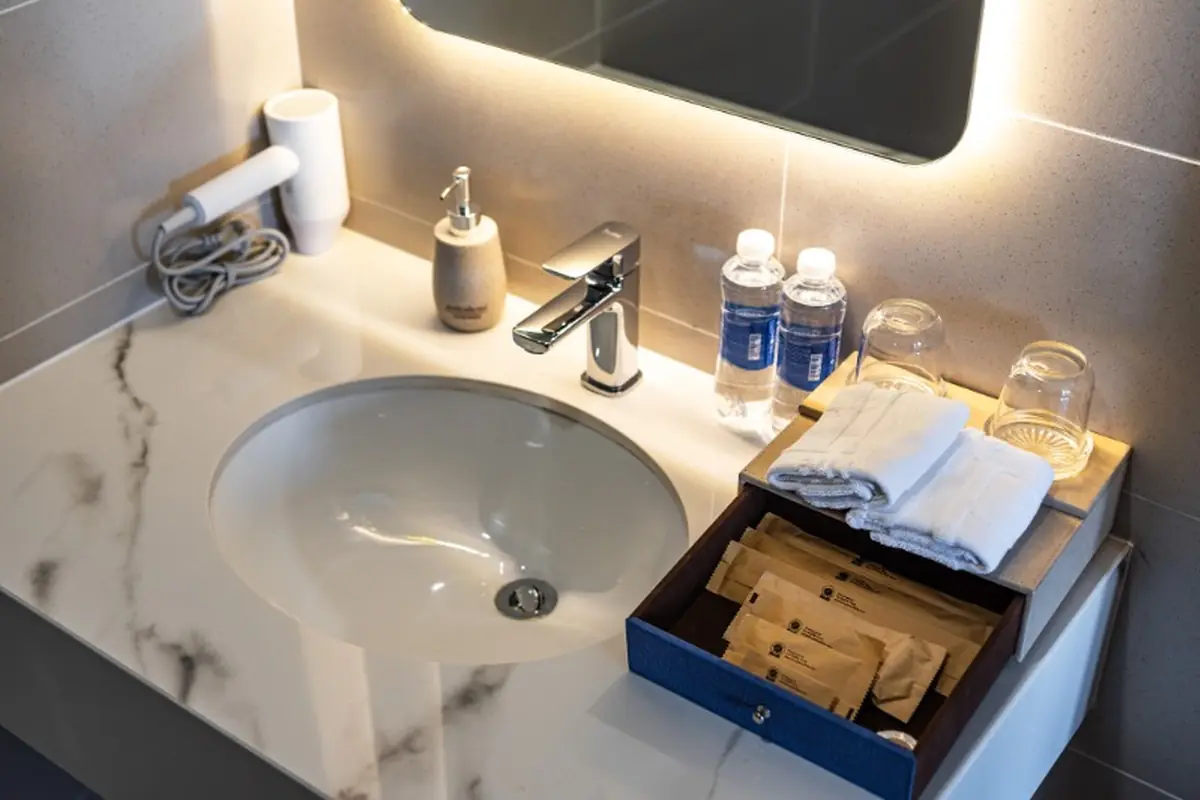
Photo: The Up Phu Quoc Hotel
The easiest choice for a first-time visitor is to ask for a drink without ice. You can say “Không đá, cảm ơn” (“No ice, thank you”). A factory-sealed cold bottle, a freshly opened can, or freshly brewed hot tea or coffee avoids much of the uncertainty. An iced Vietnamese coffee is worth ordering where the café uses ice manufactured for drinking, stores it in a covered bin and handles it with a clean scoop, so ask before you order.
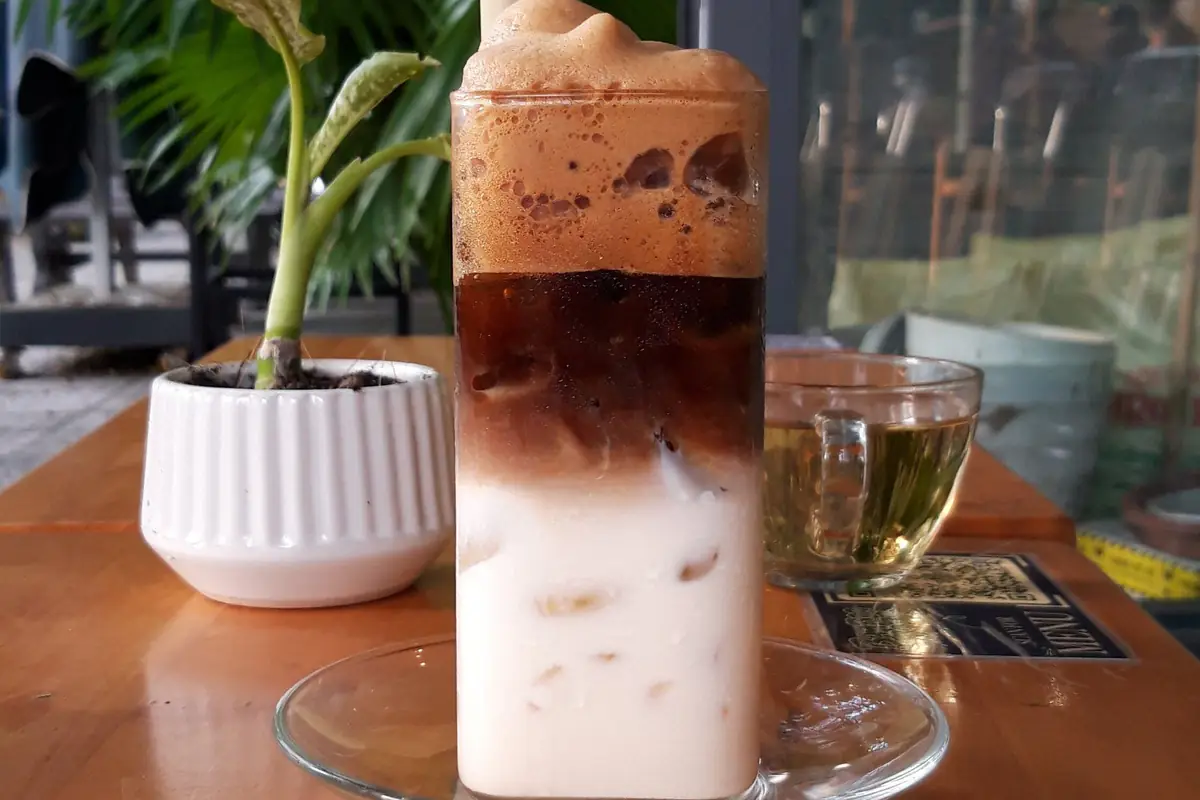
Photo: Klientos
Consider the whole drink, not just its ice. Fresh sugarcane juice may pass through a machine that needs thorough cleaning. A smoothie may combine ice, washed fruit, milk and a blender jar used repeatedly during a busy shift. Fresh fruit juice can also be contaminated while being cut, squeezed or stored. A small street stall can handle all of this well; a stylish café can handle it poorly. From the customer's side, uncertainty is the problem.
There is a useful distinction between a sealed bottle kept cool in a bucket of ice and loose ice dropped directly into your drink. In the first case, the ice is outside the container. In the second, it becomes an ingredient. Removing ice after it has begun melting will not remove any contamination already mixed into the beverage.
For children, pregnant travelers, older visitors and anyone with a weakened immune system, skipping ice of uncertain origin is a sensible default. It is not a judgment on Vietnamese coffee culture; it is simply an easy way to remove one avoidable exposure.
Is street food safe in Vietnam? Choose the cooking method first
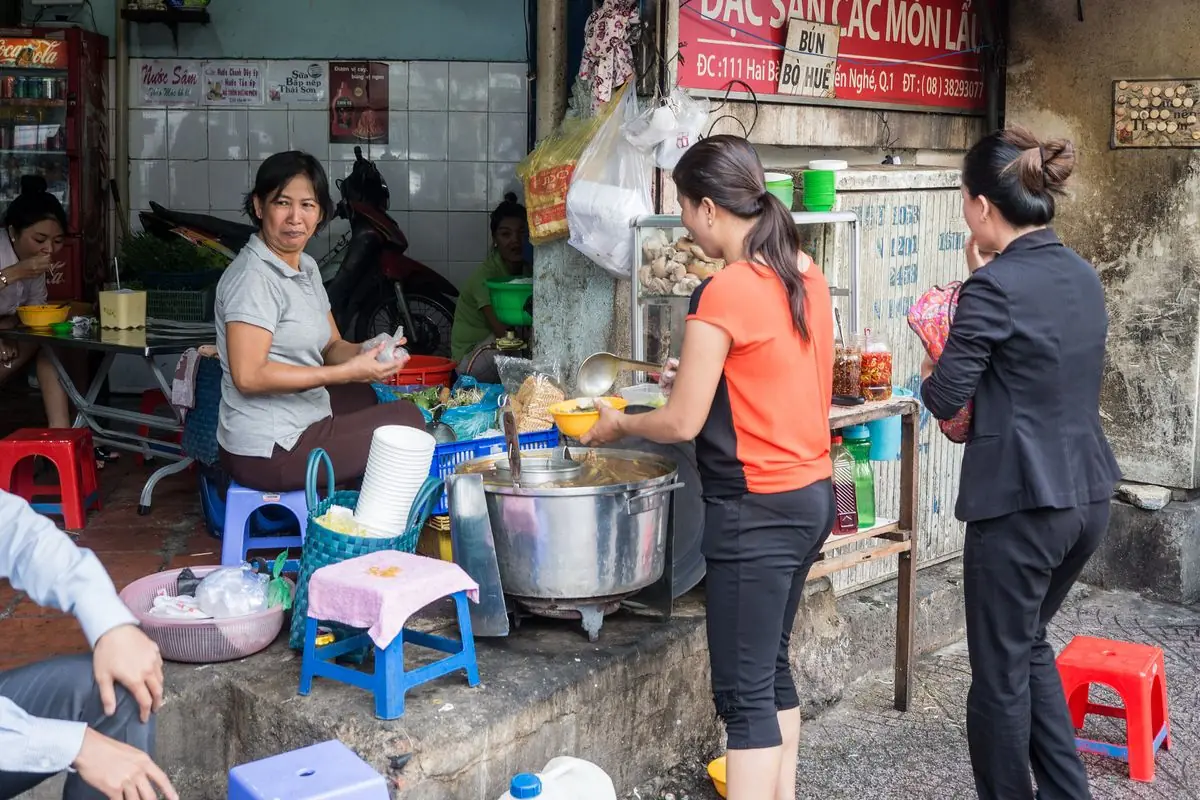
Street food is one of the reasons to visit Vietnam. A bowl of pho from a pavement stall, banh can cooked in small clay molds in Nha Trang, or grilled pork served with rice noodles can be memorable without a high restaurant bill. Yet a long queue is not proof that food is safe. It may suggest a fast turnover of ingredients, but it tells you little about washing water, cross-contamination or refrigeration.
Food from street vendors carries more risk for travelers, particularly when it is uncooked. Reduce that risk by selecting dishes that are cooked thoroughly and served piping hot. A freshly boiling broth is easier to evaluate than a tray of prepared food sitting at room temperature. Cold foods should actually be kept cold, not merely shaded beneath an umbrella.
Spend a minute watching the work area before ordering. Is raw meat handled separately from ready-to-eat food? Does the cook wash hands or change utensils after dealing with money or raw ingredients? Are cooked toppings covered? Are vegetables being dipped into a tub of water of unknown origin? A stall may have a very simple setup and still manage these things carefully. Another may have glossy menu pictures but leave its sauces outside all afternoon.
In Nha Trang, a hot bowl of bun cha ca (fish-cake noodle soup) is a reasonable introduction, provided the fish cakes are fully cooked and the broth is served hot. You can decline the plate of uncooked herbs that often arrives alongside it. Freshly cooked banh can with a fully set egg and thoroughly cooked filling is another option. With nem nuong, grilled pork is only one component; raw herbs, lettuce, rice-paper wrappers and dipping sauce deserve separate attention.
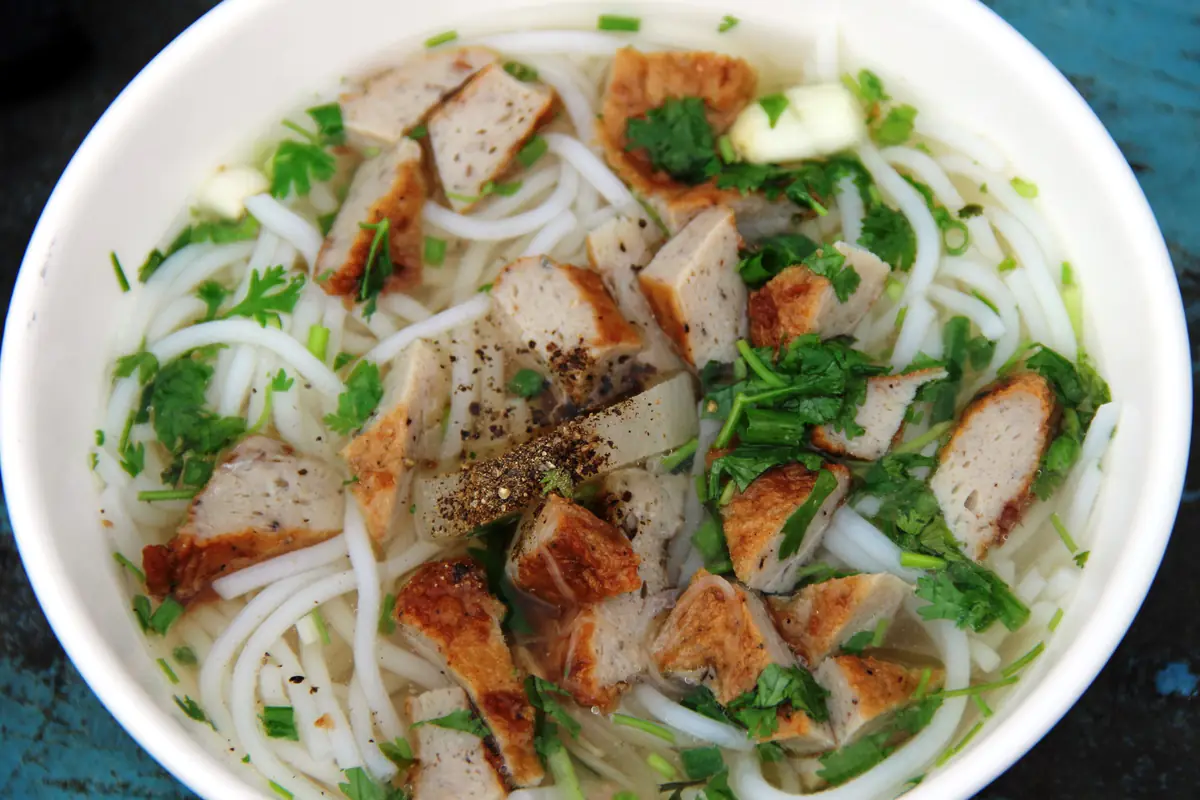
Photo: Phương Huy
In Hanoi, pho with fully cooked meat and steaming broth is a different proposition from pho served with rare or raw beef added at the table. Bun cha can work well when the pork is cooked through, but its raw herbs and any sauces left unrefrigerated may still add risk. There is no need to give up regional dishes. Ask for a preparation that suits your comfort level.
A quick street-food check before you sit down
Look for food cooked to order; dishes reheated after an uncertain period are a weaker bet. Prefer utensils that separate raw and cooked ingredients. Check whether food requiring refrigeration is actually chilled. Choose a vendor whose staff can serve without handling cash and ready-to-eat food with the same unwashed hands. Pay attention to how drinking glasses and dipping bowls are cleaned.
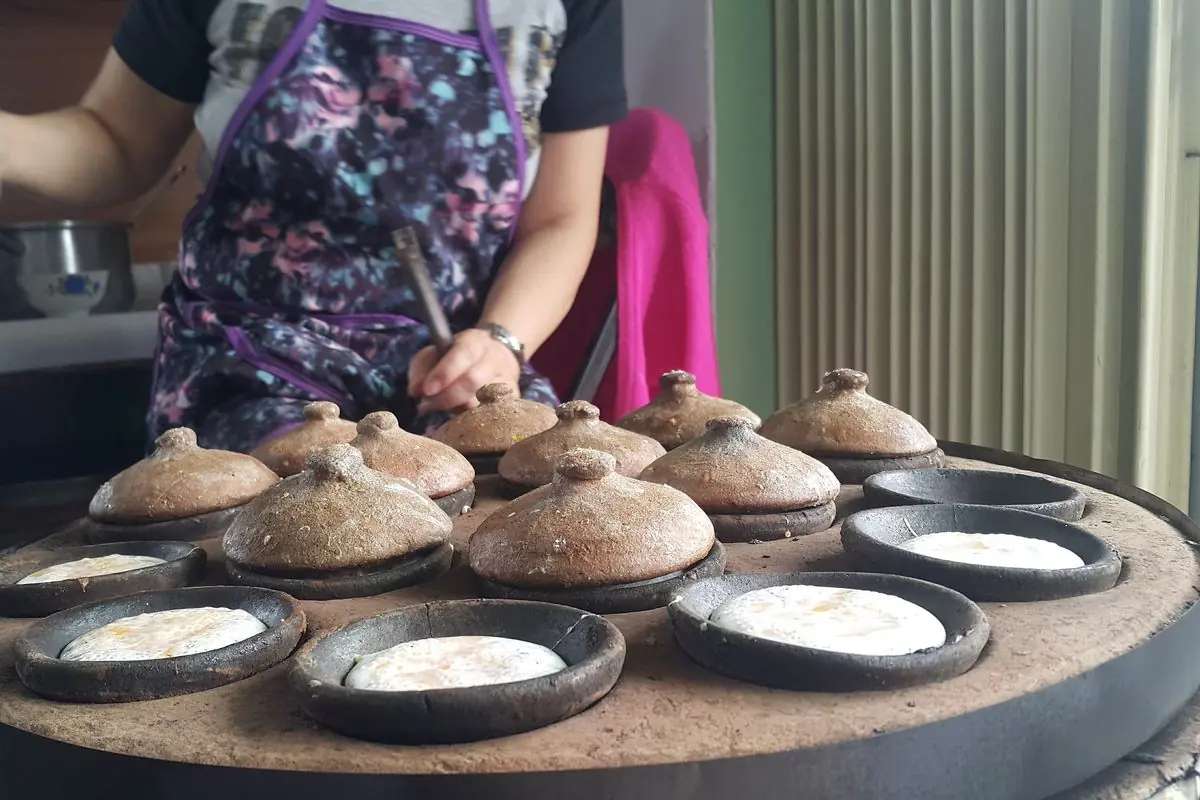
Photo: VinhNguyen.1257
Flies around uncovered food, meat that is still raw inside, a sour smell from seafood, or cooked dishes sitting warm for hours are all reasons to move on. Hunger is inconvenient, but finding another place is easier than managing illness during a three-day itinerary.
These observations reduce risk; they cannot guarantee safety. They also cannot replace medical advice for someone with a serious food allergy. Peanut, fish and shellfish ingredients may be hidden in broths and sauces. Carry a Vietnamese allergy card and any doctor-prescribed emergency medication if you have a history of severe reactions.
Raw vegetables, herbs and fruit: the parts of a meal people overlook
Vietnamese meals often arrive with a generous plate of fresh herbs. Mint, basil, lettuce, bean sprouts and other greens can be part of pho, banh xeo, noodle bowls and spring rolls. They also bypass the final cooking step that makes a hot dish more reassuring. Washing reduces dirt, but it does not reliably eliminate all pathogens, especially if the water and food-handling practices are unknown.
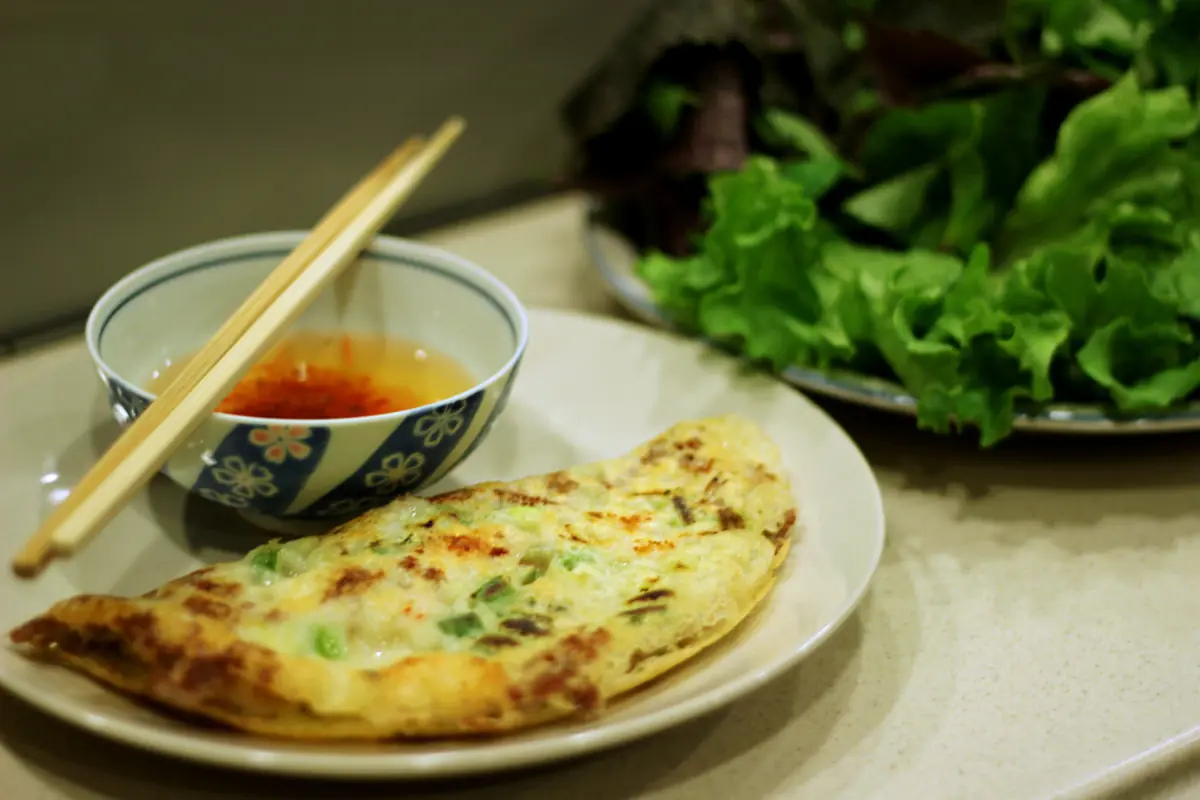
Photo: Vivian D Nguyen
Skipping raw herbs and salads is entirely reasonable on a first visit or for anyone at higher risk of severe illness. Ask whether the vegetables can be cooked. A handful of herbs briefly dipped into broth is only safe when it is heated sufficiently. Squeezing lime over raw food or covering it in chili does not disinfect it.
Fruit is easier to manage when you can peel it yourself. Choose a whole banana, orange, tangerine, mango or dragon fruit, rinse it with safe water where appropriate, and use a clean knife or your hands to remove the peel. Pre-cut fruit in open trays may have been prepared long before you arrive, handled repeatedly and left out in the heat. Fresh-looking fruit does not reveal its storage history.
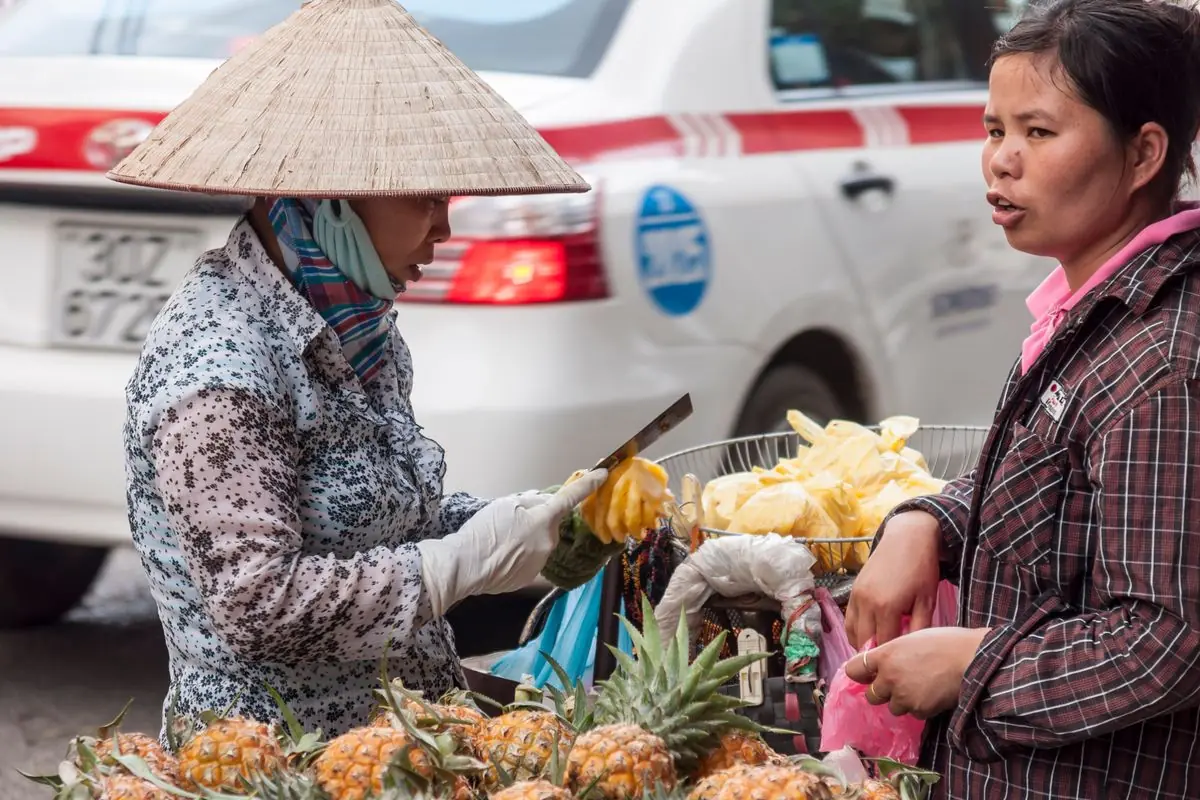
Photo: CEphoto, Uwe Aranas
Dipping sauces deserve similar scrutiny. Factory-produced fish sauce in an unopened bottle is not the same thing as a bowl of diluted fish sauce mixed with water, garlic, chili and herbs, then left on the table. The ingredients and storage conditions of a prepared sauce matter. Unsure? Take only a small portion from a freshly prepared, clean serving, or skip it.
For first-time visitors, cooked vegetables are a good compromise. Steamed greens or vegetables served hot alongside rice and cooked fish let you enjoy local flavors without relying on raw garnish preparation. The meal may look less elaborate than the photograph on the menu, but it is often easier on both your stomach and your travel plans.
Seafood in Nha Trang: keep it fully cooked
A trip to Nha Trang naturally brings up fish, squid, prawns, clams and oysters. The most straightforward choice is seafood that has been thoroughly cooked and served immediately. Steamed prawns, grilled fish and cooked squid are easier to recommend to a first-time visitor than raw oysters, raw fish or seafood that has only been marinated in citrus juice.
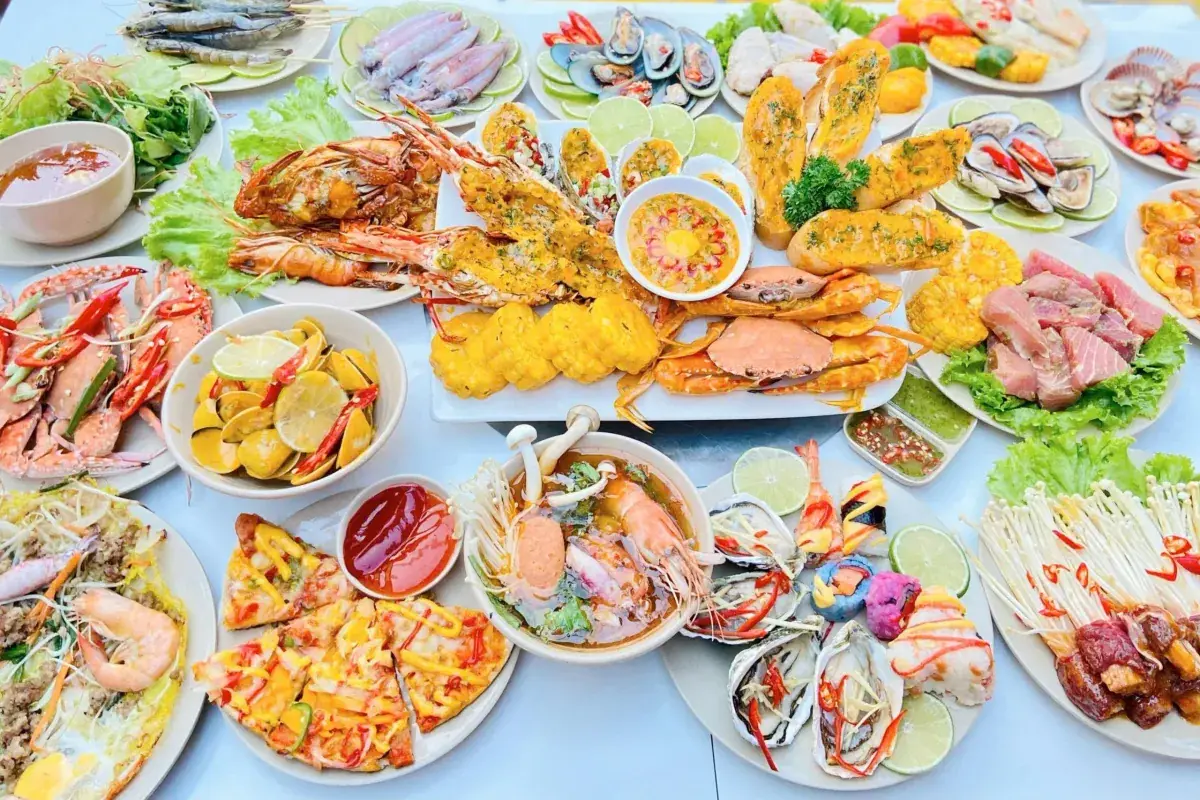
Photo: I Like Buffet
Lime juice, vinegar and chili add flavor; they do not cook seafood. Shellfish also need appropriate cooking. Raw or undercooked seafood carries particular risks for people with liver disease, weakened immunity or pregnancy. Those travelers should be especially cautious, local specialty or not.
A restaurant that lets you point to live seafood in a tank may offer useful transparency. Still, seeing a crab or prawn alive does not establish how everything else is stored or whether cooked seafood will be placed on a cutting board used for raw ingredients. Watch how it is handled between tank and table. A cooked seafood display should be protected from the raw-preparation area; check that it is.
Some dishes require an extra decision. Jellyfish noodles may contain chilled or specially prepared jellyfish; a hot broth does not necessarily mean every ingredient in the bowl was thoroughly cooked. Fresh spring rolls combine cooked fillings with uncooked herbs and wrappers. Blood pudding made with raw animal blood, known as tiet canh, is a dish visitors should avoid because of serious infection risks. Knowing which ingredients skipped a reliable cooking step is enough; there is no need to fear the cuisine.
When you are showing a foreign friend around, ask whether they prefer to be cautious with raw foods before ordering a shared meal. You can introduce grilled seafood, steaming noodle soup and freshly made pancakes without pressuring anyone to taste raw shellfish or other high-risk dishes.
What if you get stomach pain or diarrhea while traveling?
First, identify what is actually happening. A heavy meal may cause bloating without infection. Travelers' diarrhea usually involves loose or watery stools, sometimes with cramps, nausea, vomiting or fever. Symptoms can begin hours or even days after exposure, so blaming the last meal is often misleading.
If you are only mildly uncomfortable and have no warning signs, slow down, drink safe fluids and monitor how you feel. If you begin passing repeated loose stools, preventing dehydration becomes the main priority. Do not plan a long boat excursion or an overnight bus ride simply because you hope the symptoms will stop before departure.
- First
Replace fluids and electrolytes
Ask for Oresol, the name commonly used in Vietnam for oral rehydration salts, or simply ask a pharmacist for ORS. It is sold in sachets that must be mixed with the precise quantity of safe water specified on the packet. Different products require different volumes. Never assume that every sachet is intended for one liter, and do not mix it with an arbitrary mugful of water.
Use factory-sealed drinking water or boiled water that has cooled. Do not add extra sugar or dilute a prepared solution without following the product directions. Sip regularly, taking small amounts more frequently if you feel nauseated. Oral rehydration is particularly important for children, older adults and people with chronic illnesses, who may become dehydrated more quickly.
For a mild episode, regular safe fluids may be enough to maintain hydration, but ORS is especially useful when fluid losses are substantial. Very sugary soft drinks can make diarrhea worse in some cases and are not an equivalent replacement for properly prepared ORS. If you are vomiting repeatedly and cannot keep even small sips down, seek medical help; do not keep forcing fluids.
- Second
Eat normally as your appetite allows
Keep eating after an episode of diarrhea as your appetite returns. Start with small portions of freshly cooked rice, congee, broth, plain noodles or other familiar foods. Avoid very fatty meals, alcohol and raw food while your stomach is unsettled. Continue breastfeeding a breastfed child; young children need timely hydration and appropriate feeding advice, and they should not go without food for long.
Wash your hands thoroughly with soap after using the toilet and before handling food. In a shared apartment, do not prepare meals for other people while you have diarrhea. Hand sanitizer with at least 60% alcohol helps when handwashing facilities are unavailable, but soap and water are preferable, especially if hands are visibly dirty.
- Third
Do not start antibiotics automatically
Travelers' diarrhea may be bacterial, viral or caused by other organisms. Many mild cases do not need antibiotics. Self-prescribing can cause side effects, may not address the true cause, and can contribute to antibiotic resistance. A clinician can assess whether treatment or testing is necessary, particularly if you have severe symptoms.
An anti-diarrheal medicine such as loperamide can reduce bowel movements for some adults with uncomplicated diarrhea. It should not be used alone when diarrhea is bloody or accompanied by fever. Ask a clinician or pharmacist before using such medication during pregnancy, with underlying illness, with other medicines or for a child. Symptom relief does not mean dehydration or an invasive infection has been treated.
Antibiotics prescribed before departure for a specific contingency come with your travel clinician's exact instructions; follow them. Do not substitute a different medicine suggested by a taxi driver, fellow traveler or unverified online post.
Where to buy medicine in Vietnam
In cities including Nha Trang, Hanoi and Ho Chi Minh City, look for a pharmacy sign reading “Nhà thuốc.” National chains such as Long Châu and Pharmacity are recognizable options, although opening hours, product availability and English-speaking assistance vary by branch. For oral rehydration salts, show the pharmacist the words “Oresol / oral rehydration salts” and ask how much water the particular packet requires.
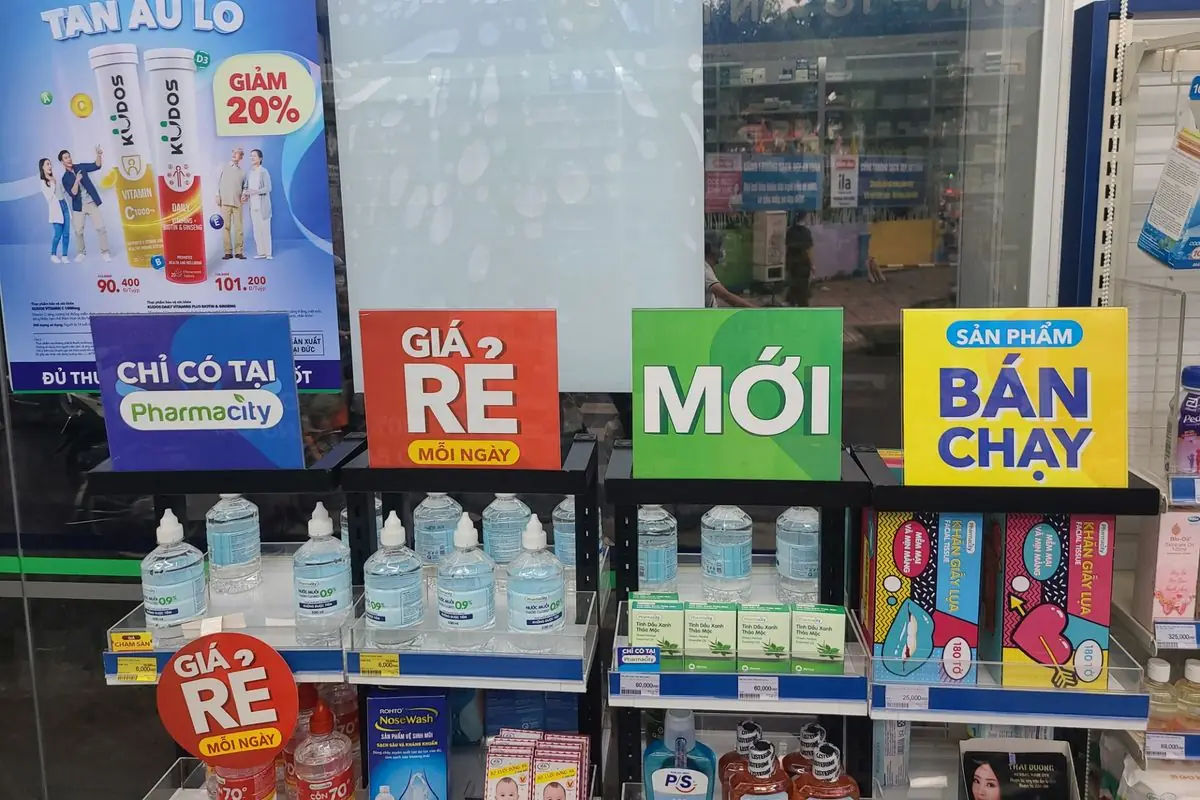
Photo: Tranhoangnam4320
A pharmacy is useful for minor problems and instructions on medicines, but it is not a replacement for a hospital when warning signs are present. Your hotel can help locate a suitable clinic or hospital for a consultation. Bring your passport details, a list of medicines and allergies, and your travel insurance information if you have it. Keep receipts and discharge documents for any insurance claim.
When should you see a doctor or go to hospital?
Seek prompt medical assessment if you have blood in your stool, a high fever, severe or worsening abdominal pain, or repeated vomiting that prevents you from keeping fluids down. Signs of dehydration include very little urine, a very dry mouth, unusual weakness and dizziness when you stand. Diarrhea that is worsening or has not improved after two or three days also deserves medical advice. A warning sign means you should not wait that long.
Young children, pregnant travelers, older people and people with weakened immune systems or significant chronic conditions should seek medical advice sooner. For a baby or small child who refuses feeds, becomes unusually sleepy, has very little urine or is repeatedly vomiting, do not wait to see whether an over-the-counter product helps.
Diarrhea that persists after you return home is worth raising with your healthcare professional, along with where in Vietnam you traveled, when symptoms began, and which medicines you took. Some infections need testing; repeated courses of symptom-relief medication are no substitute.
A lower-risk day of eating in Nha Trang
- Breakfast
Hot noodle soup, sealed water
Picture a simple day of eating. At breakfast, order steaming hot fish-cake noodle soup and pass on the uncooked herb plate. Open your own sealed water bottle. For coffee, take a freshly brewed hot version unless you can establish that the café uses clean drinking-water ice and handles it properly.
- Lunch
Food that is actually held hot
At lunch, choose a rice restaurant where cooked meat, fish and vegetables are actually held hot, not merely left under a loose lid. Ask for well-cooked ingredients. Take fruit as a whole piece that you can peel yourself later; pre-cut cups sitting outside in the sun are harder to judge. You can still try the flavors of the region without testing every raw component on the first day.
- Afternoon, evening
Beach water, cooked seafood dinner
On a beach afternoon, carry enough safe drinking water and skip the public washing taps. In the evening, a thoroughly cooked seafood dinner can be a highlight: grilled fish or steamed prawns served directly from the kitchen are reasonable starting points. An authentic Nha Trang evening does not require raw oysters.
This approach is particularly useful when your next day includes an island boat trip from Nha Trang, a long journey to Da Lat, or an early departure for Cam Ranh Airport. An upset stomach is inconvenient anywhere, but it is especially difficult when you cannot easily reach a toilet or a pharmacy. Adjust your food choices to the day's travel commitments.
A few preparations make the first 48 hours easier
Keep a sealed water bottle in your day bag after arriving in Vietnam. Learn the local word nhà thuốc before you need a pharmacy. Carry a small supply of oral rehydration salts if they are appropriate for you, check that packets are in date, and know how to prepare them using safe water. Save your accommodation's address in Vietnamese so that someone else can help you get medical assistance.
Travelers with a chronic gastrointestinal condition, regular medication, a pregnancy or a serious food allergy should speak to a healthcare professional before the trip about an individual plan. Do not take preventive antibiotics or random combinations of anti-diarrheal medicines simply because somebody online lists them as essential Vietnam travel gear.
The best precautions are often ordinary habits: wash your hands, choose foods at appropriate temperatures, avoid questionable raw ingredients and drink water whose safety you can verify. None of this guarantees that you will never become ill. It does, however, give you clearer choices than judging everything by whether local people are eating it.
Final choice: what suits your trip?
On your first visit, with young children, or with a tight itinerary: stick to sealed water, no uncertain ice and freshly cooked, hot food. For longer stays with a clean kitchen: properly boiled and stored water can work; when exploring street food, use the same standards of cooking, handling and storage you would expect anywhere.
FAQ
Can I drink boiled tap water in Vietnam?
Yes, if the source is not suspected of chemical contamination and you boil it correctly: one minute at a full rolling boil, or three minutes above about 2,000 meters. Cool and store it in a clean, covered container. Boiling kills common pathogens but does not remove many chemical contaminants.
Is ice in Vietnamese coffee safe?
It depends on the water used to make it and how the ice is stored and handled. Shape alone is not proof of safety. If you cannot verify the source, ordering coffee without ice is a more cautious choice.
Is Vietnam street food safe to eat?
Street food can be enjoyable, but risk varies by vendor and preparation. A long queue is not a safety certificate. Prefer fully cooked food served hot, avoid poorly stored ingredients and consider skipping raw garnishes.
Should I avoid raw vegetables and seafood in Vietnam?
Travelers seeking lower risk, particularly those who are pregnant or immunocompromised, should avoid raw vegetables of uncertain hygiene and raw or undercooked seafood. Cooked vegetables, fully cooked seafood and fruit you peel yourself are easier choices.
What should I do first if I have diarrhea in Vietnam?
Replace lost fluids and electrolytes using safe water and ORS mixed according to the sachet instructions. Seek medical care for bloody stools, high fever, severe pain, dehydration or inability to keep liquids down. For a life-threatening emergency, call 115.
Related posts
Guides
Vietnamese phrases for travelers: thirty useful sentences beat memorizing a hundred words
Essential Vietnamese travel phrases with pronunciation tips, real situations, and emergency numbers.

Guides
Night market or rooftop bar: where to go in Nha Trang at night
Where to go, what to eat, and how to spend a great evening in Nha Trang.
Guides
Nha Trang bus stations: choose the right one and avoid missing your bus
A practical guide to Nha Trang's bus stations, major routes, FUTA pickup points, and city transfers.