Hoi An in December or January: which month is better?
Da Nang's long-term rainfall average drops from 272 mm in December to 83 mm in January, while Hoi An hosts a special lantern festival on December 3-6, 2026.
Written by Tụi mình mê biểnUpdated

Photo: Steffen Schmitz
Yes, Hoi An can be worth visiting in December, but it is not a reliable dry-weather destination. Rain is common, evenings feel cooler than the temperature suggests, and the low streets beside the Hoai River can flood during prolonged heavy rainfall. Go for historic houses, local food, museums and lantern-lit evenings rather than beach swimming, and leave room to rearrange your itinerary.
Hoi An in December weather: temperature, rainfall and rainy days
December is the final part of the wet season on Vietnam's central coast. Hoi An is close to Da Nang and shares much of the same regional weather pattern, though rain and temperature can differ from one neighborhood to another. Compared with the hotter months, walking through town is more comfortable when it stays dry. The biggest disadvantage is that you cannot count on those dry periods arriving at a convenient time.
The figures below are Da Nang's 1991-2020 climate normals, a consistent reference for planning. They are useful regional averages, not measurements taken in Hoi An's Old Town and not a forecast for December 2026.
| Climate reference | December | January |
|---|---|---|
| Average daytime high | 25.3°C / 77.5°F | 25.2°C / 77.4°F |
| Average nighttime low | 20.5°C / 68.9°F | 19.7°C / 67.5°F |
| Average monthly rainfall | 272 mm / 10.7 in | 83 mm / 3.3 in |
| Average number of rainy days | 21 | 14 |
The definition of a rainy day matters. In this data set, a day counts when at least 0.1 mm of precipitation is recorded. So 21 rainy days are not 21 full days of downpours. One day may have a short shower, while another may bring long periods of heavy rain. A monthly average cannot tell you which kind of day you will encounter during a two-night stay.
During a dry afternoon, temperatures around the mid-20s Celsius make the Old Town pleasant for walking. You can visit several heritage buildings without dealing with the intense midday heat of summer. After dark, wind and damp clothing make the air feel cooler. A light jacket is useful for sitting in an open-fronted restaurant or walking back to your hotel after dinner.
Hoi An weather in December is also affected by the northeast monsoon. Onshore wind can make the coast rough, so a comfortable air temperature does not guarantee swimming conditions at An Bang Beach or a suitable day for a boat trip. December is a poor bet for a holiday built around swimming every afternoon.
Use the weather forecast to choose the order of your activities. Historic houses, exhibitions and restaurants can fill wetter periods. River walks and photography are better kept for the clearest hours. River conditions need a separate check, especially after several days of heavy rain.
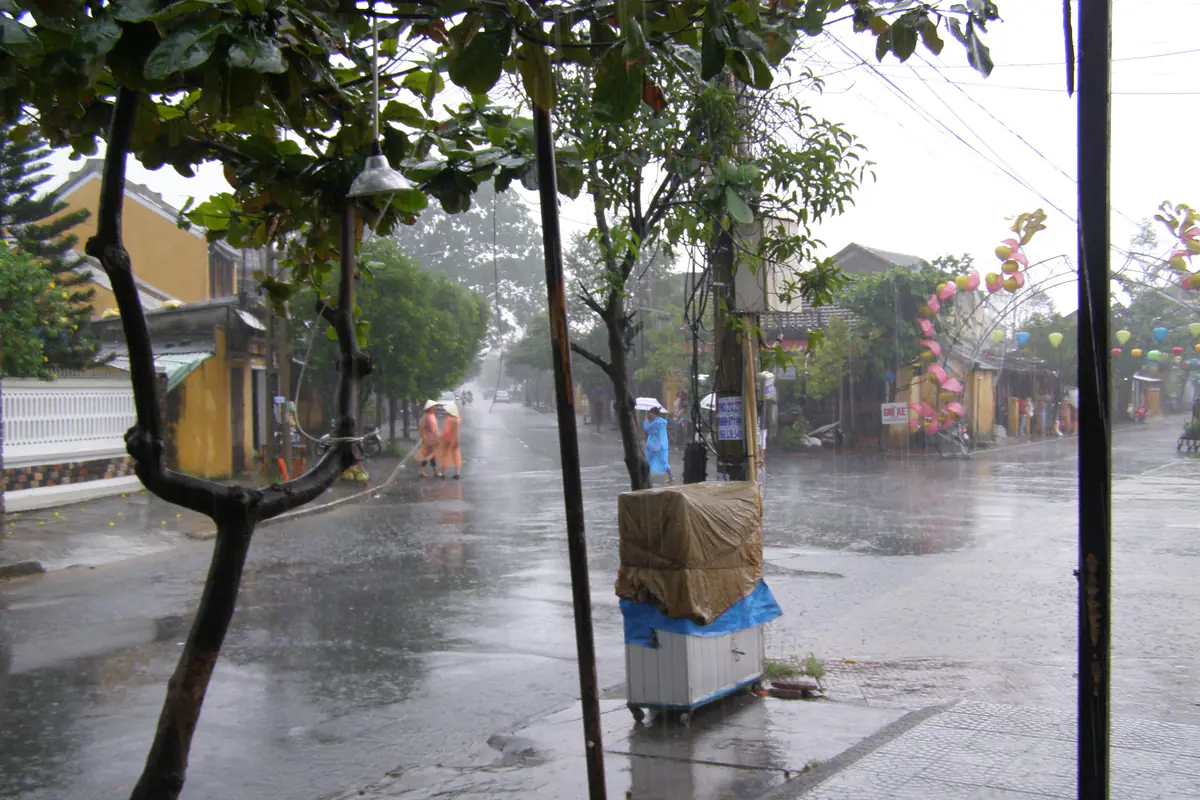
Photo: RG72
Does it rain all day in Hoi An in December?
Sometimes, but not every rainy day is a washout. There are three useful weather situations to plan around. They call for different decisions, and they explain why two people visiting in the same month can have very different experiences.
Light showers: keep your Old Town walk
Short showers are manageable in the historic center. Tran Phu, Nguyen Thai Hoc and the streets around the Japanese Covered Bridge have shops, old houses and cafés where you can stop between outdoor sections. Yellow walls and hanging lanterns still look distinctive when the streets are wet, although photos take more time because you need to protect your phone or camera.
Bring a compact rain jacket rather than relying only on an umbrella. Wind makes an umbrella awkward, especially on narrow streets with other pedestrians. Wear shoes with a reliable grip. Polished floors, old stone thresholds and wet paving can become slippery even when there is no flooding.
Plan your indoor visits first, then use a break in the rain for a walk around the outside of the buildings. Most of the appeal of the Old Town comes from a relatively small area, so moving a few streets at a time is enough.
Persistent heavy rain: change the schedule
A wet morning is a good reason to begin with the Museum of Folk Culture, an assembly hall or a booked lantern-making session rather than a cycling excursion. Leave the riverfront until later. A long lunch is a practical part of this plan.
If heavy rain is expected throughout the afternoon, do not book a boat ride just because it appeared in your original itinerary. Boat services may stop when conditions become unsafe. Workshops and performances can also be rescheduled, so confirm any paid session before leaving your hotel.
Heavy rain does not always cause an immediate flood in the Old Town. The more important issue is cumulative rain and the river level. A clear sky directly over Hoi An is not proof that water will stop rising; rain falling farther upstream takes time to reach the lower Thu Bon system.
Rising river water: stay away from the low streets
The riverside Bach Dang Street, the area around An Hoi Bridge and the approaches to the Hoai River deserve particular attention during flood warnings. In serious floods, water has reached streets farther into the Old Town, including Nguyen Thai Hoc, Le Loi and Tran Phu. Streets a few blocks back from the river can flood too.
Can Hoi An's Old Town flood in December?
Yes. December flooding is possible, although it does not happen every day or every year in the same way. Hoi An sits on low ground beside the Hoai River, which is linked to the Thu Bon river system. Heavy rainfall upstream can feed water into the town after the worst rain has already passed locally. High river levels may then make certain streets, shops and accommodation entrances inaccessible.
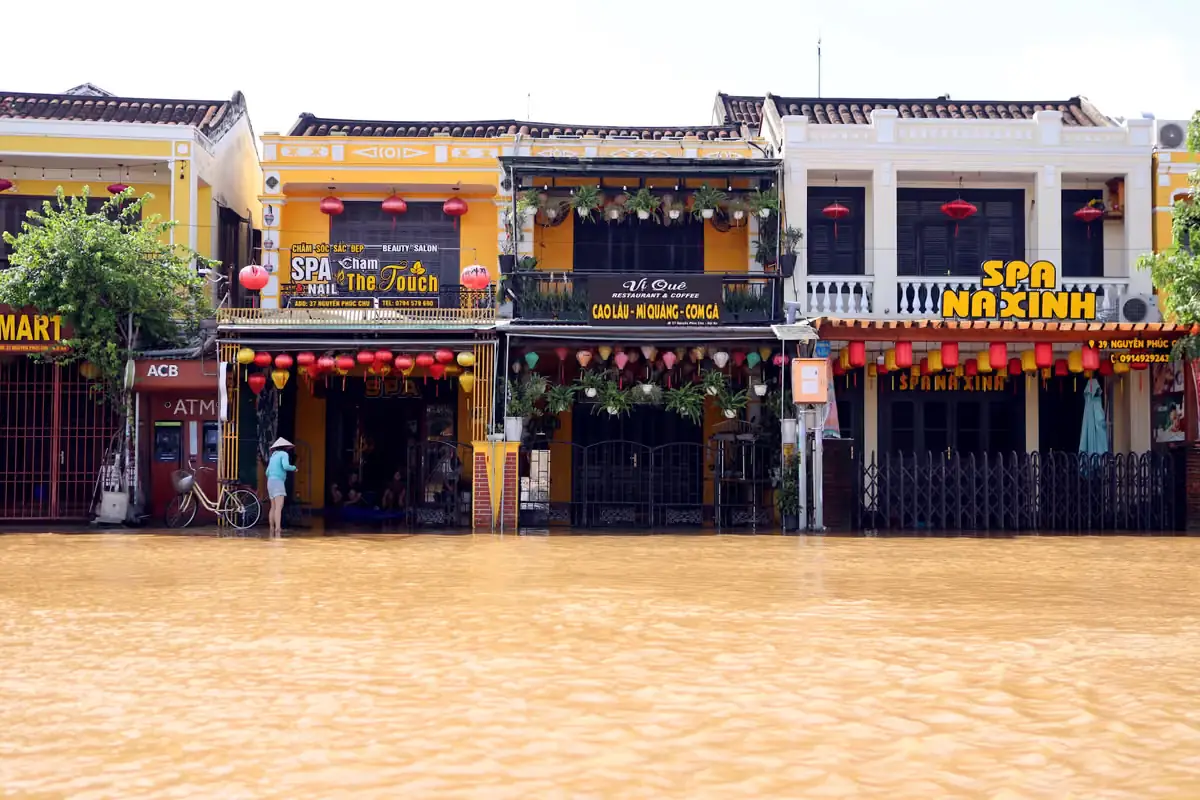
Photo: Lâm Trần
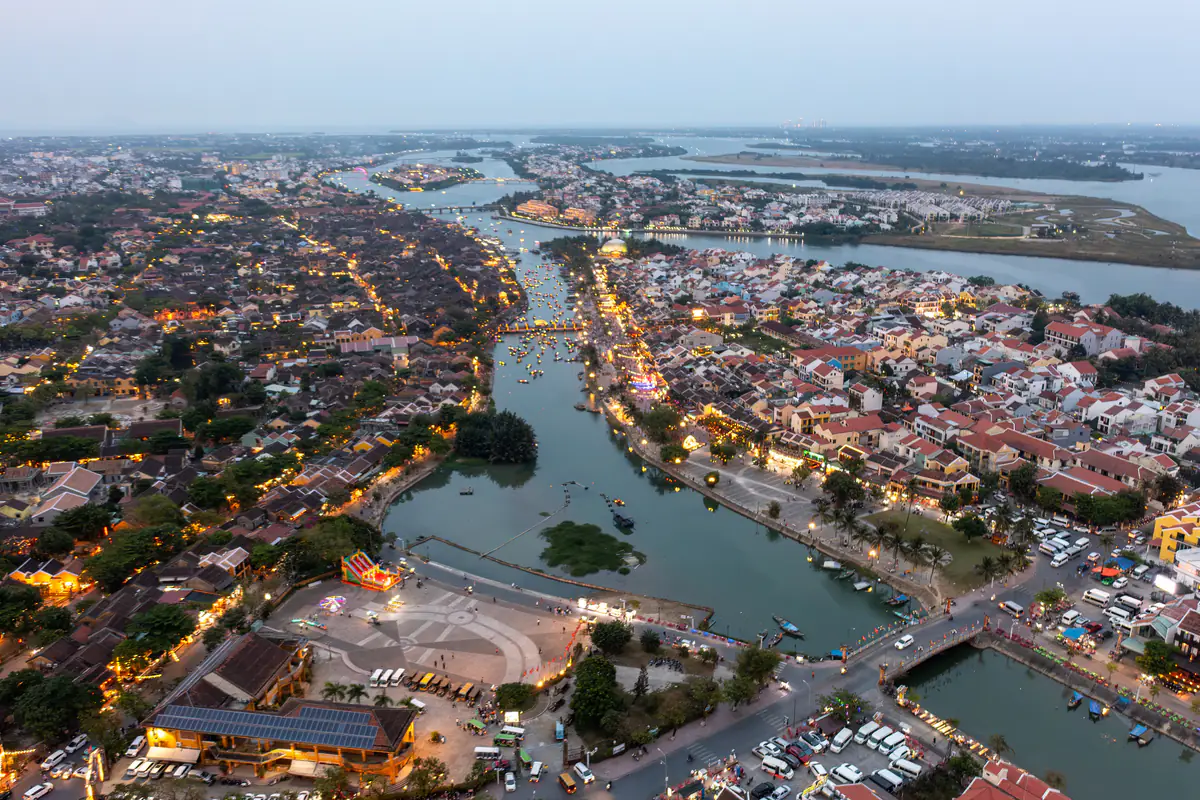
Photo: Omar David Sandoval Sida
October and November usually carry the greatest wet-season risk. December generally sees less rain than those peak months, but that is a seasonal average, not a guarantee. Hoi An has experienced flooded Old Town streets in December, including cases affecting the Bach Dang riverside area and the vicinity of An Hoi Bridge.
For visitors, the problem is often disruption. A hotel may still be operating but have no normal vehicle access. Ground-floor shops may close while other areas remain open. Riverboat operators may suspend services. Your Da Nang plans can carry on normally while parts of Hoi An stay hard to reach.
Check more than the rain icon on your phone
About three to five days before departure, start looking at the regional forecast for Da Nang and Hoi An. Heavy-rain warnings matter more than the percentage chance of showers. In the final 24-48 hours, add river-level and road-access information, because these can change quickly.
Keep travel documents, your phone, any medication and a power bank inside a dry bag. Avoid leaving a suitcase on the floor of a ground-level room when a flood warning is in force. Have a backup plan in case roads become impassable.
Should you cancel if rain is shown every day?
Not based on the icon alone. A forecast showing showers on six consecutive days can still leave reasonable time for museums and street walks. Look at expected rainfall totals, the timing of heavier spells, official warnings and the condition of the river. A flexible heritage trip can survive bad weather better than a fixed boat-and-beach itinerary.
On the other hand, a flood warning, road closure or hotel access problem is a genuine reason to change your plan. Moving your overnight stay to Da Nang, or shifting the Hoi An part of the trip by a day, is more sensible than trying to reach a closed riverside street.
Is Hoi An worth visiting in December 2026?
December makes sense when the Old Town itself is the attraction. You can see the Japanese Covered Bridge, historic merchant houses, assembly halls and small museums without the oppressive heat common in other seasons. Hoi An's UNESCO-listed core is compact, and a well-paced half-day inside heritage buildings can be enjoyable even under gray skies.
December 2026 has an additional draw: the Hoi An International Lantern Festival on December 3-6, followed by the regular Old Town Night on December 22. They are different events, both worth considering when choosing dates. Neither makes the weather more predictable, however, and outdoor programming can be adjusted if conditions deteriorate.
December is less attractive if your trip depends on beach swimming, cycling through the countryside every morning, visiting the Cham Islands or completing a tightly scheduled outdoor photoshoot. Boats and sea excursions are weather-dependent. A two-hour clear spell is enough for a rewarding Old Town walk, but it is not enough to rescue every outdoor activity on a packed sightseeing list.
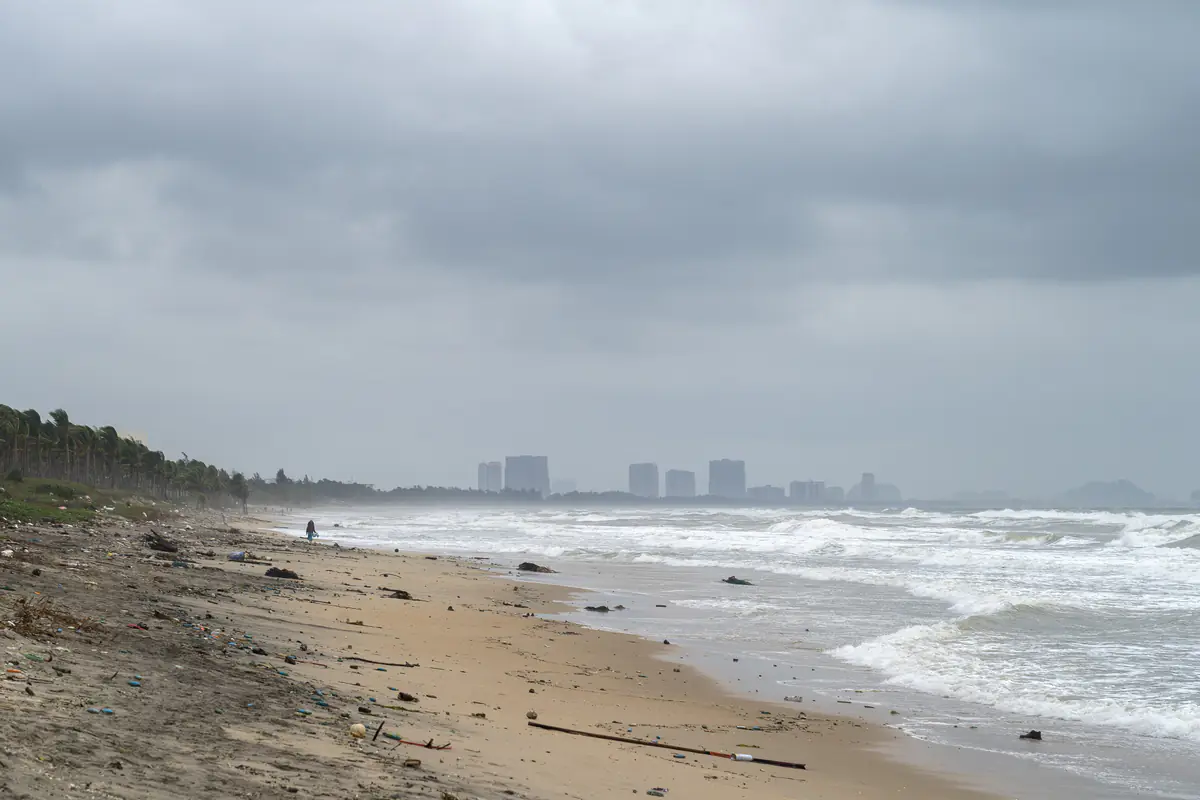
Photo: Alexkom000
For a first visit, two days and one night is more forgiving than a rushed evening trip. You gain another chance to see the lanterns and can move indoor activities between days. With only one afternoon, the visit may come down to food, cafés and one or two heritage sites.
Hoi An lantern festival dates in December 2026
The term lantern festival is used for more than one event in Hoi An. This creates unnecessary confusion when people search for a full-moon night. The town holds its traditional Old Town Night on the 14th day of each lunar month, while the International Lantern Festival is a separate, special event taking place in early December 2026.
| Event | Date or time | What to plan for |
|---|---|---|
| Hoi An International Lantern Festival | December 3-6, 2026 | Lantern art, craft activities and performances around Song Hoai Square, An Hoi Sculpture Garden and the historic streets |
| Festival opening | Scheduled for 7:00 pm, December 3 | Main program at Song Hoai Square |
| Festival lantern-making activities | 4:00-9:00 pm, December 3-6 | Hands-on area at Song Hoai Square |
| Monthly Old Town Night | Tuesday, December 22, 2026 | The 14th day of the 11th lunar month, with activities scheduled from 6:30 pm |
| Next monthly Old Town Night | Thursday, January 21, 2027 | The 14th day of the 12th lunar month |
For the international festival, the program includes an exhibition on the history of Hoi An lanterns at Hoi An Communal House, 27 Le Loi Street, scheduled from 9:00 am to 9:00 pm during the four-day event. Lantern-making at Song Hoai Square runs 4:00-9:00 pm. Displays and performances are spread across several locations around town.
The main festival opening is scheduled for 7:00 pm on December 3. Other activities include a lantern procession and heritage performances. Because much of the program takes place outdoors, leave time to adjust for wet weather.
For Old Town Night on December 22, reaching central Hoi An around 5:00-5:30 pm is a reasonable plan. Have an early meal and identify your walking route before the evening program begins at approximately 6:30 pm. It is not necessary to spend the entire day waiting for the lanterns. If rain makes the riverside unsuitable, focus on the open heritage streets, food and indoor venues instead.
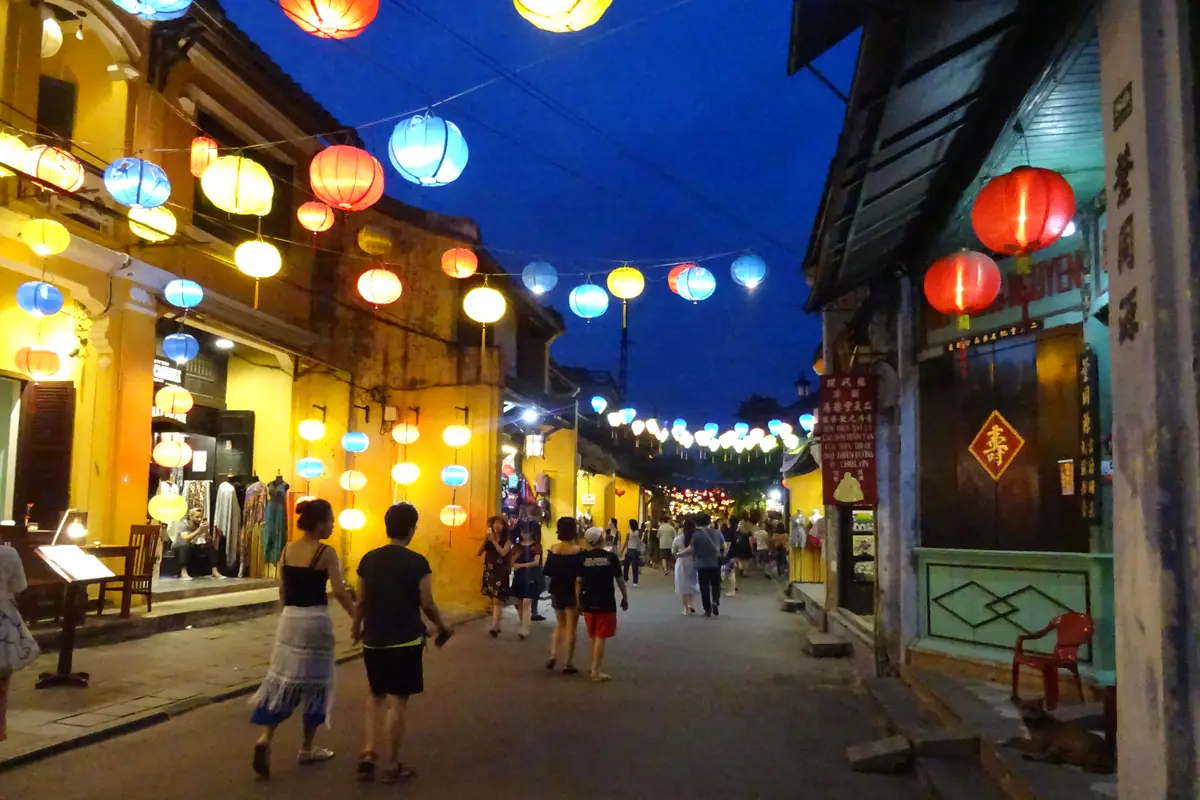
Photo: Christophe95
What can you do in Hoi An when it rains?
Start with historic houses and museums
Hoi An was an important trading port between the fifteenth and nineteenth centuries. Its surviving street plan, timber buildings and cultural mix are the main reasons the Old Town has World Heritage status. Rain is a good excuse to slow down and actually step inside some of these buildings.
Choose a small cluster instead of zigzagging across the center. The Japanese Covered Bridge and Nguyen Thi Minh Khai area form one convenient starting point. Tran Phu, Le Loi and Nguyen Thai Hoc provide further heritage sites and museums within walking distance when the streets are clear.

Photo: YukioSanjo
One temporary exhibition is especially worth catching in late 2026. “Old Spaces” at the Museum of Folk Culture, 33 Nguyen Thai Hoc Street, is scheduled for November 23 to December 23. It explores historic domestic spaces and provides context for what visitors see in Hoi An's old houses. An exhibition of Han-Nom inscriptions at Hoi An Communal House, 27 Le Loi Street, runs December 1-5.
These are better suited to a rainy morning than a trip out to the coast. Museums generally keep daytime hours, so don't leave every indoor visit until after dinner. Save the evening for the lanterns, cafés and streets that are open and safe to walk.
Take a lantern-making class
Lantern-making is one of Hoi An's most recognizable crafts. Workshops commonly involve selecting fabric and a shape, fitting or decorating a bamboo frame, and learning how to fold the finished lantern for transport. Some classes provide a prepared frame; others teach more of the assembly process. Ask what is included before reserving a place.
An indoor workshop is useful when rain makes outdoor sightseeing unpleasant. Confirm the duration, class location, language of instruction, whether children can take part and whether the finished lantern can be packed flat. A class located inside a shop or craft space is a more dependable wet-weather option than a temporary outdoor festival stall.
The International Lantern Festival includes craft sessions from December 3-6. Those sessions are worth considering if your visit already overlaps the event, but they should not be treated as guaranteed shelter during severe rain.
Eat slowly instead of racing between attractions
Hoi An offers enough local food to occupy more than one rainy meal. Cao lau noodles, chicken rice, mi Quang and white rose dumplings are familiar choices in the town. Many casual restaurants serve these dishes without requiring an elaborate booking. Ask to see the current menu and prices before ordering, especially for seafood sold by weight.

Photo: Chainwit.
A long lunch gives you time to review the afternoon forecast. It is often better to finish a proper meal, wait out the heaviest shower and then walk a short route than to spend an hour moving between cafés in wet shoes. A planned break in a sheltered restaurant is particularly helpful for groups with children or older travelers.
Traditional houses with cafés offer a place to rest and watch activity on the street. A simple covered table on a quieter street may be more comfortable when rain blows in from the river. Riverside businesses can also close or change access during high water.
Is a lantern boat ride a good idea in December?
Only when river and weather conditions are suitable. Avoid boat trips during heavy rain, strong winds and flood warnings. On a normal operating evening, follow the boat operator's instructions and wear the provided life jacket. Boat prices vary with the service, the number of passengers and the time, so there is no dependable single fare for every visitor.

Photo: lumoplank
You can enjoy lantern-lit Hoi An without boarding a boat. On a dry evening, the streets around An Hoi and Nguyen Phuc Chu offer views of hanging lanterns and the river. If the water is rising, drop the riverfront from your route entirely and stay away from the edge.
Hoi An Old Town tickets and visiting hours in 2026
Ancient Town tickets come in two adult prices for 2026: VND 80,000 for Vietnamese adults and VND 120,000 for international adults. Tickets cover the heritage visitor area and a selection of recognized sites, with the number and type of visits determined by the ticket rules. Buy tickets at official counters and check the included sites before starting.
In 2026, heritage sites generally open 8:00 am-5:00 pm. The town itself continues to have an evening atmosphere after those admission hours. In winter, the core Old Town is open only to pedestrians and non-motorized vehicles, 9:00 am-9:00 pm. On Phan Chau Trinh, pedestrian hours are 5:30-9:00 pm.
A heritage ticket is most useful if you plan to enter several historic buildings during the day. For a wet-weather visit, choose the Japanese Covered Bridge area, an assembly hall or historic house, and a museum before the doors close. Leave unstructured lantern walks until the evening. Special events and weather-related restrictions can alter access, so pay attention to notices at the ticket booth.

Photo: YukioSanjo
There is a difference between walking through an atmospheric street and entering a managed heritage monument. Not every building is free to enter, and not every old building stays open after sunset. Checking the ticket conditions once at the start saves time later.
What to wear in Hoi An in December
Pack for damp weather rather than serious winter cold. Light trousers, quick-drying tops and a thin long-sleeved layer work for most daytime sightseeing. Add a lightweight wind-resistant jacket for the evening. People accustomed to a tropical climate may appreciate a warmer layer when temperatures fall and the breeze picks up beside the river.
Footwear matters more than another outfit. Choose shoes with a grippy sole or secure sandals that handle wet pavement. Smooth-soled slip-ons can be uncomfortable on old stone steps, and white canvas trainers may stay damp overnight. Spare socks are useful after a day of showers.
Carry a compact raincoat, a waterproof pouch for your phone, a dry bag for passports and other documents, and a small cloth for wiping water off a camera lens. Keep a separate bag for wet clothing. Anyone booking an ao dai or long-dress photoshoot should ask about rescheduling the rental or photographer when the forecast looks poor.
A heavy winter coat is usually unnecessary for the coastal Old Town. The situation changes if you combine Hoi An with a visit to Ba Na Hills or another higher-elevation area, where conditions can be much colder. Check the forecast for that location; Hoi An's daytime temperature won't tell you much about it.
One extra set of dry clothes for children in a day bag can make a large difference. Wet trousers and shoes are much more uncomfortable during a long dinner or drive back to Da Nang than during a short stroll. Keep the replacement clothes separate from the rain gear.
How to plan Hoi An and Da Nang in December
One day from Da Nang
About 30 km from central Da Nang
Hoi An is roughly 30 kilometers from central Da Nang, depending on where you start. A car journey often takes about 40-60 minutes in normal traffic, but heavy rain, congestion and restricted access can make it longer. Avoid scheduling your arrival to the minute on a festival night.
A manageable plan is to leave Da Nang around 1:00 pm, reach Hoi An in the early afternoon, visit one or two heritage sites before 5:00 pm, have dinner and stay for the lanterns if the weather allows. Start the return journey around 8:00-8:30 pm if you prefer not to be out late. The exact return time depends on where your driver can collect you during pedestrian hours.
With only one day, do not try to combine Marble Mountains, the coconut forest, a full Old Town visit and an evening event. Each transfer takes time, and wet weather adds more waiting. Keep one indoor visit and a meal as the core plan, with the evening stroll as the part you can change.
If the forecast shows persistent rain and rising river levels, a museum day in Da Nang is more practical than forcing the drive to Hoi An. You may be able to switch the outing to another day of the trip. Otherwise, accept that this visit may not work out.
Two days and one night in Hoi An
Add Tra Que or Thanh Ha on a dry morning

Photo: Christophe95
This is a good balance for a first visit during the wet season. Arrive early enough to settle into your accommodation and visit a small group of historic sites. Keep late afternoon free in case the rain becomes heavier. Use the evening for food and lanterns when streets are open.
On the second morning, choose a museum, another historic house or a lantern workshop. A dry morning with no warnings is the time to add an excursion to Tra Que Vegetable Village or Thanh Ha Pottery Village. Admission in 2026 is VND 35,000 for Tra Que and VND 35,000 for Thanh Ha, excluding separately priced experiences and services.
Cycling in persistent rain is not a comfortable replacement for a town walk, and open-air activities can lose much of their appeal when the ground is soaked. Choose the museum and craft plan first, then add the countryside only when conditions improve.
An overnight stay also removes the pressure of driving back to Da Nang immediately after the lanterns. On a rainy evening, you can return to your hotel, change clothes and try again the next morning. That flexibility is the main benefit; the second day may still be wet.
Three days and two nights in the Da Nang-Hoi An area
Base in Da Nang, save Hoi An for the driest day
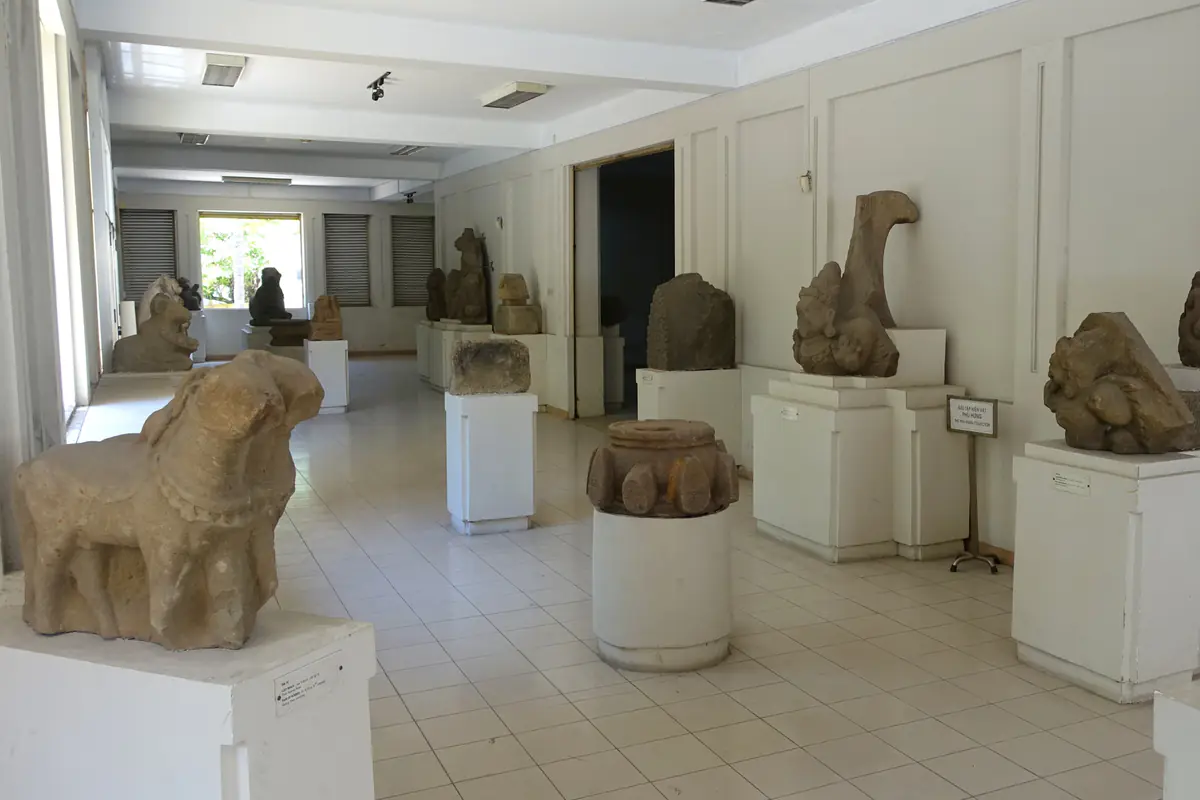
Photo: Daderot
Use Da Nang as a flexible base when you want a mix of city attractions and the Old Town. A museum day in Da Nang leaves the best forecast window free for Hoi An. This is especially useful when planning around the December 3-6 festival or the December 22 Old Town Night. Put your most important Hoi An evening in the middle of the trip if you can, rather than immediately before your flight home.
On a wet day in Da Nang, the Museum of Cham Sculpture, 2 September 2 Street, is a straightforward option. General admission is VND 60,000 in 2026, and it opens 7:30 am-5:00 pm. The Da Nang Museum is another indoor choice, with general admission of VND 50,000 and hours of 8:00 am-5:00 pm. Pick whichever one suits your interests.
Do not count on My Khe Beach or An Bang Beach as swimming stops in December. A pleasant-looking break in the clouds does not confirm safe sea conditions. Before heading to the beach, check the actual surf and local safety instructions that day.
Should you stay in Da Nang or Hoi An in December?
Staying in Hoi An works best when evening walks and historic streets are your priority. You can return to your room easily after dinner and head out again if the weather improves. The trade-off is that some charming riverside properties are in areas vulnerable to flooding. Check the room floor, vehicle access, cancellation terms and the hotel's plan for high-water days.
Staying in Da Nang makes sense if you are arriving at Da Nang airport, have several city activities planned or want to keep your accommodation away from the low Old Town streets. That leaves you free to visit Hoi An on the driest available afternoon. The drawback is the return transfer after dark, especially on an event night when more visitors need transport.
Do not choose a hotel solely because a photograph shows a balcony directly over the river. A river-view balcony works in normal conditions but becomes a liability in a flood. Properties outside the historic core can be disrupted by the weather too. Ask about actual road access and keep booking terms flexible.
One night in town generally makes more sense than two round trips from Da Nang on a two-night trip focused on Hoi An. If a serious flood warning is already in effect, staying in Da Nang and postponing the Old Town visit is the more practical choice.
Hoi An in December or January: which is better?
January is usually the easier month for weather-sensitive sightseeing. The nearby Da Nang climate record shows average monthly rainfall falling from 272 mm in December to 83 mm in January. Average rainy days drop from 21 to 14. Those are substantial differences for anyone planning several walks, a countryside outing or an outdoor photoshoot.
Temperatures do not change nearly as much. The average high is 25.3°C in December and 25.2°C in January at the reference station. Average lows shift from 20.5°C to 19.7°C. January may feel slightly cooler in the mornings and evenings, but the main practical gain is lower rainfall.
December still has two reasons to choose it in 2026. The special International Lantern Festival is scheduled for December 3-6, and the regular Old Town Night takes place on December 22. January 2027 has a regular Old Town Night on January 21, but the early-December international event is unique to the 2026 calendar.
If your dates are flexible and you are not going for a specific event, January is the better choice for wandering through streets, taking photos and extending your day into nearby villages. Festival-goers who value the program more than a dry-weather guarantee will find December reasonable. Either way, warm air is no proof that the sea is calm enough for swimming.
Flexible days and a tightly timed stopover are also very different cases. A visitor spending four or five days between Da Nang and Hoi An can wait for a good afternoon. Someone with a single evening before an international flight has much less room to react to weather changes. The shorter your stay, the stronger the case for January.
Five decisions to make before traveling in December 2026
- Step 1
Choose the event before the hotel
December 3-6 is the international lantern festival; December 22 is the monthly Old Town Night. They are not the same celebration. Check which one you actually want to see before booking a particular week.
- Step 2
Leave part of the itinerary unbooked
One spare half-day is more helpful than a long list of paid excursions you cannot move. Keep the weather-dependent activities together so you can rearrange them rather than canceling several unrelated reservations.
- Step 3
Ask your accommodation about flood access
A clear answer on road conditions, room level and date changes is more valuable in December than a general claim that the property is close to the Old Town. Save the hotel's phone number so you can check conditions before leaving Da Nang.
- Step 4
Allow extra time for the transfer
Treat the usual 40-60-minute drive as a rough guide. Heavy rain, event traffic and pedestrian restrictions may add time. Do not begin the journey just before a scheduled show if you also need to park, collect tickets or walk to the venue.
- Step 5
Pack for wet streets and check official warnings close to departure
Grippy shoes, a light raincoat and a waterproof bag are simple essentials. Use the latest local forecast and flood notices when making final decisions; long-range monthly weather icons are not a reliable schedule.
So, should you go in December or wait until January?
Choose January 2027 if you can move the trip and want the better chance of dry sightseeing. Choose December 2026 if the December 3-6 international lantern festival or December 22 Old Town Night is your reason for traveling, but keep at least one spare half-day and book accommodation you can change if flooding affects access.
FAQ
Does it rain a lot in Hoi An in December?
Yes. December remains part of the wet season, and nearby Da Nang's long-term averages show 272 mm of rain and 21 days with measurable precipitation. That does not mean continuous rain every day. Check the actual forecast and flood warnings before traveling.
Is Hoi An cold in December?
It is usually mild during the day and cooler in the evening, particularly when it is windy or wet. A light jacket, long-sleeved layer and quick-drying clothes are suitable for most Old Town activities. Higher-elevation excursions may require warmer clothing.
Can Hoi An flood in December 2026?
It can, but no one can reliably identify the exact flood days months ahead. Low streets around the Hoai River are vulnerable when the Thu Bon river system rises. Follow local warnings, contact your hotel and avoid entering flooded streets or traveling by boat during unsafe conditions.
When is the Hoi An full-moon lantern night in December 2026?
The monthly Old Town Night is Tuesday, December 22, 2026, which is the 14th day of the 11th lunar month. The next one falls on January 21, 2027. Separately, Hoi An's International Lantern Festival is scheduled for December 3-6, 2026.
Is Hoi An better in December or January?
January is generally better for drier weather and outdoor sightseeing. December has more rain but offers special lantern events in 2026. For a flexible cultural trip, either month can work; for a short visit depending on good weather, January is the safer choice.
Related posts

Weather
Why is February better than September for outdoor activities in Da Lat?
Compare Da Lat's weather across all 12 months to choose the right season for sightseeing, cloud hunting, flowers, and packing.

Places
Yang Bay or Ba Ho? Which waterfall day trip is better?
Compare two waterfall trips, with current Yang Bay tickets and a realistic day plan.
Places
Is Nha Trang worth visiting for first-time travelers? Who will love it and who should go elsewhere?
Nha Trang is worth visiting for its beaches and convenience, but there are some drawbacks to consider.