Vietnam power plugs and outlets: a plug that fits can still damage your device
Whether you're packing for a trip to Vietnam or bringing home electronics purchased abroad, check two things before plugging anything in: the plug shape and the device's voltage rating. This guide explains which adapters work in Vietnam, when you need a voltage converter, and how to avoid damaging your electronics.
Written by Tụi mình mê biểnUpdated
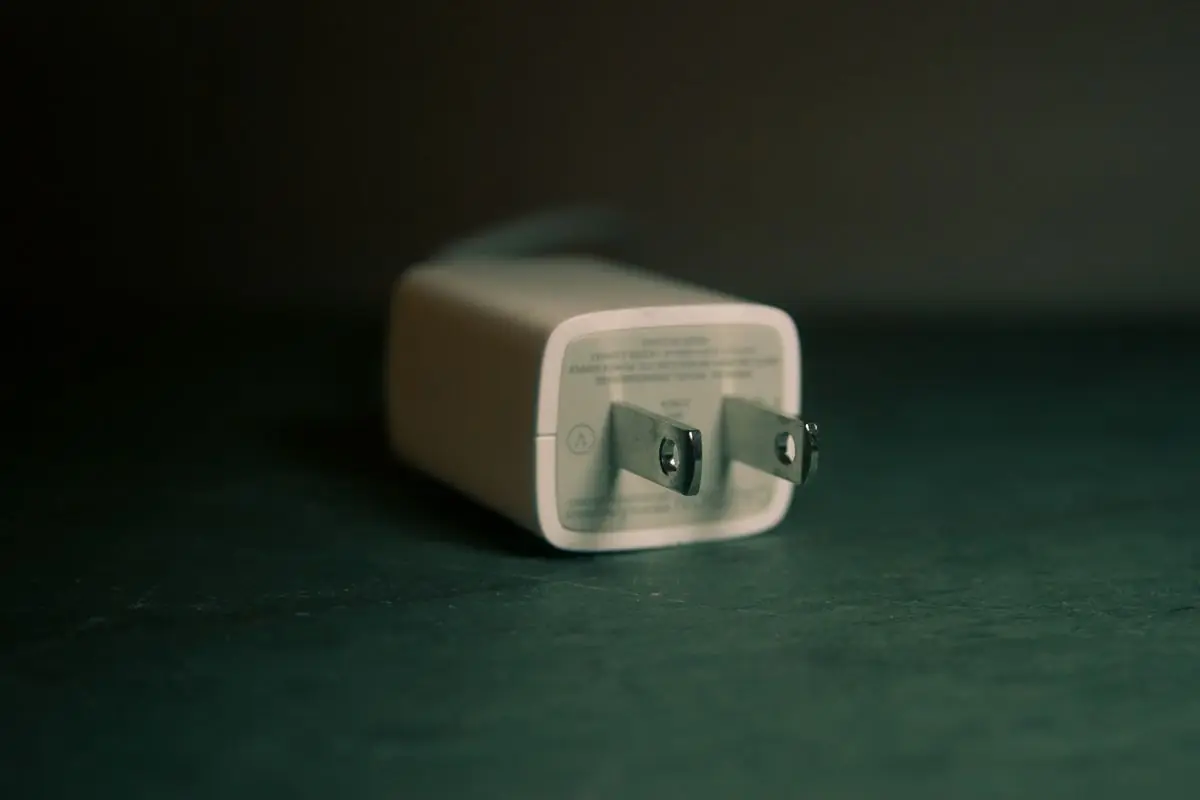
Photo: Steve A Johnson
Before plugging anything into a wall outlet in Vietnam, find the INPUT rating on your charger or appliance. Vietnam generally uses 220V electricity at 50Hz, and both flat two-pin and round two-pin plugs are common. A charger labeled 100-240V, 50/60Hz will usually work, but a device designed only for 110-120V must not be connected directly to a 220V outlet.
What type of power plugs and outlets does Vietnam use?
Vietnam does not have one identical outlet design in every building. You may encounter sockets that accept two round pins, two flat pins, or several different plug shapes.
The three types most commonly listed for Vietnam are Type A, Type B, and Type C. In practice, Type A, Type C, and combination outlets that accept both are particularly useful for travelers to recognize.
| Plug type | Appearance | Compatibility in Vietnam |
|---|---|---|
| Type A | Two parallel flat pins | Widely accepted by many outlets |
| Type B | Two flat pins and one round grounding pin | Supported in some locations, but not everywhere |
| Type C | Two small round pins | Very common |
| Type D | Three round pins arranged in a triangle | Uncommon; may be found in certain installations |
| Type F | Two round pins with side grounding contacts | Not universally compatible; grounding may not be maintained |
| Type G | Three rectangular pins, British style | Usually requires an adapter |
Type A: two flat pins, like those used in the US and Japan
No grounding pin
Type A has two parallel flat metal pins and no grounding pin. You will recognize it if you use electrical devices purchased in the United States, Canada, or Japan.
Many combination outlets in Vietnam accept Type A plugs. For example, a US phone charger with two flat pins might fit directly into a hotel room outlet.
However, a plug that fits does not mean the voltage is compatible. The United States uses 120V/60Hz electricity, while Vietnam uses approximately 220V/50Hz. That difference matters for devices designed exclusively for the American market.
A dual-voltage phone charger may work perfectly. A 120V hair dryer may not.
Type B: three-pin American plugs with grounding
Two flat pins plus a round ground
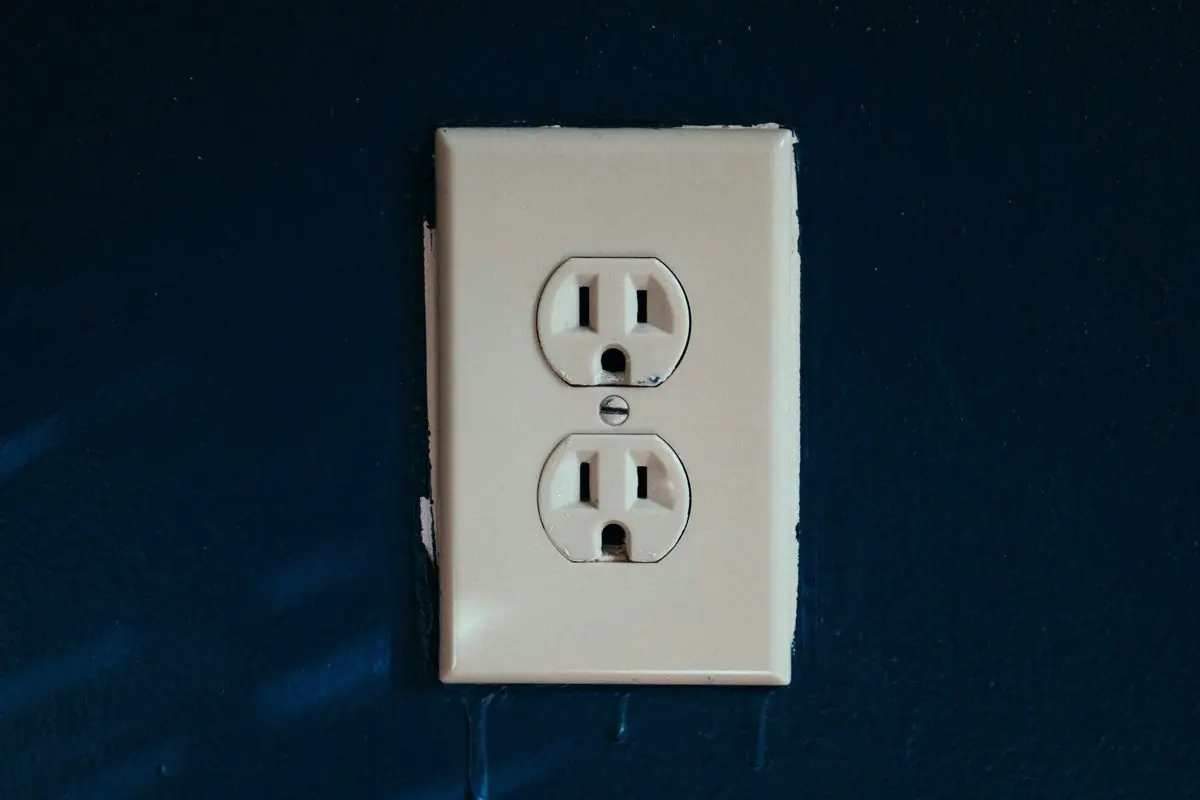
Photo: Brian Patrick Tagalog
Type B resembles Type A but adds a round grounding pin. It is commonly used for computers, household appliances, and electrical equipment that requires protective grounding.
An outlet that accepts Type A will not necessarily accommodate Type B. Do not remove the grounding pin or force a three-pin plug into a two-hole socket.
Grounded appliances need a properly grounded outlet or an adapter that maintains the grounding connection. A basic three-to-two-pin adapter does not provide protective grounding on its own.
Type C: two round pins commonly used in Europe
The Europlug, no grounding
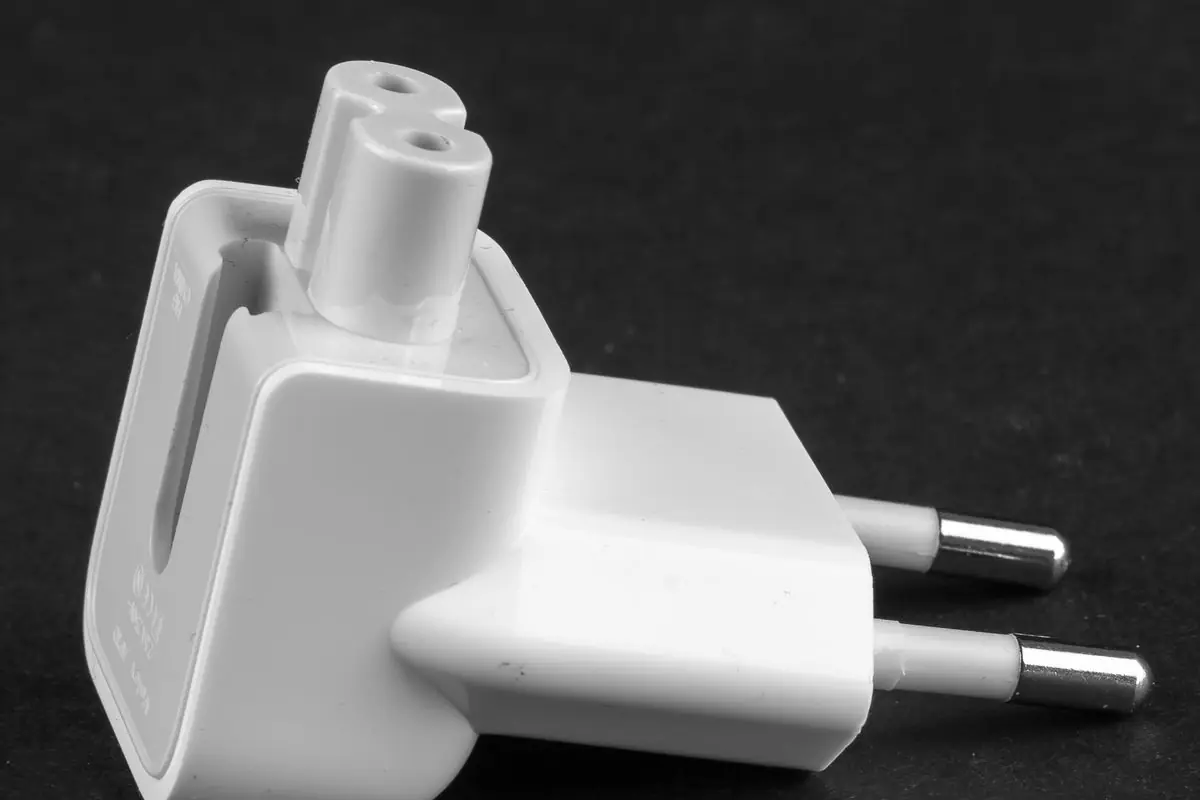
Photo: Raimond Spekking
Type C, often called the Europlug, has two small round pins and no grounding connection. It is frequently found on phone chargers, small lamps, and other low-power electronic devices.
Travelers from Germany, France, Spain, and many other European countries can often use their Type C plugs directly in compatible Vietnamese outlets.
Not every European plug is Type C, though. Larger Type E and Type F plugs have different grounding arrangements and should not be treated as interchangeable with a small two-pin Europlug.
Type C plugs are also intended for low-power devices. Check the appliance's power requirements rather than assuming that any two-round-pin connection is suitable for a high-wattage appliance.
What about Type D, F, and G?
Uncommon, depends on the building
You may encounter other socket designs in private homes, offices, serviced apartments, or buildings equipped for specific electrical systems.
Type D has three round pins and is associated with electrical equipment from India. Type F has two larger round pins and grounding contacts on the sides. Type G, used in Singapore and the United Kingdom, has three rectangular pins.
Some universal outlets accept these plugs mechanically, but that does not guarantee correct grounding or suitability for every appliance.
For most visitors, Type A and Type C are the two most useful outlet types to plan around. If your appliances have different plugs, bring a suitable travel adapter rather than relying on a hotel to provide the exact socket you need.
Does Vietnam use 220V or 230V electricity?
Vietnam's household electricity supply is commonly described as 220V, 50Hz. Some international reference databases list Vietnam at 230V/50Hz instead.
These figures reflect differences in how nominal electricity supply ratings are reported. For travelers, the practical advice remains the same: check the voltage range printed on your equipment.
A device labeled 220-240V, 50Hz or 100-240V, 50/60Hz is designed for the voltage and frequency normally encountered in Vietnam. An appliance labeled only 110V or 120V is a different matter.
What do 220V and 50Hz actually mean?
Voltage describes the electrical potential supplied to the appliance. Your device must be designed to operate with the voltage available at the wall outlet.
Frequency describes how often an alternating electrical current completes a cycle. Vietnam uses 50Hz, meaning 50 cycles per second.
You should check both specifications because an appliance may be compatible with the voltage but not the frequency. Here are several examples:
- INPUT: 100-240V ~ 50/60Hz: Suitable for Vietnam's usual electricity supply.
- INPUT: 220-240V ~ 50Hz: Suitable for Vietnam.
- INPUT: 120V ~ 60Hz: Not suitable for direct connection to a Vietnamese 220V outlet.
- INPUT: 110/220V ~ 50/60Hz: Check whether the appliance switches automatically or requires you to select the correct voltage.
- INPUT: 100-240V ~ 50Hz: Compatible with Vietnam's usual voltage and frequency.
Some labels give only one exact voltage without an operating range. Those devices need the manufacturer's own guidance; do not assume they will tolerate any voltage between 220V and 240V.
Does Vietnam's 50Hz frequency matter for American appliances?
It can, especially for devices with motors or other components whose operation depends on the AC supply frequency.
The United States uses 60Hz electricity. Certain appliances designed only for 60Hz may run at a different speed, overheat, or perform incorrectly on a 50Hz supply. A normal voltage transformer does not change the frequency from 50Hz to 60Hz.
By contrast, modern electronic chargers labeled 50/60Hz are designed to operate at either frequency, so they need no separate frequency converter.
Are Vietnam's power outlets the same as those in the US, Singapore, India, and Thailand?
This is one of the most important things to check before packing. The plug shape determines whether you need a physical adapter. The voltage and frequency determine whether your appliance can safely use the electricity available at your destination.
| Country | Common plug types | Voltage and frequency | What to expect in Vietnam |
|---|---|---|---|
| Vietnam | A, B, C; combination outlets are common | 220V, 50Hz | Check both the socket and device rating |
| United States | A, B | 120V, 60Hz | The plug may fit, but the voltage can be incompatible |
| Singapore | G | 230V, 50Hz | Usually requires a plug adapter |
| India | C, D, M | 230V, 50Hz | Type C often works; D and M need checking |
| Thailand | A, B, C, O | 230V, 50Hz | A and C often work; O may need an adapter |
| United Kingdom | G | 230V, 50Hz | Usually requires a plug adapter |
| Australia | I | 230V, 50Hz | Requires a suitable plug adapter |
| Japan | A, B | 100V, 50/60Hz depending on region | Check voltage carefully, even if the plug fits |
These are typical national electricity specifications, not a guarantee that every outlet in every building will be identical.
Are Vietnam's power outlets the same as those in the United States?
Same shape, different voltage
Partly similar in shape, but significantly different in voltage.
A two-flat-pin Type A plug from the US can fit many outlets in Vietnam. US household electricity is 120V, though, compared with approximately 220V in Vietnam.
Consider two devices purchased from the same American electronics store. A laptop charger marked INPUT 100-240V, 50/60Hz can generally operate in Vietnam once you have a compatible plug connection. A hair dryer marked 120V, 60Hz cannot be connected directly to the same outlet.
A US traveler carrying only a phone, laptop, camera, and headphones probably does not need to pack a large voltage transformer. A suitable plug adapter, together with a quick check of each charger's input label, is often enough.
Are Vietnam's power outlets the same as Singapore's?
Different plug, similar supply
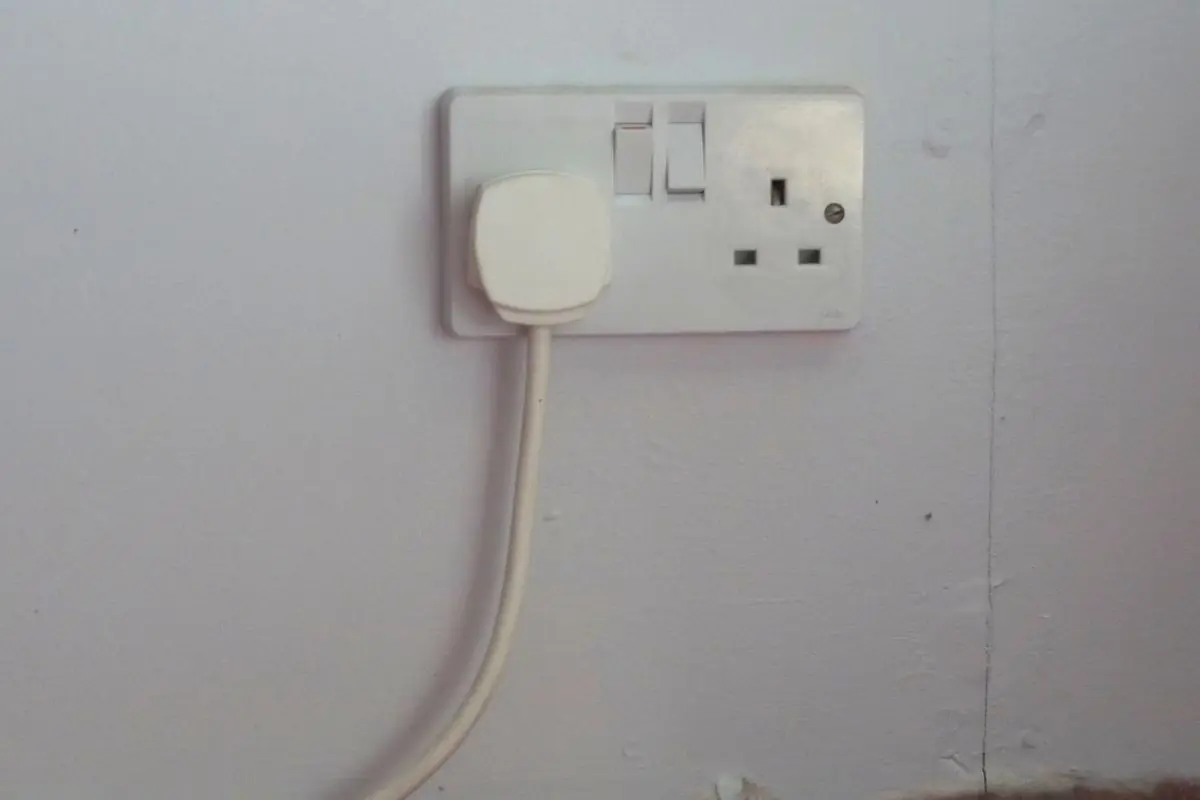
Photo: Thryduulf
No, the common plug shape is different, although the electricity supply is similar.
Singapore uses Type G plugs with three rectangular pins and a 230V/50Hz supply. A Singapore Type G plug will usually need an adapter to connect to a standard Vietnamese Type A or Type C outlet.
Because the two countries have compatible voltage and frequency specifications for most appliances rated 220-240V/50Hz or 100-240V/50/60Hz, a voltage converter is generally unnecessary.
There is one important safety consideration. A Type G plug provides a grounding connection, and a small adapter that converts it to a two-pin plug may not preserve that connection. Appliances that need protective grounding should go through a properly grounded setup.
Are Indian power plugs compatible with Vietnam?
Type C works, D and M need checking
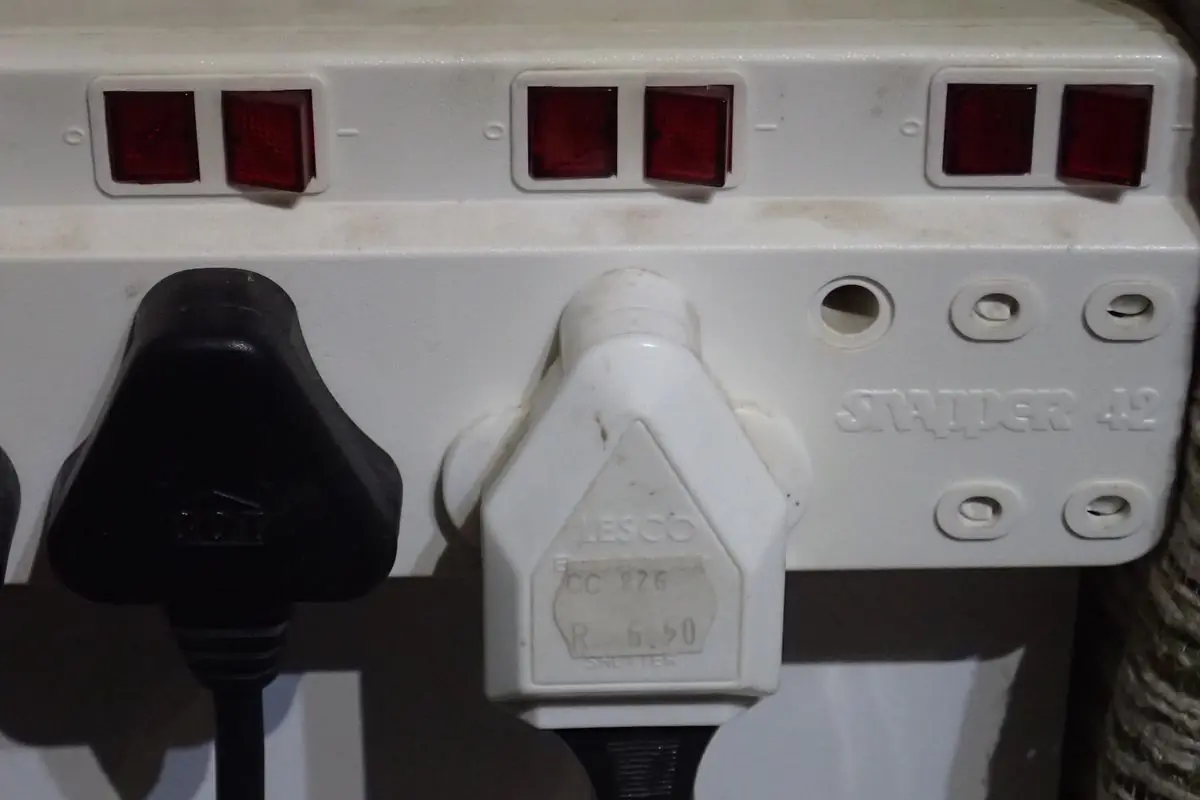
Photo: Pbsouthwood
Some are, but not all.
India uses 230V/50Hz electricity, which is compatible with the voltage used in Vietnam. Many Indian phone chargers have Type C plugs with two small round pins, and these can often be connected directly to compatible Vietnamese outlets.
The main difficulty comes from Type D and Type M plugs. Both have three round pins, but their dimensions differ. A Vietnamese outlet with round holes may still reject either design.
Check whether your laptop's three-pin Indian power cord can be detached from the power adapter. In some cases, purchasing a properly rated replacement cord with the correct plug and grounding connection is simpler than carrying several adapters.
Are Thai power plugs the same as Vietnamese plugs?
Type A and C overlap, Type O differs
Several plug types overlap, but the systems are not identical.
Thailand uses Type C and Type O, while many outlets also accept Type A and Type B plugs. Household electricity there is 230V/50Hz.
A Type A or Type C plug from Thailand will often work with a compatible outlet in Vietnam. The Thai Type O plug is different: it has three round pins, including a grounding pin, and a universal outlet in Vietnam may not accept it correctly or maintain the necessary grounding connection.
Frequent travelers between Bangkok, Hanoi, Da Nang, and Nha Trang may find a good-quality travel adapter supporting the actual plug types they carry a practical purchase. Voltage is usually less of a concern when your appliances are labeled 220-240V, 50Hz.
What power outlets are common in Vietnamese hotels?
In hotels across Hanoi, Ho Chi Minh City, Da Nang, and Nha Trang, you may find Type C sockets, outlets accepting Type A plugs, or combination sockets supporting both. Some rooms also provide universal outlets, USB-A ports, or USB-C charging points beside the bed or desk.
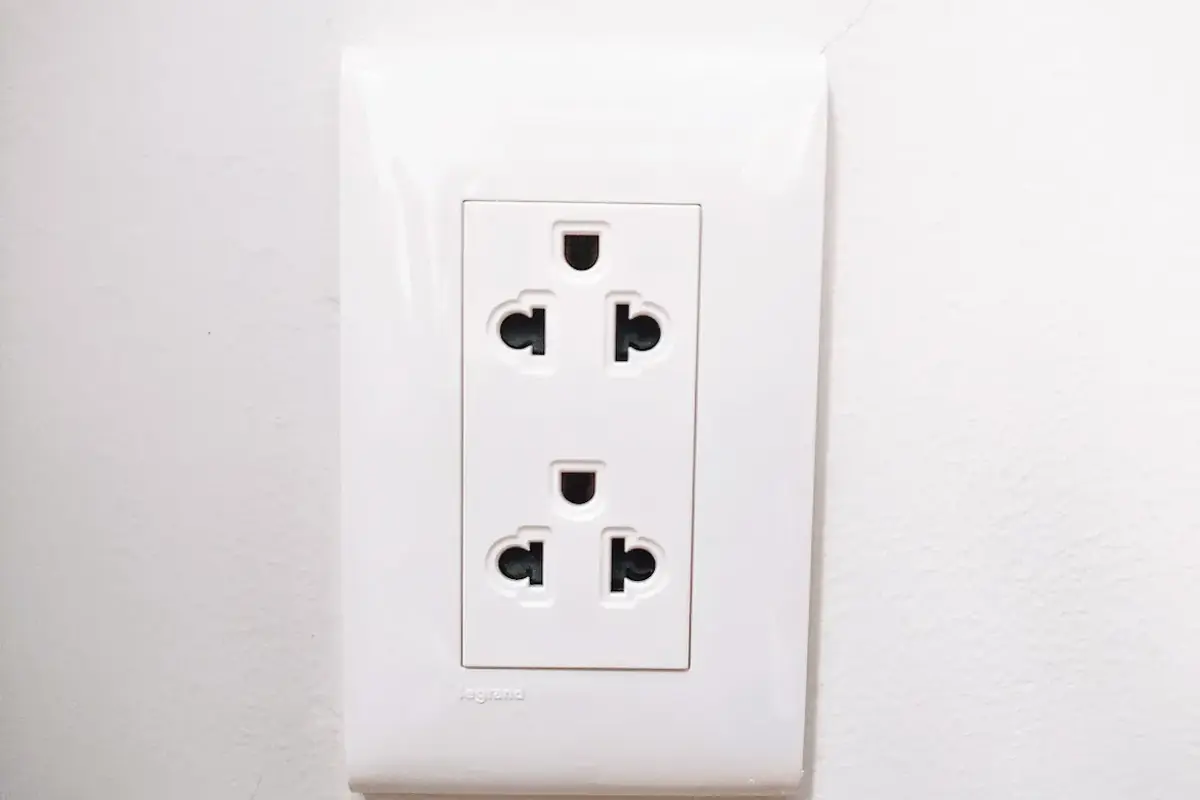
These features depend on the property, room category, and when the electrical fittings were installed or renovated. Do not assume that a five-star hotel will necessarily provide Type G or grounded Type B sockets. Likewise, a small guesthouse may have perfectly usable Type A/C combination outlets.
What should you check before booking?
A regular two-pin outlet is often enough for charging a phone and laptop, provided that your chargers are electrically compatible.
If you are traveling for work or carrying camera equipment, desktop accessories, or appliances requiring grounding, ask the accommodation directly. A simple question works well:
Does the room have Type C sockets or universal power outlets?
Ask specifically about properly grounded outlets as well. The phrase "universal outlet" alone does not guarantee that every plug type is supported safely.
What about hotel outlets in Nha Trang?
Visitors spending a few days in Nha Trang usually need electricity for phones, cameras, camera batteries, laptops, and personal electronics. For these devices, one multiport charger rated 100-240V, used with a suitable plug connection, is often more convenient than carrying several separate adapters.
Outlet designs can vary between beachfront hotels along Tran Phu Street, serviced apartments, and smaller homestays. If you are staying in an apartment for several weeks, it is worth asking about the location of the desk outlets and whether properly grounded connections are available.
Planning to use a hair dryer? Ask whether one is provided in the room. That may save you from bringing a high-wattage 120V hair dryer from the US and having to find a suitable voltage converter.
Can a hotel USB-C port charge your laptop?
Not necessarily. USB-C refers to the connector's shape, not the power output it guarantees.
A USB-C port built into a wall outlet might provide enough power for a phone but not for a laptop. Check the output wattage and whether USB Power Delivery is supported if your computer requires it.
For important work trips, bringing your own manufacturer's charger or a compatible replacement you have already tested remains the more dependable option.
Which devices need a voltage converter in Vietnam?
You cannot determine voltage compatibility from the country of purchase or the plug shape alone. A laptop purchased in the US may work perfectly in Vietnam, while a hair dryer purchased from the same store may be unsuitable. The difference is the electrical input rating printed on each device.
| Device | Typical situation | Recommended action |
|---|---|---|
| Phone charger | Often rated 100-240V, 50/60Hz | Use a compatible plug connection |
| Laptop charger | Commonly supports 100-240V, 50/60Hz | Usually no voltage converter needed |
| Camera battery charger | Many models support multiple voltages | Check the input label |
| American hair dryer | Many models operate only at 110-120V | Do not plug directly into 220V |
| Curling or flat iron | May be single-voltage or dual-voltage | Check the exact model |
| Electric shaver | Depends on the model and charging system | Check the charger and appliance |
| Rice cooker or coffee maker | Often designed for the country where sold | Check voltage, wattage, and frequency |
| Motor-driven appliance | May depend on both voltage and frequency | Follow the manufacturer's instructions |
Phones and laptops: a plug adapter is usually enough
Most modern phone, tablet, and laptop chargers are designed to work across a wide range of electricity supplies. For example, Apple's USB power adapters are designed to work with AC supplies ranging from 100V to 240V at 50-60Hz.
You should still check the charger you actually own, especially if it is a third-party replacement or an accessory from an unfamiliar manufacturer. A typical suitable input label might say:
INPUT: 100-240V~ 50/60Hz 1.5A
This means the power adapter accepts alternating-current electricity from 100V to 240V, at either 50Hz or 60Hz. That is compatible with Vietnam's normal electricity supply.
Hair dryers from the US: one of the biggest compatibility problems
Hair dryers draw considerable power, and many models are designed for the voltage used in the country where they are sold. For example, Dyson hair dryers sold for the US market operate at 110-120V and are designed for the electrical supply of their intended market.

Photo: Element5 Digital
A hair dryer with those specifications cannot be plugged directly into a Vietnamese 220V outlet simply because you have found an adapter that fits. You have three options:
- Use the hair dryer provided by your hotel.
- Bring a travel hair dryer designed for the appropriate voltage and frequency, such as a compatible dual-voltage model.
- Consider a suitable voltage converter only when the appliance manufacturer permits it and the converter meets the appliance's power and technical requirements.
For a short vacation, the first option is usually the easiest. Voltage converters capable of powering high-wattage hair dryers are much larger and heavier than ordinary travel plug adapters, and the motor may also be affected by Vietnam's 50Hz frequency.
Can you use a 110V/220V dual-voltage travel hair dryer?
Some travel hair dryers support two voltage settings and have a manual selector. If your hair dryer has a switch marked 110V/220V, read the manual and select the appropriate setting before plugging it into a Vietnamese outlet. Also confirm that the appliance supports 50Hz operation.
A label displaying both 110V and 220V does not necessarily mean the device switches between them on its own. By comparison, a hair dryer labeled INPUT 100-240V, 50/60Hz is designed to operate across that full range without manual voltage selection, unless the manufacturer specifies otherwise.
Different models from the same brand may have different capabilities. Always check the exact model you own.
Curling irons and hair straighteners
Hair-styling appliances are another category worth checking before departure. Some models accept international voltages, while others are designed for a single country's electrical supply. A compact size or a "travel-friendly" marketing description does not prove that a device supports dual voltage.
Look for the voltage and frequency specifications on the appliance or in its instruction manual. A tool labeled only 120V must not be connected directly to a Vietnamese 220V supply, and if the manufacturer does not permit using a voltage converter either, choosing a styling tool designed for 220-240V is a more appropriate solution.
Electric shavers, toothbrushes, and small electronics
Many rechargeable shavers use multi-voltage power supplies, but there are exceptions.
A device that charges through USB from a charger rated 100-240V only needs the correct cable and a compatible wall connection. Devices that plug directly into the wall or use a dedicated charging stand are different: examine the specifications on that part of the equipment, and do not rely solely on the battery voltage printed on the appliance itself.
This distinction is particularly useful when bringing small electrical devices from the US or Japan.
What is the difference between a plug adapter and a voltage converter?
These accessories perform different jobs and should not be confused.
Travel plug adapters
A travel plug adapter changes the physical connection between your device's plug and the wall outlet. For example, an adapter can allow a Singapore Type G plug to connect to a compatible Vietnamese Type A or Type C outlet.
It does not lower the incoming 220V electricity to 110V. Even an adapter with a large body, multiple AC sockets, or built-in USB charging ports does not convert the voltage supplied through its AC outlet.
An adapter marked 250V-10A does not mean it converts 250V electricity to 110V. Those figures usually describe the electrical ratings the accessory is designed to handle.
Voltage converters and transformers
A voltage converter or transformer is designed to change the voltage supplied to an appliance. Using a 110-120V appliance with Vietnam's 220V electricity means investigating a suitable step-down converter.
But voltage alone is not the only consideration. You also need to check the appliance's wattage, the type of electrical load, the frequency requirements, and the manufacturer's instructions.
A standard 220V-to-110V transformer typically does not change 50Hz electricity into 60Hz electricity. As a result, it may still be unsuitable for an appliance with a motor designed exclusively for 60Hz operation.
When do you need neither?
Suppose your phone charger has a Type C plug and is labeled 100-240V, 50/60Hz. If your accommodation has a compatible Type C outlet, you typically need neither a travel adapter nor a voltage converter.
This is why some travelers can spend several weeks in Vietnam without purchasing any electrical accessories. Bring a 120V hair dryer from the US, on the other hand, and you must resolve the voltage compatibility problem before worrying about the plug shape.
How to choose the right travel plug adapter for Vietnam
A long row of sockets or USB ports does not make an adapter the best one. It should match your equipment, fit the available outlet, and meet the relevant electrical requirements.
Check the plug going in and the plug coming out
Travelers from Singapore need an adapter that accepts a Type G plug; travelers from Australia need one that accepts Type I.
The side connecting to the Vietnamese wall outlet should be compatible with the outlet provided by your accommodation. Type A and Type C are sensible options to prioritize for many travel situations.
Visiting several countries each year makes a reliable universal travel adapter more convenient than carrying multiple individual adapters. Just make sure it supports the actual plug types you use and has clear electrical specifications.
Check the maximum power rating
Travel adapters often carry electrical ratings such as 6A, 10A, or 13A, along with a maximum voltage.
For example, an adapter marked 10A, 250V has specified electrical limits, but that does not mean every appliance below a calculated wattage is safe to use with it. At 220V, multiplying 220V by 10A gives a theoretical power figure of 2,200W. That calculation alone does not establish whether a particular adapter, wall outlet, or cable is appropriate for a 2,200W appliance.
You must also consider the manufacturer's instructions and the ratings of every component in the connection. The lowest applicable limit controls what you can safely connect.
A small adapter intended for charging phones should not be used with a hair dryer, iron, or electric kettle.
Do not overlook grounding
Three-pin plugs may be designed to provide protective grounding, and an adapter that does not maintain the grounding connection can remove that protection.
For laptops and other appliances with grounded power cords, use a properly grounded outlet and compatible adapter when grounding is required. If your hotel room has no suitable grounded outlet, ask the property for another solution.
Is an adapter with USB-A and USB-C ports worth buying?
Adapters with built-in USB ports are convenient if you carry phones, smartwatches, and wireless earbuds. Check their combined output wattage and charging specifications.
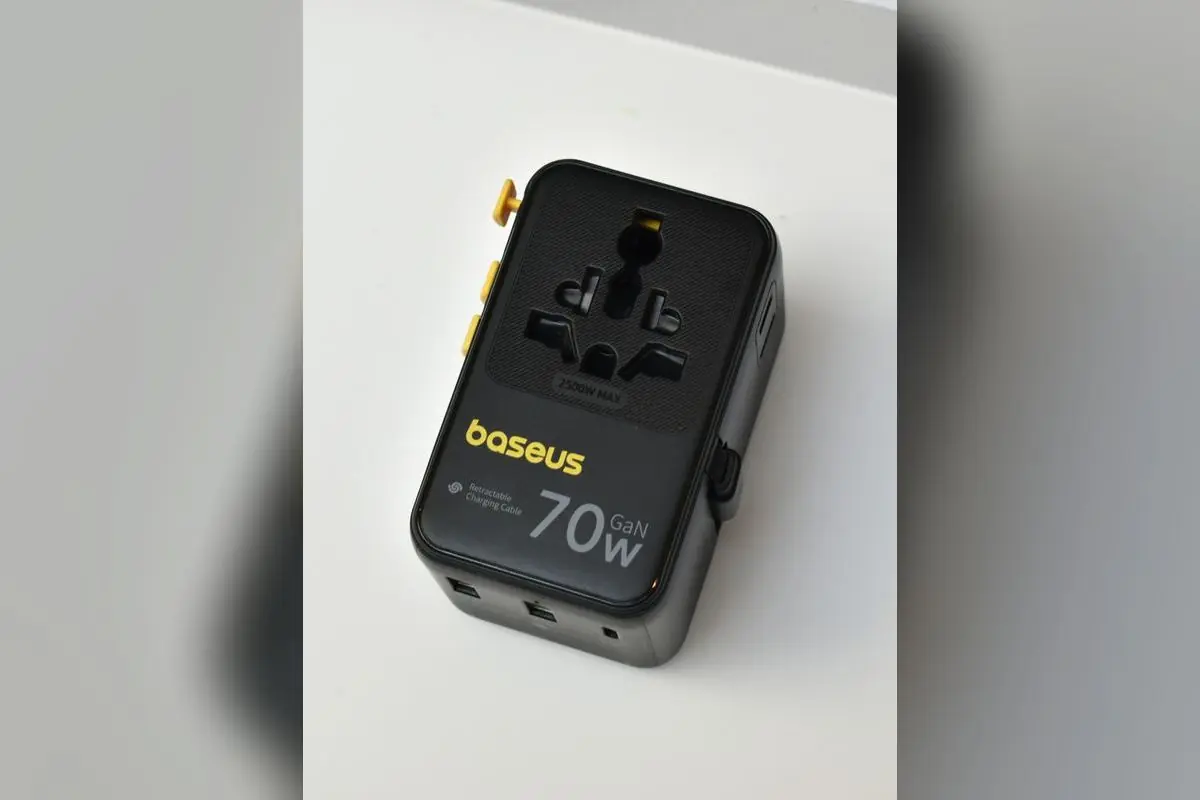
Photo: Gavin Phillips
Two USB-C ports on the same adapter can deliver different amounts of power. Some chargers divide the available power between connected devices, reducing the wattage delivered to each one.
Also, a universal travel adapter with USB-C ports is not equivalent to a high-wattage USB-C Power Delivery charger suitable for a laptop.
Where can you buy a travel plug adapter in Vietnam?
Travel plug adapters are available through electronics stores, electrical supply shops, and retailers selling travel accessories. The easiest option depends on where you are coming from and how urgently you need one.
Buying an adapter before your trip
This is the most convenient choice if your equipment uses Type G, Type I, Type D, or Type M plugs. You can select the correct adapter, inspect its specifications, and test the physical fit before packing.
Choose a product from a retailer that clearly identifies the manufacturer, electrical ratings, warranty terms, and instructions. Avoid choosing solely on price or marketing claims that an adapter works in every country.
Buying an adapter from an electronics retailer in Vietnam
Dien May Xanh is one of Vietnam's major electronics retail chains and sells various electrical accessories, including travel adapters. For example, the Dien Quang TV-01 travel adapter it sells has a rated voltage of 250V, a rated current of 10A, and a listed maximum power of 2,500W.
These are electrical ratings for the accessory. They do not mean that the adapter converts 220V electricity into 110V.
Prices and availability depend on the store, location, promotions, and purchase date. Rather than relying on an old promotional price, check the current listing or contact the store before visiting.
Ask whether the adapter maintains grounding if your equipment requires it, and check the maximum electrical rating before purchasing.
Can you buy an adapter at the airport?
Airport shops may be convenient for last-minute purchases, but you should not assume every airport stocks the exact adapter you need. Uncommon three-pin plugs or adapters that must preserve grounding may be harder to find than basic two-pin travel adapters.
Arriving at Cam Ranh International Airport and heading to Nha Trang? Bring the necessary adapter in your carry-on luggage when you know you will need to charge a device immediately after arrival. That is particularly useful for a late-night arrival.
Should you bring a power strip?
Travelers staying in hotels or apartments for an extended period may consider a suitably rated power strip. A power strip does not convert voltage, though, and it needs to meet the relevant electrical ratings and grounding requirements.
Check your accommodation's rules before using your own extension cords or power strips. If you only need to charge two phones and a laptop, a properly rated multiport charger is often more compact and practical.
What should Vietnamese buyers check when importing electronics?
The same electricity compatibility issues apply to Vietnamese residents buying appliances from overseas. You might order a coffee machine, hair dryer, shaver, kitchen appliance, or personal electronics from another country.
The plug may look familiar in the product photos, but that does not mean the device is suitable for Vietnamese electricity.
Buying electrical appliances from the United States
The first question is whether the appliance supports only 120V or accepts an international voltage range. A device marked 120V, 60Hz must not be connected directly to Vietnam's 220V supply.
Confirm the power requirements and available options with the manufacturer before planning long-term use. Even a correctly rated step-down transformer may not resolve a frequency difference for certain appliances.
Some products also come in a 220-240V version intended for another market, and buying that version is often simpler than relying on external voltage conversion indefinitely.
Buying from Singapore, the UK, or Europe
Many of these markets use household electricity around 220-240V at 50Hz. As a result, appliances designed for those supplies are often electrically compatible with Vietnam.
The main issue may be the plug shape and grounding requirements. For example, an appliance from Singapore may require a Type G adapter or a properly rated replacement power cord. Always check the exact model, especially when products are manufactured specifically for individual markets.
Buying appliances from Japan
Japan uses 100V household electricity, with 50Hz or 60Hz depending on the region. A Japanese domestic appliance designed only for 100V must not be plugged directly into a Vietnamese 220V outlet.
Some Japanese electronics use international power supplies, but many household appliances do not. Read the input rating carefully: two flat pins that fit a Vietnamese outlet do not make a Japanese appliance compatible.
Should you replace the power cord instead of using an adapter?
For appliances with detachable power cords, you may be able to purchase a properly rated replacement cord with a Vietnamese-compatible plug. This is appropriate only when the device or its power supply already supports Vietnam's voltage and frequency.
Changing the power cord does not transform a 120V-only appliance into a 220V appliance. The replacement must also have the correct connector, electrical ratings, and grounding arrangement.
Five common electrical mistakes travelers should avoid in Vietnam
Plugging a 110V device into a 220V outlet because the pins fit
This can damage the appliance as soon as power is supplied. A Type A plug may fit physically, but the device may still be incompatible with Vietnam's voltage. Always check the INPUT label first.
Assuming a 250V travel adapter converts electricity
A 250V marking usually indicates the maximum voltage rating of the adapter. It does not mean the adapter reduces a 220V supply to 110V; voltage conversion takes an appropriate converter.
Using a grounded appliance without proper grounding
Not every universal outlet provides a suitable grounding connection. Equipment that requires grounding must be connected through an appropriate grounded system, and an adapter without a functioning grounding connection is not an equivalent substitute.
Using a small adapter with a high-wattage hair dryer
Adapters can be overloaded when connected to appliances exceeding their electrical ratings.
Before using a high-power appliance, check the device's wattage, the adapter's current and power limits, and the wall outlet's requirements. Also confirm that the appliance supports Vietnam's voltage and frequency.
Continuing to use a loose or damaged outlet
If the plug does not stay firmly connected, the outlet is cracked or discolored, or you notice buzzing, unusual heat, or a burning smell, stop using it and inform the accommodation staff.
Do not try to repair a hotel outlet or wedge objects around a loose plug. Electrical outlets should be inspected and repaired by qualified personnel.
What electronics should you check before packing for Vietnam?
A few minutes checking your actual equipment is more useful than carrying a collection of electrical accessories for every possible situation. Before closing your suitcase, follow these steps:
- Step 1
Gather everything that needs a wall outlet
Include your phone, laptop, camera battery charger, hair dryer, styling tools, electric shaver, and any personal medical equipment.
- Step 2
Read or photograph the INPUT label
Look for voltage, frequency, current, and wattage. Check the manufacturer's instructions for specialized equipment.
- Step 3
Identify each plug type
Determine whether it is Type A, B, C, D, G, I, or another design. Note which appliances require protective grounding.
- Step 4
Separate multi-voltage from single-voltage equipment
A charger supporting 100-240V may only need an adapter. A single-voltage appliance needs closer checking.
- Step 5
Choose the appropriate accessories
Use adapters with suitable ratings and grounding arrangements, preferably purchased from a reliable seller.
Travelers from the United States should pay particular attention to hair dryers, curling irons, and household appliances, which are among the devices more likely to be affected by the voltage difference.
Travelers from Singapore, the UK, and Australia will often need a plug adapter, even when their appliances are already compatible with Vietnam's electricity supply. Visitors from Thailand and European countries using small Type C two-pin plugs may not need any adapter at all.
One final distinction matters for nearly everyone: the shape of the plug tells you whether it fits; the electrical label tells you whether it can operate.
Quick recommendation: who needs an adapter, and who needs a converter?
If you only carry a phone and laptop with chargers labeled 100-240V, 50/60Hz, you generally need a plug adapter only when your existing plugs do not fit. Travelers from Singapore, the UK, and Australia should usually pack one, while visitors bringing electronics from the US or Japan should pay particular attention to voltage compatibility. Never connect an appliance designed only for 110-120V directly to Vietnam's 220V supply.
FAQ
What power plug types are used in Vietnam?
Vietnam commonly uses Type A plugs with two flat pins and Type C plugs with two round pins. Combination outlets accepting both are widely encountered, while grounded Type B outlets and other designs may be found in some buildings. The country's household electricity supply is generally described as 220V/50Hz.
Do American travelers need a plug adapter in Vietnam?
Not always. American Type A plugs can fit many outlets in Vietnam, but the voltage must still be compatible. A charger rated 100-240V, 50/60Hz will generally work, while a device designed only for 120V must not be connected directly to Vietnam's 220V electricity supply.
Are Thailand's power outlets the same as Vietnam's?
Partially. Both countries commonly accommodate Type A and Type C plugs, but Thailand also uses Type O, which should not automatically be considered compatible with Vietnamese outlets. Both countries use 50Hz electricity, and their nominal household voltages are similar.
Can I use an American hair dryer in Vietnam?
Only if that specific model supports Vietnam's voltage and frequency. A hair dryer designed exclusively for 110-120V cannot be connected directly to a 220V outlet, even with a plug adapter. For a short trip, using the hotel's hair dryer or bringing a compatible dual-voltage travel model is usually the simplest choice.
Can I buy a travel plug adapter in Vietnam?
Yes. Travel adapters are available from electronics retailers, electrical supply stores, and accessory shops. Check the supported plug types, rated voltage and current, maximum power, and grounding arrangements before buying. Remember that a normal plug adapter does not convert voltage.
Related posts
Guides
Why can some travelers stay in Vietnam for 45 days without a visa?
Check your passport, visa-free stay allowance, and official application options before traveling to Vietnam.

Food
Nha Trang banh can is best fresh off the griddle, whatever the time of day
Find the right Nha Trang banh can shop for your location, schedule, and favorite toppings.

Places
A Mekong Delta day trip is worth it for My Tho and Ben Tre, not Can Tho
Choose My Tho and Ben Tre for a day trip; stay overnight in Can Tho if you want to visit Cai Rang Floating Market.