How to use Vietnam currency: recognize banknotes, exchange money, and pay correctly
In major cities and larger hotels, international cards work well for bigger purchases. At street food stalls, local markets, and rural destinations, carry Vietnamese dong in smaller 10,000-50,000 VND notes.
Written by Tụi mình mê biểnUpdated
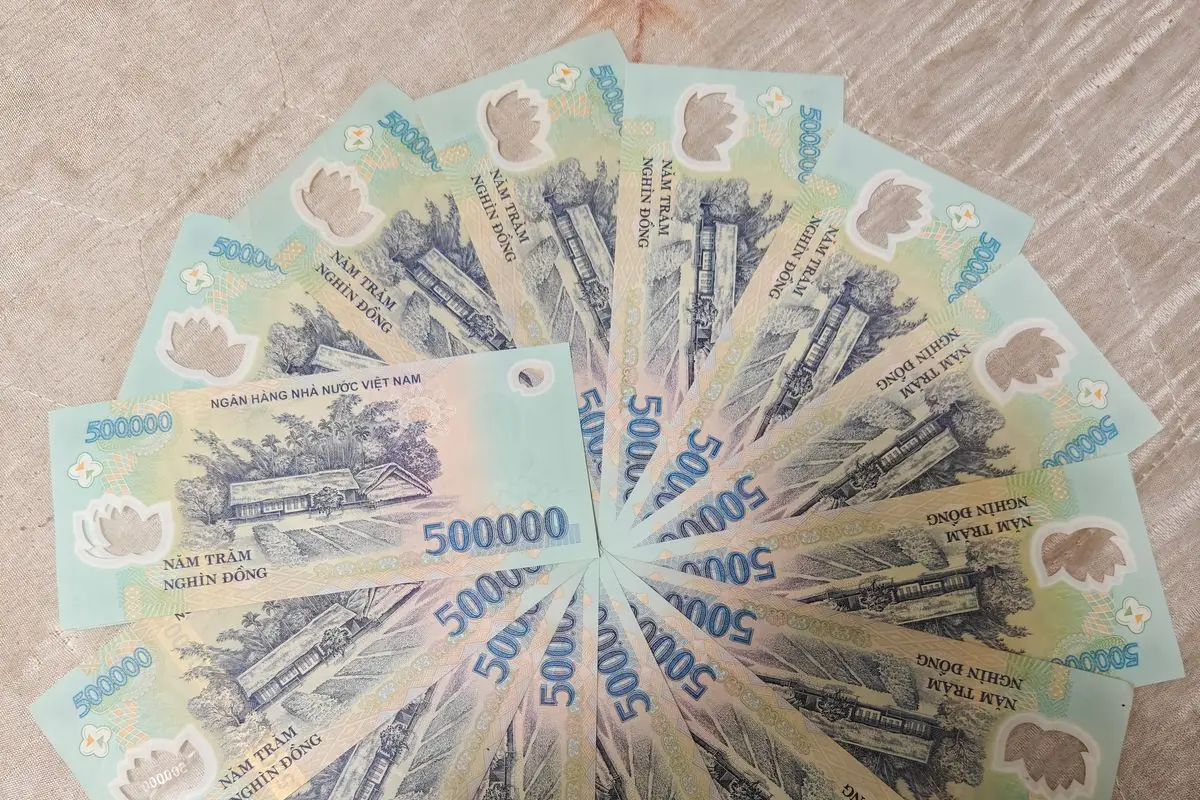
Photo: HuangWending18072009
The 20,000 VND and 500,000 VND banknotes are both blue, but one is worth 25 times more than the other. A menu showing 150k means 150,000 Vietnamese dong, while a green 100,000 VND note is worth ten times as much as a brownish-yellow 10,000 VND note. Once you understand the denominations, recognize the easily confused bills, and know where to exchange money legally, paying for things in Vietnam becomes much easier.
What is Vietnamese money? Understanding VND, VNĐ, and ₫
Vietnam's official currency is the Vietnamese dong, abbreviated as VND. You may also see VNĐ or the currency symbol ₫. In everyday conversations, Vietnamese people usually shorten amounts to "thousand," "hundred thousand," or "million."
Prices can appear in several formats:
| Written amount | Actual value |
|---|---|
| 10.000đ | 10,000 VND |
| 10k | 10,000 VND |
| 50 nghìn | 50,000 VND |
| 100k | 100,000 VND |
| 1 triệu | 1,000,000 VND |
| 1,5 triệu | 1,500,000 VND |
| 2tr | 2,000,000 VND |
The letter k generally means thousand. On a café menu, restaurant price list, or market sign, 35k and 35.000đ mean exactly the same amount.
Vietnam also uses number separators differently from American English. A period normally separates thousands, while a comma marks decimals. For example, 1.500.000 VND means one million five hundred thousand dong. This is worth remembering when reading menus, booking transportation, or checking hotel bills.
Vendors also shorten spoken amounts. Someone might say "năm chục" for 50,000 VND or "hai trăm" for 200,000 VND when the context is clear. Looking at the amount on a calculator, receipt, or phone screen is safer than guessing what someone means, especially on a first visit.
Vietnamese currency denominations: which banknotes are in circulation?
Vietnam uses two main types of banknotes: polymer notes and traditional cotton-paper notes.
Polymer notes range from 10,000 to 500,000 VND. They have a slightly glossy surface, resist water better than ordinary paper, and contain transparent security windows.
Cotton-paper notes are more common in smaller denominations, particularly 1,000, 2,000, and 5,000 VND. The 100, 200, and 500 VND paper notes remain legal currency, although they are rarely encountered in everyday transactions.
All 12 Vietnamese banknote denominations
| Denomination | Material | Main color and identifying image |
|---|---|---|
| 500,000 VND | Polymer | Light blue with purple tones; a traditional house in Sen Village, Kim Lien, on the reverse |
| 200,000 VND | Polymer | Reddish brown; Ha Long Bay on the reverse |
| 100,000 VND | Polymer | Green; the Temple of Literature in Hanoi on the reverse |
| 50,000 VND | Polymer | Pinkish purple and reddish brown; Phu Van Lau and Nghinh Luong Dinh in Hue on the reverse |
| 20,000 VND | Polymer | Dark blue; the Japanese Covered Bridge in Hoi An on the reverse |
| 10,000 VND | Polymer | Yellowish brown; the Bach Ho oil field on the reverse |
| 5,000 VND | Cotton paper | Dark blue; the Tri An Hydropower Plant on the reverse |
| 2,000 VND | Cotton paper | Brown; the Nam Dinh Textile Factory on the reverse |
| 1,000 VND | Cotton paper | Purple; a logging scene on the reverse |
| 500 VND | Cotton paper | Small denomination, rarely seen |
| 200 VND | Cotton paper | Small denomination, rarely seen |
| 100 VND | Cotton paper | Small denomination, rarely seen |
Colors are useful for quick identification, but they should not be your only reference. Older banknotes may have faded, and poor lighting can make different denominations look more similar.
The six polymer denominations from 10,000 to 500,000 VND are the ones most visitors need to recognize. You can use them for nearly all ordinary purchases, from meals and transportation to shopping and accommodation.
The 1,000, 2,000, and 5,000 VND notes are still useful for small purchases and change. A 1,000 VND note has little purchasing power today, but it remains valid currency.
Vietnam also has coins in denominations of 200, 500, 1,000, 2,000, and 5,000 VND. They are legally recognized but have become extremely uncommon in day-to-day transactions.
What makes Vietnamese polymer money different?
Pick up a 100,000 VND banknote and you will notice that it feels different from ordinary paper money. The surface is smoother, slightly flexible, and more resistant to moisture, because it is made from polymer rather than traditional cotton paper.
Vietnam introduced polymer banknotes in 2003 and gradually added more denominations afterward. Today, the six polymer denominations are 10,000, 20,000, 50,000, 100,000, 200,000, and 500,000 VND.
These notes have several security features, including transparent windows, watermarks, raised printing, and elements that change appearance when tilted. You can examine many of these features without special equipment.
New polymer notes sometimes stick together. When receiving a stack from a bank or ATM, separate the notes with your fingers and count them individually.
Avoid scrunching, stretching, or scratching the surface to test authenticity. These methods are unreliable and may damage the banknotes.
How to check Vietnamese polymer notes
- Step 1
Look at the transparent window
Start with the transparent window. It is built into the banknote's material itself, with no sticker over a hole.
- Step 2
Hold it up to the light
Next, hold the note toward a light source and look for watermarks and detailed printed patterns. Some denominations also have color-shifting ink that changes appearance when the banknote is tilted.
- Step 3
Feel the raised printing
Finally, run a finger over the portrait of Ho Chi Minh, the national emblem, or other raised printing on the front. Genuine notes have textured areas that feel different from the smoother background.
No single feature is sufficient to confirm authenticity. If a note looks suspicious, ask for a different one or have it checked at a bank.
Which Vietnamese banknotes are easiest to confuse?
20,000 VND vs. 500,000 VND
Both blue, 25 times apart
First-time visitors mix up this pair more than any other.
Both notes have blue tones. In dim lighting, inside a taxi, or at a crowded market stall, it is possible to hand over a 500,000 VND note when you intended to pay 20,000 VND.
The easiest ways to distinguish them are size and the image on the reverse. The 20,000 VND note is smaller and features the Japanese Covered Bridge in Hoi An. The 500,000 VND note is larger and shows a traditional house in Sen Village, associated with Ho Chi Minh's childhood.
Do not rely on color alone. Read the entire denomination before handing over the note.
The difference is 480,000 VND, or almost 19 USD at the 25,600 VND reference rate.
10,000 VND vs. 200,000 VND
Both brown, very different sizes
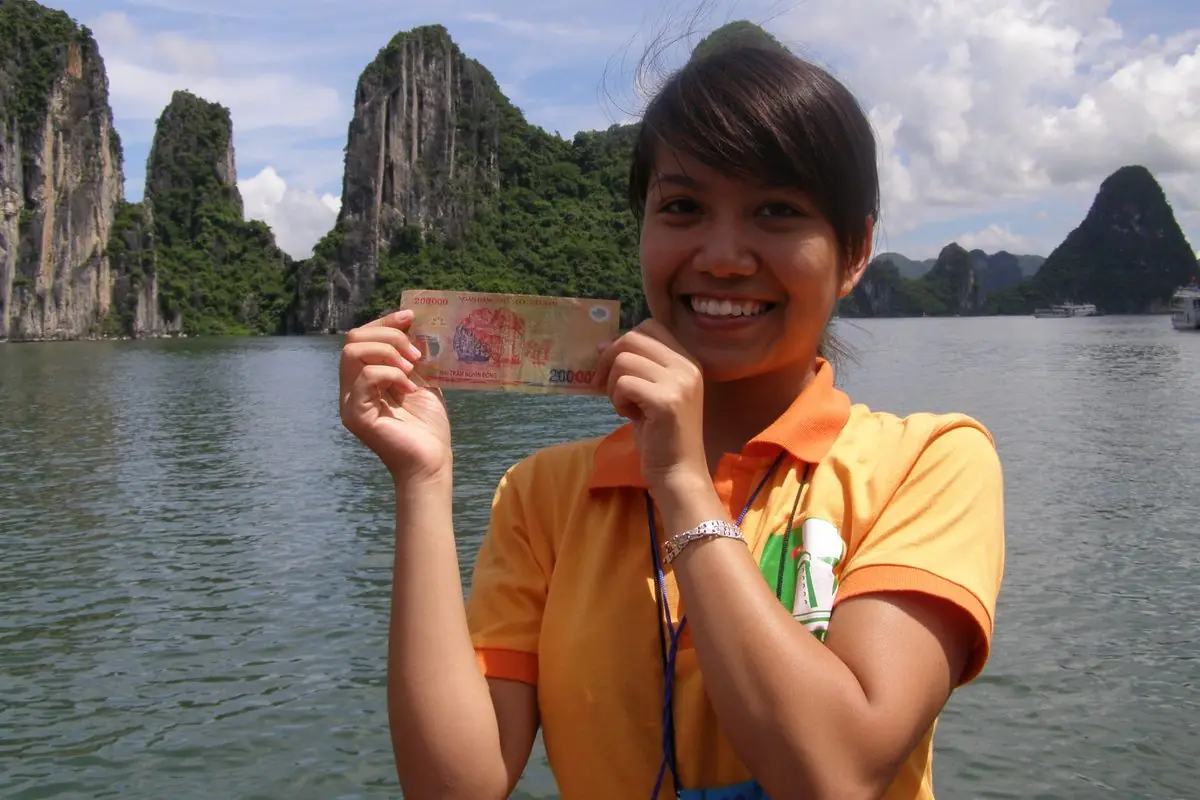
Photo: RG72
Both notes contain brown tones, although the 10,000 VND note is considerably smaller. The 10,000 VND note features the Bach Ho oil field, while the 200,000 VND note shows Ha Long Bay.
The 200,000 VND note has one more zero than the 20,000 VND note, but it is worth twenty times as much as the 10,000 VND note.
Some visitors focus on the first digit without reading all the zeros. Check the complete number every time.
10,000 VND vs. 100,000 VND
Both start with 1, different colors
Both are polymer notes with Ho Chi Minh's portrait on the front, and both denominations begin with the digit 1.
Their colors are quite different, though. The 10,000 VND note is yellowish brown; the 100,000 VND note is green.
Their reverse images also differ: the 10,000 VND note shows the Bach Ho oil field, while the 100,000 VND note shows the Temple of Literature in Hanoi.
One 100,000 VND note is worth ten 10,000 VND notes.
50,000 VND vs. 200,000 VND
Both with reddish-brown tones
These notes both contain reddish-brown tones. The 50,000 VND note leans toward pink and purple, while the 200,000 VND note has a deeper reddish-brown appearance.
Check the reverse if you are unsure. The 50,000 VND note features architectural landmarks in Hue. The 200,000 VND note shows Ha Long Bay.
When paying, take out individual notes and count them yourself rather than handing over a large stack for the vendor to select from.
How much is Vietnamese money in USD?
The USD-to-VND exchange rate changes daily and varies between banks. There is no single fixed rate that applies to every transaction.
Vietcombank's USD rates on November 6, 2026:
| Transaction type | Exchange rate |
|---|---|
| Vietcombank buys USD cash | 25,370 VND/USD |
| Vietcombank buys USD by bank transfer | 25,400 VND/USD |
| Vietcombank sells USD | 25,780 VND/USD |
If you bring US dollar bills to a bank and exchange them for Vietnamese dong, look at the cash buying rate.
For example, exchanging 100 USD in cash at 25,370 VND per USD would give you approximately 2,537,000 VND. Exchanging 200 USD would give you about 5,074,000 VND, before any applicable fees.
Buying USD with Vietnamese dong uses the bank's selling rate, and you must meet the applicable transaction requirements. The bank's USD buying rate should not be used for both directions.
Quick VND-to-USD conversion table
Everyday travel math works fine with a rounded reference rate of 1 USD to about 25,600 VND.
| Vietnamese dong | Approximate USD |
|---|---|
| 10,000 VND | $0.39 |
| 20,000 VND | $0.78 |
| 50,000 VND | $1.95 |
| 100,000 VND | $3.91 |
| 200,000 VND | $7.81 |
| 500,000 VND | $19.53 |
| 1,000,000 VND | $39.06 |
| 2,000,000 VND | $78.13 |
| 5,000,000 VND | $195.31 |
How to convert VND to USD in your head
One simple method is to remove the last three zeros from the VND amount and divide the remaining number by approximately 25.6. For example, 256,000 VND becomes 256, and 256 divided by 25.6 equals 10 USD. Likewise, 128,000 VND is approximately 5 USD.
An even easier method is to memorize three reference points:
- 100,000 VND is about $4.
- 250,000 VND is nearly $10.
- 500,000 VND is nearly $20.
These figures are accurate enough for a quick estimate of whether a meal, souvenir, or short ride is reasonably priced. Larger payments such as hotel rooms, multi-day tours, or private transportation deserve a check of the actual exchange rate.
How to convert USD to VND
Multiply the US dollar amount by the reference exchange rate. For example, 10 USD multiplied by 25,600 equals approximately 256,000 VND. Similarly, 50 USD equals about 1,280,000 VND.
Multiplying by 25,000 gives a very quick rough estimate, although it will be less accurate for larger amounts.
Travelers whose home currency is EUR, GBP, AUD, or SGD should check the direct exchange rate for that currency. Converting everything into USD first adds a second step and unnecessary estimation errors.
Where should you exchange money in Vietnam?
The safest and most straightforward choices are banks authorized to conduct foreign exchange transactions and licensed foreign currency exchange agents.
Major banks such as Vietcombank, BIDV, VietinBank, and Agribank have branches in many Vietnamese cities, but not every branch handles every foreign currency in cash. Before visiting, check whether the branch accepts the currency you are carrying. US dollars and euros are easier to exchange than less commonly traded currencies.
Exchanging money at a bank
Banks are suitable when you want clear exchange rates, a clear transaction record, and official receipts.
Bring your passport, as the bank may require identification. Keep your foreign currency notes clean, flat, and undamaged. Torn or heavily damaged banknotes may be rejected or handled under special conditions.
Before handing over your money, ask how many Vietnamese dong you will actually receive. The rate displayed on the bank's website may not be identical when you reach the counter, since rates can change during the day.
Count the VND notes before leaving and keep your transaction receipt. The receipt can be useful if you later need to clarify a transaction or exchange remaining dong before leaving Vietnam.
Using a licensed currency exchange agent
Some authorized currency exchange counters are located in hotels, tourist areas, shopping centers, and airports. These may operate as exchange agents for licensed credit institutions.
Not every hotel, jewelry store, or tourist service counter is legally authorized to exchange foreign currency. Choose a properly licensed exchange location rather than assuming that a business displaying a USD or EUR sign can legally exchange money.
Foreign exchange agents primarily buy foreign currency cash from individuals and pay them in Vietnamese dong. Selling foreign currency back to individuals is allowed only in legally permitted circumstances, including certain agents in international border-gate restricted areas.
This means exchanging USD into VND is easier than exchanging leftover VND back into USD.
Should you exchange money at the airport?
Having some Vietnamese dong before leaving the airport is useful, especially if you need to pay for transportation, buy a SIM card, or use a service that does not accept cards.
There is no need to exchange your entire trip budget immediately. Exchange a small amount at a licensed airport counter or withdraw VND from an ATM that accepts international cards, then handle the remaining cash needs after reaching the city.
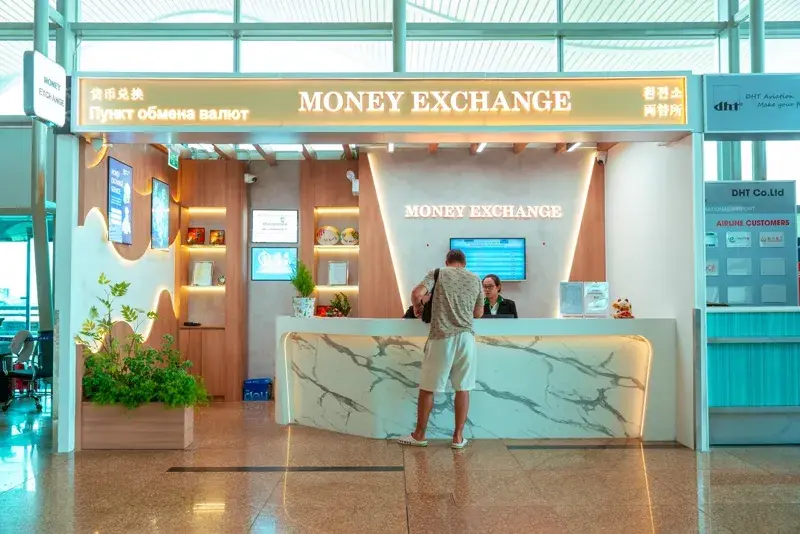
Late-night arrivals should check whether the exchange counter will still be open. ATMs may operate outside normal banking hours, but individual machines can run out of cash or become temporarily unavailable.
Traveling to an island, mountainous area, or remote village? Exchange or withdraw sufficient money before leaving a major town.
Is withdrawing Vietnamese dong from ATMs convenient?
ATMs are a practical option if you have an international debit card and prefer not to carry large amounts of foreign currency cash.
In Hanoi, Ho Chi Minh City, Da Nang, Nha Trang, Hue, and other major destinations, you can find ATMs operated by Vietcombank, BIDV, VietinBank, Agribank, and other banks.
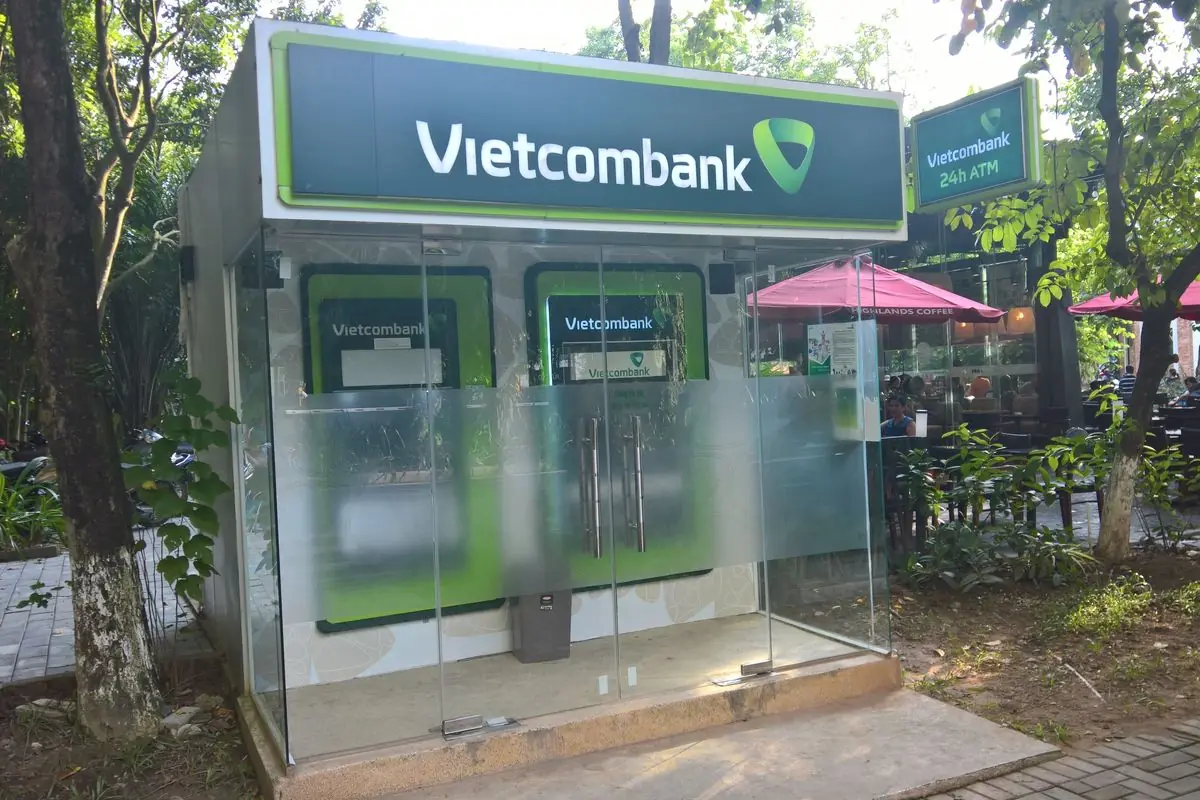
Photo: Donald Trung
Choose a machine displaying a compatible payment network logo, such as Visa/PLUS or Mastercard/Cirrus. Whether your card works also depends on your issuing bank and whether international withdrawals are enabled.
What ATM fees should you expect?
There are three potential costs: a fee charged by the Vietnamese ATM operator, an overseas cash withdrawal fee from your card-issuing bank, and the currency conversion cost, which may be included in the exchange rate or charged separately.
There is no universal ATM withdrawal fee for all banks or cardholders.
Withdrawal limits also differ between machines. Some allow only a few million dong per transaction, while others offer higher limits. Check the maximum amount shown on the ATM screen rather than relying on a fixed figure.
Making many small withdrawals can become expensive if fees are charged each time. Withdrawing your entire travel budget on the first day, on the other hand, means carrying more cash than necessary.
A debit card suits ATM withdrawals better than a credit card for most travelers. Credit card withdrawals may be treated as cash advances, with additional fees and interest according to the issuing bank's terms.
Should you choose VND or USD on an ATM screen?
An ATM that offers to convert your withdrawal into USD or your card's home currency is offering Dynamic Currency Conversion, commonly called DCC. With DCC, the ATM operator or payment service provider performs the conversion using its own exchange rate, potentially including an additional markup.
This lets your card network and issuing bank handle the currency conversion instead. Your issuing bank may still charge foreign transaction fees.
Declining DCC does not normally mean canceling the withdrawal. Read the options carefully before confirming.
If an ATM fails to dispense cash, retains your card, or displays a transaction error, contact both the ATM operator and your issuing bank. Machines located at bank branches or staffed locations may be easier to get assistance with.
How widely accepted are credit and debit cards in Vietnam?
Card payments are common in major cities and established tourist areas, but acceptance is far from universal.
Visa and Mastercard are frequently accepted at larger hotels, resorts, shopping malls, supermarkets, restaurants, and established tour companies.
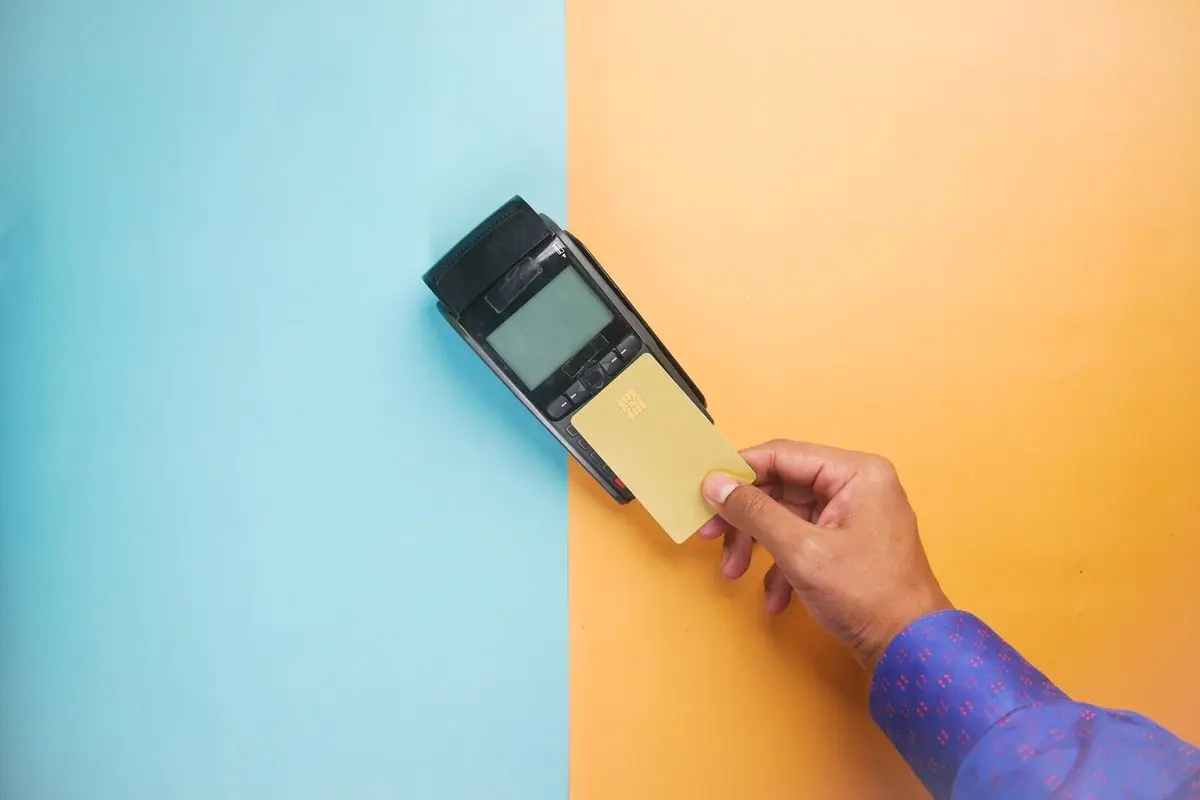
Photo: Pexels
Small street food stalls, traditional market vendors, neighborhood cafés, and rural businesses may accept only cash or local bank transfers.
| Where you are paying | Payment method to prepare |
|---|---|
| Large hotels and resorts | International card or advance payment |
| Restaurants with POS terminals | Card or cash |
| Supermarkets and convenience stores | Card or cash |
| Street food stalls | Cash |
| Traditional markets | Cash, preferably smaller notes |
| Regular taxis | Cash or card where supported |
| App-booked transportation | Payment methods available in the app |
| Small attractions and remote destinations | Cash |
| VietQRGlobal merchants | Compatible foreign payment app or cash |
These are practical guidelines; individual businesses in a category may accept different methods.
Can you use Apple Pay and Google Pay in Vietnam?
An international card already linked to Apple Pay or Google Pay may work through your phone at compatible contactless payment terminals.
However, not all POS terminals support contactless transactions, and not every foreign-issued card is enabled for mobile wallet payments.
Carry at least one physical card as a backup. A dead phone battery, connection problem, or incompatible terminal can make mobile payments unavailable.
Can foreign tourists use MoMo, ZaloPay, and VietQR?
MoMo, ZaloPay, and VietQR bank transfer payments are familiar to Vietnamese residents. Many small shops that do not have card terminals display QR codes next to the cashier, and customers with Vietnamese bank accounts can scan the code using their banking apps and transfer money directly.
Local wallets and domestic bank transfers may be more complicated for short-term foreign visitors. Account registration, identity verification, and supported funding methods can all affect eligibility.
VietQRGlobal: paying with a foreign app
Vietnam has been expanding VietQRGlobal to support cross-border QR payments through participating foreign banks and payment applications.
The network has completed cross-border QR payment connections with China, South Korea, Thailand, Laos, Cambodia, and Singapore.
Some participating applications from Singapore, along with supported services in the Alipay and Weixin Pay ecosystems, may work at compatible merchants. A country being connected does not mean that every bank or digital wallet in that country supports the service.
Before traveling, check whether your own payment app supports QR transactions in Vietnam. At the merchant, look for VietQRGlobal acceptance and confirm compatibility before scanning.
For first-time visitors, a combination of cash and an international payment card remains the simplest backup arrangement.
How much cash should you carry in Vietnam?
Your entire travel budget does not have to be in cash. The appropriate amount depends on where you are going, how you are traveling, and which expenses you have already paid.
With accommodation, flights, and major tours prepaid, you will generally need much less cash.
Major cities: around 500,000-1,000,000 VND per day
This is a suggested cash reserve for one person visiting a city while using cards for larger expenses. It is not a fixed average daily travel budget.
With this amount in your wallet, you have some flexibility for street food, drinks, small purchases, local transportation, and businesses that do not accept international cards.
For example, you can divide 800,000 VND into:
- Two 200,000 VND notes
- Two 100,000 VND notes
- Two 50,000 VND notes
- Four 20,000 VND notes
- Two 10,000 VND notes
This combination gives you smaller denominations without needing to use a 500,000 VND note for every purchase.
Restaurants that accept cards, ride-hailing apps, and attractions with electronic ticketing all reduce the cash you need.
Rural areas, mountains, and islands: plan around actual expenses
Some destinations outside major towns have fewer ATMs, limited banking services, or unreliable mobile connections. Ask your accommodation provider whether cards are accepted and where the nearest ATM is located.
If you need cash for your homestay, meals, local transportation, and activities, calculate those expenses before leaving the city.
Carrying around 1-2 million VND per person may be a reasonable starting point for a short remote segment with several unpaid expenses, but a multi-day trekking trip or private vehicle arrangement may require a different amount.
Do not treat that figure as a complete budget. The real figure depends on the number of nights, transportation costs, meals not included in your booking, and possible extra expenses if your itinerary changes.
Should you carry many 500,000 VND notes?
The 500,000 VND note is convenient for carrying larger amounts of money, but it is not ideal for small purchases. A street vendor may not have enough change, especially early in the day before making many sales.
Use larger notes at supermarkets, hotels, and establishments with well-stocked cash registers, and keep the smaller notes you receive for everyday purchases.
It is also easier to prepare change beforehand rather than asking a busy street vendor to break a large note when you are not buying anything.
What do you need small Vietnamese banknotes for?
Smaller denominations are more useful than they might initially appear.
The 10,000, 20,000, and 50,000 VND notes are convenient for street food, bottled drinks, snacks, parking fees, and other minor expenses.
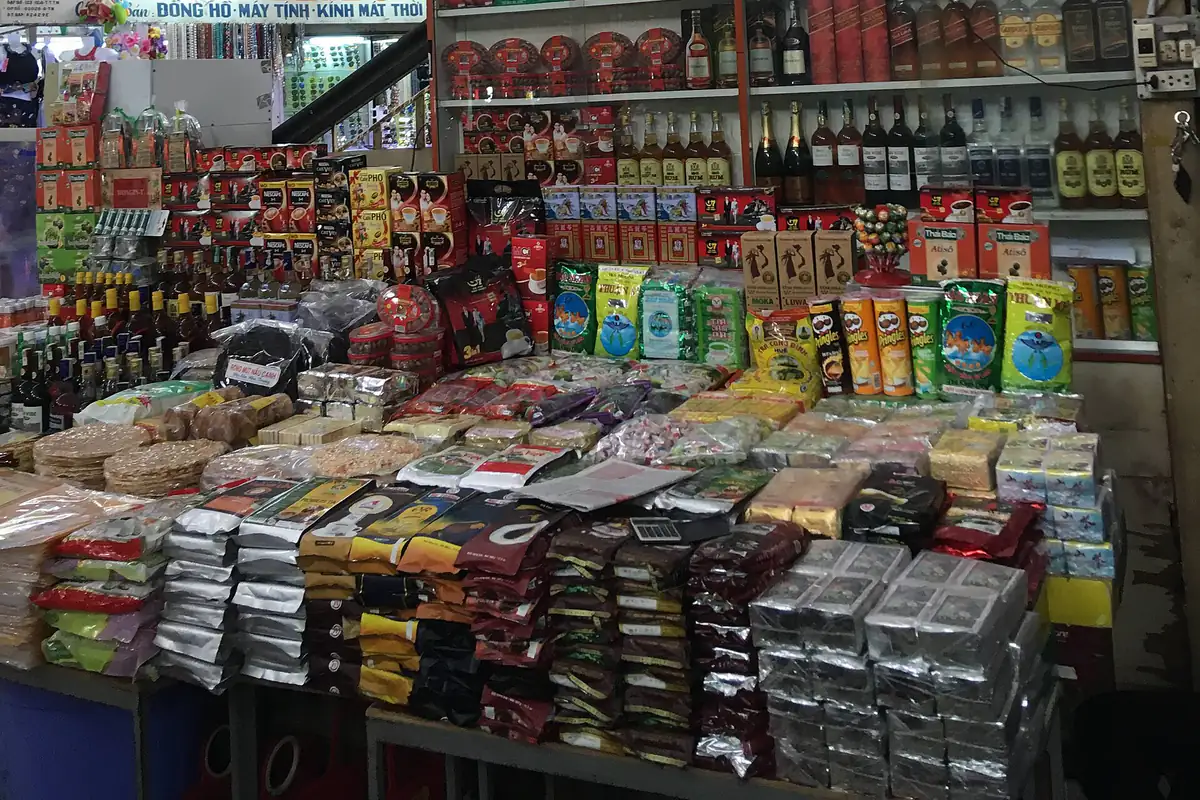
Photo: Christophe95
The 100,000 VND note is useful as well because it can be combined with smaller bills. Keeping a few 10,000 and 20,000 VND notes in an accessible section of your wallet means you rarely need to wait while a vendor looks for change.
How to manage small bills
At the beginning of each day, check how many smaller notes you have left. Running low? Get change from a normal purchase at a store with a cash register rather than waiting until you need to pay a tiny amount.
Keep 1,000, 2,000, and 5,000 VND notes separately. They are useful for exact payments and receiving change, even though their individual purchasing power is limited.
There is no need to collect large quantities of 1,000 VND notes. Too many small paper notes make your wallet bulky and slow down counting.
Tipping is not mandatory for most ordinary services in Vietnam. Leaving your change as a tip is up to you.
How to pay and check your change correctly
When paying with cash in Vietnam, vendors typically take your money, count it, and return any change at the counter.
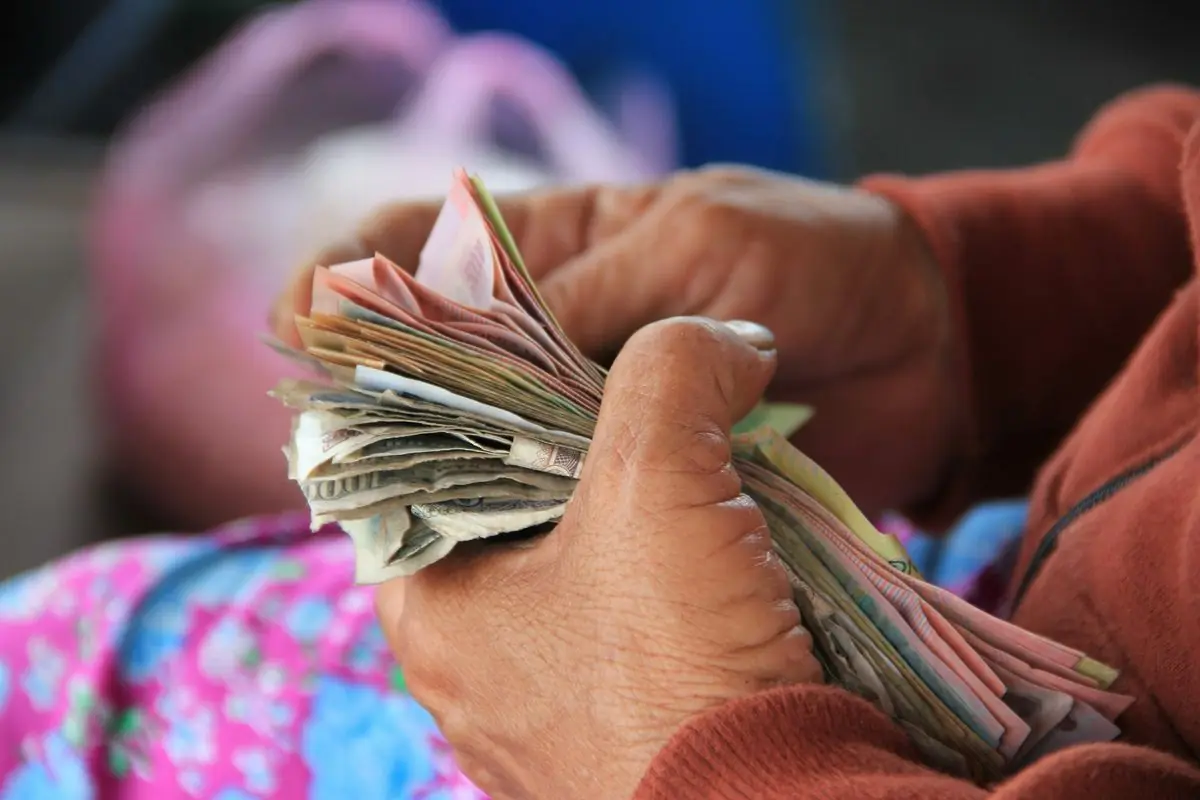
Photo: Niels Steeman
Look at the total amount first, then take the appropriate notes from your wallet.
For example, a 72,000 VND bill paid with 100,000 VND leaves 28,000 VND in change. A 270,000 VND bill paid with 500,000 VND leaves 230,000 VND. These are only arithmetic examples.
It is perfectly reasonable to count your change before walking away. A quick check is simply a useful habit, particularly in busy places.
Understand shortened spoken prices
A Vietnamese vendor may say "seventy-two" instead of "seventy-two thousand" when the context clearly indicates 72,000 VND. However, omitting words such as "thousand" and "million" can cause confusion with larger amounts.
When you are uncertain, ask the vendor to enter the number into a calculator or show it on their phone. Two useful Vietnamese phrases are:
- Bao nhiêu tiền?: How much is it?
- Bạn viết số tiền giúp tôi.: Please write down the amount for me.
Seeing the complete price is more reliable than guessing from spoken numbers.
What should you check when paying by QR code?
With a supported QR payment method, check the recipient's name and payment amount before confirming.
Some merchants use static QR codes that require you to enter the amount manually. Typing one extra zero can make a substantial difference when dealing with large VND numbers.
After submitting the payment, wait until the app confirms that the transaction was successful and the merchant acknowledges receiving it. Do not rely on an old screenshot or an incomplete payment notification as proof of payment.
Can you pay in US dollars in Vietnam?
Ordinary purchases and services are paid in Vietnamese dong.
Transactions and payments in foreign currencies within Vietnamese territory are generally restricted under Circular 32/2013/TT-NHNN and subsequent amendments, unless specifically permitted by law.
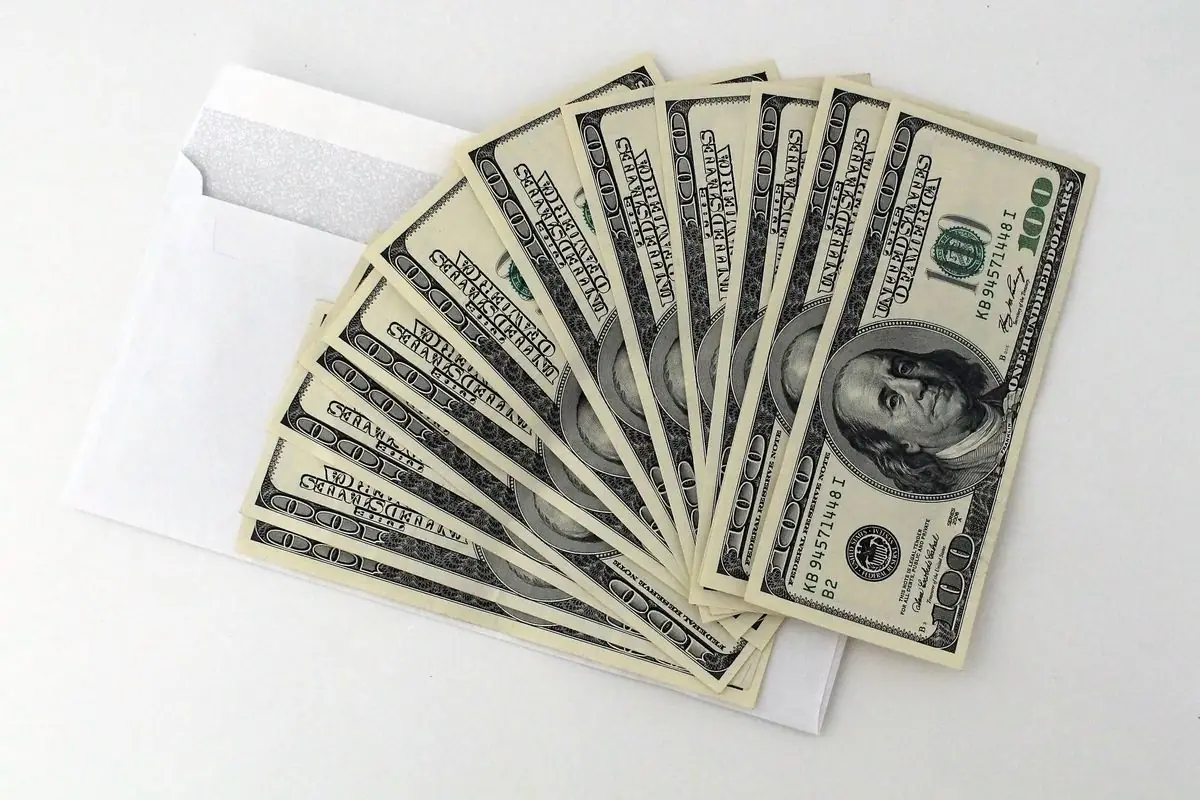
Photo: Pixabay
This means US dollars are not freely interchangeable with VND as a payment method in shops, restaurants, taxis, or hotels. Certain specialized transactions have legal exceptions, but visitors should not assume those exceptions apply to everyday purchases.
Even when an international tour booking website displays prices in USD, check the actual payment currency and payment method.
A vendor who accepts US dollars at their own exchange rate may be breaking the rules, and the rate may be worse than at an authorized channel. Exchanging foreign cash for Vietnamese dong before spending it keeps things simple.
Should you exchange USD before arriving in Vietnam?
Not necessarily. You can arrive with an international payment card and a reasonable amount of foreign cash, then exchange or withdraw VND after arrival.
A bank in your home country that sells Vietnamese dong at a competitive rate can be a convenient source for a small amount before departure. Compare the amount you will actually receive after fees, not just the headline exchange rate.
Longer trips work well with three options combined: a little VND on arrival, a debit card for withdrawals, and a credit card for hotels or larger purchases. Avoid relying completely on one card or payment application.
How much cash can you bring into Vietnam before declaring it?
International travelers should understand Vietnam's cash declaration thresholds.
Individuals entering or leaving Vietnam through international border gates using passports must declare cash when carrying more than 5,000 USD, an equivalent amount in another foreign currency, or more than 15,000,000 VND, under Article 2 of Circular 15/2011/TT-NHNN.
You can carry more than these amounts, but you must declare it. When leaving Vietnam with amounts above the thresholds, additional documentation or authorization requirements may apply.
If you are traveling with substantial cash, prepare the relevant documents and make the required declaration. Do not divide money into smaller amounts in an attempt to avoid declaration requirements.
The thresholds count only the physical cash you carry; bank balances and card limits do not count.
There is another specific situation worth knowing. Someone entering Vietnam who intends to deposit foreign currency cash into their foreign currency account at an authorized credit institution may need to declare that cash even if the amount is below the general threshold.
On a short holiday, carrying a manageable amount of VND and using cards for larger expenses is usually more convenient than traveling with substantial cash.
How to keep Vietnamese money safe and avoid mistakes
Divide your money into what you expect to spend during the day and a separate reserve, and leave the hotel with only the day's share. Keep the reserve somewhere secure rather than in the wallet you regularly open in public.
Traveling with someone else? Consider splitting cash between travelers, so losing one wallet does not leave everyone without a way to pay.
Pay larger amounts by card at a legitimate merchant when possible, rather than counting a large stack of notes in a crowded location.
At markets and busy attractions, prepare the notes you need before reaching the payment counter. Avoid standing in the middle of a walkway while opening your entire wallet and counting all your money.
What if you receive a suspicious or damaged banknote?
If a note looks unusual, examine it under good lighting, compare it with another of the same denomination, and ask for a different note if you are unsure.
A banknote you suspect is counterfeit should not be passed on to someone else. You can take it to a bank or contact the appropriate authorities for guidance on verification.
Damaged banknotes are not automatically eligible for replacement in every situation. Banks assess their condition and apply the relevant rules for exchanging damaged or unfit currency.
A slightly creased or worn polymer note is not necessarily counterfeit. Likewise, the presence of a transparent window alone does not prove authenticity.
The simplest precaution is to obtain cash from banks, ATMs, or licensed exchange locations and count it immediately.
How to prepare cash for different Vietnam itineraries
A three-day city trip
Hanoi, Da Nang, Nha Trang, Ho Chi Minh City
For a visit to Hanoi, Da Nang, Nha Trang, or Ho Chi Minh City, you can pay for accommodation in advance, use cards for larger expenses, and carry roughly 500,000-1,000,000 VND per day depending on your plans.
There is no need to withdraw three days' worth of cash at once if ATMs are easily accessible.
Try to keep several 10,000, 20,000, and 50,000 VND notes for street food stalls, markets, and smaller shops. Check your smaller denominations before leaving your accommodation in the morning; it is easier than searching for change when a vendor is waiting for payment.
Traveling between cities by train or bus
Hanoi, Hue, Da Nang, Nha Trang
A route from Hanoi to Hue, Da Nang, and Nha Trang will take you through places with very different payment facilities.
Train tickets, bus tickets, and accommodation can often be paid for in advance using the methods supported by the provider. Meals at roadside stops and small purchases are easier with VND cash.
Keep a cash reserve when your train or bus arrives early in the morning or late at night, as you may not be able to find an open foreign exchange counter immediately after arriving.
Trekking, staying in homestays, or visiting islands
Needs the most cash planning
These trips require more careful cash planning.
Ask your tour organizer or accommodation provider exactly which expenses are included and which must be paid separately. Do not simply ask whether there is an ATM nearby: an ATM near the starting point does not mean that cash withdrawals are available throughout a trekking route or on a small island.
Before leaving the main town, calculate the unpaid expenses, withdraw enough VND, and add a reasonable reserve. Some homestays may accept domestic bank transfers, but foreign visitors cannot always access those payment methods.
When your itinerary depends on boats, mountain roads, or weather conditions, a reserve also gives you more flexibility if you need to rearrange transport or stay an extra night.
What should you do with leftover Vietnamese dong?
Before your departure, check how much VND you have left and which expenses you still need to pay. You can use smaller notes for meals, airport transportation, or final purchases. There is no need to spend everything simply because your trip is ending.
To exchange a large amount of leftover dong into foreign currency, ask an authorized bank about the applicable requirements for foreign visitors. Some transactions may require a passport, receipts, or supporting documentation.
An exchange agent that bought your USD when you arrived may not be allowed to sell USD back to you when you leave. Currency exchange agents have defined operating permissions.
A few leftover 10,000 or 20,000 VND notes can be kept for a future trip. Vietnamese dong does not expire because you have left the country, provided the particular banknotes remain legal currency.
What to remember before spending Vietnamese money
The biggest challenge for first-time visitors is not the number of Vietnamese banknote denominations. It is getting used to reading prices with so many zeros.
Learn the six polymer notes first, particularly the blue 20,000 and 500,000 VND notes, which have a substantial difference in value.
Use approximately 25,600 VND per dollar for quick USD estimates, then check the actual exchange rate before significant transactions.
Exchange foreign cash at banks and properly licensed agents. At an ATM or card terminal, consider choosing VND rather than accepting Dynamic Currency Conversion when the conversion offer is less favorable.
Smaller 10,000-50,000 VND notes are useful for everyday purchases. International cards work well at larger hotels, supermarkets, and established restaurants. Prepare enough cash for remote destinations before leaving the nearest major town.
Before your trip, check Vietcombank's exchange rates, practice converting five common VND denominations, and try dividing 800,000 VND into smaller notes. It is a simple way to make your first payment at a local restaurant in Hanoi, Nha Trang, or Hoi An much easier.
FAQ
How much is Vietnamese money worth in US dollars?
In early November 2026, a rounded reference rate is approximately 25,600 VND per USD. At that rate, 100,000 VND is about $3.91, 500,000 VND is about $19.53, and 1,000,000 VND is about $39.06. Actual bank buying and selling rates vary and may change daily.
Where should foreigners exchange money in Vietnam?
Use banks authorized to conduct foreign exchange transactions or properly licensed currency exchange agents, including certain authorized airport and tourist-area counters. Bring your passport, check the cash buying rate, and confirm the amount of VND you will receive. Not every jewelry store or hotel is licensed to exchange foreign currency.
Can you use US dollars to pay in Vietnam?
For ordinary shopping and services, you should use Vietnamese dong. Vietnam restricts domestic transactions and payments in foreign currencies, except in legally permitted situations. Do not assume that a shop offering its own USD exchange rate makes direct dollar payments appropriate.
How can you tell the 10,000 and 100,000 VND notes apart?
The 10,000 VND note is yellowish brown, smaller, and features the Bach Ho oil field on the reverse. The 100,000 VND note is green and features the Temple of Literature in Hanoi. Both are polymer notes, but the 100,000 VND note is worth ten times more. Always read the complete denomination.
Do I need cash in Vietnam if I have Visa or Mastercard?
Yes. International cards are accepted at many hotels, restaurants, supermarkets, and shopping centers, but smaller restaurants, traditional markets, and some rural destinations still require cash. For a city sightseeing day with major expenses already paid, carrying around 500,000-1,000,000 VND may be a suitable reserve. Adjust the amount to your itinerary and expected expenses.
Related posts
Guides
Why do you often get a worse exchange rate at Cam Ranh Airport?
Where to exchange foreign currency, withdraw Vietnamese dong, and avoid unnecessary fees in Nha Trang.

Guides
Train tickets to Nha Trang: 7 steps to book correctly in 2026
A practical guide to Nha Trang train fares, official booking channels, sleeper options, and station information.

Guides
Vietnamese head spa or foot massage in Nha Trang: which is better after a day out?
A practical guide to head spa treatments, foot massages, prices, and booking in Nha Trang.