Nha Trang Money Exchange: What to Know Before You Go
We suggest an authorized bank or registered agent for cash exchange; if you rely on a foreign card, check withdrawal access and costs first.
Written by Tụi mình mê biểnUpdated
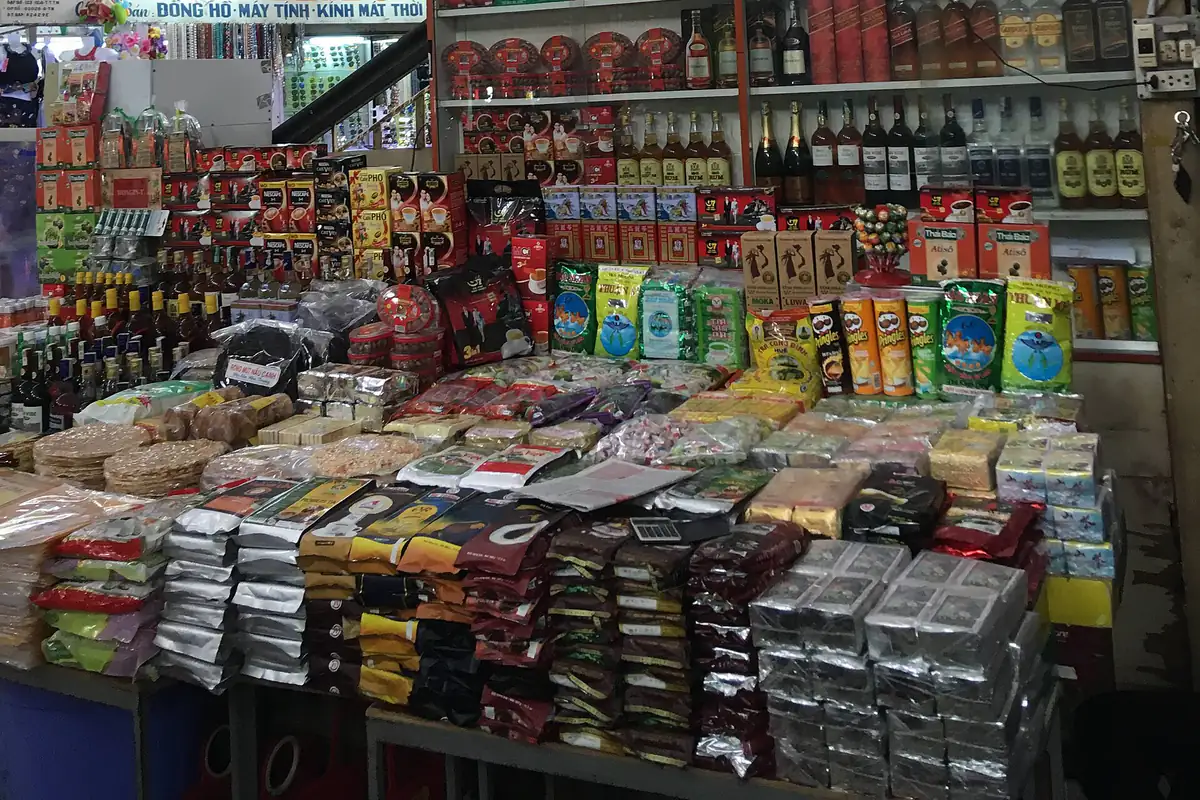
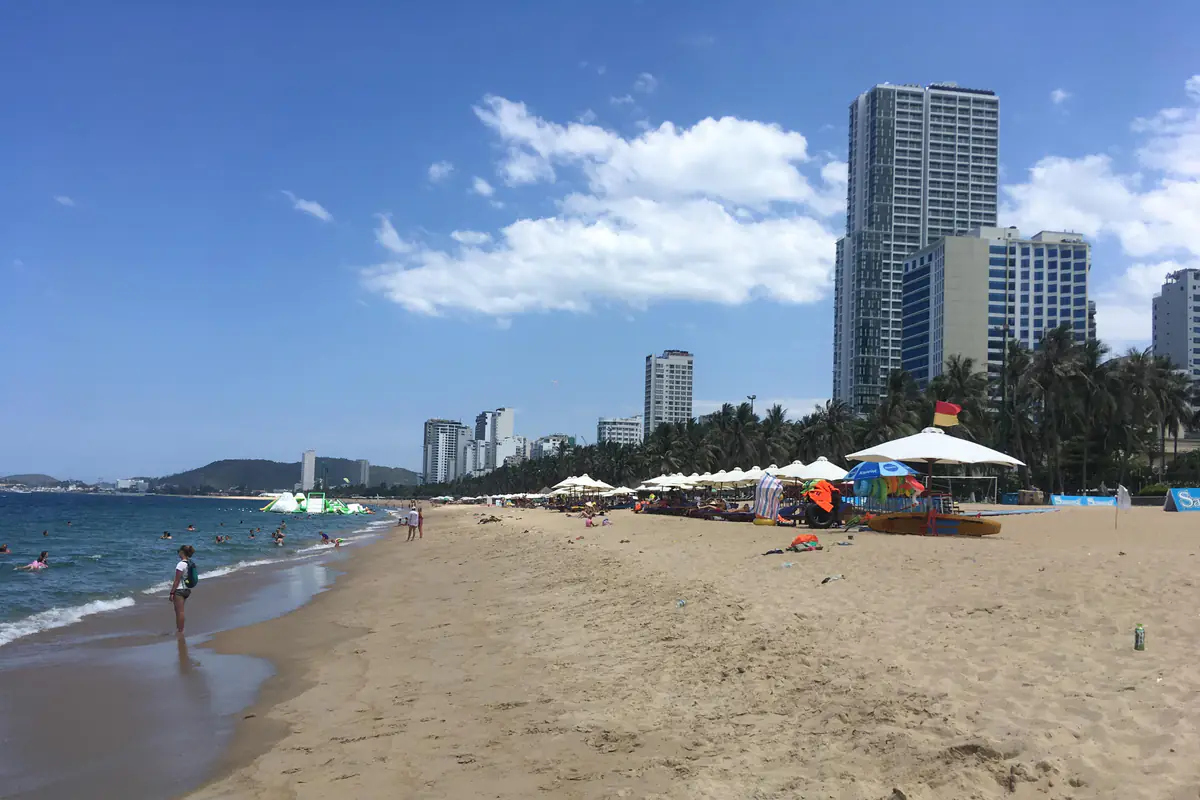
Photo: Christophe95
A shop offering to exchange dollars is not automatically licensed to do so. For Nha Trang money exchange, we suggest an authorized bank or registered exchange agent, then comparing the amount of Vietnamese dong (đồng) you will actually receive. A slightly better quoted rate is a poor trade for a transaction without clear authorization or a receipt.
Choose an authorized counter before comparing rates
Vietnam permits individuals to sell foreign cash through authorized credit institutions and registered exchange agents. A gold shop, hotel, or travel business may or may not have that authorization. Its business type alone does not establish that it can exchange your money legally. Ask which bank the agent represents and request a transaction receipt.
We would avoid arranging an exchange with a stranger who messages you, meets you outside a counter, or asks you to transfer funds before handing over cash. If you are helping a family member exchange money, a staffed bank counter gives you a straightforward place to ask about the calculation and check the notes together.
Selling foreign notes for Vietnamese dong is different from buying foreign currency with leftover dong. Exchange agents do not have unrestricted permission to sell foreign cash to everyone. For a substantial amount you want to convert before leaving Vietnam, ask an authorized bank what documents and purpose-of-use requirements apply.
Use the airport for your arrival needs
Cam Ranh Airport’s international terminal, T2, lists ATMs and currency exchange among its facilities. Exchange service follows the flight schedule, which is different from a promise that every counter is open all night. We suggest getting enough dong for your immediate arrival needs before arranging a larger exchange in town.
For a bank visit, bring your passport and leave foreign notes in their original condition. Ask the particular branch whether it buys your currency in cash. A currency appearing on a bank’s website does not establish that every branch accepts all denominations, coins, or damaged notes.
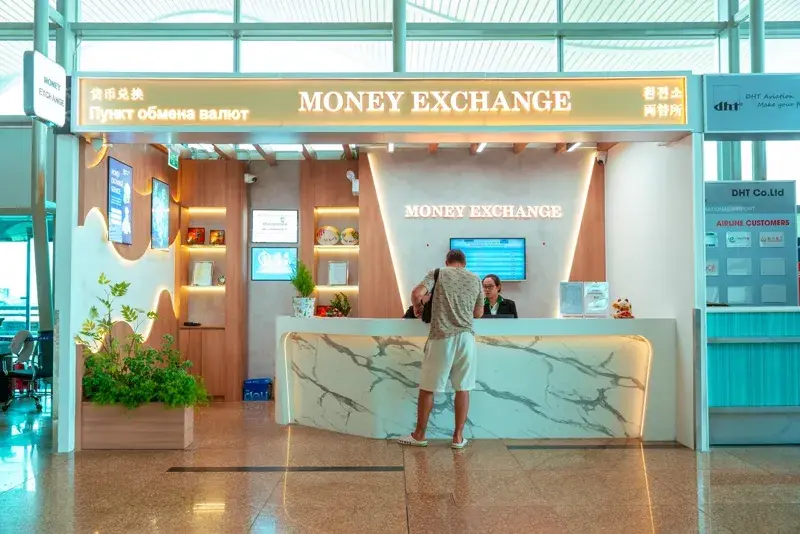
When selling paper currency, look for the cash-buying rate. The selling rate and transfer-buying rate apply to different transactions. Ask for the final VND amount after any charges before handing over your notes. Count the dong at the counter and keep the receipt with your travel records.
A small transaction is not an exemption
Decree 340/2025, effective February 9, 2026, provides warnings for specified unauthorized foreign-currency exchanges below US$1,000 or the equivalent. For individuals, exchanges from US$1,000 to below US$10,000 fall within a VND10,000,000-20,000,000 penalty band. Repeated smaller violations can also fall into that band.
The rules also provide for confiscation of the currencies involved in the relevant penalty category. A warning threshold does not create a legal allowance to use an unlicensed exchanger. For an unusual transaction or a larger amount, ask the competent authority about the applicable rule rather than treating a short travel summary as a ruling on your circumstances.
Check the ATM fee and your own bank’s charges
Your card needs access to a network supported by the ATM, and your issuing bank must allow international withdrawals. We suggest using a machine associated with a bank branch during staffed hours when practical. That gives you a place to seek help if the machine retains your card. Cover the keypad and put the cash away before leaving.
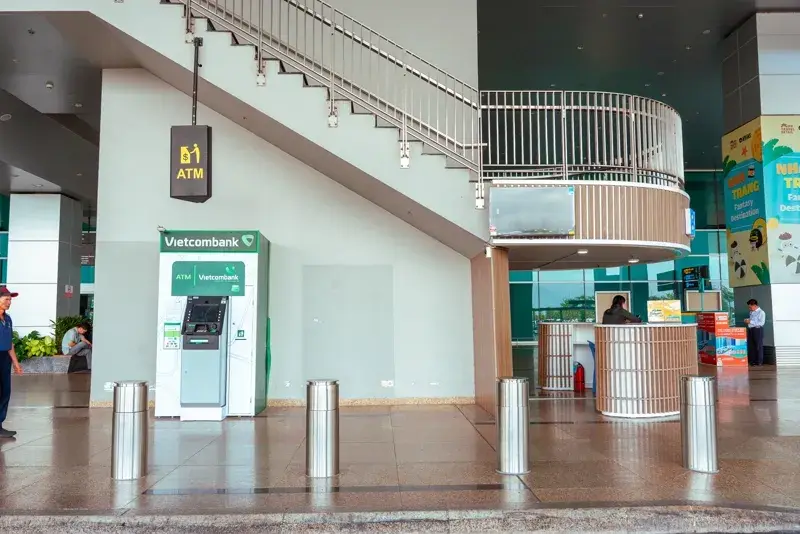
The total cost can include the local ATM operator’s charge, your bank’s overseas withdrawal fee, and currency conversion costs. A machine’s per-transaction ceiling is separate from your card’s daily limit. We would not plan a trip around one supposedly universal withdrawal limit or a claim that a particular bank is always free.
Read the confirmation screen. If you do not like the stated fee, cancel before approving the transaction and compare another machine. Taking out many tiny amounts can multiply fixed charges, but carrying your entire holiday budget in cash creates a different problem. Choose a withdrawal size that covers a manageable stretch of your plans.
An ATM may offer to bill the withdrawal in your home currency. This is dynamic currency conversion, or DCC, and it comes with its own quoted exchange rate and possible markup. We usually choose VND and let the card issuer handle conversion, after checking the issuer’s fees. Declining DCC is a separate choice from declining the cash withdrawal.
Treat Mir and cross-border QR as options to check
Vietnam-Russia Bank, or VRB, has published information about connecting Mir cards to its ATM network. That establishes the service connection, not a guarantee that your particular card will work at a particular machine today. Ask both your issuing bank and VRB about current compatibility, available locations, and restrictions before relying on it.
Keep an alternative lawful payment method available. Do not assume a Russian-issued card works internationally because it carries a familiar logo, and do not plan your arrival around an unconfirmed ATM location. A declined transaction is a reason to contact the bank, rather than repeatedly entering a PIN you are unsure about.
VietQRGlobal has cross-border connections with South Korea, China, Thailand, Laos, Cambodia, and Singapore. Availability still depends on the participating app and merchant. A personal bank-transfer QR code on a small shop’s counter is not necessarily a compatible international payment code.
If your home banking app supports the service, try it for a small purchase before depending on it for dinner or a larger bill. Confirm the merchant name, amount, conversion, and successful payment status. Your seller needs confirmation of receipt, not a screenshot showing that a payment is still pending.
Keep small notes for the day’s smaller purchases
Vietnamese dong uses large numbers. Separate notes by denomination before you pay, especially in low light or when you are tired after arriving. We suggest carrying the amount needed for the day’s small expenses separately from your reserve money and backup card.
Notes such as VND10,000, VND20,000, and VND50,000 are convenient for modest purchases. Ask about payment methods before ordering or using a service, particularly at a small stall. Card acceptance at your hotel does not tell you how the next food vendor or parking attendant takes payment.
Credit-card cash withdrawals can have different fees and interest rules from debit-card withdrawals. Check the cash-advance terms rather than treating the available credit limit as a travel cash budget. Before buying gifts to take home, decide what you need so your final withdrawal is proportionate to the remaining shopping.
Keep enough dong for the journey out and a modest contingency. When entering or leaving through an international border with a passport, cash above US$5,000 or the equivalent in another foreign currency, or above VND15,000,000, must be declared to customs. Keep supporting records and check any additional documents required when taking foreign cash out of Vietnam. A bank exchange does not complete the border declaration for you.
FAQ
Should I give someone my PIN to help with a withdrawal?
Keep your PIN and authentication codes private. Operate the machine yourself and contact your bank for assistance.
What if an ATM retains my card?
Record the machine location and time, contact its operator, and ask your issuing bank about blocking or recovering the card.
What if an ATM dispenses a damaged note?
Keep the receipt, note the machine and transaction time, and contact the operator for its checking procedure.
Related posts
Guides
Nha Trang Christmas and New Year: What to Know Before You Go
Choose your dates around announced events and the kind of break your group wants.

Guides
Nha Trang Massage: What to Know Before You Book
Choose a manageable spa appointment in Nha Trang and establish the treatment details and total cost first.
Guides
Nha Trang with Kids: What to Know Before Taking the Family
Choose the room, rest schedule, and two main outings before filling a family itinerary in Nha Trang.