14-day Vietnam and Cambodia itinerary for first-time visitors
This itinerary is for international travelers with two weeks to explore Vietnam, Phnom Penh, and Siem Reap. It works particularly well from January to March, although the route can be adjusted for other seasons.
Written by Tụi mình mê biểnUpdated

Photo: Chi King
Start by choosing your arrival and departure airports before booking hotels. For a 14-day trip, Hanoi - Hoi An - Ho Chi Minh City - Phnom Penh - Siem Reap is a practical route: you travel south through Vietnam, cross into Cambodia, and finish near Angkor without returning to your starting point. Direct buses connect Ho Chi Minh City and Phnom Penh through the Moc Bai-Bavet border crossing, making this one of the simplest ways to combine the two countries.
Loading map...
- Hanoi: Arrival city, first three days of the 14-day route
- Hoi An Ancient Town: About 30 km from Da Nang International Airport
- Ben Thanh Market, Ho Chi Minh City: Central area near the Phnom Penh bus departures
- Moc Bai border gate: Vietnamese exit point on the bus route
- Bavet: Cambodian entry point, accepts e-visas
- Victoria Chau Doc: Speedboat departures to Phnom Penh, 1 Le Loi Street
- Royal Palace, Phnom Penh: One or two days in the capital
- Angkor Wat: At least two full days at Angkor
Should you visit Vietnam or Cambodia first?
Both directions work. The better choice depends on your international flights, how much of Vietnam you want to see, and whether you prefer to travel overland or fly between the two countries.
Route 1: Vietnam first, Cambodia second
Hanoi - Ninh Binh - Hoi An - Ho Chi Minh City - Phnom Penh - Siem Reap
This is the route to prioritize if you want to experience several regions of Vietnam.
Fly into Hanoi, travel gradually south, and leave Vietnam from Ho Chi Minh City. From there, take a direct bus to Phnom Penh. The journey usually takes around 6-7 hours, including immigration procedures at the border.
After Phnom Penh, continue to Siem Reap for Angkor Wat, Bayon, and Ta Prohm. You can finish your trip at Siem Reap Angkor International Airport (SAI), depending on available flights to your home country.
This route has three clear advantages.
First, you avoid returning to Hanoi after reaching southern Vietnam. Second, you use a convenient overland connection between the two countries. Third, you finish with the Angkor temples rather than another long journey across Vietnam.
The main drawback is the number of flights. A 14-day itinerary covering Hanoi, central Vietnam, and Ho Chi Minh City will normally involve at least two domestic flights. If you dislike changing hotels frequently, consider dropping one destination in Vietnam.
Route 2: Cambodia first, Vietnam second
Siem Reap - Phnom Penh - Ho Chi Minh City - Hoi An - Hanoi
This direction makes sense when flights into Siem Reap are more convenient or you want to visit Angkor at the beginning of your vacation.
Spend at least three nights in Siem Reap. Use one day for Angkor Wat, Bayon, and Ta Prohm, then another for the Grand Circuit or temples farther from town.
Next, take a bus to Phnom Penh, stay one or two nights, and cross the border into Ho Chi Minh City.
From Ho Chi Minh City, fly to Da Nang and continue to Hoi An. Finish with Hanoi before taking your international flight home.
The main consideration is the weather toward the end of your trip. Northern Vietnam can be chilly and cloudy during winter, particularly in December and January.
Sunshine and beach time depend on the month, so check it before choosing this direction.
When should you skip the full length of Vietnam?
Trying to fit Hanoi, Ha Long Bay, Hoi An, Ho Chi Minh City, Phnom Penh, and Siem Reap into 10 days is too ambitious.
Every change of destination involves more than the time spent on a plane or bus. You also need to check out, reach the station or airport, collect your luggage, travel to the next hotel, and possibly wait for check-in.
With 10 days, concentrate on southern Vietnam and Cambodia.
With three weeks, adding Ha Long Bay, Ninh Binh, and central Vietnam becomes much more reasonable.
What is the best time to visit Vietnam and Cambodia together?
January through March is generally the easiest period for a combined Vietnam and Cambodia trip.
Southern Vietnam is usually in its dry season, and Cambodia also experiences relatively little rain. Northern Vietnam can be cool or cold, while conditions in central Vietnam generally become more favorable as February turns into March.
There is no single month with guaranteed perfect weather throughout Vietnam. Choose your dates according to the regions you actually plan to visit.
| Months | Vietnam | Cambodia | Recommendation |
|---|---|---|---|
| December-February | Dry in the south; cooler in the north; some rain in central Vietnam | Dry season, generally comfortable | Good for Ho Chi Minh City, Phnom Penh, and Siem Reap |
| March-April | Sunny in many regions; increasingly hot in the south | Dry but becoming very hot | Good for 14-21 days, with early temple visits |
| May-August | Favorable beach weather in parts of central Vietnam; rain in the north and south | Rainy season | Better if Vietnam is your main priority |
| September-November | Pleasant periods in the north; heavy rain and storms possible in central Vietnam | Rain gradually decreases | Keep central Vietnam plans flexible |
Traveling in January or February
These months work particularly well if you want to focus on Ho Chi Minh City, the Mekong Delta, and Angkor.
Morning temperatures in Siem Reap are usually more comfortable than during the hottest months. In Ho Chi Minh City, dry weather makes walking around the center and traveling to the Mekong Delta easier.
Hoi An and Hue are less predictable in January. You can still explore the old town, historical buildings, and local restaurants, but beach weather is not guaranteed.
Another consideration is Tet, the Vietnamese Lunar New Year.
Domestic flights, trains, and hotels on popular routes can become expensive or sell out. Some local businesses close for the holiday, while major attractions may be crowded.
If your trip overlaps Tet, book intercity transportation earlier than usual.
Traveling in March
March offers a good balance for a two-week Vietnam and Cambodia itinerary.
Hanoi is generally warmer than in midwinter. Hoi An and Da Nang become more suitable for walking, cycling, and outdoor sightseeing.
Ho Chi Minh City is hot, but the dry season usually makes long-distance road travel more predictable.
At Angkor, plan to start around 5:00-6:00 AM if you want to see sunrise or explore before the strongest heat.
By midday, temple courtyards with little shade can become uncomfortable. Carry water and plan a break rather than trying to cover every temple in one continuous visit.
Traveling from June to August
If beaches are your main reason for visiting Vietnam, this period can work well for Da Nang, Hoi An, or Nha Trang.
Nha Trang generally has favorable sunny conditions from January through August.
Cambodia, however, is in its rainy season.
Rain rarely lasts all day, but showers can affect outdoor sightseeing, road conditions, and travel schedules.
For a July trip, consider spending more time in Vietnam and limiting Cambodia to Phnom Penh and three nights in Siem Reap.
Phnom Penh and Siem Reap are enough to make the journey worthwhile without several smaller Cambodian destinations.
Is October or November a good time?
Yes, but central Vietnam requires more flexibility.
An alternative is to replace Hoi An with additional time in Ho Chi Minh City and the Mekong Delta before continuing to Phnom Penh.
10-day Vietnam and Cambodia itinerary: southern Vietnam and Angkor
With only 10 days, skip Hanoi and Hoi An.
The route Ho Chi Minh City - Phnom Penh - Siem Reap gives you enough time to experience both countries without spending most of your vacation in transit.
- Days 1-2
Ho Chi Minh City
On your first day, arrive at Tan Son Nhat International Airport and transfer to your hotel.
Staying around Ben Thanh Market, Dong Khoi Street, or the Nguyen Thai Binh area makes it easier to explore central Ho Chi Minh City and reach intercity bus offices.
On day two, visit the Independence Palace, Saigon Central Post Office, and Nguyen Van Binh Book Street.
If you are interested in twentieth-century history, allow additional time for the War Remnants Museum.
There is no need to visit every attraction in one afternoon. Ho Chi Minh City can be particularly hot around midday, especially from March through May.
- Day 3
Mekong Delta or Cu Chi Tunnels
Choose one of these day trips.
For military history and a relatively straightforward trip from the city, visit the Cu Chi Tunnels.
For waterways, fruit orchards, and life in the Mekong Delta, choose My Tho or Ben Tre.
Do not try to combine Cu Chi and the Mekong Delta in the same day. They are in different directions, and you would spend much of your time in a vehicle.
- Day 4
Another day in Ho Chi Minh City
Keep this day flexible.
You could visit Cholon, the city's historic Chinatown, and Thien Hau Temple, or spend the morning visiting cafés and markets.
Use the afternoon to prepare for the trip to Cambodia. Check your bus ticket, passport, and visa documents.
If you prefer rural scenery, you could stay overnight in Ben Tre instead. Just make sure you return to Ho Chi Minh City before your bus departure.
- Day 5
Ho Chi Minh City to Phnom Penh
Take a morning bus operated by Giant Ibis or another established company offering direct service through the Moc Bai-Bavet border crossing.
Allow approximately 6-7 hours for the journey, with extra time possible at immigration.
Treat this as a travel day. Do not book a fixed afternoon tour in Phnom Penh.
After arriving, check into your hotel and have dinner near the riverside.
- Day 6
Phnom Penh
Spend the morning at the Royal Palace and Silver Pagoda, subject to their opening arrangements on the day.
In the afternoon, choose the National Museum of Cambodia or the Tuol Sleng Genocide Museum.
These are very different experiences. Tuol Sleng deals with disturbing events in Cambodia's history and may not be suitable for younger children.
In the evening, walk along Sisowath Quay, the central riverside promenade.
- Day 7
Phnom Penh to Siem Reap
Take a morning bus to Siem Reap.
The journey usually takes approximately six hours. A morning departure gets you to town in the afternoon, leaving time to check in and rest.
You can visit the Old Market area or have dinner around Pub Street.
Avoid scheduling an Angkor temple tour immediately after arriving. The next two days are better used for sightseeing.
- Days 8-9
Angkor temples
On your first temple day, visit Angkor Wat, Bayon, and Ta Prohm.
Use the second day for Preah Khan, Neak Pean, Ta Som, or other temples along the Grand Circuit.
Splitting the temples over two days is much more comfortable than trying to see everything in one.
A three-day Angkor Pass can still be worthwhile even if you only use two days within its validity period.
- Day 10
Depart from Siem Reap
Check flights departing from Siem Reap Angkor International Airport (SAI).
The airport is a considerable distance from central Siem Reap, so allow enough time for the transfer, check-in, and security procedures.
Whenever possible, fly home from Siem Reap or connect through a convenient international hub rather than taking a long bus journey back to Ho Chi Minh City.
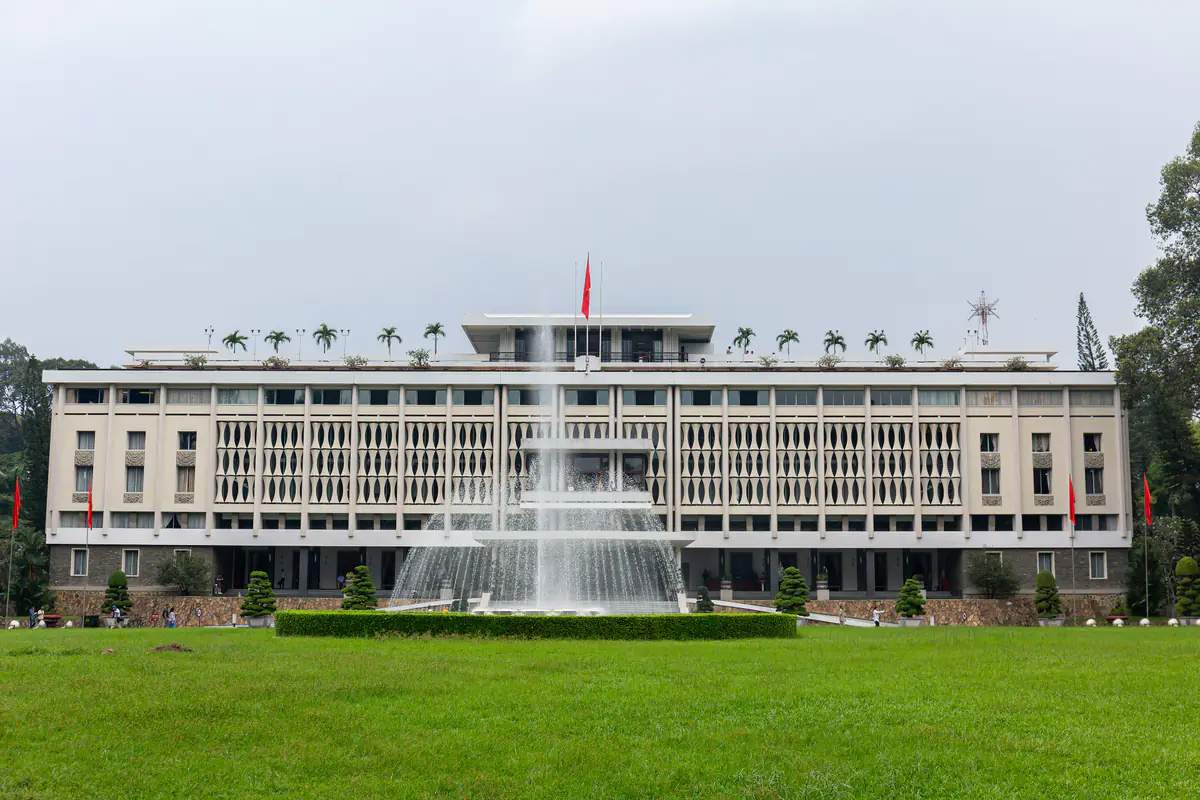
Photo: Balon Greyjoy
14-day Vietnam and Cambodia itinerary: eight days in Vietnam, six in Cambodia
This is a better-balanced itinerary for first-time international visitors who want to experience several parts of Vietnam and still have two full days at Angkor.
| Day | Destination | Main activities |
|---|---|---|
| 1 | Hanoi | Arrive at Noi Bai Airport, explore the Old Quarter |
| 2 | Ninh Binh | Trang An or Tam Coc, Hoa Lu |
| 3 | Hanoi | Temple of Literature, Hoan Kiem Lake, local food |
| 4 | Hanoi - Da Nang - Hoi An | Fly to Da Nang and transfer to Hoi An |
| 5 | Hoi An | Ancient Town, Tra Que Village, or An Bang Beach |
| 6 | Hoi An - Ho Chi Minh City | Fly from Da Nang to Ho Chi Minh City |
| 7 | Ho Chi Minh City | Central attractions and museums |
| 8 | Ho Chi Minh City | Cu Chi Tunnels or a Mekong Delta day trip |
| 9 | Ho Chi Minh City - Phnom Penh | Bus through Moc Bai-Bavet |
| 10 | Phnom Penh | Royal Palace, museums, riverside |
| 11 | Phnom Penh - Siem Reap | Bus to Siem Reap |
| 12 | Angkor | Angkor Wat, Bayon, Ta Prohm |
| 13 | Angkor | Preah Khan, Neak Pean, Grand Circuit |
| 14 | Siem Reap | Transfer to the airport and depart |
The first three days in Hanoi
On arrival day, check into your hotel and keep sightseeing close to the Old Quarter.
After a long-haul flight from Europe or North America, avoid scheduling a long trip to Ha Long Bay immediately after landing.
On day two, visit Ninh Binh.
From Hanoi, the drive usually takes around 2-2.5 hours each way, depending on traffic and your destination.
Leave around 7:00 AM if you want enough time for a boat trip through Trang An or Tam Coc.

Photo: Jakub Hałun
Keep day three for Hanoi itself.
An overnight stay in Ninh Binh turns the excursion into a two-day trip and reduces your time in the capital.
Two days in Hoi An
On day four, fly from Hanoi's Noi Bai Airport to Da Nang.
From Da Nang International Airport, Hoi An Ancient Town is roughly 30 km away. The drive typically takes 45-60 minutes.
Spend the first evening walking through the old town.
The following day, choose between Tra Que Vegetable Village, An Bang Beach, or Hoi An's historical buildings and museums.
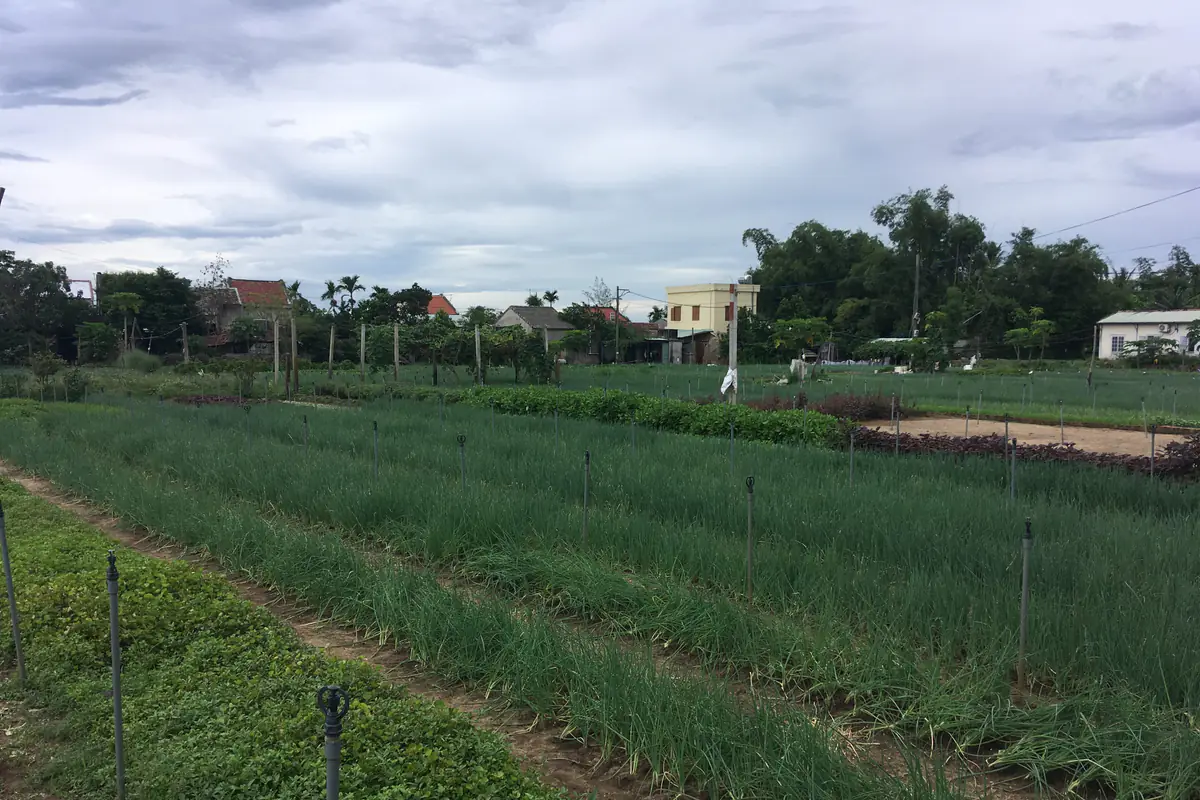
Photo: Christophe95
Adding Hue would make this part of the itinerary rushed.
Traveling to Hue and returning to Da Nang for a flight to Ho Chi Minh City leaves very little time to enjoy central Vietnam.
Three days in Ho Chi Minh City
Day six is mainly for flying and checking into your hotel.
Use day seven to explore central Ho Chi Minh City and day eight for Cu Chi or the Mekong Delta.

Photo: Balon Greyjoy
For the international bus to Phnom Penh, staying around Pham Ngu Lao or the central part of the former District 1 is convenient.
You will not have to travel far across the city to reach the bus departure point early the next morning.
Six days in Cambodia
Days nine and eleven are mainly travel days.
Day ten gives you a full day in Phnom Penh, while days twelve and thirteen are reserved for Angkor.
Three nights in Siem Reap are worth keeping.
You can visit temples on two separate mornings, return to your hotel during the hottest part of the day, and go out again in the late afternoon.
Dropping Hanoi or Hoi An cuts down on domestic flights.
Use the extra time for the Mekong Delta and cross into Cambodia by river from Chau Doc. This route is slower but involves fewer changes between distant regions of Vietnam.
21-day Vietnam and Cambodia itinerary: Ha Long Bay and the Mekong River
Three weeks allows you to travel from northern to southern Vietnam before continuing to Cambodia.
You can add an overnight cruise in Ha Long Bay and spend time in the Mekong Delta, including Chau Doc, before crossing the border by boat.
| Day | Destination | Plan |
|---|---|---|
| 1-2 | Hanoi | Old Quarter, Hoan Kiem Lake, Temple of Literature |
| 3-4 | Ha Long Bay | Two-day, one-night cruise |
| 5 | Ninh Binh | Trang An or Tam Coc |
| 6-8 | Hoi An | Fly to Da Nang, explore Hoi An |
| 9-11 | Ho Chi Minh City | City attractions, Cu Chi, food |
| 12 | Can Tho | Travel into the Mekong Delta, stay overnight |
| 13 | Chau Doc | Travel from Can Tho, stay near the boat departure point |
| 14 | Chau Doc - Phnom Penh | Cross the border by speedboat |
| 15-16 | Phnom Penh | Royal Palace, museums, riverside |
| 17 | Phnom Penh - Siem Reap | Bus to Siem Reap |
| 18-20 | Siem Reap | Three days exploring Angkor |
| 21 | Siem Reap | International departure |

Photo: lumoplank
The biggest difference from the 14-day route is the Mekong Delta section.
From Ho Chi Minh City, travel to Can Tho and stay overnight. The following morning, you can explore the waterways before continuing to Chau Doc.

Photo: Christophe95
Spend the night in Chau Doc so you are ready for the early speedboat to Phnom Penh.
Chau Doc is a useful connection point because international passenger boats operate directly between the town and Cambodia's capital, with no backtracking to Ho Chi Minh City for an overland bus.
However, the river route is not suitable for everyone.
The speedboat costs more than the bus from Ho Chi Minh City, departures are less flexible, and the visa arrangements at the river border are different from those at Bavet.
Angkor fans should keep three full days for its temples. A three-day pass lets you spread your visits over several mornings rather than spending entire days in the heat.
How to travel from Ho Chi Minh City to Phnom Penh
There are three practical options: an international bus, a direct flight, or a speedboat via Chau Doc.
For most first-time visitors, the bus offers the simplest combination of cost and convenience.
Bus via Moc Bai-Bavet: the easiest overland option
The bus travels from Ho Chi Minh City toward Tay Ninh, exits Vietnam at Moc Bai, and enters Cambodia at Bavet.
It then continues directly to Phnom Penh.
Giant Ibis is one of the operators serving this route.
Its 2026 schedule lists departures from Ho Chi Minh City at:
- 8:00 AM
- 9:45 AM
- 3:45 PM
The company's Ho Chi Minh City departure point is in the Pham Ngu Lao area.
In Phnom Penh, its passenger terminal is on Street 106, near the Night Market and Sisowath Quay.
The journey generally takes around 6-7 hours, although border processing and traffic can extend it.
Arrive at the bus office at least 30 minutes before departure.
Booked through 12Go, selected November 2026 Giant Ibis departures cost approximately US$28-35 per person for the morning VIP services and related ticket listings. Other departures and promotions may cost less.
The exact price depends on the date, departure, booking channel, and seat class.
One point worth checking is the border visa assistance fee.
Some operators offer a service that helps passengers complete visa procedures at the border. This is separate from the official Cambodian visa fee.
If you already have a Cambodian e-visa, print the approval document and tell the bus staff before departure.
Flying from Ho Chi Minh City to Phnom Penh
Flying makes sense if you are traveling with young children, carrying substantial luggage, or prefer to avoid a long bus journey.
Search for flights from Tan Son Nhat International Airport (SGN) to Techo International Airport (KTI).
Techo International Airport officially began operations on September 9, 2025, replacing the old Phnom Penh International Airport.
A nonstop flight takes roughly one hour.
However, the total door-to-door journey is considerably longer once you include the trip to Tan Son Nhat, airport check-in, immigration, baggage collection, and transportation from KTI into central Phnom Penh.
Do not compare a one-hour flight with a six-hour bus journey without accounting for these extra steps.
Airfares change substantially according to travel dates, so there is no reliable fixed fare for the whole of 2026.
Compare the final flight price, including baggage and airport transfers, with the complete bus fare.
Speedboat from Chau Doc to Phnom Penh
The river route is worth considering if you have 18-21 days and want to spend time in the Mekong Delta.
Hang Chau Tourist operates passenger speedboats between Chau Doc and Phnom Penh.
Fares announced by the company on May 5, 2026, took effect on June 1, 2026:
| Route | Departure | Hang Chau Tourist fare, 2026 |
|---|---|---|
| Chau Doc - Phnom Penh | 7:00 AM daily | VND 1,640,000 per person |
| Phnom Penh - Chau Doc | 12:30 PM daily | VND 1,580,000 per person |
These fares apply through May 31, 2027.
In Chau Doc, passengers depart from the area of Victoria Chau Doc Hotel at 1 Le Loi Street.
In Phnom Penh, the departure and arrival point is at 103 Sisowath Quay, near Titanic Restaurant.
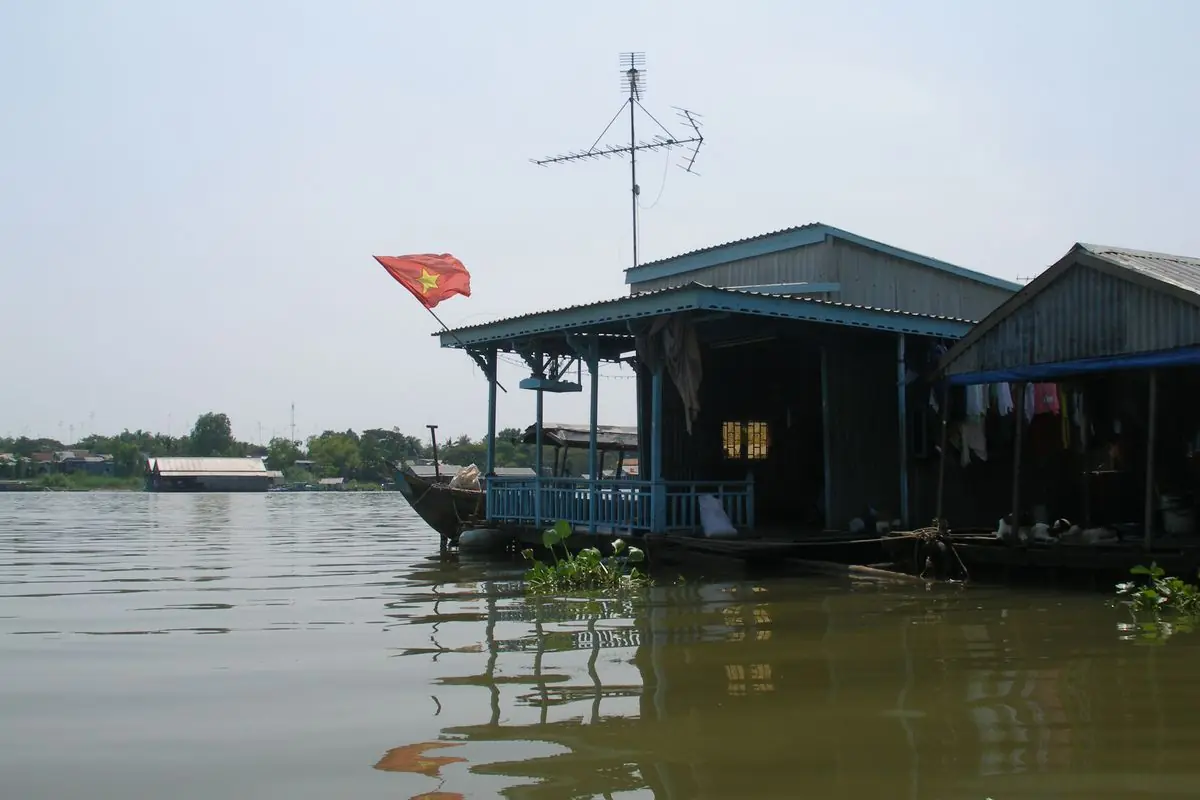
Photo: Vyacheslav Argenberg
The operator asks passengers to arrive at least 30 minutes before departure.
The total journey takes approximately 6-6.5 hours, including immigration procedures. Border processing may take longer during busy periods.
The operator lists restroom facilities, bottled water, snacks, and passenger accident insurance among the included services.
Eligible passengers can use Hang Chau Tourist's visa-on-arrival service at the border.
The company charges US$37 in 2026, including its service fee, for Cambodian visa processing on the Chau Doc-Phnom Penh route.
That is the operator's service price; the Cambodian government's standard tourist e-visa fee is US$30.
Check whether your nationality qualifies for visa on arrival at this crossing before booking a nonrefundable boat ticket.
The speedboat is not the best choice for a 10-day itinerary.
You still need to travel from Ho Chi Minh City to Chau Doc and should normally spend a night there before the 7:00 AM departure.
Which Vietnam-Cambodia border crossing should you use?
Vietnam and Cambodia share several international border crossings, but not all are equally convenient for tourists.
Not every Cambodian border checkpoint accepts the same visa type, either.
Choose the crossing and the visa together.
Moc Bai-Bavet
Ho Chi Minh City to Phnom Penh by bus, Cambodian e-visas accepted
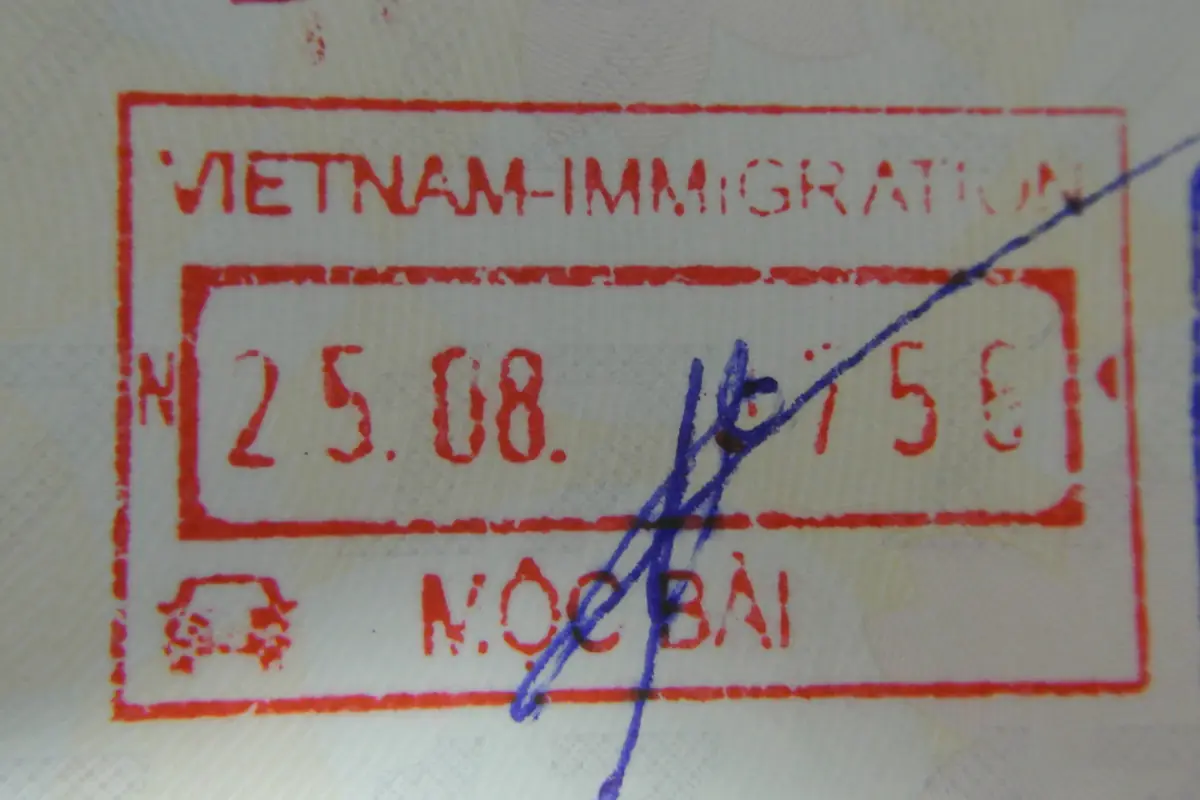
Photo: Tonbi ko
This is the best option for the direct Ho Chi Minh City-Phnom Penh route.
- Vietnamese side: Moc Bai, Tay Ninh Province.
- Cambodian side: Bavet, Svay Rieng Province.
- Best transportation: Direct international bus or an appropriately arranged private transfer.
- Cambodian e-visa: Bavet is an approved e-visa entry point.
Travelers complete departure procedures on the Vietnamese side before entering Cambodia.
On an international bus, staff normally explain where passengers need to go and when to return to the vehicle.
You are still responsible for checking your passport, visa, and completed immigration procedures.
Border opening hours
No current official notice confirms a shared 2026 operating schedule for both sides of the Moc Bai-Bavet crossing.
An older Cambodian border document listed Bavet passenger processing from 6:00 AM to 10:00 PM, while Vietnam Airlines' travel guidance listed 7:00 AM to 6:00 PM for Moc Bai procedures.
The practical approach is to use a morning international bus and confirm its border arrangements directly with the operator before traveling.
Vinh Xuong-Kaam Samnor
River crossing used by the Chau Doc-Phnom Penh speedboat
This crossing is used by the Chau Doc-Phnom Penh river route.
Vietnamese documents may refer to the crossing as Song Tien or Vinh Xuong. The Cambodian side is called Kaam Samnor, also spelled Kaam Somnor.
Vietnam's e-visa system and Cambodia's e-visa system are separate.
Being able to use a Vietnamese e-visa at a designated river crossing does not mean a Cambodian e-visa will be accepted at the corresponding Cambodian checkpoint.
For the boat from Chau Doc to Phnom Penh, travelers who require a Cambodian visa must use an entry arrangement accepted at Kaam Samnor.
Hang Chau Tourist offers visa-on-arrival assistance for eligible passengers.
Ha Tien-Prek Chak
Useful from Phu Quoc or Ha Tien toward Kampot and Kep
The Ha Tien-Prek Chak crossing can be useful if you are visiting Phu Quoc, Ha Tien, Kampot, or Kep.
It is not the most direct choice for travelers going from Ho Chi Minh City to Phnom Penh and Siem Reap.
Prek Chak is not listed among the Cambodian entry points accepting tourist e-visas on the official e-visa portal.
Crossing there means confirming your nationality's visa requirements and an accepted method of entry with Cambodian immigration authorities before booking transportation.
Vietnam and Cambodia visa requirements
International travelers must check the entry rules for each country based on their nationality and passport.
There is no combined Vietnam-Cambodia tourist visa.
Vietnam visa
A Vietnamese electronic visa may be valid for up to 90 days and can be issued for either single or multiple entry.
The official fees are:
- Single-entry e-visa: US$25
- Multiple-entry e-visa: US$50
These are government visa fees; travel agencies add their own charges on top.
If you enter Vietnam once, travel onward to Cambodia, and fly home from Siem Reap, a single-entry visa is generally sufficient if your nationality requires a visa and your trip meets its conditions.
For example, consider this route:
Hanoi - Hoi An - Ho Chi Minh City - Phnom Penh - Siem Reap.
You enter Vietnam only once.
But if you travel from Vietnam to Cambodia and later return to Vietnam for an international flight, you need to check whether you require permission for a second entry.
A multiple-entry visa or applicable visa exemption may solve that issue.
Remaining entirely within an international transit area without entering Vietnam is a different situation. Whether that is possible depends on your tickets, airline, baggage, and airport arrangements.
Cambodia visa
The Cambodian government's official e-visa portal lists the following conditions for a Tourist Visa (Visa T).
| Item | Cambodia Tourist Visa T |
|---|---|
| Official e-visa fee | US$30 |
| Number of entries | Single entry |
| Visa validity | Three months from issue |
| Permitted stay | One month |
| Expected processing time | Three business days |
| Passport validity | More than six months remaining on entry |
Visa T is different from Cambodia's ordinary Visa E, which serves other purposes and has separate requirements.
Citizens of several ASEAN countries, including Vietnam, qualify for visa exemptions under applicable arrangements.
The permitted visa-free stay depends on nationality and the relevant agreement.
Do not assume that the conditions for another passport apply to yours.
Cambodian border crossings accepting e-visas
The approved entry points are:
- Techo International Airport (KTI).
- Siem Reap Angkor International Airport (SAI).
- Sihanoukville International Airport (KOS).
- Bavet land border crossing, from Vietnam.
- Tropaeng Kreal land border crossing, from Laos.
The same portal lists temporary restrictions on e-visa entry at Cham Yeam and Poipet until further notice.
Border regulations can change, so verify the current list immediately before traveling overland.
Does Cambodia e-Arrival replace a visa?
No. Cambodia e-Arrival is an electronic arrival declaration, not a visa.
Cambodia introduced the e-Arrival system on September 1, 2024.
Travelers entering through international airports are required to submit their arrival information within seven days before arrival. Submission through the official government system is free.
The Cambodian e-visa portal also advises all travelers, including visa holders, to complete e-Arrival.
However, some foreign government travel advisories specifically describe the mandatory requirement for air arrivals, while land and river procedures may differ.
Bus passengers through Bavet and boat passengers through Kaam Samnor should check the current official instructions and confirm the procedure with their transport operator.
Do not assume that the airport process is identical to the land-border process.
What should you check before leaving Vietnam?
Before the border-crossing day, make sure that:
- Your passport meets Cambodia's remaining-validity requirement.
- Your visa shows the correct name, passport number, date of birth, and validity dates.
- Your intended border crossing accepts your visa type.
- You have a printed copy of your e-visa approval and an offline copy on your phone.
- Your bus or boat ticket contains the correct passenger details and departure point.
- You have some US dollars available for legitimate fees or expenses along the journey.
Phnom Penh to Siem Reap: bus or flight?
Phnom Penh and Siem Reap are approximately 320 km apart by road.
A bus normally takes around six hours.
The flight itself is much shorter, but flying also requires airport transfers, check-in, security procedures, and baggage collection.
For most 10-21-day itineraries, a daytime bus is the more practical choice.
Giant Ibis lists departures from Phnom Penh to Siem Reap at:
- 8:45 AM
- 9:45 AM
- 12:30 PM
The company also operates some night services.
Its Phnom Penh departure point is on Street 106, near the Night Market.
Check the precise Siem Reap arrival location on your ticket, as passenger drop-off arrangements can change.
A daytime bus should get you to Siem Reap with enough time to check in, have dinner, and prepare for the following morning.
Flying is worth considering if the schedule works particularly well, the final price is reasonable, or you need to reduce your time on the road.
Do not automatically plan to take a tourist boat from Phnom Penh to Siem Reap across Tonle Sap.
Passenger boat services on this route are not as regular as buses, and water levels affect their operation.
For a short itinerary, only include the boat if you have confirmed a specific departure.
How many days do you need in Phnom Penh and Angkor?
First-time visitors often want to spend as much time as possible at Angkor.
That makes sense, but Phnom Penh deserves at least one full sightseeing day.
Phnom Penh: one or two full days
One day allows you to cover a few important sights in the city center.
Start with the Royal Palace and Silver Pagoda, then continue to the National Museum.
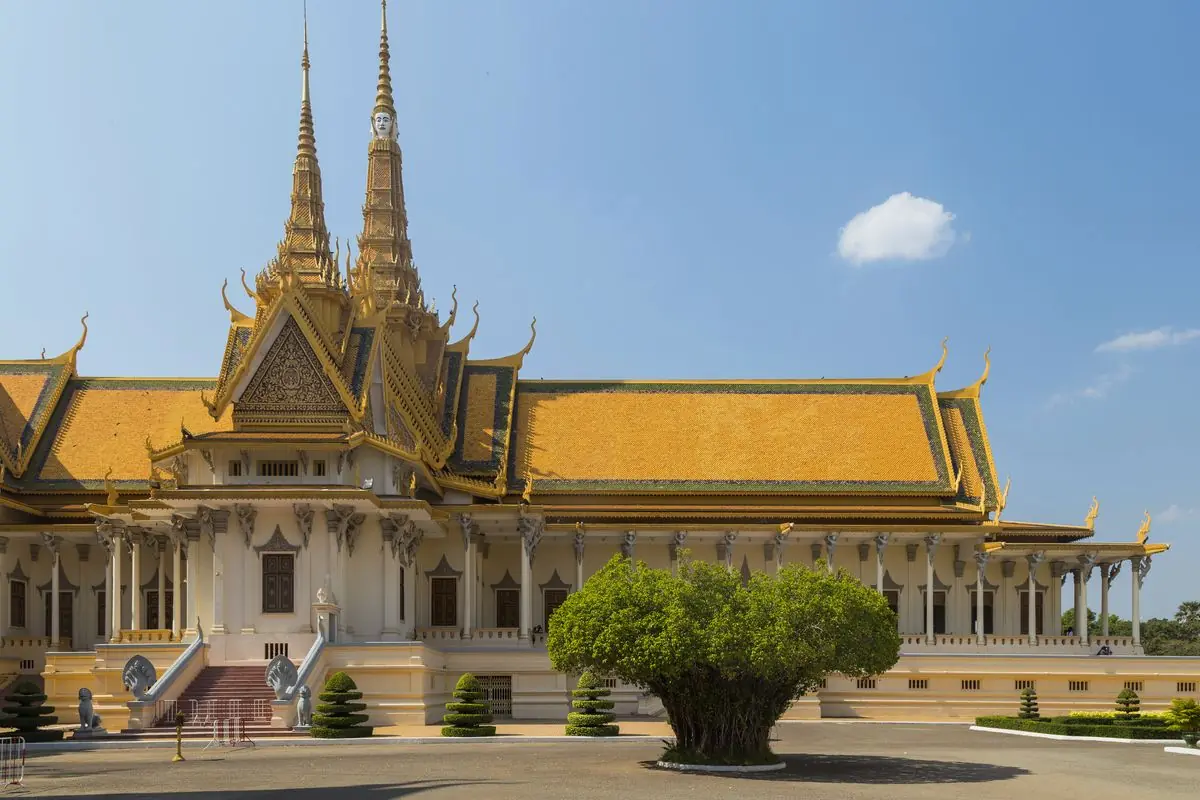
Photo: Marcin Konsek
Tuol Sleng, a sobering stop for anyone following Cambodia's twentieth-century history, can fill the afternoon.
With a second day, you can explore the city at a slower pace or visit the Choeung Ek Genocidal Center.
Choeung Ek is outside central Phnom Penh, so allow time for transportation. Avoid combining it with too many other attractions.
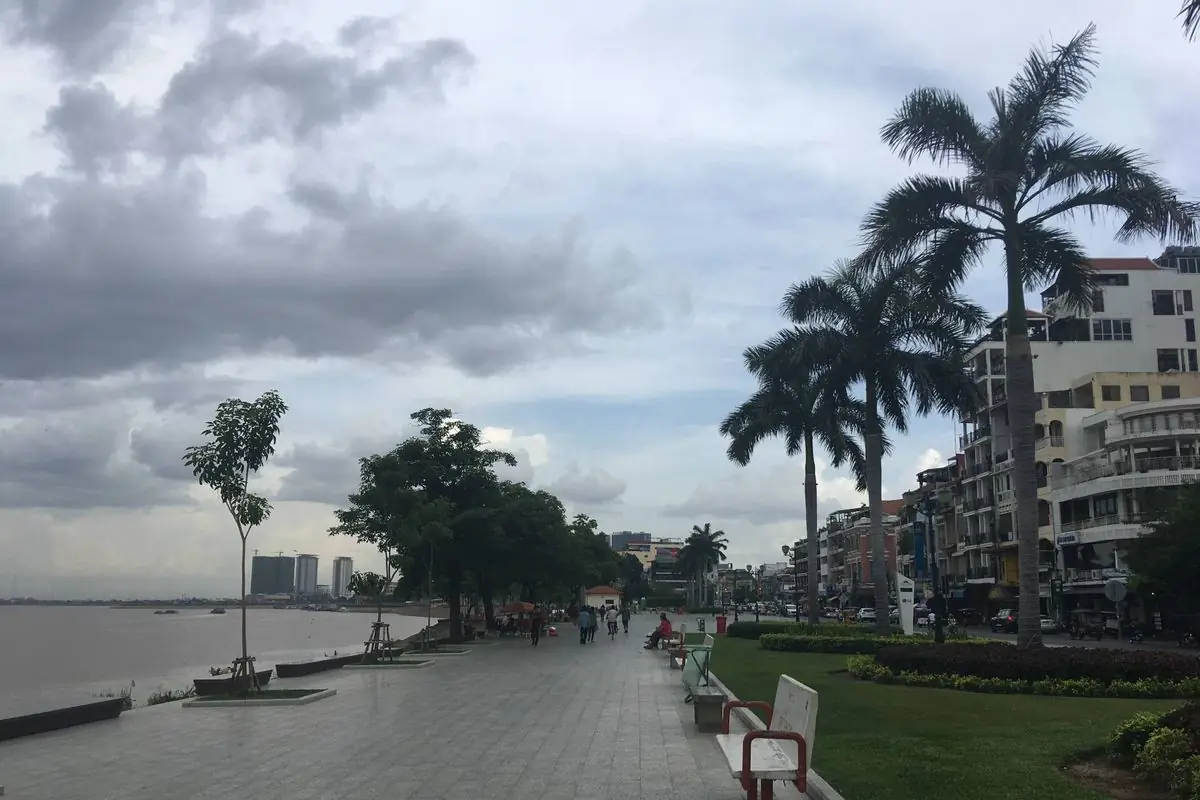
Photo: Christophe95
Siem Reap: three or four nights
Three nights is a good minimum for a two-week Vietnam and Cambodia itinerary.
You get two proper days at Angkor without rushing immediately after the bus from Phnom Penh.
The standard 2026 Angkor Enterprise prices for foreign visitors are:
| Angkor Pass | Price | Validity |
|---|---|---|
| One-day pass | US$37 | One day |
| Three-day pass | US$62 | Three visiting days within seven days |
| Seven-day pass | US$72 | Seven visiting days within 30 days |
Tickets are sold through Angkor Enterprise's official channels.
The main ticket office is on Road 60, around 4 km from central Siem Reap.
If you only have one day, focus on Angkor Wat, Bayon, and Ta Prohm.
That is already a substantial day of sightseeing.

Photo: Marcin Konsek

Photo: lumoplank
For two or three days, the three-day pass offers better flexibility.
Use the additional time for Preah Khan, Ta Som, Neak Pean, and other temples along the Grand Circuit.
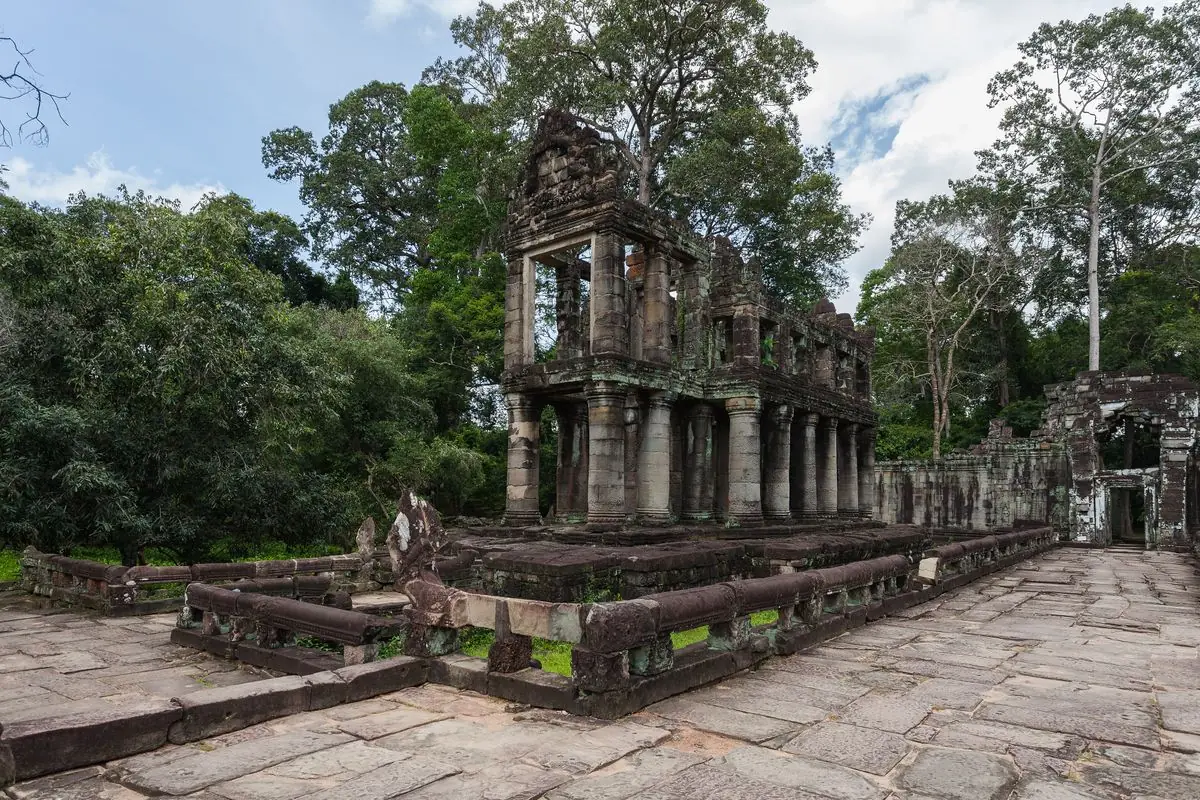
Photo: Diego Delso
During the hot season, a morning visit followed by a midday break and a shorter late-afternoon outing is more comfortable than staying out from sunrise to sunset.
Wear clothing appropriate for religious sites, follow marked visitor routes, and respect areas closed to public access.
How much does a Vietnam and Cambodia trip cost?
A combined trip involves more than hotel rooms and meals.
The costs that are easiest to overlook are transportation between regions, border formalities, and extra nights needed before early departures.
Several expenses have fixed 2026 prices.
| Expense | 2026 price |
|---|---|
| Vietnam single-entry e-visa | US$25 |
| Vietnam multiple-entry e-visa | US$50 |
| Cambodia Tourist e-visa | US$30 |
| Ho Chi Minh City-Phnom Penh bus | Around US$28-35 for selected Giant Ibis services booked through 12Go in November 2026 |
| Chau Doc-Phnom Penh speedboat | VND 1,640,000, Hang Chau Tourist, June 1, 2026-May 31, 2027 |
| Visa-on-arrival assistance on the river route | US$37, Hang Chau Tourist service rate, where applicable |
| One-day Angkor Pass | US$37, Angkor Enterprise |
| Three-day Angkor Pass | US$62, Angkor Enterprise |
These figures are not a complete trip budget.
Flights, accommodation, meals, and transportation within individual cities vary significantly by season and comfort level.
When comparing routes, consider the expenses that make the biggest difference.
Bus route: Usually more economical for Ho Chi Minh City to Phnom Penh, but takes most of a day.
River route: Requires transportation to Chau Doc and normally an overnight stay, in addition to the speedboat fare. In return, the journey becomes part of your Mekong Delta experience.
Flight route: Avoids the land border, but adds airport transfers and potentially checked-baggage fees.
For travelers on a moderate budget with two weeks available, the bus from Ho Chi Minh City to Phnom Penh is generally the better value.
The money saved can go toward another temple day or an additional hotel night in Siem Reap.
Common mistakes that make a two-country itinerary too rushed
Booking a round-trip international flight from the same city
Consider arriving in Hanoi, traveling south to Ho Chi Minh City, continuing to Cambodia, and then having to return to Hanoi to fly home.
That final return journey can consume most of a day and require another flight.
Before buying tickets, compare open-jaw or multi-city flights.
For example, arrive in Hanoi and depart from Siem Reap.
The reverse can also work: arrive in Siem Reap and fly home from Hanoi.
These tickets are not always cheaper, but they are worth checking first.
Choosing the river route without allowing an extra day
The Chau Doc-Phnom Penh speedboat leaves at 7:00 AM.
Do not plan to travel from Ho Chi Minh City to Chau Doc on the same morning and still catch that departure.
Arrive in Chau Doc the previous day, stay near the departure point, and prepare your passport and immigration documents.
Applying for a Cambodian e-visa before choosing the border
This is one of the easiest mistakes to avoid.
Bavet accepts Cambodian e-visas.
Kaam Samnor, used by the Chau Doc-Phnom Penh speedboat, does not accept them.
Decide whether you are traveling by road or river before choosing your visa application method.
Spending too little time in Siem Reap
One night in Siem Reap is rarely enough when Angkor is a major reason for your trip.
You have already spent approximately six hours traveling from Phnom Penh. You still need to arrange temple tickets, transportation, and time to rest.
Two nights should be the bare minimum.
Three nights are considerably better.
Leaving no buffer time at the border
Overland travel can take longer than scheduled because of traffic, queues, and document checks.
Avoid booking a nonrefundable flight or fixed-time tour immediately after your expected arrival in Phnom Penh.
For an important international departure, stay in the departure city the night before whenever possible.
Adding Thailand without checking border conditions
Before continuing from Cambodia into Thailand, check the current security situation and land-border status.
Land crossings between Cambodia and Thailand remain suspended, and the UK Foreign, Commonwealth & Development Office advises against travel to areas close to parts of the border.
The itineraries in this guide connect Vietnam and Cambodia only. They do not require crossing the Cambodia-Thailand land border.
Which itinerary should you choose?
The easiest way to plan a combined trip is to keep three destinations fixed: Ho Chi Minh City, Phnom Penh, and Siem Reap.
Then add Hanoi, Hoi An, or the Mekong Delta according to how many days you have.
With 10 days, there is no need to cover all three regions of Vietnam. Four days in and around Ho Chi Minh City, followed by six days in Cambodia, makes for a more manageable vacation.
A 14-day trip along the route through Hanoi, Hoi An, Ho Chi Minh City, Phnom Penh, and Siem Reap offers a good range of landscapes and cultural experiences. Two domestic flights in Vietnam help keep long-distance travel under control.
With 21 days, you can add Ha Long Bay, Ninh Binh, and the Mekong Delta before taking the speedboat from Chau Doc to Phnom Penh. This is a better option for travelers who want to spend time along the Mekong rather than simply move between major cities.
If beach relaxation matters more than covering multiple destinations, add time in Hoi An, Da Nang, or Nha Trang during the appropriate season instead of introducing another city.
For a first two-week trip, choose Hanoi - Hoi An - Ho Chi Minh City - Phnom Penh - Siem Reap and cross by bus at Moc Bai-Bavet. The Chau Doc-Phnom Penh speedboat is better suited to a three-week journey that includes time in the Mekong Delta.
FAQ
How should I split 14 days between Vietnam and Cambodia?
Allow approximately eight days for Vietnam and six for Cambodia, including travel and departure days. In Cambodia, plan one or two full sightseeing days in Phnom Penh and at least two full days exploring Angkor.
What is the best month to visit Vietnam and Cambodia together?
January through March is generally the easiest period. Southern Vietnam and Cambodia are usually in their dry seasons, while central Vietnam becomes more favorable toward March. If beach activities are important, check conditions for your specific destinations.
How long is the bus journey from Ho Chi Minh City to Phnom Penh?
Usually around 6-7 hours, although border processing can add time. Giant Ibis operates direct buses through Moc Bai-Bavet. A morning departure is preferable, and you should avoid booking a fixed afternoon activity immediately after arrival.
Do international tourists need separate visas for Vietnam and Cambodia?
Yes, unless their nationality qualifies for visa exemption in one or both countries. Vietnam offers electronic visas valid for up to 90 days, while Cambodia's Tourist Visa T normally allows a one-month stay and single entry. Cambodian e-visas are accepted at Bavet but not at the Kaam Samnor river crossing used by the Chau Doc-Phnom Penh speedboat.
Is it better to fly or take the bus from Ho Chi Minh City to Phnom Penh?
The bus is generally better for travelers prioritizing cost and straightforward city-to-city transportation. Flying makes sense if you want to avoid the long road journey or find a convenient fare. Remember to include airport transfers, baggage fees, and check-in time when comparing the two.
Related posts
Guides
Plan a 7-day Vietnam itinerary: should you visit the north, central, or south?
Three practical 7-day Vietnam itineraries with transport, costs, and day-by-day plans.
Places
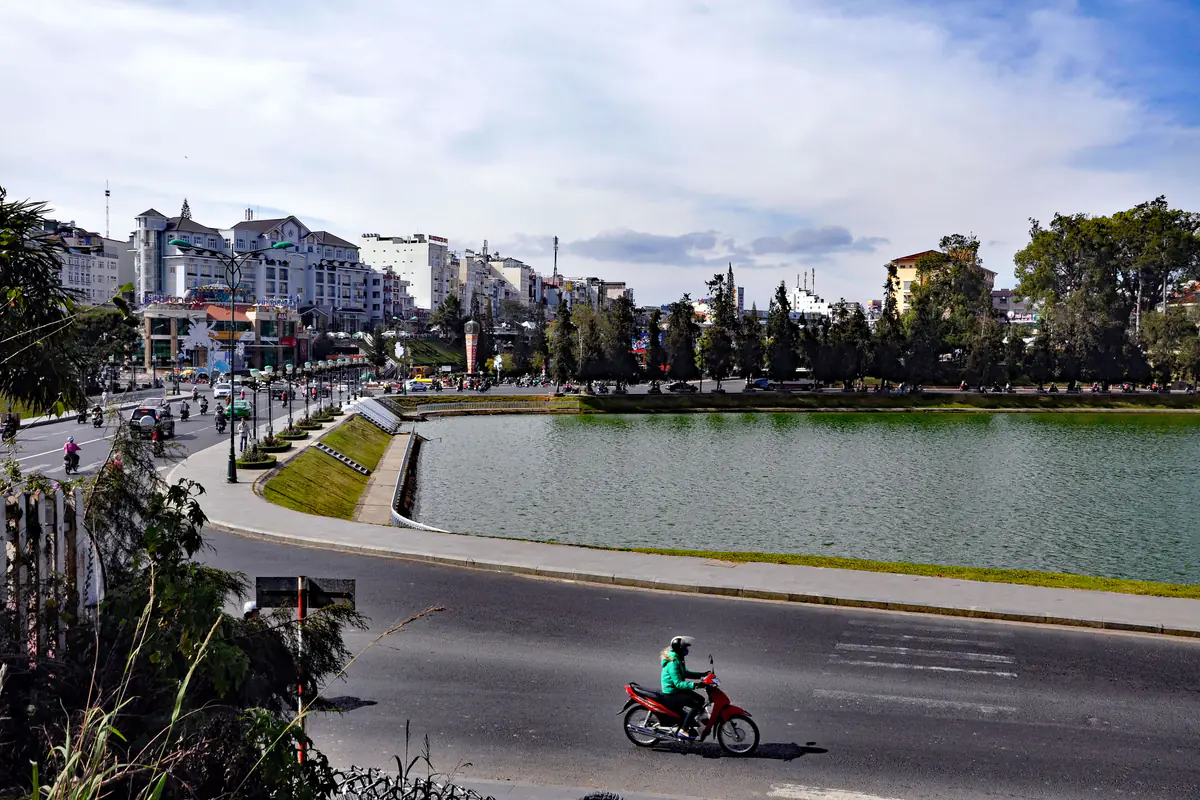
What to do in Da Lat: a practical 2-day itinerary for first-time visitors
A practical guide to Da Lat's best attractions, with a 2-day itinerary organized by location to reduce travel time.
Places
What to do in Saigon in 2 days without wasting time in traffic?
A practical 2-day Saigon itinerary with attractions, ticket prices, evening activities, and routes that avoid unnecessary travel.