Why does a 90-day stay shape a digital nomad's life in Vietnam?
Vietnam works well for a trial stay of several weeks or months when your remote job is already stable and you can confirm your immigration position before booking accommodation. It is a poor place to improvise your work status after arrival if your activities require separate work authorization.
Written by Tụi mình mê biểnUpdated

Photo: Bao Tran
Vietnam's e-visa can be issued for up to 90 days, but it is an entry and stay document, not a remote-work permit. For a first month, Da Nang offers the most straightforward mix of workspaces, beach access and an international remote-worker community; Nha Trang is a strong alternative if you want a more compact coastal routine. Your choice should begin with your legal stay, meeting hours and housing needs, rather than a three-month apartment advertised in a Facebook group.
Is Vietnam a good place to work remotely?
It can be, provided your income is stable and your work can travel with you. A remote employee, a freelance designer, a software contractor and a Vietnamese resident temporarily relocating within the country may all want reliable fiber internet and a desk. They do not necessarily face the same visa, work-permit or tax rules.
Vietnamese citizens changing cities usually focus on accommodation, commuting, costs and any location restrictions in their employment contracts. Foreign nationals have another layer of questions: which immigration status covers the stay, whether the actual work requires authorization, how a landlord reports temporary residence, and whether income earned while physically in Vietnam creates tax obligations.
The distinction matters. Being paid in another country does not settle where your salary is taxable. Likewise, the words digital nomad on a social profile do not constitute a visa category. Do not rely on someone else's arrangement unless their nationality, activities, employer and time spent in the country are genuinely comparable with yours.
Before choosing a city, look at your work calendar. Meetings from 09:00 to 17:00 Vietnam time work in almost any established neighborhood. European teams can fill your afternoon and evening. A regular US West Coast schedule can push calls well into the night. At that point, a soundproof bedroom and dependable backup internet are worth more than an ocean view.
Ask your employer whether remote work from Vietnam is allowed. Some organizations restrict work locations because of cybersecurity, data handling, payroll, insurance or contractual requirements. A weekly local client meeting also brings airports, transport and professional networks into the choice. A cheap room far outside the city can become an expensive decision once you count the travel time.
Best cities in Vietnam for digital nomads: a practical comparison
| City | Planning budget, one person/month (2026) | Work options | Community and lifestyle | Climate drawback |
|---|---|---|---|---|
| Da Nang | VND 15-26 million | Many coworking spaces and work-friendly cafés | Accessible nomad scene around My An and An Thuong | Heavy rain in the later months of the year |
| Hoi An | VND 15-28 million | Dedicated community coworking | Smaller and more social, slower pace | Autumn rain and localized flooding |
| Nha Trang | VND 13-24 million | Dedicated desks plus central cafés | More compact, good for independent workers | Wetter weather around September-December |
| Da Lat | VND 13-23 million | Dedicated coworking and cafés | Cooler, calmer, less business-oriented | Rainy season roughly April-October |
| Ho Chi Minh City | VND 18-35 million | Extensive professional workspace choices | Strong business and networking scene | Heat, traffic and wet-season downpours |
| Hanoi | VND 17-33 million | Numerous coworking locations | Professional connections and culture | Humid summers, chilly winters |
These figures are editorial planning allowances, worked out from the assumptions below. They assume a solo resident renting a furnished studio or small apartment, paying for normal food, utilities, local transport and possibly a coworking membership. They exclude flights, refundable deposits, visa fees, insurance and taxes. An ocean-view apartment, an upscale serviced residence or a very short contract can cost considerably more.
Da Nang: the simplest place to begin
My An, An Thuong; VND 15-26 million a month
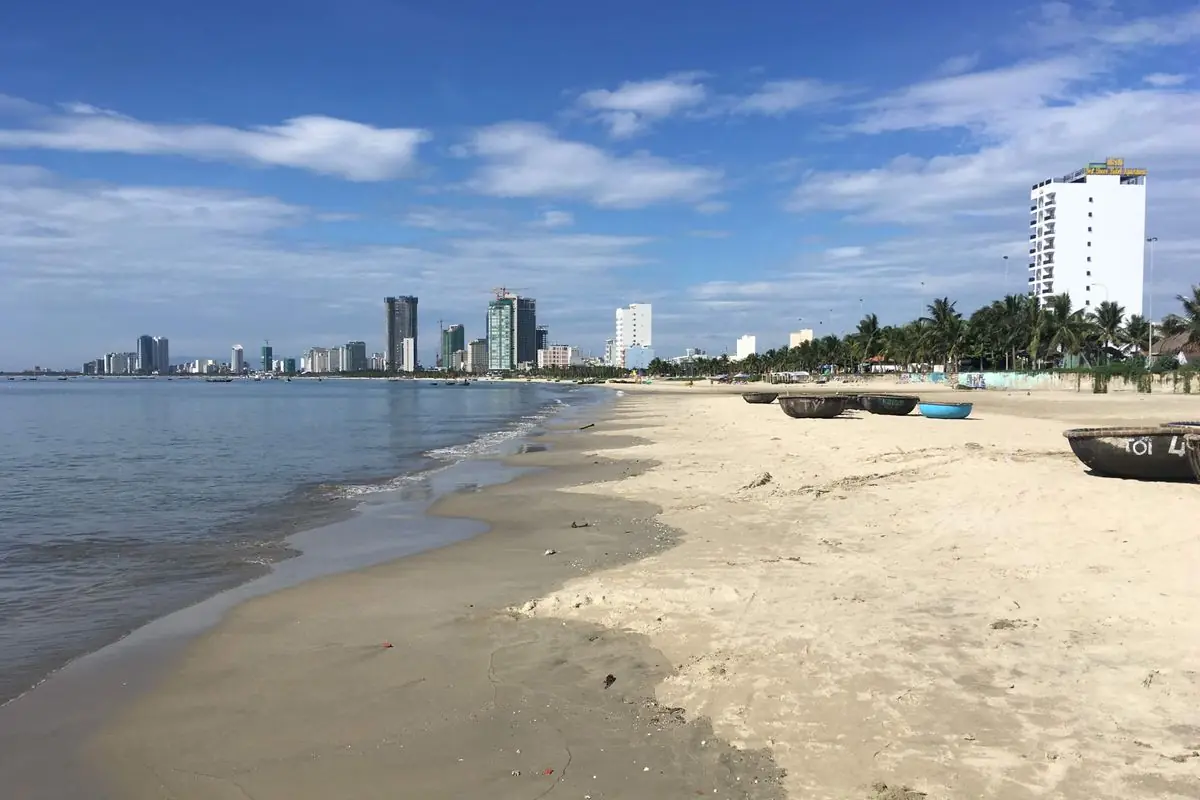
Photo: Christophe95
Da Nang has a practical advantage over many attractive holiday towns: a remote worker can find apartments, coworking spaces, groceries, gyms and the beach within a relatively small area. The An Thuong streets and nearby My An neighborhood are popular starting points because much of daily life can be done on foot. You can work through the afternoon, have dinner nearby and reach My Khe Beach without building your day around a motorbike.
The trade-off is noise. The most convenient apartment above a busy bar may be a terrible choice for calls at midnight. Look for a quieter lane just outside the restaurant streets. Visit during the day and, if possible, after 21:00. A room that looks calm at lunchtime can sound entirely different once the neighborhood fills up.
At Coworking Danang, 28 Tran Van Thanh, the 2026 reservation page prices are VND 250,000 for a day pass and VND 3.5 million for 30 days. Reception is open 08:00-22:30 Monday-Friday and 08:00-18:00 Saturday, with extended access for longer memberships. Older, lower prices still circulate online, so take the price at checkout as your reference and ask for a final quote.
Housing should be treated with the same caution. The median asking rent for studios in My An on HelpRent Da Nang was VND 11 million a month on 7 November 2026. That figure covers listings on one platform only. A one-month stay may cost more than a six-month contract. Ask for a quote for your exact dates.
Choose Da Nang if you want a decent chance of meeting other remote workers without organizing every social interaction. Consider a riverside location instead of the beach if your business takes you into the city center or to the airport frequently.
Hoi An: community first, nightlife second
Cam Chau, Cam Thanh, An Bang; VND 15-28 million a month
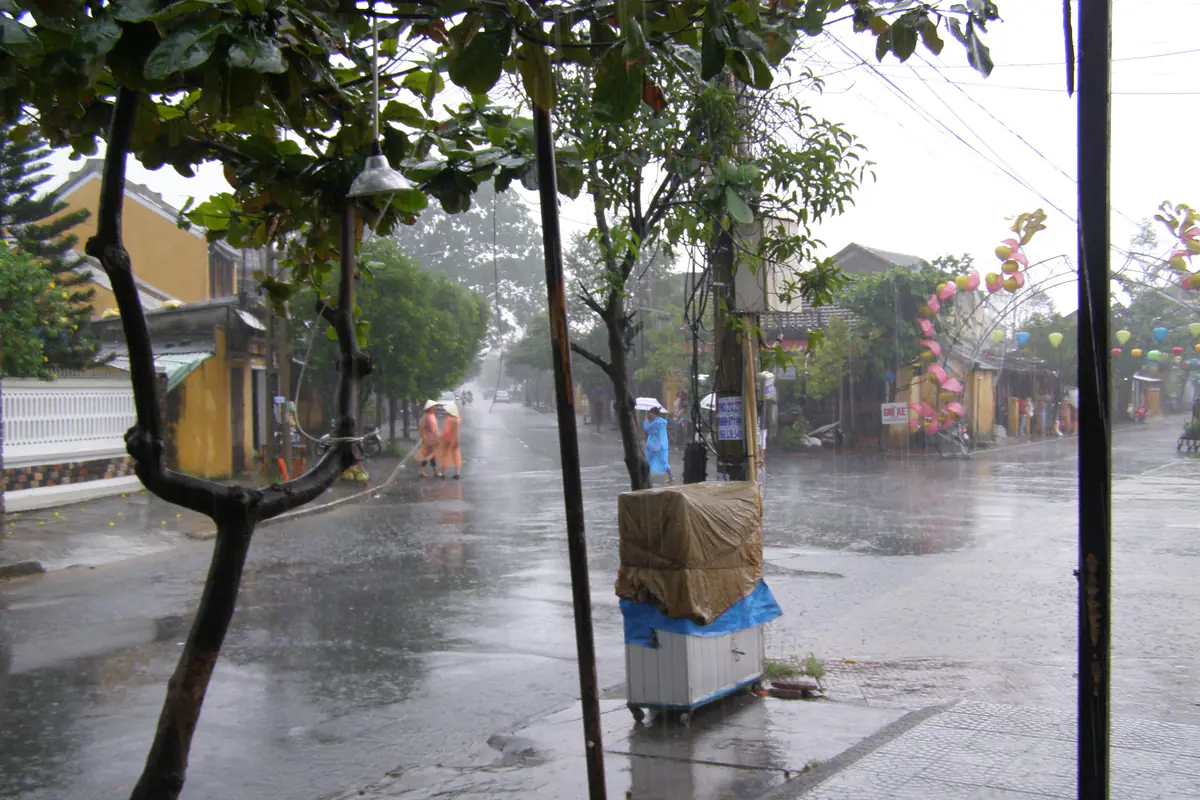
Photo: RG72
Hoi An makes sense when you want quiet mornings, cycling routes, green surroundings and a small community that actually meets regularly. Look around Cam Chau, Cam Thanh and routes toward An Bang Beach. These areas feel different from the tourist lanes of the old town, so choose based on where you will spend workdays, not just what you plan to see at weekends.
Hub Hoi An charges VND 250,000 for a day pass, VND 1.3 million for one week and VND 4 million for a month. Its coworking offering includes desk space, internet, drinks and community events. New arrivals are directed to check in during 09:00-17:00, Monday-Saturday; confirm out-of-hours access for your chosen membership. The venue is useful for someone who wants built-in social contact, although events are not a substitute for a quiet room when you have back-to-back calls.
The main practical weakness is seasonal weather. Central Vietnam's autumn rain can affect routes into and around Hoi An, and some neighborhoods experience flooding. Ask a landlord whether the building, street and access road flooded during recent heavy rain. A nicely furnished ground-floor unit can make a poor month-long office during the wettest weeks.
Hoi An also works less well if you must be in Da Nang for meetings several times a week. The commute may be manageable occasionally, but doing it late at night changes the appeal of that cheaper, greener room.
Nha Trang: a coastal work routine without constant moving
Tran Phu, Loc Tho, Hon Chong; VND 13-24 million a month
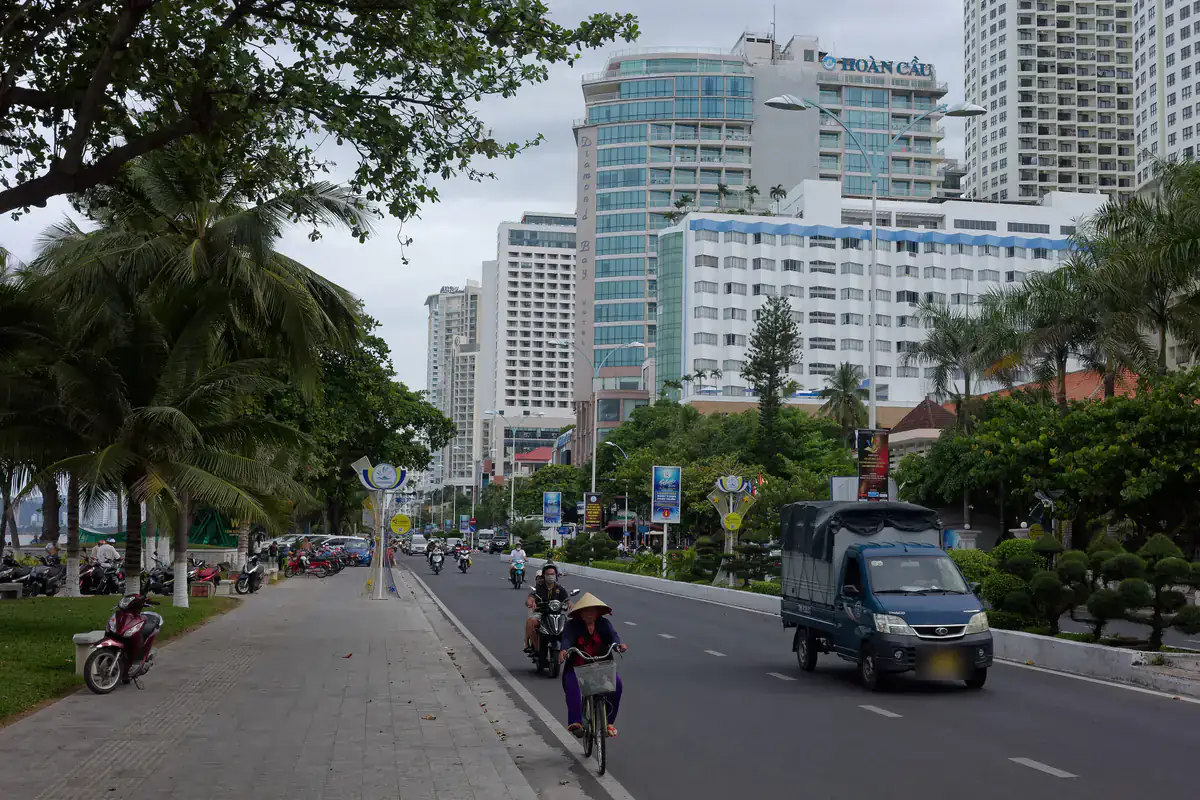
Photo: Leonid
Nha Trang is worth considering beyond its reputation as a holiday destination. Its central area is reasonably compact, and the sea, everyday food and basic services can fit into a simple daily routine. A remote worker who wants to focus rather than attend a networking event every night may find it easier to settle here for a month or two.
The Tran Phu and Loc Tho areas make it easy to get to the beach and restaurants, but they can be busy and noisy. Farther north around Hon Chong and Vinh Hoa, you may find a different mix of apartments and a more residential feel. Check the actual walking or ride-hailing distance to your workspace; an apartment advertised as “near the beach” might be far from the particular part of town you use.
A concrete work option is Stockholm Co-working at 43 Ly Tu Trong. Its 2026 prices are VND 100,000 for four hours, VND 150,000 for a day, VND 840,000 for a week and VND 2.7 million per month. The day pass covers 07:00-23:00. The venue has fiber internet, desk space and phone booths, which is a more useful starting point for video-call workers than an attractive café with no meeting policy.
On housing, BDS Nha Trang's June 2026 rent guide puts studios at approximately VND 7-12 million a month in the central area and VND 5-9 million farther north. A 32 m² furnished studio at Hân Apartment cost VND 7 million a month in 2026, with an equal deposit and a three-to-six-month lease. That apartment may no longer be available. Importantly, the price does not mean you can book it for only 30 days.
Da Lat: a cooler place to focus
Xuan Huong Lake, Truong Cong Dinh; VND 13-23 million a month
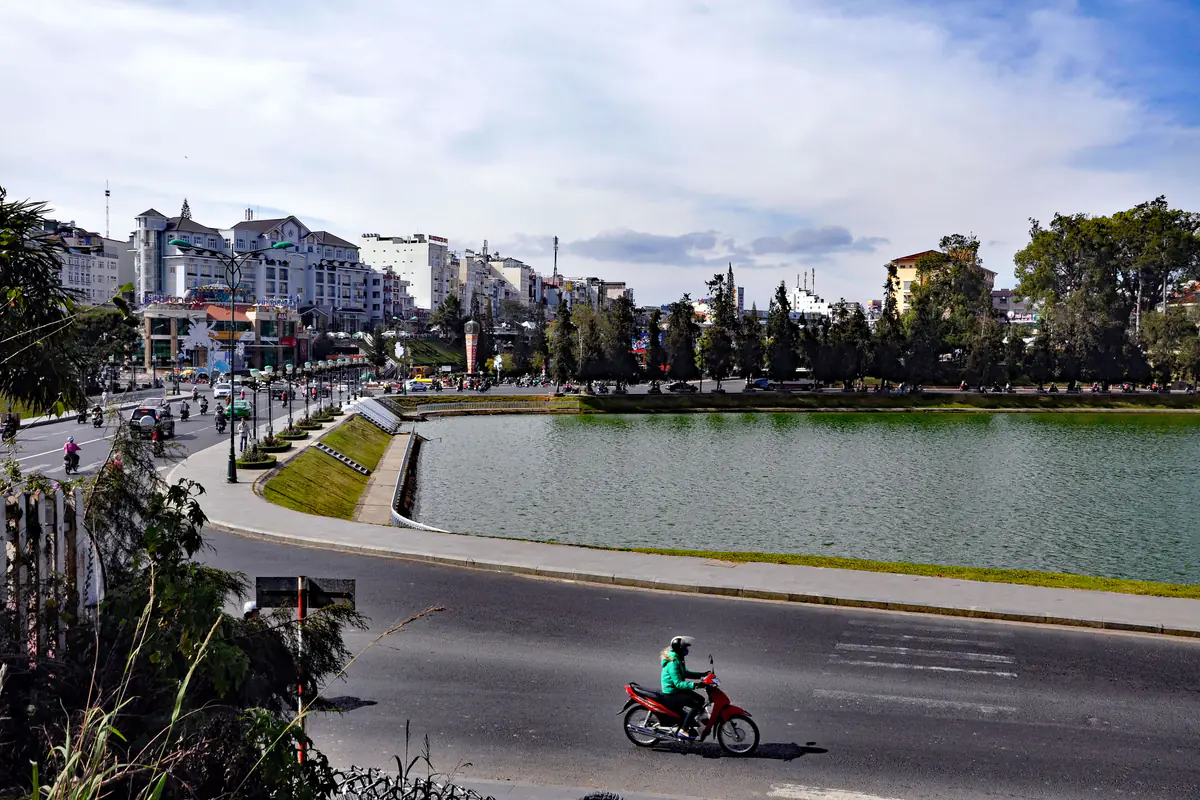
Photo: P. Hughes
Da Lat attracts people who are tired of coastal humidity and large-city traffic. The highland weather, cafés and compact central streets can make it a pleasant place to write, code or study. Staying near Xuan Huong Lake or streets around Truong Cong Dinh puts ordinary services within easier reach than a hillside homestay outside town.
There is a specific coworking option: ThomWork, second floor, 17 Truong Cong Dinh. Prices are VND 85,000 for half a day, VND 135,000 for a full day and VND 1.95 million for 30 consecutive days. It opens 08:00-midnight daily. Test the space before assuming you can work from a café every day. Some café tables are fine for reading but have no accessible socket, no private-call area and chairs that become uncomfortable after a few hours.
Rain and damp are the bigger housing questions. Da Lat's rainy season generally runs from around April to October. A room can be bright in photos and still have condensation, poor ventilation or difficult access on a wet day. Ask about hot water, laundry drying space, windows and noise from weekend visitors.
Da Lat is less compelling if your work depends on frequent face-to-face meetings with a large business community. Choose it for focused work and cooler evenings, not because you expect the same density of professional gatherings as Ho Chi Minh City.
Ho Chi Minh City: best for meeting people through work
Thao Dien, Binh Thanh; VND 18-35 million a month
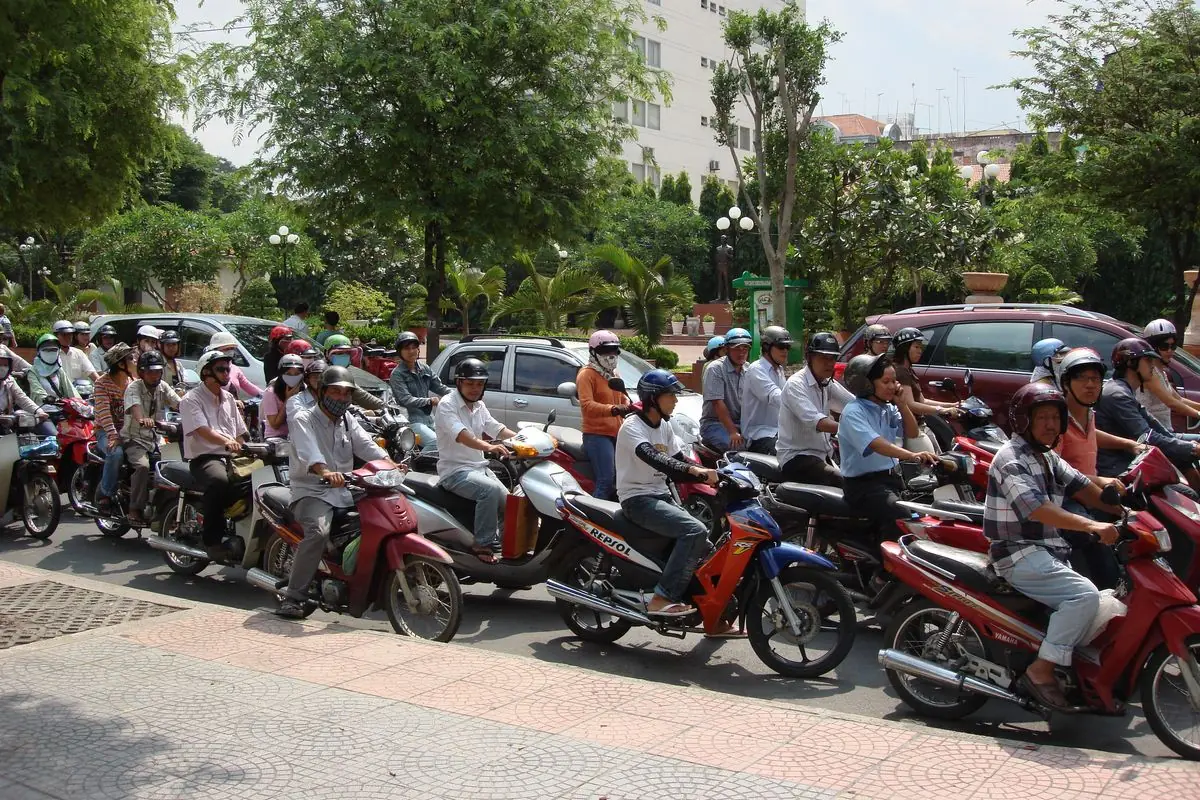
Photo: Jorge Láscar from Australia
Ho Chi Minh City is the strongest option on this list for someone whose business depends on client meetings, startup events, professional introductions or access to a wide range of services. It is not the place to choose solely because you want a cheap and peaceful base. Heat, traffic and the time lost between districts can shape the entire workday.
Thao Dien is a familiar starting area for international residents. Binh Thanh and other neighborhoods with reasonable access to the places you visit may be more practical. Don't make a housing decision from a district name alone: two addresses that appear close on a map can have very different travel times in rush hour.
At the Hive Thao Dien, 94 Xuan Thuy, the English membership page displays VND 190,000 for a day, VND 1.8 million for 10 days and VND 2.6 million for a 30-day hot-desk membership, before VAT. Lower package prices still appear in older listings, so confirm the final price, access hours and whether you are paying for 10 days or unrestricted use. The venue's membership details distinguish daytime access from full-time access.
This city works particularly well if you have hybrid remote work: most tasks online, a few meetings in person, and occasional use of professional facilities. If your workday extends into the evening, consider a quiet apartment with a genuine desk rather than paying a premium simply to live above the busiest nightlife street.
Hanoi: professional connections with more seasonal variation
Tay Ho, Ba Dinh, Cau Giay; VND 17-33 million a month
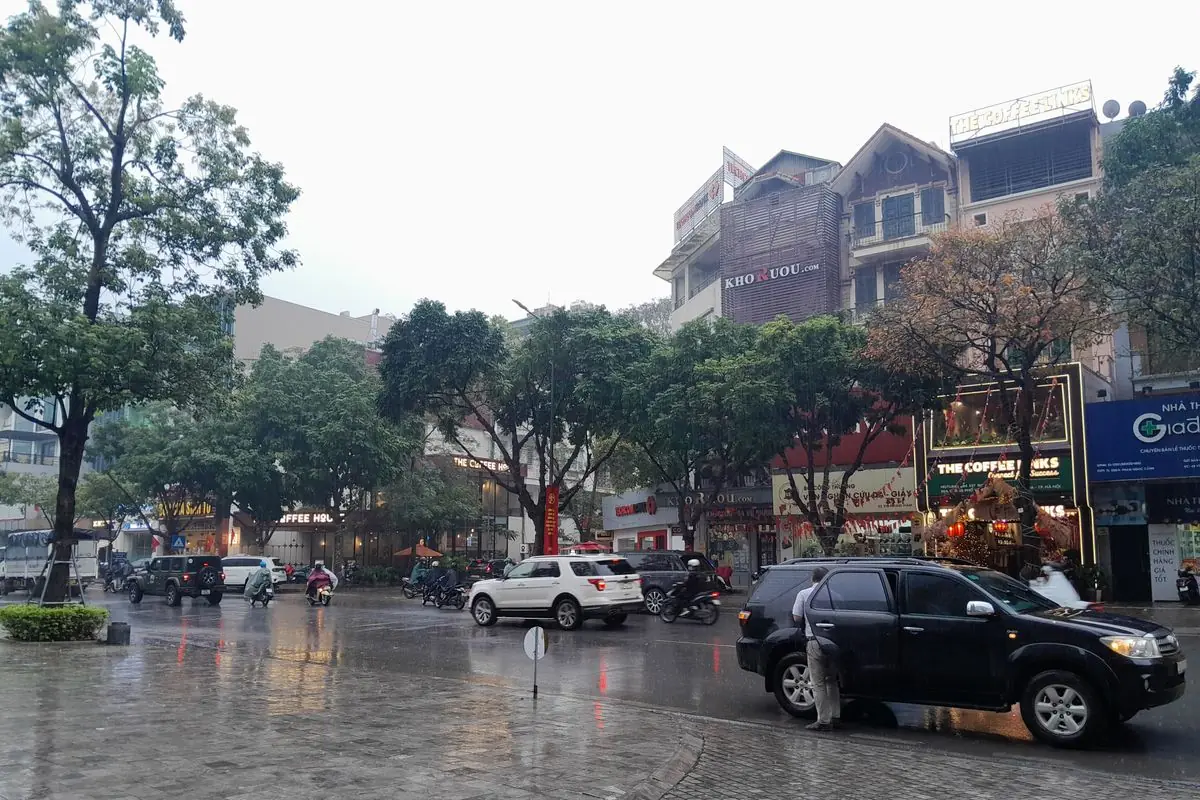
Photo: Bohdan Phúc Đan
Hanoi is a sensible base when your work involves organizations, institutions, consultancies, universities or business contacts in the capital. It also offers a wide choice of neighborhoods, from the established international residential areas around Tay Ho to districts closer to large office clusters.
The question is how often you will need to cross the city. Tay Ho can be pleasant for a longer stay, but being closer to an office in Cau Giay, Dong Da or Ba Dinh might save hours over a month. A pleasant lakeside address may not suit your client calendar.
COGO 1, floors 3-4 of Viet Tower, 1 Thai Ha, charges VND 150,000 for a day pass, VND 2.6 million per month for a flexible desk, and VND 3 million per month for a dedicated desk. The day-pass information gives 08:00-19:00 Monday-Saturday. Check your actual membership's access rules rather than extending those hours to every product.
Hanoi's climate needs more preparation than newcomers often expect. Summers are hot and humid; winter can be chilly and damp. If you plan to work from home, ask whether the apartment has two-way air conditioning or another effective heating option, ventilation and a way to manage moisture. Over a two-month stay, those details may matter more than being within walking distance of every major attraction.
How much does one month in Vietnam actually cost?
The monthly budget is mostly a housing decision. Food is flexible, but rent rises quickly when you want a serviced apartment near a beach, a quiet room in a popular international area or a contract short enough to leave after one month. Coworking adds a smaller, more predictable amount if you compare like with like.
A concrete 2026 Nha Trang planning example makes the method clearer. Use the Hân Apartment studio rate of VND 7 million a month, Stockholm's VND 2.7 million monthly coworking pass, an allowance you set yourself of VND 5 million for food, VND 1 million for utilities and local travel, and VND 135,000 for a Viettel data plan. That adds up to VND 15,835,000. It is a personal budget exercise built from separate prices. That studio requires a three-to-six-month commitment, with a deposit. Insurance, flights, visa charges, taxes and unexpected equipment costs are not included.
This illustrates why “Vietnam costs $500 a month” is not a useful answer for every remote worker. Someone sharing a local apartment and eating most meals simply might spend much less than someone renting a one-bedroom seaside serviced unit and ordering international food daily. Exchange rates also shift, so keep your main budget in Vietnamese dong and convert only when necessary.
A coworking pass is optional. Confidential video calls and a second monitor can make a reliable home office essential. Mostly asynchronous writing or coding? A basic apartment desk plus two coworking days a week might be enough. Compare the total expense, including transport and coffee purchases, instead of comparing desk membership prices in isolation.
Renting a monthly apartment: what to check before paying
Search for serviced studio, monthly apartment, apartment for rent and the name of the neighborhood. When you find a promising listing, ask for a written quote for your exact dates and lease duration. The monthly price in a listing may apply only to a three-, six- or twelve-month agreement, not a 30-night booking.
You need a breakdown of the refundable deposit, electricity charge per kWh, water, cleaning, management fee, internet, laundry facilities and any early-exit terms. Confirm whether the landlord is entitled to rent out the property. View the contract, get a payment record and inspect the property yourself or through someone you trust. Attractive photos and a friendly messaging account are not a replacement for these steps.
Test the room as a workplace. Close the windows, switch on the air conditioner, and run a video meeting for ten or fifteen minutes. Check upload performance, video stability, VPN access and mobile signal in the actual room, not only in the building lobby. Look at the chair, desk depth, electrical sockets, curtains and neighboring construction sites. If you work overnight, ask about quiet hours, bar music and the location of elevators or stairwells.
There is a simple question that saves trouble: Can you send me a short video from the desk during an ordinary weekday, with the windows closed? It does not replace a physical viewing, but it can help identify whether the promised desk and room layout are real.
Coworking, mobile data and internet backup
Internet in Vietnam's main cities is generally a practical foundation for remote work, but no connection speed on paper guarantees a flawless video call. A venue's “1 Gbps fiber” is the connection or equipment specification, not the speed every device will always achieve. Router placement, local congestion, the building's wiring, power interruptions and overseas servers can all affect the result.

Photo: Ann0611
Before buying a month-long pass, test the three things your job actually uses: a live video meeting, a file upload, and access to your company's VPN or work platforms. Confirm the organization's data-security requirements before you work with sensitive customer information. Public Wi-Fi should not become your entire security plan.
Check the rules for speaking and whether there are bookable booths before planning calls there. A silent coworking floor can be excellent for programmers and unsuitable for someone who spends half the day consulting clients. If you need evening access, compare hours as carefully as rates: Stockholm's Nha Trang day pass runs until 23:00, ThomWork in Da Lat stays open until midnight, and some longer-term Da Nang memberships offer access beyond reception hours.
For backup, keep a local SIM or eSIM with usable data and enough hotspot allowance for an emergency meeting. Viettel's 5G135N plan costs VND 135,000 for 30 days, with 6 GB per day for eligible subscriptions; VinaPhone's BIG120 costs VND 120,000 per month, with 2 GB per day for eligible subscriptions. These are operator plan prices, not necessarily the cost of obtaining a new SIM, and eligibility should be checked with the provider. Register the number properly using your identification documents. A phone showing strong signal outdoors may perform very differently inside a concrete apartment block.
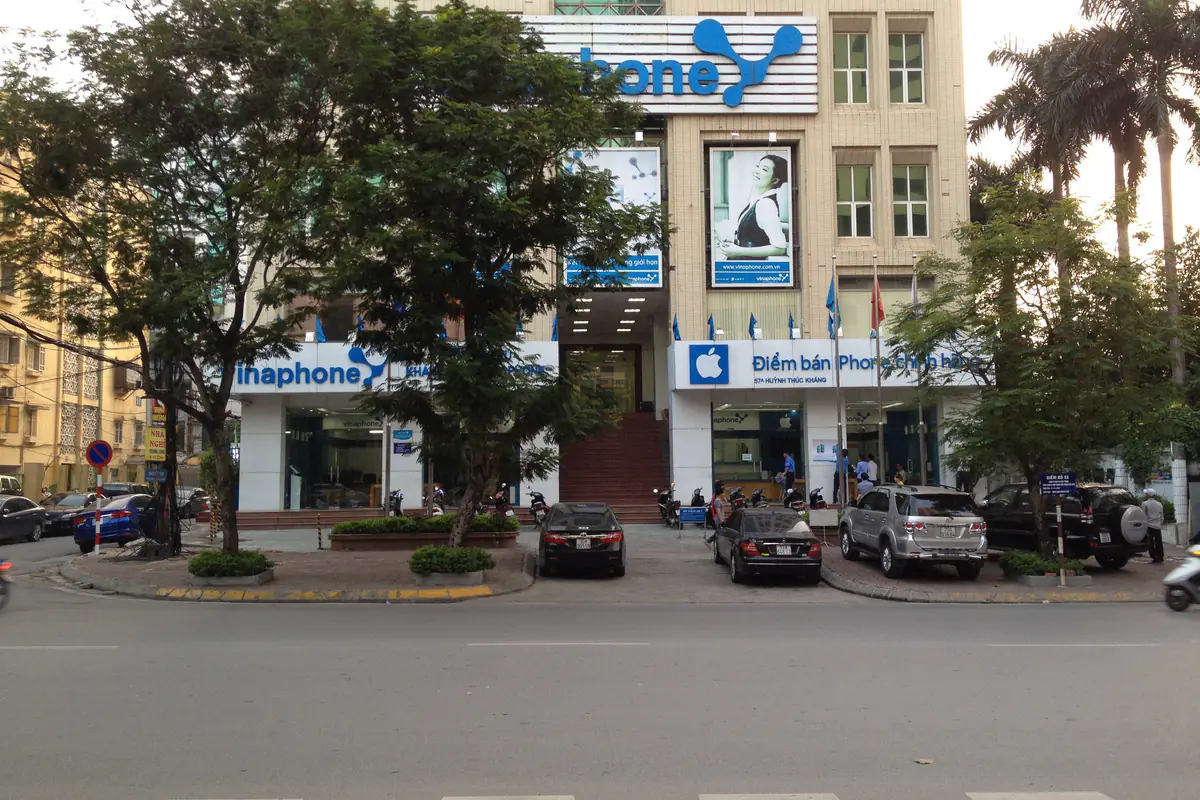
Photo: Phan Minh Tuấn
Whatever base you choose, set up two independent ways to connect before your first deadline.
Digital nomad visa Vietnam: is there one in 2026?
Vietnam does not have a generally available visa category specifically called a digital nomad visa. Vietnam has several visa categories and has introduced other immigration measures for certain qualified groups, but those should not be confused with a general remote-worker permission for anyone receiving money from abroad.
A proposal for more flexible arrangements for foreign remote workers appeared on 8 November 2026 as part of a draft tourism-policy resolution. It remains a proposal, with no visa product open for applications. The draft does not establish a published general application route, approved income threshold or stay period for digital nomads.
The Vietnam e-visa can be valid for up to 90 days with single or multiple entries. Under Circular 28/2026/TT-BTC, effective 1 April 2026, the fee is US$25 for single entry and US$50 for multiple entry. Apply through the official government portal, evisa.gov.vn. Your actual permitted stay is what your issued visa says; the statutory maximum is not an entitlement to 90 days in every application.
Passport holders of some countries may qualify for 45 days of visa-free entry under the relevant government resolutions. Eligibility depends on nationality and entry conditions. If you want to stay longer than your permitted period, review the applicable extension or alternative immigration route before making commitments. Do not assume a brief trip across a border guarantees another visa or another full period of stay.
Where your activity falls into a gray area, obtain case-specific advice before starting it. A tourist or e-visa should never be described as automatically authorizing employment.
Digital nomad Vietnam tax: will a foreign salary be taxed?
Possibly. A foreign bank account or overseas employer does not automatically make salary untaxable in Vietnam. Article 2 of Personal Income Tax Law No. 109/2025/QH15, effective 1 July 2026, provides that tax residents are liable on taxable income generated inside and outside Vietnam, while nonresidents are liable on taxable income generated within Vietnam. The law's provisions concerning residents' business income and salaries apply from the 2026 tax year.
The commonly quoted 183-day rule is important but incomplete. Article 2(2) of the Law and Article 4 of Decree 253/2026/ND-CP consider presence for at least 183 days in a calendar year or within 12 consecutive months from first arrival. They also consider habitual residence, including certain rental arrangements with a term of at least 183 days. Someone with habitual residence and fewer than 183 days of physical presence may still need to prove tax residence in another country to avoid being treated as Vietnamese tax resident under the relevant rules.
For a nonresident earning salary for work performed in Vietnam, Article 64 of Decree 253/2026/ND-CP specifies a 20% rate on the relevant salary and wages. That does not mean every freelance invoice is taxed at 20%: income from business activity has its own provisions. A resident employee's salary is assessed under progressive income-tax rules and applicable deductions rather than automatically at that nonresident rate.
Article 6 of Decree 253/2026/ND-CP also explains that taxable income sourced in Vietnam can matter irrespective of where payment is made or received. Depending on the facts and the countries involved, a double-taxation agreement may affect how income and foreign tax paid are treated. Keep your employment agreement, payment records, passport entry and exit history, days worked in each country and any foreign tax-residence certificate.
Vietnamese remote workers moving between cities within Vietnam do not change their country of tax residence simply by changing their domestic address. They still need to comply with the rules applicable to their income and employment arrangement. A foreign freelancer working through an overseas company should not copy that conclusion without examining their own circumstances.
SIM cards, banking and insurance for a few months
Your first practical purchase is dependable mobile data. It allows you to navigate, contact a landlord and stay connected while testing apartments. Buy from an appropriate official channel and make sure the number is registered under valid identification. Keep the same number if it is used for work authentication; changing SIMs repeatedly can cause more inconvenience than the savings justify.
Opening a Vietnamese bank account is a separate decision. Circular 17/2024/TT-NHNN, as amended by Circular 25/2025/TT-NHNN, sets identification requirements for payment accounts. Foreign nationals need acceptable identification documentation, while foreign residents in Vietnam may need evidence of a valid visa, equivalent residence document or visa exemption as applicable. Banks also have customer-verification processes. HSBC Vietnam, for example, asks foreign customers for a passport and valid immigration documentation and requires biometric verification at a branch.
This means a visitor with a short e-visa should not assume that every bank will open a fully functional account immediately. For a short stay, an international payment card, some cash and a reliable backup payment method may be simpler. If you intend to stay longer or receive payments locally, contact the bank first about eligibility, documents, fees and transaction limits.
Insurance should fit the length and nature of the stay. Read the actual coverage terms for outpatient visits, emergency care, hospitalization, medical evacuation, pre-existing conditions, equipment and any professional or work-related exclusions. Be particularly careful with motorbike coverage: policy conditions, licensing and exclusions matter. A travel policy designed for a two-week holiday may not suit someone living overseas and working for three months.
Keep digital copies of your passport, visa, rental agreement, insurance certificate and important contact numbers. Protect those copies with appropriate security. Back up your laptop, use two-factor authentication and have an emergency plan for a lost or damaged device. These habits are not glamorous, but they protect your income when something goes wrong.
How to plan a 30-, 60- or 90-day remote-work stay
- 30 days
One city, one routine
Choose one city. Book an initial five-to-seven-night stay, test the neighborhood, then settle into a routine. Da Nang or Nha Trang can work well because everyday services and outdoor time are relatively easy to combine. If you are unsure whether coworking suits you, pay for a day or two before committing to a month.
- 60 days
Split between two cities
You might split your time between Da Nang and Hoi An or between Nha Trang and Da Lat. There is no need to change apartments every week. Every move costs work hours through packing, transportation, check-in, Wi-Fi testing and rebuilding your workspace. Keep travel away from major deadlines.
- 90 days
A main base plus one short leg
Choose a main base for six to eight weeks and only add a second destination if your immigration permission and work calendar allow it. A socially minded worker may prefer Da Nang followed by Hoi An; someone who wants quiet, predictable workdays may stay in Nha Trang for most of the time and make a shorter trip inland. Put the actual expiry date of your permission in your calendar and plan your departure before it.
Build your leisure plans around your job rather than squeezing work between sightseeing activities. A boat tour from Nha Trang or a mountain trip from Da Nang deserves a free day, not a gap between two client calls. A sustainable routine includes ordinary errands, food shopping, laundry and time away from the screen.
Mistakes that make a remote stay harder than it needs to be
The first mistake is signing a long lease before checking your visa, contract restrictions and likely working schedule. The second is selecting a photogenic apartment without inspecting the actual workstation and network. The third is assuming coffee shops can replace a private office during a week full of confidential meetings.
Another is comparing prices that buy different things. A coworking day pass may not allow late-night access. A 10-day membership is not the same as an unlimited month. A dedicated desk may include storage while a flexible pass does not. Ask for the complete payable amount, including VAT where applicable, before making a reservation.
Finally, avoid treating your first week like a full-speed holiday. You need to establish where you sleep, where you work and what happens if the primary internet connection fails. After that, beaches, cafés, temples and weekend trips are much more enjoyable.
Once you know how to evaluate a room, a desk and your legal stay, you can use the same method for a later move from Nha Trang to Da Lat or Da Nang to Ho Chi Minh City. A good nomad base is one where your work remains dependable after the excitement of arrival has worn off.
FAQ
Does Vietnam have a digital nomad visa in 2026?
No generally available dedicated digital nomad visa exists. The e-visa may permit a stay of up to 90 days, but entry permission does not by itself establish work authorization. Recent proposals should not be mistaken for rules already in effect.
What is the best city in Vietnam for digital nomads?
Da Nang is the easiest starting point if you want coworking, beach access and a visible remote-worker community. Nha Trang suits a quieter coastal routine, Hoi An suits a smaller social scene, Da Lat offers cooler weather, and Ho Chi Minh City or Hanoi are better when professional meetings drive your schedule.
How much money do I need to live in Vietnam for one month?
For a solo remote worker renting a furnished studio, the article uses a planning allowance of approximately VND 13-35 million per month, depending on the city and lifestyle. That is not a guaranteed rate and excludes international travel, insurance, immigration charges and taxes.
Do digital nomads pay tax in Vietnam if they stay under 183 days?
They may. Tax residence has criteria besides days present, and nonresidents can also have Vietnam-sourced taxable income. The relevant rules depend on where work is performed, the type of income, residence facts and any applicable tax treaty.
Is it better to rent an apartment before arriving?
Book a flexible first week, but avoid paying a large long-term deposit without checking the room, lease conditions and internet. Confirm whether the landlord can handle foreign-guest residence declarations and whether the monthly advertised rate applies to your length of stay.
Related posts
Guides
Why can some travelers stay in Vietnam for 45 days without a visa?
Check your passport, visa-free stay allowance, and official application options before traveling to Vietnam.

Food
Why does vegetarian pho in Nha Trang need a broth check?
Where to eat plant-based food in Nha Trang, and what to ask before ordering.
Guides
Why does Vietnam's pre-arrival form need a QR code?
How to submit Vietnam's free pre-arrival form, enter your visa details, and save your QR code.