Plan your Con Dao islands trip with the right transport, beaches and history stops
Flying from Ho Chi Minh City suits a short stay with limited travel time; the ferry from Tran De suits travelers already in the Mekong Delta. Three days give you room for the prison sites, a beach afternoon and one flexible activity.
Written by Tụi mình mê biểnUpdated
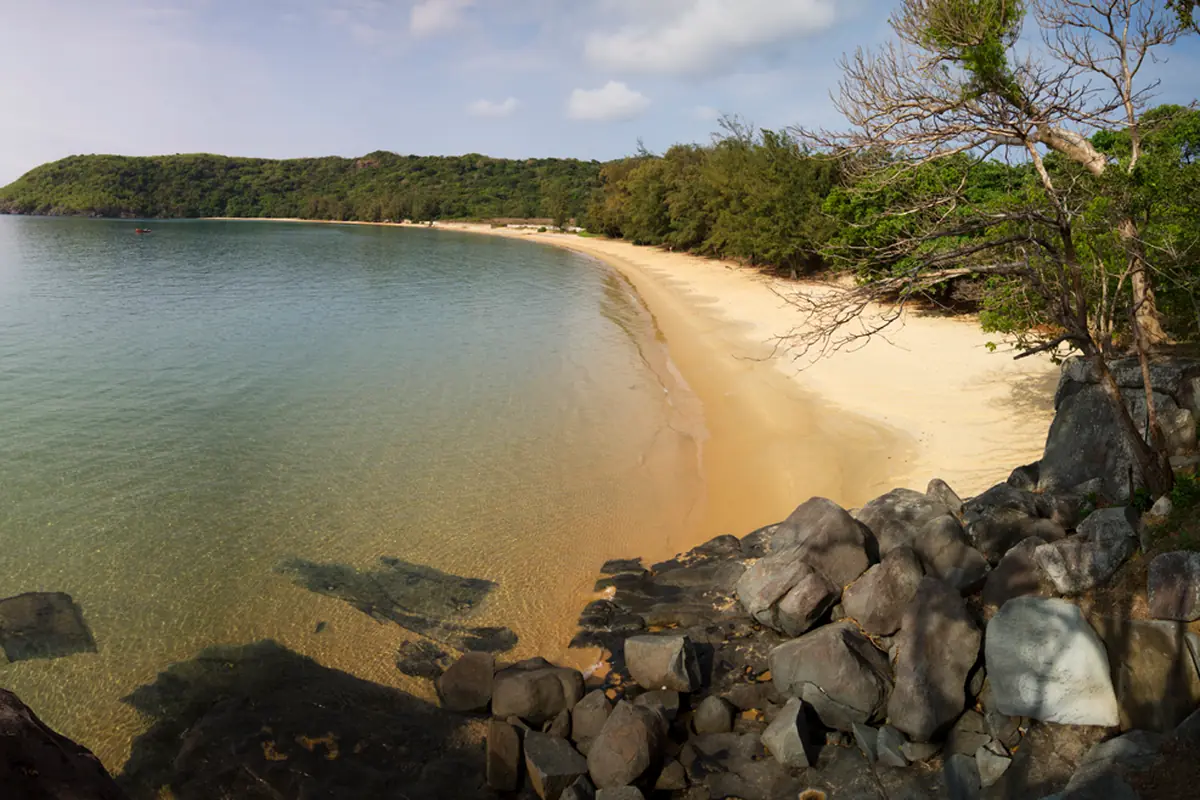
Photo: meenaghd
The flight from Ho Chi Minh City's Tan Son Nhat Airport to Con Dao takes roughly 45 minutes. From Tran De, a fast ferry takes around two and a half hours at sea. The Con Dao islands are a remote archipelago off southern Vietnam, now administered as the Con Dao Special Zone of Ho Chi Minh City; three days is a sensible first visit if you want both the beaches and the island's prison history.
Where are the Con Dao islands in Vietnam?
Con Dao is a group of 16 islands in the East Sea, off Vietnam's southern coast. Its largest island, Con Son, is where you will find Con Dao Airport, the main residential area, hotels, local restaurants and most of the historical sights. The archipelago is around 185 kilometers from the Vung Tau area and about 230 kilometers from central Ho Chi Minh City. There is no road bridge or drive-on route to Con Son from the mainland.
16
islands, the largest is Con Son
185 km
from the Vung Tau area
45 min
flight from Tan Son Nhat
VND 50,000
prison sites ticket
Older travel guides place Con Dao in Ba Ria-Vung Tau Province. That was correct before Vietnam's 2025 administrative restructuring. After that restructuring, the former Con Dao district became Con Dao Special Zone, Ho Chi Minh City. A hotel address that still says Ba Ria-Vung Tau is therefore using the former administrative description. Con Son, Vung Tau and Tran De remain useful geographical names even when their provincial or city-level addresses have changed.
The geography matters when you plan activities. A stay in the main settlement on Con Son does not give you unrestricted access to every smaller island. Hon Bay Canh, Hon Tai and other offshore areas fall within a conservation landscape, with boat access dependent on conditions and permissions. Your accommodation, the prison museum and the main beaches can be reached on Con Son, but the turtle nesting sites and some snorkeling locations require organized transport.
Con Dao appeals to travelers who want more than a resort beach. A day here might mean reading a prisoner's testimony in the museum, walking through preserved cell blocks and ending at a quiet stretch of sand. Another day might involve a national park route or a guided snorkeling trip. These are different sorts of outings, with different opening hours, weather limits and energy requirements. Plan them separately; one packed day cannot cover everything.
How many days do you need in Con Dao?
Two days and one night can work for someone arriving on an early flight and leaving late the next day. You would have time for the museum, one or two prison sections and one accessible beach. It is not enough for a reliable turtle-watching program or a full island-hopping plan. A late arrival and an early departure make the visit shorter than the calendar suggests.
Three days and two nights is the most useful starting point for many travelers. Keep your arrival day fairly light, reserve one full day for history or the sea, and leave some room on the final morning. Calm water opens up the middle day for an offshore excursion; the historical visits then move to the last morning, provided the return flight is late enough.
Four days and three nights gives you the option of a dedicated nature day. A sea turtle nesting excursion may include an overnight stay at a ranger station on a smaller island. That changes where you sleep, the boat transfer you need and when you can return to Con Son. A four-day visit also gives you a better margin when boat activities are moved because of wind or swell.
Count full usable days on the island, not just nights on a booking confirmation. A three-day holiday with an afternoon arrival and a morning departure contains only one full day. The return ferry schedule can be particularly restrictive, because some departures do not operate every day of the week.
How to get to Con Dao: flights and fast ferries
Flights from Ho Chi Minh City and Can Tho
Con Dao Airport has the code VCS and sits near the northern end of Con Son Island. Vietnam Airlines and its associated operator VASCO serve the island using smaller aircraft, principally ATR 72 turboprops, from Tan Son Nhat (SGN) in Ho Chi Minh City and Can Tho (VCA). Published flying time is approximately 45 minutes, excluding airport check-in, baggage collection and the hotel transfer.

Photo: Patrick Farrelly
There is no regularly scheduled nonstop Hanoi-Con Dao flight. From Hanoi, the usual plan is to fly through Ho Chi Minh City and continue to VCS. Travelers starting elsewhere in Vietnam can use the same connection or investigate Can Tho. If your flights are on separate tickets, allow enough time to reclaim luggage and check in again. Leave a generous margin between your Con Dao flight and any long-haul departure.
Vietnam Airlines promotes Con Dao fares from about VND 1.6 million one way. Fares vary with demand, season, baggage and how early you book. Compare the actual round-trip total on the days you need. On smaller aircraft, baggage allowances and available seats can be particularly important for families or people carrying diving equipment.
The airport is separate from the main hotel district. Ask your accommodation about an airport pickup before arrival, giving your flight number, arrival time and passenger count. A taxi is another option. Some resorts offer their own transfers, while smaller guesthouses can often help arrange a vehicle. Ride-hailing apps you use in central Ho Chi Minh City do not always have cars on the island.
Fast ferry from Tran De, the former Soc Trang area
The Tran De ferry port is now in Tran De Commune, Can Tho City, following the 2025 restructuring. You will still see it called the Soc Trang-Con Dao route because Soc Trang was the former province name. The fast ferry crosses to Ben Dam Port on Con Son Island in roughly 2 hours 15 minutes to 2 hours 30 minutes, depending on the operator and conditions.
In 2026, the adult ECO fare on Phu Quoc Express is VND 390,000 one way from Monday to Thursday, or VND 450,000 from Friday to Sunday and on holidays, with VIP seats at VND 590,000. Ferries leave at 8:00 a.m. from Tran De and 1:30 p.m. from Con Dao. Superdong also serves the route, with its own fare structure and departure times. Never assume one company's timetable applies to the other.
This can be the economical choice for people already traveling through the Mekong Delta. For someone starting in central Ho Chi Minh City, however, getting to Tran De adds a substantial road journey and possibly an extra overnight stay. Include that ground journey before deciding that the cheapest ferry ticket means the cheapest overall trip.
Arrive at the correct ferry terminal early enough for check-in and ID verification. Confirm the actual boarding pier, not just “Soc Trang” in your travel app. Keep the passenger name and identity-document details consistent with the ticket. International travelers should carry their passport and the documents supporting their lawful stay in Vietnam.
Fast ferry from Vung Tau
Phu Quoc Express also operates the Thang Long ferry between Cau Da Port, 9 Ha Long Street, Vung Tau Ward, Ho Chi Minh City, and Ben Dam Port, Con Dao. Cau Da sits in the Vung Tau coastal area, a long way from downtown Saigon. The sea crossing is generally around 3 hours 15 minutes to 4 hours.
Adult ECO fares for 2026 are VND 790,000 one way on weekdays and VND 950,000 on weekends and public holidays. VIP seats cost about VND 1 million to VND 1.1 million. Confirm the price and any port charges for your particular sailing.
Each week, ferries leave Vung Tau at 7:30 a.m. on Tuesdays, Thursdays and Saturdays, with returns from Con Dao at 1:00 p.m. on Wednesdays, Fridays and Sundays. Frequency may change during busy periods or bad weather. That pattern makes the return date especially important: you cannot simply assume a ferry will depart on the third day of any two-night stay.
Starting in central Ho Chi Minh City means a road trip to Vung Tau before boarding. Because the ferry leaves early, spending the previous night in Vung Tau is often the simpler choice. Check which port your ground transport is actually taking you to, as Vung Tau has more than one passenger boat location.
Is there a direct ferry from central Saigon?
The Phu Quy Express service used to connect the Nha Rong terminal in central Ho Chi Minh City with Con Dao, offering seats and sleeper accommodation. The service has been suspended since September 1, 2026 for maintenance. Only plan around it once the operating company confirms a resumed departure.
Which route should you choose?
| Your situation | Start with this option | Check before paying |
|---|---|---|
| Two or three days, starting in Ho Chi Minh City | SGN-VCS flight | Return time and baggage allowance |
| Already traveling in the Mekong Delta | Tran De fast ferry | Ground transfer and both sailings |
| Staying in Vung Tau | Cau Da fast ferry | Actual operating days |
| Traveling with young children or prone to seasickness | Compare flight prices first | Total travel time and connection margin |
| Arriving from abroad | International flight to Ho Chi Minh City, then VCS | Vietnam entry requirements and connection time |
Getting around Con Son once you arrive
Ben Dam Port is at the southern end of the island, more than 10 kilometers from the main town area. The airport is to the north. Neither is the same as your hotel address, so budget for a transfer. Arrange a pickup where possible and confirm whether the quoted price is per passenger or for the entire car.
Loading map...
- Con Dao Airport: Code VCS, north of the island
- Dam Trau Beach: Near the airport
- Six Senses Con Dao: Dat Doc Beach area
- Hang Duong Cemetery: Central Con Dao
- Lo Voi Beach: Next to the town
- Con Dao Museum: 2 Nguyen Hue Street
- Phu Hai Prison: Part of the prison sites
Central Con Son is small enough to explore some streets on foot. The museum, several historical buildings, the waterfront and local restaurants sit within a manageable area. A motorbike or taxi becomes more useful for Dam Trau Beach, Bai Nhat, the southern coastal road and other distant places.
One rental service charges VND 150,000 per day for an automatic scooter in Con Dao. Confirm helmets, fuel, insurance or deposit requirements, pickup location and return time. Renting for only one or two days can make more sense than paying for the whole stay when your history day is mostly walkable.
There are bends, slopes and stretches with limited lighting along the coastal roads. Ride only with the correct license and adequate experience. Wear a helmet and avoid unfamiliar roads at night or during heavy rain. A taxi is a reasonable alternative if you are traveling as a family, do not ride motorcycles at home or want to stop for several hours at a beach without worrying about the return drive.
Where to stay in Con Dao
Central Con Son for restaurants and historical sites
Ton Duc Thang, Nguyen Hue, Pham Van Dong
For a first trip, look around Ton Duc Thang, Nguyen Hue, Pham Van Dong and Nguyen An Ninh streets. This part of Con Son is practical for food, the museum, the waterfront and arrangements for day trips. You can walk to several attractions and return to your room during the hottest part of the day.
Hotels in this area include The Secret Con Dao at 8 Ton Duc Thang, Marina Bay Con Dao on Nguyen Hue, and smaller places such as Hacoda Homestay on Pham Van Dong. Compare the real total for your dates, cancellation rules, air conditioning, hot water and recent guest feedback.
A hotel described as “beachfront” may face the sea without providing a convenient swimming entrance. Check both the map location and the actual walk to the sand. If your trip is mainly about the prison museum and heritage sites, a central room can be more useful than a distant sea view.
An Hai and Lo Voi for easy beach access
Near the water, close to town
The areas around An Hai Beach and Lo Voi Beach give you a quieter shoreline within reach of the town. They suit travelers who want an early morning walk, an easy swim when conditions are safe, or a chance to rest between morning and afternoon outings. Families may find it useful to have a beach close to the room instead of taking a taxi to Dam Trau every day.
Compare places carefully: some roads are nearer the waterfront than the usable sandy beach, and conditions change with wind and tide. Lifeguards are not on duty along every stretch. Check the surf, local warnings and the weather before entering the water.
Dat Doc Beach for a resort-based holiday
Six Senses, Poulo Condor
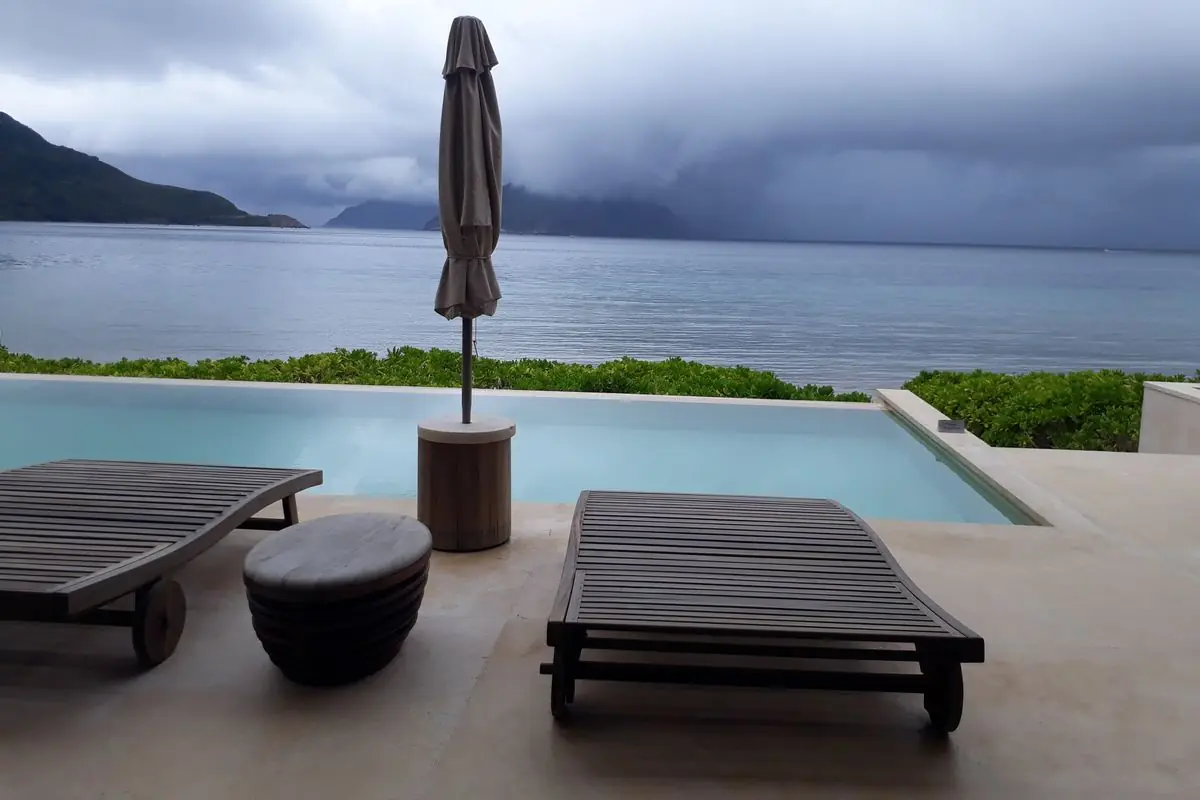
Photo: Daeva Trạc
Six Senses Con Dao and Poulo Condor are associated with the Dat Doc Beach area, away from the densest group of town restaurants. Six Senses offers private-pool villas and works with Con Dao National Park on sea turtle conservation. This is the area to consider if you want a quiet room, resort dining and most of your beach time close to your accommodation.
You will need organized transport to visit the prison museum, Hang Duong Cemetery or the central market. Check whether airport transfers, breakfast and taxes are included in your chosen room rate; packages differ. A high-end resort makes for a restful trip, but it is less practical for someone spending most of each day on guided excursions.
Book your return transport before you commit to accommodation. Flights and ferry days can be harder to change than a restaurant reservation. Once those are fixed, choose a hotel that matches the activities you will actually do.
The beaches and outdoor activities worth planning around
Dam Trau Beach: allow half a day
Dam Trau Beach lies near Con Dao Airport, on the northern part of Con Son Island. It has a sandy bay bordered by greenery and is a good place to spend an unhurried afternoon. The area is also known for occasional views of aircraft approaching the airport, although whether a plane passes while you are there depends entirely on the day's actual flight schedule.
Visit after checking the surf and weather. Bring drinking water and sun protection, and ask locally which section is suitable for swimming. Crossing the island just for a plane photo is a gamble; aircraft timing and flight operations are outside your control.
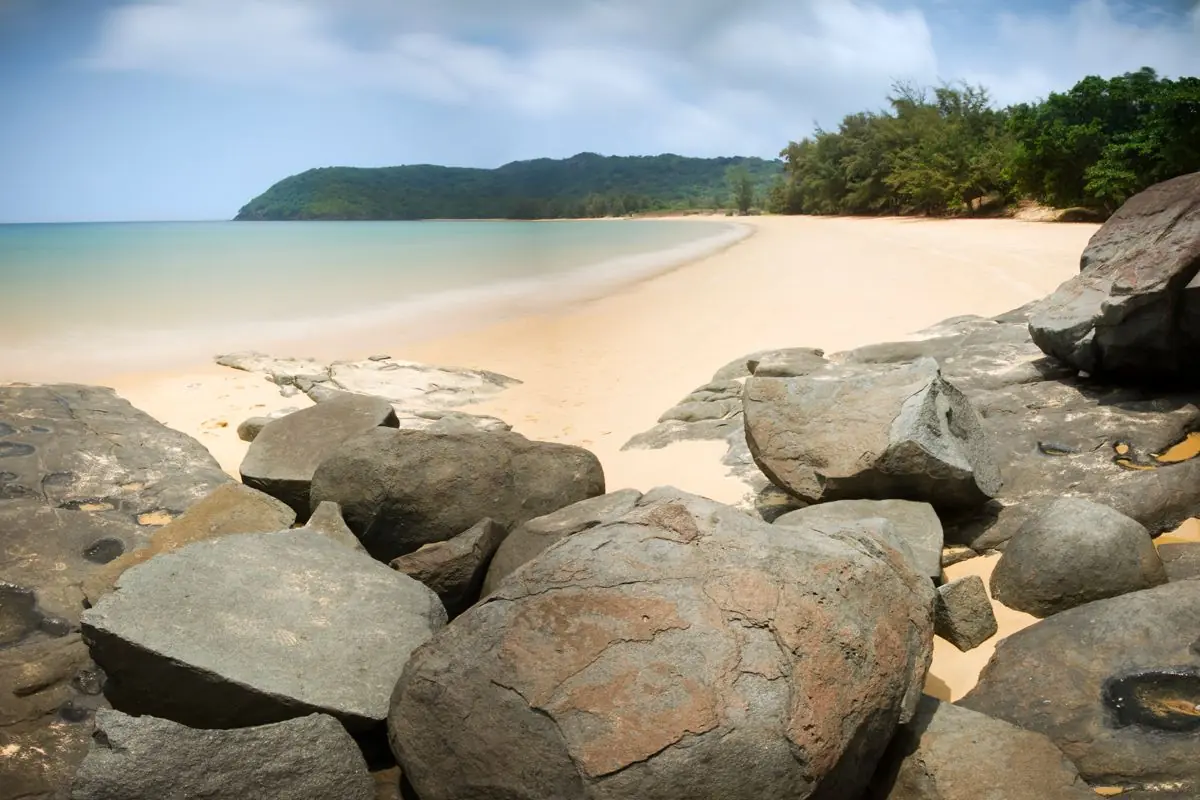
Photo: meenaghd
Bai Nhat and the southern coastal road: watch the tide
Bai Nhat is on the scenic road heading towards Mui Ca Map and Ben Dam Port. The strip of exposed sand changes with the tide. At high tide there may be little visible beach, so a photo from a travel website may not match what you see on arrival. Check tide conditions and choose a safe access point.
An afternoon drive along the southern coast works well after a morning of historical visits. Stop at legal viewing areas, and avoid parking on blind bends or standing close to a cliff edge. The coastline is worth it even if you turn back before the ferry port. Return to the main town before dark unless you have arranged a car and driver.
Lo Voi, An Hai and Ong Dung: three different outings
Lo Voi and An Hai are convenient choices for a short beach break near the settlement. They make sensible backup plans when an offshore boat is canceled. A walk, a coffee and a look at the water may be enough for that afternoon; swimming is optional and always depends on conditions.
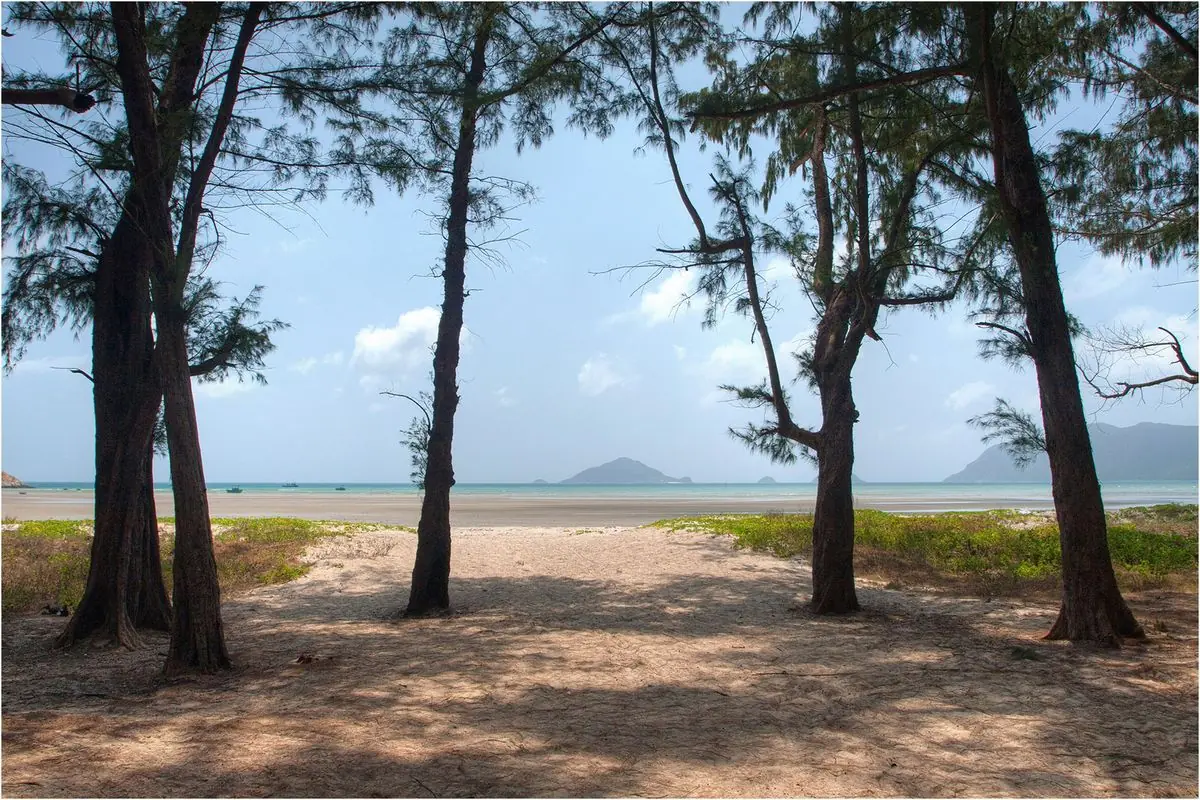
Photo: Tuderna
Ong Dung Beach is part of a route through Con Dao National Park. Confirm where the trail starts, whether registration or an entrance ticket is required and which parts are currently open. Wear appropriate shoes and carry enough water. National park routes should not be treated like a paved hotel walkway.
Snorkeling and scuba diving
Con Dao's marine environment makes organized snorkeling and diving a major reason to visit. Trips may explore permitted waters around smaller islands such as Hon Bay Canh and Hon Tai, depending on the season and operator. Snorkeling means watching marine life with a mask and snorkel near the surface; scuba diving requires suitable training, equipment and direct professional guidance.
Before paying for a tour, ask which activity you are booking, how long the boat transfer takes, the expected time in the water, the group size, whether life jackets are supplied and what happens if visibility is poor. Some marketed “diving tours” are actually surface snorkeling trips. Neither is wrong, but you should know what you are buying.
Much of the surrounding environment is protected. Do not stand on coral, touch wildlife, collect shells or remove marine life. Stay within permitted areas and follow the guide's safety brief. Poor sea conditions are a legitimate reason to change plans, even in a month generally considered good for swimming.
Sea turtle watching: a supervised conservation activity
Sea turtles nest around Con Dao over an extended season. Late April to October is a useful broad planning window, with May to September usually the main nesting period. Hon Bay Canh is one of the important nesting locations inside the national park. Turtles generally come ashore to lay eggs at night.
This is not an activity to arrange independently by walking along a beach with a flashlight. Register through the national park or an authorized operator, and follow the ranger's instructions. Some programs involve an overnight stay at a ranger station. Availability depends on conservation rules, sea conditions, transport and the animals themselves.
If this is your main reason for visiting Con Dao, give yourself four days rather than two and keep one date flexible. A night on a smaller island can be memorable, but it should not put you at risk of missing your flight from VCS the next morning.
Visiting Con Dao prison: opening hours and how to plan the route
The name Con Dao prison refers to a wider system of historical sites, not a single building with one ticket gate. The main places to visit are Con Dao Museum, Phu Hai Prison, the French tiger cages at Phu Tuong, the American tiger cages at Phu Binh, and the former Island Governor's Residence. Parts of the complex can close temporarily for conservation or restoration; check the current list of open sites locally.
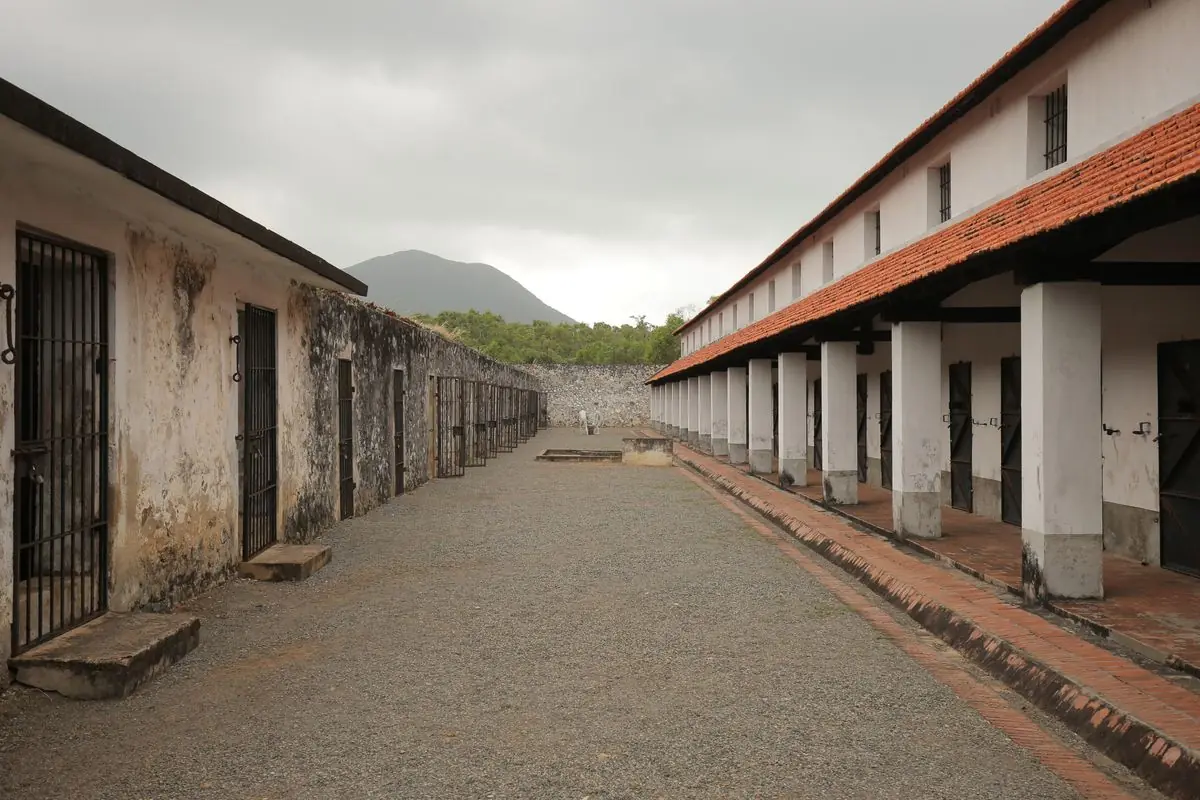
Photo: Tycho
Opening hours at Con Dao Museum, 2 Nguyen Hue Street, are 7:00-11:30 a.m. and 1:30-5:00 p.m. daily. An adult ticket costs about VND 50,000 for the group of five museum and prison-related sites. The prison sites receive visitors roughly 8:00 a.m.-5:00 p.m., but some buildings may close over lunch. Plan to visit between 8:00 and 11:00 a.m. or 1:30 and 4:30 p.m., after confirming access with the ticket office.
Start at the museum. Its exhibits give the timeline and context needed to understand what you will see later. Then move to Phu Hai, where the prison architecture becomes much more tangible. Continue to the French tiger cages if they are open. Add the other buildings only if there is enough time to read the explanations rather than rushing from one photo spot to another.
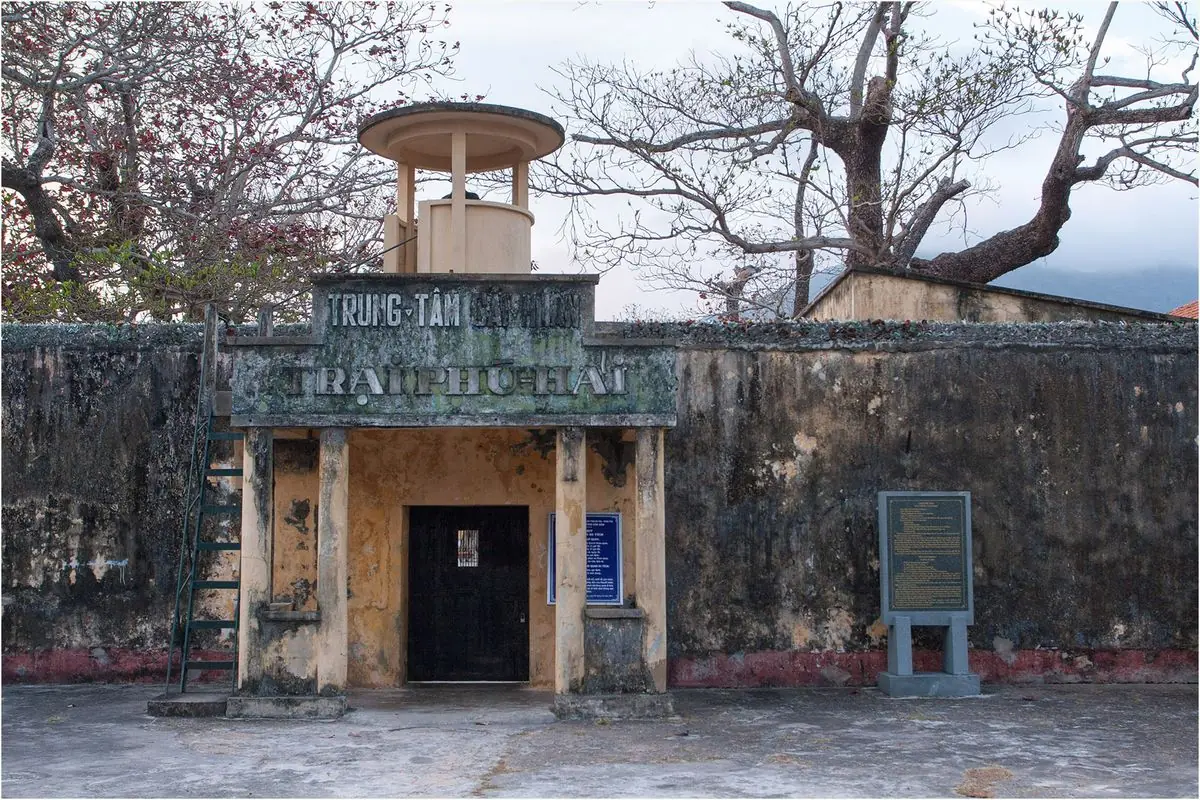
Photo: Tuderna
The displays deal with imprisonment, harsh conditions, abuse and death. This history is central to the island and deserves a respectful visit. Families should consider what is appropriate for younger children. English-speaking visitors can ask in advance about English interpretation or a guide, but should not assume every shared tour provides bilingual commentary.
Allow at least half a day for the core sites. Wear light clothing suitable for warm weather, bring water and follow any photography restrictions. Do not enter roped-off rooms or touch preserved objects. A late-morning arrival can be inconvenient because the museum closes for lunch, so an early start is usually the most efficient choice.
Visiting Hang Duong Cemetery respectfully
Hang Duong Cemetery, on Vo Thi Sau Street in central Con Dao, is a memorial and burial site associated with the island's prison history. The grave of Vo Thi Sau, a young Vietnamese resistance fighter, receives many visitors. This is a place of remembrance rather than a night-time sightseeing attraction.
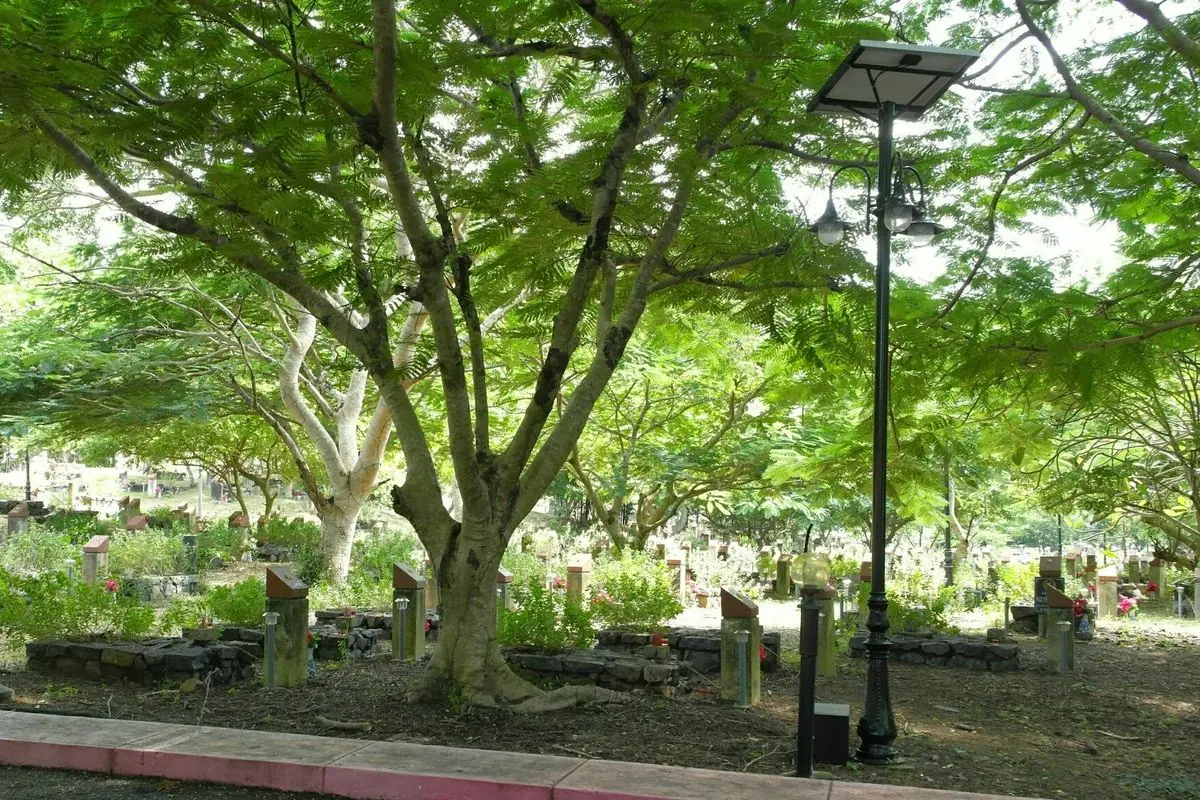
Photo: Lam Tr Th
The cemetery is open 7:00-11:30 a.m. and 1:00 p.m.-midnight. Individual areas or visitor services may have different arrangements, so confirm details before a late visit. Midnight is optional; a morning or early-evening visit works as well, including with children or older relatives.
Wear respectful clothing, keep your voice low, follow marked paths and take any trash or disposable offerings with you. A short, quiet visit is better than arriving in a hurry with a group immediately before your airport transfer. Visiting the prison sites in the morning leaves the cemetery as a separate stop later in the day.
When is the best time to visit Con Dao?
For beaches, snorkeling and boat trips, March to September is generally the easier planning window. March to May is particularly attractive if your priorities are coastal drives, swimming and sunny daytime outings. That does not make every beach safe every day, nor does it mean the island is empty during Vietnamese holiday periods.
May to September overlaps with the main turtle nesting period. Rain showers can still occur, and underwater visibility depends on the local sea conditions. A calm morning may be excellent for snorkeling even when a weather forecast shows afternoon rain. On the day, ask a responsible local operator about wind, swell and visibility; a monthly travel guide only gives the broad picture.
November through February is associated with the northeast monsoon, often called the windy season on Con Dao. Exposed waters can be rougher and ferries or offshore activities may be disrupted. You can still enjoy the museum, the prison sites, restaurants and a quieter resort stay. Just do not treat an offshore snorkeling tour as a guaranteed part of a two-day holiday during this period.
October is a transition month. Some days may be good for beach activities; others can have changing wind and sea conditions. Check the forecast for the island and the sea, not only the rain icon for Ho Chi Minh City. Accommodation with reasonable cancellation terms is particularly useful if you are traveling primarily for a boat excursion.
Food, everyday costs and a sensible budget
Central Con Son has local restaurants, breakfast places and seafood stalls. You can look for fish, squid, crab and shellfish, with availability changing daily. Not all seafood sold on the island is necessarily caught locally. For a simple meal between museum visits, rice dishes, noodles and Vietnamese breakfasts are often more practical than arranging a long seafood lunch. Roasted or candied tropical almond seeds, called hat bang, are a familiar island souvenir.
Here are prices to budget with:
| Item | Reference amount | What to check |
|---|---|---|
| SGN-VCS flight | Vietnam Airlines promotes fares from around VND 1.6 million one way | Exact day, baggage and return fare |
| Tran De-Con Dao ferry | Phu Quoc Express ECO VND 390,000-450,000 one way | Ground transfer and actual sailing |
| Vung Tau-Con Dao ferry | Phu Quoc Express ECO VND 790,000-950,000 one way | Operating weekday and port charges |
| Museum and prison site ticket | Around VND 50,000 per adult | Open buildings and eligibility for discounts |
| Scooter rental | Automatic scooter VND 150,000/day | Rental terms, fuel and helmets |
| Hotel, food and sea tours | Obtain a quote for your actual dates | Main sources of budget variation |
For a planning exercise, suppose you cap a double room at VND 800,000 per night. Two nights would be VND 1.6 million per room. Add a personal food allowance of VND 300,000 per day if that suits your eating style, or VND 900,000 for three days, then add round-trip transport, local transfers and admission tickets. The total per person changes substantially when two people share a room, or when you add private diving, an overnight turtle program or an upscale resort.
A cheap sea ticket only beats a flight once you add the cost of getting to the port. A traveler based near Tran De may save a great deal. Someone flying in from Australia or Canada and traveling through Ho Chi Minh City may save time and money overall by taking a connecting flight to VCS instead of paying for an additional long road transfer and overnight stay.
Con Dao or Phu Quoc: which island should you choose?
| Question | Con Dao | Phu Quoc |
|---|---|---|
| Who is it best for? | Nature, meaningful history, a slower pace and quieter beaches | Families, resort choice, entertainment and convenient services |
| How easy is it to reach? | Fewer air options and weather-dependent ferries | International airport and a broader range of transport |
| Which is easier on a budget? | Getting there and some accommodation choices often cost more | More competition and a wider selection of budget-to-luxury rooms |
| Which feels busier? | Generally fewer built-up entertainment areas | Major tourism zones can be substantially busier |
| What makes it distinctive? | Con Dao prison, Hang Duong, national park and turtles | Extensive resort areas, family attractions and varied dining |
Choose Con Dao if you want to spend a morning understanding Vietnam's history, a calm afternoon on the coast and perhaps another day in protected nature. Choose Phu Quoc if your group needs a large choice of hotels, restaurants and organized family activities, or if a direct international flight will simplify the trip. Con Dao is often quieter, but public holidays and weekends can still fill its limited flight seats and rooms.
For people traveling from Australia, Canada or New Zealand, Con Dao works well as a domestic extension after arriving in Ho Chi Minh City, provided your Vietnam entry documents are in order. It is not an international arrival airport comparable to Phu Quoc. Allow time for the international arrival process and any domestic connection at Tan Son Nhat.
A realistic three-day Con Dao itinerary
Day 1: arrive, check in and visit one beach
Morning or midday: Fly into VCS or arrive at Ben Dam Port. Use your pre-arranged transfer to reach the hotel. Leave luggage with reception if your room is not ready. Eat near your accommodation, check the weather and decide whether you need a scooter that afternoon.
Afternoon: Head to Dam Trau Beach if you arrived early and can dedicate several hours to the northern coast. A late arrival is better spent at An Hai or Lo Voi, which are closer to central Con Son. Keep the day simple. Crossing the island repeatedly to collect several beach photographs wastes time and increases the amount of driving on unfamiliar roads.
Evening: Eat in town, walk along the waterfront or rest. If you choose to visit Hang Duong Cemetery in the evening, treat it as a separate respectful visit rather than an entertainment stop. Confirm the current visitor arrangements first.
Day 2: museum and prison history, then the southern coast
- 7:30-8:00 a.m.
Con Dao Museum
Have breakfast and go to Con Dao Museum. Read the main historical exhibits before visiting the prison buildings.
- 9:00-11:00 a.m.
Phu Hai and the tiger cages
Visit Phu Hai Prison and the French tiger cages or other sites confirmed open that day. Spend time with the interpretation. The subject matter is too important to rush through in a few minutes.
- 11:30 to 1:30
Lunch break
Lunch and a break at the hotel. This also avoids the museum's midday closure.
- 2:00-4:30 p.m.
Southern coast road
Take the southern road towards Van Son Tu, Mui Ca Map and Bai Nhat. Stop according to the tide, road conditions and your energy level. Return before dark and have dinner in town.
Sea-day alternative: If snorkeling or diving is your priority and the forecast is excellent, use the middle day for a boat tour instead. Move the museum and main prison visit to the last morning only if your return flight or ferry leaves sufficiently late. A full offshore excursion and a complete prison circuit are too much for one day.
Day 3: Hang Duong or a short beach stop, then depart
Morning: Visit Hang Duong Cemetery if you have not already done so. Have breakfast and pick up a small souvenir. With a late departure, you could add a nearby beach or one remaining heritage site. Avoid booking a boat out to Hon Bay Canh on your final morning unless the return connection has been confirmed and leaves a substantial margin.
Before departure: Return any rental vehicle, collect your bags and follow your flight or ferry operator's check-in instructions. Confirm sea departures again on the day of travel. Weather changes should move the optional beach or museum stops, never your mainland return journey.
What to check before leaving for Con Dao
Start with your return ticket. Does the ferry sail on the day you want, and is there enough time between the VCS flight and your onward connection? Next, confirm accommodation and pickup details. Does the hotel know your arrival time, and will someone meet you at the airport or port? Finally, check sea conditions and the opening status of the historical sites. Those two factors determine whether your middle day should be spent offshore or in town.
International visitors should have their correct Vietnam entry documents and an accessible copy of each transport booking. Pack walking shoes, sun protection, any necessary personal medication and a waterproof pouch for your phone. Use flotation equipment and follow the boat crew's safety instructions. At the prison sites and cemetery, follow the signs and allow time for the historical material.
A four-day holiday keeps the same basic structure plus one dedicated national park or turtle-conservation day. Fix the journey back to the mainland first, then keep the rest of the itinerary flexible enough for the sea.
FAQ
Where is Con Dao Vietnam, and which province is it in?
The Con Dao islands lie offshore in southern Vietnam. Con Son is the main inhabited island, where the airport and most hotels are located. Since the 2025 administrative changes, the correct administrative designation is Con Dao Special Zone, Ho Chi Minh City, rather than Ba Ria-Vung Tau Province.
How do you get to the Con Dao islands from Ho Chi Minh City?
The simplest route for a short visit is usually a flight from Tan Son Nhat (SGN) to Con Dao (VCS), taking about 45 minutes in the air. Ferries also operate from the Vung Tau area or Tran De, but require additional ground travel and are subject to sea conditions and operating days.
When is the best time for the beach and sea turtles?
March through September is generally a useful window for sea activities. Sea turtle nesting is most concentrated around May through September, with activity outside those months as well. Turtle watching must be organized through the national park or an authorized provider, and sightings cannot be guaranteed.
What are the Con Dao prison opening hours and ticket prices?
Hours at Con Dao Museum are 7:00-11:30 a.m. and 1:30-5:00 p.m. An adult ticket for the museum and a group of related prison sites costs about VND 50,000. Check which individual sites are open and start at the museum before visiting Phu Hai and the tiger cages.
Con Dao or Phu Quoc for a three-day island break?
Choose Con Dao for a quieter trip focused on the prison history, coastline and protected nature. Choose Phu Quoc for a wider range of accommodation, family attractions and dining. Con Dao generally takes more advance transport planning, while Phu Quoc is easier to reach and has more options across different budgets.
Related posts
Islands & beaches
Why is Tran Phu beach still worth visiting despite the crowds?
Compare Nha Trang's beaches by swimming conditions, crowds, facilities, and travel time.
Guides
Plan your 10 days in Vietnam with three routes that actually work
Three practical ways to spend 10 days in Vietnam without changing hotels every night.
Weather
Hoi An or Phu Quoc? Where to go in Vietnam in March
A practical March guide to Vietnam's weather, flowers, festivals and best regions.