Why is Tran Phu beach still worth visiting despite the crowds?
Tran Phu Beach puts hotels, restaurants, and beach facilities within easy walking distance, but you trade convenience for crowds and less privacy. Head north toward Hon Chong or farther to Bai Dai and Doc Let for more space, with longer journeys to consider.
Written by Tụi mình mê biểnUpdated
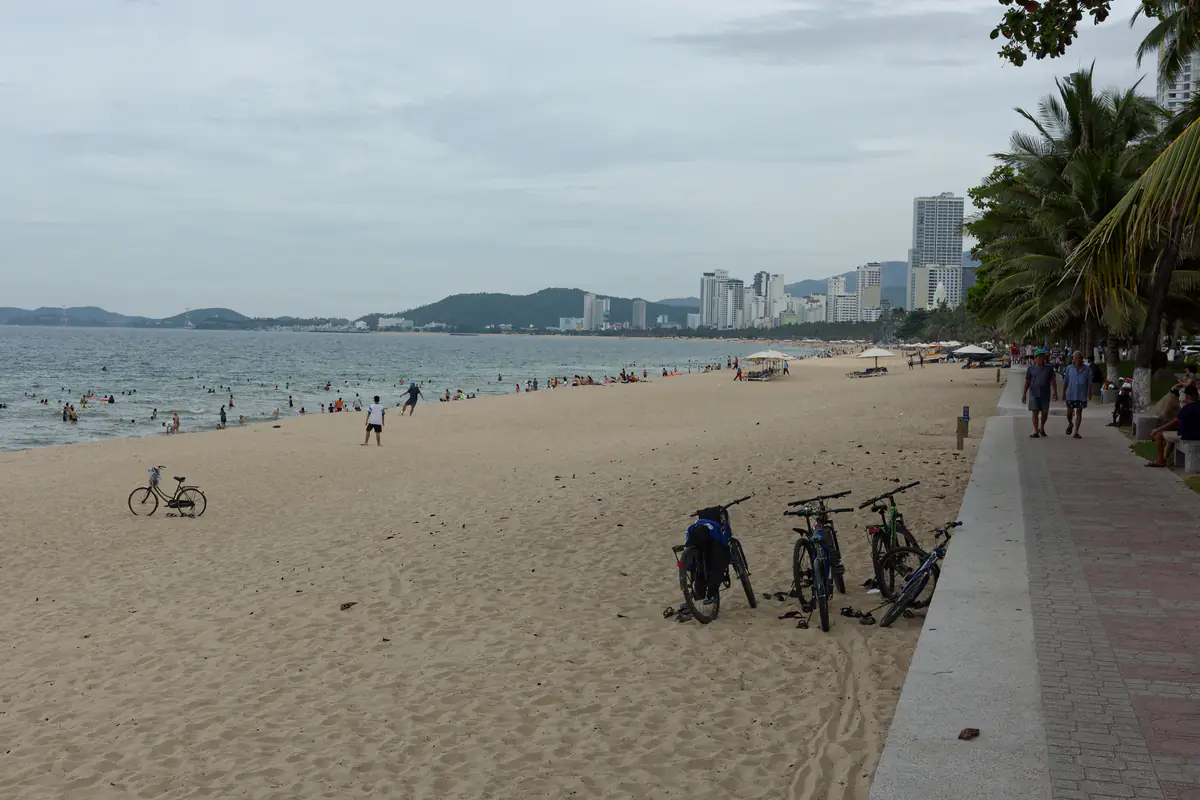
Photo: Leonid
If this is your first visit to Nha Trang, start at 2/4 Square and Tram Huong Tower. The sandy beach across Tran Phu Street is convenient for a morning swim, a seaside walk, and finding accommodation close to the water. For somewhere less busy, head north toward Bai Duong and Hon Chong. Consider Bai Dai Beach in Cam Ranh or Doc Let Beach for half a day or longer.
Where are the beaches in Nha Trang, and which area should you stay in?
Search for "Nha Trang Beach" on Google Maps, and you will usually be directed to the long stretch of coastline running alongside Tran Phu Street.
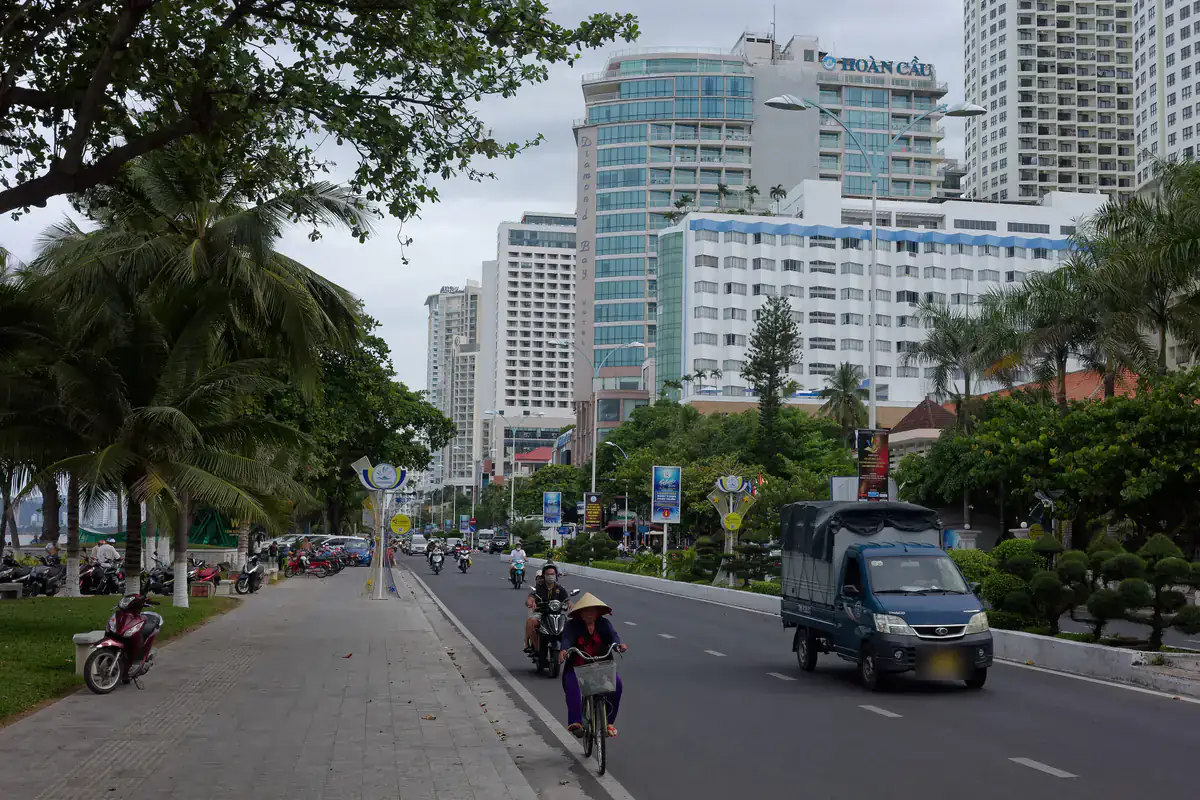
Tran Phu is Nha Trang's central beach, facing the city's main tourist district. Hotels, restaurants, parks, and seaside walking paths sit directly across the road.
Tran Phu Beach stretches for approximately 6-7 km, depending on where its boundaries are measured. The sand runs alongside landscaped parks, pedestrian paths, and one of the city's busiest coastal roads.
Access to the public beach is free.
Tran Phu is not the only mainland beach worth visiting. For most travelers, Nha Trang's beach options fall into four main areas:
- Tran Phu Beach: The central city beach, best for first-time visitors and travelers who want everything within walking distance.
- Bai Duong and Hon Chong: North of Tran Phu Bridge, with sandy swimming areas and a separate rocky coastline known for its scenery.
- Bai Dai Beach, Cam Ranh: Approximately 25-30 km south of central Nha Trang, suitable for longer beach visits and resort holidays.
- Doc Let Beach: Around 40-50 km north of central Nha Trang, in the Ninh Hoa area, known for pale sand and relatively shallow nearshore water in many sections.
Loading map...
- Tran Phu Beach, Tram Huong Tower: The central beach, across from 2/4 Square
- Bai Duong: Sandy stretch north of Tran Phu Bridge
- Hon Chong: Rocky scenic coastline, better for sightseeing than swimming
- Bai Dai, Cam Ranh: About 25-30 km south of the center
- Doc Let: About 40-50 km north, in Ninh Hoa
There is also Nhu Tien Beach, south of the city, where access and facilities may be associated with nearby tourism developments.
For English-speaking visitors, the names to search are Tran Phu Beach, Bai Duong Beach, Hon Chong, Bai Dai Beach, and Doc Let Beach.
Check the location carefully when searching for Bai Dai. Several beaches in Vietnam share this name, and the one discussed here is in the Cam Ranh coastal area of Khanh Hoa Province.
10-20 min
Bai Duong and Hon Chong, by motorbike or taxi
35-50 min
Bai Dai, Cam Ranh, by car
70-90 min
Doc Let, by car
Nha Trang beach comparison
| Beach | Water and waves | Atmosphere and facilities | Best for |
|---|---|---|---|
| Tran Phu | Conditions vary; exposed sections can have strong surf | Busy, with hotels, restaurants, and public parks nearby | First-time visitors, friends, short stays |
| Bai Duong | Sandy swimming sections; waves vary with wind and location | Generally less hectic than the city center | Couples, relaxed mornings |
| Hon Chong | Rocky shoreline; not suitable for swimming everywhere | Scenic viewpoints, photography, and cafés | Sightseeing rather than swimming |
| Bai Dai, Cam Ranh | Wide sandy stretches; waves can still become strong | Public-access areas, beach businesses, and resorts | Families, longer beach stays |
| Doc Let | Many relatively shallow areas when conditions are calm | Light-colored sand, open space, beach resorts | Families, day trips |
Do not judge a beach only by the color of the water in promotional photographs.
Water clarity changes with rainfall, wind, waves, tides, and local conditions. A beach that appears turquoise in one photograph may look completely different the following morning.
Tran Phu Beach: the easiest place to swim in central Nha Trang
Tran Phu Beach is not famous for being secluded. Its biggest advantage is convenience.
You can spend an hour swimming and return to your hotel without arranging transportation or planning an entire day around the beach.
Hotels around Tran Phu, Hung Vuong, Nguyen Thien Thuat, and Biet Thu streets are often within walking distance of the sand.
This makes the area practical for travelers staying two or three nights, including those arriving by train, bus, or plane.
Loading map...
- 2/4 Square: The easiest spot to find, beside Tran Phu Street
- Tram Huong Tower: Next to 2/4 Square and a broad section of beach
- Sailing Club Nha Trang: 72-74 Tran Phu Street
- Louisiane Brewhouse: Lot 29 area, Tran Phu Street
- Yersin Park: Northern end of the beach section, toward Tran Phu Bridge
- Tran Phu Bridge: Across it, Pham Van Dong Street leads toward Bai Duong
Which part of Tran Phu Beach should you choose?
Around 2/4 Square and Tram Huong Tower
Easiest to find, usually crowded
This is the easiest place to find.
The square sits beside Tran Phu Street, next to Tram Huong Tower and a broad section of sandy beach.
There are plenty of nearby hotels, restaurants, and streets to explore. You can swim in the morning, return to your room to shower, and go out for breakfast without needing a taxi.
The downside is the number of visitors.
This central section can become crowded during weekends, public holidays, and the summer tourist season.
For photographs of Tram Huong Tower, you do not necessarily need to stay directly in front of the busiest entrance. Walking farther along the beachfront park gives you different views of the shoreline.
The southern section near Bach Dang Park
A longer seaside walk, less time at the square
Continue south along Tran Phu Street toward Bach Dang Park.
Choose this section if you prefer a longer seaside walk and want to spend less time around the main square.
There are landscaped areas, trees, and sandy sections facing the sea. Depending on where you stop, you may find more room than around Tram Huong Tower.
Do not assume this area is always quiet. Weekends and special events can change how busy the beach feels.
The northern section toward Yersin Park and Tran Phu Bridge
Leads on to Hon Chong and Po Nagar
This area suits travelers who enjoy walking along the waterfront and want to explore Hon Chong afterward.
Follow the coast north toward Tran Phu Bridge. Once across the bridge, the coastal route continues along Pham Van Dong Street toward Bai Duong.
It is an easy direction for combining a morning at the beach with a visit to Po Nagar Cham Towers or Hon Chong.
Near the mouth of the Cai River, pay particular attention to water conditions after heavy rain. Muddy water, floating rubbish, and runoff are good reasons to avoid swimming, even if the beach is relatively empty.
Are the waves strong at Tran Phu Beach?
Sometimes.
On calm days, the sea can be relatively flat. On other days, waves break strongly along the shoreline even when the sky looks clear.
Tran Phu Beach faces Nha Trang Bay, so swimming conditions depend on wind direction, offshore weather, and the sea state.
Northeasterly winds and rough weather toward the end of the year can make swimming less comfortable or unsafe.
Use designated swimming zones where available, follow warning flags and lifeguard instructions, and avoid going beyond your ability.
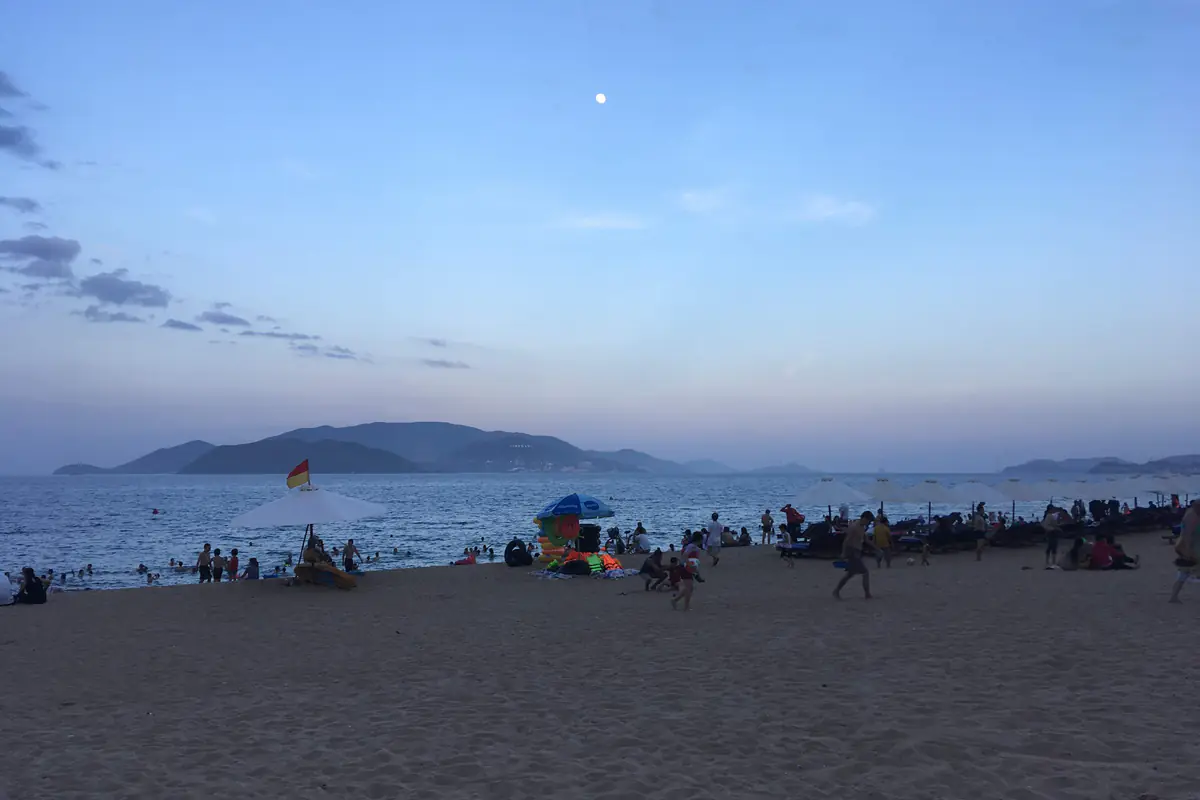
Photo: Christophe95
If you are not a confident swimmer, stay in water shallow enough for your experience rather than following other swimmers farther offshore.
A beach that slopes gently in one location may become deeper more quickly in another.
What else can you do at Tran Phu Beach?
Walking, jogging, sunrise photography, and relaxing by the sea are easy activities here.
You will also find businesses offering beach chairs, umbrellas, refreshments, and other services along sections of the coast.
Two recognizable beachfront addresses are Sailing Club Nha Trang at 72-74 Tran Phu Street and Louisiane Brewhouse in the Lot 29 area of Tran Phu Street.
Both are useful reference points if you want somewhere to eat, drink, or spend additional time by the water. They are commercial establishments, not required entrances to the public beach.
For families with children, staying at a hotel with showers, changing facilities, and secure luggage storage close to the beach is especially convenient.
You will not need to carry wet clothes and beach equipment across the city.
Bai Duong and Hon Chong: quieter beaches just north of the city center
From 2/4 Square, follow Tran Phu Street north, cross Tran Phu Bridge, and continue along Pham Van Dong Street.
Bai Duong and Hon Chong are in this northern coastal area, roughly 4-6 km from central Nha Trang, depending on your exact starting point.
The journey usually takes around 10-20 minutes by motorbike or taxi in normal traffic.
The atmosphere sets this area apart.
You still have hotels, cafés, restaurants, and local businesses nearby, but the coastline generally feels less focused on the busy central tourist district.
Can you swim at Bai Duong Beach?
Yes, when conditions are suitable.
Bai Duong is a sandy beach in northern Nha Trang, close to Hon Chong.
There are sections of sand and water where visitors can swim when swimming is permitted and conditions are safe.
Compared with central Tran Phu, Bai Duong is a reasonable option for travelers who prefer a quieter morning without traveling far from town.
You could arrive early, walk along the shore, swim in a designated area, and relax before continuing to Hon Chong.
Lifeguard coverage and beach facilities may not be evenly distributed along the entire coastline.
Look for marked swimming zones, warning signs, and lifeguard stations before choosing where to enter the water.
Hon Chong is scenic, but not every part is suitable for swimming
Hon Chong is best known for its large natural rock formations beside the sea.
The rocks create an attractive viewpoint over Nha Trang Bay and the surrounding islands, particularly in clear weather.

Photo: Vinhtantran
The rocky attraction and the nearby sandy swimming beach serve different purposes.
Focus on sightseeing and photography at the Hon Chong scenic area. Stay on permitted paths and avoid climbing onto wet rocks near the water.
The surfaces can be slippery, gaps between rocks can be difficult to judge, and waves may reach farther than expected.
Look for a designated sandy swimming section around Bai Duong instead of entering the water among the rocks.
Is Hon Chong a good place to stay?
Yes, particularly if you want a quieter atmosphere and a room overlooking the sea.
Hotels and serviced apartments around Hon Chong and Pham Van Dong Street offer alternatives to the central Tran Phu area.
Before booking, check whether your accommodation is across the coastal road from the beach, where the nearest public beach entrance is, and whether the shoreline is sandy or rocky.
A hotel advertising a "sea view" does not necessarily provide convenient access to a swimming beach.
Tran Phu will usually be easier if you plan to visit night markets, restaurants, and bars in the central tourist district every evening.
Bai Dai Beach, Cam Ranh: a better choice for a longer beach day
Bai Dai lies south of central Nha Trang, along the Cam Lam-Cam Ranh coastline.
The area has long sandy sections, tourist facilities, and numerous resorts.
From central Nha Trang, travel south toward Cam Ranh International Airport using the coastal route along Nguyen Tat Thanh Road.
The distance to different sections of Bai Dai varies, but many are approximately 25-30 km from the city center, with some farther away.
Allow around 35-50 minutes by car in normal conditions, plus additional time to locate your intended beach entrance.
Unlike Tran Phu, Bai Dai is not a beach most visitors can reach on foot from a central hotel.
You need to arrange transportation.
What makes Bai Dai different from Tran Phu?
In many sections, Bai Dai offers wider sand, more open surroundings, and fewer high-rise buildings immediately behind the beach.
On a clear day with calm seas, the water can look attractive, and the sandy shoreline is pleasant for walking, relaxing, or spending time with children.
The contrast between an urban beach and a resort coastline is easy to notice.
Tran Phu has roads, parks, shops, and restaurants close behind the sand. Bai Dai has more space dedicated to beach activities and accommodation.

Photo: L.K.Phung
Bai Dai is not always deserted.
Areas around restaurants, beach services, and resorts may become busy during weekends and holidays.
Wave conditions can also change considerably.
Do not assume that Bai Dai is always safe for small children simply because a travel article describes it as shallow or calm.
Do you have to pay to visit Bai Dai Beach?
It depends on which facilities and access routes you use.
There are public-access sections of the coastline, but entrances through hotels, restaurants, and resorts may be managed separately.
Being able to reach a public beach without an entrance fee does not mean you can use a resort's facilities free of charge.
Decide what kind of visit you want before traveling:
- A simple visit to a public beach for swimming and walking.
- A paid beach-club or resort experience with chairs, umbrellas, food, showers, and possibly a swimming pool.
There is no single 2026 admission or service price covering all businesses at Bai Dai.
Contact the specific venue you intend to visit and ask about day-use fees, beach chairs, parking, and what the package includes.
Who should choose Bai Dai?
Bai Dai suits families and couples who want to spend several hours in one place rather than moving between attractions.
It is also practical for travelers staying near Cam Ranh International Airport or booking a resort holiday on the southern coast.
A flight arriving during the day can make staying at Bai Dai more sensible than traveling into Nha Trang and returning south for the beach.
On the other hand, do not choose Bai Dai for a two-hour break between city activities.
The round trip could take almost as long as your time on the sand.
Doc Let Beach: shallow water and light-colored sand north of Nha Trang
Doc Let is in the Ninh Hoa area, north of Nha Trang.
From the city center, travel toward Ninh Hoa along National Highway 1 before turning onto the roads leading to Doc Let.
The distance is roughly 40-50 km, depending on your departure point and chosen beach entrance.
By car, allow approximately 70-90 minutes in normal traffic.
Doc Let is worth visiting early in the day rather than squeezing into an already full itinerary.
Why do families like Doc Let?
Doc Let is known for its light-colored sand, gently sloping nearshore areas, and relatively shallow water in many sections.
When the sea is calm, walking into the shallow water can feel more comfortable than entering a beach where waves break heavily at the shoreline.
The landscape is also quite different from central Nha Trang.
There are fewer high-rise buildings immediately beside the sand, with trees, tourist facilities, and open coastal views.
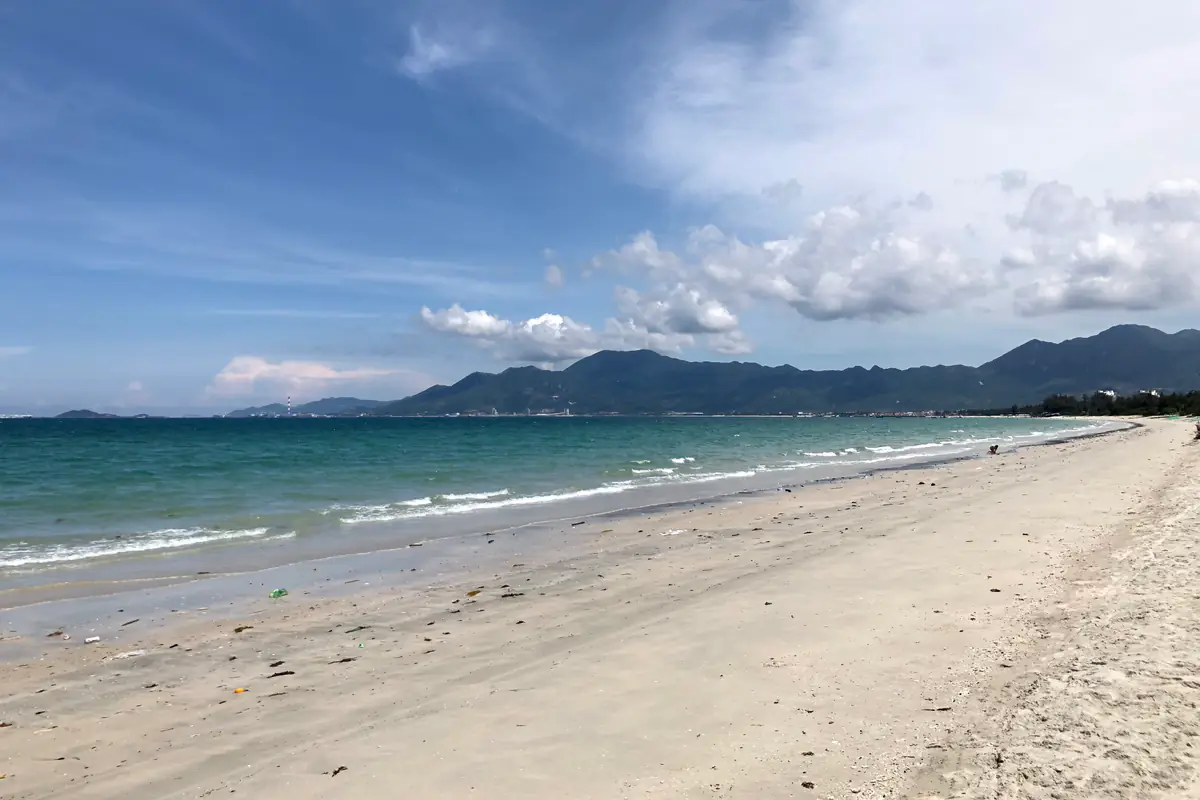
Photo: Victor311
For families with young children, Doc Let is worth considering because of the space available for playing on the sand and relaxing near the water.
However, shallow water does not eliminate swimming risks.
Depth, waves, and currents can change across the same beach.
Choose an area with lifeguard supervision, and keep children within arm's reach when they are in the water.
Which part of Doc Let should you visit?
Doc Let has public beach areas as well as tourism businesses offering facilities for day visitors.
One recognizable property is TTC Resort - Doc Let, in the Dong Cat area of Ninh Hoa.
The resort operates accommodation, dining facilities, and services associated with its beach area.
Ask the property whether a day-use package is available if you are not staying overnight.
Older promotional prices may no longer apply in 2026, so avoid relying on travel posts from previous years.
You can also look for public beach access in the Doc Let area, but check where to park, change clothes, use the toilet, and shower afterward.
A practical day trip starts around 7 am in Nha Trang.
Arrive during the morning, swim or relax before the strongest midday sun, eat lunch nearby, and return in the afternoon.
Traveling by motorbike is possible, but the distance is considerably longer than going to Hon Chong.
For families with children or older travelers, a car is usually more comfortable and leaves everyone less tired when they reach the beach.
Is Nhu Tien Beach worth visiting instead of Tran Phu?
Nhu Tien Beach is located south of central Nha Trang, approximately 10 km away.
The beach sits in a coastal setting surrounded by hills, giving it a different appearance from the urban waterfront along Tran Phu.
It may appeal to travelers who want somewhere different without going all the way to Cam Ranh or Ninh Hoa.
It is not the easiest place to visit without checking access in advance.
Some approaches to the beach are associated with tourism developments, and access arrangements, available facilities, and day-visitor policies may change.
Contact the operator of the specific location you want to visit before setting off.
Tran Phu or a suitable public section near Bai Duong is more straightforward for an easy, inexpensive hour of swimming.
Which is the best beach in Nha Trang?
There is no single best beach for every traveler.
The easiest way to choose is to think about what you actually want to do.
Tran Phu Beach
First-time visitors
Choose Tran Phu if you want to swim, eat breakfast, visit cafés, return to your hotel, and explore the city without hiring a driver for the day.
For a one- or two-night stay, saving travel time can matter more than finding a quieter beach.
Bai Duong
Couples who prefer somewhere quieter
Bai Duong is worth considering for a relaxed morning.
You can walk along the sand, enjoy the sea views, and combine the visit with Hon Chong.
Accommodation in northern Nha Trang is also worth exploring if you prefer to stay away from the busiest part of the tourist district.
Doc Let or Bai Dai
Families
Both beaches have sandy areas and room for a longer seaside visit.
Doc Let stands out for its relatively shallow water in many sections during calm conditions.
Bai Dai is the easier choice if you want to stay at a resort along the Cam Ranh airport route.
Choose based on lifeguard coverage, available shade, changing facilities, and services rather than assuming shallow water automatically makes a beach safe.
Hon Chong and Tran Phu
Photography
Hon Chong offers natural rock formations and views across the bay.
Tran Phu has the curved coastline, beachfront parks, Tram Huong Tower, and city skyline.
The two places produce very different photographs, and you can visit both in one morning.
Bai Dai
Spending the whole day by the sea
Choose a beach venue with a restaurant, shade, showers, and somewhere comfortable to sit.
You will not need to carry your belongings around or keep arranging transportation.
For a resort swimming pool or other private facilities, check the price of a day-use package rather than budgeting only for the journey.
What is the best month for swimming in Nha Trang?
As a general seasonal guide, January through August is often more favorable for beach travel in Nha Trang.
March to August typically brings many sunny days suitable for spending time on the beach and in the water.
September through December tends to be wetter, with periods of rougher seas.
October and November deserve particular attention because heavy rain and storms can affect travel plans.
These are general seasonal patterns, not guarantees.
A July afternoon can still bring strong waves, while a December morning may occasionally be calm and sunny.
What time of day is best for swimming?
The following schedule is a practical guide, not an official swimming timetable.
| Time | Recommended activity |
|---|---|
| 5:30-6:30 am | Walk, photograph sunrise, and observe the sea; swim only if the area is open and conditions are safe |
| 6:30-8:30 am | Convenient for morning swimming when conditions and beach warnings allow |
| 9-11 am | Relax by the beach, but limit prolonged exposure as the sun becomes stronger |
| 11 am-2:30 pm | Take a lunch break and avoid long periods in direct sunlight |
| 3:30-5:30 pm | Good for walking and late-afternoon swimming if conditions and lifeguard arrangements permit |
| After dark | Stay onshore; avoid swimming in poorly lit areas without lifeguards |
On windy or stormy days, consider replacing swimming with a meal, café visit, or another activity in a safe location.
Are Nha Trang beaches clean?
Nha Trang's main tourist beaches have managed public areas, beachfront parks, and cleaning services.
However, it would be inaccurate to say that the water at every beach is always clean.
Water quality can change depending on location, weather, runoff, and other local conditions.
There are three important distinctions.
Clean sand does not always mean clean water
A beach that is regularly cleared of litter may still have murky water after heavy rain or strong waves.
Likewise, clear blue water does not automatically mean that every water-quality measurement meets health standards.
Reliable conclusions about bathing-water quality require actual testing at the relevant location and time.
You cannot rank the cleanliness of a beach by eye, so do not pick a "cleanest" beach by appearance alone.
Be careful near runoff areas after heavy rain
The Cai River flows into the sea near the northern part of central Nha Trang. There are also stormwater outlets along the urban coastline.
Heavy rain can carry mud, rubbish, and pollutants from land into coastal water.
If the water changes color unusually, has floating debris, visible film, or a strange smell, choose another location or skip swimming.
There is no reason to force a swim simply because you have already traveled to the beach.
An empty beach is not necessarily a cleaner beach
Some less crowded sections may have less visitor litter.
Others may lack regular cleaning, public toilets, lifeguards, or active supervision.
For families, a managed beach area with rubbish bins, working toilets, and a clearly marked swimming zone is often a better choice than an isolated stretch of coastline.
You can bring towels, drinking water, and personal belongings, but follow the posted rules concerning food, public spaces, and hygiene.
Are there jellyfish in Nha Trang? Can swimming cause itching?
Yes, jellyfish can appear in Nha Trang's swimming areas.
Jellyfish are a real local concern, not something limited to remote beaches.
On May 13, 2025, stinging jellyfish appeared in several beach areas, affecting residents and tourists.
A similar warning was issued in July 2024.
Jellyfish appearances can vary with seasons, currents, wind, and local conditions.
It is not possible to guarantee that a particular beach or month is completely free of jellyfish.
How can you reduce the risk of jellyfish stings?
Before swimming, look at the water, the shoreline, and any warnings from lifeguards.
If jellyfish are visible near the beach or there is an official warning, stay out of the affected area.
Do not pick up jellyfish with bare hands, even when they appear dead or have washed onto the sand.
For children, use supervised swimming areas and discourage them from touching unfamiliar marine animals.
What should you do after a jellyfish sting?
Leave the water and seek assistance from a lifeguard or medical professional.
Avoid rubbing the affected skin.
If tentacles remain attached, do not pull them off with bare hands. Suitable clean tools may be used to remove them carefully.
Seawater can be used for gentle initial rinsing. Fresh water may trigger additional stinging-cell discharge from certain jellyfish species.
Vinegar treatment depends on the species involved.
Vinegar can help with some jellyfish stings but is not appropriate for every species.
For this reason, ask a trained lifeguard or medical professional for guidance instead of experimenting with different substances.
What if your skin itches after swimming but you did not see jellyfish?
Itching after swimming does not necessarily mean the water was polluted or that a jellyfish was involved.
Skin irritation can result from salt, sand, sunscreen, small marine organisms, and other causes.
It is not possible to identify the exact cause from itching alone.
Leave the water, check the affected skin, and seek medical advice if there are visible stings, persistent rashes, or worsening symptoms.
Do not return to the water simply to see whether the irritation happens again.
Do you have to pay to use Nha Trang beaches?
The public sections of Tran Phu Beach do not charge an entrance fee.
You can walk along the sand, sit in permitted public areas, and swim within designated safe zones without purchasing a beach-service package.
Additional facilities and services may cost money.
| Expense | What to check |
|---|---|
| Public access to Tran Phu Beach | No beach entrance fee |
| Sun loungers and umbrellas | Prices vary by operator; confirm the rate and duration |
| Showers and changing facilities | Some facilities are free, while others charge separately |
| Parking | Check the posted rate at the parking location |
| Food and drinks | Charged according to the business's menu |
| Resorts and tourism facilities at Bai Dai or Doc Let | Day-use packages or separate facility fees may apply |
There is no single 2026 sun-lounger price that applies across every beach business in Nha Trang, so ask for the price before you rent.
Independent vendors and private resorts may have completely different pricing arrangements.
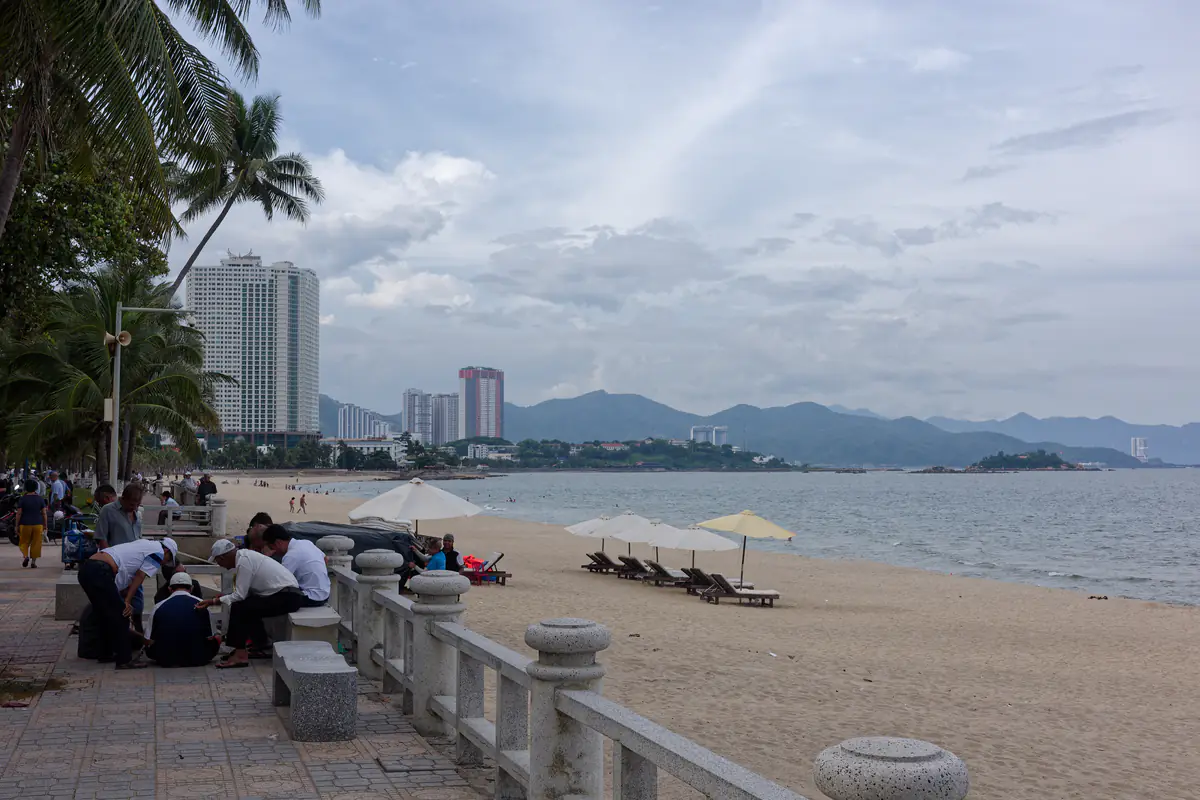
Photo: Leonid
For Bai Dai or Doc Let, choose a specific establishment in advance and ask how access works.
Do not travel there assuming every resort welcomes non-resident visitors without a booking.
For larger groups, confirm whether the quoted price includes showers, towels, parking, and any minimum food or drink purchase.
A low advertised price may not cover everything your group needs.
What should you bring for a beach day in Nha Trang?
You do not need much equipment for a short visit.
A towel, swimwear, sandals, drinking water, and a waterproof bag will cover most basic needs if you are staying near Tran Phu and only plan to swim for an hour.
Apply sunscreen before going outside, following the product instructions.
For longer trips to Bai Dai or Doc Let, bring a change of clothes, a hat, sun-protective clothing, and a plan for staying out of the midday heat.
Leave valuable belongings at your hotel where possible.
Do not leave passports, wallets, and phones unattended on a towel when everyone in your group goes swimming.
International visitors should keep their accommodation address saved on their phones and give drivers a precise destination.
Saying "Nha Trang Beach" may not tell a taxi driver which part of the coastline you want.
Useful destinations to save include 2/4 Square, Bai Duong Beach, and Hon Chong Promontory.
These names help distinguish sandy swimming areas from scenic attractions.
If you cannot swim confidently, use a properly fitted life jacket where appropriate and remain within permitted swimming areas.
Inflatable pool toys are not substitutes for approved lifesaving equipment.
Three practical Nha Trang beach itineraries
Itinerary 1: morning swim at Tran Phu, city sightseeing later
Best for: First-time visitors staying in central Nha Trang.
- 6:30 am
Walk to the beach
Walk to the beach near 2/4 Square and check the swimming conditions.
- 6:45-7:30 am
Swim
Swim if the sea is suitable and the area is supervised.
- 7:45 am
Back to the hotel
Return to your hotel for a shower and change of clothes.
- 8:15 am
Breakfast
Have fish noodle soup or jellyfish noodle soup in the city center.
- 9:30 am
Sightseeing
Continue to Po Nagar Cham Towers or other city attractions.
The advantage of this itinerary is simplicity.
You do not need to carry wet clothes around or spend a large part of the morning traveling.
Itinerary 2: Bai Duong Beach and Hon Chong before lunch
Best for: Couples, friends, and travelers interested in photography.
- 7 am
Set off
Leave your central hotel and cross Tran Phu Bridge.
- 7:20 am
Arrive at Bai Duong
Arrive around Bai Duong, walk along the beach, and choose an appropriate supervised swimming area.
- 8:30 am
Rest and change
Finish swimming and change clothes.
- 9 am
Hon Chong
Visit Hon Chong for coastal views and photographs.
- 10:30 am
Meal or coffee
Stop for a meal or coffee around Pham Van Dong Street before returning.
This order places swimming and time on the sand in the cooler part of the morning.
You can then spend the later morning sightseeing.
Itinerary 3: a full-day trip to Doc Let
Best for: Families and travelers who want a longer beach visit.
- 7 am
Leave Nha Trang
Leave central Nha Trang by car.
- Around 8:30 am
Arrive at Doc Let
Arrive at Doc Let, park, and confirm your chosen beach facilities.
- 9-10:30 am
Swim and play
Swim or spend time on the sand if conditions allow.
- 11:30 am
Lunch
Have lunch at your selected beach restaurant or nearby dining area.
- 12:30-2:30 pm
Rest
Rest in the shade and avoid prolonged direct sun exposure.
- 3 pm
Head back
Prepare to return to Nha Trang.
You can follow a similar schedule for Bai Dai, although the journey from central Nha Trang is generally shorter.
These are suggested travel schedules, not official business opening hours.
When heavy rain, thunderstorms, or rough-sea warnings affect the coast, replace the swimming portion of the itinerary rather than trying to keep to the original timetable.
Where should you stay: Tran Phu, Hon Chong, or Bai Dai?
Think about how often you expect to use the beach and how much time you want to spend exploring the city before you book a hotel.
Stay near Tran Phu Beach if you want easy morning swims, restaurants within walking distance, and plenty of evening activities.
This is usually the most practical option for independent travelers and international visitors coming to Nha Trang for the first time.
Stay around Hon Chong and Pham Van Dong Street if you want coastal accommodation without being in the busiest part of the tourist center.
You can enjoy the sea views, take walks along the coast, and use a taxi to visit central Tran Phu when needed.
Stay at Bai Dai if your main purpose is a resort holiday.
Look for accommodation with clear beach access, dining facilities, a swimming pool, and services suitable for your group.
Visiting central Nha Trang every evening adds a return journey that takes additional time and money.
Stay at Doc Let if you want a slower coastal holiday away from the urban center.
Staying there simply for cheaper accommodation makes less sense when you travel into central Nha Trang every day.
A useful rule is to look at your itinerary.
Several city activities planned each day make Tran Phu the likely better base.
Bai Dai or Doc Let deserves serious consideration when most of your time goes to swimming, eating, and relaxing at your accommodation.
Spend your first morning at Tran Phu Beach near 2/4 Square, then visit Bai Duong and Hon Chong on another morning to compare the atmosphere. Make your next beach trip to Bai Dai in Cam Ranh or Doc Let in Ninh Hoa when you prefer wider stretches of sand and have a full day available.
FAQ
What is the best beach in Nha Trang for swimming?
Tran Phu is the most convenient for hotels, restaurants, and facilities. Bai Duong is a good alternative for a quieter setting, Doc Let has relatively shallow water in many sections during calm weather, and Bai Dai suits longer beach stays. The best place to swim on any particular day depends on wave conditions, warnings, and available lifeguard supervision.
Where is Nha Trang beach? Is it close to the city center?
The central beach runs alongside Tran Phu Street, directly across from 2/4 Square and many seafront hotels. Bai Duong and Hon Chong are north of Tran Phu Bridge. Bai Dai is farther south toward Cam Ranh, while Doc Let is north of Nha Trang in the Ninh Hoa area.
What is the best month to swim in Nha Trang?
March through August is generally favorable for swimming and beach activities, although January and February can also bring pleasant weather. September through December tends to be wetter, particularly October and November. Always check the current forecast and beach warnings before entering the water.
Are there jellyfish in Nha Trang? Can the water make your skin itch?
Yes, jellyfish can appear in Nha Trang's coastal waters. Stinging jellyfish have appeared at the city's swimming beaches in previous summer seasons. Stay out of the water when jellyfish are visible or warning notices are posted. Itching after swimming can also have causes unrelated to jellyfish or water pollution.
Are Nha Trang beaches clean and free to visit?
Public sections of Tran Phu Beach are free to enter, but sun loungers, umbrellas, showers, and other services may carry additional charges. Water quality can vary, especially after heavy rain or near river mouths and drainage outlets. Resorts and private tourism facilities may have separate conditions for using their amenities.
Related posts

Places
Go to Nha Trang for a Beach Beside the City
Choose Nha Trang when you want beach time with city life close at hand.
Guides
Why is walking to Nha Trang Beach sometimes faster than taking Grab?
A practical guide to walking, Grab and taxis for everyday trips around Nha Trang.

Guides
Stay Near Tran Phu (Trần Phú) for Your First Nha Trang Visit
Choose the neighborhood for your daily plans before comparing views and room upgrades.