Best time to visit Nha Trang: why March beats the summer months
For comfortable beach weather, relatively little rain, and good opportunities for island trips, February to April is your best bet, especially March. June to August works well for summer family holidays, but expect stronger sunshine, busier beaches, and higher demand for good hotel rooms.
Written by Tụi mình mê biểnUpdated
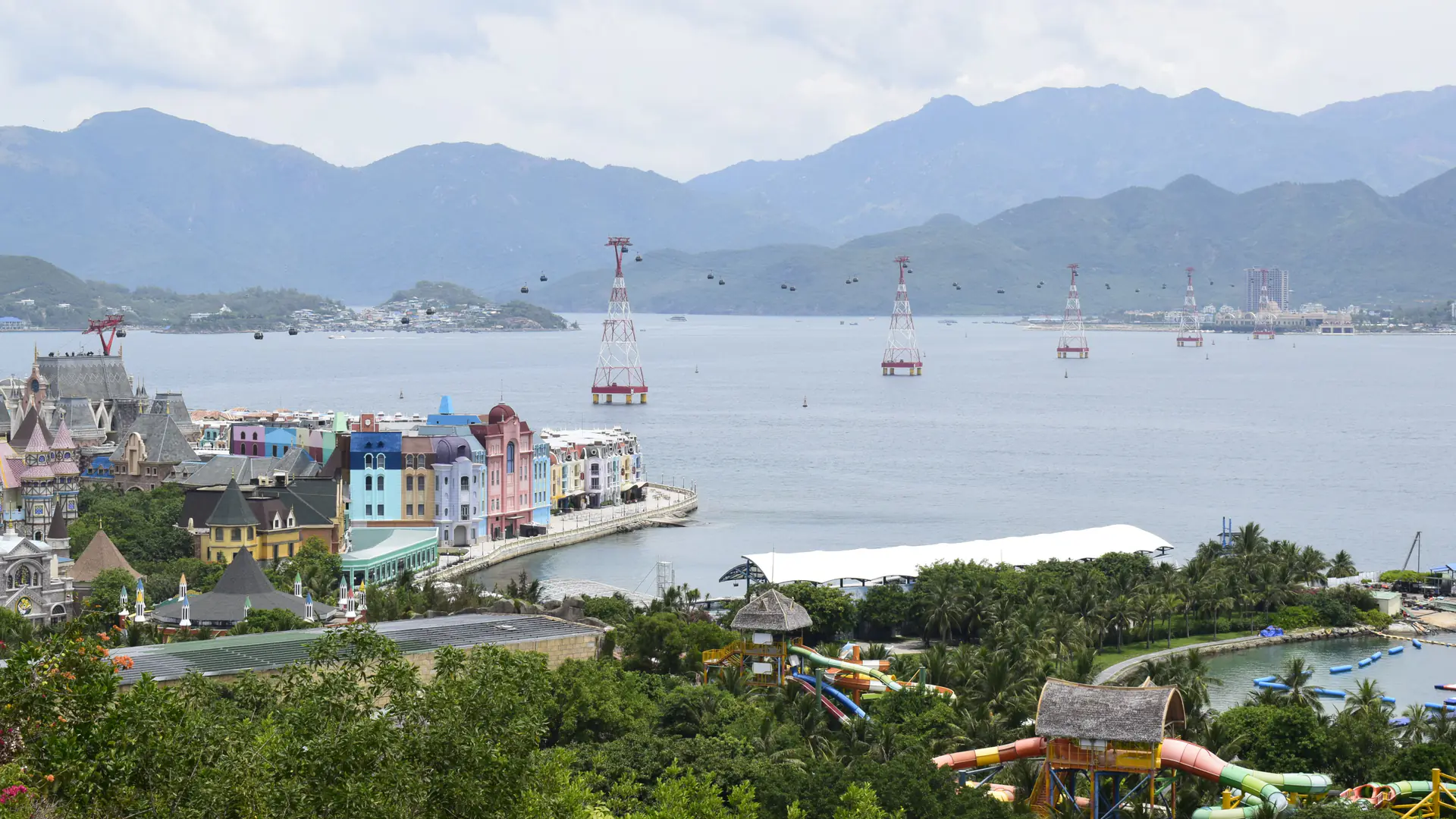
Photo: Rayrayokocha
Look at Nha Trang's 12-month weather calendar, and one pattern stands out: most of the city's rainfall arrives during the final four months of the year. Long-term climate records show that February to April is considerably drier, while June to August is hotter but still suitable for beach activities. March is the first pick for anyone who can choose only one month for swimming, island hopping, and dodging the worst summer heat.
72%
of Nha Trang's average annual rainfall falls between September and December
24-29°C
mean monthly temperature between January and August
What is the best month to visit Nha Trang?
March is the best all-around month to visit Nha Trang. Rainfall is usually low, temperatures have not yet reached their summer highs, and planning outdoor activities is relatively straightforward.
It works for first-time visitors, couples, families with young children, and international travelers looking for a few relaxing days by the sea.
Other parts of the year have their own advantages.
| Months | Typical weather | Best for | Overall assessment |
|---|---|---|---|
| January-February | Becoming drier, generally comfortable, but occasional rough seas | Relaxed holidays, walking, avoiding heat | Good, but check sea conditions |
| March-April | Little rain, plenty of sunshine, favorable beach weather | First-time visitors, couples, families | Best overall |
| May | Stronger sunshine, still attractive for swimming | Beach lovers and outdoor activities | Good, but hotter |
| June-August | Hot, sunny, and busy with summer tourists | Families on school holidays, groups of friends | Good for beaches, but crowded |
| September | Rainfall increases and weather becomes less predictable | Flexible travelers looking beyond peak season | Worth considering |
| October-November | Peak rainy season, with greater risk of rough seas and disrupted tours | Visitors who do not prioritize the beach | Best avoided for beach holidays |
| December | Rain may continue, and sea conditions can remain unsettled | Hotel-based relaxation and city activities | Not a first choice |
The table reflects long-term climate patterns; the weather on any particular date can differ.
For international travelers searching for the best month to visit Nha Trang, February to April is the strongest overall window for a beach holiday.
Vietnamese families traveling during school holidays can still enjoy Nha Trang in June, July, or August. Those months are not the wettest part of the year, although the heat, crowds, and demand for accommodation are greater.
Wind, waves, and actual sea conditions determine whether you can swim or reach the islands, even in the driest month.
Nha Trang weather throughout the year: dry season vs. rainy season
Nha Trang sits on Vietnam's south-central coast and has a tropical coastal climate. Temperatures remain relatively warm throughout the year, but rainfall changes considerably between seasons.
Unlike much of southern Vietnam, where the rainy season commonly begins around May, Nha Trang usually experiences relatively dry weather through much of the summer.
This explains why June and July can still be good months for beach holidays in Nha Trang, even when other Vietnamese destinations are already experiencing frequent seasonal rain.
Dry season: approximately January to August
Nha Trang's dry season is generally considered to run from January through August.
The first few months are comparatively comfortable. Temperatures gradually rise toward summer, and the middle of the year brings stronger sunshine.
Nha Trang's mean monthly temperature between January and August ranges from approximately 24°C to 29°C (1991-2020 average).
Afternoon highs run well above these monthly averages.
By late spring and summer, daytime temperatures can climb considerably higher. Walking across hot sand, waiting at a pier, or joining an outdoor tour at midday can feel much hotter than sitting in the shade near the beach.
The dry season works well for:
- Swimming early in the morning or later in the afternoon.
- Taking boat or speedboat trips around the islands when sea conditions permit.
- Snorkeling or diving at locations where these activities are allowed.
- Staying at a beachfront hotel and combining beach time with restaurants, cafés, and city sightseeing.
Even in the dry season, unseasonal rain, thunderstorms, and strong winds are still possible, and early in the year the northeast monsoon can occasionally bring rougher seas under relatively clear skies.
Rainy season: approximately September to December
Nha Trang's rainy season usually begins around September, becomes more pronounced in October and November, and can continue into December.
In the 1991-2020 monthly rainfall averages, approximately 72% of Nha Trang's average annual rainfall falls between September and December.
That is a substantial difference between planning a holiday in March and one toward the end of the year.
The rainy season does not mean continuous rain from morning until night, and sunny periods still occur, but conditions are less predictable.
Heavy rain can cause localized flooding, make coastal waters murky, and disrupt boat operations.
A rainy-season trip needs a flexible itinerary and bookings with clear cancellation or date-change conditions.
Why March and April are the best months to visit Nha Trang
March and April have three major advantages: relatively little rain, temperatures more comfortable than midsummer, and fewer pressures from Vietnam's main school summer holiday season.
March: best for beach holidays and relaxation
March is more comfortable than the summer months.
Mornings are suitable for spending time at the beach, while afternoons can be used for walking, visiting cafés, or sightseeing without dealing with prolonged midsummer heat.
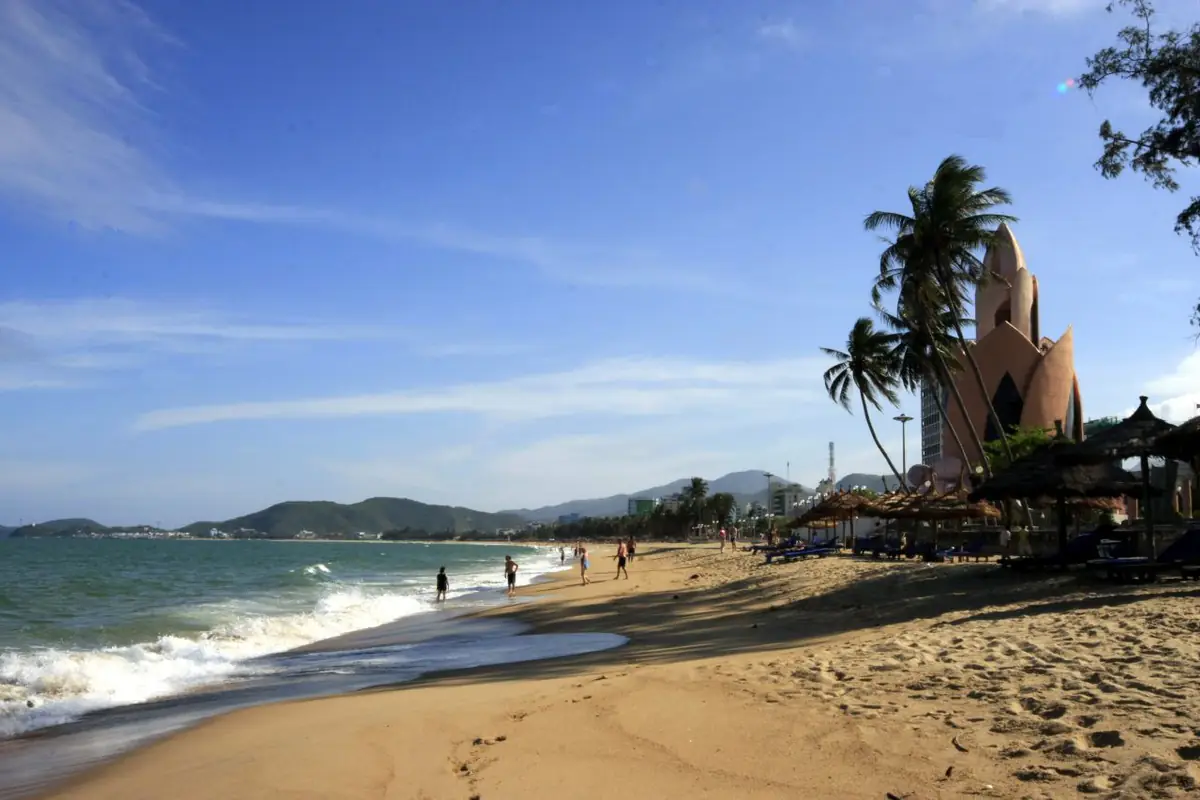
Photo: Bruce Tuten
A relaxed day near Tran Phu Street might look like this: visit the beach around 6:30-8:00 AM, have breakfast, rest or explore the city, then return to the waterfront after 4:00 PM.
March also makes it easier to plan a full-day island tour.
Weather is more favorable than in the final months of the year, but check the wind and wave forecast before paying for a boat trip.
As for crowds, March normally faces less pressure from Vietnamese families on school summer holidays, but Nha Trang attracts international visitors, so popular resorts can remain busy and beachfront hotels are not always cheap.
What we like
- More comfortable than the summer months
- Little rain, so outdoor activities are easier to plan
- Less pressure from Vietnamese families on school summer holidays
Watch out for
- Popular resorts can remain busy and beachfront hotels are not always cheap
- The wind and wave forecast still needs checking before paying for a boat trip
April: excellent beach weather, but choose your dates carefully
April usually brings stronger sunshine than March, making it attractive for travelers who enjoy swimming and spending time outdoors.
Travel demand can increase sharply around Vietnam's Reunification Day and International Workers' Day holidays on April 30 and May 1.
Flights, hotels, and group-tour services may be priced very differently during the holiday period compared with ordinary weekdays.
Early to mid-April, before the late-April holiday rush, offers similarly favorable weather with less competition for desirable hotel rooms.
April is also when it becomes increasingly important to manage your time in the sun.
People sensitive to heat, older travelers, and young children should avoid spending long, uninterrupted periods on the beach between approximately 10:00 AM and 3:00 PM.
Should you choose March or April?
Choose March if you prefer comfortable temperatures, walking, and relaxed sightseeing.
Choose April if you want stronger sunshine, plan to swim frequently, and can avoid the major holiday period.
Is Nha Trang worth visiting from May to August?
Yes. This is still a favorable period for swimming and beach activities, and it is also one of Nha Trang's liveliest tourist seasons.
The biggest drawbacks are heat and visitor numbers.
May: attractive beaches, but the sunshine gets stronger
May suits travelers who want to stay at a hotel with a swimming pool, enjoy the beach in the morning, and relax during the hottest part of the day.
Island-hopping tours call for attention to how long you'll spend in direct sunlight: a tour running from morning until mid-afternoon may involve considerable sun exposure, especially while waiting at the pier, standing on a boat deck, or boarding a speedboat.
Bring a wide-brimmed hat, sunglasses, drinking water, and water-resistant sunscreen.
Reapply sunscreen according to the product instructions, especially after swimming or drying yourself with a towel.
For a short beach break in May, three days and two nights can work well.
Just avoid packing an entire day with outdoor sightseeing followed by extensive evening travel.
June to August: great for summer holidays, not necessarily for saving money
Between June and August, Nha Trang continues to offer favorable conditions for beach holidays.
But this is also when many Vietnamese families travel during their children's summer break.
The 2026 summer season showed how strong demand can become in Nha Trang and the nearby Bai Dai resort area.
Many well-located hotels and resorts were receiving heavy bookings well in advance, with some properties already holding reservations extending through August.
Summer is not crowded only on weekends.
Group travel, family holidays, and major events can also affect room availability during the week.
If you must travel during the summer school holidays, it makes sense to:
- Choose weekdays rather than Friday-to-Sunday stays where possible.
- Book refundable rooms if your plans are not final.
- Stay close to the beach when traveling with young children.
- Schedule outdoor activities in the morning and reserve the middle of the day for rest.
Travelers who enjoy a lively holiday atmosphere will like July and August.
Central beaches are often busier, especially early in the morning and toward the evening.
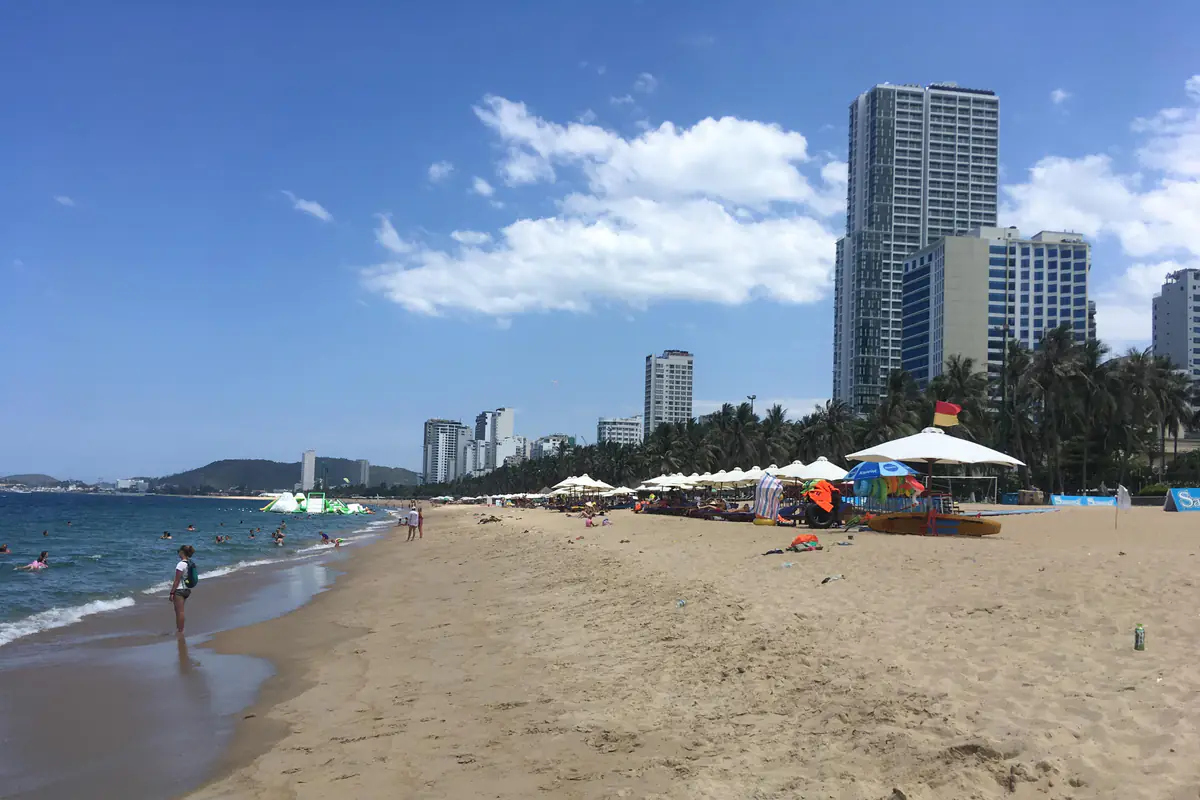
Photo: Christophe95
On the other hand, visitors looking for a quiet resort break, long reading sessions by the sea, and uncrowded hotel breakfasts may find the summer season less relaxing.
There is no need to avoid July and August completely. Just recognize that you are choosing peak season and plan your bookings accordingly.
What we like
- Conditions remain favorable for beach holidays
- A lively holiday atmosphere for families on summer break
Watch out for
- Heat that tires you faster outdoors
- Crowds, with many well-located hotels booked up well in advance
- Not the season for saving money
Is September a good month to visit Nha Trang on a budget?
September is a transitional month. It has its appeal, but it is not the most reliable option for people whose main priority is beautiful beach weather.
After the summer holidays, domestic travel demand often decreases as students return to school.
Some hotels and travel services may become easier to book compared with July and August.
The trade-off is increasing rainfall.
Sunny days still occur, but the risk of encountering rain during your holiday is higher than in spring or early summer.
September suits travelers with flexible schedules.
Over four or five days in Nha Trang, you can rearrange your sightseeing according to the weather rather than insisting on visiting the islands on a particular day.
A two-day, one-night trip is more vulnerable to disruption, especially with non-refundable flights and a fixed-date boat tour already paid for: heavy rain on the day of your planned island excursion could eliminate the main reason for your visit.
Don't book accommodation just because you spot a lower room rate.
Compare the total cost, including transport, date-change conditions, and the possibility of replacing planned activities.
Vietnam's National Day holiday on September 2 can still draw large numbers of domestic travelers, so not every day in September is low season.
Which months should you avoid visiting Nha Trang?
October and November are the two months most worth avoiding if swimming, island hopping, and snorkeling are the main reasons for your trip.
By Nha Trang's long-term climate patterns, this is the wettest part of the year.
Heavy rain, strong winds, and rough seas can directly affect the activities that make a beach holiday worthwhile.
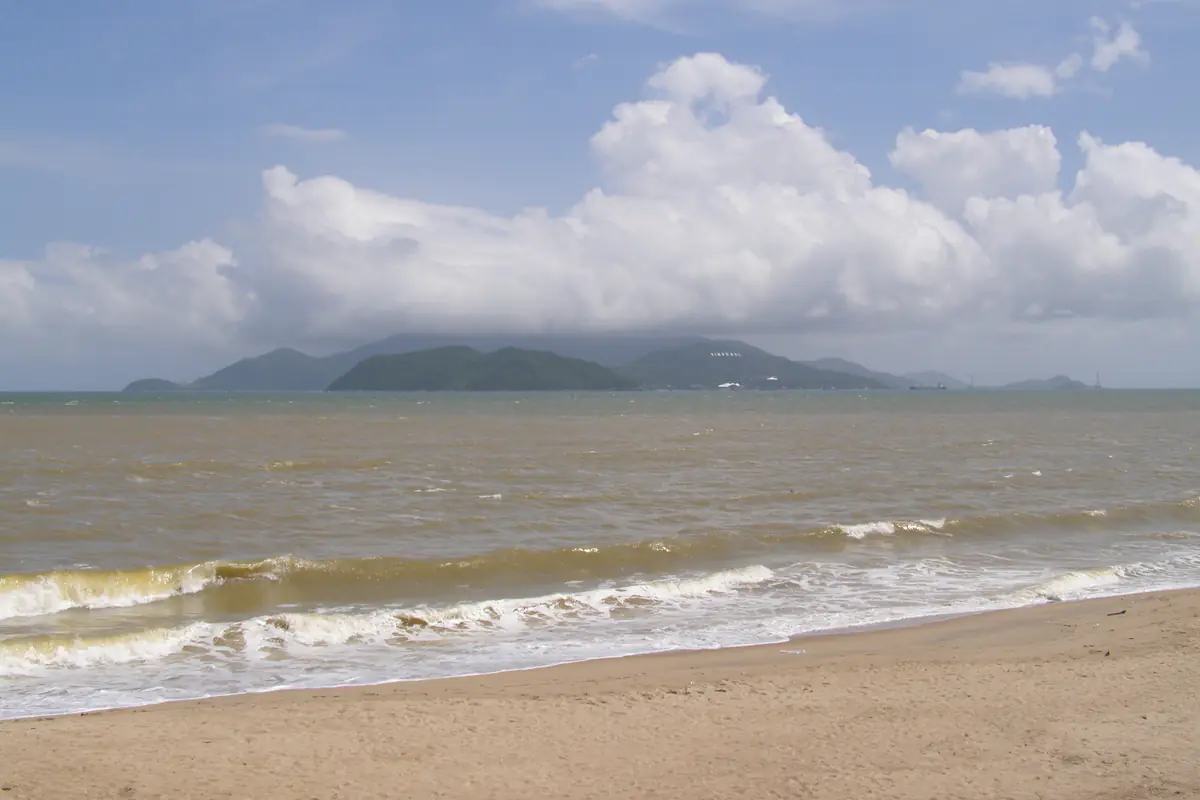
Photo: RG72
Why October and November are poor choices for fixed island tours
Island trips require more than a break in the rain.
Boats and speedboats depend on wind, waves, visibility, and operating conditions at the time of departure.
A sightseeing cruise may be canceled or its itinerary changed even when the weather outside your hotel in central Nha Trang looks sunny.
Offshore waters can also be rougher than sheltered areas close to the mainland.
Heavy rainfall may leave the water cloudy, making snorkeling and coral viewing less enjoyable.
For a tour package built around underwater activities, the trip may still go ahead, but the experiences you were most looking forward to might not.
Should you avoid December too?
December still falls toward the end of Nha Trang's usual rainy season, though not every year is bad.
There may be pleasant sunny periods mixed with rain and unsettled seas.
The northeast monsoon can also create waves even when it is not raining.

Photo: cloud.shepherd (Brian Miner)
March is the better option than December for the same beach holiday.
For international visitors whose holidays are fixed around Christmas or New Year, Nha Trang still offers hotels, restaurants, and city-based activities.
Keep the itinerary from depending entirely on boat trips and swimming.
Best months for swimming in Nha Trang
Choosing the dry season is a good starting point, but the beach and time of day also matter.
Not every beach in the Nha Trang area has identical wave conditions.
The central beach along Tran Phu Street is different from the beaches around Cam Ranh or the waters surrounding the islands.
Central Nha Trang beach: prioritize March to August
Tran Phu Beach is convenient for travelers staying in the city center because many hotels are within walking distance of the waterfront.
For people who enjoy an early swim, a midday break, and another walk along the beach in the late afternoon, March to August is a sensible period.
March and April are more comfortable in terms of heat, while June to August tends to be hotter and busier.
On sunny days, consider these two periods:
- 6:00-8:00 AM: Suitable for walking and swimming when sea conditions permit, before the sunshine becomes intense.
- 3:30-5:30 PM: More comfortable than midday, especially for families spending time at the beach before dinner.

Photo: Phương Huy
Island hopping: choose calm seas, not just a dry month
Many sightseeing trips around Nha Trang Bay depart from the Nha Trang Tourist Boat Pier.
Exact departure times depend on the tour operator and weather conditions.

Photo: The Erica Chang
For boat sightseeing, snorkeling, and swimming around the islands, March and April are good months to prioritize when choosing your holiday dates.
The summer months also provide many opportunities for sea activities, although strong sunshine requires more care.
Not every snorkeling location has crystal-clear water.
Visibility depends on waves, currents, recent rainfall, and actual conditions at the permitted activity site.

When should you visit Nha Trang to avoid extreme heat?
People who don't tolerate heat well should aim for February or March, or early April if the dates fit their schedule.
These months usually offer a good balance of sunshine and temperature.
They also work for visitors who want to combine beach time with walking around the city.
May through August is still a fine time to travel, but the heat tires you faster, which matters for families with young children and older travelers.
A summer beach day is better divided into two clear parts.
Use the morning for activities that benefit from good weather, such as swimming or outdoor sightseeing.
Spend the hottest part of the day indoors, having lunch, resting, showering, or relaxing at your hotel.
You can head out again after approximately 3:30 PM if conditions are favorable.
Don't judge the strength of the sun by air temperature alone.
The UV index can be high even when the forecast temperature looks manageable.
Sand and seawater also reflect sunlight, increasing exposure when you spend long periods at the beach.
For someone who dislikes intense heat, visiting in March and organizing outdoor activities carefully is more comfortable than visiting in July and trying to spend the entire day by the sea.
When is Nha Trang most crowded and expensive?
Nha Trang receives both domestic and international tourists, so its busiest periods are not confined to a single season.
Domestic peak season: summer and public holidays
June to August brings strong demand from Vietnamese families.
The holidays around April 30, May 1, and September 2 can also create busy travel periods.
Beachfront hotels, sea-view rooms, family rooms, and resorts with swimming pools draw the most interest.
There is no fixed citywide percentage increase in room prices during peak season.
Even at the same hotel, a Tuesday night can cost considerably less than a Saturday night.
A flexible, refundable booking may also be more expensive than a non-refundable reservation paid in advance.
In 2026, several accommodation providers in Khanh Hoa saw strong summer booking demand well ahead of the travel period.
For future summer trips, waiting until the last minute may not save you money.
International visitor season: not just summer
Some international travelers choose Nha Trang during winter and early spring to escape colder weather at home.
As a result, December through approximately March should not automatically be considered a cheap or quiet period.
Christmas, New Year, and Tet, the Vietnamese Lunar New Year, may all increase demand depending on the year and the markets visitors are traveling from.
Tet's date changes on the Gregorian calendar, so for a January or February trip, check the exact holiday dates.
When can you find more reasonable hotel rates?
A flexible schedule lets you compare:
- Weekdays in March or early April.
- Non-holiday weeks in May.
- Midweek stays during June, July, and August.
- September, if you accept a higher chance of rain.
Pick the same hotel, room category, and number of guests, then compare the total price across three different date ranges.
Check the final amount after taxes and fees, along with the cancellation policy, not just the first rate shown.
Avoid choosing October or November purely to save on accommodation if your main reason for visiting is the beach.
A cheaper room is not much consolation if the island trip you've been looking forward to is canceled because of bad weather.
Best time to visit Nha Trang for different travelers
There is no single month that suits every visitor.
Your holiday dates, tolerance for heat, and preferred activities should guide the decision.
Families with young children
March-April, or June-August during school terms
March and April are the months to prioritize for children not yet in school.
Rainfall is low, outdoor activities are easier to plan, and you're not restricted to the summer school holiday period.
Families with school-age children can choose June through August.
Stay close to the beach if possible, prioritize reliable air conditioning, and look for a hotel pool suitable for children.
Avoid scheduling too many activities in a single day.
When children enter the water, adults must supervise them directly.
Inflatable swimming toys are not substitutes for properly fitted life jackets or active adult supervision.
Couples looking for a quiet beach holiday
March or early April
March or the first few weeks of April are strong choices.
You can spend mornings at the beach, visit a café in the afternoon, and enjoy dinner in the city without having to travel far.
Desirable sea-view rooms can still be in high demand, especially at larger hotels.
A room you like at a reasonable rate is better booked ahead than left for a last-minute discount.
Groups of friends interested in water activities
April-August
April through August works well for groups that enjoy swimming, island trips, and outdoor activities.
April is more comfortable, while summer brings a livelier atmosphere.
Larger groups should confirm their final number of participants before purchasing tours, as private and shared tours may use different pricing structures.
For water sports, follow the operator's rules on life jackets, minimum age, health requirements, and safety instructions.
Older travelers and people sensitive to heat
February-March
February and March are easier on these travelers than midsummer.
Swimmers should still check wave conditions and water temperature before entering the sea.
On windy days or when waves are high, replace swimming with a coastal walk, gentle sightseeing, or time relaxing at the hotel.
International visitors traveling at the end of the year
Christmas and New Year
Travelers visiting around Christmas or New Year should prepare a flexible itinerary rather than assuming Nha Trang has ideal beach weather throughout the year.
On a stay of several days, schedule outdoor sea activities for whichever day has the best conditions instead of automatically booking them for your first day.
International visitors can look up forecasts under Nha Trang weather, but should also check Vietnam's official meteorological warnings, particularly those concerning strong winds and high waves.
How to choose travel dates and reduce the risk of storm disruptions
Visiting during the best season reduces weather-related risks, but it does not guarantee that your holiday will be free from dangerous conditions.
Nha Trang and the waters around Khanh Hoa can still be affected by tropical storms, tropical depressions, heavy rain, and monsoon winds.
Their impacts vary from year to year and from one weather event to another.
A sensible approach involves three stages.
- Before flights
Pick the month, check refunds
Use long-term climate records, which give historical weather probabilities rather than a forecast for your departure date, to choose your travel month.
For a single visit with the best chance of good beach weather, March and April are stronger choices than October and November.
A holiday that depends heavily on one activity, such as snorkeling or an island excursion, calls for a review of the cancellation and rescheduling conditions before paying.
- 1 week before
Check the multi-day forecast
Check the multi-day weather forecast for both Nha Trang and Cam Ranh.
Look beyond the simple sun and rain symbols.
Pay attention to wind, thunderstorms, heavy-rain warnings, and rough-sea alerts.
Vietnam's National Center for Hydro-Meteorological Forecasting publishes marine weather forecasts, tropical storm and depression warnings, and wave forecasts.
These are important sources to consult when your itinerary involves boats, speedboats, or offshore activities.
Clear skies do not necessarily mean calm seas.
- Day before
Confirm with the tour operator
Contact the tour operator directly to confirm whether boats are expected to operate.
Ask about the meeting time, departure pier, itinerary, safety requirements, and rescheduling arrangements.
If the authorities restrict or suspend boat operations because of weather conditions, follow those restrictions.
Do not look for another boat operator simply to get around a weather-related suspension.
If heavy rain, deep flooding, flash floods, or landslide warnings affect areas along your planned route, postpone the journey or choose a safer alternative.
Never attempt to cross a flooded road when you cannot determine the depth of the water or the condition of the road surface underneath.
How to plan a 3-day, 2-night Nha Trang trip by season
The same three-day, two-night holiday should be organized differently depending on whether you're traveling in the dry or rainy season.
March-April: put beach activities first
- Day 1
Arrive and settle in
Arrive in Nha Trang, check into your hotel, and rest; an early arrival in good weather leaves the afternoon for a walk or swim at Tran Phu Beach.
- Day 2
Bay tour or main water activity
Reserve this day for a bay sightseeing tour or your main planned water activity. For a boat trip, confirm the arrangement with the operator the previous afternoon and check again on the morning of departure.
- Day 3
Check out and head to the airport
Have breakfast, take a final walk along the waterfront, buy local specialties, and check out. Avoid booking a distant attraction that would leave you rushing to the airport.
This schedule works well when the beach is your main priority.
You need only one favorable day for the island excursion, while retaining some flexibility elsewhere in the trip.
June-August: keep the middle of the day free
On the first day, consider staying at the hotel until late afternoon before going to the beach.
On the second day, begin outdoor activities early, then allow enough time around midday for lunch and rest.
Avoid scheduling several activities in direct sunlight one after another.
With young children, one main activity per day is easier to manage than constantly moving between attractions.
September-December: prepare alternative plans
During the rainy season, avoid locking your entire itinerary into fixed boat-tour dates.
You can spend time enjoying local food, visiting indoor attractions, relaxing at your hotel, or choosing resort activities suitable for the conditions.
VinWonders Nha Trang on Hon Tre Island is one entertainment option, but the park includes many outdoor attractions and transport to the island depends on operating conditions. It is not a guaranteed backup plan during storms or rough seas.
In 2026, a standard VinWonders admission ticket with a return cable-car journey costs VND 1,050,000 for guests at least 140 cm tall.
A ticket for entry after 4:00 PM costs VND 700,000.
Operating hours are 9:00 AM to 8:00 PM daily. Ticket prices, hours, and transport arrangements may change, so check the current information before visiting.
During heavy rain or dangerous weather warnings, the simplest and safest choice may be to remain at suitable accommodation until conditions improve.
Common mistakes when choosing when to visit Nha Trang
Assuming summer is the rainy season everywhere in Vietnam
Many travelers are familiar with southern Vietnam's rainy season, which begins around May, and assume Nha Trang follows the same pattern.
It doesn't.
Nha Trang has a different seasonal rainfall pattern, and summer is usually still favorable for beach activities.
There is no need to rule out June, July, or August simply because you're worried about rain.
The more important considerations during those months are sunshine, heat, crowds, and travel costs.
Assuming December is completely dry
The end of the year does not always bring settled weather.
Rain and rough seas can continue to affect travel plans.
With only a few days and a wish to swim every morning, December is not an ideal month for high expectations about beach conditions.
Checking rain forecasts but ignoring waves
This mistake matters most for island tours.
Sunny skies over the city do not guarantee that boats can safely travel offshore.
Strong winds and high waves may cause operators to change routes or suspend departures.
Conversely, a day with a brief shower may still allow certain activities to operate.
Actual conditions and safety regulations should determine whether an excursion goes ahead.
Booking a cheap hotel too far from the beach
During the hotter months, every journey between your hotel and the beach adds time and effort, particularly when you're traveling with small children.
A hotel within walking distance of the beach may be worth paying more for compared with a cheaper room that requires frequent taxi rides.
Proximity to central Nha Trang matters much less if you're planning to stay mainly at a resort and use its swimming pool.
Scheduling your island trip for the final day
If the weather changes, you have no time left to move the excursion to another day.
For a three-day, two-night holiday, schedule your most important sea activity on the second day or the earliest day with suitable conditions.
Leave the final day for light activities and the journey home.
Which month should you choose for your only trip to Nha Trang?
Here is the order to consider when school holidays and annual leave don't restrict you.
March: The first choice for combining swimming, island trips, relaxation, and avoiding the strongest summer heat.
April: Excellent for beach holidays if you can avoid the main public holiday period and don't mind slightly hotter conditions.
February: Suitable for travelers who prefer comfortable temperatures and relatively little rain, although sea conditions and Tet holiday dates require attention.
May-August: Good for people who enjoy sunshine, swimming, and summer holidays. Expect hotter weather and stronger demand for tourist services.
September: Worth considering if your dates are flexible, you're interested in potentially lower travel costs, and your plans do not depend on one fixed boat tour.
October-December: Not the preferred period for a trip built primarily around swimming and island hopping.
Of course, the best time also depends on how many days you have available.
A March trip with only one full day in Nha Trang may be less relaxing than a well-planned four-day holiday in June.
March remains the strongest overall choice for travelers who love the beach but dislike intense heat.
For families with children attending school, June to August is a perfectly practical option. There is no need to rearrange everything just to travel in spring.
Of all 12 months on Nha Trang's calendar, circle March first when looking for flights and hotels. Choose June to August if a summer holiday works better for your schedule, but leave October and November for another destination if what you're looking forward to most is a swim in the sea every morning.
FAQ
What is the best month to visit Nha Trang?
March is generally the best month for balancing pleasant weather, beach activities, and comfortable sightseeing. April is also excellent, although temperatures are higher and visitor numbers can increase around the April 30-May 1 public holidays. Overall, February to April is the period most worth considering for a first trip.
When is the rainy season in Nha Trang?
Nha Trang's rainy season usually runs from approximately September to December, with the heaviest rainfall generally occurring in October and November. Heavy rain may coincide with strong winds and rough seas, affecting boat schedules and island tours. Conditions become drier toward the beginning of the year, although the sea is not necessarily calm every day.
What are the worst months to visit Nha Trang?
October and November are the least favorable months if your main interests are swimming, island hopping, and snorkeling. December can also be unpredictable because rain and rough seas may continue. If your plans are mainly focused on hotel relaxation, food, or city activities, you can still visit, but your itinerary should remain flexible.
Is July or August a good time to visit Nha Trang?
Yes. Both July and August can be good for beach holidays. However, they are hot summer months and part of the domestic tourism peak season, so popular hotels may book out early. Families should consider accommodation near the beach, plan outdoor activities for mornings or late afternoons, and avoid prolonged midday sun exposure.
When is the best time to visit Nha Trang for international tourists?
March is generally the best-balanced choice for international visitors who want sunshine, relatively little rain, and comfortable temperatures. February to April is also a strong travel window. June to August suits travelers who enjoy hotter weather and don't mind crowds, while trips between October and December require more careful monitoring of rain, wind, and sea forecasts.
Related posts

Weather
4 Days in Nha Trang in November: Leave Room for Rain
Keep a November stay flexible enough to move the sea day and shorten travel in heavy rain.
Weather
Is December a Good Month for a Nha Trang Beach Break?
Plan December around the city and book the holidays without depending on daily swims.
Weather
Nha Trang Weather in October: 265 mm of Rain on Average
Plan October around an adjustable sea day and land outings you actually want.