The Reunification Express route worth choosing for first-time Vietnam train travel
A Vietnam train journey rewards you with views and overnight travel, but the full ride from Hanoi to Saigon takes more than a day of your holiday. Choosing one or two sections often gives you the best experience without sacrificing your time in each city.
Written by Tụi mình mê biểnUpdated
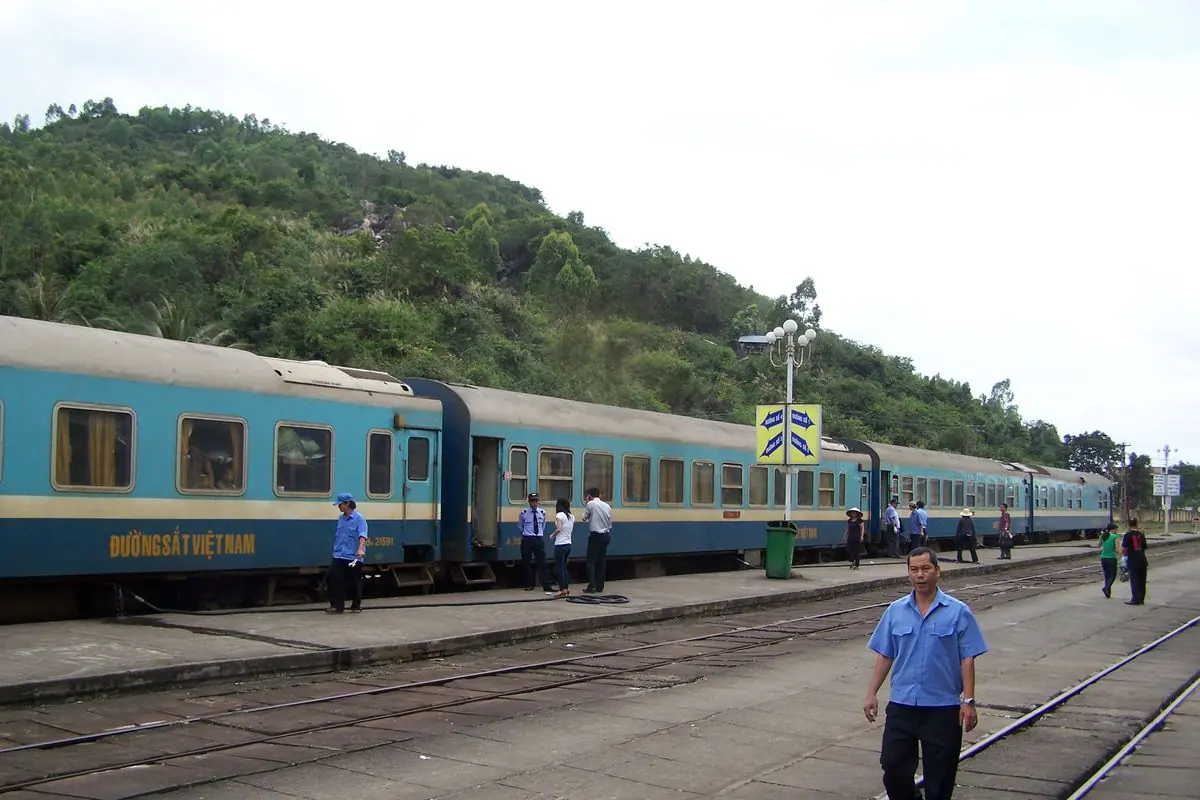
Start with the part of Vietnam you want to see from a train window. If your priority is scenery, look at Hue to Da Nang in daylight; if you want to experience an overnight sleeper, consider Hanoi to Hue or Ho Chi Minh City to Nha Trang. Then compare the arrival time, berth type and price for your date. Doing it in this order stops you booking the longest journey before deciding whether it fits the holiday.
What is the Reunification Express?
The Reunification Express is the widely used English name for passenger trains on Vietnam's north-south railway. In Vietnamese, people often refer to the journey as tàu Thống Nhất. The railway links Hanoi station in the north with Saigon station in Ho Chi Minh City in the south, running roughly 1,726 kilometers between them.
The train numbers matter more than the nickname. Southbound trains commonly include SE1, SE3, SE5, SE7 and SE9; northbound services include SE2, SE4, SE6, SE8 and SE10. The usual pattern is an odd number going south and an even number going north. Each has a different timetable, stops and mix of available accommodation. A train that is fastest over the whole line may not be the best train for a journey ending in Hue or Nha Trang.
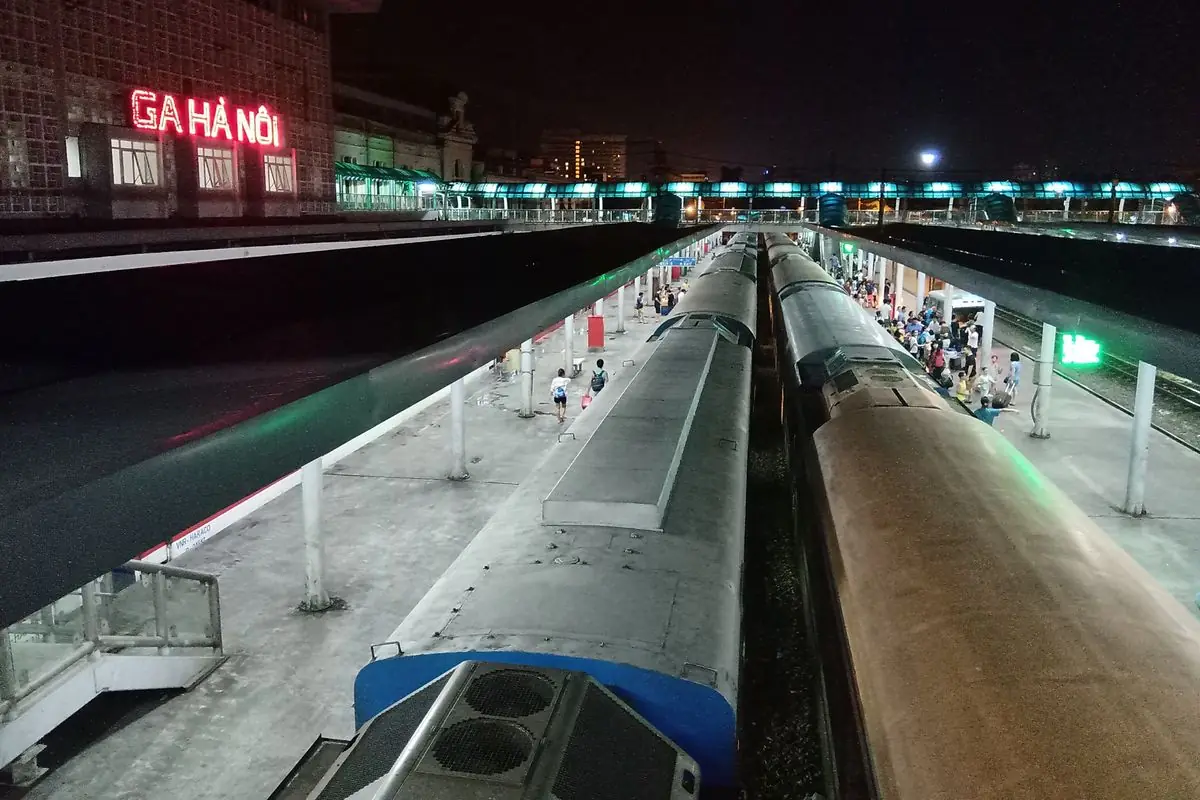
Photo: Handyhuy
You can enjoy the railway without riding the whole route. Many travelers split the railway into individual tickets: Hanoi to Dong Hoi for Phong Nha, Hanoi to Hue, Hue to Da Nang, Da Nang to Nha Trang, and Nha Trang to Saigon. You can stop for several nights in each city and buy the next section separately. This is the most flexible way to build a Vietnam train travel itinerary around the places themselves.
There is no single fixed fare for the whole route. Price varies with travel date, train number, class, bunk level and availability. Comparing a soft seat on one train with a lower bunk on another will give a misleading impression of the cost of traveling across Vietnam.
How long is the Hanoi to Saigon train?
Five main through services run south from Hanoi. The quickest, SE1, takes 32 hours and 45 minutes. The longest of the five shown, SE9, takes 38 hours and 26 minutes. A full journey therefore means either two nights or a long combination of day and overnight travel, depending on the departure time.
1,726 km
Hanoi to Saigon by rail
32h 45m
SE1, the fastest southbound
38h 26m
SE9, the slowest of the five
| Train | Leaves Hanoi | Arrives at Saigon station | Total travel time | What to know |
|---|---|---|---|---|
| SE1 | 21:45 | 06:30, two mornings later | 32h 45m | Fastest of these services; daylight around Hue and Da Nang |
| SE3 | 19:20 | 05:30, two mornings later | 34h 10m | Morning arrival around Hue and Da Nang |
| SE5 | 08:00 | 18:20, the following day | 34h 20m | Reaches Da Nang around midnight |
| SE7 | 06:00 | 17:00, the following day | 35h | Hue to Da Nang section is in the evening |
| SE9 | 13:00 | 03:26, two mornings later | 38h 26m | Slower overall and a very early final arrival |
SE2 is the fastest northbound service. It leaves Saigon station at about 20:35 and reaches Hanoi at about 05:42 two mornings later, taking 33 hours and 7 minutes. SE4, SE6, SE8 and SE10 follow different timings. Northbound times differ from southbound ones; look them up separately.
The headline duration also omits the time needed to reach the station, board the train, leave the arrival station and reach your accommodation. On a 7-day holiday, a 33-hour train ride takes a substantial share of your available sightseeing time. It may be exactly what you want if the rail journey is the holiday; it is harder to justify if your main objective is Hanoi, Hoi An, Nha Trang and Ho Chi Minh City.
Which sections of Vietnam's railway are most scenic?
Hue to Da Nang is the section to prioritize for scenery. The railway passes through the Lang Co area and around Hai Van Pass, where the mountains meet the sea. On clear stretches you can see bays, green hillsides and water close to the track. The train generally takes about two and a half to four hours, depending on the service. That makes it a manageable daytime trip for travelers who do not want to spend a night on a train.
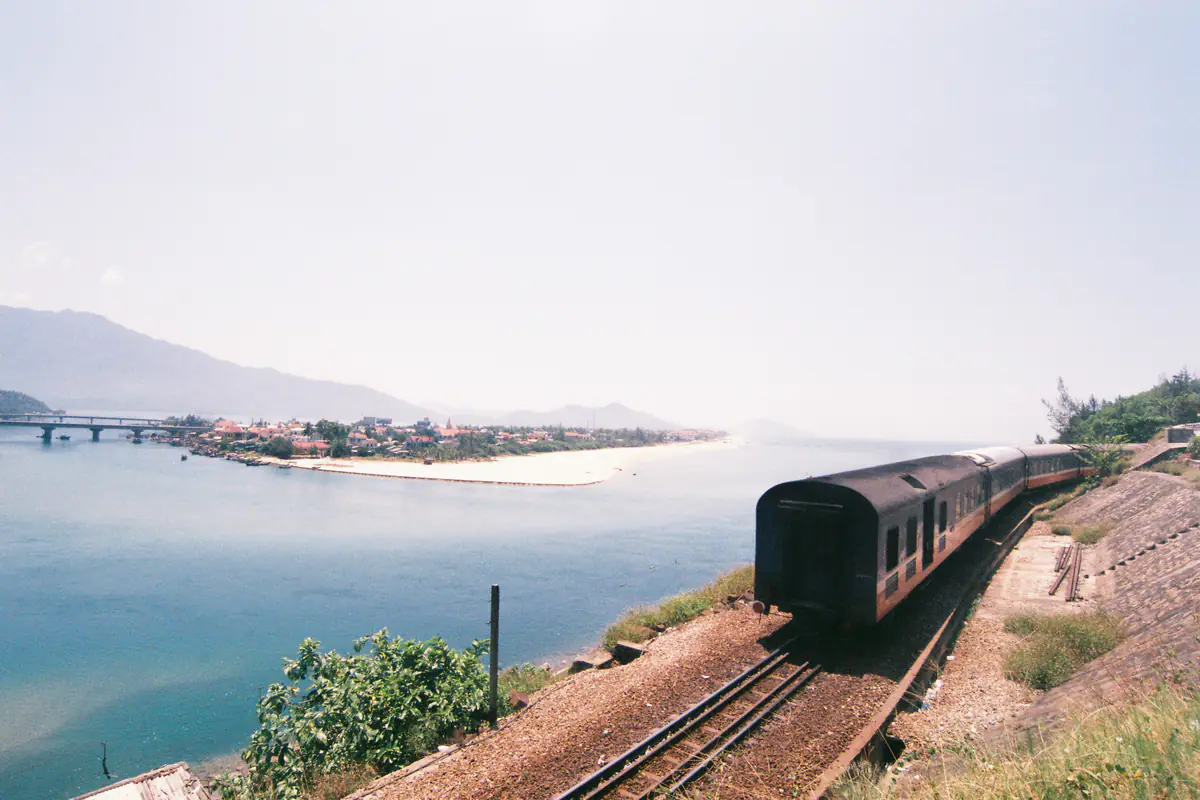
Photo: Khánh Hmoong
You can take a regular SE service or look for the separate Central Heritage Connection tourism train between Hue and Da Nang. The heritage service is a distinct product, with its own timetables and onboard experience. Whichever you choose, check that the crossing is in daylight. A scenic route is no use if your train passes the coast at midnight.
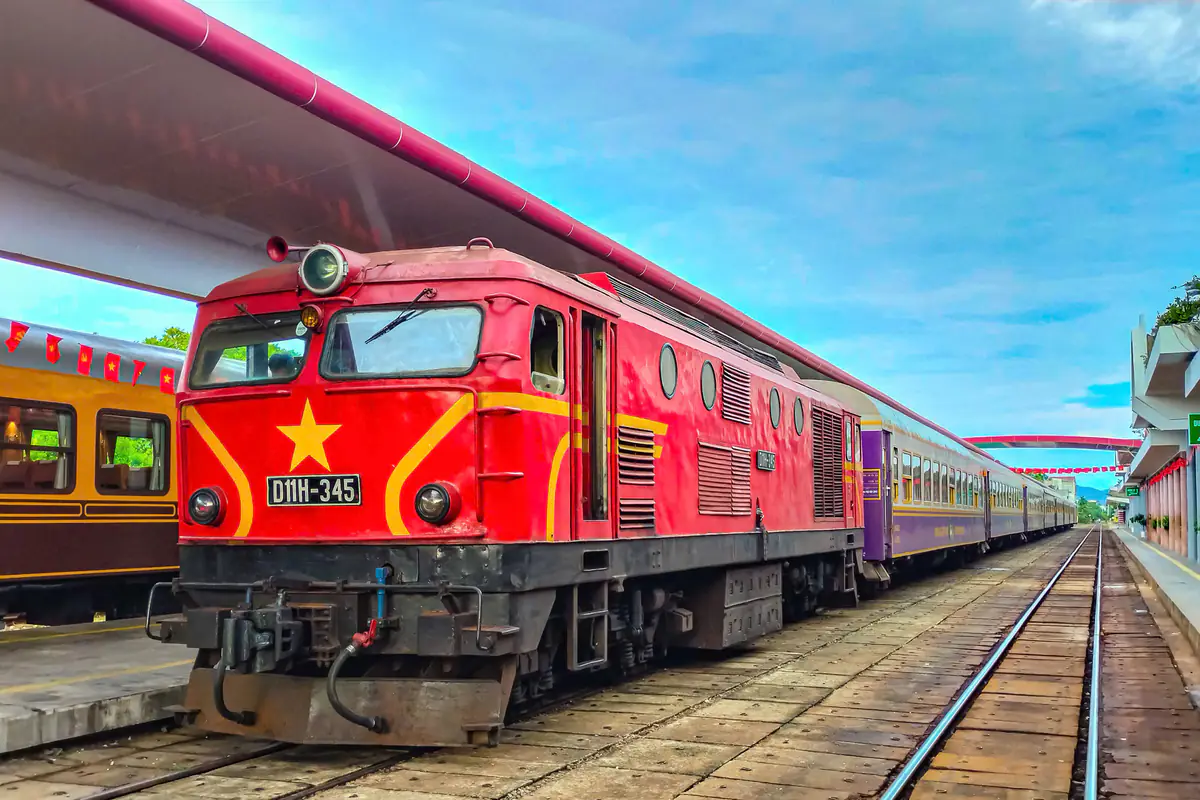
Photo: Nguyenbaotrung725
Heading south, SE3 reaches Hue at roughly 07:50 and Da Nang at 10:28, while SE1 is around 10:25 at Hue and 13:14 at Da Nang. Those schedules put the coastal section in the daytime. SE5 and SE7 pass this part of the line much later, so they are less suitable when the view is the main reason for traveling. These times can change during the year.
Hanoi to Hue is a good first overnight sleeper trip. It typically takes about 12.5 to 14 hours on the faster through services. With an evening departure and a morning arrival, the train can replace one hotel night and deliver you close to Hue's attractions. However, a sleeper berth is not the same as a quiet hotel room. Track movement, occasional announcements and people moving around the carriage can interrupt your sleep. Keep your first morning in Hue flexible.
Da Nang to Nha Trang works as a longer coastal link. Depending on the train, expect roughly nine to twelve hours. You will pass towns, fields, hills and the occasional sea view. Choose a departure that keeps at least some interesting sections in daylight. This journey makes sense if you are exploring central Vietnam slowly; it is less appealing when you have only one day left before a fixed excursion or flight.
Ho Chi Minh City to Nha Trang is a useful first night train. The trip is generally around seven to nine hours. You can choose a departure that makes sense with hotel check-in, an evening meal and the following day's plans. Nha Trang station is in the city, which is convenient for many hotels. Cam Ranh airport is outside the city, so your return flight will involve a separate road transfer. That difference is important when comparing a train out and flight back.
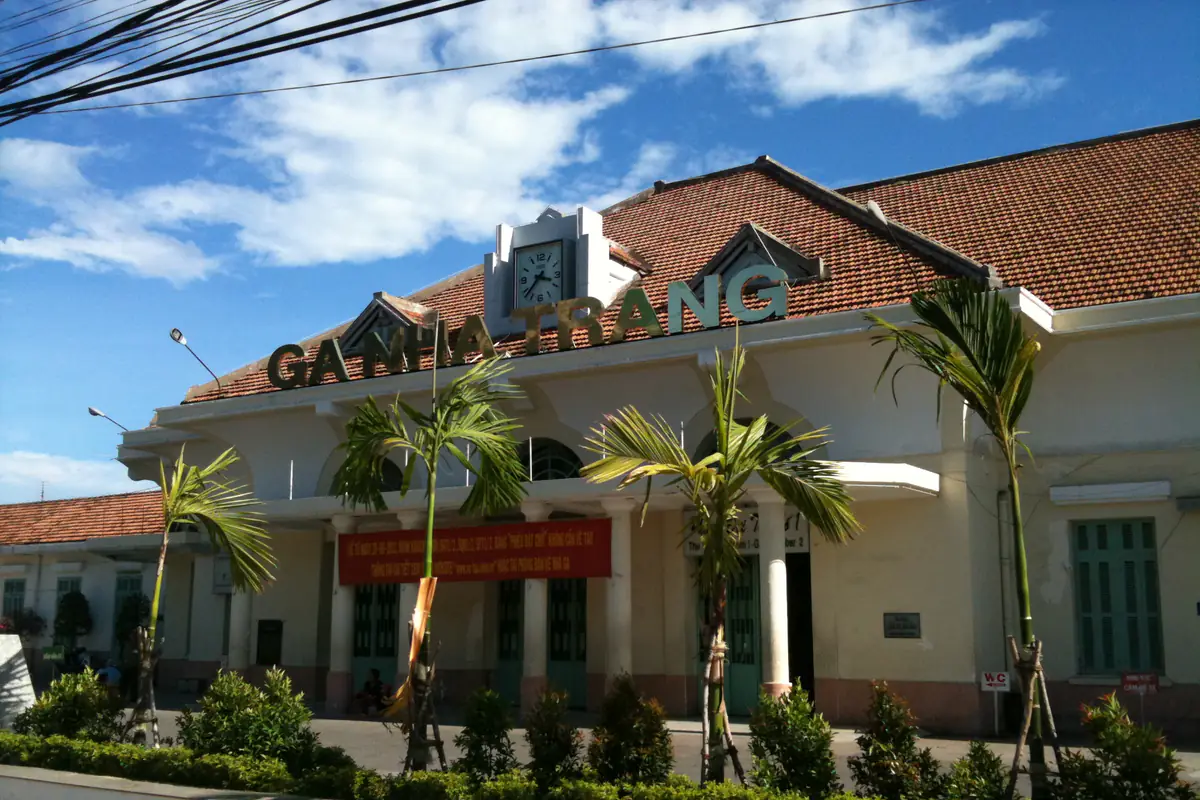
Photo: Dragfyre
For destinations near the railway rather than directly on it, study station names carefully. Dong Hoi is the rail gateway for onward travel to Phong Nha. Dieu Tri is useful for Quy Nhon, but you still need a road transfer to the beachside city center. Thap Cham serves the Phan Rang area. Hoi An has no railway station; travelers usually get off in Da Nang and continue by road. Booking the correct station avoids an unnecessary and sometimes expensive detour.
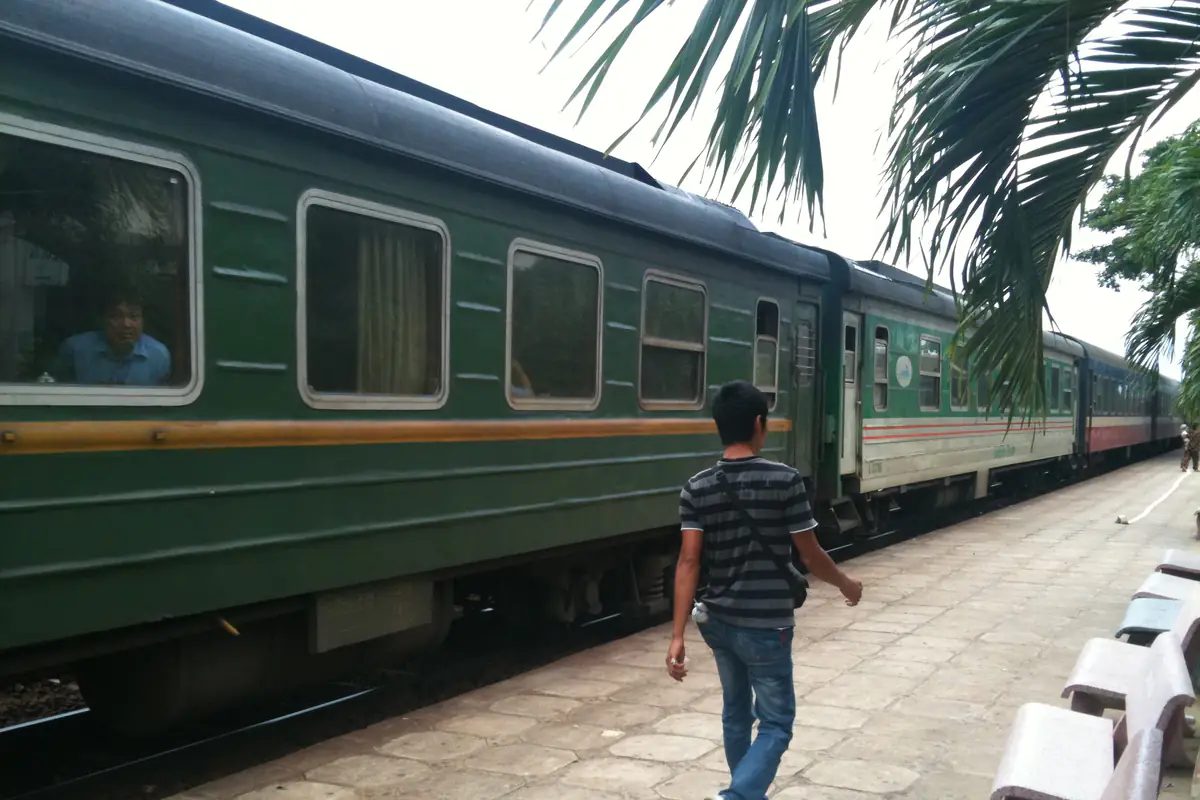
Photo: Dragfyre
Loading map...
- Hanoi station: Northern end of the line
- Dong Hoi station: Get off here for Phong Nha
- Hue station: Start of the Hai Van Pass ride
- Da Nang station: Get off here for Hoi An
- Dieu Tri station: Station for Quy Nhon
- Nha Trang station: In the city
- Thap Cham station: Serves the Phan Rang area
- Saigon station: Southern end of the line
Vietnam train ticket prices by route and class
The table below shows the lowest adult one-way fares on Vexere in 2026, platform fees included. Prices are in Vietnamese dong (VND) and are not converted to US dollars because exchange rates vary.
| Route | Air-conditioned soft seat | Six-berth sleeper | Four-berth sleeper |
|---|---|---|---|
| Hanoi to Saigon | From VND 1,034,000 | From VND 1,341,000 | From VND 1,854,000 |
| Hanoi to Hue | From VND 455,000 | From VND 688,000 | From VND 923,000 |
| Saigon to Da Nang | From VND 637,000 | From VND 911,000 | From VND 1,177,000 |
| Saigon to Nha Trang | From VND 247,000 | From VND 363,000 | From VND 487,000 |
| Da Nang to Hue | From VND 77,000 | From VND 84,000 | From VND 98,000 |
These figures provide a sensible starting point for estimating Vietnam train ticket prices. They do not mean that an upper berth, lower berth and soft seat will all be available together at the lowest displayed fare. A lower bunk usually costs more than an upper one. Faster or more popular departure times may cost more, as may weekends, holidays and the peak Lunar New Year travel period.
Fare promotions can also change the comparison. The railway is currently discounting selected services and directions involving Hanoi, Da Nang, Dieu Tri and Nha Trang, with reductions varying by train and seat class and reaching as high as 40% on specified routes. These are not blanket reductions for every SE ticket. Check the actual total after choosing your train and berth instead of taking a percentage off a general price table.
When comparing train and flight costs, calculate the entire trip. A flight fare may be low until checked baggage, airport transfers and an additional hotel night are included. A sleeper ticket may save a night's accommodation, but it can also leave you tired on arrival. On some dates, a four-berth sleeper will cost more than a discounted domestic flight. The better value depends on whether the rail journey itself is part of what you want to experience.
Soft seat, six-berth sleeper or four-berth sleeper?
Soft seat
Best for daytime rides like Hue to Da Nang
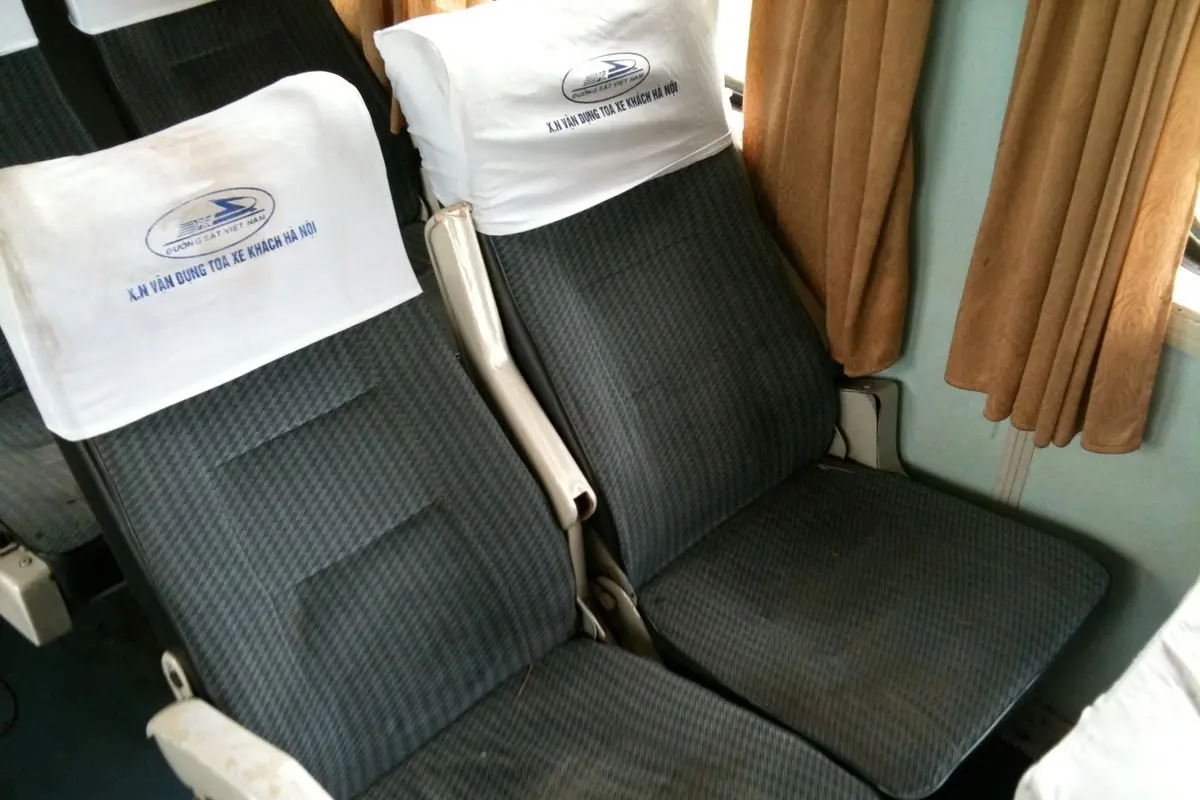
Photo: Dragfyre
A soft seat is an upholstered, reclining seat in a shared air-conditioned carriage. It is the straightforward option for daytime trips such as Hue to Da Nang. It also works for a longer journey if you are comfortable sitting for hours, but it does not turn into a bed. Spending a full night or more in a seat to save money can leave little energy for the destination.
Six-berth sleeper
Three bunk levels a side, the budget sleeper
A six-berth sleeper has three bunk levels on each side of a shared compartment. It is the budget option for travelers who want to lie flat overnight. Upper berths tend to be less expensive and more difficult to climb into. Lower berths are easier to reach and more convenient for people who need to get up during the night. Space for sitting upright becomes more limited higher up. Privacy is lower than in a four-berth cabin, and you share the space with more people.
Four-berth sleeper
Two levels a side, with a cabin door
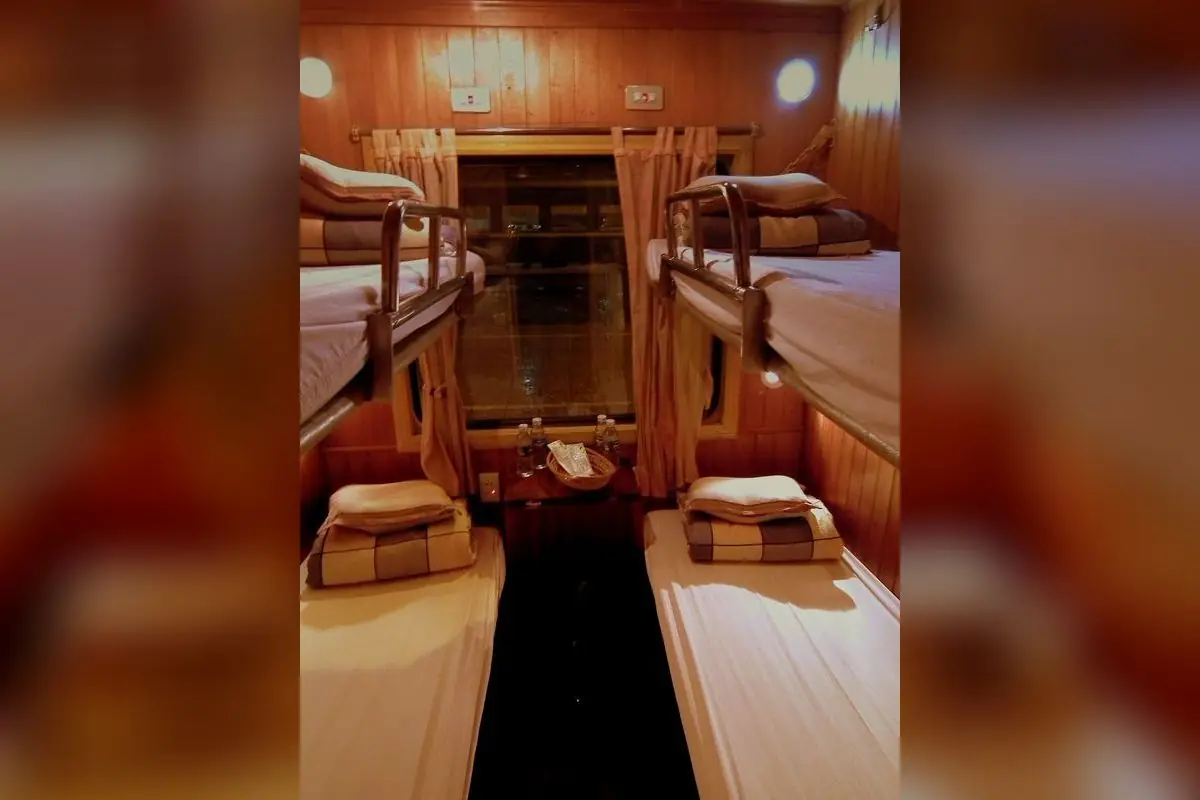
Photo: calflier001
A four-berth sleeper has two levels on each side of a compartment with a door. For first-time overnight train passengers, it is often the easiest compromise between cost and comfort. A lower berth provides easier access and usually a more convenient place to sit, read or look out of the window. An upper berth may be fine for an able-bodied solo traveler who would rather spend less. The fare shown when booking is normally per berth, not the price of renting the entire compartment.
Two-berth and upgraded cabins
Only on some trains and carriages
Some routes and operators also sell upgraded or two-berth cabins. Availability depends on the particular train and carriage. Not every service labeled SE1 or SE3 has a private two-person cabin. Some higher-end carriages are operated as separate products attached to regular trains and have different fares, inclusions and booking conditions. Check exactly which company operates the carriage and whether the quoted fare includes meals.
How to book a Vietnam train ticket
Tickets are sold on Vietnam Railways' own website and through booking agents; pick one that shows the train number, exact berth and full price before payment. Vexere offers an English-language booking interface and accepts international cards. Vietnamese users with a level-2 verified VNeID account can also buy railway tickets in VNeID's transport section from 9 November 2026.
First choose the departure and arrival stations, not just the province names. Enter the correct day and compare the available trains by their arrival times. Then open the carriage diagram, identify the seat or bunk, and check whether it is lower, middle or upper. Enter the passenger details exactly as required. Review the full fare and any booking fee before paying. Save the resulting e-ticket and booking confirmation offline.
International visitors should enter their names and passport numbers consistently with the passport they will carry. Passenger identification details must match valid travel documents. Vietnamese travelers should follow the identification fields in the system they use. A ticket may be electronically issued, but identity information still matters when entering the station and boarding.
Before closing the booking screen, check six pieces of information: departure station, arrival station, departure date, train number, carriage number and seat or berth number. A seventh useful detail is the scheduled arrival date. Long-distance trains cross midnight and can arrive two calendar days after departure. Write that date into your hotel booking calendar, not just the train's departure date.
Before placing a second order after a failed payment, check your email and card transaction. When using a third-party agent, keep the railway e-ticket reference as well as the agent's confirmation. The railway provides an online ticket-verification function that checks the ticket number, train, route, travel date and identity-document number. A reservation is not guaranteed until payment succeeds.
Book earlier when you need a particular lower bunk, a full four-berth cabin or a popular weekend departure. During Tet and other major holidays, look for the specific sales announcement and refund conditions. Refund and amendment fees depend on the ticket, departure time and period of travel; a rule quoted for an older holiday timetable should not be treated as the current rule for every journey.
Finding the right station and boarding calmly
Hanoi railway station is centrally located and serves the main north-south line. In Ho Chi Minh City, the arrival point is called Saigon station on ticketing systems. It is not the same as Tan Son Nhat airport. Da Nang station is not in Hoi An, while Nha Trang station is different from Cam Ranh airport. If you book the wrong destination, the last part of the trip may involve more road travel than expected.
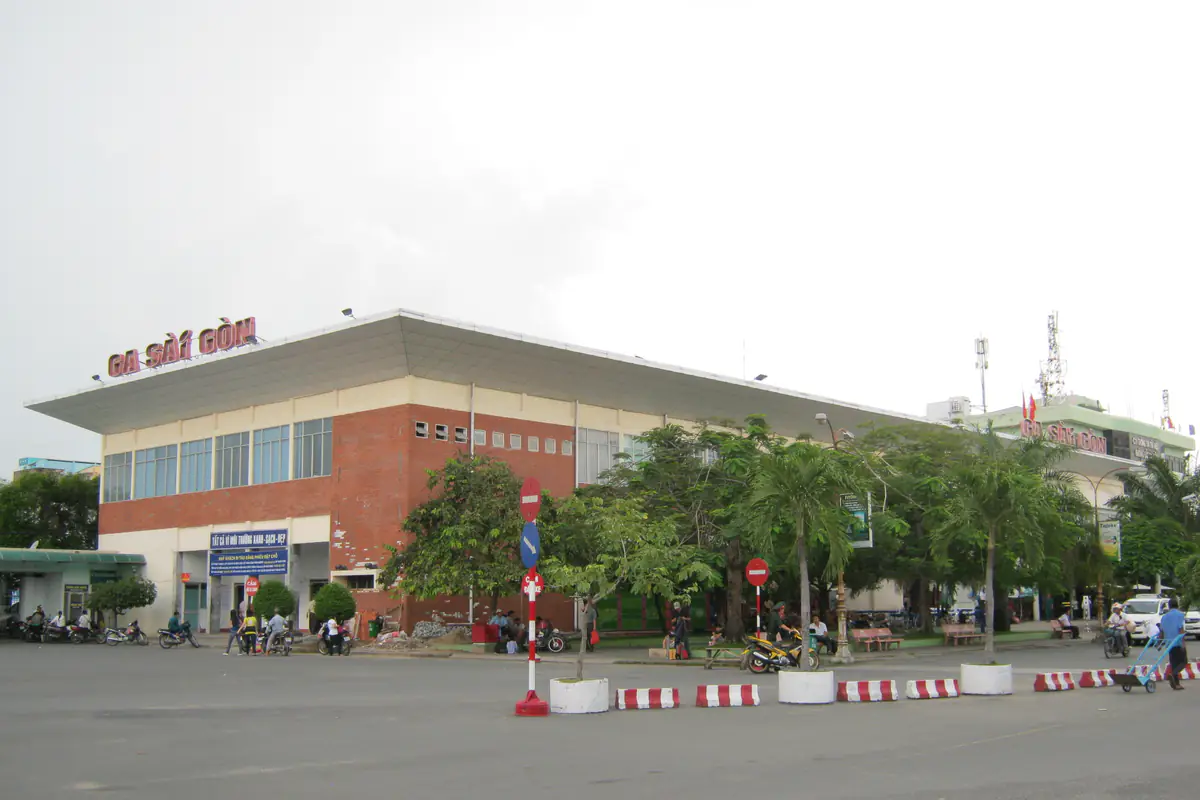
Photo: Bùi Thụy Đào Nguyên
Aim to reach a major station about 30-45 minutes before departure. Stations do not require this; it is simply a sensible buffer. Arrive earlier during busy holiday periods or when traveling with several large bags. Look for the train number on the departure board, follow platform signs and ask railway staff when the platform is unclear. Trains can be made up of many carriages, and yours may be a long walk from the entrance.
Keep your passport or other required identification and e-ticket within reach. Place luggage in the designated space under a lower berth or on suitable racks, without blocking doors or the corridor. Once on board, follow the carriage and berth labels to find your place. Boarding is much easier when each passenger has a small bag for what they need overnight.
Eating, sleeping and staying comfortable on the train
Pack a compact overnight bag even if you are traveling with a suitcase. Useful items include a light layer for cold air conditioning, earplugs, an eye mask, tissues, hand sanitizer, toiletries, charging cable, power bank and easy-to-slip-on footwear. For a full Hanoi to Saigon journey, add a change of clothes and something comfortable to wear overnight. Keep medication and valuables in the small bag with you.
Regular long-distance sleeper trains generally have toilets and washbasins, but you should not expect a shower. The condition of facilities can vary by carriage and how far the train has traveled. Bedding is provided according to the type of sleeper accommodation; a soft seat is still just a seat. Charging access can vary, so a charged power bank is useful. Mobile reception may be patchy in tunnels, around mountain passes and away from towns. Download tickets, maps and entertainment before leaving your hotel.
Food and drink are sold on many services, often including simple rice meals, noodles and packaged drinks. Availability, service times and whether anything is included in the fare depend on the train and class. Carry drinking water and a few easy snacks even when you expect to buy food on board. Travelers with strict dietary requirements, including vegetarian preferences, should plan their own suitable meal rather than relying on a particular dish being sold at a particular hour.
Eat a proper meal before a late departure if that suits your schedule. For two nights on the train, plan for breakfast, lunch and dinner yourself; meals are not always included. Pack food that does not make a mess or create a strong smell in a shared compartment. Respect other passengers who want to sleep. Avoid getting off to buy snacks at an intermediate station unless you know the stop duration and staff have confirmed that it is safe; some stops are too short for a leisurely walk along the platform.
The usual free hand-luggage allowance for a ticketed passenger is 20 kg, with size limits as well. More recent carriage regulations may govern excess or unusual items, so check with the operator before bringing a bicycle, oversized suitcase or other bulky equipment. Keep bags clear of walkways. You are responsible for looking after belongings in the carriage, so carry your passport, cards, phone and cash in a small bag that stays close while you sleep.
A practical sleep strategy is to avoid booking an ambitious tour for the minute you arrive. Have a plan to leave the station, get breakfast and store your luggage if the hotel room is not ready. A train that reaches Hue at about 08:00 can be convenient, but it does not guarantee eight hours of restful sleep the night before.
When does combining rail and flying make sense?
For a five- to seven-day itinerary, choose one meaningful train journey rather than taking the full line from Hanoi to Ho Chi Minh City. An overnight train from Hanoi to Hue, a day or two in Hue, and a daylight trip to Da Nang over Hai Van Pass makes a compact railway experience. You can then fly onward or home from Da Nang. This provides an overnight berth and a scenic daytime stretch while protecting time for actual sightseeing.
Eight to twelve days gives you time to add Hoi An and Nha Trang. Take a sleeper to Hue, explore Hue, go by rail to Da Nang and continue by road to Hoi An. After two or three nights around Da Nang and Hoi An, decide whether another long train to Nha Trang is worth the time. A flight may be preferable if your aim is to spend several days swimming, visiting islands or taking a coastal break. Check current flight schedules before locking the order of cities.
Two weeks or more makes a multi-stop north-south rail itinerary realistic. Start in Hanoi, stop at Dong Hoi for Phong Nha, continue to Hue and Da Nang, then consider Dieu Tri for Quy Nhon, Nha Trang and finally Saigon. Build rest days between overnight journeys and buy each railway section separately. This makes it possible to change the pace without treating the full distance as one endurance test.
One particularly straightforward hybrid route is Saigon to Nha Trang by overnight train, then Cam Ranh to Ho Chi Minh City by air. You get a sleeper experience in one direction and save time on the return. Another is fly to Da Nang, take a daytime train to Hue, and fly out from whichever city has the better flight for your dates. Flights may not run at the exact time you want; compare actual schedules and the road transfer required at each end.
Getting to an airport and getting to a station take very different amounts of time. Trains often arrive at established city stations, while airports such as Cam Ranh involve longer road journeys. A flight with a very early departure may require leaving your Nha Trang hotel long before dawn. A late-arriving train may leave you waiting for hotel check-in. These small details can determine whether the hybrid itinerary feels efficient.
Three sample Vietnam train travel itineraries
Three days: the scenic section only
Hue, Hai Van Pass, Da Nang or Hoi An
Spend your first day in Hue, exploring the Imperial City and central neighborhoods. On day two, book a daytime train to Da Nang that crosses Hai Van Pass while there is light. Stay in Da Nang or continue by road to Hoi An. On day three, choose beach time, Hoi An's old town or your onward flight. This is the simplest itinerary for a traveler who wants the view without a night on board.
Six to eight days: one sleeper and one flight
Hanoi, Hue, Da Nang, Hoi An
Begin in Hanoi and take an evening southbound SE train to Hue, choosing a service that reaches Hue at a useful morning hour. Stay in Hue for two nights rather than heading straight onto another overnight service. Travel by train to Da Nang in daylight, visit Hoi An and spend another two or three nights in the area. Fly to Ho Chi Minh City or back to Hanoi at the end. This is often a better balance for a first-time visitor than buying a 33-hour through ticket.
Twelve to sixteen days: the line in several stages
Hanoi, Dong Hoi, Hue, Da Nang, Nha Trang, Saigon
Start in Hanoi, take an overnight train towards Dong Hoi and spend time around Phong Nha. Continue to Hue for two nights, use the daylight railway to Da Nang, and allow time for Hoi An. Next, choose between the train and a domestic flight for the longer journey towards Nha Trang. Finish in Saigon, either by train from Nha Trang or another practical transport option. Confirm the fixed activities first, then fit rail tickets around them.
These itineraries are frameworks for planning. They deliberately leave room for meals, transfers, hotel check-in and a slower morning after an overnight journey. You can shorten them further: a single train ride from Hue to Da Nang still gives you a genuine Vietnam railway experience. Riding all the way from Hanoi to Saigon is worth it only if the long ride itself is what you want.
Common booking mistakes to avoid
The first mistake is booking the cheapest train without reading its arrival time. An arrival at Saigon station around 03:30 presents a different problem from an arrival at 06:30 or 17:00. You may need transport in the early morning and somewhere to wait before hotel check-in. Paying a little more for a convenient time can make the whole day easier.
The second is booking a soft seat for two nights and expecting the comfort of a sleeper. The third is choosing a train that crosses Hai Van Pass after dark despite making the scenery the whole purpose of the trip. The fourth is booking the wrong station for Quy Nhon, Hoi An or another place without a central rail stop. These errors are avoidable by checking the full journey, not just the departure and destination city names.
The fifth mistake is forgetting that a berth is not an entire cabin. If privacy matters, calculate the number of berths you need to purchase and check whether they are actually together. The sixth is assuming that every ticket can be changed or refunded under one standard policy. Railway operators publish conditions for different travel periods, and promotional tickets or holiday departures may have their own restrictions.
Finally, avoid connecting trains, flights and prepaid excursions with no buffer. A timetable helps you plan, but trains still run late. The extra time is especially important for a flight out of Vietnam or a tour that cannot be rearranged.
A quick checklist before you pay
Check the station names and the calendar date twice. Compare at least two trains on the same route, including arrival times. Confirm whether you are selecting a seat, an upper berth or a lower berth. Review the total fare, platform fees and refund conditions. Enter passport or other identification details consistently, and keep an offline copy of the e-ticket. Arrange your arrival transfer and somewhere to store luggage when the train reaches the station before hotel check-in.
For your first booking, compare SE3 and SE1 from Hanoi to Hue, then look at a daylight Hue-Da Nang train. For another rail section, Saigon to Nha Trang is the easy add-on; otherwise, a flight from Da Nang or Cam Ranh saves time for the destinations.
FAQ
Is the Reunification Express a single train?
No. Reunification Express is the widely used name for the passenger trains on the north-south railway. Multiple SE services operate in both directions. Book using the actual train number, departure date, station and travel class.
How long does the Hanoi to Saigon train take?
Through services from Hanoi to Saigon take approximately 32 hours 45 minutes to 38 hours 26 minutes. SE1 is the fastest of the five services listed, at about 32 hours 45 minutes. Always verify the timetable for your own date.
What are Vietnam train ticket prices for a full north-south trip?
Hanoi to Saigon fares on Vexere in 2026 started at VND 1,034,000 for an air-conditioned soft seat, VND 1,341,000 for a six-berth sleeper and VND 1,854,000 for a four-berth sleeper. Fares change with the date, train and berth.
Can foreign visitors book Vietnam train tickets with a passport?
Yes. Foreign visitors can use booking channels that accept passport details and a suitable payment method, or purchase tickets at a station. Match the ticket details to the passport you will carry, and save the train and berth numbers with your e-ticket.
What is the best short scenic train ride in Vietnam?
Hue to Da Nang via Hai Van Pass is the strongest short option for most visitors. Choose a daytime departure, allow roughly half a day for the journey and transfers, and continue your trip in Da Nang or Hoi An.
Related posts

Guides
14-day Vietnam and Cambodia itinerary for first-time visitors
Plan two weeks in Vietnam and Cambodia, including routes, border crossings, visas, and transportation.
Guides
How to get to Nha Trang by plane, train, bus or private car
Compare four ways to reach Nha Trang and choose the best option for your schedule, budget, and comfort.
Places
What to do in Da Lat: a practical 2-day itinerary for first-time visitors
A practical guide to Da Lat's best attractions, with a 2-day itinerary organized by location to reduce travel time.