How to get from Hanoi to Hoi An by train and where to get off?
Hoi An has no railway station, so you need to take a train from Hanoi to Da Nang, then travel another 30 km by road. An overnight sleeper is a good choice if you enjoy train journeys, while flying is considerably faster.
Written by Tụi mình mê biểnUpdated
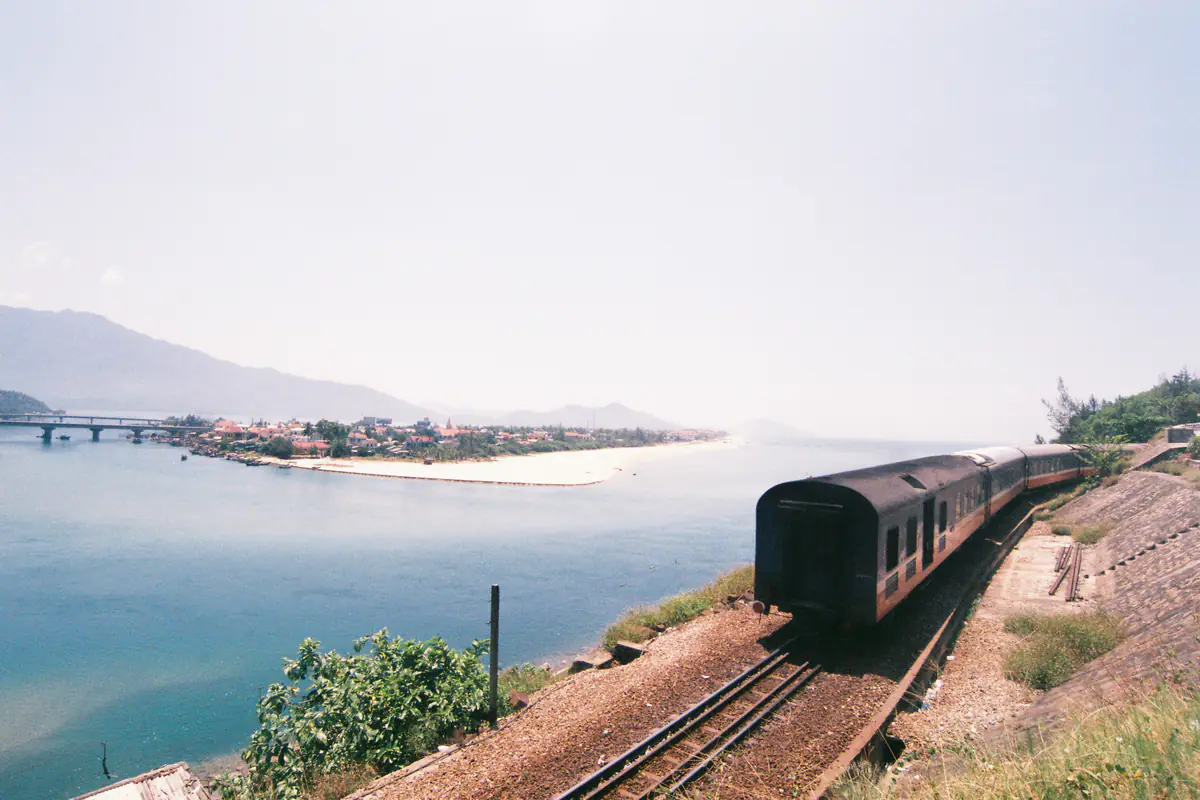
Photo: Khánh Hmoong
If you want to travel from Hanoi to Hoi An by train, book a ticket from Hanoi Railway Station to Da Nang Railway Station. There is no railway station in Hoi An. The SE3, departing Hanoi at 7:20 PM and arriving in Da Nang at 10:28 AM the following day, is one of the most convenient overnight services. A four-berth or six-berth sleeper is a much better choice than sitting upright overnight on a journey of around 15-17 hours.
Can you travel from Hanoi to Hoi An by train?
Yes, but you cannot travel all the way to Hoi An by rail.
The journey has two parts:
- Hanoi to Da Nang: Depart from Hanoi Railway Station at 120 Le Duan Street and arrive at Da Nang Railway Station at 791 Hai Phong Street. The railway distance is approximately 791 km, and most services take 15-17 hours.
- Da Nang to Hoi An: Travel approximately 30 km by road. A car journey usually takes around 45-60 minutes in normal traffic.
Loading map...
- Hanoi Railway Station: 120 Le Duan Street, where you board
- Da Nang Railway Station: 791 Hai Phong Street, where you get off for Hoi An
- Hoi An Ancient Town: About 30 km by road from Da Nang Railway Station
You do not need to change trains at Hue. The main SE services run directly from Hanoi to Da Nang, stopping at intermediate stations along the way.
Arrival time matters more than journey length.
Arriving at 10 or 11 AM gives you time to find transport, reach Hoi An before the afternoon and leave your bags at your accommodation. Arriving shortly after midnight is considerably less convenient if you have not arranged a transfer.
Should you get off at Hue instead?
Only if you want to visit Hue before continuing to Hoi An.
Hue is worth an overnight stop for its Imperial City, royal tombs and local food. However, it is still a substantial distance from Hoi An, so getting off there does not make the journey more straightforward.
With Hoi An as your main destination, stay on the train until Da Nang.
For a longer Central Vietnam itinerary, another option is to travel from Hanoi to Hue, spend a day or two there, then take a train through the Hai Van Pass to Da Nang before continuing to Hoi An.
That route makes more sense when the railway journey is part of the holiday rather than just transport between two destinations.
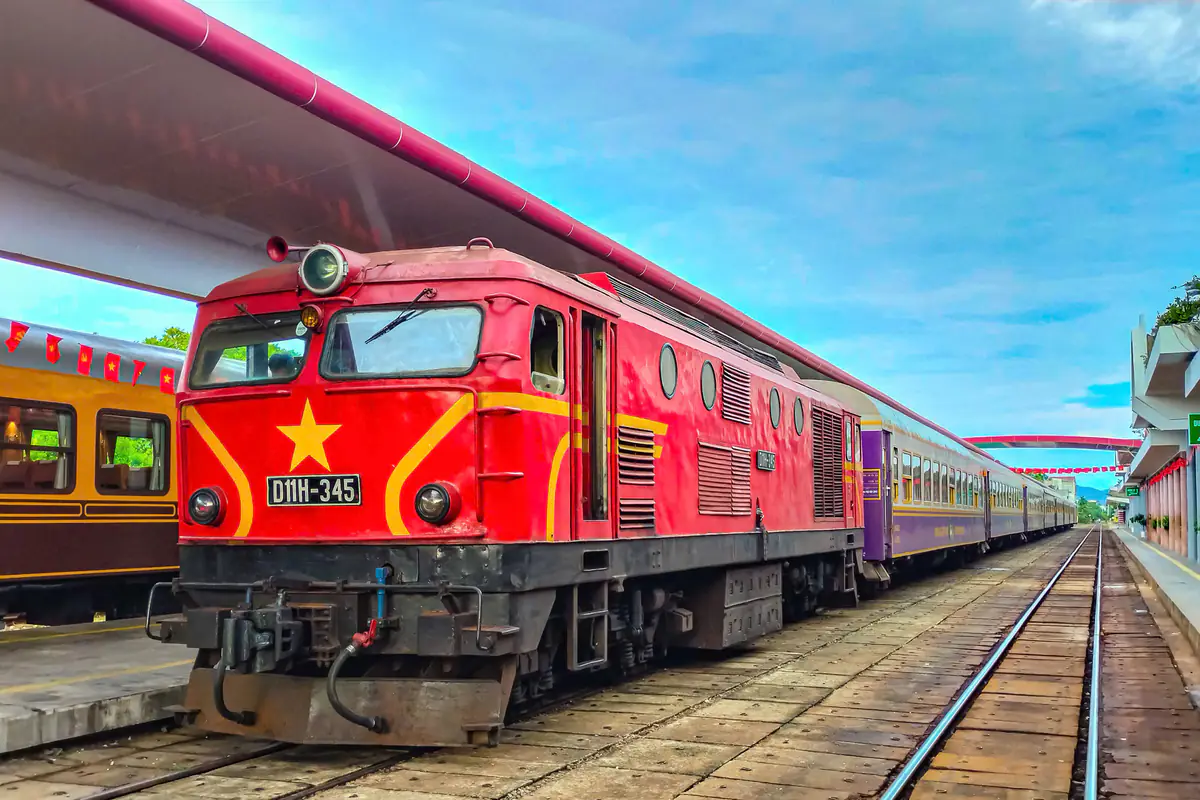
Photo: Nguyenbaotrung725
How long is the train from Hanoi to Da Nang?
The Hanoi to Da Nang train takes approximately 15 hours 8 minutes to 16 hours 48 minutes on the main services running in 2026.
15h 8m
SE3, the fastest service
16h 48m
SE9, the slowest service
791 km
Hanoi to Da Nang by rail
45-60 min
by car from the station to Hoi An
SE3 is one of the fastest options. SE5 and SE9 take slightly longer, but an hour or so matters less than the arrival time.
A train that arrives in the morning is often more useful than a slightly faster one arriving in the middle of the night.
Hanoi to Da Nang train timetable for 2026
| Train | Hanoi departure | Da Nang arrival | Journey time |
|---|---|---|---|
| SE7 | 6:00 AM | 10:15 PM, same day | 16h 15m |
| SE5 | 8:00 AM | 12:21 AM, next day | 16h 21m |
| SE9 | 1:00 PM | 5:48 AM, next day | 16h 48m |
| SE3 | 7:20 PM | 10:28 AM, next day | 15h 08m |
| SE19 | 7:45 PM | 11:35 AM, next day | 15h 50m |
| SE1 | 9:45 PM | 1:14 PM, next day | 15h 29m |
Vietnam Railways timetable for departures on November 6, 2026. Times are local Vietnam time (GMT+7). Services and arrival times may change, particularly during periods of severe weather.
SE3: the best all-round overnight option
7:20 PM to 10:28 AM the next day
SE3 leaves Hanoi at 7:20 PM and reaches Da Nang at approximately 10:28 AM the next morning.
This schedule works well for travelers heading directly to Hoi An.
You can have dinner in Hanoi, arrive at the station in the early evening, settle into your sleeper berth and spend the night on the train.
The final stretch of the journey, including the area around Hai Van Pass, takes place during daylight on this schedule.
Once you arrive in Da Nang, you can take a car to Hoi An and reach your accommodation around lunchtime, assuming the train is running on time.
Your room might not be ready for check-in, but many hotels and guesthouses can store luggage until the afternoon.
Compare SE3 first when planning this route.
SE19: a good choice for a more comfortable sleeper
7:45 PM to 11:35 AM the next day
SE19 departs Hanoi at 7:45 PM and arrives in Da Nang at approximately 11:35 AM the following day.
The SE19/SE20 service was upgraded by Vietnam's railway operator in 2023, with improvements to passenger carriages and onboard facilities.
It is worth checking when comfort matters more to you than getting the lowest possible fare.
Four-berth sleeper accommodation is available on this service. The smaller cabin appeals to couples, families and travelers who would rather share with fewer passengers.
However, do not assume that every ticket on SE19 provides a private cabin. Check the exact class and berth before paying.
SE1: best for a later departure from Hanoi
9:45 PM to 1:14 PM the next day
SE1 leaves Hanoi at 9:45 PM and reaches Da Nang at 1:14 PM the following day.
This gives you more time in Hanoi before departure. You can have a relaxed dinner, collect your luggage and head to the station later in the evening.
After arriving in Da Nang, you can travel directly to Hoi An and reach your hotel during the afternoon.
That timing is useful because most hotels have already started their normal check-in period.
The drawback is that nearly all of your second day will be spent traveling. With only one or two nights in Hoi An, you may prefer to fly.
SE9: best for an early arrival
1:00 PM to 5:48 AM the next day
SE9 leaves Hanoi at 1:00 PM and arrives in Da Nang at 5:48 AM the following morning.
An early arrival can be useful if you have arranged a private driver or want to start exploring Central Vietnam before breakfast.
However, it means spending much of the afternoon and evening on the train, followed by an early wake-up to collect your belongings.
You may reach Hoi An well before your hotel room is available.
Families with children or travelers carrying large suitcases may find this schedule harder.
SE5 and SE7: less convenient for Hoi An
SE5 arrives 12:21 AM, SE7 arrives 10:15 PM
SE5 arrives in Da Nang at approximately 12:21 AM.
You can still continue to Hoi An by taxi or pre-booked transfer, but you will be traveling in the middle of the night. You may also need to pay for a hotel night even though you only arrive in the early hours.
SE7 arrives at 10:15 PM. This is more manageable, but you will still reach Hoi An late.
These services only beat SE3, SE19 or SE1 when the ticket price is significantly better or their departure times suit a particular itinerary.
How much is the Hanoi to Da Nang train in 2026?
Train ticket prices depend on the service, travel date, accommodation class, berth position and booking time.
A lower berth in a four-berth sleeper usually costs more than an upper berth in a six-berth compartment.
These are 2026 Vexere fares for travel on November 6, 2026.
| Train | Ticket class | Fare |
|---|---|---|
| SE7 | Air-conditioned soft seat | 813,000 VND |
| SE5 | Air-conditioned soft seat | 813,000 VND |
| SE9 | Six-berth sleeper | 1,032,000 VND |
| SE3 | Six-berth sleeper | 1,155,000 VND |
| SE19 | Four-berth sleeper | 1,466,000 VND |
| SE1 | Air-conditioned soft seat | 771,000 VND |
Each train shows one accommodation class; other seats and sleepers on that service have their own fares. Insurance or other booking charges may apply.
The distinction matters.
The 771,000 VND fare shown for SE1 is for a soft seat. It should not be compared directly with the 1,466,000 VND four-berth sleeper fare shown for SE19.
For a more general comparison, Vexere's Hanoi to Da Nang sleeper fares in October 2026 started at approximately 769,000 VND for six-berth accommodation and 1,054,000 VND for four-berth accommodation.
How much should you budget?
These are reasonable approximate ranges per person for planning:
- Air-conditioned soft seat: 700,000-1,000,000 VND.
- Six-berth sleeper: 800,000-1,300,000 VND.
- Four-berth sleeper: 1,100,000-1,700,000 VND.
These are indicative budgets only. Some departures can cost more, especially during peak travel periods.
The final price needs to be checked for your exact travel date.
How much does it cost for two people?
Suppose two people book four-berth sleeper tickets on SE19 at the Vexere fare of 1,466,000 VND each for November 6, 2026.
The total train fare would be 2,932,000 VND, before any additional charges.
You would then need to pay for transport from Da Nang Railway Station to Hoi An.
Why do booking websites show different prices?
There are several possible reasons.
One website may display the cheapest seat available, while another may show the price of a sleeper berth.
The fare can also change depending on whether you select a lower or upper berth, even on the same train.
Some booking agents add service charges, while specialist tourist carriages can cost substantially more than standard Vietnam Railways accommodation.
When comparing prices, use the same departure date, train and berth category. Compare the final amount at checkout rather than the headline starting price.
Four-berth vs six-berth sleeper: which is better?
Over 15 hours, the sleeper class makes a noticeable difference.
A four-berth compartment is the better option for travelers who want a more comfortable night, such as couples, families and older passengers.
A six-berth compartment is a sensible compromise when you want a proper bed without spending as much.
Four-berth sleeper: more space and fewer people
Two levels, four passengers at most
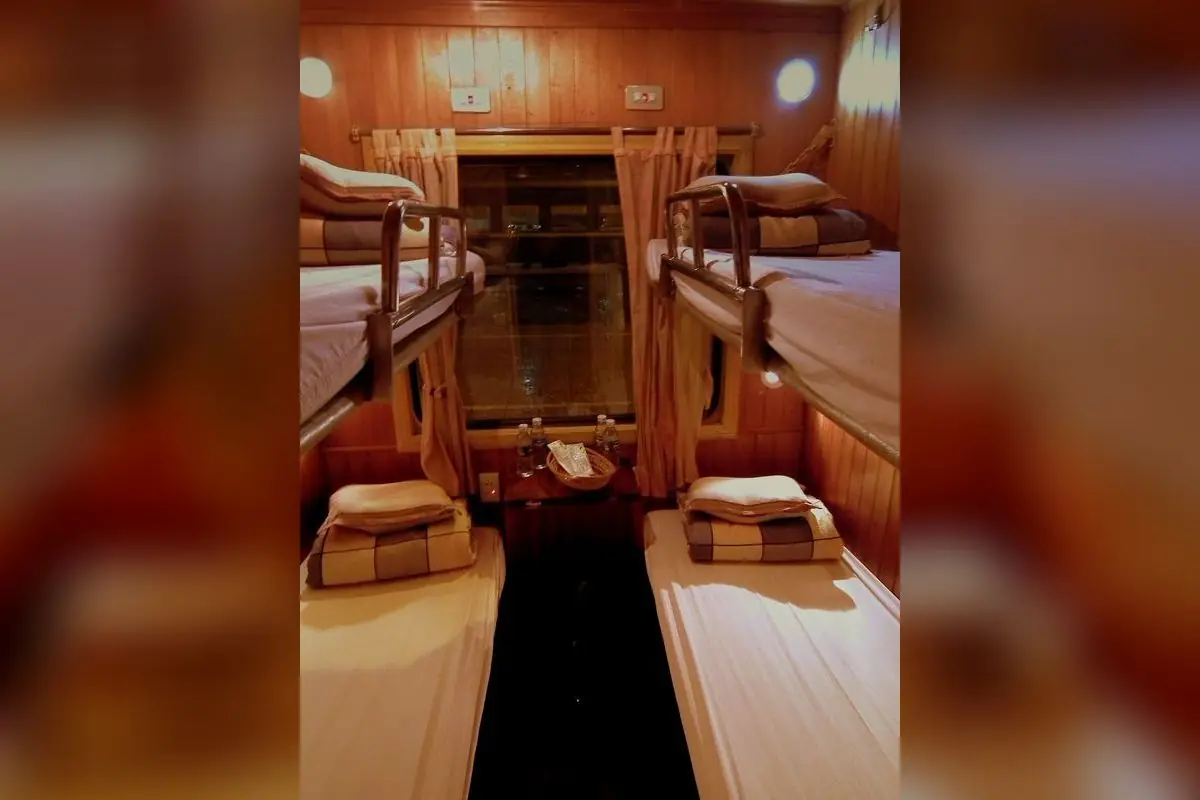
Photo: calflier001
A standard four-berth compartment has two lower berths and two upper berths.
There is a door separating the compartment from the corridor, along with space for luggage and basic onboard amenities depending on the carriage.
The main advantage is simple: a maximum of four passengers share the compartment.
There is also more vertical space around the beds than in a six-berth sleeper, making it easier to sit up and move around.
Lower berths are generally best for older travelers, people who have difficulty climbing and passengers who expect to get up during the night.
Upper berths can be slightly cheaper. They also provide a little more privacy during the day because other passengers are less likely to use them as seats.
The main disadvantage is the higher ticket price.
Solo travelers will usually share the compartment with other passengers.
Six-berth sleeper: cheaper, but noticeably tighter
Three levels on each side
A six-berth compartment has three sleeping levels on each side.
The lower berths are easiest to reach and offer more convenient access to luggage and the window.
Middle berths can be a reasonable balance between price and accessibility.
Upper berths are usually the cheapest, but they require a higher climb. The distance between the mattress and the ceiling is also limited, so sitting upright can be difficult.
Six-berth accommodation suits solo travelers, younger passengers and people traveling on a moderate budget.
You still get a mattress, bedding and air conditioning, but there is less room to move around than in a four-berth cabin.
Soft seat: only worth considering if saving money matters most
Over 15 hours sitting up
Air-conditioned soft seats are padded and usually recline to some degree.
They are perfectly reasonable for a shorter journey. Fifteen or sixteen hours overnight is a different matter.
You may struggle to stretch your legs or sleep comfortably. People getting up or walking along the aisle can also interrupt your rest.
Choose the sleeper for this route when the price difference between a soft seat and a six-berth sleeper is manageable.
Which accommodation class should you book?
| Traveler | Recommended class | Why |
|---|---|---|
| Solo budget traveler | Six-berth sleeper | A proper bed at a lower price |
| Couple | Four-berth sleeper | Fewer people and more space |
| Family with children | Four-berth, lower berths | Easier to manage luggage and help children |
| Older traveler | Four-berth, lower berth | No need to climb |
| Tall traveler | Four-berth, after checking bed size | More room than a six-berth compartment |
| Travelers seeking privacy | Private cabin if available | Avoid sharing with strangers |
International booking websites often use the terms soft sleeper and hard sleeper.
A soft sleeper generally refers to a four-berth compartment, while a hard sleeper usually means a six-berth compartment.
Despite the name, a hard sleeper is not a bare wooden bunk. It still has a mattress, although the accommodation is usually more basic.
Can you sleep comfortably on the overnight train?
Yes, but do not expect a completely quiet night.
Vietnam's North-South railway is a conventional railway, and the carriages move and vibrate as the train runs.
You will hear the wheels, occasional braking, doors opening and passengers getting on or off at intermediate stations.
Someone who sleeps easily can get enough rest in a four-berth sleeper to enjoy the following day.
Light sleepers should consider bringing earplugs and an eye mask. These take up almost no luggage space and can make a long journey more manageable.
The air conditioning may feel cold after several hours, even in summer. A light jacket or long-sleeved top is useful.
Before boarding, it is worth doing a few simple things:
- Have dinner rather than relying on finding a meal as soon as you board.
- Carry drinking water and a few snacks.
- Keep your passport, phone, wallet and other valuables in a small bag close to you.
- Pack the things you need overnight separately from your main suitcase.
- Charge your phone before departure, even if your carriage has electrical outlets.
Food and drinks are available on many long-distance trains, although the menu and service times vary.
Toilets are located in shared areas of the carriages. The train can move unexpectedly, so hold the handrails when walking and wear footwear with a secure grip.
One advantage of rail travel is being able to get up, stretch your legs and move around the carriage safely.
Is the Hanoi to Da Nang train scenic?
The route crosses a large part of northern and central Vietnam.
Much of the journey passes through fields, towns and residential areas. Depending on the service, you may see long stretches of countryside during daylight and larger stations after dark.
The most memorable section is usually between Hue and Da Nang.
Hue, Hai Van Pass and the coast
South of Hue, the railway passes through the Hai Van mountain area before descending toward Da Nang.
Parts of the track run along steep hillsides, with views over the sea and surrounding mountains.

Photo: Vyacheslav Argenberg
The scenery changes quickly. You may pass through a tunnel and emerge beside a stretch of coastline, then turn around another hillside.
It is one of the strongest reasons to travel between Hue and Da Nang by train.
On the SE3, SE19 and SE1 schedules, this section is normally covered during daylight.
That does not guarantee sunshine or clear views. Cloud, rain and the location of your window can make a difference.
You also cannot rely on one particular side of the train providing the best view for the entire stretch, as the track curves around the hills.
What is the best season for the scenery?
Between roughly March and August, Central Vietnam generally has more sunny days, giving you better chances of clear coastal views.
Summer also brings higher travel demand, particularly during school holidays.
From September through December, the region experiences wetter conditions. Heavy rain can reduce visibility and sometimes disrupt transport.
How to book Hanoi to Da Nang train tickets
You can buy tickets through Vietnam Railways' official online booking system, authorized ticket agents or railway station ticket counters.
The official booking website is dsvn.vn.
The process is straightforward.
Select Ha Noi as the departure station and Da Nang as the destination. Choose your travel date and review the trains available.
After selecting a train, open the carriage diagram and choose your seat or sleeper berth. Enter the required passenger details and complete payment.
Make sure the personal information matches the identification document you will use when traveling.
How can foreign visitors book tickets?
The Vietnam Railways booking website provides an English-language option.
Use the following station names:
From: Ha Noi
To: Da Nang
Do not enter Hoi An as the destination. There is no railway station there.
For accommodation, look for terms such as soft sleeper, 4-berth compartment, hard sleeper or 6-berth compartment.
Choose the berth level carefully. Lower, middle and upper berths can have different prices and levels of comfort.
International booking services may also accept foreign cards and provide English-language customer support. Compare any service fees before paying.
Foreign passengers should enter the name and passport information accurately. Bring the same passport when traveling.
How far in advance should you book?
Once your travel date is confirmed, it makes sense to check sleeper availability.
Looking one or two weeks ahead is a practical starting point for ordinary travel weeks.
For public holidays, summer weekends and Tet, plan further ahead once ticket sales open.
Popular lower berths and four-berth compartments can sell out before the train itself is fully booked.
You may still see seats available when the sleeper class you wanted has already sold out.
With uncertain plans, read the ticket change and refund conditions before making payment. Cancellation charges depend on the applicable rules and how close you are to departure.
Where do you board the train in Hanoi?
Hanoi Railway Station's main entrance is at 120 Le Duan Street, close to the city center.
For SE3, which departs at 7:20 PM, arriving around 6:30-6:45 PM gives you a comfortable amount of time to find your platform and carriage.
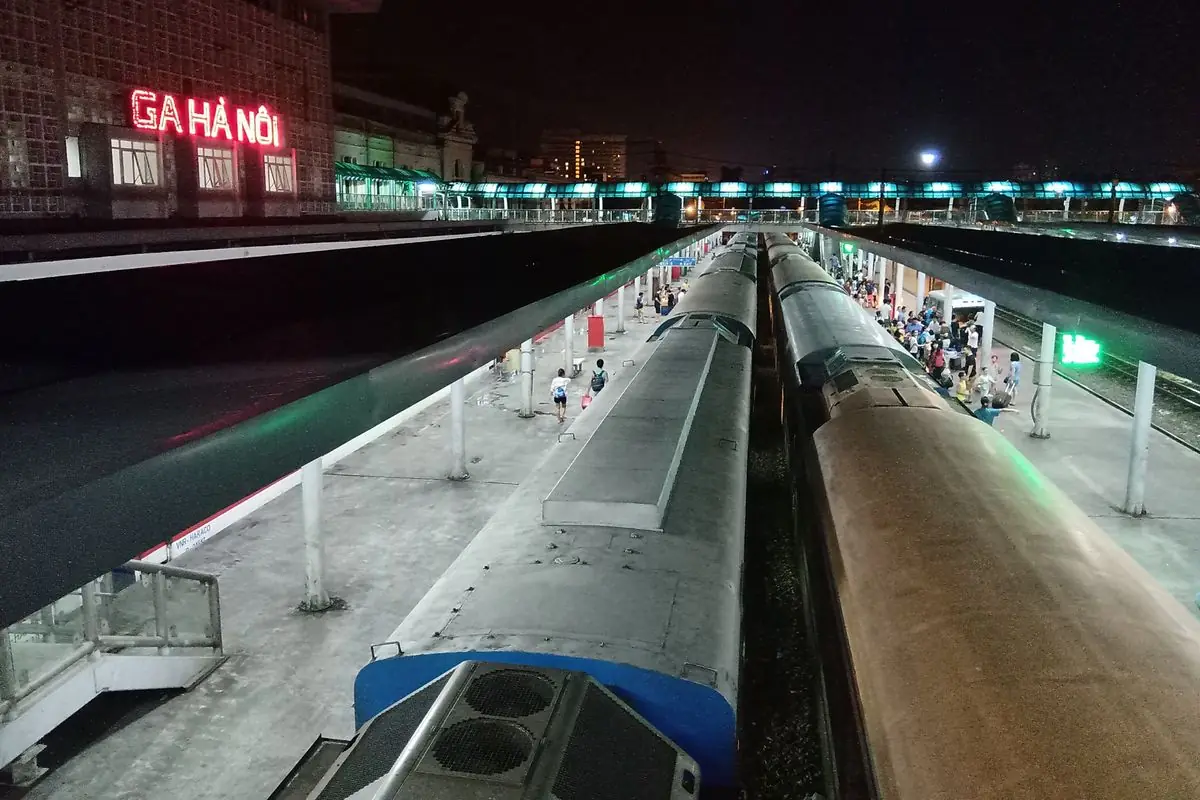
Photo: Handyhuy
There is no need to arrive several hours early, but turning up five minutes before departure is a bad idea, especially with large luggage.
North-South trains can be long, and your carriage may be some distance from the platform entrance.
Before boarding, check four details on your ticket:
- Train number, such as SE3 or SE19.
- Departure date and time.
- Carriage number.
- Seat or berth number.
Do not rely only on the departure time to identify the train.
Different services may operate from nearby platforms, and staff may need to verify your ticket before allowing you to board.
Do you need a printed ticket?
Electronic tickets are accepted through the relevant railway ticketing arrangements.
Save your booking confirmation and QR code on your phone before arriving at the station.
Keep a screenshot or downloaded copy too, as mobile data can drop out.
Carry the identification document associated with the booking. For international travelers, this will normally be your passport.
After booking through a third-party agent, check whether the document you received is a final electronic ticket or a booking confirmation requiring further action.
How do you get from Da Nang Railway Station to Hoi An?
Da Nang Railway Station is located at 791 Hai Phong Street.
It is the correct station for passengers traveling from Hanoi to Hoi An by train.

Photo: Christophe95
Hoi An is roughly 30 km away, and a direct car journey usually takes 45-60 minutes in normal traffic.
Your main options are taxi, Grab, a pre-booked private transfer or a public bus.
Choose by your arrival time, luggage and the number of people traveling together.
Taxi or Grab: most convenient for couples and families
Straight to your hotel
A taxi or GrabCar is usually the simplest way to continue after a long overnight train journey.
You can travel directly toward your accommodation without finding a bus stop or changing vehicles.
This helps when traveling with children, older passengers or large suitcases.
Enter your hotel's full address rather than simply choosing Hoi An Ancient Town as the destination.
Some streets in the historic center have restrictions on motor vehicles. The driver may need to drop you at the nearest permitted access point when your hotel is inside a pedestrian area.
Pre-booked transfer: best when you want a driver waiting
Late arrivals, groups, plenty of luggage
A private transfer is worth considering if your train arrives late, you are traveling as a group or you prefer not to arrange transport after arrival.
Provide the company with your train number, scheduled arrival time, contact number and accommodation address.
Agree on a meeting point at Da Nang Railway Station.
Because trains can run late, choose a transfer provider that allows reasonable adjustments when arrival times change.
Public bus: cheapest, but requires more planning
Bus 02, not outside the station
Public transport can reduce your costs if you are traveling alone with light luggage.
However, you should not assume that a Da Nang-Hoi An bus departs directly outside the railway station.
Depending on the current route, you may first need to travel to another stop or bus terminal.
Bus 02 connects Da Nang with Hoi An, but schedules and stopping points can change. Check the current network before relying on it.
A daytime train arrival makes using the bus easier.
After arriving on SE5 shortly after midnight, you will find a taxi or arranged transfer much more practical than depending on a public bus.
The decision you need to make here is straightforward: pay more for a direct ride to your accommodation, or allow extra time and possibly another transfer to spend less.
How to plan your Hanoi to Hoi An train journey
The right itinerary depends on how much time you have and whether you want to explore immediately after arriving.
Option A: Take SE3 and reach Hoi An around lunchtime
This is the easiest itinerary for most independent travelers.
- Day 1, afternoon
In Hanoi
Have an early dinner and prepare your overnight bag.
- 6:30-6:45 PM
At the station
Arrive at Hanoi Railway Station.
- 7:20 PM
Departure
Depart on SE3.
- Overnight
On board
Sleep on the train.
- Day 2, 10:28 AM
Arrival
Scheduled arrival at Da Nang Railway Station.
- Late morning
By road
Transfer by road to Hoi An.
- Around midday
At your hotel
Around midday or early afternoon: arrive at your accommodation, leave luggage or check in if your room is ready.
- Afternoon
Ancient Town
Rest and explore Hoi An Ancient Town.
- Evening
Hoai River
Have dinner and walk near the Hoai River.
There is no need to fill your first afternoon with distant attractions.
Even if you have slept reasonably well, a night on the train is rarely as restful as a night in a hotel.
A short walk through the Ancient Town, an unhurried dinner and an early night are enough for the first day.

Photo: Omar David Sandoval Sida
Save attractions such as My Son Sanctuary or the coconut forest for another day.
Option B: Take SE1 and arrive in Hoi An during the afternoon
SE1 makes sense when you want to spend most of your final day in Hanoi before leaving.
- Day 1, evening
In Hanoi
Have dinner and collect your bags.
- Around 9:00 PM
At the station
Get to Hanoi Railway Station.
- 9:45 PM
Departure
Depart on SE1.
- Day 2, 1:14 PM
Arrival
Scheduled arrival in Da Nang.
- Early afternoon
By road
Travel to Hoi An by car.
- Late afternoon
At your hotel
Check in and rest.
- Evening
Ancient Town
Walk the Ancient Town or have dinner near your hotel.
The advantage is that you will generally arrive during normal hotel check-in hours.
The disadvantage is that you lose most of the day to travel.
For a trip with only one or two nights in Hoi An, this is a significant consideration.
Option C: Spend one night in Da Nang before visiting Hoi An
This option is useful when you have more time or prefer not to rush after a long train ride.
After arriving at Da Nang Railway Station, head to your hotel in the city and take the rest of the day at an easy pace.
You could visit the My Khe Beach area the following morning before traveling to Hoi An in the afternoon.
This also gives you some flexibility when the train is delayed or the weather affects your plans.
There is little reason to squeeze every attraction in Da Nang into the same day you arrive after an overnight journey.
Is the Hanoi to Da Nang train worth it compared with flying?
The train is worth considering if you enjoy rail travel, have enough time and want to experience the journey itself.
Flying is much faster.
A direct flight from Hanoi to Da Nang generally takes around 1 hour 20 minutes in the air.
Even after allowing time for airport transfers, check-in, security, baggage collection and the road journey to Hoi An, flying is still considerably quicker.
The train offers something different.
You can sleep in a proper berth, stand up and walk around during the journey, and watch Vietnam's countryside and coastline pass by.
The section around Hai Van Pass is especially appealing.
| Factor | Overnight train | Flight |
|---|---|---|
| Main journey time | Around 15-17 hours | Around 1h 20m in the air |
| Sleeping arrangements | Sleeper berth available | Standard aircraft seat |
| Arrival point | Da Nang Railway Station | Da Nang International Airport |
| Transfer to Hoi An | Road transfer required | Road transfer required |
| Scenery | Countryside, mountains and coast | Aerial views, weather permitting |
| Best for | Travelers who enjoy trains and have time | Travelers who want to arrive quickly |
With only three days for Hanoi, Da Nang and Hoi An, fly.
You will have more time for Hoi An's historic streets, beaches and nearby attractions.
A week or longer leaves room for an overnight train as an enjoyable part of the itinerary rather than simply a way to reach the next destination.
Does the sleeper train really save a night in a hotel?
Potentially, but you need to compare the total cost.
An overnight train lets you travel while you sleep, which may eliminate the need for one night's accommodation.
However, a four-berth sleeper can cost more than a discounted flight, particularly when two or more people are traveling.
For example, two SE19 four-berth tickets at the Vexere fare for November 6, 2026 total 2,932,000 VND before additional charges.
You still need to pay for the transfer to Hoi An and any meals or other travel expenses.
A direct flight on the same date that is significantly cheaper means the train will not save you money.
The better reason to take it is that you want the sleeper-train experience and the coastal scenery.
Common mistakes to avoid
A few small mistakes can make an otherwise straightforward journey more tiring than necessary.
- Searching for a Hoi An railway station. Hoi An has no train station. Book Hanoi to Da Nang instead.
- Comparing the cheapest headline fares. A soft-seat ticket and a four-berth sleeper ticket are not equivalent. Always check the accommodation class.
- Choosing a train that arrives after midnight. SE5 reaches Da Nang shortly after midnight. Think about your onward transfer and accommodation before booking.
- Assuming two sleeper tickets give you a private cabin. A standard four-berth compartment can be shared with two other passengers.
- Booking your transfer too tightly. Train delays are possible. A driver who can adjust the pickup time is preferable to a rigid connection.
- Confusing the departure date with the arrival date. Leave Hanoi on Friday evening aboard SE3 and you arrive in Da Nang on Saturday morning. Your Hoi An hotel booking needs to match Saturday's arrival.
- Keeping everything in a large suitcase. Sleeper compartments are not spacious. Pack your night-time essentials separately so you do not need to open a large case repeatedly.
- Ignoring the weather in Central Vietnam. Heavy rainfall can affect both train operations and roads around Hoi An. Check official weather and transport notices before traveling, especially during the wet season.
What should international travelers know before boarding?
The main source of confusion for English-speaking visitors is the route name.
Searching for Hanoi to Hoi An train can produce conflicting information because Hoi An is not on the railway network.
The route to book is Hanoi to Da Nang, followed by a road transfer.
You may see the following Vietnamese and English names on tickets or booking websites:
| Vietnamese | English |
|---|---|
| Ga Hà Nội | Hanoi Railway Station |
| Ga Đà Nẵng | Da Nang Railway Station |
| Ghế mềm điều hòa | Air-conditioned soft seat |
| Giường nằm khoang 6 | Six-berth sleeper / Hard sleeper |
| Giường nằm khoang 4 | Four-berth sleeper / Soft sleeper |
| Giường tầng dưới | Lower berth |
| Giường tầng giữa | Middle berth |
| Giường tầng trên | Upper berth |
Use your passport details when booking and carry the passport you used for the reservation.
Tall travelers should check sleeper dimensions before purchasing. Train berths in Vietnam may be narrower or shorter than the beds you are used to, particularly in six-berth compartments.
It is also worth contacting your Hoi An accommodation before departure.
Give the hotel your train number and expected arrival time in Da Nang. The staff may be able to advise on transfers or arrange a pickup, depending on the property.
Having transport organized beforehand is especially helpful after a late arrival.
Open the official Vietnam Railways booking website and select Ha Noi to Da Nang for your travel date. Check SE3 departing at 7:20 PM first, compare four-berth and six-berth sleeper fares, then arrange your onward transfer from Da Nang Railway Station to your accommodation in Hoi An.
FAQ
Which station should I get off at for Hoi An?
Get off at Da Nang Railway Station, located at 791 Hai Phong Street. Hoi An has no railway station. From Da Nang, travel approximately 30 km by taxi, Grab, private transfer or public transport to reach Hoi An.
How long does the train from Hanoi to Da Nang take?
Most services take approximately 15-17 hours. On the November 6, 2026 timetable, SE3 takes 15 hours 8 minutes, SE19 takes 15 hours 50 minutes, and SE1 takes 15 hours 29 minutes. Allow another 45-60 minutes for a direct car journey from Da Nang to Hoi An in normal traffic.
How much is the Hanoi to Hoi An train ticket?
There is no direct train ticket to Hoi An because the town has no railway station. You need a Hanoi to Da Nang ticket. Vexere's 2026 fares for November 6, 2026 were 1,155,000 VND for a six-berth sleeper on SE3 and 1,466,000 VND for a four-berth sleeper on SE19. Prices vary by date and accommodation class, and the road transfer to Hoi An costs extra.
Should I book a four-berth or six-berth sleeper?
Choose a four-berth sleeper if comfort, space and fewer cabin companions matter most. A six-berth sleeper is better for budget-conscious travelers who still want a proper bed. On a journey lasting over 15 hours, a lower berth in a four-berth compartment is a particularly practical option for older travelers and people who do not want to climb.
Is the Hanoi to Da Nang train worth it?
Yes, if you enjoy overnight trains, have enough time and want to see the scenery around Hai Van Pass. SE3 and SE19 are convenient choices because they depart in the evening and arrive the following morning. If your priority is reaching Hoi An quickly, or you only have a few days in Central Vietnam, flying is usually the better option.
Related posts

Road trips
Hoi An (Hội An) to Nha Trang: What to Know Before You Go
Decide whether to change transport in Da Nang or leave directly from Hoi An before buying the long-distance ticket.

Guides
Da Nang to Hoi An is just 30 km: Grab is easier, but the bus is cheaper
Compare transport prices, travel times, and pickup points from Da Nang Airport, the railway station, and the city center.

Guides
Plane or train to Nha Trang? Which one makes more sense?
Compare four ways to reach Nha Trang and choose the best option for your schedule, budget, and comfort.