Sapa (Sa Pa) Trekking: Getting Ready for a Village Walk
Field trails bring you closer to the valley but add mud, uneven ground and pickup logistics; we suggest a shorter guided route for your first visit.
Written by Tụi mình mê biểnUpdated
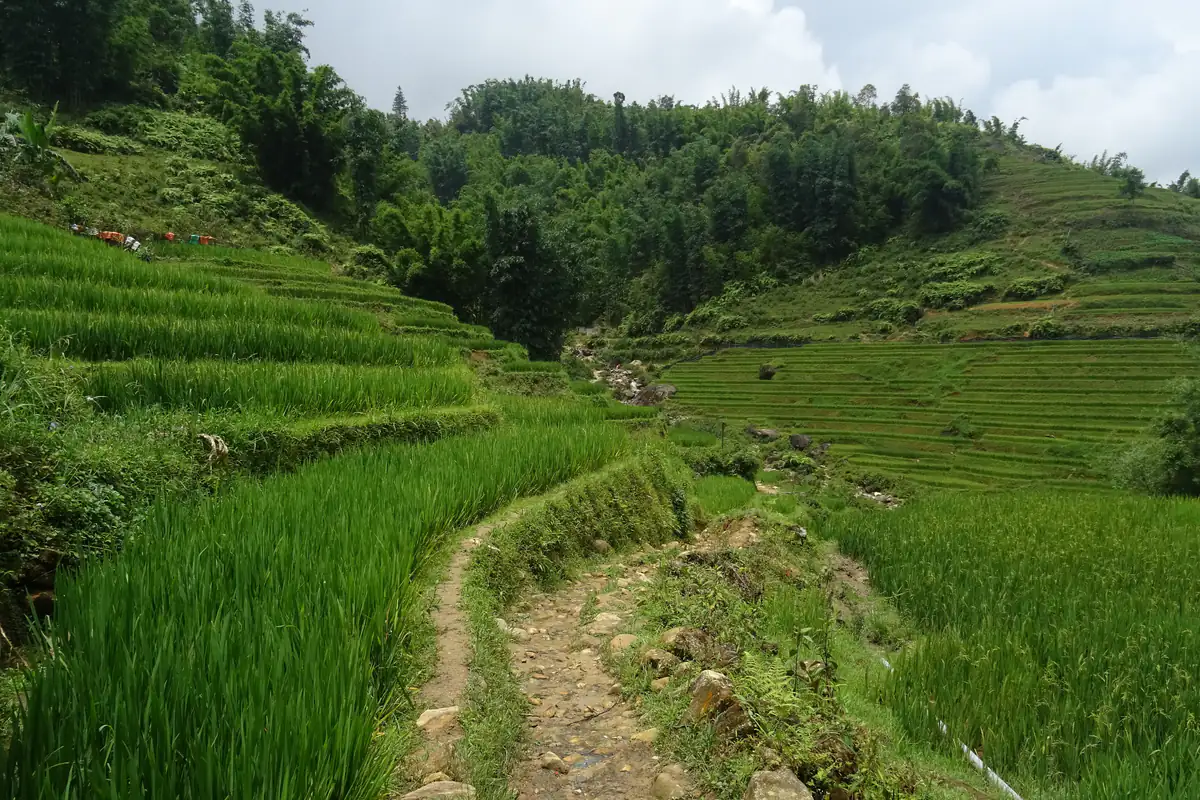
Photo: Christophe95
A dirt path between rice terraces can be much narrower than the valley looks in a photograph. That small detail matters when choosing a trek: do you want a village walk on a road, a trail through fields or a full day of uneven ground? For a first Sapa trekking trip, we suggest a guided walk with an agreed vehicle pickup. Add an overnight stay because you want time in a village, rather than because the longest package sounds more impressive.
Ask about the surface before the scenery
A trek advertised between Lao Chai and Ta Van (Tả Van) can follow different paths. Concrete village roads, field edges and hillside trails produce very different days. Request the planned walking distance, actual walking time, elevation changes and recent information about the ground. A label such as “easy” is not enough to judge whether the route suits your knees, balance or experience.
For an occasional walker, we would choose a half-day outing with a place to shorten the route. A full valley day suits people comfortable walking for longer, provided lunch, breaks and the return ride are clear. A foot ascent of Fansipan is a separate mountain expedition with its own preparation and access requirements. It is not simply a slightly longer village walk.
| Area | Why choose it | Confirm first |
|---|---|---|
| Cat Cat (Cát Cát) | A visitor-oriented village walk | Steps, admission and return route |
| Lao Chai and Ta Van | A valley and village day | Exact trail and vehicle pickup |
| Ta Van toward Ban Ho (Bản Hồ) | A longer route with an overnight option | Daily stages and accommodation |
| Fansipan on foot | A separately planned mountain climb | Organizer, access and conditions |
We favor a guide for your first trail day
A useful guide knows the route, adjusts the pace and has a plan if someone needs to stop. Ask who will actually lead, what language they speak, what professional documentation applies and which business is responsible for the booking. Someone saying they know the way is not the same as a clear service arrangement. Meet or speak with the organizer before committing to an ambitious route.
Request an itemized quote covering guiding, transfers, meals, any admission and accommodation. Check the maximum size of a shared group. One strong walker and someone with sore knees need different pacing. Establish whether shopping stops, performances or household visits are included, especially if your main aim is walking. We prefer a route with room for rest over one tied to a rigid photo schedule.
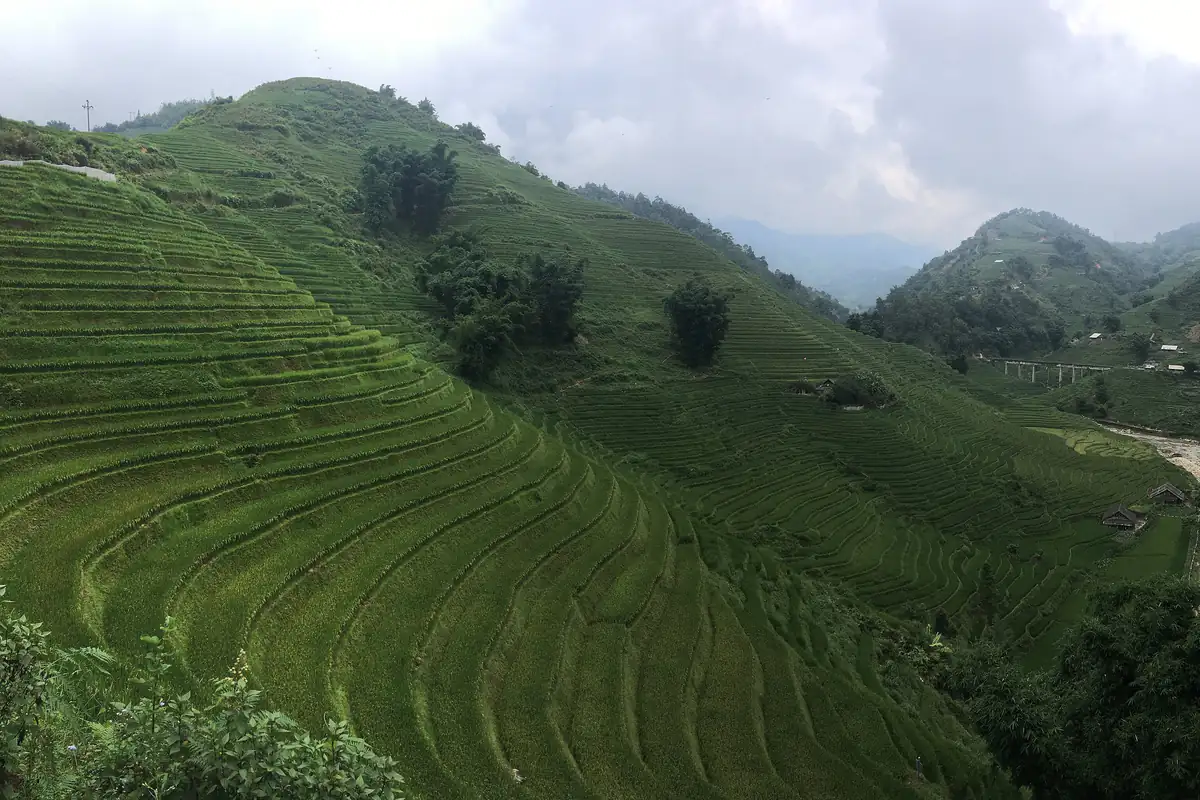
Photo: Christophe95
Choose walking conditions before rice color
September to November is a useful season to consider, with March to May another generally mild period. Summer brings rain and thunderstorms; late December through March can be cold and misty. Rice does not ripen across every village at once. Ask your guide about the fields on the actual route instead of treating a calendar month as a guarantee of golden terraces.
We would choose a drier path over a perfect rice photograph during heavy rain. Mud changes walking speed, wet shoes become uncomfortable and fog can remove the view you traveled for. Postpone during heavy-rain, flash-flood or landslide warnings and follow local instructions. Do not test a swollen stream on foot or cross a damaged section simply because another person has just made it through.
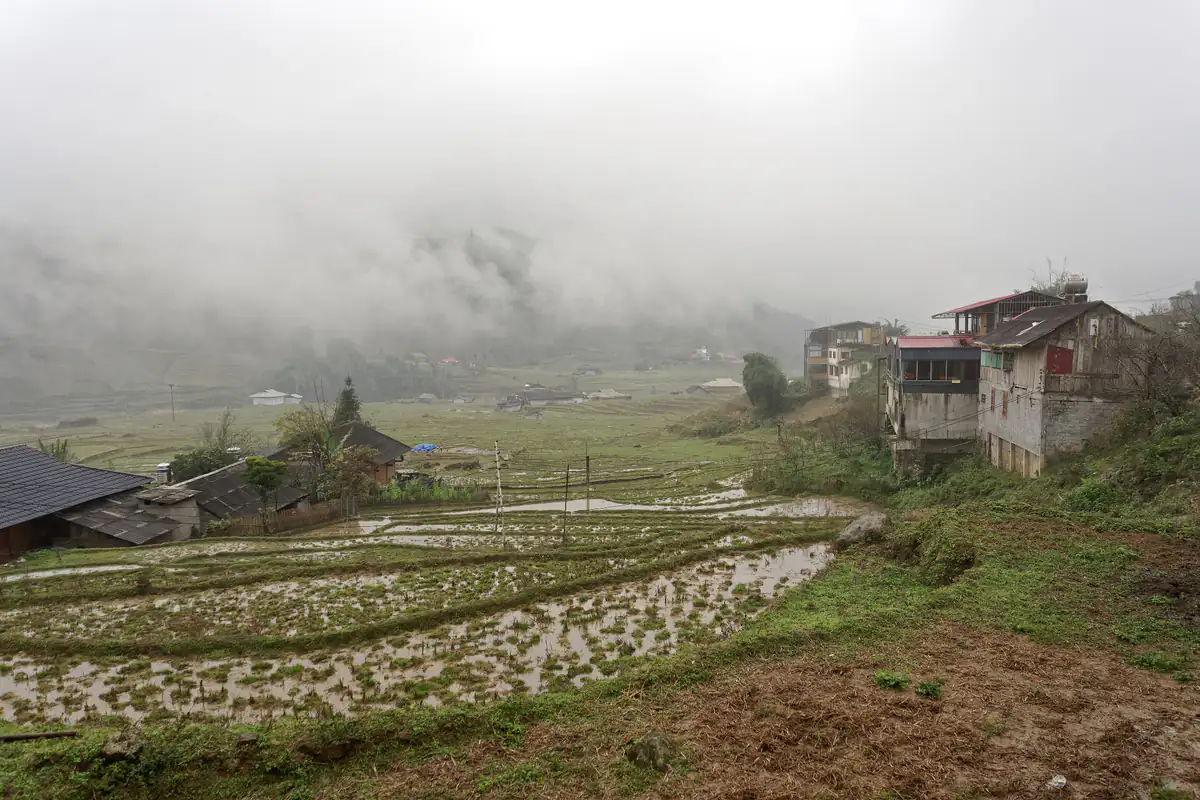
Photo: Jakub Hałun
Broken-in shoes matter more than an outfit
Wear shoes you have already walked in, with good grip and enough room for your toes on descents. Pack a light warm layer, rain protection, drinking water and a compact snack. Agree on refill and meal points so the amount you carry matches the route. Keep your phone and documents in a waterproof pouch. Dry replacement socks are more useful than an extra outfit intended only for photos.
Walking poles can help people accustomed to using them, but they do not make an unsuitable route suitable. Try the loaded daypack before leaving and remove things you will not use. Keep frequently needed items accessible so every water break does not require unpacking everything. Carry prescribed medication and the information needed to explain a medical condition.
Travelers who are pregnant, have underlying medical conditions or plan to bring young children should get medical advice before choosing a strenuous outing. Tell the organizer about relevant mobility or health needs when booking. Waiting until the group reaches the steep section leaves fewer useful options for changing the day.
Choose a homestay for the evening as well as the bed
A night in Ta Van or another village makes sense if you want dinner, a slower morning and less rushing back to town. The word homestay does not always mean sharing a family’s living space; some operate more like guesthouses. Ask about the room, private or shared bathroom, hot water, warm bedding and how close a vehicle can get.
Confirm dinner arrangements and dietary requirements ahead of time. If you are leaving a large suitcase elsewhere, agree where it will stay and how you collect it afterward. Carry valuables, medication and documents yourself. For light sleepers, ask about the room’s position and evening activities. A sociable group dinner may be appealing to one traveler and the wrong setting for another.
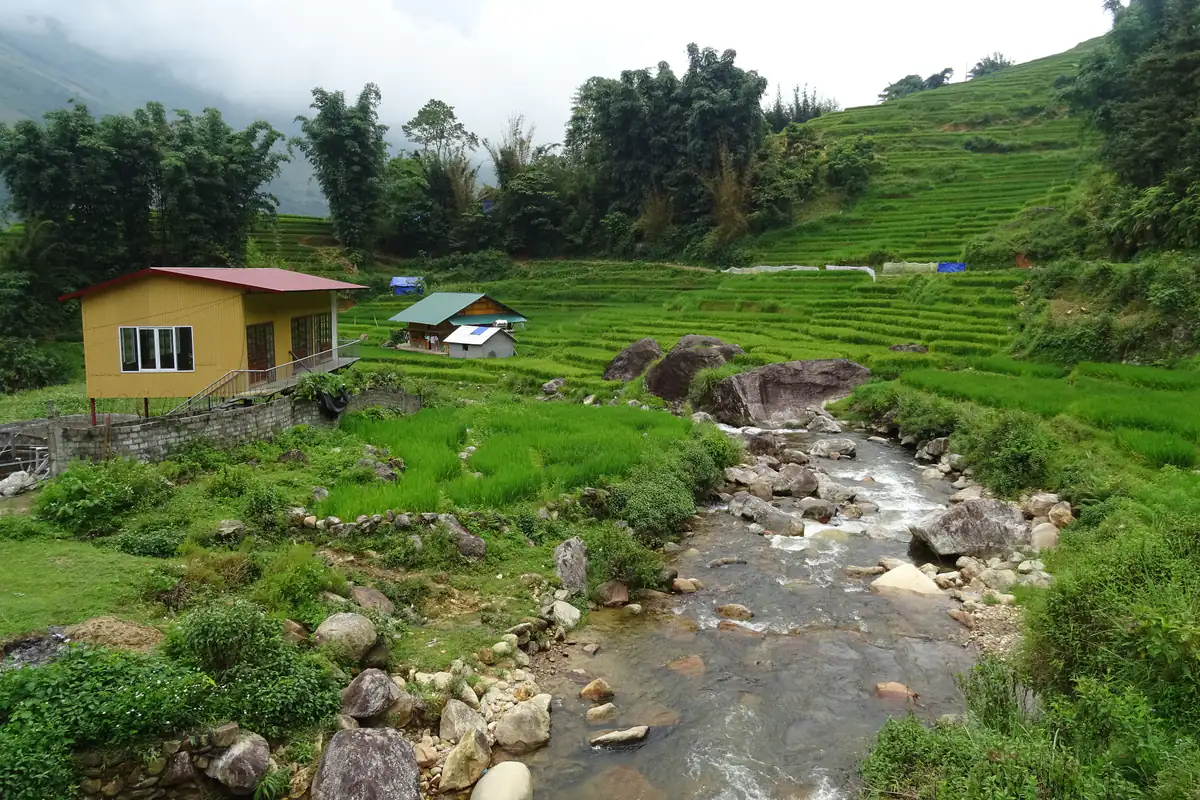
Photo: Christophe95
Fields and homes are working spaces
Stay on the route your guide identifies. Rice fields are farmland, and stepping into them for a better photograph can damage someone’s work. Ask before photographing a person or entering a yard, and accept a refusal without trying to bargain it away. If a photo session or activity has a charge, agree on that arrangement first.
We do not suggest handing money or sweets to children along the path. Purchase services and products through clear arrangements with adults instead. Carry your rubbish to a proper collection point. Traditional clothing, craft work and family meals are parts of people’s lives; ask specific questions and leave room for privacy. Choosing local people to provide the actual service also makes the transaction easier to understand.
Keep the arrival day lighter
After an overnight journey, we would not begin with the longest trek available. Check in, assess the weather, take a short walk near your accommodation and discuss the next day’s route. On the trekking day, keep lunch, breaks and the agreed pickup in the schedule. Leave the evening for rest rather than adding a tight connection immediately after the trail.
Plan the journey from Hanoi to Sapa separately from the walking itinerary. If Sapa is one part of a longer trip, compare the seasonal pattern across Vietnam before moving all your travel dates around a single field photograph.
FAQ
How can I prepare before traveling?
Walk with the shoes and daypack you plan to use, including some uphill and downhill ground, before choosing a route.
Is a private walking group worth considering?
It can suit companions with different needs because you can agree on breaks and the endpoint together. Confirm exactly what the service includes.
How should I carry craft purchases?
Keep room in a dry bag or arrange collection at your accommodation if the seller agrees, instead of exposing delicate items to a full wet walking day.
Related posts
Road trips
Hanoi to Sapa: choose the right bus or train and arrive on time
Compare five ways to travel from Hanoi to Sapa, including 2026 ticket prices, schedules and where to book.
Places
5 Stops at the Temple of Literature (Văn Miếu Quốc Tử Giám), Hanoi (Hà Nội)
Give the buildings and inscriptions your first visit, then consider the evening program separately.
Road trips
Nha Trang to Mui Ne (Mũi Né): Bus or Private Car?
Choose a direct transfer or a coastal overnight stop before booking the trip south.