5 Stops at the Temple of Literature (Văn Miếu Quốc Tử Giám), Hanoi (Hà Nội)
We favor daytime admission for a first visit: seeing the architecture and reading the stelae deserves priority over adding a projection show.
Written by Tụi mình mê biểnUpdated
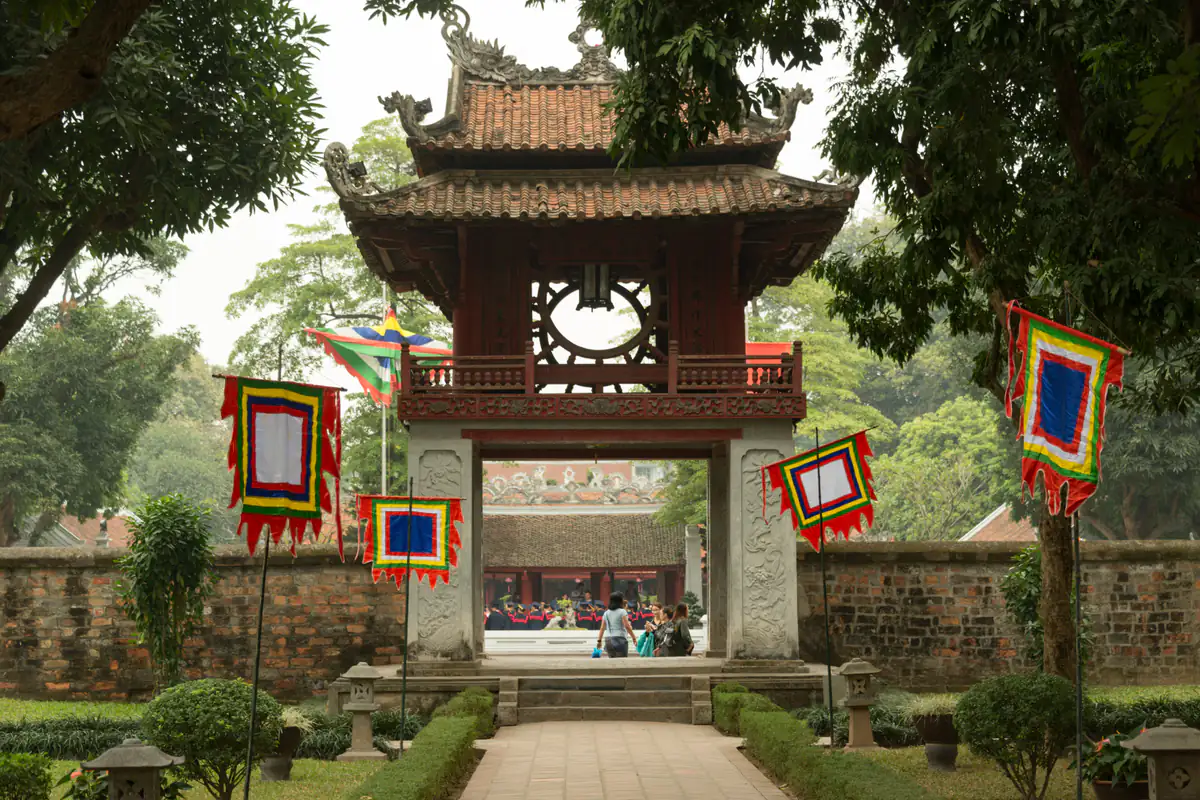
Photo: Xiquinho Silva
You have a spare morning in Hanoi, and the Temple of Literature looks like an easy stop before lunch. Then you notice there is also a night experience with projection shows. We would choose the daytime ticket for a first visit: you can study the courtyards, read about the stone inscriptions and move at your own pace. The evening program suits visitors who want a scheduled presentation and are comfortable paying more for it.
Day admission is VND70,000
The site opens daily from 8:00 a.m. to 5:00 p.m. Standard daytime admission costs VND70,000. A VND35,000 concession applies to eligible groups with the required documentation, while children under 16 enter free during the day. Do not assume a foreign student card automatically qualifies for the student rate; the published category refers to students at institutions in Vietnam.
The entrance is at 58 Quoc Tu Giam Street, in Van Mieu - Quoc Tu Giam ward (Văn Miếu - Quốc Tử Giám). Use that entrance when booking a ride, because the site has separate exit points. We suggest arriving at opening and allowing about 90 minutes. That is a planning allowance, not a fixed visit length, and you can extend it if the exhibitions hold your attention.
A temple and a school have different histories
The temple was established in 1070, followed by the national academy in 1076. Those dates provide a useful starting point without requiring you to memorize a dynasty chart. They also explain why it is misleading to treat the whole complex as one original university building. The site changed over centuries, and the present Thai Hoc area (Thái Học) was built from 1999.
We suggest carrying two questions through the visit: how was learning honored, and how were successful scholars remembered? The courtyards, worship spaces and inscribed stones answer different parts of that story. For children, choose one building and one inscription to investigate together. That gives the visit a purpose without turning every sign into a lesson they must finish.
Five stops worth giving your attention
The entrance and first courtyards
Notice the route through gates and planted spaces before focusing on individual objects. The sequence creates a separation from the streets outside and gives the visit its shape. Pause to look along the central path rather than walking straight toward the most recognizable pavilion. For group photos, stand clear of the main passage and move on when you have the picture you want.
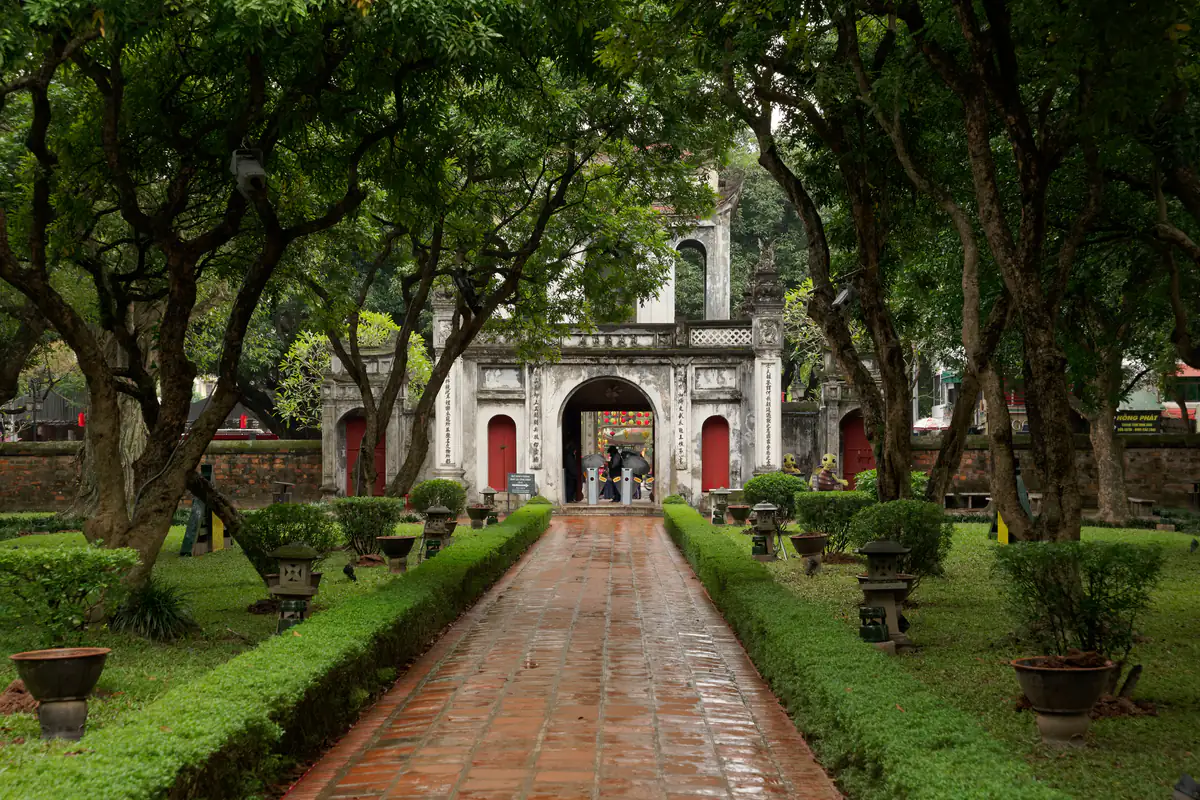
Photo: Jakub Hałun
Khue Van Pavilion
The red upper structure and round windows make this an easy landmark to recognize. Look at the supports below and the space around the pavilion as well as its roof. We prefer a photograph showing that setting to a tightly cropped image that could hide how the structure fits into the complex. If a guided group occupies the center, wait to one side rather than squeezing between listeners.
Thien Quang Well (giếng Thiên Quang) and the stone stelae
This is the part we would give the most time if you want to understand the site’s connection with education. Its 82 doctoral stelae are recognized as national treasures. These upright stone slabs preserve information about successful examination candidates. One records the examination of 1442 but was erected in 1484, a useful reminder that the exam date and the monument’s date are not always the same.
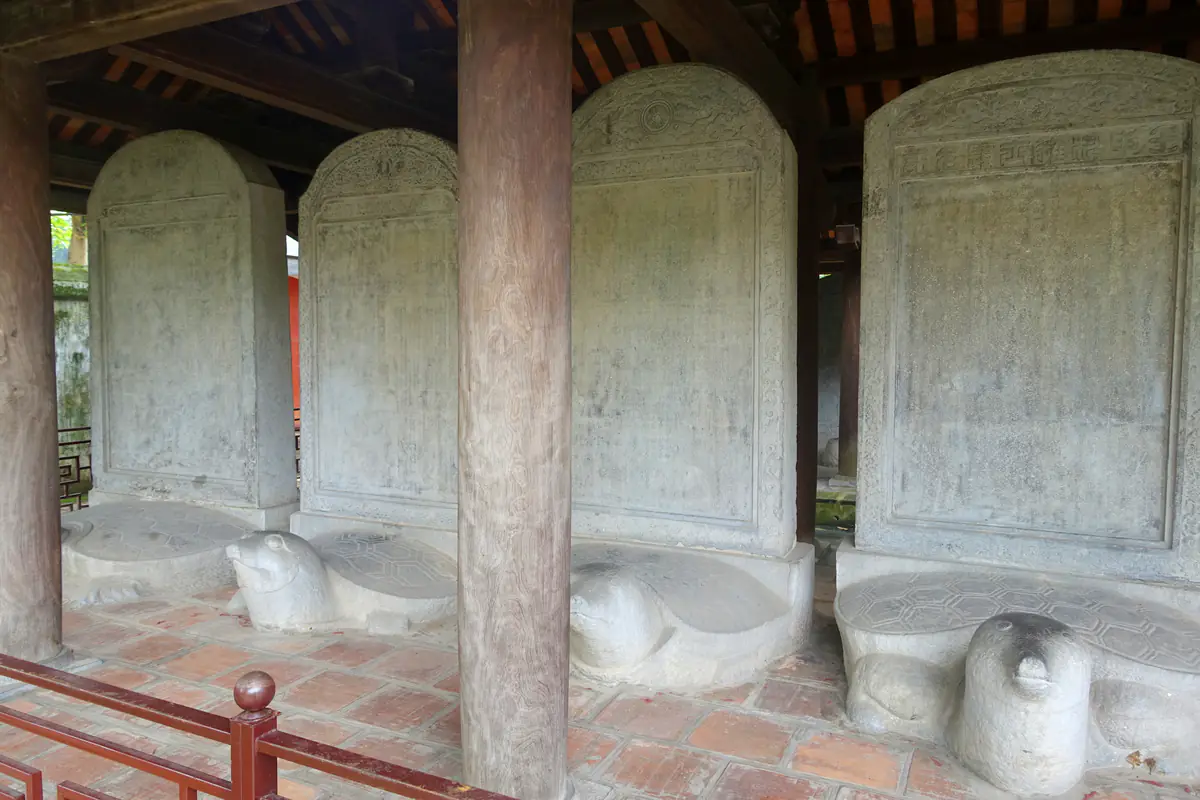
Photo: Daderot
Read one inscription’s explanation carefully instead of treating the rows as a counting exercise. Keep your hands off the stones and turtles, and remain outside the protective barriers. We do not recommend rubbing a turtle for luck. With children, point out the carved details from the visitor path. On a wet day, slow down at changes in level and around slippery paving.
Dai Thanh worship area (Đại Thành)
Here the visit moves more clearly into a place of worship. Keep voices low, give people room to pay their respects and follow the signs for photography and restricted areas. Choose modest, comfortable clothing; bring a light layer if you need to cover your shoulders. Observe the altars and architectural details from the space open to visitors instead of stepping over a boundary for a closer photograph.
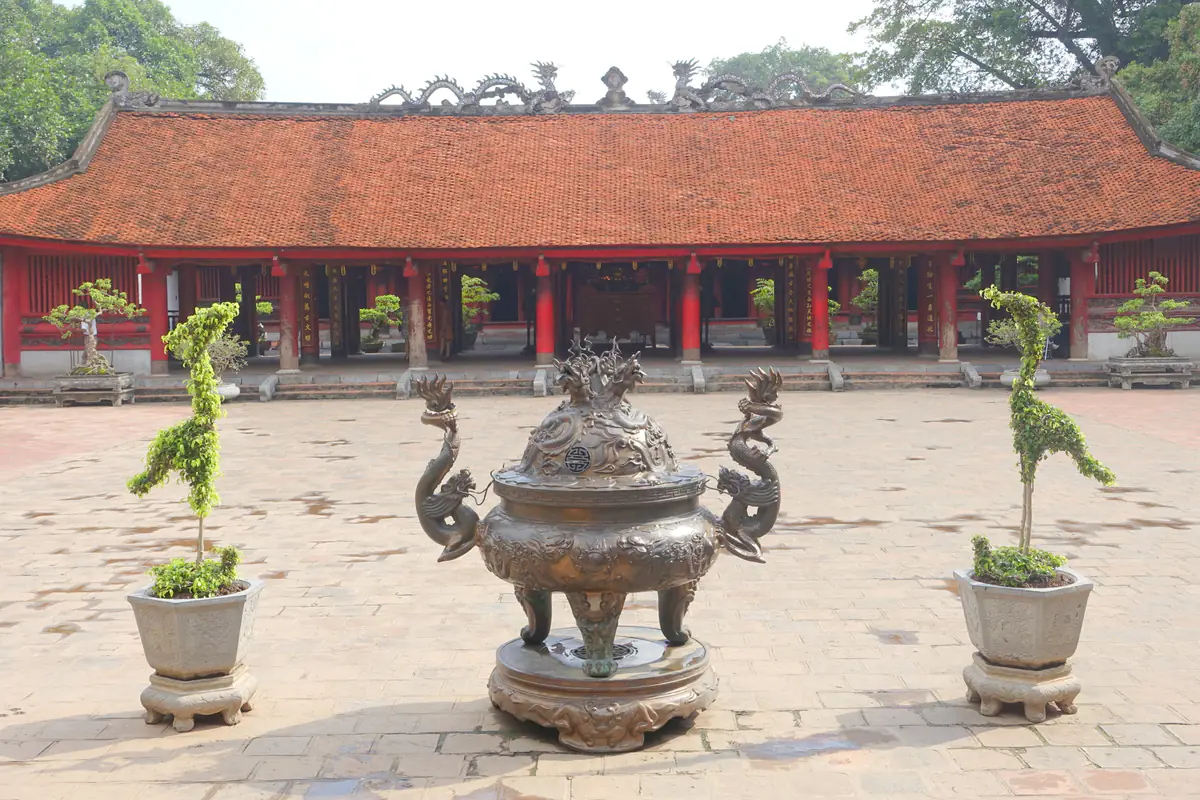
Photo: Daderot
The Thai Hoc area
Save some attention for the exhibitions here, rather than assuming the visit ends after the turtle stelae. The story of teachers, scholars and the national academy becomes easier to follow once you have seen the earlier spaces. If your group is tiring, choose one exhibition theme that interests you. Reading selectively is more rewarding than marching past every display just to complete the route.
The evening program uses separate admission
The night experience runs on Wednesday, Saturday and Sunday within a 6:30-10:00 p.m. opening window. A one-show package costs VND299,000 for adults and VND149,000 for children. The two-show package is VND399,000 and VND199,000 respectively. Its ticket categories use height: adult above 1.30 meters, child from 1 to 1.30 meters, with free admission below 1 meter.
We would buy the day ticket for close observation of the buildings and inscriptions. The evening experience adds lighting, storytelling and projection mapping, which means images fitted to architectural surfaces. Before booking, establish which shows your package includes, when you must arrive and what language support is available. An opening window ending at 10:00 p.m. does not mean you can arrive at any point and see everything.
If you have already visited in daylight, the evening program offers a reason to return. For a single free morning, we would keep the simple daytime plan. Buying both tickets just to avoid choosing can take time away from other parts of the city without adding much for someone who mainly wants to understand the physical site.
Bring a light bag and leave room for lunch
Water, a compact umbrella and shoes with reliable grip cover the basics for our suggested route. If you arrive by scooter, ask at the entrance for the designated parking arrangement, price and collection time. Travelers who use a wheelchair or find steps difficult should contact the site about a suitable route before arriving, rather than assuming every part of the complex is level.
Afterward, take a proper lunch break before adding another large historic site. The Imperial Citadel and the Ba Dinh area (Ba Đình) deserve their own arrangements for entry and opening times. If this is your arrival day, settle the airport transfer to your accommodation first, then decide whether to visit that afternoon or save the temple for the next morning.
FAQ
Is a guide worthwhile for a small group?
We would choose one when the group wants a shared narrative. Ask about language, duration and the fee before deciding.
When should I arrange calligraphy?
Leave it after the main visit, then establish the price, completion time and how to carry the paper before ordering.
Should I join a group if I am traveling alone?
We would use ordinary admission for an independent visit and reserve a separate program only when we want a specific service.
Related posts
Weather
Hanoi (Hà Nội) or Phu Quoc (Phú Quốc) for Vietnam in November?
Choose a November region around your main activity and keep weather-dependent connections flexible.
Guides
Hanoi (Hà Nội) Airport to Old Quarter: Bus 86 or a Car?
Compare the final connection and luggage handling before choosing your airport ride.

Places
2 Main Stops for a Ninh Binh (Ninh Bình) Day Trip
Choose one boat outing and one land stop for a less hurried day in Ninh Binh.