Why is Ninh Chu Beach worth two days in Phan Rang?
Stay near Ninh Chu Beach for slow mornings and an easy swim; choose central Phan Rang if you prefer local food, Cham architecture and short trips to nearby villages.
Written by Tụi mình mê biểnUpdated
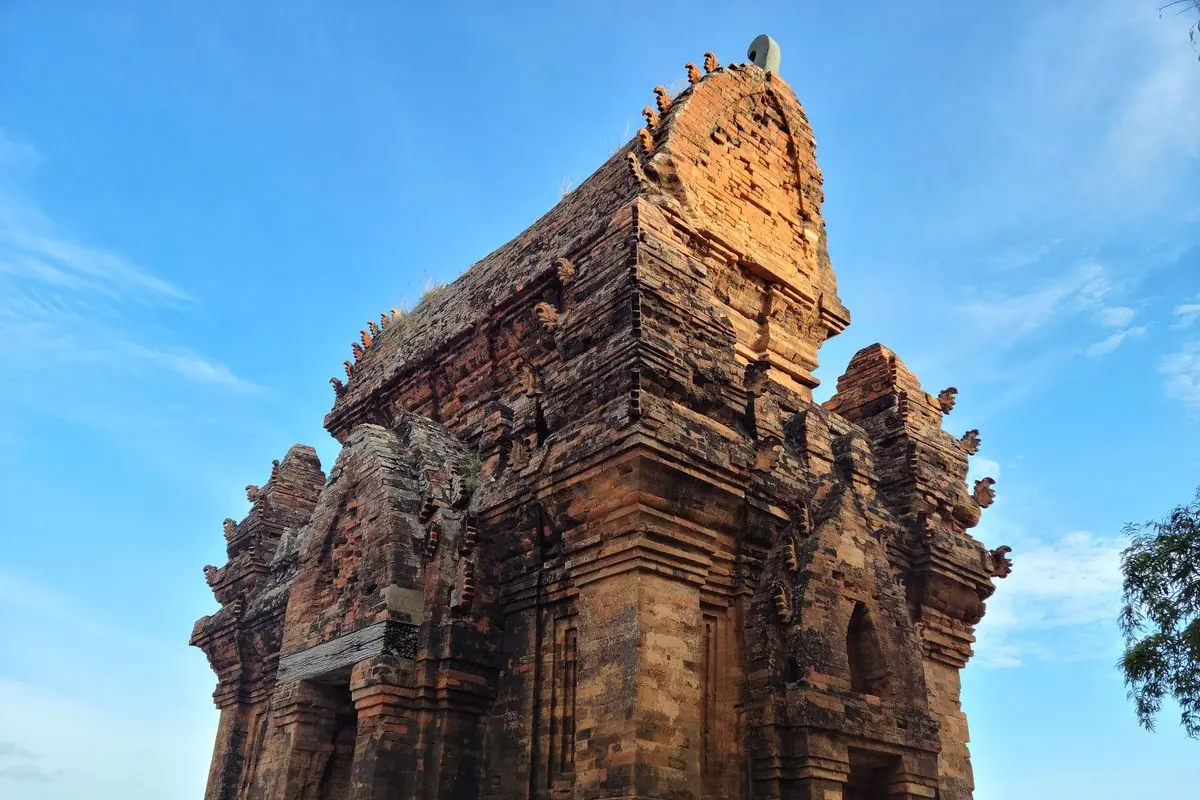
Photo: Theodor
Is Phan Rang worth stopping in for one or two days?
The train from Nha Trang reaches Thap Cham station in roughly 90 minutes. A historic Cham tower complex stands a short drive from the station, while Ninh Chu Beach lies on the opposite, eastern side of town. Two days and one night in Phan Rang give you time for the towers, a beach afternoon, local food and either a pottery village or a vineyard. On a one-day stop, you should make fewer choices.
Phan Rang is a useful change of pace on a coastal journey through Vietnam. Nha Trang has a busy beachfront and a wide range of organised excursions; Phan Rang offers a smaller urban centre, accessible Cham heritage and a more open landscape of dunes and grape-growing villages.
You can see the main sights without a packaged tour. You do need to understand their directions. Po Klong Garai is west of the centre, Ninh Chu is east, the pottery villages are farther south, and the Thái An vineyards are north along the coastal road. Plan around one area at a time, and leave the hottest hours for lunch or a break indoors.
Where is Phan Rang in Vietnam?
Phan Rang is on Vietnam's south-central coast, south of Nha Trang and north of the former Bình Thuận area. The older name Phan Rang - Thap Cham still appears on train websites, road signs, hotel listings and travel maps. Until the 2025 administrative changes, it was a city in Ninh Thuận province. Ninh Thuận has since merged into Khánh Hòa province, and the former city's neighbourhoods now fall under new ward-level administrations.
Once you are travelling, the names matter more than the history. Phan Rang ward covers the central urban area. Ninh Chử ward includes the popular Ninh Chu Beach area. Đô Vinh ward contains the Cham towers and Thap Cham railway station. Đông Hải ward covers another part of the wider urban area. Bàu Trúc pottery village is in Ninh Phước commune; Nam Cuong Sand Dunes are in Phước Dinh commune; and Mỹ Hòa Lagoon and the Thái An grape-growing area are in Vĩnh Hải commune.
Loading map...
- Thap Cham station: Do Vinh ward, the stop for Phan Rang
- Po Klong Garai: Trau Hill, Do Vinh ward, near the station
- Ninh Thuan Bus Station: End of bus route 11
- 16 April Square: Town centre, food and evening walks
- Ninh Chu Beach: Ninh Chu ward, east of the centre
- Bau Truc pottery village: Ninh Phuoc commune, to the south
- Nam Cuong Sand Dunes: Phuoc Dinh commune, to the south
Many businesses have not replaced their old address formats online. Expect to see “Ninh Thuận” and “Phan Rang - Thap Cham” together even when the current administrative address ends in Khánh Hòa. Search by the attraction's name, inspect the map pin and confirm the street or village before arranging a pickup.
The urban centre and Ninh Chu Beach are roughly 5-8 km apart, depending on your hotel. It's a short taxi ride; walking it with luggage in the midday heat is no fun. The larger attractions are spread far enough apart that the location of your accommodation affects what you can comfortably do in a single day.
Getting from Nha Trang to Phan Rang
The road journey is a little over 100 km on the usual route. The easiest choice depends on whether you are travelling independently, carrying large bags or trying to return to Nha Trang that night. Rail is efficient for a point-to-point transfer; the intercity bus is economical; and a car provides the most freedom for stops along the way.
100+ km
by road from Nha Trang
90 min
train to Thap Cham
2 h 15
Duc Loc minibus
2.5-3 h
bus route 11
Train from Nha Trang to Thap Cham
Nha Trang station to Thap Cham station, about 90 minutes
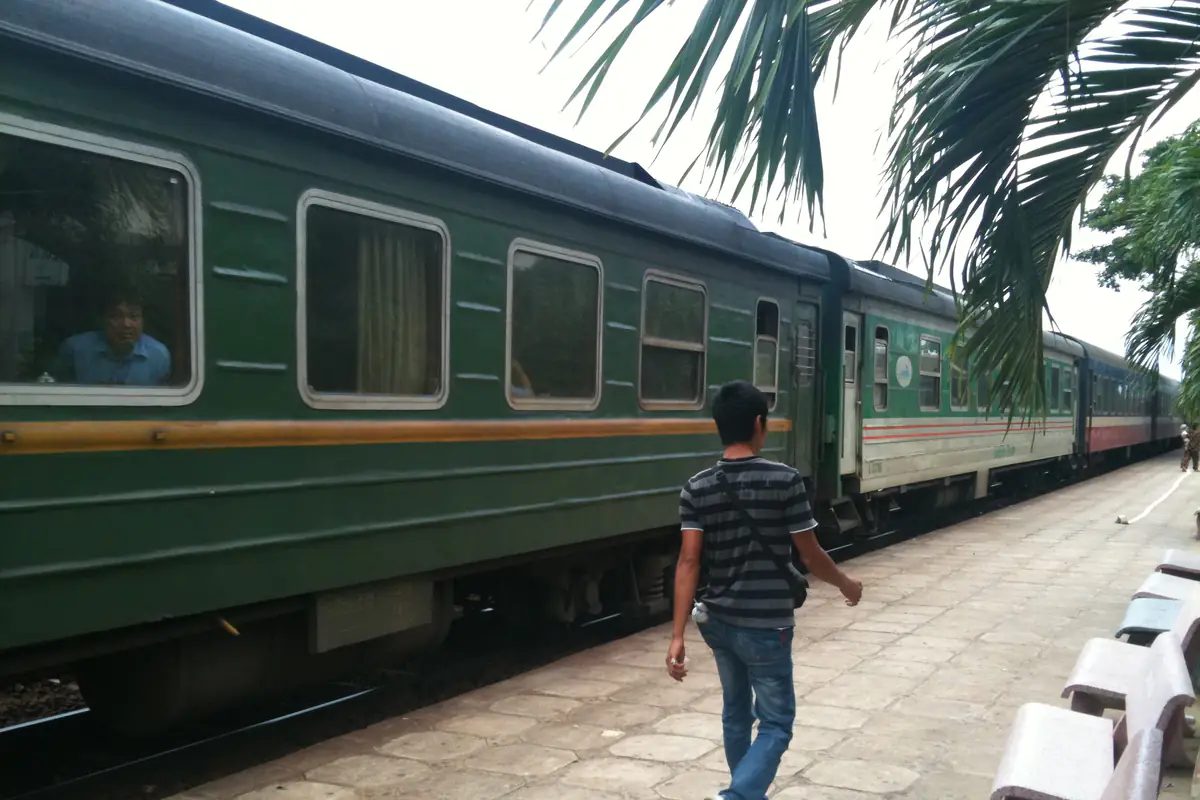
Photo: Dragfyre
Buy a ticket from Nha Trang station to Thap Cham station. “Phan Rang” is not the station name you need to enter into the booking system. Services on this route include SE7, SE5, SE9, SE21, SNT1 and SE3; timetables and seat availability vary by travel date.
In 2026, the SE7 leaves Nha Trang at about 08:47 and arrives at 10:22, with seats from around 57,000 VND. The SE5 leaves around 10:25 and arrives at noon, with seats from 62,000 VND. Fares vary by train and seat class. Confirm the exact train before paying and allow time to find your carriage at the station.
Rail suits travellers heading from northern Vietnam toward Ho Chi Minh City who want a small stop between larger destinations. Once you arrive, arrange a taxi or pickup. Thap Cham station is not on the beachfront. If you want to see Po Klong Garai first, you are already on the correct side of town; if you have booked a beachfront hotel, you will need a separate transfer east.
Passengers arriving on a late train should consider having the hotel arrange pickup. An arrival after dark is not the best moment to negotiate sightseeing stops or look for a motorbike rental. Save the local exploration for daylight.
Bus 11 from Nha Trang to Phan Rang
North Bus Station to Ninh Thuan Bus Station, 116 km
FUTA City Bus route 11 connects Nha Trang North Bus Station with Ninh Thuận Bus Station, passing through Cam Ranh. The full route is 116 km. Fares run 15,000-65,000 VND depending on how far you ride; the full route costs more than the lowest fare.
Expect a slower journey than the train because the bus has stops along the way. Around 2.5-3 hours is a reasonable planning allowance, with traffic and waiting time potentially extending your door-to-door travel. You must also reach the North Bus Station in Nha Trang and make your way from Ninh Thuận Bus Station to your chosen hotel.
Budget travellers spending two nights in town will find it workable. It is less attractive for a very short day trip, when the terminal transfers consume much of your time. Call FUTA City Bus on 1900 638 494 to confirm the nearest boarding point and departure times; old timetable screenshots go out of date.
Minibus or private transfer
Duc Loc 112,000 VND per person, about 2 hours 15 minutes
Đức Lộc runs a 16-seat service between its 23/10 Street office in Nha Trang and its Phan Rang office. The 2026 fare is 112,000 VND per person, and the ride takes about 2 hours 15 minutes. Minibuses run around 04:30-18:00, roughly every 30 minutes. Ask the company which exact departure has seats and where the driver will drop you.
A private car makes sense for a family or a group with luggage, especially if someone wants to stop at an attraction on the way. Get a price covering the pickup address, drop-off address, tolls and waiting time. A transfer to Ninh Chu Beach is not identical to a transfer to the railway station or the city centre.
Riding a motorbike down from Nha Trang is possible, but the combination of highway travel, strong sun and an afternoon of sightseeing is tiring. Unless the ride itself is the purpose of your journey, do not build a full sightseeing day around a long motorcycle transfer.
How long should you stay in Phan Rang?
One day works when your priorities are simple. Arrive in the morning, visit Po Klong Garai, eat lunch in central Phan Rang and head to Ninh Chu Beach in the late afternoon. You can add a quick coffee stop, but pottery villages and distant vineyards would make the itinerary unnecessarily tight. Secure your onward transport before spending the afternoon at the beach.
Two days and one night suit most travellers coming from Nha Trang. Use the first day for the towers, town and beach. On the second, take one excursion either south to Bàu Trúc or north to the vineyards. This is enough to appreciate what makes the area different without turning the visit into a series of rushed car journeys.
Three days or more become useful if you want to learn kitesurfing, spend most of your time at a seaside resort or explore longer stretches of the coast. Wind-dependent sports require more flexibility than ordinary sightseeing. A visitor with only one afternoon at Mỹ Hòa should think of a lesson as an introduction rather than a promise of independent riding.
The famous Vĩnh Hy Bay is farther north on the coastal route. It deserves its own outing if you have more time. Travellers continuing from Nha Trang toward Mũi Né should keep the longer southern transfer separate from the Phan Rang sightseeing day.
Ninh Chu Beach: what to expect
Ninh Chu Beach is the easiest beach to reach from Phan Rang. You will find a broad stretch of sand, a curving coastline and hotels and resorts along the waterfront. The public beach is generally free to access. Individual businesses may charge for loungers, refreshments, facilities or services, so check before using anything that belongs to a hotel or concession.
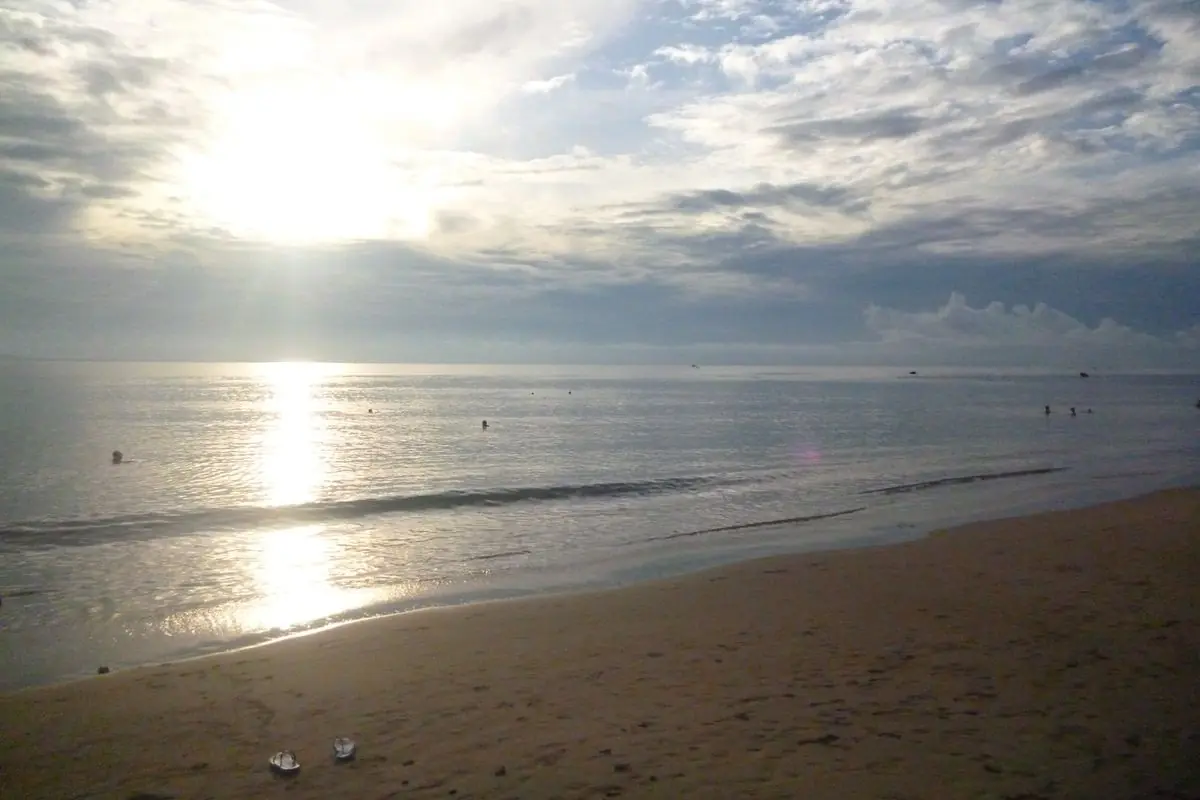
The best part of the day for a relaxed walk is early morning or late afternoon. By midday, the sand can become extremely hot and there is little benefit in spending hours under direct sun. Arriving on a midday train? Have lunch, check in or leave your luggage at the hotel, and head to the waterfront later in the day.
A small spelling detail can save confusion: Ninh Chữ is the familiar beach name, while Ninh Chử is the current administrative name of the ward. Hotel listings and older guides may use one or the other; they usually refer to the same coastal area.
Ninh Chu is not a nightlife resort in the style of central Nha Trang. Evenings tend to be quieter, which is a benefit if you want a sea-facing dinner and an early start. Stay downtown instead if your favourite part of a trip is walking between inexpensive local restaurants after dark.
Po Klong Garai: the essential Cham heritage stop
Po Klong Garai is a group of red-brick Cham towers on Trầu Hill in Đô Vinh ward. The site remains connected to the religious and cultural life of the Cham community. The principal surviving structures are the main sanctuary, a gateway tower and a fire tower. The main tower stands approximately 20.5 metres tall and faces east. Inside is an image of King Po Klong Garai recognised as a Vietnamese national treasure.
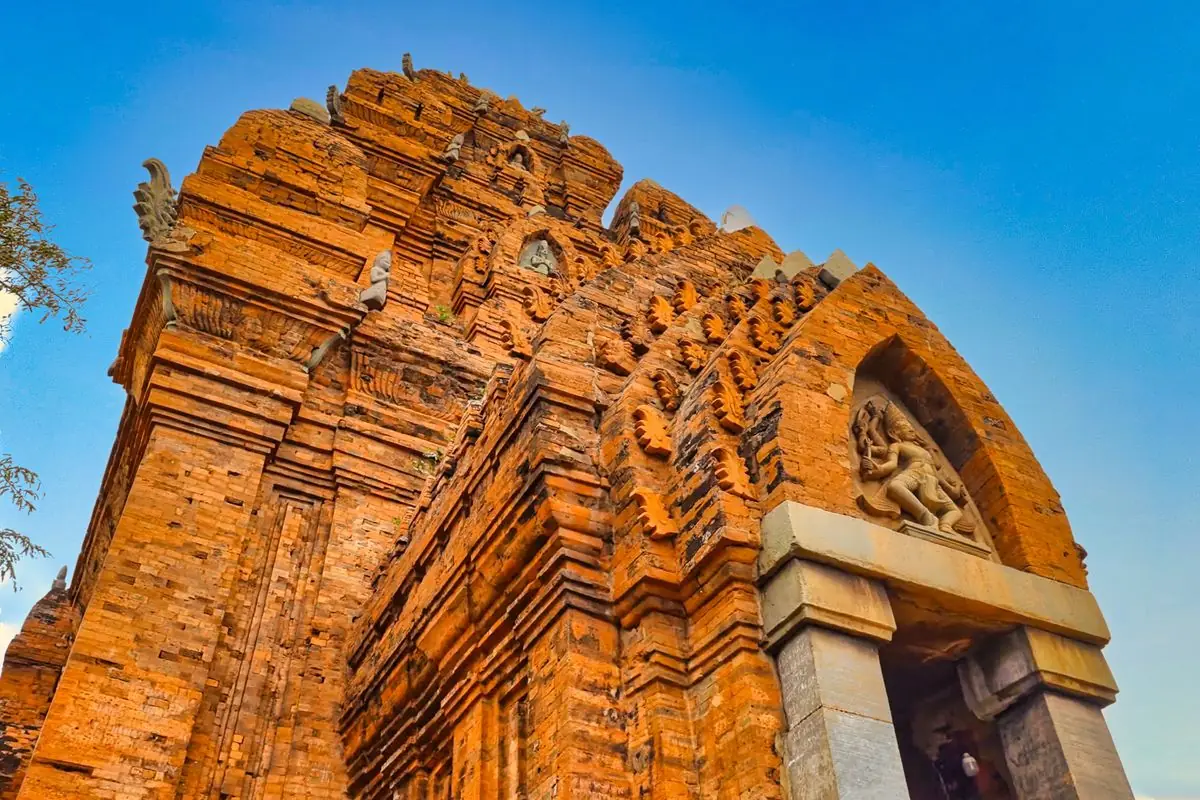
Photo: Ms Sarah Welch
The site is open 07:30-17:30. Adult admission in 2026 is around 20,000 VND; confirm the ticket price and any electric-cart fee at the entrance. Allow one to one and a half hours to walk up, explore the complex and take in the view.
The Katê festival is an important time in the Cham religious calendar, and Po Klong Garai is a key ceremonial site. During a festival, parts of the site may be used for rituals, and people are there to worship, not to perform for tourists. Follow local instructions and give participants space.
Travellers arriving by rail should visit the towers before heading to the beach. That simple order prevents an unnecessary journey back across town later in the day.
Bàu Trúc pottery village and Cham craftsmanship
A visit to Bàu Trúc, in Ninh Phước commune, adds something you cannot get from an ordinary beach stop. Cham pottery is traditionally shaped by hand rather than by sitting at a powered potter's wheel. Artisans move around the clay form as they work, smoothing and building it with learned hand movements. Many pieces are unglazed and are fired using traditional methods.
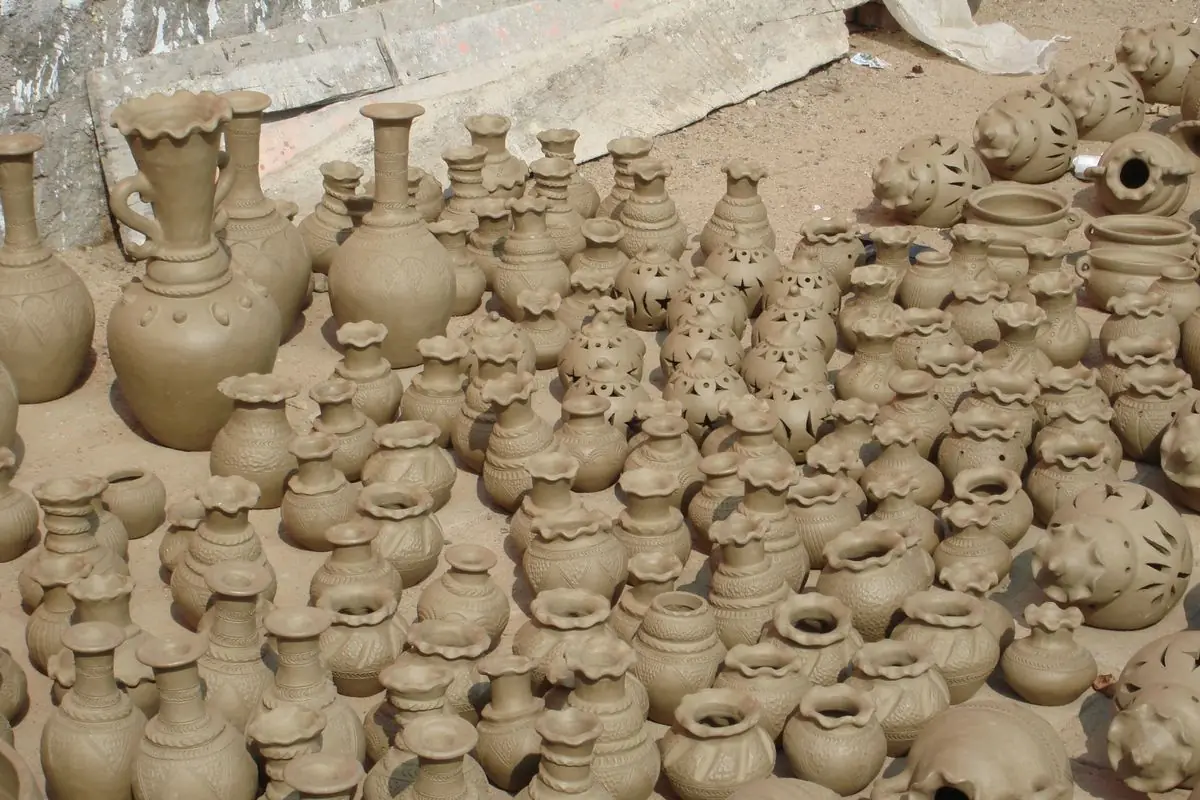
Photo: Liftold
The art of pottery-making of the Cham people was placed on UNESCO's List of Intangible Cultural Heritage in Need of Urgent Safeguarding in 2022.
Look for a workshop where artisans are working, ask permission before taking close photographs and find out whether visitors may observe or try shaping clay. Demonstrations and hands-on sessions depend on who is available. There is no single admission price for the entire village, and the cost of an activity or handmade object should be agreed directly with the host.
Buying a small piece of pottery is a practical way to support a craftsperson, but remember that unboxed ceramics break easily on trains and buses. Ask for careful packing. Look at the surface and the small irregularities; no two bowls or vases come out machine-identical.
The nearby Mỹ Nghiệp weaving village is another option for people interested in Cham textiles. Choose a workshop that is welcoming visitors and allow enough time to speak with the people making the products, rather than arriving only to photograph them.
Vineyards near Phan Rang
Grapevines are a distinctive part of the landscape around the former Ninh Thuận area. The clusters are grown on trellises, and some families welcome visitors for photos, fruit purchases or short tours. But these remain working farms. Whether you can enter, pick fruit or find ripe grapes depends on the particular grower and the stage of the harvest.
Thái An village, in Vĩnh Hải commune, is the best-known grape-growing area along the northern coast road, ĐT702. It is approximately 30 km from central Phan Rang. Thái An is a village of many growers, with no single ticket booth or shared opening hours. Outside peak harvest, contact a specific garden to confirm your visit.

Photo: MIA.vn
This excursion works well for travellers with a car or motorbike who also want coastal scenery. Leave early or go in the afternoon, ask whether the vines currently have fruit, and settle any picking charges before cutting a bunch. Photographing the trellises is different from being invited to harvest the grapes.
Closer to the Ninh Phước area, there is Ba Mọi vineyard. Confirm the operating address and whether guests are being received before leaving your hotel. Local grape products include fresh fruit, grape syrup and processed snacks; ask about ingredients and the price per bottle or kilogram at the farm.
A vineyard visit is not essential on a one-day trip. It becomes a useful second-day choice when you want a rural setting after spending the first day around the station, towers and waterfront.
Nam Cuong Sand Dunes and the southern landscape
Nam Cuong Sand Dunes lie in the former An Hải area, now part of Phước Dinh commune, south of Phan Rang. The attraction is the terrain itself: wind-shaped ridges, broad open sand and views toward a dry coastal landscape. There are far fewer facilities and much less shade than at the beach.

Photo: Transson
Go near sunrise or toward the end of the afternoon. Carry water, wear shoes that you can empty easily and remember where you left the vehicle. The shapes of the dunes shift, so a route that looks obvious from one ridge may not look the same from another. Do not drive into soft sand without a suitable vehicle and local knowledge.
The dunes are a better choice for landscape photography and travellers who enjoy the area's dry scenery than for families looking for facilities or a place to swim. On a two-day stay, swap Nam Cuong in for one of the other long excursions. Extending farther south toward Mũi Dinh makes the outing substantially longer.
There is no benefit in arriving at the sand dunes at midday just because you have a free hour. That is the moment when the heat, bright reflected light and lack of shelter make the experience least comfortable.
What to do in Phan Rang at night
For a dependable evening, start around 16 April Square, then look for food along Trần Quang Diệu, Lê Lợi and Ngô Gia Tự streets. These are more useful reference points than searching for a large entertainment complex. You can have local pancakes, take a short walk, buy a drink and return to your hotel without arranging a long excursion.
The Ninh Thuận night market and the former Phan Rang pedestrian street are two different things. The night market on Trần Quang Diệu used to run around 16:00-22:30. Don't count on every stall still keeping those hours. The pedestrian-street pilot around 16 April Street, Hoàng Diệu and Trần Quang Diệu was suspended in late June 2025, with no fixed date for reopening.
Do not plan your only evening around a promised weekend walking street, fountain performance or collection of market stalls. Plan around restaurants that are open on your actual night. The square and surrounding streets are still useful central landmarks, even without a special event.
The alternative is a quiet evening by Ninh Chu Beach. Take a taxi to a beachfront restaurant, order dinner and enjoy the cooler air. Check how you will get back before staying late, especially if your hotel is across town. A late beach walk along a deserted stretch is not necessary to enjoy the coast; choose lit, active areas.
Travellers used to major backpacker nightlife hubs should expect a smaller-scale evening in Phan Rang. The town is better for local food and a relaxed overnight stop than for a full schedule of bars and live music.
What to eat in Phan Rang
Start with bánh căn, small savoury rice-flour cakes cooked in round clay moulds. They may contain egg or seafood and come with dipping sauces and accompaniments that vary by stall. Bánh xèo here is also often made in smaller, crisp portions. Ask whether a price is for one cake, a set or a full plate, because it is easy to order more than you intended.
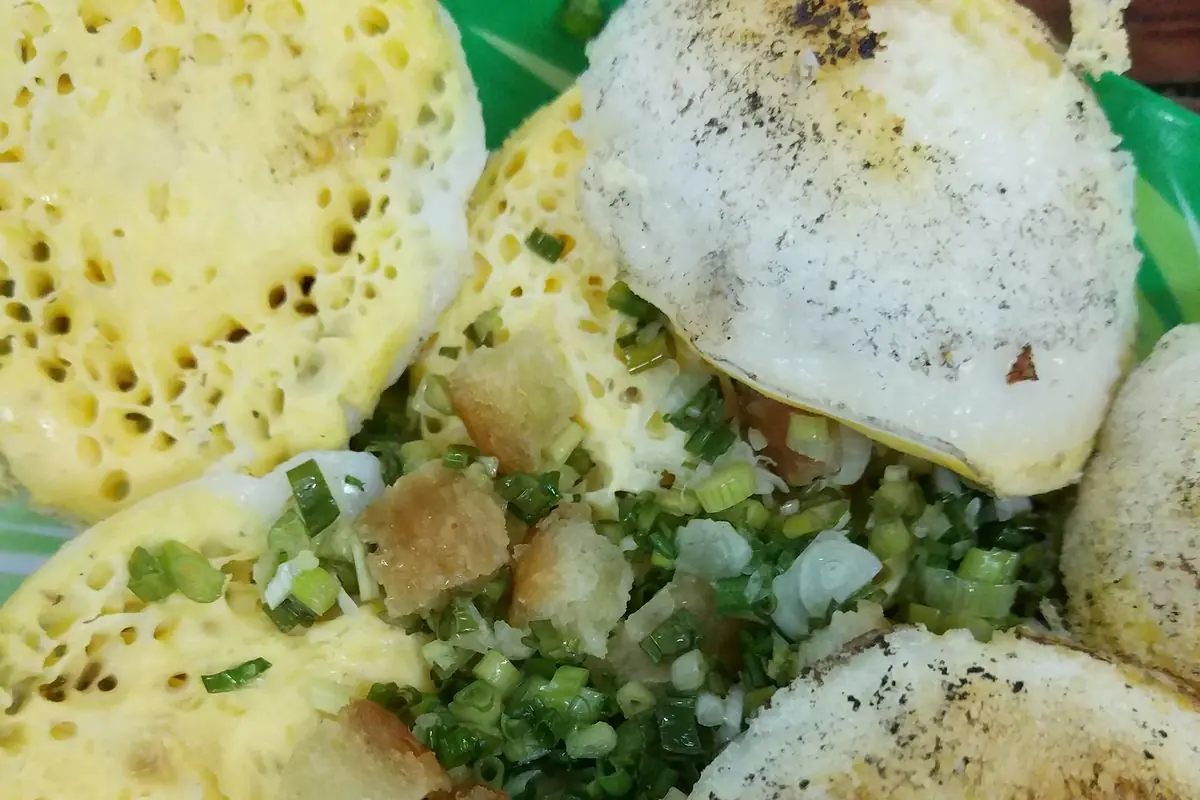
Photo: Saigon Time
Quê Hương on Trần Quang Diệu Street is known for bánh căn and bánh xèo. It opens 08:00-21:00, with dishes around 15,000-20,000 VND; ask for 2026 prices at the counter. Small stalls in the central streets and around the square come into their own in the late afternoon.
For breakfast or an early lunch, look for bánh canh chả cá, thick noodle soup with fish cake. Bánh canh Nhường at 284 Ngô Gia Tự is a popular choice. Opening hours run around 08:00-22:00, and a bowl costs about 25,000-55,000 VND. Ask about 2026 prices before you order.
Other options include Phan Rang chicken rice, beef hotpot, goat and lamb dishes, and seafood around the Ninh Chu area. A simple approach is noodle soup for breakfast, rice or seafood at lunch, and bánh căn in the late afternoon. That leaves room for dinner without making every stop a large meal.
Fresh grapes, local apples, grape syrup and garlic are common souvenir ideas. Ask where produce was grown and whether the quoted price is per kilogram or package. Soft fruit needs a rigid box if you are continuing by bus or rail, and bottles need careful sealing. These are practical purchases only when you can carry them without damaging the rest of your luggage.
Where to stay in Phan Rang
Stay in central Phan Rang ward for a brief stop that involves the railway station, inexpensive local restaurants and an early onward departure. A central room makes it easier to get breakfast, arrange a taxi and explore several food streets without a long evening transfer. The trade-off is that you will not be walking directly onto the beach.
Stay around Ninh Chử ward and Ninh Chu Beach if you want to wake up by the sea, spend time at the hotel or visit the waterfront more than once. Look carefully at the map: a property using “Ninh Chu” in its name may still be set back from the public beach or require crossing a busy road. For families, the actual walking route and pool access may matter more than a sea-view label.
Kitesurfers should consider staying at or near Mỹ Hòa Lagoon. Repeated transfers from central Phan Rang waste time, especially when you are trying to use a particular wind window. The kite centres can also explain how the lessons, equipment storage and accommodation work together.
Choose a room only after deciding how you will travel. A traveller arriving by rail late at night needs a confirmed pickup more than a slightly cheaper hotel far down the coast. Room prices change by date and category, so compare like-for-like bookings with the correct travel dates rather than assuming a universal nightly rate.
Phan Rang kitesurfing: season, lessons and rentals
The main Phan Rang kitesurfing area is Mỹ Hòa Lagoon, on ĐT702 in Vĩnh Hải commune, north of Ninh Chu. It is not the central swimming beach. Inside the reef, sections of the lagoon offer flatter water, making the area attractive to schools as well as independent riders. Conditions still vary with the tide, wind and location within the riding area.
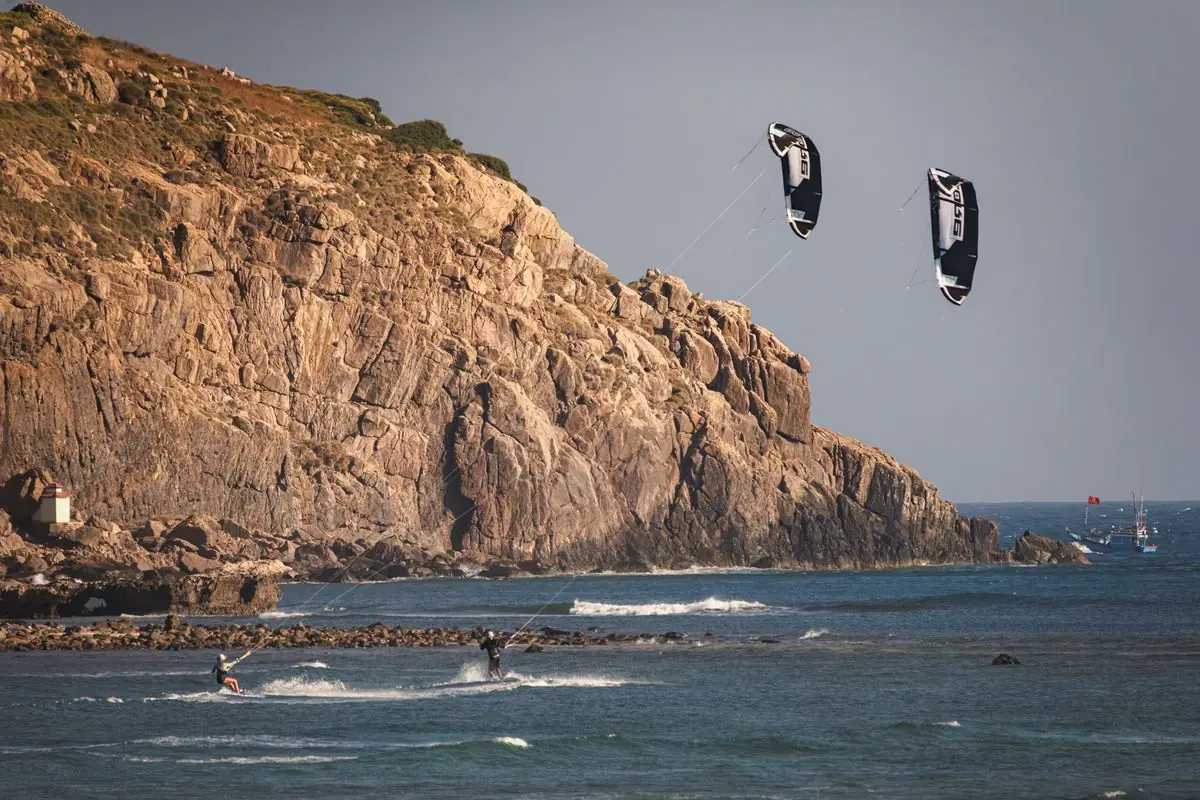
Photo: Kite Therapy
The usual operating season follows the northeast monsoon, approximately November through March or April, with December and January often particularly windy. Strong wind is good for a trained rider only when the equipment size and conditions are appropriate. A beginner should never decide that a day is safe simply because other kites are in the air.
Phan Rang Kite Center offers lessons and equipment rental at Mỹ Hòa. Courses in 2026 include a USD 35 per person group introduction to kite control, USD 55 per hour for its Begin & Ride training and USD 450 for a nine-hour independent-rider course. A complete equipment set rents for USD 80 per day. Confirm what is included and whether beach access, equipment insurance or other services affect the final amount.
My Hoa Lagoon Kiting Town is another established operation offering lessons and rental equipment in the same general area. Kite Therapy also teaches at Phan Rang Kite Center from 1 December 2026 to 1 April 2027, with its own prices and bookings. Contact a provider directly to discuss your level, language, the wind forecast and the number of hours you want to book.
A one- or two-hour introduction is a worthwhile activity during a short stay, but it is not the same as learning to ride independently. If progressing in the sport is your main objective, build in several sessions and enough extra days for unsuitable wind conditions. Even without a course, the colourful kites make the lagoon worth a visit just to watch.
Phan Rang weather and the best time to visit
Phan Rang has a warm, sunny climate and a noticeably dry-looking landscape compared with much of coastal Vietnam. This does not mean rain never occurs. Daytime temperatures can be high, particularly in late spring and summer. Rainfall tends to become more significant in the later months of the year, while the northeast monsoon affects the coast and watersports season.
For a general visit combining beach time, Cham heritage and rural sights, February through April is a useful starting point. You still need sun protection, but the overall conditions are often easier to plan around than the peak heat of summer. May through August can suit visitors who want a sun-heavy trip, provided they move outdoor sightseeing to early morning and late afternoon.
September through November require more attention to rain forecasts and possible rough weather. Do not force a long drive to dunes or coastal viewpoints during a period of strong wind or heavy rain. December and January are important months for the kitesurfing scene, but a good kite day can be a poor day for relaxed sea swimming.
The Phan Rang weather forecast should be checked separately from Nha Trang's. Even though the places are close enough for an easy train or bus ride, wind direction, sea state and local showers can differ. Check the forecast for the actual activity location (central Phan Rang, Ninh Chu Beach, Phước Dinh or Mỹ Hòa) rather than treating the whole province as one weather zone.
The weather call that matters most comes the day before an excursion. You can plan the broad season in advance, but keep the order of vineyard, dunes and beach flexible once you know the forecast.
A practical one-day Phan Rang itinerary from Nha Trang
- Morning
Train to Thap Cham
Take a morning train such as the SE7 at 08:47, arriving at Thap Cham around 10:22. Arrange luggage storage or a pickup beforehand. Do not drag a large suitcase around the tower site just because it is close to the station.
- Late morning
Po Klong Garai and lunch
Visit Po Klong Garai while the site is open, then return to central Phan Rang for lunch. Choose an easy local meal such as chicken rice or fish-cake noodle soup. Leave time for the taxi journey; even a short ride can take longer when you are waiting for a vehicle.
- Early afternoon
Sit out the heat
Rest indoors or at a café. The exposed dunes and hilltop towers are not good midday stops.
- Late afternoon
Ninh Chu Beach
Travel to Ninh Chu Beach for a walk and, if conditions permit, a swim in an appropriate area.
- Evening
Bánh căn or the ride back
Head back to Nha Trang only if you already have a suitable return ticket. Otherwise, stay overnight and enjoy bánh căn or bánh xèo without checking the time every few minutes. That extra night often makes the difference between a pleasant stop and a rushed detour.
A two-day, one-night Phan Rang itinerary
- Day 1
Thap Cham, the town and Ninh Chu
Arrive in the morning, leave your bags at the hotel and go directly to Po Klong Garai. Have lunch in town and check in. Spend the late afternoon on Ninh Chu Beach. In the evening, choose local pancakes around the central streets or a quieter dinner near the waterfront, depending on where you have booked your room.
- Day 2
Pick one direction
To the south, visit Bàu Trúc pottery village and, if a workshop is receiving guests, Mỹ Nghiệp weaving village. To the north, drive along ĐT702 to Thái An for a grape-growing experience. For a more open landscape, head south to Nam Cuong Sand Dunes very early. After the chosen outing, return to your accommodation, collect your bags and continue to the railway or bus station.
Pick one main excursion for day two. The pottery village, vineyards and dunes are not three stops along the same simple route. Seeing all of them before an afternoon departure would require a car and a lot of time spent driving, leaving little space for the actual experiences.
If your itinerary continues along the southern coast, treat the journey from Phan Rang toward Mũi Né as the start of the next travel day. Vĩnh Hy Bay deserves its own coastal excursion or a longer stay. Both are good reasons to spend more time in the region, but neither is necessary to understand Phan Rang itself.
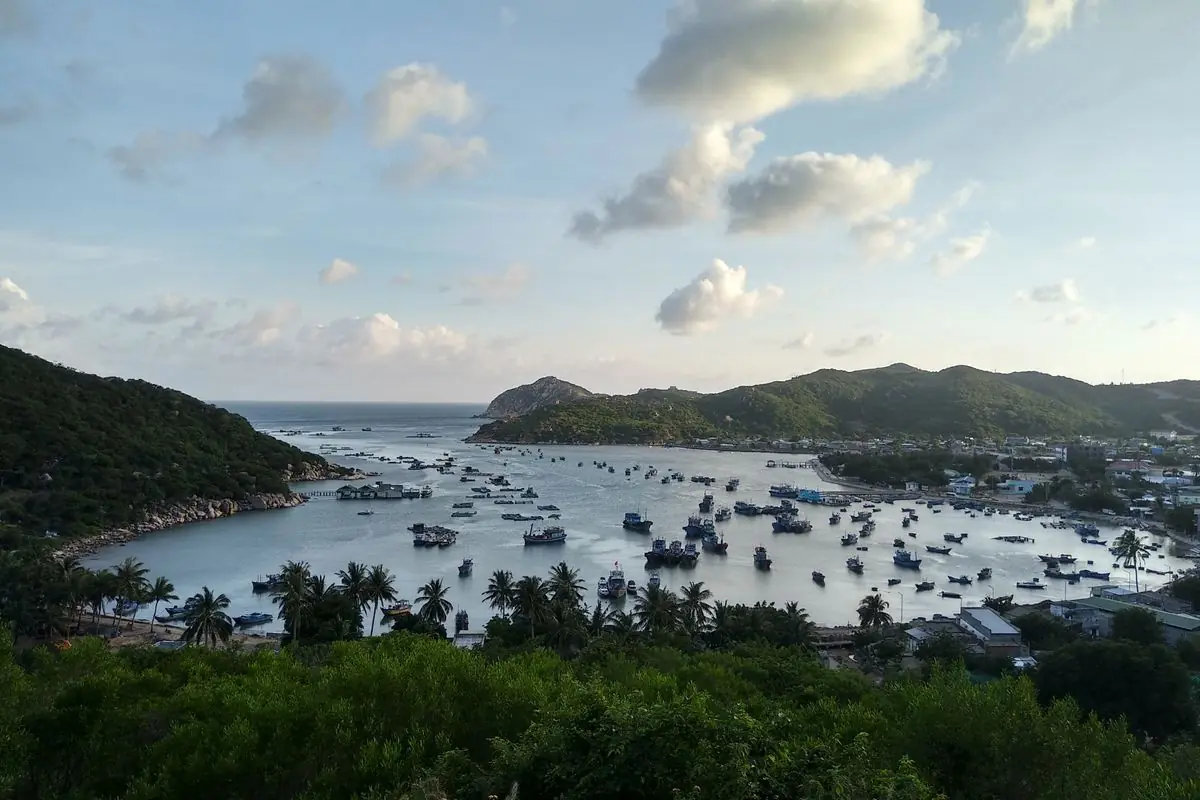
Photo: Karel Bilek
Budgeting for a stop in Phan Rang
There are three main transport costs to separate: getting from Nha Trang to Phan Rang, reaching your accommodation from the station or terminal, and travelling between local attractions. A cheap train ticket still leaves you paying for taxis between sights. Likewise, a convenient car transfer might become good value for a group once you include several separate taxi rides.
Use one operator's figures for the intercity leg: rail seats on certain 2026 departures start around 57,000 VND; Đức Lộc charges 112,000 VND for its minibus; and FUTA bus 11 prices by distance. Pick the one you will actually use, then add local transfers. Avoid making a misleading total by combining the cheapest price from one operator with the timing of another.
Public beach access and scenic viewpoints may cost nothing, but parking, loungers, refreshments and organised experiences are separate purchases. At Po Klong Garai, keep cash for entry and any additional transport within the site. At Bàu Trúc, the biggest expense may be the handmade item you decide to buy. At a vineyard, agree on the weight-based price before picking fruit.
Kitesurfing is in a different budget category. A lesson or equipment hire is often priced in US dollars, sometimes with additional access or service charges. Ask the school for a complete quote and the accepted payment method. There is no reason to budget for a course if you only want to see the lagoon and watch the riders.
Accommodation is too variable for a useful flat estimate without dates. A central guesthouse, a sea-facing hotel and a kite camp serve different needs. Confirm whether the rate covers breakfast, taxes, transfers or cancellation, and compare the total cost of the stay rather than the first headline price you see.
Local transport, safety and small practical decisions
Phan Rang is spread out enough that walking is useful within a neighbourhood but not between all attractions. Taxis and private cars are good choices for people travelling with children, older relatives or large bags. Motorbikes give independent travellers more flexibility, provided they are comfortable with local roads and the weather.
Keep drinking water with you, especially for the dunes, vineyards and Cham tower complex. Use sun protection even on breezy days. Carry some small-denomination cash for parking or food stalls, plus a backup payment option. With an evening departure, arrange your final transfer before leaving the hotel in the morning.
Public transport, hotel names and workshop hours can change. Prioritise things you can confirm directly: the train ticket, your pickup point, the location of the room and whether the workshop or kite centre is expecting you. That is more useful than trying to fix every meal and photo stop in advance.
For a two-day visit, make the next decision now: book a room in central Phan Rang or near Ninh Chu Beach, then choose Bàu Trúc or Thái An for your second morning. The rest of the route can be organised around those two choices.
FAQ
Where is Phan Rang, Vietnam?
Phan Rang is on Vietnam's south-central coast, south of Nha Trang. The area was formerly part of Ninh Thuận province and now belongs to Khánh Hòa province following the 2025 administrative changes.
How do I get from Nha Trang to Phan Rang?
Take a train from Nha Trang to Thap Cham station in roughly 90 minutes, use FUTA City Bus route 11 between the North Bus Station and Ninh Thuận Bus Station, or book a minibus or car. The rail option is especially convenient for travellers continuing through Vietnam by train.
Is Ninh Chu Beach good for swimming?
It can be, when the sea is calm and a designated swimming area is open. Wind and waves vary by season and by day. Follow lifeguard instructions and warning flags, and avoid swimming in rough conditions.
What is there to do in Phan Rang at night?
Try bánh căn or bánh xèo near 16 April Square, explore the central food streets, or have dinner at Ninh Chu Beach. The former pedestrian-street pilot was suspended in June 2025, so do not expect a guaranteed weekend walking street.
When is the Phan Rang kitesurfing season?
The usual season at Mỹ Hòa Lagoon runs from approximately November to March or April, with December and January often particularly windy. Several schools provide lessons and equipment rental; beginners should learn with a qualified instructor.
Related posts
Places
Why is there a giant handprint on the rocks at Hon Chong Nha Trang?
Hon Chong is known for its mysterious handprint, giant seaside rocks, and traditional Vietnamese music pavilion.
Places
Two stops are enough for a day trip from Hanoi to Ninh Binh
Choose one boat trip and one viewpoint for a comfortable Ninh Binh day trip from Hanoi.

Guides
Why pack only five days of clothes for two weeks in Vietnam?
Pack for your route and activities, not fourteen separate outfits.