Why is there a giant handprint on the rocks at Hon Chong Nha Trang?
Visit Hon Chong early in the morning or late in the afternoon for coastal views, rock formations, and traditional music performances when available. Avoid walking onto the rocks during heavy rain or rough seas; for swimming, choose the nearby sandy beach instead.
Written by Tụi mình mê biểnUpdated
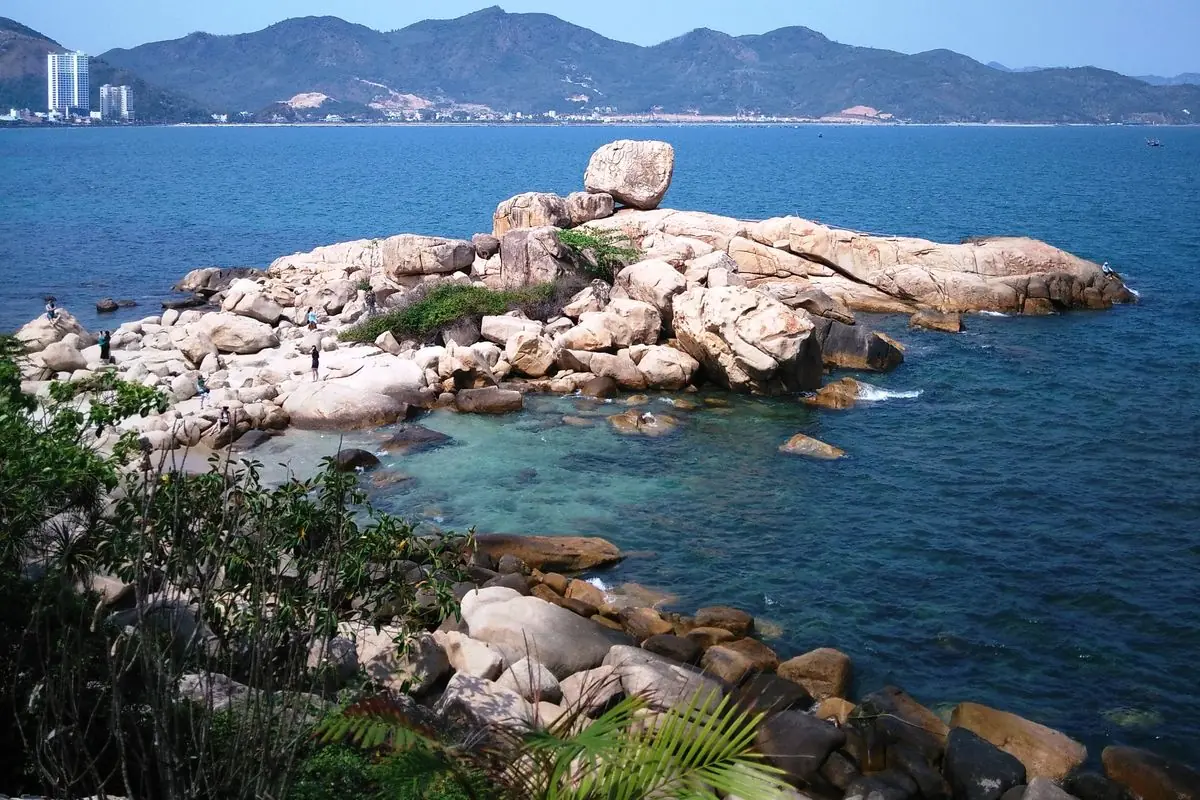
Photo: Phương Huy
Hon Chong is about 4 km north of Nha Trang's April 2 Square, roughly a 10-15 minute drive from the city center when traffic is light. This coastal attraction is known for enormous granite-like boulders stacked beside the sea, a mysterious five-finger handprint, and the Nha Trang Bay Assembly Hall. Allow 45-90 minutes to explore the main sights, then combine your visit with the nearby Po Nagar Cham Towers.
Where is Hon Chong in Nha Trang?
Hon Chong is located at the foot of La San Hill, in Bac Nha Trang Ward, Khanh Hoa Province. Before Vietnam's administrative reorganization in 2025, this area belonged to Vinh Phuoc Ward in Nha Trang City.
The attraction sits near Pham Van Dong Street and Nguyen Dinh Chieu Street, directly overlooking Nha Trang Bay. Unlike the islands offshore, Hon Chong is accessible by road. No boat ticket or guided tour is involved.
The easiest route from April 2 Square is to follow Tran Phu Street north, cross Tran Phu Bridge, and continue along Pham Van Dong Street. From there, turn toward Nguyen Dinh Chieu Street and follow signs for the Hon Chong scenic area.
Loading map...
- April 2 Square: Starting point in the city center, about 4 km from Hon Chong
- Hon Chong Scenic Area: Rocks, the handprint and Nha Trang Bay Assembly Hall
- Bai Duong Beach: Public sandy beach along Pham Van Dong Street, the place to swim
- Po Nagar Cham Towers: Cu Lao Hill by the Cai River, 10-15 minutes by car or motorbike
From Hon Chong, you can also see parts of Nha Trang's shoreline, the mouth of the Cai River, and islands scattered across the bay. It is one of the easiest places in the city to experience a natural rocky coastline without leaving the mainland.
How to get to Hon Chong
A motorbike is convenient if you are traveling alone or as a couple and plan to visit several attractions in northern Nha Trang. You can stop at Hon Chong, continue to Po Nagar Cham Towers, and return to the city center without retracing the same route several times.
A taxi is usually more comfortable for families with young children or older travelers. The drive is short, and you avoid dealing with parking, traffic, and the heat.
Walking may also be an option from hotels along Pham Van Dong Street. Check the actual distance first, though. The road runs a considerable distance north, and not every hotel that calls itself near Hon Chong is within a comfortable walk.
Motorbikes belong in a designated parking area; check the posted fee before leaving your vehicle.
Hon Chong Nha Trang entrance fees in 2026
The Hon Chong entrance fee in 2026 is VND 30,000 per adult and VND 15,000 per child eligible for a reduced ticket.
Prices can change, so check the board at the ticket counter on the day of your visit.
| Visitor category | Price in 2026 |
|---|---|
| Adults | VND 30,000 |
| Children eligible for reduced admission | VND 15,000 |
| Young children eligible for free admission | Free |
| Parking, drinks, and optional services | Charged separately |
Some older articles still list VND 22,000 for adults and VND 11,000 for children. Those were previous rates and should not be used as your main budget reference for a 2026 visit.
For two adults and one child eligible for reduced admission, the total is VND 75,000. Two adults traveling with a young child who qualifies for free entry would pay VND 60,000.
The exact eligibility rules for children's tickets and other exemptions should be confirmed at the ticket counter. Height and age thresholds are not always stated the same way, so it is better not to assume eligibility based on a child's height alone.
A regular admission ticket generally provides access to the open visitor areas, including the assembly hall and the rocky shoreline. Drinks, private services, and separate cultural events may cost extra.
Hon Chong opening hours
Opening hours are not posted consistently. You may see 7:00 AM-6:00 PM, 7:00 AM-7:00 PM, or 6:00 AM-7:00 PM.
7:00 AM-6:00 PM is the more conservative planning window. It should not be treated as a guaranteed official schedule for every day.
This difference will not affect most itineraries. Arriving between 7:00 and 8:00 AM gives you plenty of time to see the rocks and continue to Po Nagar Cham Towers. In the afternoon, aim to enter before 4:30 PM rather than arriving close to closing time.
Opening hours may also change during public holidays, special events, or severe weather. Check notices at the entrance before buying your ticket.
Why is there a giant handprint at Hon Chong?
The most unusual feature of Hon Chong is not its tallest boulder but a large indentation on the surface of one of its rocks. From the right angle, the indentation resembles a human hand with five spread fingers.
This unusual formation has inspired several local legends.
The legend of the giant fisherman
One popular story tells of a giant who came to this stretch of coast to fish. When a powerful fish took the bait, it pulled so hard that the giant lost his balance. He reached out and grabbed the rock to stop himself from falling into the sea.
According to the legend, the force of his grip left a deep handprint in the stone. The mark remains one of Hon Chong's most recognizable features.
There are several versions of the story. Some describe the giant slipping on the rocks, while others add details about his fishing rod or the enormous fish struggling offshore.
These are traditional folk stories, not evidence that giants once lived along Nha Trang Bay.
The legend of Hon Chong and Hon Vo
Another local legend connects the rocks with a married couple caught in dangerous seas. As a powerful wave threatened to carry his wife away, the husband grabbed onto a rock and tried to hold her. Despite his efforts, the couple could not escape the sea.
The two nearby groups of rocks later became associated with the husband and wife, giving rise to the names Hon Chong and Hon Vo. In Vietnamese, chong means husband and vo means wife.
This story is a traditional explanation of the names, never verified as a historical event.
Today, Hon Vo refers to a smaller rocky formation near the assembly hall, at the eastern foot of the hill.
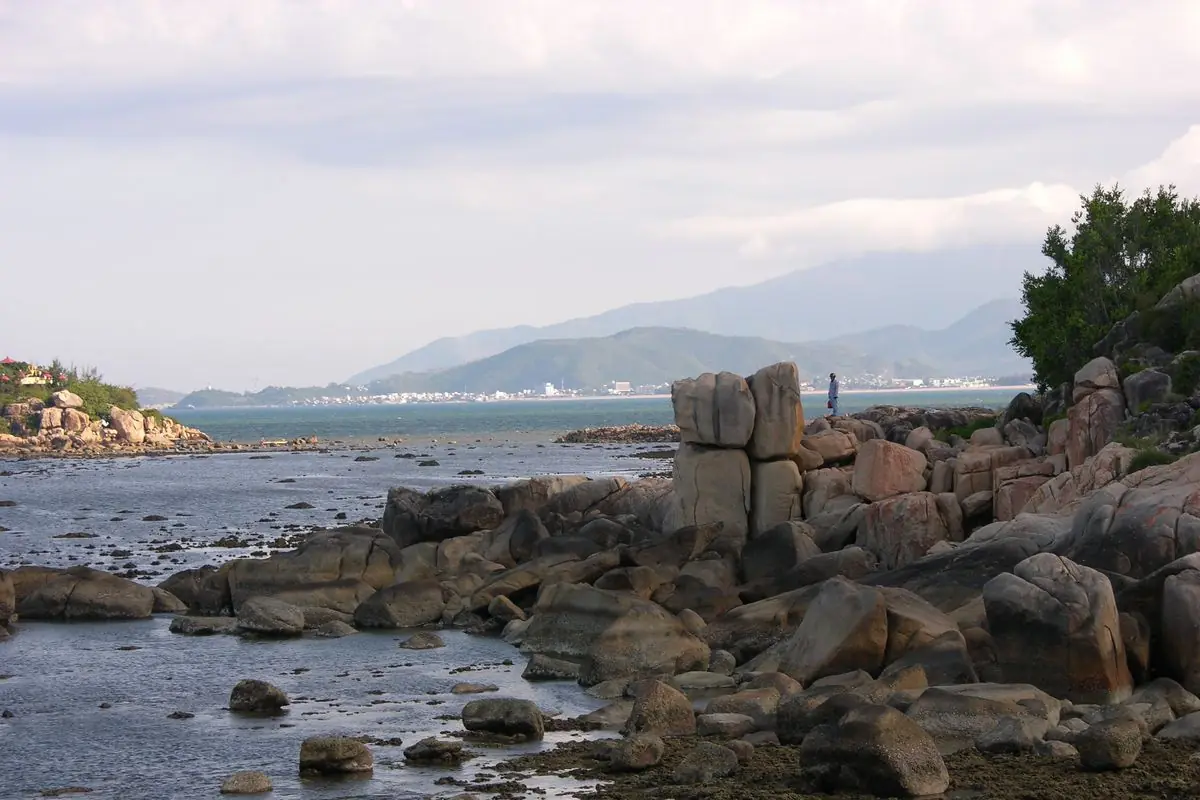
Photo: Vinhtantran
It is easy to overlook because many visitors concentrate on the main Hon Chong rocks. A staff member can point out the direction, which beats climbing over wet or difficult sections of the shoreline to find it.
Why are the rocks stacked on top of one another?
Even without the legends, Hon Chong is visually unusual. Large boulders of different shapes and sizes rest against one another along the coastline. Some have smooth, rounded surfaces, while others are angular, tilted, or balanced against neighboring rocks.
Weathering, seawater, and other long-term natural processes have helped shape the surfaces, cracks, and formations visible today.
From one direction, a large boulder may look as though someone placed it carefully on top of another. Move a few steps to the side, and you can see more clearly how the rock surfaces meet.
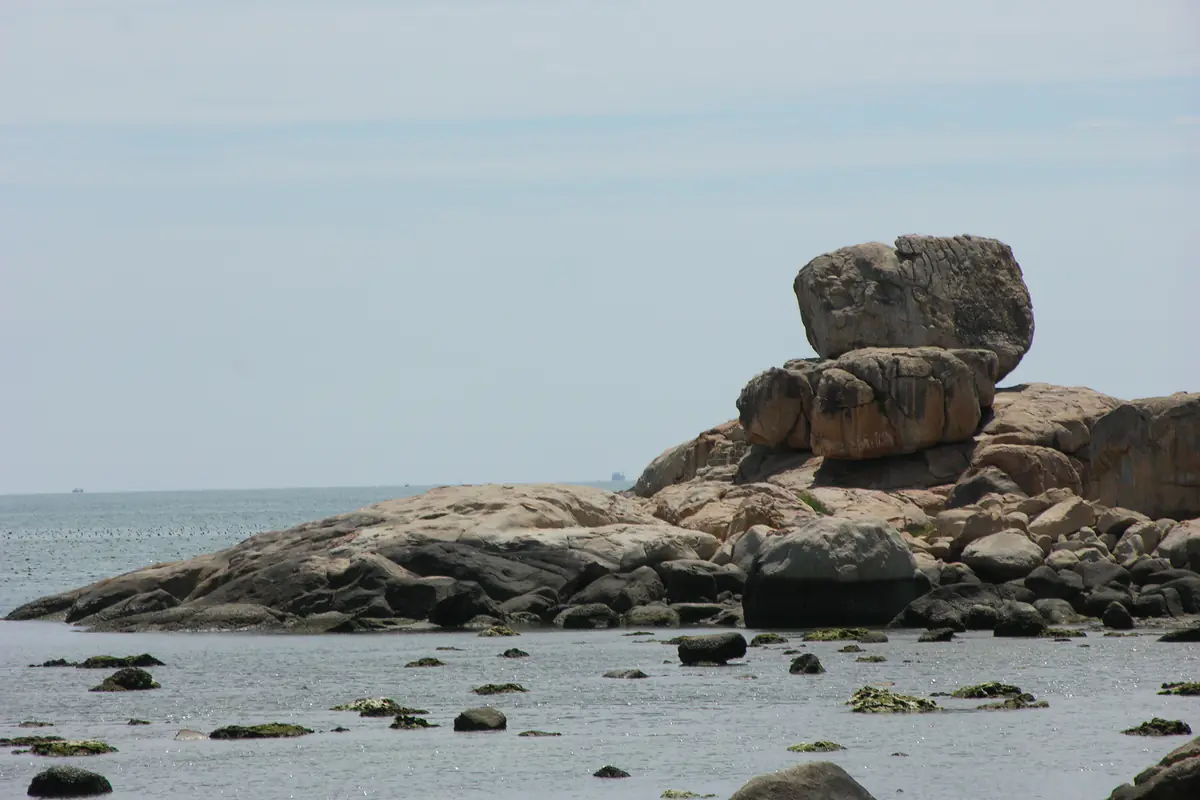
Photo: Vinhtantran
There is no reliable basis for assigning an exact age to the present arrangement of individual rocks.
The natural formation itself is the real interest. Before moving down to the shoreline, stop at the upper viewing area and look at the arrangement as a whole. You will get a better sense of the scale than you would from a close-up photograph of a single boulder.
What is there to see at Hon Chong Nha Trang?
Hon Chong is a small scenic attraction rather than a large entertainment complex. The main reasons to visit are the unusual rocks, the giant handprint, the traditional assembly hall, and the views across Nha Trang Bay.
Hon Chong's rocky shoreline
A rugged headland just below the assembly hall
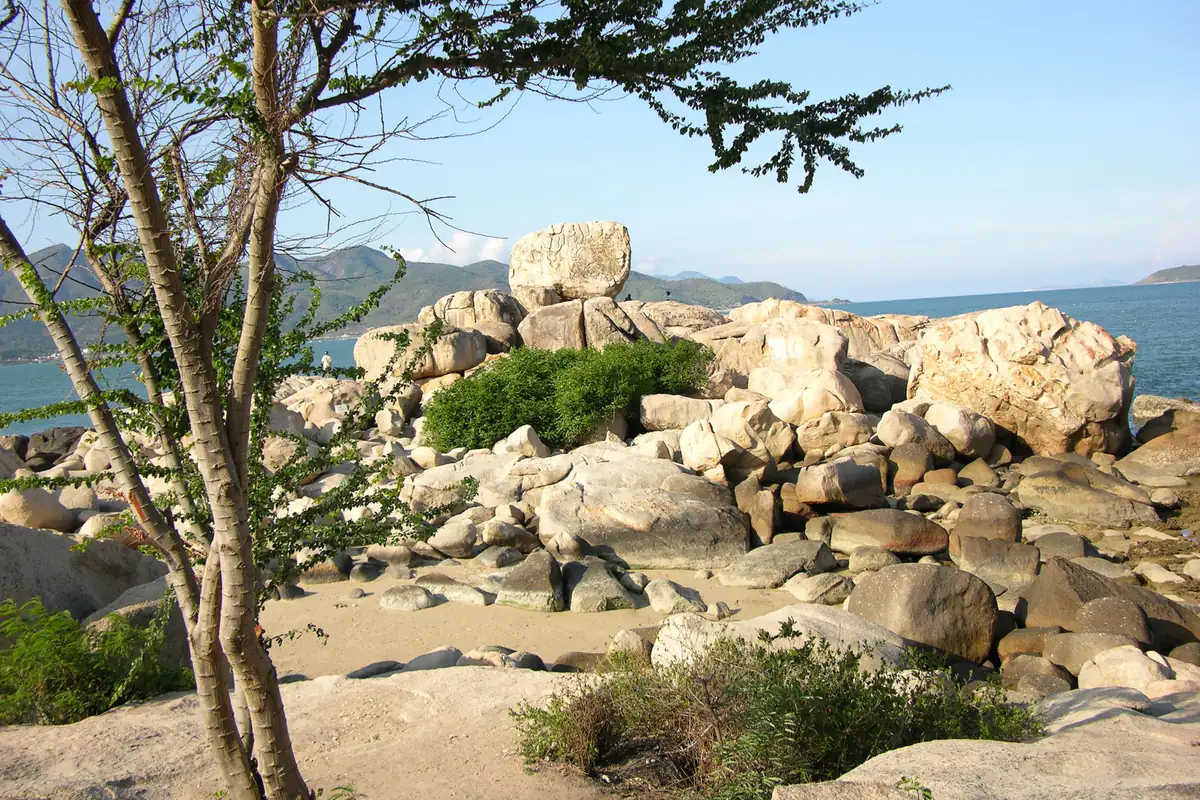
Photo: Vinhtantran
From above, the boulders form a rugged headland extending toward the water. Some rocks lean against each other, creating narrow gaps and sheltered spaces. Others sit separately near the edge of the sea.
On calm, dry days, you can stand on the lower, accessible rocks and photograph the larger formations behind you. One of the best compositions is simple: a large rock in the foreground, the sea in the middle, and distant hills or islands in the background.
Another good viewpoint is from the upper pathway. From here, you can fit the entire formation and the surrounding bay into a single photograph. Worthwhile pictures are possible without climbing to the highest boulder.
The rocky ground deserves attention. Some surfaces are smooth, sloped, or wet from sea spray. Avoid slippery sandals and high heels. Comfortable walking shoes or sports sandals with good grip are much more practical.
Stay away from the outermost rocks when waves are strong, even if other visitors are standing there.
The five-finger handprint
On a large boulder in the main formation
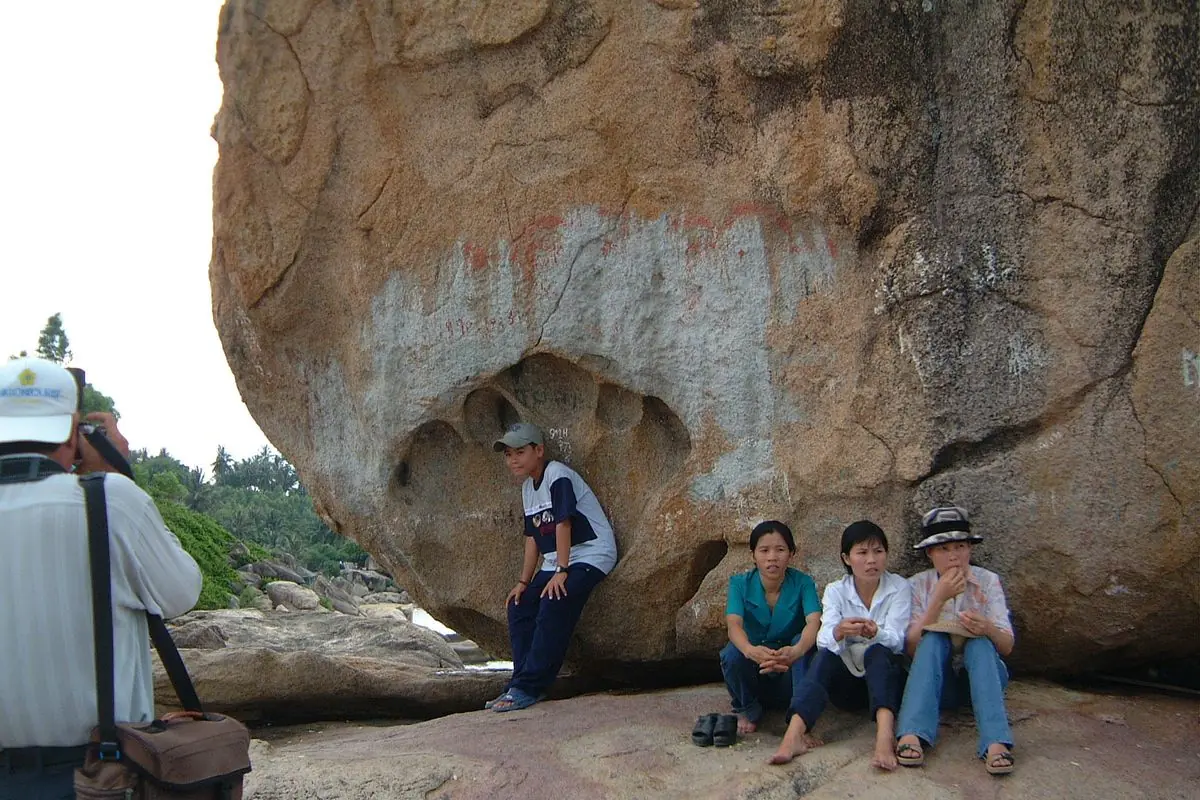
Photo: Udo Braunschweiger
The handprint is located on the surface of a large boulder within the main Hon Chong formation.
Its appearance changes with the direction of the light. When sunlight strikes the stone at an angle, shadows can make the five indentations easier to recognize. Under harsh midday light, the surface may look relatively flat in photographs. Shooting from the side, rather than straight at the rock, gives a clearer picture.
Tour groups crowd this popular photo stop, so you may have to wait briefly when they arrive. Take a few pictures and give other visitors room to see it.
Do not pour water, apply coloring, or scratch the stone to make the indentation stand out. The natural shape is the attraction.
Nha Trang Bay Assembly Hall
Hue-style wooden house above the rocks, about 15-20 minutes
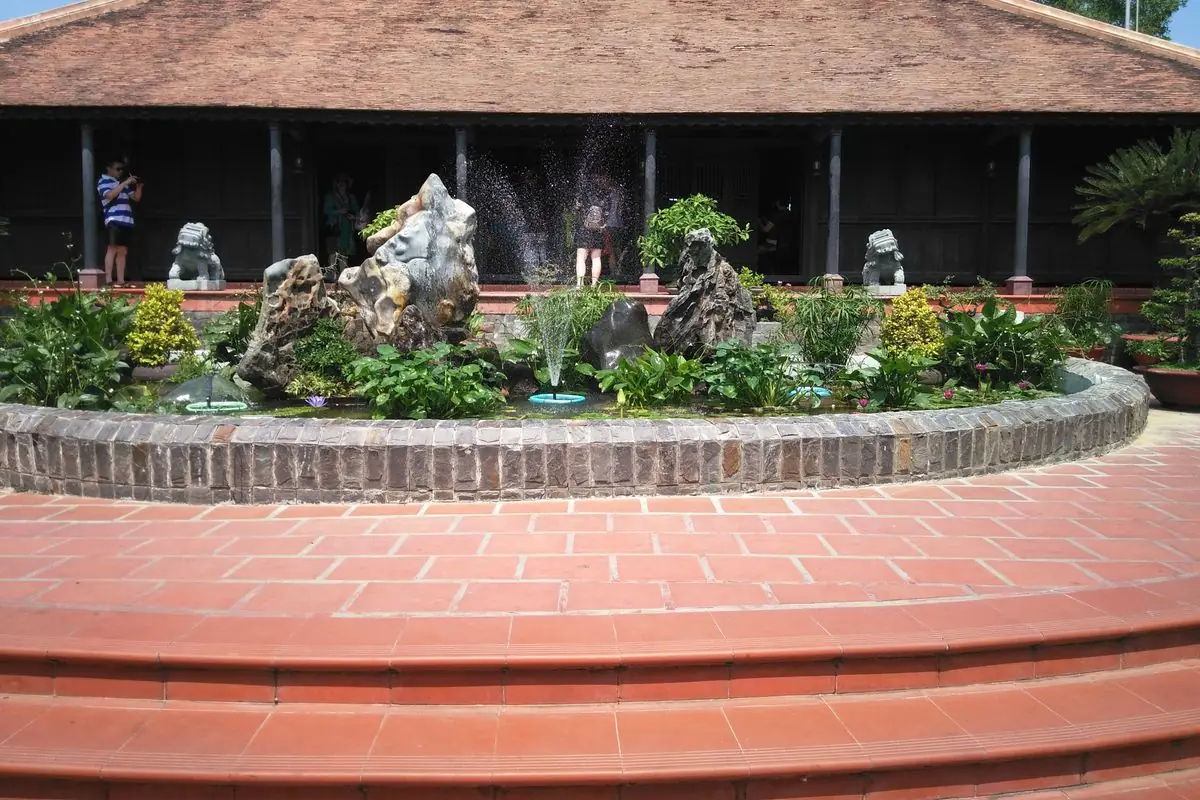
Photo: Phương Huy
The Nha Trang Bay Assembly Hall, sometimes called Hon Chong Assembly Hall, stands above the rocky shoreline. Its design reflects traditional Vietnamese architecture, particularly the wooden-house style associated with Hue. You will notice its timber framework, tiled roof, and relatively open interior.
The building provides a pleasant break from the exposed rocks, especially during the hotter part of the day. It is also associated with cultural displays and traditional Vietnamese musical performances.
Allow about 15-20 minutes here if the hall is open and you want to look around. Visitors interested in architecture can examine the wooden structure and interior layout. Others may prefer to sit, rest, and enjoy the coastal view.
For families traveling with older relatives, visiting the hall first is a practical choice. Anyone who finds the rocky path uncomfortable can remain in the upper area while other members of the group explore the shoreline.
Traditional music and cultural performances
Stone lithophone and dan T'rung; no fixed daily schedule
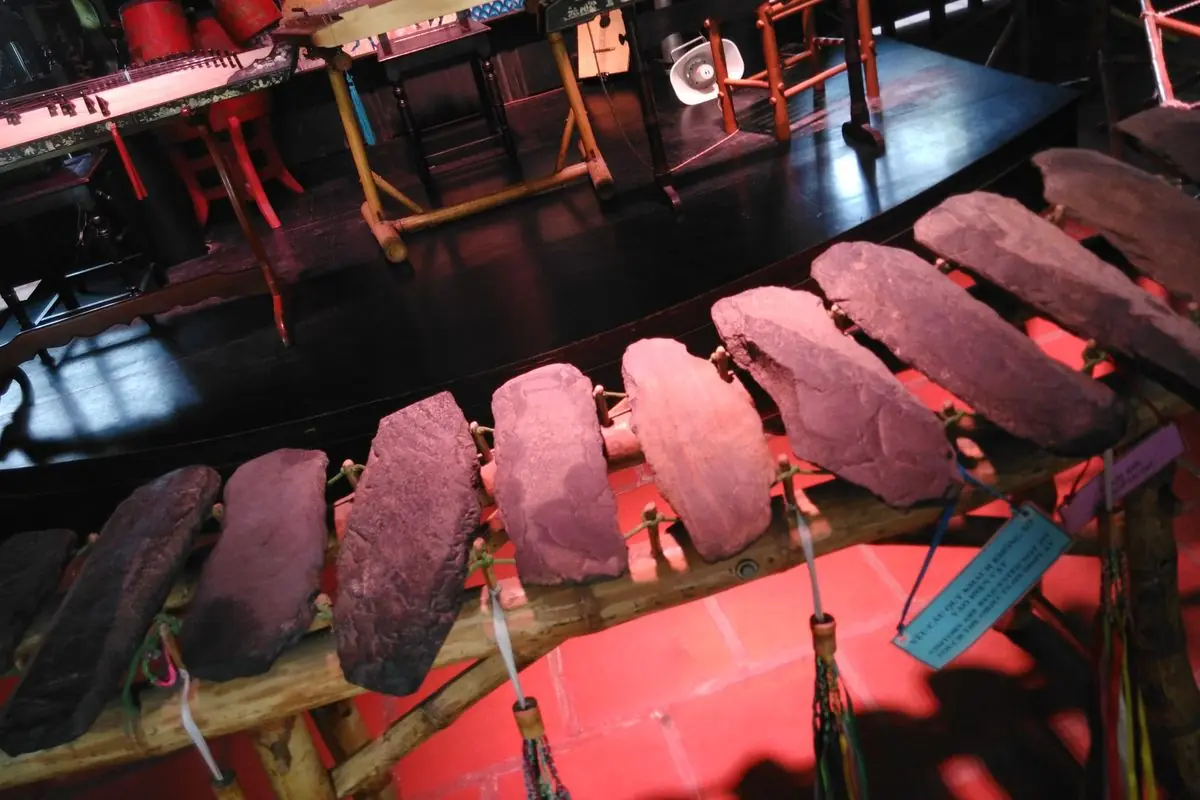
Photo: Phương Huy
Hon Chong is also associated with performances featuring traditional Vietnamese instruments. These may include the dan da, a lithophone made from carefully selected stone pieces, and the dan T'rung, which uses bamboo tubes to produce musical notes.
The dan da creates different pitches when the stone pieces are struck. Its sound is quite different from the string instruments more commonly encountered in Vietnamese traditional music.
A performance during your visit is worth another 15-20 minutes. It adds a cultural element to what might otherwise be a short stop focused entirely on natural scenery.
However, a standard Hon Chong entrance ticket does not guarantee that a music or dance performance will be scheduled during your visit. Performances depend on the day's activities, and larger cultural programs may be organized only for particular events.
For example, during the Khanh Hoa Sea Festival in July 2026, the Hon Chong-Hon Do scenic area hosted activities featuring a 54-piece stone instrument, traditional instrumental performances, and cultural displays. Those festival activities should not be confused with a guaranteed daily performance schedule.
At the ticket counter, simply ask whether the assembly hall has a music performance that day and, if so, what time it begins. If there is no performance, spend the extra time exploring the rocks and enjoying the bay views.
Views across Nha Trang Bay
Big rocks in the foreground, islands behind
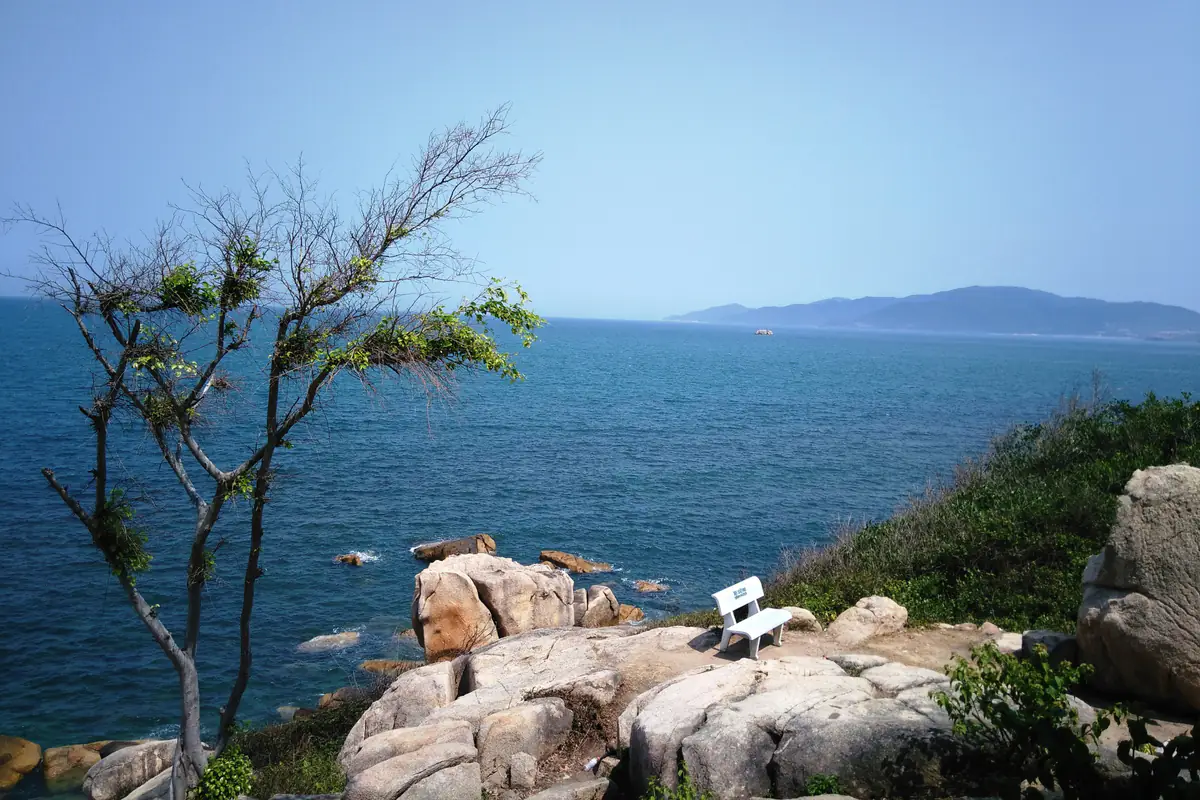
Photo: Phương Huy
Hon Chong offers a different perspective from the main beach along Tran Phu Street. At central Nha Trang Beach, you generally look across a broad stretch of sand toward the water. At Hon Chong, large rocks become part of the foreground, creating a more rugged coastal scene.
From suitable viewpoints, you can see the sea extending toward distant islands and sections of the city's coastline.
There are two useful ways to photograph the scenery. For a dramatic image, make the rocks your main subject and leave the sea and mountains in the background. For a wider landscape, stand slightly higher and include more of the bay, with only a small section of rock framing the photograph.
A lightly cloudy day can work particularly well because the rock surfaces are less reflective and their details are easier to capture. Strong sunshine may make the water look a brighter blue, but it can also create deep shadows on people's faces.
What is the best time to visit Hon Chong for photos?
The two time slots worth prioritizing are 7:00-9:00 AM and 3:30-5:00 PM. Which one is better depends on what you want to do afterward.
Morning: 7:00-9:00 AM
Morning is the better choice if you plan to combine Hon Chong with Po Nagar Cham Towers. Temperatures are generally more comfortable than at midday, particularly during the warmer months from May to August. You can walk down to the rocks first, take photographs, and then return to the assembly hall for a break.
Hon Chong faces the sea to the east, so early sunlight can create backlighting when you photograph someone facing the camera with the ocean behind them. Portraits come out clearer when you change the shooting direction or angle the person to the light.
For sunrise photographs before 6:00 AM, consider the public beachfront outside the ticketed attraction. Do not assume the scenic area's entrance will be open at sunrise.
Afternoon: 3:30-5:00 PM
Late afternoon is convenient if you prefer not to start sightseeing early. After about 3:30 PM, the sun is usually less intense than at midday. Angled light can also make the cracks and rough surfaces of the rocks more visible.
The main drawback is that popular photo spots may become crowded. If several groups are waiting near the handprint, explore the wider shoreline first and return when there is space. You can also arrive a little earlier than 3:30 PM or choose a morning visit.
Nha Trang's coastline faces east. You can enjoy the changing late-afternoon light at Hon Chong, but you should not expect to watch the sun set directly into the ocean horizon as you might on a west-facing beach.
Should you visit at midday?
Midday is not the best choice, particularly between 11:00 AM and 2:00 PM during hot weather.
There is limited shade on parts of the rocky shoreline, and the stone surfaces can become uncomfortable under strong sunshine. Overhead light also tends to create harsh facial shadows in photographs.
Midday visits still work when there is no other slot. Just keep the outdoor section shorter, carry water, and spend some time inside or around the assembly hall. On an overcast, comfortable day, a lunchtime visit may be perfectly reasonable.
Can you swim at Hon Chong Beach?
Yes, there are swimming beaches near Hon Chong, but tell the ticketed rocky headland apart from the nearby public sandy beach.
For swimming, head toward the sandy coastline along Pham Van Dong Street, commonly referred to as Hon Chong Beach or Bai Duong Beach. North of the scenic area, parts of Bai Duong have sand, trees, and space for walking, resting, and swimming when conditions permit.

Photo: StarUniqu3 (@vyquangdong)
The public beach itself does not charge an admission fee. You may still need to pay for parking, loungers, freshwater showers, or other privately provided services.
When is the best time to swim near Hon Chong?
Early morning and late afternoon are generally more comfortable than midday. However, wave conditions, weather, and local safety notices matter more than the time of day.
Choose a designated swimming section with lifeguards and visible safety flags where available. Families with children should remain close enough to assist them immediately, even in shallow water.
During periods of strong northeast winds, rough seas, or heavy rain, skip swimming. After heavy rain, avoid entering discolored water or swimming near drainage outlets.
A sensible plan is to explore the Hon Chong rocks first and then move to Bai Duong if the weather is suitable. Do not arrive expecting to swim among the boulders inside the scenic area.
How long do you need at Hon Chong?
For most visitors, 60-90 minutes is enough to explore the rocks, see the handprint, visit the assembly hall, and take photographs.
Here is a practical breakdown.
| Activity | Suggested time |
|---|---|
| Buy tickets and enter the assembly hall area | 10 minutes |
| Walk the rocks and find the handprint | 20-30 minutes |
| Take photographs and enjoy the bay views | 15-20 minutes |
| Watch a traditional music performance, if available | 15-20 minutes |
| Walk back toward the exit | 5-10 minutes |
Treat these as suggested durations; the site does not run a set visitor schedule.
Seeing the scenery and taking a few pictures may take only 45 minutes. Head toward the main rocks, photograph the handprint, enjoy the view, and return to the entrance.
Travelers who enjoy photography may want 90 minutes or longer, particularly if they are waiting for better light or fewer people at the main viewpoints.
Older visitors need time planned around walking ability rather than every photo location. Hon Chong is a relatively compact attraction, but the natural rock surfaces and steps require more care than a flat promenade.
An hour can also be enough for young children. Children may enjoy seeing the giant boulders and traditional instruments, but they should not be allowed to move independently across the rocks near the water.
How to combine Hon Chong with Po Nagar Cham Towers
Po Nagar Cham Towers is the easiest major attraction to combine with Hon Chong when exploring northern Nha Trang.
The two sites are relatively close. Hon Chong sits beside the sea, while Po Nagar stands on Cu Lao Hill near the Cai River, off Hai Thang Tu Street. A taxi or motorbike trip between them generally takes around 10-15 minutes, depending on traffic and the exact pickup point.
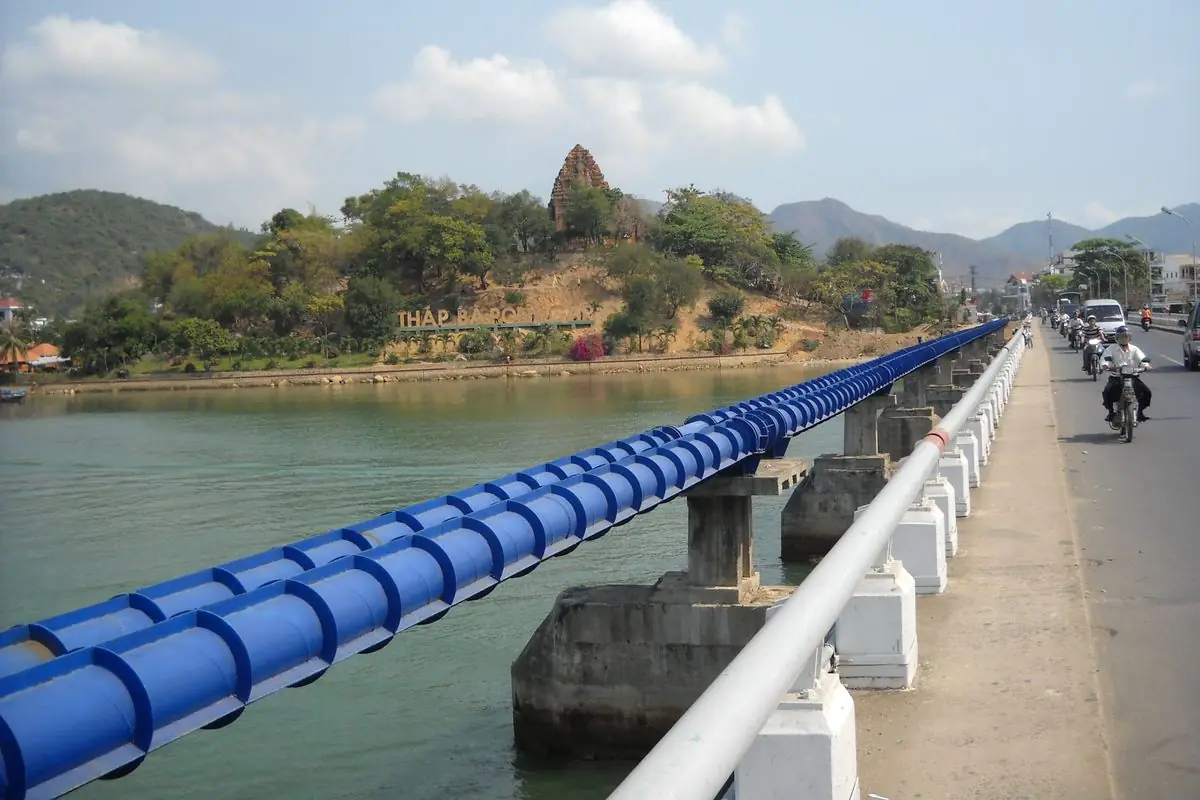
There is little reason to visit Hon Chong, return to central Nha Trang for a long break, and then travel north again to Po Nagar. Combining them in a single outing saves time.
Itinerary 1: Hon Chong first, Po Nagar afterward
Choose this route if you want to photograph the rocks while the morning is still cool.
- 7:00-8:15 AM
Hon Chong
Visit Hon Chong, the rocks, and the assembly hall
- 8:15-8:30 AM
Transfer
Travel to Po Nagar Cham Towers
- 8:30-9:30 AM
Po Nagar Cham Towers
Walk around the Cham temple complex
- 9:30-10:15 AM
Break
Stop for a drink or a late breakfast
- After 10:15 AM
Head back or carry on
Return to your hotel or continue sightseeing
Have a light breakfast before a 7:00 AM start at Hon Chong.
At Po Nagar, you can see the columned entrance area, climb toward the main temple towers, and learn about Cham architecture and religious traditions.
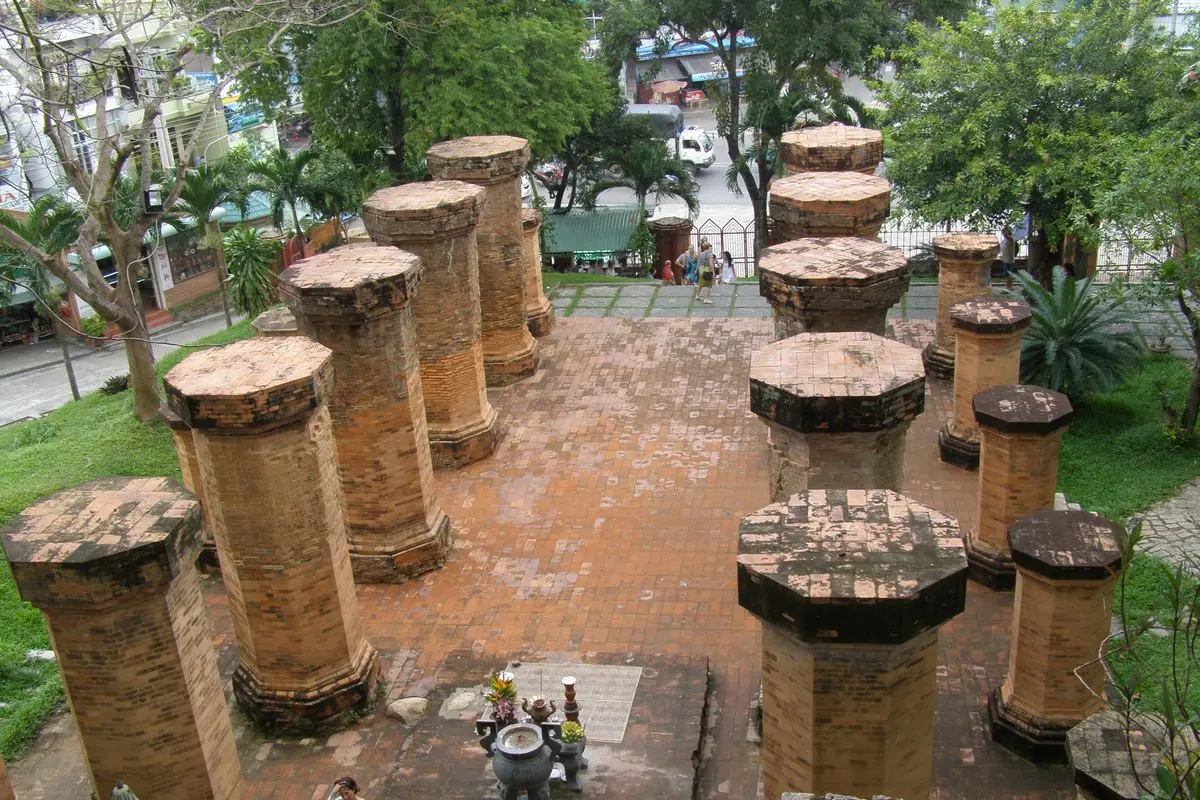
Photo: RG72
Pack swimwear for a later swim in your bag rather than wearing beach clothing to the temple.
Itinerary 2: Po Nagar first, Hon Chong in the afternoon
This route works if you already have morning plans and want softer afternoon light for photographs at Hon Chong.
| Time | Activity |
|---|---|
| 2:30-3:30 PM | Visit Po Nagar Cham Towers |
| 3:30-3:45 PM | Travel to Hon Chong |
| 3:45-5:00 PM | See the handprint, rocks, and assembly hall |
| After 5:00 PM | Walk along Pham Van Dong Beach or return downtown |
Po Nagar is open 6:00 AM-5:30 PM, so it is better not to leave the temple visit until too late.
Check whether a music performance is scheduled at Hon Chong before choosing an afternoon arrival.
Is there time for a third stop?
Yes, but keep it nearby. Bai Duong Beach is an easy addition if you want to walk along the waterfront or relax by the sea.
You could also consider a mud bath in the broader Thap Ba area, but that deserves its own time allocation. Changing clothes, showering, using the facilities, and resting afterward can take considerably longer than a quick sightseeing stop. Do not squeeze a mud bath into a two-hour itinerary that already includes both Hon Chong and Po Nagar.
For a two-day, one-night trip to Nha Trang, a half-day Hon Chong-Po Nagar route is practical. It leaves the rest of your time for beaches, island tours, or other activities.
If you have booked a full-day island excursion, however, there is no need to force Hon Chong into the evening. The rocks are best appreciated in daylight.
Is Hon Chong suitable for families and older visitors?
Hon Chong can be enjoyable for different age groups, but not every part of the attraction is as easy to navigate as a paved city park.
Visiting with children
Children may enjoy the enormous rocks, the natural gaps between them, and traditional musical instruments. However, the rocky shoreline is not a playground.
Stay close to children, especially around sloping surfaces, gaps, and the water's edge. There is no need to let them climb high onto the boulders to get a photograph.
Families traveling with strollers should also know that a stroller is not suitable for the natural rocky paths. One adult may prefer to remain in the more accessible upper area while the others explore the shoreline.
Bai Duong Beach is the place for playing in the sand and swimming, so spend more time there rather than treating the rocky attraction as a swimming destination.
Visiting with older travelers
Older visitors can enjoy the upper grounds and assembly hall without necessarily going all the way down to the rocks. Whether to explore the lower shoreline depends on mobility, balance, and the day's conditions. Shoes with reliable grip matter more here than footwear chosen for photographs.
If the rocks are wet or crowded, do not feel obliged to reach the handprint. There are good coastal views from higher positions, and those alone may justify a short stop.
Visiting for photography
Photography deserves a comfortable time slot at Hon Chong rather than a rush between multiple appointments.
A wide-angle lens is useful for including the boulders and bay in one frame. The ultrawide camera on a modern smartphone can also work, although you should avoid leaning over edges or walking with your attention fixed on the screen.
Try three types of pictures: a wide view of the formation, a portrait with a large rock showing its scale, and a close-up of the handprint. Including a person in the scene often gives a better sense of the rocks' size than photographing the stone surfaces alone.
Where to get coffee or food near Hon Chong
After exploring the rocks, you can stop for a drink near the assembly hall or find a cafe along Pham Van Dong Street.
Hon Chong Coffee is a name commonly associated with the area overlooking the rocky shoreline and bay. Check the actual entrance, menu, and admission arrangements before sitting down, since cafe services should not be assumed to be included in the scenic area's entrance ticket.
A comfortable seat facing the sea beats an elaborate rooftop or heavily decorated cafe for enjoying the view.
After Po Nagar, consider eating around Thap Ba Street or Hai Thang Tu Street. This part of Nha Trang has restaurants and food stalls serving local dishes such as fish noodle soup, jellyfish noodle soup, banh can, squid pancakes, and seafood.
For a late breakfast, bun ca or bun sua is a practical choice. A bowl of fish noodle soup with fish cakes, broth, and herbs makes a relatively quick meal after walking around the rocks and temple complex. It is easier to fit into a morning itinerary than a large seafood lunch.
Ca Bay Restaurant and the restaurants around the Bo Ke waterfront area are good bets for seafood. The surrounding Bai Duong neighborhood offers more dining options too. Restaurant hours, menus, and 2026 prices should be checked directly before visiting.
For seafood sold by weight, ask for the price per kilogram, the total weight, and any cooking charges before ordering. Do not rely on an old general price estimate as the final amount you should expect to pay.
What is the best season to visit Hon Chong?
Hon Chong can be visited throughout the year when the attraction is open and the weather is safe. However, rainfall, wind, waves, and temperature can make a noticeable difference to your experience.
January to April
This is a comfortable period for sightseeing in Nha Trang. There are often more dry days than during the wetter months later in the year, and temperatures are usually easier to manage than during the hottest part of summer.
Morning visits are the most pleasant. The sea may look clear, and bright conditions can be excellent for photography. However, northeast winds can still affect the coast in the earlier part of the year, bringing stronger waves on certain days.
When conditions are windy, you may still be able to enjoy the view from the upper area if the attraction remains open, but avoid moving close to the water.
May to August
These months are often sunny and attractive for visitors looking for blue skies and bright coastal photographs.
The main challenge is the midday heat. Once you are down among the rocks, shade can be limited. Arriving before 9:00 AM or in the late afternoon is more comfortable.
Bring water, wear a hat, and choose shoes suitable for walking. You will get more from your visit by staying comfortable than by carrying too much photography equipment into the heat.
September to December
Rainfall typically increases toward the end of the year, during the central Vietnam rainy season. Keep your schedule flexible and be prepared to change the day of your visit.
Light cloud cover can even make outdoor photography more comfortable. Persistent rain, rough waves, or strong winds are different.
What should you bring to Hon Chong?
A short visit to Hon Chong takes little equipment. Comfortable shoes or sports sandals with good grip, drinking water, sun protection, and a charged phone are usually sufficient.
The ground deserves more attention than your packing list. After rain, water and sand can make the rocks slippery. Avoid jumping between boulders, crossing narrow gaps, or climbing onto high formations just to improve a photograph.
A secure shoulder bag or backpack is more practical than a loose handbag because it keeps your hands available for balance. Avoid carrying a large umbrella while walking on exposed rocks in windy weather.
Some cash in small denominations can also be useful for tickets, parking, or other services. Even if some vendors accept bank transfers or electronic payments, do not assume every counter uses the same payment methods.
Before walking down toward the shoreline, look at the waves. Water can surge unexpectedly into gaps between rocks and splash over nearby surfaces. Do not leave your phone or camera bag on a rock near the water and turn away to take a picture.
Extreme heat is a good reason to keep your visit short. The most worthwhile parts of Hon Chong are still the rock formations, the handprint, and the view across the bay. Seeing them does not require exploring every corner.
Is Hon Chong worth visiting if you only have one day in Nha Trang?
Yes, but it depends on your priorities.
What we like
- Hon Chong is a good choice if you want to explore Nha Trang without leaving the mainland, enjoy natural coastal scenery, and have about an hour available in the northern part of the city. It is particularly convenient when combined with Po Nagar Cham Towers.
- The 2026 entrance fee of VND 30,000 per adult also makes it a relatively inexpensive sightseeing stop. Transport may account for a larger share of your total expense if you are staying far away and making a separate trip just for Hon Chong.
Watch out for
- On the other hand, if you have only one day in Nha Trang and your main interests are swimming, snorkeling, or visiting offshore islands, Hon Chong does not need to be your first priority. Choose your preferred sea activity and save Hon Chong for another visit.
- Travelers who are not interested in photography, natural formations, traditional architecture, or the handprint legend may find that there is relatively little to do after the first half hour. This is not a place where most people need to spend an entire morning.
Staying close to Bai Duong Beach makes it easy to enjoy a waterfront walk first and decide afterward whether to buy a ticket to the scenic area. The two experiences are different. One offers a sandy public beach for walking and swimming. The other offers natural rock formations, a traditional assembly hall, and a closer look at Hon Chong's distinctive landscape.
Hon Chong works best when you explore Nha Trang one neighborhood at a time: combine nearby attractions, avoid the hottest hours, and leave the rest of your day for the beach or a relaxed meal. The same approach suits other Vietnamese coastal cities, including Da Nang, Quy Nhon, and destinations around Phu Yen, where a beautiful viewpoint rarely needs a full-day itinerary.
FAQ
Where is Hon Chong Nha Trang, and how far is it from the city center?
Hon Chong is in Bac Nha Trang Ward, Khanh Hoa Province, near Pham Van Dong and Nguyen Dinh Chieu streets. It is approximately 4 km from April 2 Square and takes around 10-15 minutes to reach by car or motorbike in light traffic. You do not need a boat to get there.
How much is the Hon Chong entrance fee in 2026?
The 2026 entrance fee is VND 30,000 per adult and VND 15,000 per child eligible for reduced admission. Young children meeting the exemption requirements may enter free. Check the ticket counter for current prices and eligibility rules, as some older articles still show VND 22,000 for adults.
What are the opening hours, and when is the best time to visit Hon Chong?
Opening hours are not posted consistently and range from about 6:00 or 7:00 AM to 6:00 or 7:00 PM. For a convenient visit, aim for 7:00-9:00 AM or 3:30-5:00 PM. Morning is ideal for combining Hon Chong with Po Nagar Cham Towers, while late afternoon is good for photography with less intense sunshine.
What is the legend behind the giant handprint at Hon Chong?
One local legend says a giant fisherman was pulled off balance by a powerful fish and grabbed a boulder, leaving a five-finger indentation. Another legend tells of a husband trying to save his wife from dangerous waves, giving rise to the names Hon Chong and Hon Vo. These are traditional stories rather than verified historical events.
Can you swim at Hon Chong Beach?
You can swim at suitable sections of the nearby public sandy beach, commonly called Bai Duong or Hon Chong Beach, when conditions are safe and swimming is permitted. Avoid entering the water among the rocks of the Hon Chong scenic area because of submerged stones, slippery surfaces, and narrow gaps. The public beach has no general admission fee, although optional services may cost extra.
Related posts
Guides
Why is walking to Nha Trang Beach sometimes faster than taking Grab?
A practical guide to walking, Grab and taxis for everyday trips around Nha Trang.
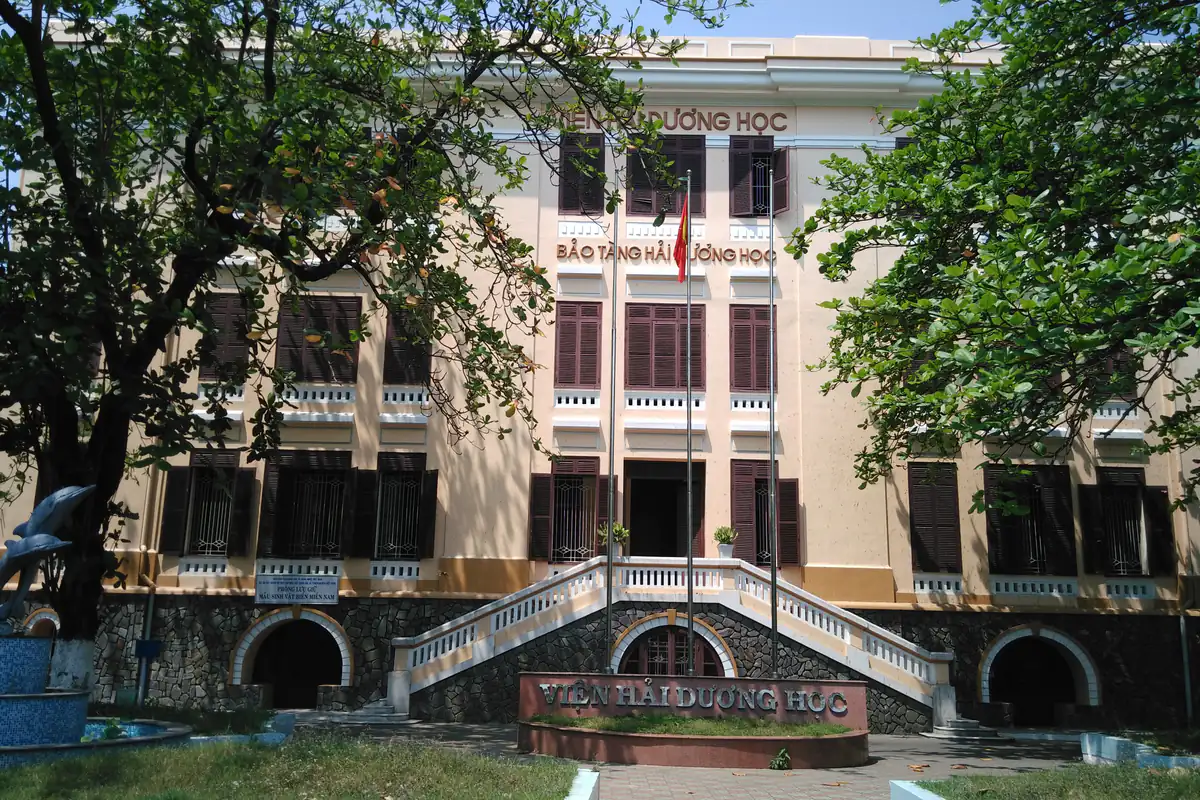
Places
Visiting the Nha Trang Institute of Oceanography: what to see and how to plan a half-day trip
Ticket prices, opening hours, directions, and the best exhibits to see at Nha Trang's Oceanography Museum.
Places
Choose the best mud bath in Nha Trang: Thap Ba, I-Resort, Galina or Hon Tam?
Compare four Nha Trang mud baths by tub type, ticket price, facilities and the time needed for each visit.