Diep Son Island, 60 km from Nha Trang: boats, tides and the sandbar
This guide is for Nha Trang visitors considering a one-day escape to Diep Son Island, particularly couples and friends planning a photo trip. It covers the November 2026 sandbar situation, boat logistics, realistic costs and the choice between a tour and an independent visit.
Written by Tụi mình mê biểnUpdated
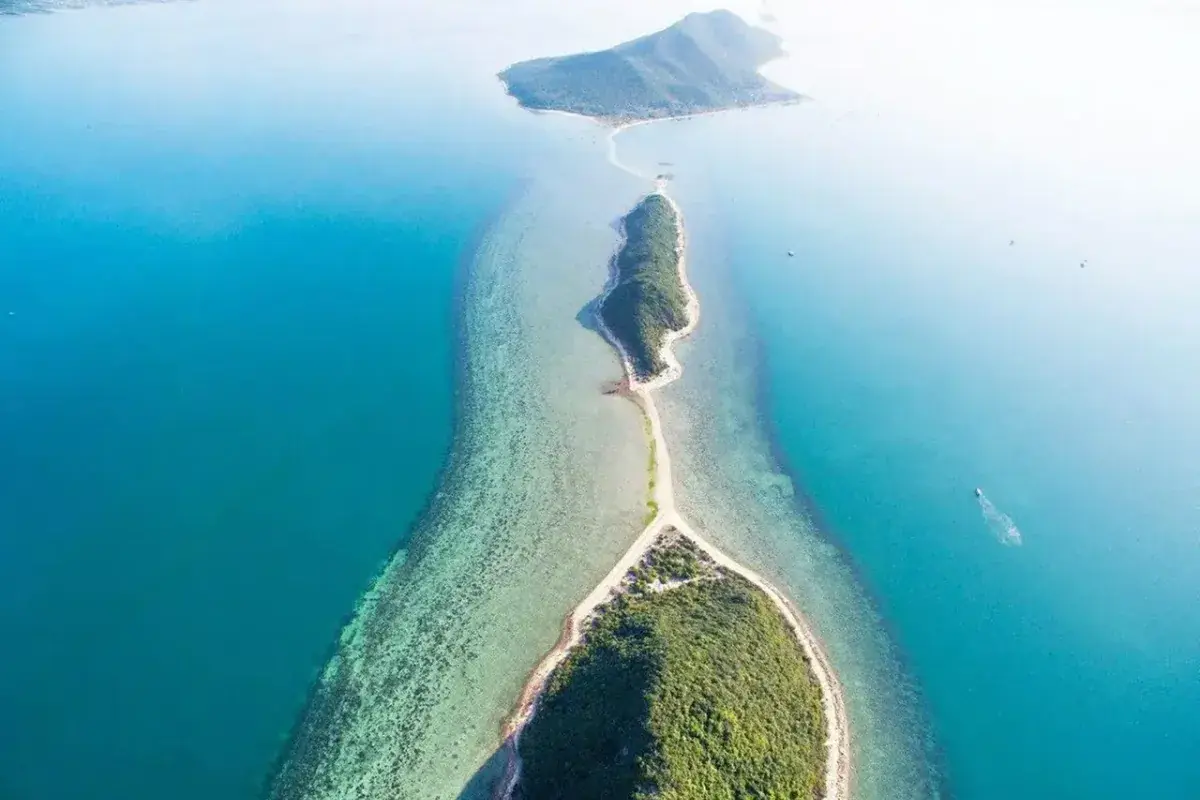
Photo: Sea You Travel
Before booking anything for Diep Son Island, ask a boat operator when the sandbar near Hon O and Hon Giua will be most exposed on your chosen date. That is the remaining stretch visitors come to photograph. From Nha Trang, you travel north by road to Van Gia and then cross Van Phong Bay by speedboat or local boat; arriving at the wrong tide can leave you with a very different view from the one you expected.
Diep Son is a reasonable day trip for people who want a quiet bay, a sandy path surrounded by water and a straightforward seafood lunch. It is not a resort island with a long list of attractions. Plan around one thing above all: the combination of the tide, the exact landing point and the confirmed return boat.
Where is Diep Son Island, and how far is it from Nha Trang?
Diep Son is the name commonly used for a small group of islands in Van Phong Bay, north of Nha Trang in Khanh Hoa Province. Hon Bip, Hon Giua and Hon O are the three names you will see most often. You may also come across Hon Qua for Hon Giua and Hon Duoc for Hon O. The names are not always used consistently in online itineraries, which is why a map pin and the name of the landing area matter more than a generic promise to visit “Diep Son Island.”
Van Gia harbor is roughly 60 km by road from central Nha Trang. Allow about 75-90 minutes by car in normal conditions, with extra time if you are traveling by motorbike or making a stop. The road leads north via the Ninh Hoa and Van Ninh areas, much of it along National Highway 1. On a speedboat the water crossing is commonly about 10-20 minutes; a slower wooden boat can take 30-45 minutes. Those are planning ranges; boats do not all use the same landing point, so journey times vary.
Administrative addresses have changed. Following the 2025 local government reorganization, Van Gia is in Van Ninh commune, while the islands historically described as being in Van Thanh commune are associated with the new Dai Lanh commune. Older maps and websites may still mention Van Ninh District. For practical navigation, search for Van Gia fishing harbor or use the location sent by your boat operator. Do not head for Nha Trang's city tourist port expecting to find a regular Diep Son departure there.
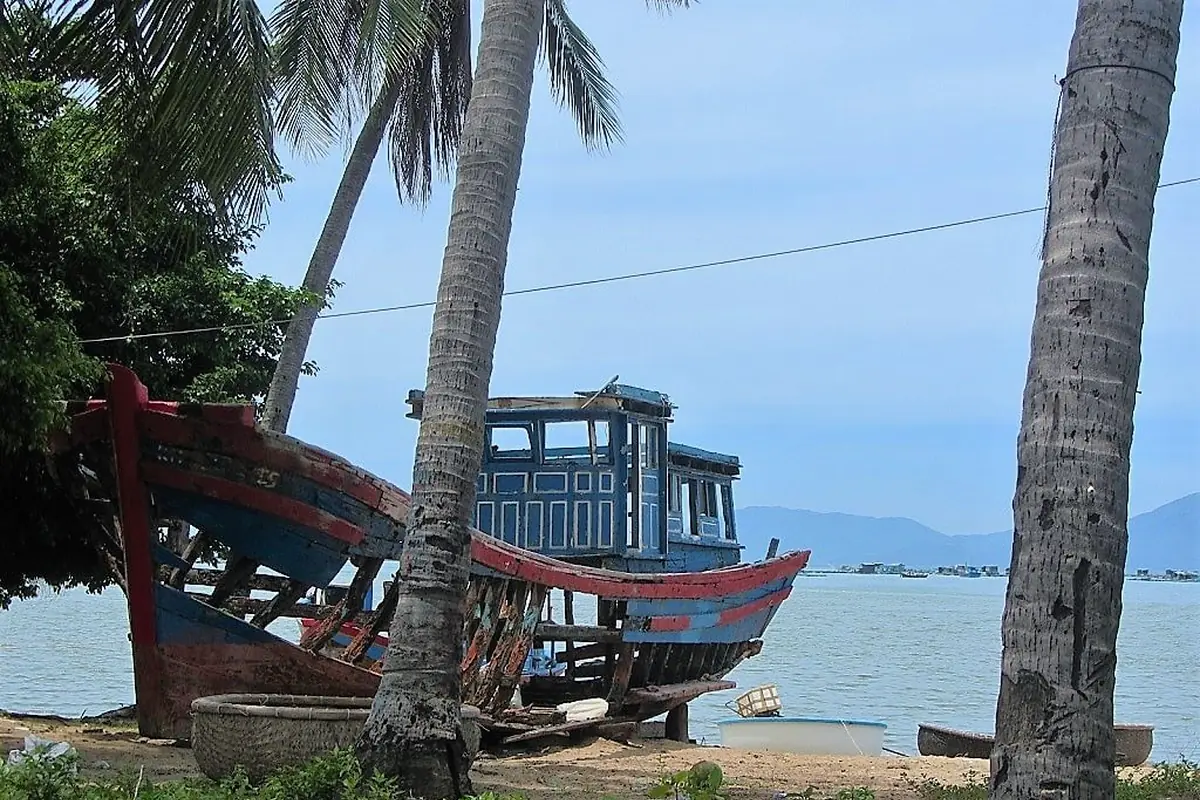
Photo: Tom Divers, Vietnam Coracle
For someone already staying at Doc Let Beach, the journey is shorter than starting from Nha Trang, but the boat arrangement is essentially the same. You still need an agreed departure point in the Van Gia area. Doc Let itself is primarily the mainland beach stop included in many combined excursions.
Loading map...
- Van Gia boat pier: Speedboats and wooden boats to Diep Son
- Hon Bip (Diep Son): Fishing village, basic food and stays
- Doc Let Beach: Mainland beach stop after the island
The important 2026 update: the old 700-meter sandbar is gone
Many travel pages describe a spectacular 700-800-meter ribbon of sand linking the islands. Some even suggest the full route remains intact. Those descriptions need checking against the more recent landscape.
In November 2026 a sandbar of about 400 meters between Hon O and Hon Giua is still there. A different sandbar, formerly more than 700 meters long between Hon Giua and Hon Bip, disappeared after a storm in 2017. Both features belong to the wider Diep Son island group, but they are not the same path.
This distinction is especially important when comparing a Diep Son Island tour with independent travel. A boat landing at Hon Bip may be convenient for a fishing-village visit and lunch, but it does not automatically put you at the remaining Hon O-Hon Giua photographic location. Ask whether the package includes a landing or transfer to that specific sandbar. A company promising a walk along the old 700-meter route should be able to show current photographs and a precise itinerary before you pay.
Part of the Hon O-Hon Giua sand ridge stays above water in some form throughout the year. That does not mean it always looks equally attractive. The visible width, the water on either side and the ease of walking are affected by the tide and sea conditions. At lower water, more sand is exposed and it becomes easier to compose the familiar photographs of a narrow pale path surrounded by blue-green water.
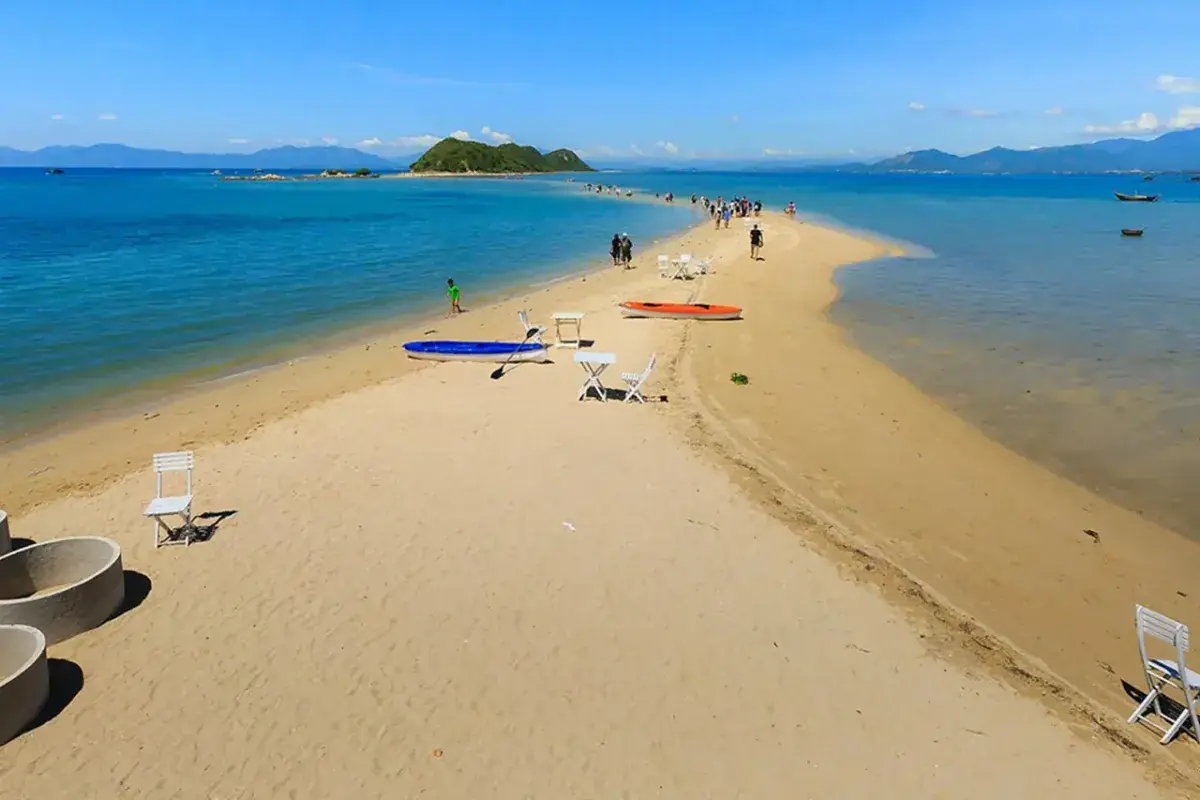
Photo: Sea You Travel
You can still enjoy the scene if the tide is not ideal, but adjust your expectations. A partly exposed strip of sand and shallow water still makes a good picture. It will not resemble an aerial shot of the former longer crossing, and no photographer or tour guide can bring that lost section back.
When does the Diep Son sandbar appear?
There is no reliable daily rule that says “the path appears at 6 am.” Tide times move through the lunar cycle. Some dates have a useful morning low; others have their best low water in the afternoon. Wind, waves and local seabed conditions affect how much of the path you actually see.
You will find older guides offering a shortcut based on the lunar calendar: the first half of the lunar month often favors afternoon falling water, while the latter half often favors morning falling water. Treat that as a rough planning hint, not as an actual timetable. A specific date needs its own tide prediction.
Look up a tide table for Van Gia or Van Phong Bay. TideCheck, for example, shows predictions for Van Gia based on its nearby Tu Bong reference station, roughly 15 km away. That forecast is useful for spotting the day's general low-water periods, but it is not a measurement on the Hon O sandbar itself. A boatman who regularly lands there should be able to tell you how the predicted tide translates into a practical visiting window.
A simple way to organize the trip is to work backwards.
- Step 1
Find the daylight low tide
Find the predicted low water during daylight hours.
- Step 2
Ask about the sandbar
Ask the operator what time the Hon O-Hon Giua sandbar usually looks best under those conditions.
- Step 3
Confirm the boat back
Check whether there is a boat back to Van Gia afterward.
- Step 4
Book the road trip
Only then book transport from Nha Trang. If the three pieces do not fit, change your date rather than forcing the schedule.
Low tide around mid-morning or lunchtime is generally more convenient for a same-day visitor than a very early dawn low. Sunrise on the sandbar is easier to catch with an overnight stay. Do not assume boats leave Van Gia before dawn, or that a regular return will be available after dark. Both arrangements require direct confirmation with the operator.
How to get to Diep Son Island from Nha Trang
The most manageable independent route is Nha Trang to Van Gia pier, then a boat to the confirmed island landing. Take the road north toward Ninh Hoa and Van Ninh, then follow the exact location provided by the boat company. Van Gia has a fishing harbor and different pick-up arrangements, so a generic map result may not match your booking. Save the operator's phone number and ask for a current pin rather than relying on an old blog photograph of the pier.
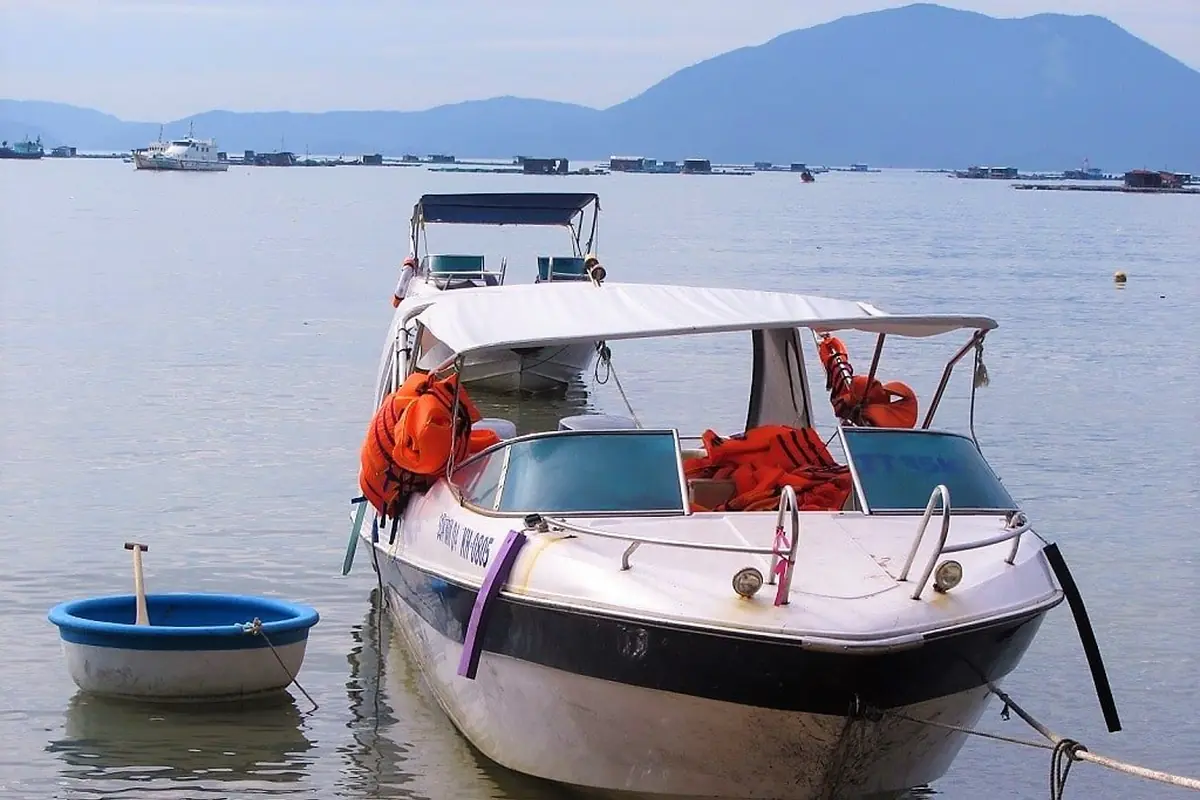
Photo: Tom Divers, Vietnam Coracle
Private car
Good for two or more, ask for a round-trip quote
A private car works well for two people carrying a camera bag and a change of clothes. A small group can split the road cost, and everyone gets an air-conditioned ride after a day in the sun. Ask the driver for a round-trip quotation that explicitly includes waiting time at Van Gia. One-way pricing is not particularly useful if the driver will have to come back or sit at the harbor for several hours.
Motorbike
About 60 km, heavy trucks on Highway 1
A motorbike gives you more freedom to stop for breakfast, photograph the coastline or add Doc Let on the return. But National Highway 1 has heavy vehicles, and spending the day on a boat can leave you more tired than you expect. It is a sensible choice only if you are comfortable with that kind of ride and legally licensed for the motorbike you use. Wear a helmet and make the return in daylight whenever possible.
Public transport
Cheaper, but the return is the hard part
Public transport can be cheaper, though it involves more uncertainty. You may be able to use a northbound bus to the Van Gia area and arrange a short ride to the harbor, but timetables and actual stops need to be checked for your date. Reaching Van Gia in the morning is the easy part; the critical issue is having a confirmed way back to Nha Trang once the boat returns. Do not build the itinerary around a supposed fixed bus departure time copied from an older guide.
Should you go via Doc Let or Van Gia?
A typical combined tour starts from Nha Trang in the morning, drives to the Van Gia area, visits Diep Son, returns to the mainland and continues to Doc Let for swimming or beach chairs. That is convenient if you want two different coastal experiences in one day. It also means the operator has to keep a timetable that accommodates lunch, boats and the beach, not just the best moment on the sandbar.
Photographers should make Diep Son the first priority and regard Doc Let as optional. When the low tide is too late for the tour schedule, you have three reasonable choices: look for a more flexible operator, travel independently with a confirmed afternoon return, or move the visit to another date. Going to Doc Let first just because it appears on the map may cost you the better sandbar window.
Doc Let has an advantage that Diep Son does not: you can plan ordinary beach time without having to cross a bay. It is the better option for a relaxed swim, a shaded rest and easy access to mainland services. Diep Son earns its travel time through the particular shape of the sandbar and the atmosphere of Van Phong Bay.
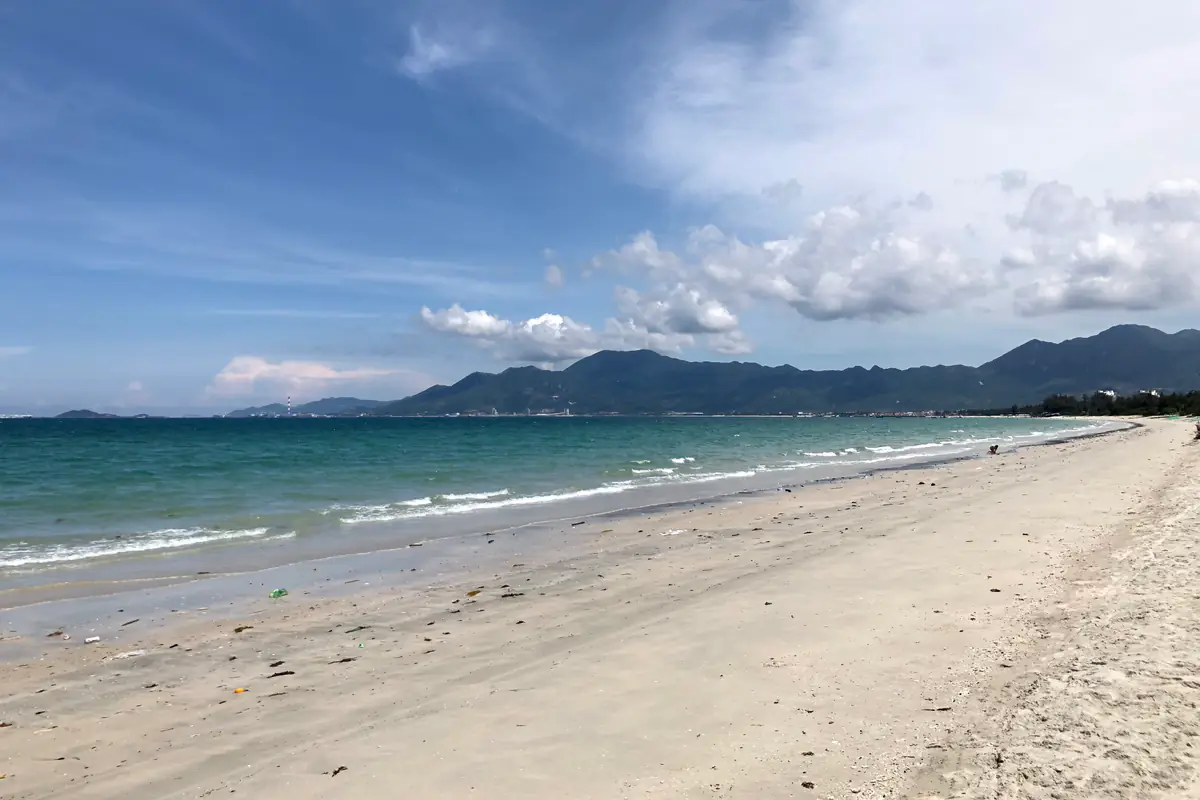
Photo: Victor311
What do Diep Son boats and admission cost in 2026?
For independent travelers, separate your budget into four parts: the road transfer from Nha Trang, the return boat, food or optional activities on the island, and any charges made by a particular landing area or service operator.
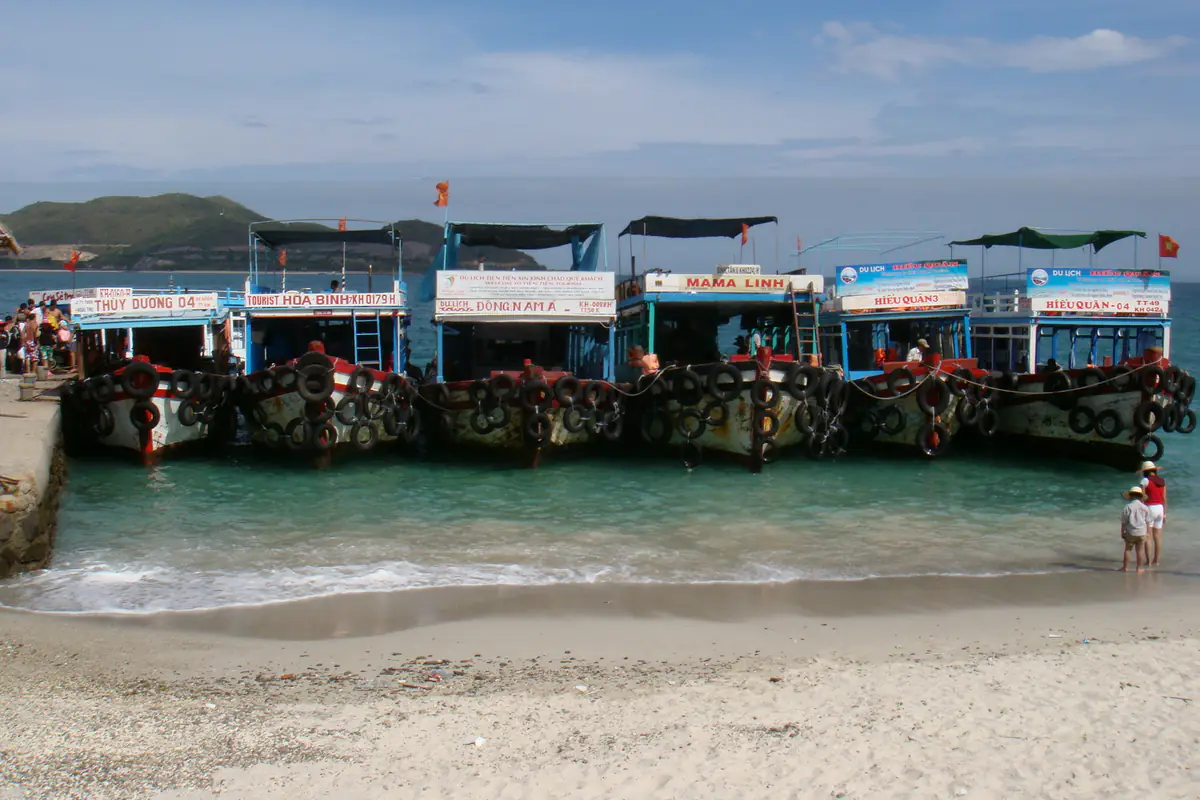
A return speedboat crossing from Van Gia costs approximately VND 200,000-350,000 per person in 2026. Boat companies do not share one universal fare. Price and availability still depend on the operator, boat size, landing point, weather and the number of passengers joining the trip. Ask for the exact total before you board.
Less expensive wooden boats also run. These can take longer and may follow different schedules. The very cheap local passenger-boat fares that appear in much older articles should not be treated as a dependable tourist fare for 2026. The same applies to a promised departure time: a boat serving local residents keeps to its own schedule.
Couples in particular should check whether the quoted price is genuinely per person or only applies when enough people share the boat. A useful question is: “If there are just two of us, what is the complete round-trip charge, including the return crossing?” Then ask the same question about the landing point. A good price is less useful if the boat takes you to a different part of the island group than the one you want to see.
As for admission, there is no single island-wide entry price for every landing and operator. Tour descriptions sometimes list “entrance tickets” among their inclusions, but that can relate to a serviced beach or a bundled attraction. Ask whether your particular island landing requires an additional fee, whether chairs and facilities are included, and what would be charged separately.
In November 2026 a day visit costs around VND 500,000 per person, and an overnight stay with meals and accommodation exceeds VND 2 million per person. Those figures cover the whole trip, crossing included. They are useful context, but not a substitute for an itemized quotation for your own route.
Diep Son Island tour prices from Nha Trang
A guided Diep Son Island tour usually combines transport from central Nha Trang, a return speedboat, lunch and, quite often, a stop at Doc Let. Published examples help establish a reasonable range, provided you compare what is included.
Sea You Travel charges a VND 750,000 adult group-tour fare in 2026, with a schedule running approximately from 7:30 am to 4:30 pm and a visit to Doc Let after the island. Saigon Star Travel charges VND 990,000 per adult for its Diep Son-Doc Let day tour, including transport, a speedboat and lunch as described in its program. Neither quoted price should be treated as a guaranteed live booking offer for every departure date.
Ask each operator about hotel collection, the length of the island visit, where exactly the boat lands, lunch, insurance, language of the guide and the use of beach chairs or showers at Doc Let. Some packages include all of these; others do not. Also ask about any holiday surcharge, a minimum number of guests and the policy if the boat cannot sail due to weather.
The biggest question, however, has nothing to do with the discount. Find out whether the tour will be at the Hon O-Hon Giua sandbar during an appropriate tide. A program that reaches Diep Son at 9 am and returns to shore at 1:30 pm may be fine on one date and disappointing on another. A group itinerary will not move several hours just because the sandbar looks better late in the afternoon.
For visitors who speak little Vietnamese, a tour can still be worth the premium even if it provides less photography flexibility. One person coordinates the pier, the boat, lunch and the return. Make sure the English-speaking service is actually available for your departure rather than merely offered in the company's general brochure.
Tour or independent trip: which is better?
Choose a group tour when convenience matters more than timing. You do not have to navigate to Van Gia, organize seats on a speedboat or negotiate the price of lunch. For a couple staying in a Nha Trang hotel, that can be especially helpful. It also makes budgeting straightforward because several expenses come as a package.
Choose independent travel when walking and photographing the exposed sandbar is the reason for the entire trip. You can change the departure date after looking at the tide, allow a longer stay on the island and skip Doc Let if the tide window is late. It is often the more satisfying way to visit for a photography-focused group, provided you arrange the return crossing in advance.
There is also a middle option: organize your own road journey to Van Gia but reserve seats on a shared local speedboat. That keeps the flexibility of your road trip without the expense of chartering a whole vessel. It works best when the operator can confirm the minimum passenger number, the final fare for your group and the intended landing point.
A four-to-six-person group may find it easier to divide the cost of a private vehicle and negotiate a charter or a group price. Two people traveling independently need to be more careful with minimum passenger conditions. The cheapest seat can turn into an expensive crossing if the boat will not depart without additional payment.
Diep Son may not suit a day built around swimming in clear water, lying on a comfortable sunbed and ordering drinks throughout the afternoon. Consider Doc Let or one of the more developed island trips closer to Nha Trang instead. Diep Son is a better match for people who enjoy a simple setting and are willing to let the conditions shape the itinerary.
Two practical one-day itineraries
Plan A: the useful low tide is in the morning
Leave Nha Trang around 6:30-7 am
Leave central Nha Trang around 6:30-7 am, aim to reach the Van Gia area around 8-8:30 am, and board your pre-arranged boat when the operator confirms conditions are suitable. Go to the sandbar first, before sitting down for lunch or spending time around the fishing village. Take photographs while the exposed sand is at its best, then have lunch around midday and return to the pier at the agreed meeting time. Doc Let can be a short afternoon stop if the boat comes back early enough.
Plan B: the useful low tide is early in the afternoon
Start later, keep it simple
Start later and keep the itinerary simpler. Travel to Van Gia, cross to the correct island landing, have an early lunch and wait for the best daylight low-water window. This only works as a day trip if the operator explicitly confirms a return boat after that window. Without that confirmation, do not improvise a late return at the pier. Look at a different date or arrange accommodation on the island.
Treat these as sample schedules. A guide may give you a different start time on the actual day, and that can be the sensible choice. Leave enough time for the boat crossing, the walk to the sandbar, changing clothes, lunch and a punctual return to the meeting point.
Be particularly careful on a day that also has a long-distance train, flight or overnight bus out of Nha Trang. The return by sea is exposed to weather changes and operator availability. A missed connection could cause serious problems, so schedule Diep Son earlier in your stay rather than on the final afternoon.
What can you do on Diep Son besides the sandbar?
The landscape is the real attraction. From the sandbar you can photograph the surrounding green hills, the changing colors of shallow water and the fishing boats in Van Phong Bay. On Hon Bip there is a fishing community and a different atmosphere from Nha Trang's beachfront road. It is a place to observe an inhabited coastal setting rather than to tick off a list of monuments.
For couple photographs, a simple composition works well: place one person near the edge of the exposed path and shoot along the curve of the sand, keeping the water visible on both sides. A wide shot explains why you traveled here more effectively than a close-up portrait. Keep some distance from the water's edge when the sand is narrow and do not block other visitors who need to pass.
Some operators offer kayaking, swimming or other waterside activities. These are not included by default with every boat ticket. Ask what is actually running on the day, whether there is supervision and how much the activity costs before committing. If you kayak, wear a life jacket, find out where you are allowed to paddle and agree on a return time. Coral viewing also depends on weather, water clarity and the availability of an appropriately organized trip.
For photographers, lighting is another consideration. Bright midday sun creates sharp shadows and reflections; early or late light is often easier for portraits. But tide comes first. If the sandbar is exposed only near midday, take a hat, drink water and look for angles that avoid pointing the camera straight into harsh sunlight. Bring a lens cloth, as salt spray and damp hands can quickly make a clean image look soft.
Do not treat the inhabited island as a photography set. Ask before making close-up pictures of residents or their homes, and keep drones on the ground unless you have confirmed the applicable flight requirements and any local restrictions. You can make memorable photographs without climbing on boats, entering private areas or damaging coastal vegetation.
Where can you eat on Diep Son Island?
Food choices are limited compared with Nha Trang. Hon Bip has a fishing village and some tourist dining facilities, but this is not a place where you should expect several restaurants to be open at any hour. A guided tour commonly includes a set lunch, so ask for the menu when booking, particularly if you avoid seafood or have allergies.
Fish, squid, shrimp, rice and vegetables are typical of the meals described in island tour programs. The actual dishes vary by provider and availability. Independent travelers can arrange a meal through their boat operator or ask them to identify a restaurant at the exact landing point. Confirm whether lunch is priced per person or by the dish and when you need to place the order.
For seafood sold by weight, ask for the price per kilogram, the weight before preparation and any cooking charge. This is a simple check that prevents confusion when the bill arrives. Diep Son restaurants do not post one flat lunch price, so treat food as an expense to confirm rather than an exact figure to copy from an old review.
Can you stay overnight on Diep Son Island?
Yes, basic accommodation and camping-style stays have been offered on Hon Bip. What you should not expect is a full-service island hotel with uninterrupted electricity, reliable hot water and every facility you would find in central Nha Trang. Before paying, ask the operator what type of bed or tent is provided, whether there is air conditioning, how the bathroom works, when electricity is available and whether dinner and breakfast are included.
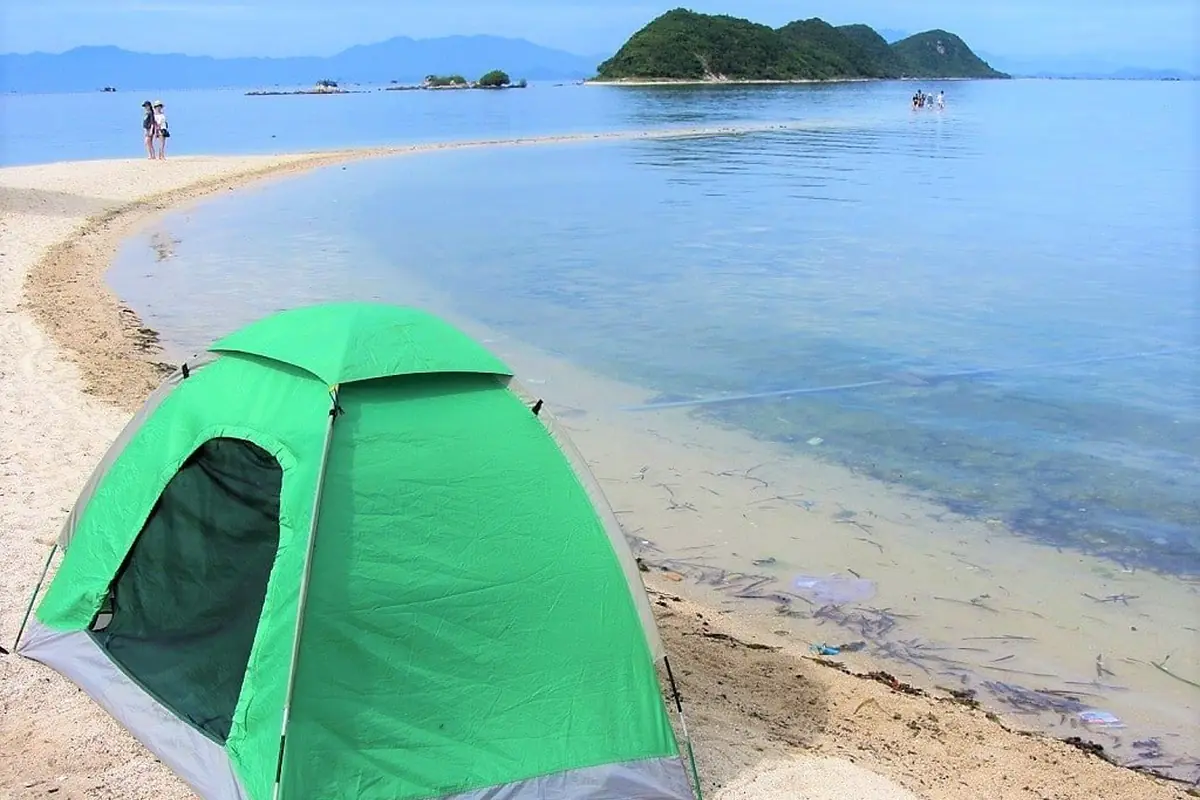
Photo: Tom Divers, Vietnam Coracle
Staying overnight makes sense if the tide you want falls outside the practical boat window of a Nha Trang day tour. It gives you an opportunity to photograph the bay early and to avoid sharing every moment with visiting groups. It also means you need to plan an additional meal and a return trip by water the next day. Confirm both before arriving.
The figure of more than VND 2 million for an overnight visit includes accommodation and meals; it is not a fixed room rate. Ask for a written, itemized quote instead of assuming that figure applies to your party. Take a power bank, basic toiletries and any personal medication, as the island's facilities are relatively simple.
Note the geography again: a room on Hon Bip may be some way from the surviving Hon O-Hon Giua sandbar. Ask how you would transfer between the two areas, how long the crossing takes and whether it is included in the price. Doc Let or Nha Trang suits a comfortable resort evening better; Diep Son is for a dawn photo session.
What is the best time of year to visit Diep Son?
For a one-day outing from Nha Trang, February through June is a sensible first choice. You are generally more likely to encounter sunnier days and manageable sea conditions than in the wettest part of the year. January can work too, but you should still check wind conditions. July and August can be hot and bright, with individual good days; do not assume every summer date will have calm water.
September to December requires more caution, especially October and November when rain, rough seas and disrupted boat services are more likely. December can still be variable even though some guides include it in their preferred season. The month alone tells you little about whether a boat will operate on a particular day or what the tide will do at Hon O.
Travelers with flexibility should choose a day when three things come together: acceptable weather, a useful low tide during daylight and a confirmed return boat. Those conditions are more important than a promise of clear skies in a long-range monthly weather summary.
What should you pack for the sandbar?
Water shoes or secure sandals are better than loose flip-flops on wet sand mixed with shells. Pack sun protection, a hat, drinking water, a small towel, a change of clothes and a waterproof pouch for your phone. A dry bag is useful if you are carrying a camera. Light-colored clothing looks good against the blue water, but very long dresses can become difficult to manage when the path is wet or narrow.
Make sure children wear properly fitting life jackets on the boat and stay within arm's reach near the water. Adults should follow the boat crew's life-jacket instructions too. Do not stand up to take pictures while the speedboat is moving, and do not enter deeper water simply because the exposed sand looks shallow from a distance.
Use a passenger service that can clearly identify the boat, its operator, its boarding point and its return arrangements. Avoid accepting an informal transfer with no clear safety arrangements just because it is cheaper. On the island, ask which sections are safe to walk at that particular tide and return as instructed if the water begins to rise or the weather changes.
Keep a phone number for the boat contact, save the landing location offline and agree on a group meeting time. The sandbar area can be distracting when everyone is taking pictures. One person in your group should keep track of the return time, and everyone should know where to regroup; that is the easiest way to avoid a missed boat.
Three questions to send before you book
The first question is about destination: “Does the boat take us to Hon O-Hon Giua, or only to Hon Bip? If it is Hon Bip, is the transfer to the surviving sandbar included?” Asking it early avoids buying the wrong trip.
The second is about timing: “What is the expected low-water window at that sandbar on our date, and will your itinerary put us there then?” The operator may need to reconfirm closer to departure, which is fine as long as you agree when that confirmation will happen. An old generic statement about a 6 am low tide is not enough.
The third is about the total price and return: “What is the complete round-trip cost for our group, including any minimum passenger charge, and what is the final confirmed return departure?” Ask what happens if rough weather prevents sailing. Once the answers are clear in a message, you can book the car from Nha Trang and decide whether Doc Let fits the rest of your day.
Your next step: Pick a date, check the daylight low tide near Van Gia, and message the boat operator to confirm the Hon O-Hon Giua landing and the return crossing. Book the road trip from Nha Trang only after those details are settled.
FAQ
Where is Diep Son Island in relation to Nha Trang?
Diep Son is in Van Phong Bay, north of Nha Trang. Van Gia harbor is about 60 km away by road, followed by a speedboat or wooden-boat crossing. It can be visited in one day if both directions of the boat trip are confirmed.
Is the famous Diep Son sandbar still there?
The old sandbar of more than 700 meters between Hon Giua and Hon Bip was lost after a 2017 storm. A different sandy path of about 400 meters between Hon O and Hon Giua is still there in November 2026. Its exposed area and appearance vary with the tide.
How much is the boat to Diep Son Island in 2026?
A return speedboat from Van Gia costs about VND 200,000-350,000 per person in 2026. Operators do not share one fixed tariff. Ask for the full fare for your party, the exact landing, possible extra charges and the confirmed return time.
Is a Diep Son Island tour better than going independently?
A tour is easier if you want a hotel pickup, lunch and Doc Let in one package. Independent travel is better if your main priority is choosing a tide-friendly time for photography. Neither option can guarantee a particular sandbar appearance without checking conditions.
Can you eat or sleep on Diep Son Island?
Basic food services and simple accommodation are available, especially around Hon Bip, but the choice is limited. Arrange meals and overnight stays ahead of time and check the facilities, landing point and next day's return boat.
Related posts
Islands & beaches
Monkey Island Nha Trang: Go on your own or take a tour?
Compare ticket prices, boat schedules, tours, and safety tips before visiting Monkey Island in Nha Trang.
Islands & beaches
What is there to do on Hon Tam Island in Nha Trang, and how much does it cost?
Ticket prices, departure piers, activities, and the best way to visit Hon Tam Island as a couple or family.
Islands & beaches
Nha Trang island group tour or private speedboat: which is better?
Compare prices, itineraries, and included services to choose the right Nha Trang island tour.