Can you visit Binh Ba Island in 2026, or is tourism banned?
Binh Ba Island is not currently an appropriate destination for a tourist trip: Khanh Hoa authorities have ordered tourism activities and tours there to stop. The restriction matters to Vietnamese visitors as well as foreigners, so do not book a boat or island accommodation based on an old travel guide.
Written by Tụi mình mê biểnUpdated
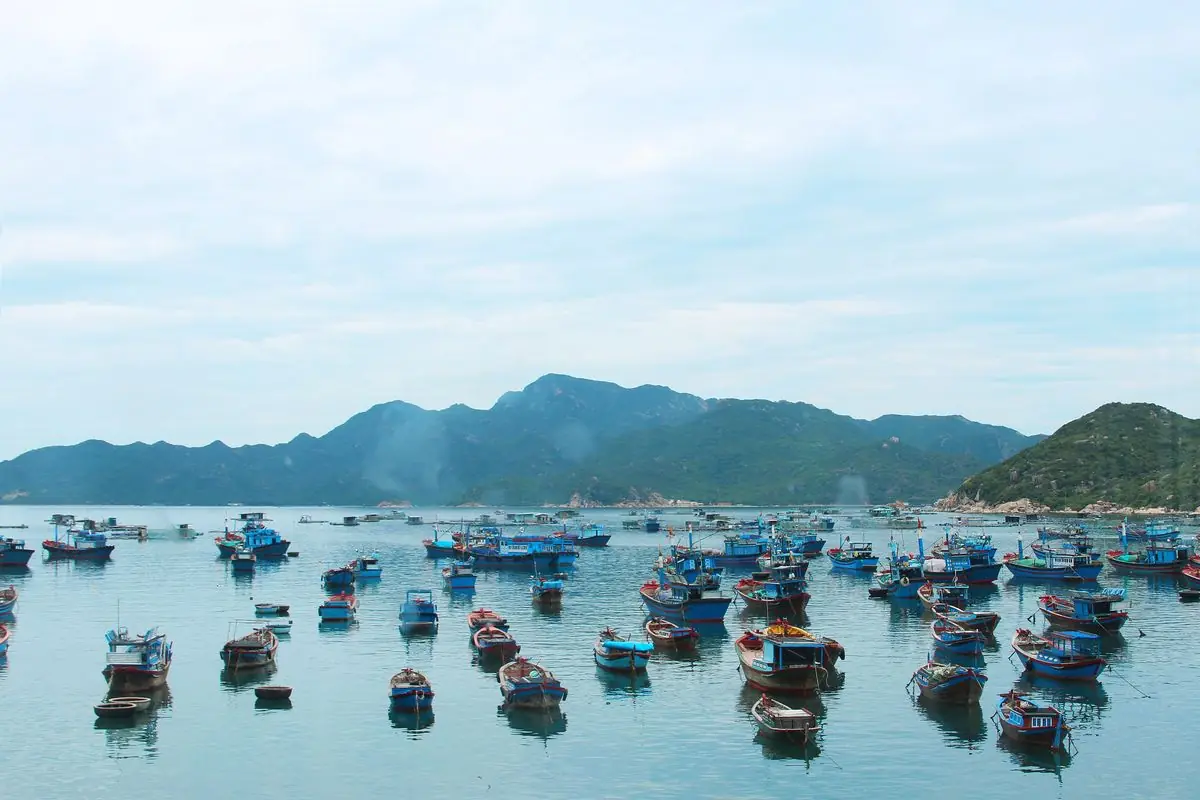
Photo: Violetbonmua
A beach day on the Binh Lap peninsula can begin with a drive down from Nha Trang, a seafood lunch on the mainland and a night in Cam Ranh. A Binh Ba Island tour looks similar on a map, except that it requires a boat into an area where tourism is not permitted. That distinction matters far more than whether the crossing takes twenty minutes or an hour.
Where is Binh Ba Island?
Binh Ba is a small inhabited island near the entrance to Cam Ranh Bay in Khanh Hoa province, southern central Vietnam. It covers roughly three square kilometers and is known for its sheltered coves, rocky hillsides, fishing community and lobster farms. From central Nha Trang, the island is approximately 60 km to the south. It is also commonly described as being around 15 km by sea from the Ba Ngoi port area on the Cam Ranh mainland.
Maps give conflicting addresses. Older guides place Binh Ba in Cam Binh commune, Cam Ranh city. Following Vietnam's administrative restructuring in July 2025, the island is described under Nam Cam Ranh commune. Both refer to the same place. An old administrative name on a booking website is not evidence that a hotel or excursion is still operating legally.
Binh Ba is not part of Nha Trang Bay. It lies farther south, beyond the main Nha Trang beach and the airport corridor, toward the strategically important Cam Ranh harbor. That explains why “an island near Nha Trang” is an incomplete description. Its location inside the security arrangements for the Cam Ranh military base determines whether a tourist visit can be made at all.
Loading map...
- Binh Ba Island: Tourism not permitted in 2026
- Ba Ngoi port: Old departure point for Binh Ba boats
- Cam Ranh International Airport: Road transfer onward
- Bai Dai: Beach and resorts near the airport
- Hon Tam: Island trips with canoe, beach and mud bath in Nha Trang Bay
The old access point was the Ba Ngoi port area, where local boats historically connected Cam Ranh with the island. From Cam Ranh International Airport, travelers had to make a separate road journey to the port; from central Nha Trang, the drive was longer. Reaching that waterfront by taxi does not now establish a right to board a boat to Binh Ba for sightseeing.
You may also encounter the phrase Tu Binh, the “four Binh” destinations: Binh Ba, Binh Hung, Binh Lap and Binh Tien. It is a tourism nickname; the four places do not share one access rule. Binh Lap is a peninsula reached by road, while Binh Ba and Binh Hung fall within the areas covered by the Cam Ranh tourism restrictions. A tour claiming to visit all four should therefore be treated with caution.
Is Binh Ba Island banned for tourists in 2026?
Yes. The current public instructions from Khanh Hoa prohibit organizing or developing tourism activities at Binh Ba Island, Hon Chut (Binh Hung Island) and Mui Hoi. The restriction is about a military security area. It is not a short-term suspension caused by bad weather, a beach clean-up or an ordinary low-season closure.
On 28 May 2026, the Khanh Hoa Department of Culture, Sports and Tourism issued a dispatch instructing authorities, organizations and tourism businesses not to conduct or develop tourism in those locations. The province's tourism information portal published the direction on 4 June 2026. Travel companies were told to stop operating, promoting or brokering tours and to discontinue offers involving restricted areas.
The department linked the instruction to the security rules surrounding the Cam Ranh military base. Its public notice cites the decision governing the base and a narrowly framed provision of Vietnam's Law on Management and Protection of National Defense Works and Military Zones. That provision covers activities and developments requiring written approval from the Ministry of National Defence. It is not a general permit allowing holidaymakers to buy a ticket and visit the island independently.
The online information is particularly confusing because some pages were written years ago and have simply had “2026” added to their headings. You can still find photographs of groups posing beside the harbor, old accommodation listings and tour descriptions offering a lobster lunch. None of those items supersedes the province's current announcement. A trip planned now starts from the official restrictions.

Photo: ttuananh
Are foreigners allowed on Binh Ba Island?
For anyone searching “Binh Ba Island foreigners”, the practical answer is that foreigners should not plan a tourist visit. Binh Ba is inside a protected military area, and the official tourism direction for 2026 rules out ordinary tourism operations on the island. This is not a situation where a foreign passport is the only obstacle and Vietnamese travelers automatically have full tourist access.
Older English-language guides often say that foreign nationals cannot visit but Vietnamese citizens can board after showing an identity card. That distinction reflected the way some informal trips were discussed in the past. It is not a sufficient explanation of the instructions issued in 2026, which address tourism activities themselves. Carrying a Vietnamese national ID does not make a prohibited package tour permissible.
There can be reasons to visit a location that are not tourism: family responsibilities, official duties, legitimate work, cargo movements or other authorized purposes. The rules and procedures for those situations are not explained by a holiday article. If this applies to you, contact the competent authorities, such as the relevant administration in Nam Cam Ranh or the responsible border-control authorities, and describe your actual purpose. Do not use general travel advice as a substitute for permission.
Overseas Vietnamese travelers and dual nationals face the same question. Rather than assuming a certain document guarantees entry, check which nationality, residence status and purpose the authorities will consider. For a mixed-nationality group planning a beach holiday, the simpler and safer decision is to choose a destination where tourism is officially permitted for everyone in the party.
How do you get to Binh Ba Island, and what happened to the ferry schedule?
Historically, the usual route was to drive from Nha Trang or Cam Ranh Airport to the Ba Ngoi area and continue by wooden boat or speedboat. The wooden crossing was often described as taking 30-60 minutes, while a speedboat could make the crossing in roughly 15-20 minutes in suitable conditions. These figures describe an old transport route. They are not a current tourist timetable or an offer to arrange passage.
Older travel pages list departures toward Binh Ba at 7:00 am, 10:00 am, 1:30 pm and 4:00 pm. Some quote a fare of VND 25,000-40,000 per one-way wooden-boat journey. Other pages display different departure times, including 8:00 am, noon and 2:00 pm. The inconsistency is one reason not to use search snippets to plan a connection from the airport or a same-day return.
There is no authorized, currently applicable tourist ferry timetable or tourist ticket price for Binh Ba. With the order to stop tourism in place, it would be misleading to publish one of those old lists as if a visitor could simply arrive at the pier and buy a leisure ticket. This article does not recommend a particular sailing or provide a booking contact for that purpose.
You may see advertisements for a “Binh Ba Island tour” with a precise start time, a speedboat picture and a deposit request. Ask what destinations are actually included, what authority permits the operator to run a tourism product there, and what refund conditions apply. A business registration or a social-media review cannot override a location-specific restriction. Do not build a non-refundable flight and hotel itinerary around an unverified departure.
An island excursion from Nha Trang is easier with an established tourist operation elsewhere in Nha Trang Bay. Hon Tam, for example, publishes its own transport schedule and package prices. If you want the scenery of Cam Ranh rather than the boat ride itself, staying on the mainland around Bai Dai or Binh Lap is more straightforward.
What are Bai Nom, Bai Chuong and Bai Nha Cu like?
The three names most often associated with Binh Ba are Bai Nom, Bai Chuong and Bai Nha Cu. They explain much of the island's reputation. Bai Nom is known for its sandy shoreline and proximity to the inhabited part of the island. Bai Chuong is often photographed in the early morning, with rockier coastal scenery. Bai Nha Cu appears in older accounts of clear water, reefs and rocky coves.
These are landscape descriptions, with no present-day swimming or snorkeling recommendation behind them. Old photographs can be useful for understanding why the island became popular, but they tell you very little about whether a beach is accessible in 2026. A beach marked on a map may still be off-limits to visitors, particularly in a military-sensitive coastal area.
The word “untouched” can also be misleading. Binh Ba has a real community, houses, working boats, markets and aquaculture activity. It was never simply an empty island waiting for travelers to set up tents wherever they liked. The combination of village life, clear bays and a relatively small island is part of its appeal, but the same setting has responsibilities and restrictions that an ordinary resort beach does not.
Bai Nom's sandy shore has a match at Bai Dai in Cam Ranh or a managed beach in Nha Trang. Hon Tam is a better fit for an island with organized facilities. A quiet coastal road, fishing boats and a seafood lunch point to the Binh Lap peninsula. The wider character of this coastline is easy to experience without reaching Binh Ba.
Why is Binh Ba famous for lobster?
Binh Ba is nicknamed Lobster Island because lobster farming has long been an important part of the aquaculture economy around Cam Ranh Bay. The animals are raised in cages, sorted and traded by type and size, then sold through seafood markets and restaurants. The name has become so well known that some visitors think they must visit the island itself to eat a lobster associated with the area.

Photo: Blog Vexere
They do not. Lobster produced around the bay can be sold and served on the mainland, including in Cam Ranh and Nha Trang. That makes a food-focused trip possible without treating the island as a permitted tourism stop. You can still enjoy the regional specialty while following the rules governing where travelers may go.
Two common terms are tôm hùm xanh, usually the more everyday green spiny lobster, and tôm hùm bông, a larger, more expensive type often called ornate or painted spiny lobster. The exact English common names can vary between menus. The more useful ordering questions are whether the lobster is live or frozen, how much it weighs, what the price per kilogram is and whether preparation is charged separately.
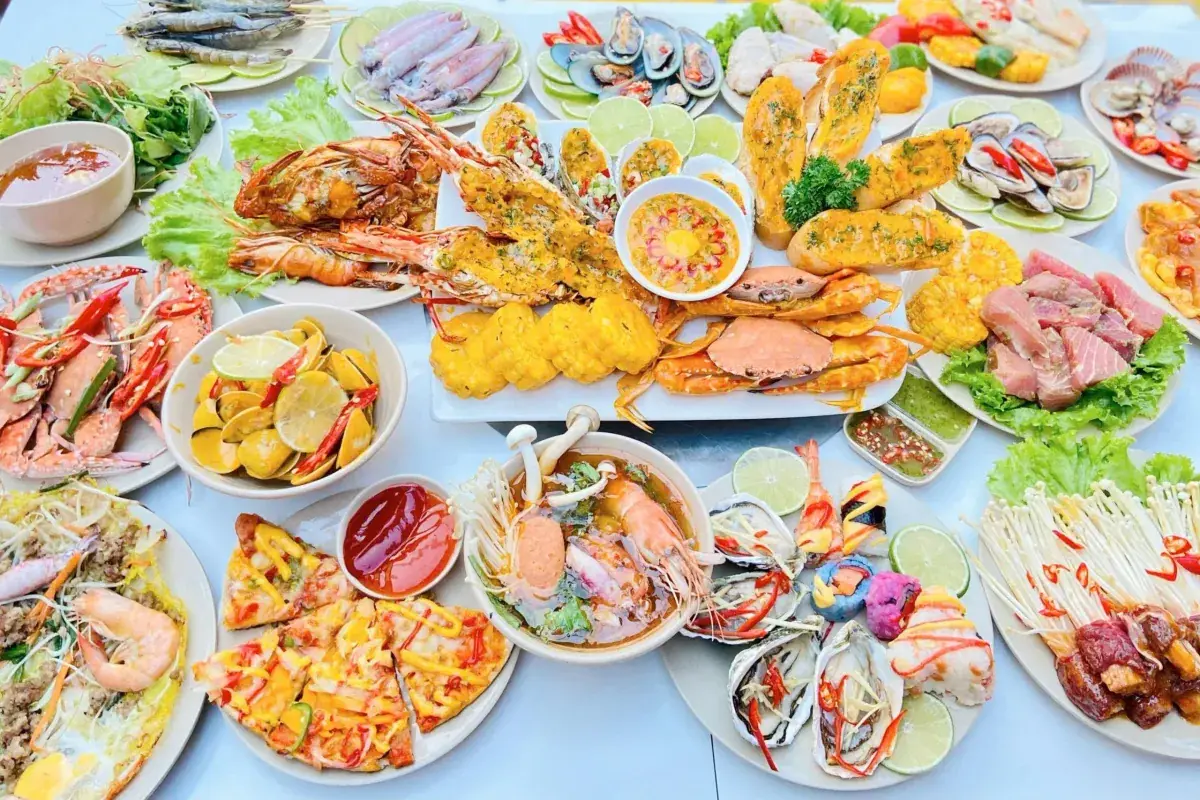
Photo: I Like Buffet
There is no single reliable “Binh Ba lobster price in 2026” that can be applied to every meal. Farm-gate prices, wholesale market prices and restaurant menu prices are different. They also vary with species, size, supply and the time of year. Check the restaurant's current menu or live-tank quotation and keep an itemized bill.
If you do not speak Vietnamese, it helps to ask: Bao nhiêu tiền một ký? (how much per kilogram?). Then confirm phí chế biến (cooking charge) and ask to see the weight on the scale. These small checks are more useful than chasing a supposedly cheap “lobster island tour” that should not be operating as a tourist excursion.
Can you stay overnight on Binh Ba Island?
Older Binh Ba guides mention guesthouses, homestays near the harbor and overnight seafood meals on floating rafts. That material should now be read as historical travel information. This guide does not recommend booking Binh Ba Island accommodation for a leisure trip in 2026. A guesthouse listing can remain visible after the conditions for tourism have changed, so the presence of a room rate online is not enough.
The most convenient area for a one-night stay near Cam Ranh depends on what you want to do the following morning.
Bai Dai
Airport-side coast, resorts, managed beach

Photo: L.K.Phung
Bai Dai, along the airport-side coast, is good for travelers who want a managed beach, resort facilities and easier access to Cam Ranh International Airport. It particularly suits families, couples wanting a quiet resort stay and passengers with an early departure the next day. The experience is considerably more developed than a fishing village, and prices depend heavily on the property and dates.
Central Cam Ranh
Seafood, markets and local streets
Central Cam Ranh makes more sense if seafood is your priority and you prefer local streets, markets and restaurants to resort grounds. You may need to travel farther to find a beach suitable for swimming, but dinner and everyday services are easier to arrange. Check each accommodation address carefully: “Cam Ranh” in a hotel name can describe locations many kilometers apart.
Binh Lap peninsula
Smaller bays and shore roads
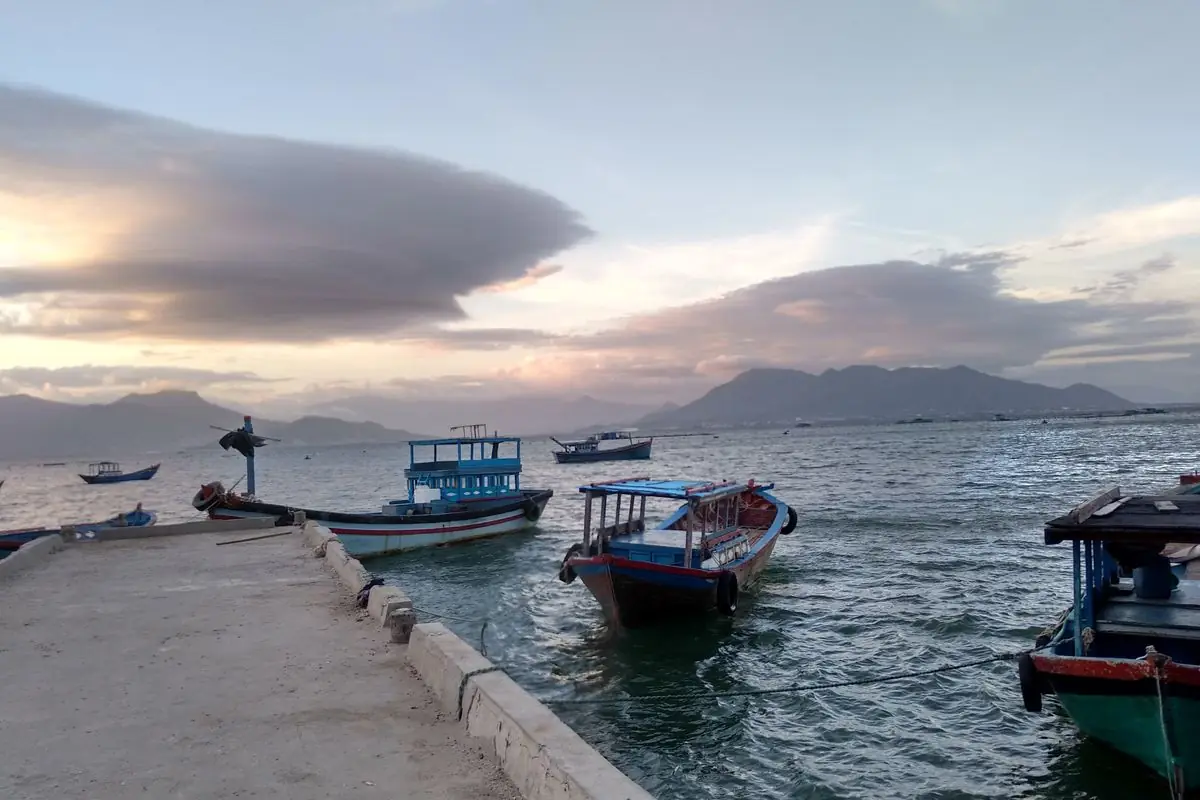
Photo: Karel Bilek
Binh Lap peninsula suits travelers drawn to smaller bays, shore roads and a slower overnight stay. Some properties are reached by narrower local roads, and dining choices may be limited once you are away from the main route. Before booking, ask about car access, parking, the nearest restaurant and how you will return to the airport or Nha Trang. An attractive photograph taken on a dry morning does not explain the access road on a wet evening.
Central Nha Trang
The easiest base for a first visit
On a first visit to Khanh Hoa with several places to see, central Nha Trang remains a sensible base. You can explore the city, choose an authorized island day trip and make Cam Ranh a separate excursion without changing hotels. On a short trip, one base often saves more time than trying to stay overnight at every scenic coastline you pass.
March to August is the easiest season on the Cam Ranh coast
For beach trips around Nha Trang and Cam Ranh, March through August is generally the easier period to plan. There are usually more dry, sunny stretches, with April to June particularly appealing for swimming and long daylight hours. July and August can be hot, so use the middle of the day for lunch and shade rather than prolonged sun exposure.
Khanh Hoa's wetter season broadly runs from September into December, with October and November often bringing more substantial rainfall. This does not mean it rains every hour or that every trip must be canceled. It does mean that sea conditions and road plans deserve more flexibility. A hotel with a pleasant place to spend a rainy afternoon becomes more useful during these months.
A sunny weather icon does not guarantee that a boat can sail or that a beach is safe for swimming. Wind, swell, port instructions and warnings from local operators matter. Any permitted island operator should explain weather cancellations and refunds. With children or people prone to seasickness, leaving the last possible return sailing as the only option is rarely a good plan.
The season does not change Binh Ba's tourism status. Calm water in May does not turn a restricted destination into an open one. Use seasonal advice to decide when to visit Bai Dai, Binh Lap, Hon Tam or another destination that actually accepts tourists.
What should you visit instead of Binh Ba Island?
The best replacement depends on what first made you search for Binh Ba. If it was the quieter Cam Ranh coastline, consider the Binh Lap peninsula and mainland beaches rather than another island. Drive down from Nha Trang in the morning, stop for lunch at a seafood restaurant with transparent pricing, and leave enough daylight to enjoy the coastal views without rushing along narrow roads. You can return to Nha Trang or stay overnight in Cam Ranh.
If you are flying into Cam Ranh and want the simplest beach break, Bai Dai is a practical choice. You avoid heading north to Nha Trang only to turn south again. Arrive, leave your luggage, eat lunch and swim later in the afternoon if local conditions are suitable. The plan works especially well for families and travelers who do not want to spend much of a two-day break on transfers.
If it was the experience of taking a boat to an island, Hon Tam in Nha Trang Bay is the clearest alternative. VinWonders, the operator, sells 2026 packages there. Its promotional rate for an adult package with round-trip canoe transfers, beach access and a standard mud bath is VND 540,000. The adult package with lunch at Hon Viet restaurant is VND 855,000. Those are VinWonders' own 2026 offers; other island tours price differently.
Hon Tam outbound canoes leave at 8:00 am, 9:00 am, 10:00 am, noon and 2:00 pm. Return services run at 10:30 am, 12:30 pm, 2:30 pm and 4:30 pm. Check the departure point and the schedule attached to your particular ticket before traveling, because services can change with weather, season and the package purchased. Those are Hon Tam times only.
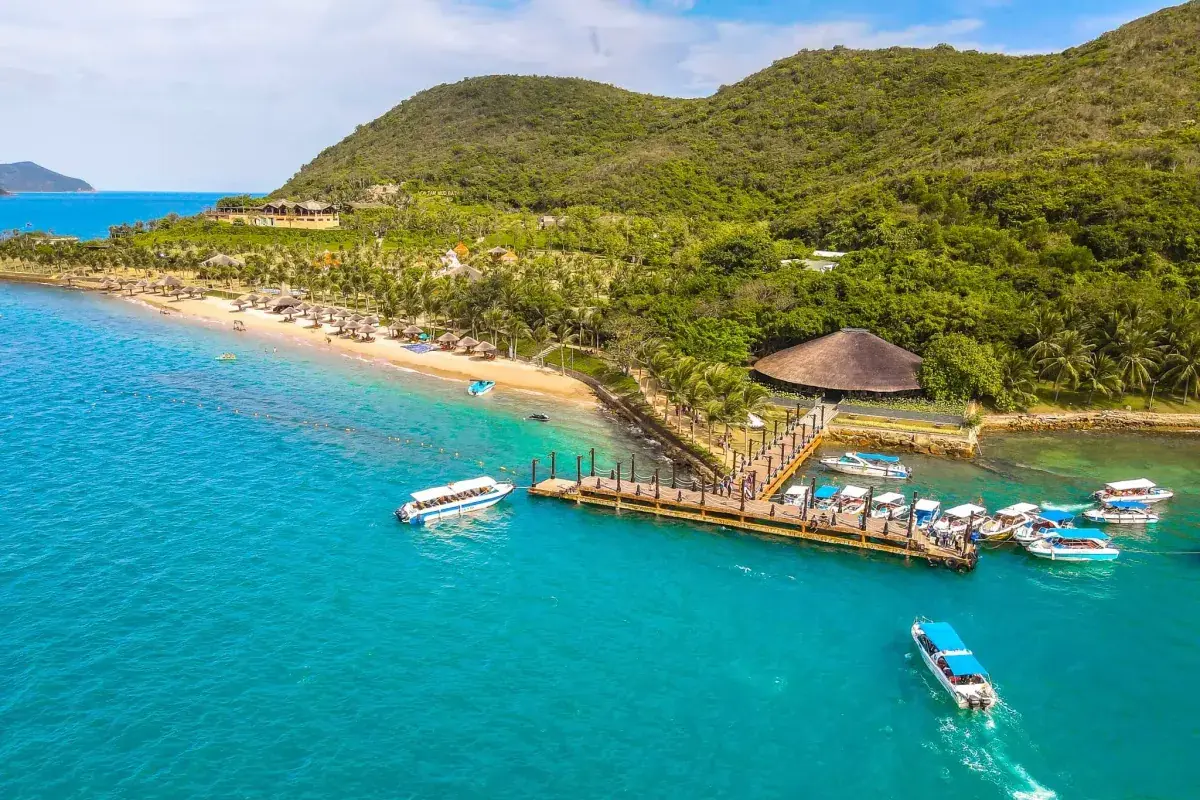
Photo: Let's Fly Travel
Hon Tam is more organized and commercial than the island lifestyle that made Binh Ba famous. That can be an advantage if you want reliable facilities, a place to change clothes, lunch arrangements and a defined route back to the mainland. Swimmers can choose the beach package rather than paying for every spa activity.
Nha Trang Bay also has other named stops, such as Hon Mieu and several managed beach areas, but do not assume that every island or reef has identical visitor rules. Some marine protection areas can have separate limits on diving, swimming and boat access. Check the actual itinerary and permitted activities instead of buying a package based only on the words “three islands” or “coral tour”.
A practical one-day itinerary without Binh Ba
For someone who wanted a Binh Ba day trip mainly for the sea and seafood, here is a sensible mainland Cam Ranh day. It is a planning template:
- 7:30-9:00 am
Leave Nha Trang or have breakfast
Leave Nha Trang toward Cam Ranh, or have breakfast near your Cam Ranh hotel. Allow extra road time based on your actual starting point.
- 9:00-11:30 am
One beach or viewpoint
Choose one beach or coastal viewpoint that is open to visitors. Avoid turning a relaxing day into a race between distant places.
- 11:30 am-1:30 pm
Seafood lunch
Have a seafood lunch. If you want lobster, confirm the species, weight, per-kilogram rate and cooking fee before ordering.
- 1:30-3:00 pm
Shade and rest
Take a break indoors or in the shade. Early afternoon is too hot for an exposed coastal walk.
- 3:00-5:00 pm
Beach walk, then back or check in
Enjoy a beach walk or another accessible scenic stop, then return to Nha Trang or check into your accommodation in Cam Ranh.
If an island boat ride is non-negotiable, replace this itinerary entirely with a Hon Tam day. Follow the meeting point supplied by the operator, choose a morning canoe, have lunch on the island if included and return on the service shown in your booking. Do not append an unofficial Binh Ba crossing to an otherwise legitimate day trip.
A two-day itinerary for beaches and lobster
Day one: arrive in Cam Ranh and choose either Bai Dai or central Cam Ranh as your base. Bai Dai is better when you want a beach or resort pool close at hand; the town is better when your priority is finding local restaurants and moving around independently. Spend the afternoon in the water only if conditions are safe. Dinner can be Cam Ranh seafood, including lobster if it suits your budget, once you have confirmed the price and weight.
Day two: eat breakfast, then head toward Binh Lap for a scenic mainland drive and a quieter corner of the bay. Alternatively, return to Nha Trang for an afternoon along Tran Phu beach and an evening meal in the city. If you are catching a flight that day, keep the schedule light. A final-day boat excursion with a late return is a poor match for a flight you cannot afford to miss.
Visitors without a private car can stay in Nha Trang throughout the trip instead. Make the first day a booked Hon Tam excursion and leave the second day for food, markets, the waterfront and city sights. You avoid changing accommodation and get a clearer transport plan.
Neither of these itineraries tries to recreate a banned Binh Ba overnight stay by using an alternative landing site. They are independent trips to places you can assess and book on their own terms.
How much should you budget?
The key number many travelers want is the cost of a Binh Ba ferry, but there is no current tourist fare to book in November 2026. The VND 25,000-40,000 tickets mentioned in older articles are archival information and do not belong in a new holiday budget. The same applies to old island guesthouse prices and two-day tour packages.
For an alternative trip, build your budget from services with named operators and dates. The Hon Tam package rates above are an example: the 2026 VinWonders offer is VND 540,000 per adult for canoe, beach and mud bath, or VND 855,000 including a lunch buffet. Ask whether your selected ticket includes everything you expect and check rates for children separately.
Compare the actual room offer, taxes and cancellation rules on your dates rather than relying on a general “Cam Ranh hotel price” quoted in a travel article. A beachfront resort, a small town hotel and a peninsula guesthouse are different products. Their rates can change substantially between weekdays, public holidays and peak summer weekends.
Lobster should be a separate, adjustable item. Decide how much you are comfortable spending before you choose the animal, and confirm the total cost in writing or on the restaurant's order slip. The budget for two people who share one lobster and several side dishes will look very different from that of a group ordering multiple premium lobsters by weight.
What should you check before paying for any coastal tour?
Start with the exact destination. An excursion labeled “Cam Ranh Bay” might be a perfectly ordinary mainland or approved coastal activity, while an excursion labeled “Binh Ba lobster experience” could be promoting tourism where it is prohibited. Ask for the island names, pier, route, lunch location and actual points of disembarkation.
Then check permission to operate at those places. A travel license does not cover selling a trip into every coastal area in Khanh Hoa. If the itinerary contradicts the province's official announcement, ask the relevant authority before paying. A claim that “locals still go there” does not answer the question.
Finally, read the payment and cancellation terms. Avoid transferring deposits to an unknown personal account for a boat that cannot show a verifiable permitted tourist service. Do not send scans of your passport or national ID through an unverified messaging contact simply to reserve a questionable crossing. A legitimate island operator should confirm its bad-weather policy and the last return time; ask for both.
Quick choice: is Binh Ba worth putting on your itinerary?
For a leisure trip in 2026, leave Binh Ba off the itinerary, whether you hold a Vietnamese or foreign passport. Choose Bai Dai for an easy beach stay, Binh Lap and mainland Cam Ranh for coastal scenery and seafood, or Hon Tam for an authorized island outing with a fixed operator schedule.
FAQ
Is Binh Ba Island closed to Vietnamese tourists too?
Yes, the June 2026 official tourism direction concerns tourism activities at Binh Ba itself, not just the nationality of visitors. Vietnamese travelers should not assume that an ID card makes a commercial sightseeing trip or island holiday permissible.
Can foreigners visit Binh Ba Island with a Vietnamese friend?
Not as an ordinary tourist visit under the current restrictions. Traveling with a Vietnamese citizen, holding a visa or using a local boat does not bypass the rules. Anyone with a genuine non-tourism purpose should ask the competent authorities directly about that specific situation.
How far is Binh Ba Island from the mainland, and how much is the ferry?
It is commonly described as about 15 km by sea from Ba Ngoi. Older guides quote wooden-boat fares of VND 25,000-40,000 one way, but those are not currently bookable tourist fares in 2026. There is no authorized tourist timetable to book.
Can you eat Binh Ba lobster without visiting the island?
Yes. Lobsters raised around Cam Ranh Bay are sold on the mainland. In a Cam Ranh or Nha Trang seafood restaurant, ask for the species, live weight, price per kilogram and cooking fee before agreeing to the order.
Should you plan one day or two days for Binh Ba Island?
Neither is suitable as a tourist itinerary under the current rules. For one day, choose an authorized Hon Tam trip or a mainland beach. For two days, stay in Cam Ranh or Nha Trang and combine accessible beaches, a coastal drive and a seafood meal.
Related posts

Islands & beaches
Diep Son Island, 60 km from Nha Trang: boats, tides and the sandbar
Check the tide and the landing point before paying for your Diep Son boat.
Islands & beaches
Monkey Island Nha Trang: Go on your own or take a tour?
Compare ticket prices, boat schedules, tours, and safety tips before visiting Monkey Island in Nha Trang.
Islands & beaches
What is there to do on Hon Tam Island in Nha Trang, and how much does it cost?
Ticket prices, departure piers, activities, and the best way to visit Hon Tam Island as a couple or family.