Visit Ba Ho Waterfalls in Nha Trang: choose the right pool and hike safely
Ba Ho Waterfalls is worth visiting if you enjoy scrambling over rocks, swimming in freshwater pools and spending a morning outdoors. Pool 1 is the sensible choice for beginners, while Pools 2 and 3 require better fitness and confidence on rocky terrain.
Written by Tụi mình mê biểnUpdated
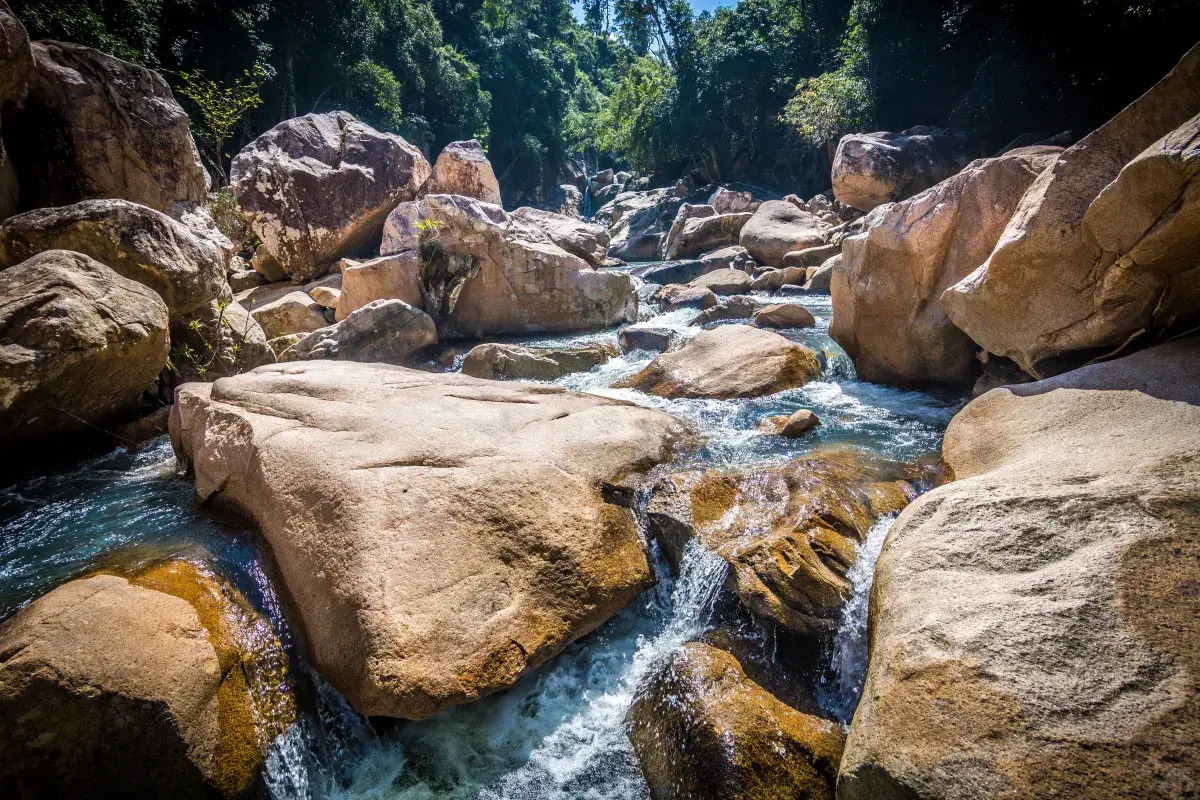
Photo: Khu du lịch sinh thái Ba Hồ
In Nha Trang, you could spend a day relaxing on the sand at Doc Let Beach or travel about 25 km north to climb rocks and swim in freshwater at Ba Ho. Doc Let suits travelers looking for a quiet beach day with little physical effort. Ba Ho is for those who would rather walk through the forest, scramble over large boulders and take a break beside a mountain stream. It's closer to the city and manageable as a half-day trip, but the hiking itself is considerably more demanding than a beach visit.
Where is Ba Ho Waterfalls in Nha Trang?
Ba Ho Ecotourism Area is located in Van Thuan Hamlet, Nam Ninh Hoa Commune, Khanh Hoa Province, approximately 25 km north of central Nha Trang. Older maps and travel guides may list its previous address as Ninh Ich Commune, Ninh Hoa Town.
From the Tran Phu Street area, the drive usually takes around 40-60 minutes by car or motorbike, depending on your starting point and traffic.
25 km
from central Nha Trang
40-60 min
each way by road
1.5 km
stream trekking route
8 AM-4:30 PM
opening hours
The name Ba Ho means "Three Lakes" in Vietnamese. It refers to three natural pools at different elevations along the same mountain stream. Water flowing down from the Hon Son mountain area passes between large rocks, forming small waterfalls, narrow channels and deeper pools surrounded by forest.
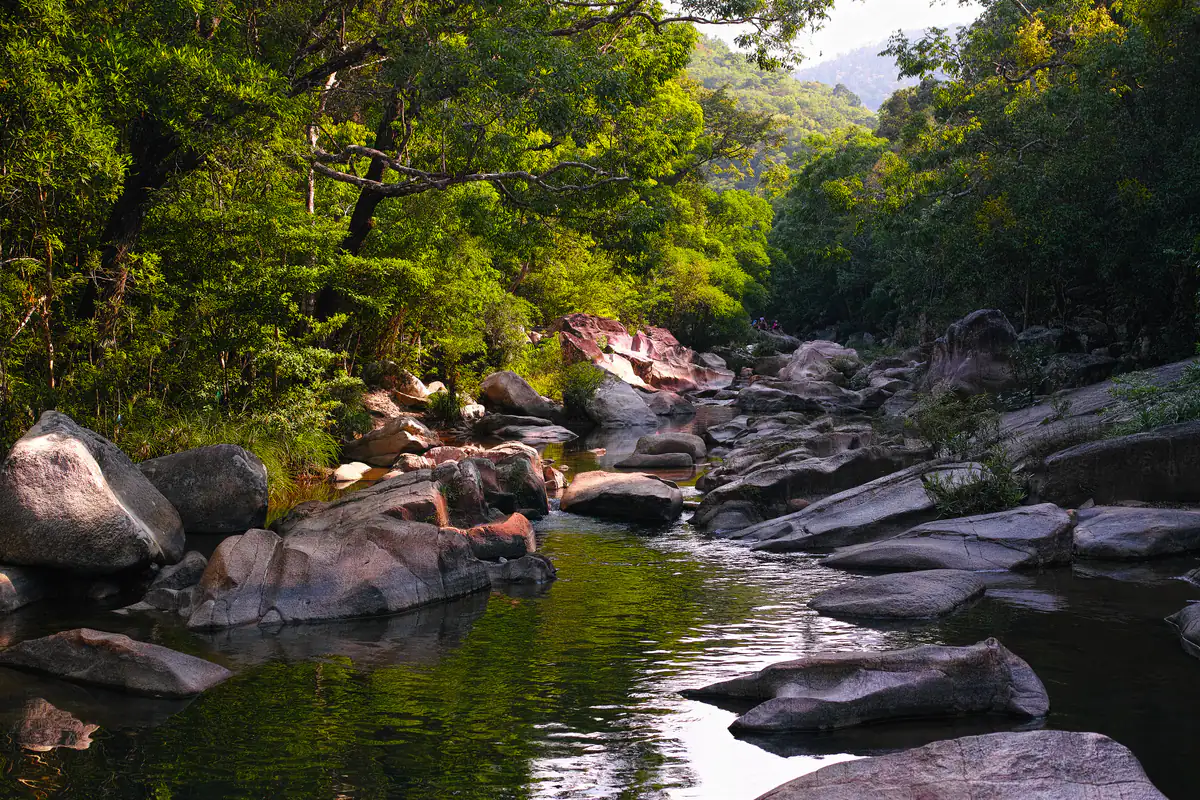
Photo: Tycho (Shansov.net)
Some sections are shaded by trees. Others have exposed rock surfaces that become hot under the midday sun.
Don't picture three swimming pools connected by paved walkways. Reaching the upper pools involves following a rocky stream, stepping across uneven surfaces and occasionally using your hands to maintain balance.
The ecotourism area also has a swimming pool, restaurants, water activities and recreational facilities. Visitors who don't want to hike all the way upstream can still spend several hours here.
Essential information:
- Location: Van Thuan Hamlet, Nam Ninh Hoa Commune, Khanh Hoa Province.
- Distance: Approximately 25 km from central Nha Trang.
- Driving time: Around 40-60 minutes each way.
- Opening hours: 8:00 AM-4:30 PM.
- Recommended visit duration: Around 4-6 hours, including transportation, if you only visit Pool 1.
- Best suited for: Active couples, groups of friends and families with older children accustomed to outdoor walking.
Ba Ho makes a good change of scenery after several days of beaches and island excursions. However, if you have only one day in Nha Trang, remember that transportation alone will take approximately 1.5-2 hours round trip.
What is there to do at Ba Ho Waterfalls?
The main attraction is the natural stream winding between enormous rock formations. In some places, water tumbles over small ledges. Elsewhere, it collects in pools that reflect the surrounding trees and sky.
The three main activities are hiking along the stream, climbing over rocks and relaxing beside the freshwater pools. Swimming should only take place in designated areas when water conditions are safe.
Explore the three natural pools
The route climbs gradually upstream
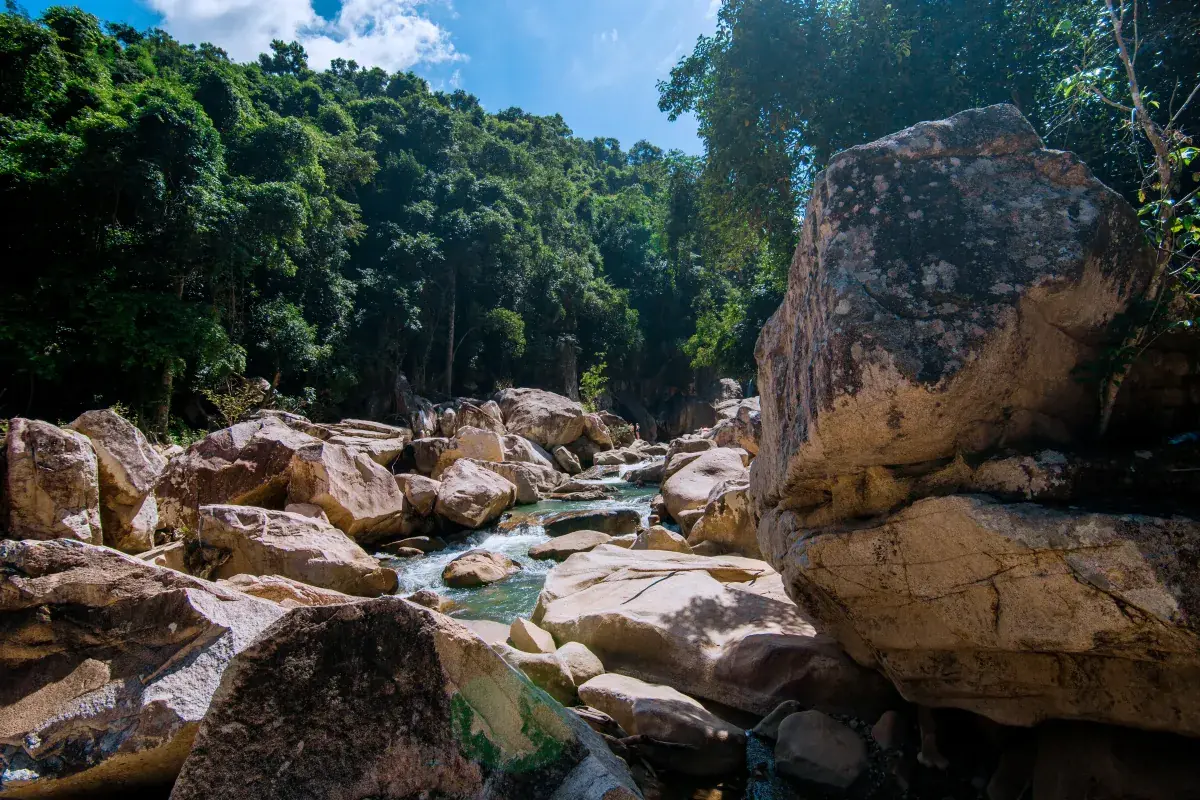
Photo: Khu du lịch sinh thái Ba Hồ
The hiking route gradually climbs upstream. Pool 1 is the easiest to reach. Pool 2 involves more challenging rock scrambling, while Pool 3 sits farther up the stream.
The scenery changes along the way. Near the lower sections, you'll generally see more visitors. Farther upstream, the boulders become more demanding, and progress slows as you choose where to place your feet.
There are plenty of interesting photography spots along the stream. Good pictures are possible without standing in flowing water or climbing onto a dangerous ledge. Choose a stable, dry surface away from the water's edge, especially when taking photos with a phone or camera.
Swim in freshwater
Only in designated areas
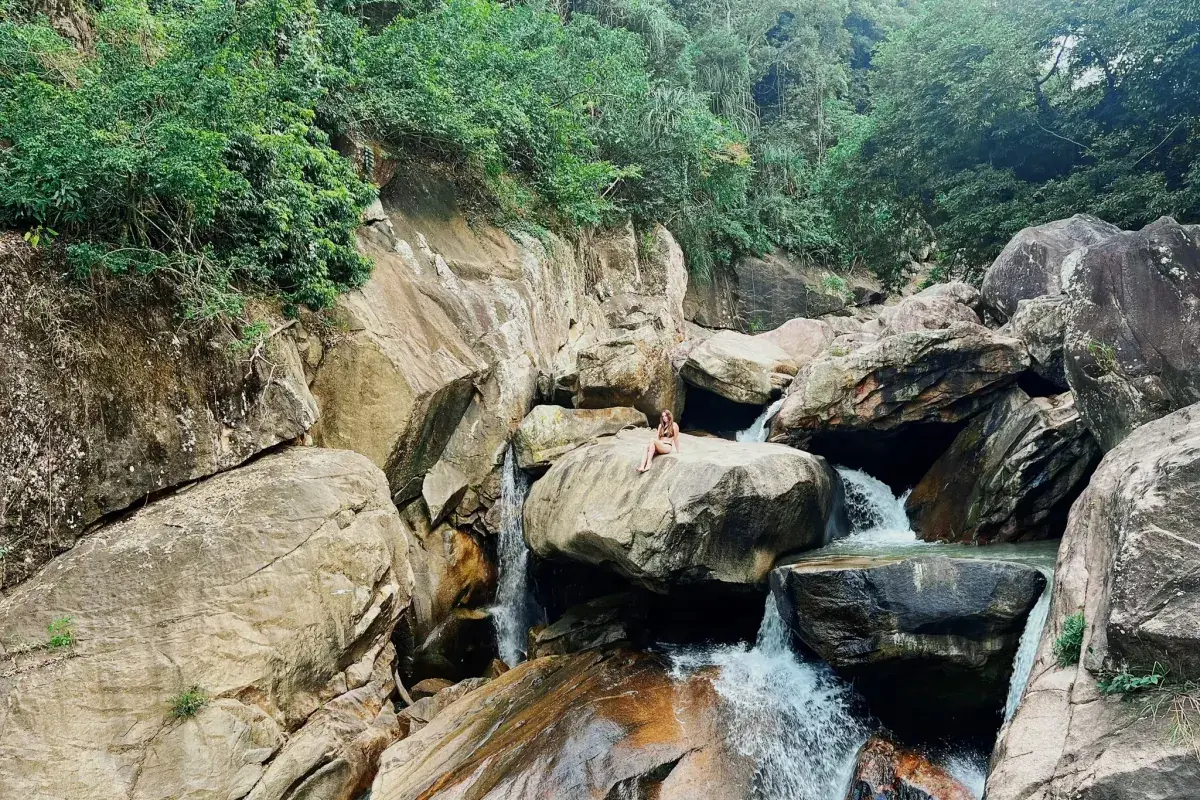
Photo: Khu du lịch sinh thái Ba Hồ
On days with little recent rainfall, the pools at Ba Ho can appear clear and green. However, water depth, submerged rocks and currents differ between locations and change with the weather.
A photograph of someone swimming or jumping into a pool does not establish that the same place will be safe when you visit.
Only enter the water where swimming is permitted, follow staff instructions and use a life jacket when appropriate. Weak swimmers should consider the managed swimming pool within the ecotourism area instead of the natural pools.
Avoid jumping from rocks, diving headfirst into unfamiliar water or swimming toward the base of a waterfall with a strong current.
Enjoy the swimming pool and recreational activities
Pool, kayaks, Skywalk, adventure rides
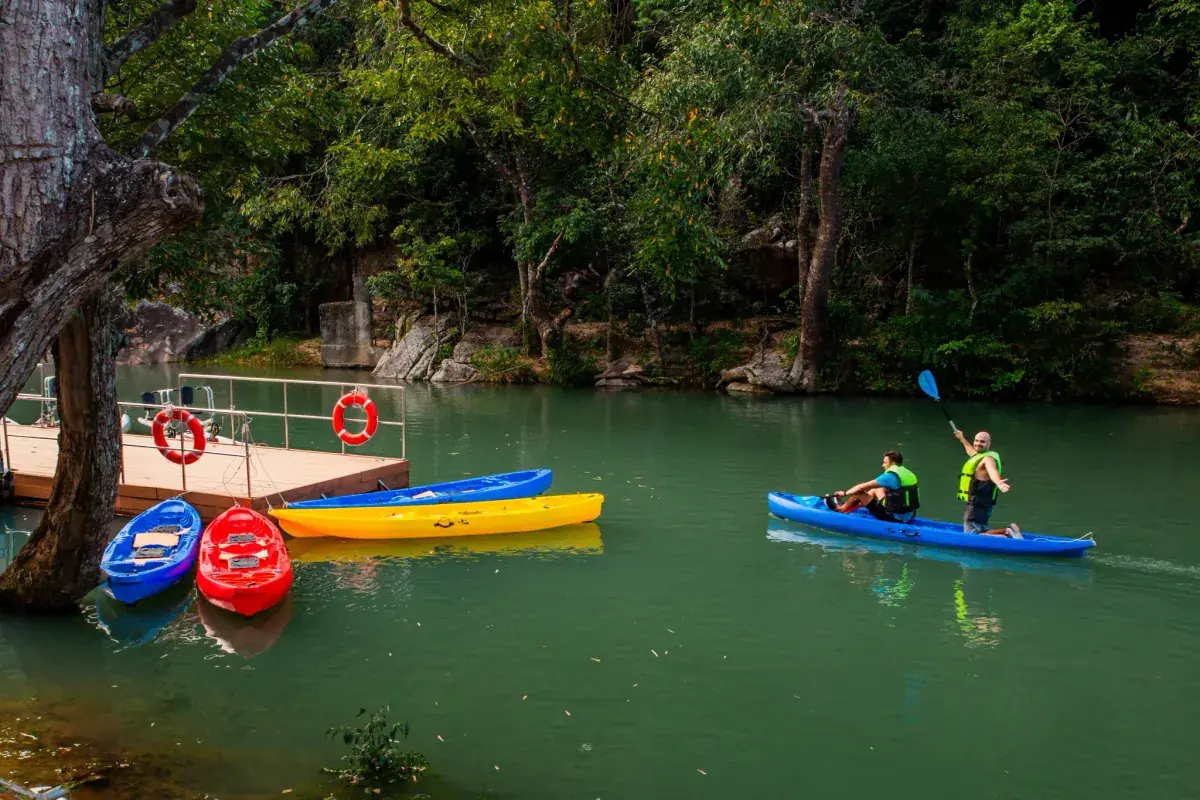
Photo: Khu du lịch sinh thái Ba Hồ
Besides the natural stream, the ecotourism area offers activities such as swimming, kayaking, water games, Skywalk and several adventure attractions.
These facilities are useful when some members of your group prefer not to hike. For example, two people might walk to Pool 1 while others relax in designated areas near the lower facilities. Agree on a meeting point and time before separating.
Don't assume every activity is included in the entrance ticket. Some adventure attractions have separate participation conditions or additional charges. Ask the ticket counter which facilities are operating and what's included in your specific ticket on the day of your visit.
Ba Ho Nha Trang ticket prices in 2026
There is an important inconsistency in the ticket information on the official Ba Ho website.
The quick-booking page displays an entrance price of 135,000 VND, while the individual adult ticket product page lists 200,000 VND. The child ticket product page lists 100,000 VND.
| Ticket | Price in 2026 |
|---|---|
| Entrance ticket on the quick-booking page | 135,000 VND |
| Adult entrance ticket on the product page | 200,000 VND |
| Child entrance ticket on the product page | 100,000 VND |
The 135,000 VND figure is the lower of the two. Because the official product page lists a higher amount, neither price can be confirmed as the amount charged at the gate without checking directly.
Admission includes some of the following benefits:
- Access during operating hours, 8:00 AM-4:30 PM.
- One bottle of drinking water.
- Access to the swimming pool and certain water sports.
- Skywalk and selected activities, depending on the ticket category.
The 200,000 VND adult ticket page also mentions an adventure swing and a discount on coaster activities.
The child ticket page does not clearly list the same adventure activities, and there is no consistent age or height rule for child admission. Families should confirm the child ticket conditions before paying.
Entrance tickets are separate from organized tours departing from Nha Trang. Transportation, guides, lunch and other services may cost extra.
Food and restaurants at Ba Ho
There are dining facilities within the ecotourism area, including Ba Ho Restaurant and Cay Son Restaurant. You can eat after your hike or have lunch before returning to Nha Trang.
The attraction allows visitors to bring outside food and drinks into certain areas. However, consuming outside food inside Ba Ho Restaurant or Cay Son Restaurant may incur a surcharge under the venue's rules.
Ask the restaurants directly for 2026 menu prices. For a short visit, eating breakfast before departure, bringing a few snacks and having lunch after the hike is a practical arrangement.
How to get to Ba Ho Waterfalls from Nha Trang
The most convenient options are a motorbike, taxi or private car. A guided tour with hotel pickup can also work well, but a visit to the lower pool works fine without one.
Loading map...
- April 2 Square: Start near Tran Phu Street, then head north on 2/4 Street
- Ba Ho Ecotourism Area: About 25 km north, 40-60 minutes each way
By motorbike: Best for confident riders
From central Nha Trang, travel north along 2/4 Street and connect with National Highway 1. Follow the local road signs toward Ba Ho Ecotourism Area. The final section follows local roads leading to the entrance.
When using Google Maps or another navigation app, search for Ba Ho Ecotourism Area and verify that the destination pin sits at the visitor entrance.
For two travelers comfortable with riding motorbikes, this is a flexible choice on a dry day. You can leave when you want, stop for food on the way back and avoid depending on a driver.
However, the route includes major roads shared with cars and trucks. A motorbike isn't a good choice solely to save money if you're inexperienced, unfamiliar with Vietnamese traffic or expecting rain.
Check the brakes, tires, lights and fuel before leaving. The rider must hold a valid license appropriate for the vehicle.
By taxi: Book the return pickup first
Families with older children and groups of three or four should consider taking a taxi or hiring a car with a driver.
You could leave your hotel at 7:15 AM, arrive around 8:00 AM and arrange a return pickup after your visit. This avoids having to ride or drive for another 40-60 minutes after a physically demanding hike.
Before departure, confirm the round-trip fare, waiting time and any extra charges if you stay longer than planned.
Don't assume you'll find an available taxi outside the attraction as easily as you would along Tran Phu Street. Keep the driver's phone number and agree on the pickup location before starting your hike.
By private car: Room for extra stops
A private car is particularly convenient for groups that want to visit Ba Ho, return to Nha Trang for lunch or add another stop if they have enough time.
You may be able to leave spare shoes, dry clothes and equipment that you don't need on the trail in the vehicle, depending on your arrangement with the driver. Keep valuables secure rather than leaving them unattended.
Agree on the number of rental hours, pickup and drop-off points, waiting arrangements and additional fees in advance.
How difficult are Pools 1, 2 and 3?
Choosing a pool is the most important decision you'll make at Ba Ho.
All three pools lie along the same stream, but the route generally becomes more demanding as you gain elevation. The stream trekking route is approximately 1.5 km, involving walking upstream and crossing rocky sections.
This isn't a flat 1.5 km walk. Travel time depends heavily on the rock surfaces, water conditions, fitness and the slowest person in your group.
| Destination | Relative difficulty | Recommended for |
|---|---|---|
| Pool 1 | Easiest of the three, but slippery rocks remain possible | First-time visitors and casual hikers |
| Pool 2 | More demanding, with steep rocks to negotiate | Active visitors comfortable with scrambling |
| Pool 3 | Most challenging, with steep and uneven terrain | Experienced hikers in favorable conditions |
Pool 1: The sensible choice for first-time visitors
Easiest to reach, still damp rocks and roots
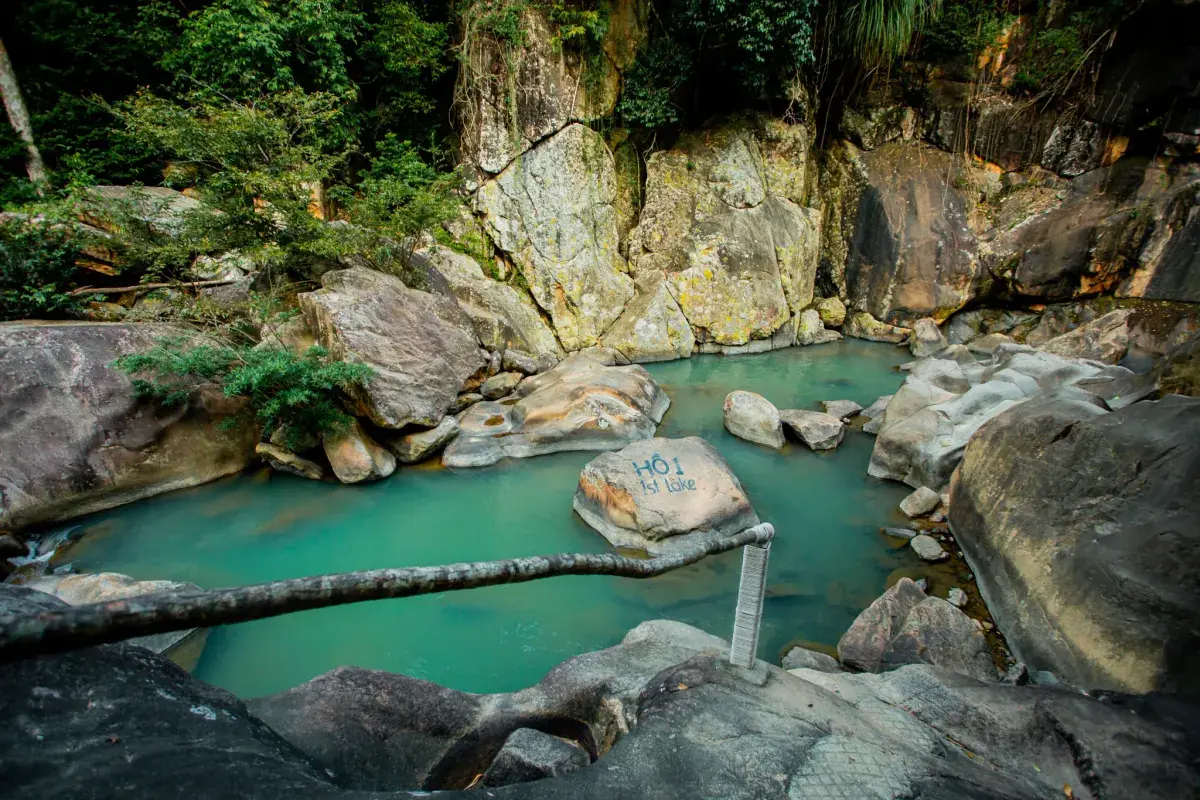
Photo: Khu du lịch sinh thái Ba Hồ
From the lower visitor area, follow the designated route toward the first natural pool. Make it your first objective if you've never hiked over natural stream rocks.
The approach is easier than the upper sections, but you still need to pay attention to damp rocks, tree roots and uneven ground.
Once you arrive, you can watch the water moving between boulders, rest in a dry spot and take photos from the bank. Swimming may be possible in designated areas when the water is safe and staff permit it.
Families with older children should start with Pool 1 and assess how comfortably everyone handles the early sections. Can the child step across rocks without being carried? Can they maintain balance? Do they remain calm when stepping down from larger stones? These observations are more useful than simply considering the child's age.
Don't push on to Pool 2 just because reaching Pool 1 took less time than expected. The terrain changes, especially on the steeper rocky sections.
Stop at Pool 1 if:
- This is your first visit and you have limited experience hiking on natural rocky terrain.
- Your group includes older children who aren't accustomed to scrambling.
- Someone feels tired, uncomfortable with heights or uncertain about descending rocks.
- You only have a morning available and want time to relax.
- The rocks are becoming wet or slippery, even if it isn't currently raining.
Stopping here doesn't mean you've missed the experience. For a half-day trip, Pool 1 is often the most sensible destination.
Pool 2: Where the hike becomes noticeably harder
Nearly 1 km of steep streamside route from Pool 1
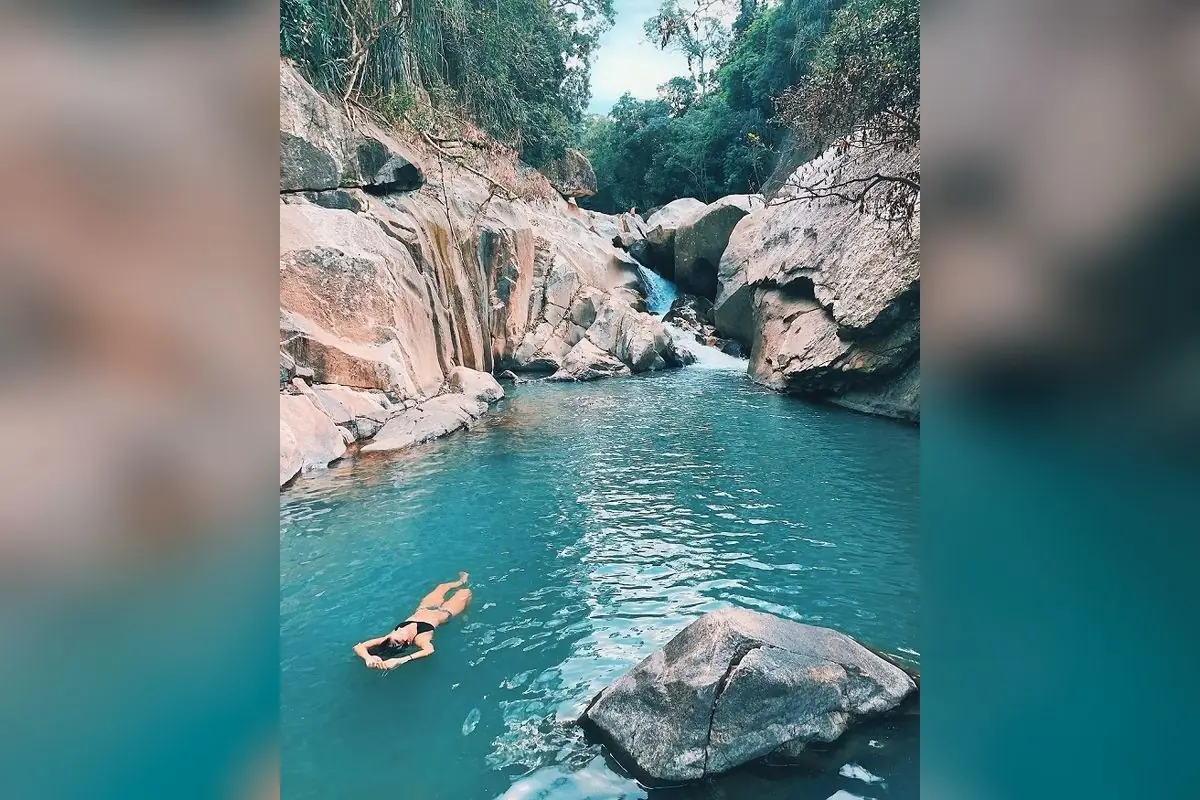
Photo: VinWonders
The section between the first and second pools follows a steeper streamside route for nearly 1 km. The difficulty comes from more than the distance.
You must find stable footholds on boulders, negotiate uneven heights and sometimes use your hands to maintain balance.
Someone who can comfortably walk several miles on pavement may still find this challenging. Rock scrambling requires balance, careful foot placement and enough control to descend without slipping.
Coming back down takes its own effort. When descending, your body weight tends to shift forward. Your legs may already be tired, and rocks near the water can be slippery.
Pool 2 suits active groups accustomed to outdoor exercise, wearing shoes with reliable grip and willing to move slowly through difficult sections.
Examine the route beyond Pool 1 before continuing. If you need someone to pull you over an obstacle, can't identify a safe route down or feel unable to maintain balance independently, turn around.
There's no requirement to complete the entire route simply because you've paid for admission.
Pool 3: A serious scramble, not an automatic final stop
Just over 300 m from Pool 2, dense vegetation and upright rocks
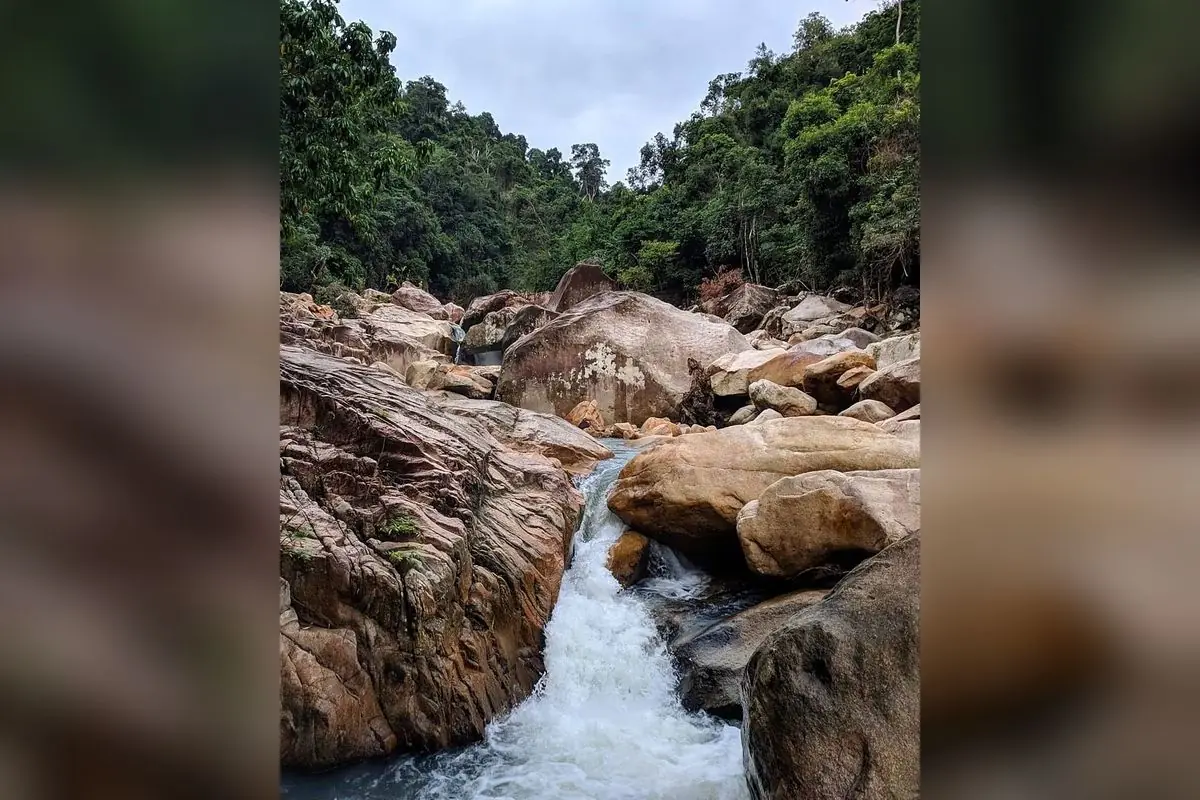
Photo: @katzprod
The section between Pools 2 and 3 is just over 300 meters long, but with dense vegetation, upright rocks and steep terrain.
That distance is shorter than the section leading to Pool 2, yet the terrain can be considerably harder. On rocky ground, 300 meters may take more effort than a much longer walk on a smooth path.
To reach Pool 3, you need enough energy after the first two pools and sufficient strength to complete the entire descent.
Only consider Pool 3 when your group has suitable scrambling experience, conditions are dry, the route is officially open and you have plenty of time before closing.
If the route includes support ropes, check the on-site guidance and continue only if you can move safely under your own control. A rope doesn't automatically make a slippery rock face safe.
Pool 3 is not an appropriate default destination for children, inexperienced hikers or visitors uncomfortable with heights.
For groups with mixed abilities, it's usually better to choose a stopping point based on the least confident member. Separating into smaller groups requires a clear meeting plan, reliable communication and suitable companions. Nobody should be left to navigate a difficult section alone.
Do you need to visit all three pools?
No.
Ba Ho's appeal comes from the mountain stream, natural rock formations and the experience of walking through the forest. You can enjoy those things in the lower sections.
For a half-day visit, Pool 1 should usually be the priority. Pool 2 is an option for groups with more time and experience. Pool 3 should never be treated as mandatory simply because the attraction is called "Three Lakes."
Before entering the trail, ask staff whether the routes to Pools 2 and 3 are open, whether any sections are particularly hazardous and whether there are restrictions that day.
Best time to visit Ba Ho Waterfalls
Nha Trang generally experiences a relatively dry period from January through August, with the wetter season concentrated between September and December. October and November are typically among the rainiest months.
At Ba Ho, the weather matters more than how attractive the pools look in photographs. Rainfall in the mountains upstream can increase stream levels and currents even when no rain is falling where you're standing.
January to April: Drier rock, less water
These months let you explore Ba Ho with less dependence on wet-season weather.
After a sustained dry spell, the rocky route is generally more manageable than immediately following heavy rainfall. Morning temperatures are also more comfortable for physical activity.
The trade-off is that some sections of the stream may have less water. Don't expect every pool to be full or every waterfall to flow strongly as shown in photographs taken during wetter conditions.
For travelers primarily interested in walking and scenery, February through April is a reasonable choice.
May to August: Morning hikes and a swim
Summer in Nha Trang can be hot. Visiting Ba Ho in the morning helps you avoid the most intense midday sunshine, particularly on exposed rocks.
Swimming or relaxing in permitted freshwater areas can be appealing after the walk. However, water clarity and flow still depend on recent rainfall. Even within the relatively dry season, individual storms can change conditions quickly.
May through August works for active groups who want to hike in the morning and return to Nha Trang for lunch or an afternoon rest.
Always check the forecast for thunderstorms and confirm stream conditions before attempting the higher pools.
September to December: Be especially cautious
This is Nha Trang's main rainy season. Heavy rainfall can turn clear water muddy, raise stream levels, make rocks slippery and increase the risk of flash floods and landslides.
Don't decide to visit simply because it's sunny outside your hotel in Nha Trang. Check weather forecasts for the Ninh Hoa area and nearby mountains, and contact the attraction about stream conditions.
October and November require particular caution. During this period, a city sightseeing plan or another activity away from mountain streams may be easier to adjust.
When should you not hike at Ba Ho?
Some conditions make continuing the hike inappropriate, regardless of how carefully you've prepared.
Don't hike during heavy rain or official hazard warnings
If weather authorities or local officials issue flash flood or landslide warnings affecting the area, postpone your stream hike.
Don't wait until the water becomes muddy or visibly stronger before deciding to leave. Flash floods in narrow mountain streams can develop quickly, leaving little time to respond.
If Ba Ho staff close the hiking route because of weather conditions, follow that restriction. Purchasing an entrance ticket doesn't mean every part of the attraction is accessible under all conditions.
Don't continue across slippery or flooded rocks
Stream rocks can become slippery because of algae, mud or a thin film of water that is difficult to see. Even when the upper surface of a boulder appears dry, the section near the waterline may be extremely slick.
If reaching the next section requires crossing a strong current, gripping wet rocks in an exposed position or pulling someone across a dangerous obstacle, turn back.
Don't remove your shoes to scramble barefoot. Sharp edges, hot rock surfaces and slippery patches can make barefoot movement difficult and unpredictable.
Don't remain in the stream when water levels are rising
Warning signs include water suddenly becoming muddy, an unexpected increase in current, more branches or debris floating downstream, or unusually loud water sounds coming from upstream.
Don't push on when someone is exhausted
A visitor experiencing cramps, dizziness, knee pain or repeated loss of balance needs to stop and reassess.
Descending over rocks takes concentration. Continuing toward another pool may leave that person without enough energy to get back safely.
It's better to finish while everyone still has strength than to wait until the entire group is exhausted.
Don't begin the upper sections too late
Ba Ho's operating hours end at 4:30 PM. That doesn't mean 4:30 PM is an appropriate time to begin descending from Pool 3.
For an independent visit, hiking in the morning is preferable. Arrive late and the sensible move is a shorter route.
Allow time for the descent, rest stops and unexpected delays on difficult rocks.
Can children visit Ba Ho Waterfalls?
Children can visit Ba Ho, but the natural stream hiking route isn't suitable for every child.
Families with young children should focus on the visitor facilities and age-appropriate swimming areas rather than attempting the upper pools.
For older children accustomed to outdoor walking, Pool 1 may be a reasonable option when the weather is good and the trail is dry. An adult should stay close throughout the rocky sections. Don't allow children to run ahead or enter the water unsupervised.
Practical ability matters more than age alone. Can the child balance on uneven rocks, step down independently and follow instructions to stop immediately when necessary?
Pools 2 and 3 are poor choices for children without prior scrambling experience. Being tall or knowing how to swim doesn't solve the difficulties of rocky terrain.
Families should bring properly fitted shoes, dry clothes, drinking water, snacks and a waterproof phone pouch. Children must be supervised around the water and should wear life jackets wherever required.
Agreeing in advance that Pool 1 will be the final destination can also prevent children from feeling pressured to keep climbing with adults.
What to bring to Ba Ho Waterfalls
A day at Ba Ho needs far less gear than a multi-day trek, but footwear and protection for your belongings deserve careful attention.
Shoes with reliable grip
Footwear is the most important item. Well-fitting athletic shoes or trail shoes with good traction are more suitable than loose sandals or flip-flops.
Avoid smooth-soled shoes, high heels and footwear that doesn't hold your heel securely. Brand-new shoes that haven't been broken in can also become uncomfortable on uneven ground.
Comfortable clothes
Lightweight, flexible clothing works best. A moisture-wicking shirt, comfortable shorts or pants, and swimwear underneath are practical choices.
Bring a dry change of clothes for the journey back to Nha Trang. Sitting on a motorbike or in an air-conditioned car while wearing wet clothes can be uncomfortable.
Waterproof protection
Keep your phone, documents, money and electronics in a properly sealed waterproof pouch or bag.
On sections where you need both hands to grip rocks, put your phone away rather than trying to record a video while moving. A camera needs a secure strap; take it out only when standing in a safe, stable position.
Water and snacks
The ticket includes one bottle of water, but this may not be enough for several hours of physical activity in warm weather. Bring additional drinking water based on your needs and the weather.
Simple snacks such as fruit, crackers or other portable foods are useful during breaks. Avoid eating an unusually large meal immediately before scrambling.
Other useful items include a hat, sunscreen, personal medication, a small towel and a bag for your trash. Keep your daypack reasonably light so it doesn't interfere with balance.
Guided tour or independent trip: which is better?
For travelers planning to visit only Pool 1, going independently is usually the more flexible option.
A guided tour makes sense if you don't want to arrange transportation, are traveling with a larger group or prefer having the day's activities organized for you.
Independent visit: Your own pace
Two to four travelers can reach Ba Ho by motorbike, taxi or private car. Once at the entrance, buy your tickets, ask staff about trail conditions and choose a suitable hiking objective.
The main advantage is flexibility. You can return early if someone gets tired, weather conditions deteriorate or you simply want to spend more time near the lower facilities. A morning beside the stream needs no full-day commitment.
Your total cost consists of admission, transportation, meals and any additional activities. Remember to confirm the admission price because the official website contains conflicting figures.
Traveling independently doesn't mean exploring outside designated visitor routes. Follow posted signs, staff instructions and all access restrictions.
Guided tour: A full day with transport and lunch
Visit Nha Trang sells a one-day Ba Ho Waterfalls tour priced from 650,000 VND per adult in 2026.
The schedule runs from 8:00 AM to 4:00 PM and includes scheduled transportation, admission under the tour program, a meal, guide services and selected other arrangements. The operator also lists a child rate of 455,000 VND, subject to its age requirements.
The tour takes the whole day.
Before booking, ask whether the guide actually accompanies participants on the rocky hiking route or primarily coordinates activities within the ecotourism area. Two tours may both be described as Ba Ho Waterfalls excursions while offering very different levels of physical activity.
A tour that promises Pool 2 or Pool 3 should spell out those sections, the physical requirements and what happens when the route is slippery or weather conditions change.
Having a guide does not make hiking during heavy rain or official flash flood warnings acceptable.
A practical half-day Ba Ho Waterfalls itinerary
This schedule works for visitors staying in central Nha Trang who want to reach Pool 1, relax for a while and return to the city for lunch.
- 7:15 AM
Leave the city
Depart from central Nha Trang
- 8:00-8:15 AM
Arrive
Arrive, check trail conditions and buy tickets
- 8:15-9:30 AM
Up to Pool 1
Walk along the stream and visit Pool 1
- 9:30-10:30 AM
Pool time
Rest, take photos or swim in permitted areas if safe
- 10:30-11:30 AM
Head down
Return to the lower facilities, change clothes and relax
- 11:30 AM-12 PM
Leave Ba Ho
Leave Ba Ho
- 1:00-2:00 PM
Back in Nha Trang
Have lunch or return to your hotel in Nha Trang
Treat these times as planning estimates; actual hiking durations and activity schedules can differ. Families with children or slower walkers should leave more time for the rocky trail.
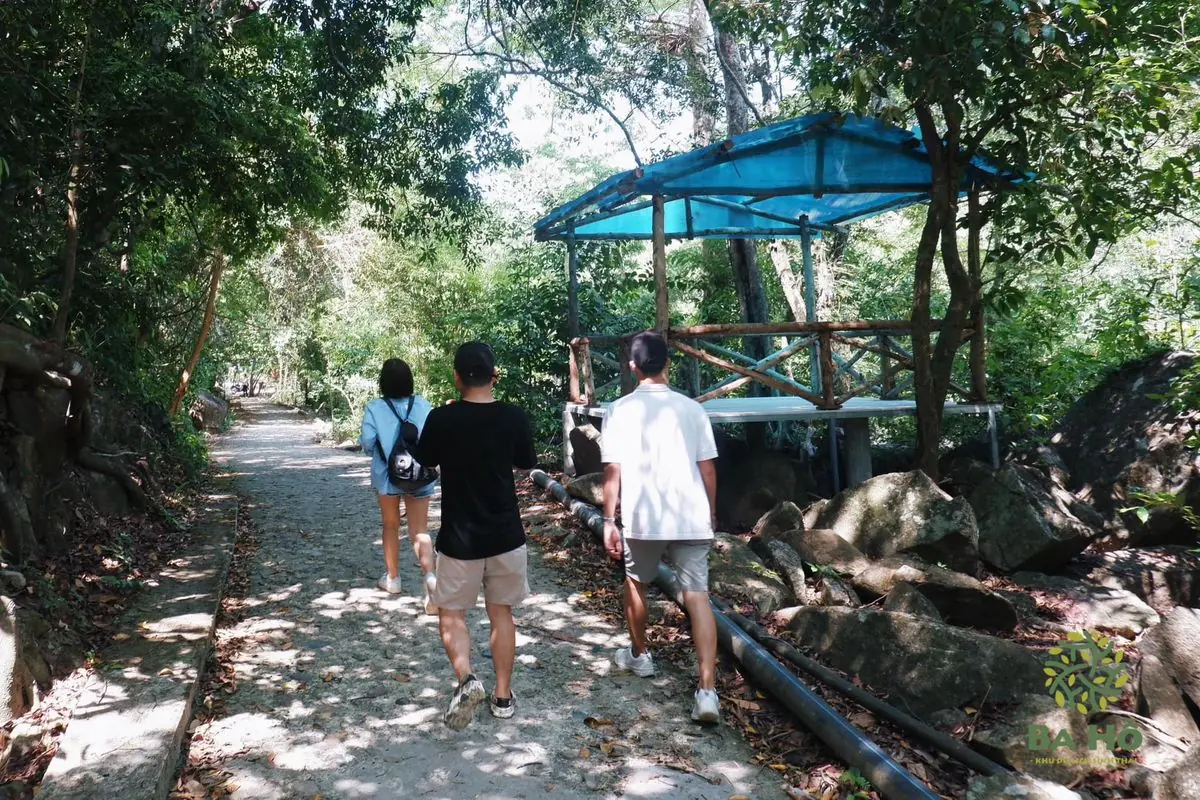
Photo: Khu du lịch sinh thái Ba Hồ
What should you eat before and after the hike?
For breakfast, a bowl of Vietnamese fish cake noodle soup, known as bún chả cá, or a bánh mì sandwich is a practical option before leaving.
There are many breakfast places around Tran Phu Street and central Nha Trang. Choosing somewhere near your accommodation saves more time than crossing the city to find a particularly famous restaurant.
Eat enough to have energy for the hike, but avoid a large meal immediately before scrambling over rocks.
After returning from the stream, you can have lunch at Ba Ho Restaurant or Cay Son Restaurant if you prefer to stay longer. Tired legs are a good reason to keep the afternoon free of more sightseeing stops.
What if you want to reach Pool 2 or Pool 3?
Don't keep the same half-day schedule and simply try to move faster.
For Pool 2, allow extra time to examine the terrain, climb carefully and descend. You may need to skip the swimming pool and recreational facilities or have a later lunch.
For Pool 3, it's better to set aside most of the day. The total time depends on actual trail conditions and the slowest person in your group. If staff recommend avoiding the upper pools, stop in the permitted lower sections.
A shorter route with enough time to descend safely is a better choice than rushing to complete all three pools.
Common mistakes to avoid at Ba Ho
Choosing your travel date based on photographs
An attractive photograph tells you very little about current conditions. Clear water, small waterfalls and dry rocks may have been photographed on a different day or during another season.
Check the forecast, look at recent rainfall and ask the attraction directly about the hiking route.
Wearing beach flip-flops
Flip-flops are fine around a swimming pool but unsuitable for steep, slippery stream rocks. Wear shoes with reliable traction for the hike and change into sandals after returning to the lower facilities.
Assuming Pool 3 is only a little farther away
The final section may be relatively short in distance, but the difficult terrain can make it physically demanding. Descending presents its own challenges.
Treat Pool 3 as an optional destination that needs suitable conditions.
Jumping into the water because others have done it
Some travel photographs show visitors jumping from rocks into natural pools. You cannot judge water depth, hidden rocks or underwater currents reliably from a picture.
Don't jump from high rocks or dive headfirst into unfamiliar natural pools.
Continuing when the weather deteriorates
It is the most serious mistake of all. Rain upstream can change stream conditions rapidly, even when the descent still looks manageable.
During heavy rain, official hazard warnings or signs of rising water, stop the activity and follow safety instructions. Don't continue simply to take another photograph or finish the final pool.
Is Ba Ho Waterfalls worth visiting?
Ba Ho is worth considering if you want an active outdoor morning, enjoy freshwater streams and don't mind walking over uneven natural rocks.
For a group of young adults, Pool 1 is a sensible starting point. Visitors comfortable with scrambling can consider Pool 2, while Pool 3 is best reserved for experienced hikers when conditions are favorable.
Families with older children can also enjoy Ba Ho, but should plan a shorter route and make use of the visitor facilities. Very young children and people with limited mobility are generally better suited to attractions that don't require rock scrambling.
Ba Ho is not the best choice if your priority is complete relaxation, you dislike physical activity or heavy rain is expected. A beach day, city sightseeing or an indoor activity will be easier to manage under those circumstances.
Before your visit, call 0866 225 766 to confirm ticket prices, trail access to all three pools and which activities are operating. Then save the Ba Ho Ecotourism Area entrance on your map, plan a morning departure and pack shoes with good traction.
FAQ
Where is Ba Ho Waterfalls, and how far is it from Nha Trang?
Ba Ho Ecotourism Area is in Van Thuan Hamlet, Nam Ninh Hoa Commune, Khanh Hoa Province, approximately 25 km north of central Nha Trang. The drive usually takes around 40-60 minutes each way. Travel north via 2/4 Street and National Highway 1, then follow the local access road toward the attraction.
How much is the Ba Ho Waterfalls entrance fee in 2026?
In 2026, the official website shows two different adult prices: 135,000 VND on the quick-booking page and 200,000 VND on the individual ticket product page. The child ticket product page lists 100,000 VND. Because these figures are inconsistent, call 0866 225 766 to confirm the actual admission price before traveling.
Is hiking at Ba Ho Waterfalls dangerous?
The route includes steep rocks, slippery surfaces and sections where you may need to use your hands for balance. Pool 1 is the easiest to reach, Pool 2 is more challenging and Pool 3 is the most demanding. Risks increase during rain, when rocks are wet or when stream currents become strong. Do not hike during heavy rain, flash flood or landslide warnings, or when the attraction closes the route.
Can children visit Ba Ho Waterfalls?
Older children accustomed to outdoor activity may be able to visit Pool 1 when the trail is dry and conditions are safe, provided an adult stays with them. Younger children should use age-appropriate facilities in the lower visitor area. Pools 2 and 3 are not recommended for children without rock-scrambling experience. Children must be supervised around water and wear life jackets where required.
What is the best time to visit Ba Ho, and do I need a tour?
January through August generally offers more favorable conditions for outdoor activities, particularly during sustained dry weather. September through December is the wetter season, with greater concern about rising streams and flash floods. You can visit independently if you plan to explore Pool 1 and can arrange your own transportation. A tour is useful if you want hotel transfers, a guide or an organized group outing.
Related posts

Islands & beaches
Choose the right Nha Trang cruise: dinner or swimming?
Compare Nha Trang cruises by price, schedule, departure pier, meals, and onboard activities.

Lifestyle
Calculate your monthly cost of living in Nha Trang and choose the right neighborhood
A practical 2026 guide to rent, monthly expenses and the best areas for long-term living in Nha Trang.

Guides
Get to the right Nha Trang tourist port and catch your island boat on time
Find Vinh Truong Pier, check departure points, understand ticket fees, and arrive in time for your island trip.