Vietnamese coffee guide: choose the right drink for your taste and order with confidence
Vietnamese coffee is worth exploring when you want something stronger or more distinctive than your usual cup. Start with your preferred level of bitterness and sweetness, but avoid egg coffee, salt coffee, or coconut coffee if you want a light drink without much sugar.
Written by Tụi mình mê biểnUpdated
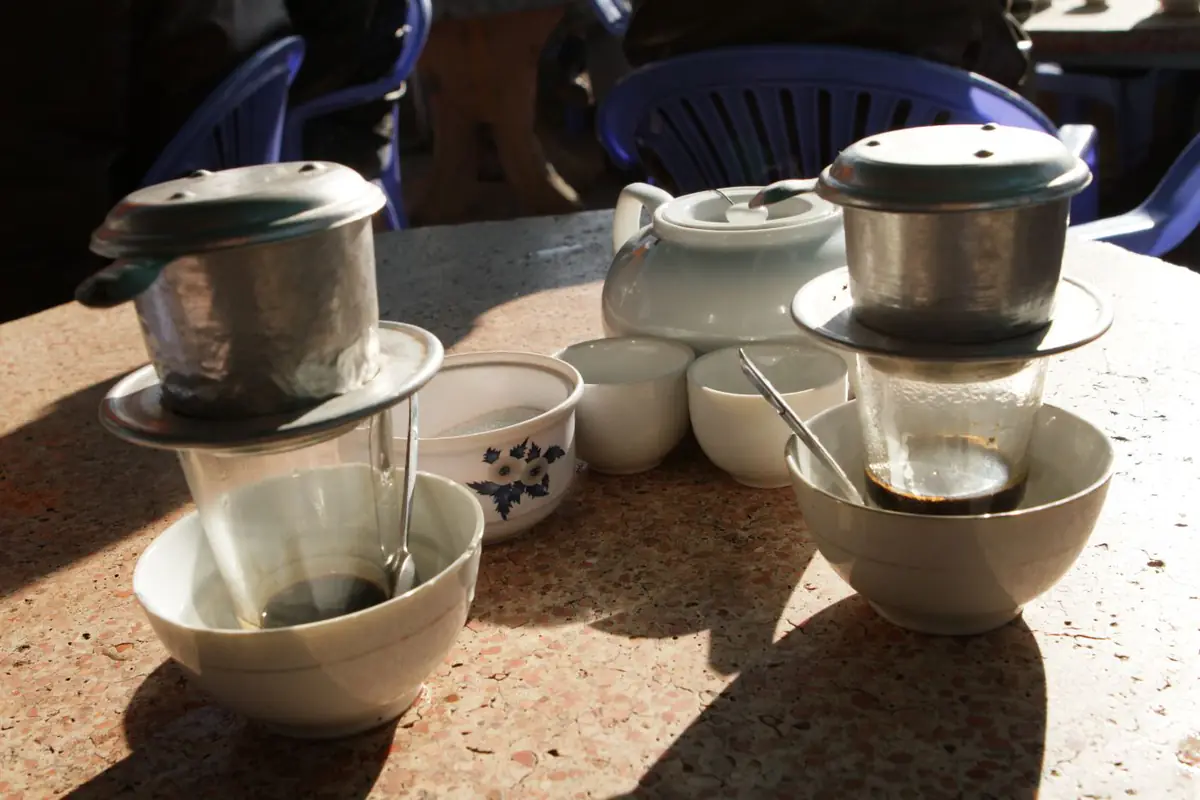
Photo: Frank Fox
The year 1946 marks an important chapter in the history of Hanoi egg coffee, a drink that eventually became one of Vietnam's best-known coffee specialties. But the first cup does not have to be egg coffee. Order cà phê đen đá for strong, bitter coffee, cà phê sữa đá for something rich and sweet, and bạc xỉu, usually the gentler choice, when you are new to coffee.
What makes Vietnamese coffee different?
Three things stand out in traditional Vietnamese coffee: its strong flavor, the metal phin filter used for brewing, and the widespread use of sweetened condensed milk.
In many neighborhood cafés, coffee is brewed in a small metal filter placed directly over a glass. Hot water slowly passes through the ground coffee, dripping into the cup below.
A typical single-serving phin takes approximately 4-7 minutes to brew, depending on the coffee grind, amount of grounds, and how tightly they are packed.

Photo: HungryHuy
4-7 min
to brew a single-serving phin
6 types
of popular Vietnamese coffee
VND 20,000-30,000
for a drink at the Hue salt coffee café
The resulting coffee is usually concentrated. You do not get a large cup, but the flavor can be remarkably strong. Depending on the drink, it is then mixed with ice, sugar, or sweetened condensed milk.
Robusta is the coffee bean most closely associated with Vietnam
Vietnam grows predominantly Robusta coffee, particularly in the Central Highlands. Buon Ma Thuot, Gia Lai, and coffee-growing areas of Lam Dong are among the places most frequently associated with Vietnamese coffee production.
Robusta has a stronger bitter character, a heavier body, and more caffeine than Arabica. When roasted dark, it may develop flavors reminiscent of bitter cocoa, roasted nuts, or toasted wood, which help it keep a distinct coffee flavor even when mixed with condensed milk and plenty of ice.
Arabica is different. It often has brighter acidity, more varied aromas, and a lighter overall character. Vietnam also produces Arabica, including beans from Cau Dat near Da Lat and growing regions in Son La.
Not every Vietnamese coffee drink uses 100% Robusta. Many cafés blend Robusta with Arabica, while specialty coffee shops may serve single-origin Arabica, fine Robusta, or lighter roasts brewed using methods other than the traditional phin.
A bitter cup does not automatically contain more caffeine, either. The actual amount depends on the beans, the quantity of ground coffee, the brewing method, and the serving size.
Why is Vietnamese coffee often so sweet?
Sweetened condensed milk is a familiar ingredient in Vietnamese coffee. Unlike the fresh milk used in a latte, condensed milk is thick, sweet, and rich.
When strong coffee meets condensed milk, the sweetness balances the bitterness. Ice makes the drink more refreshing, especially in the hot weather of central and southern Vietnam.
Many popular coffee variations build on this combination. Bạc xỉu uses a higher proportion of milk. Egg coffee adds a whipped egg cream. Salt coffee uses a lightly salted milk foam or cream. Coconut coffee combines coffee with a creamy coconut mixture.
That is why ordering simply "Vietnamese coffee" can be too vague. It is better to know which style you want, whether you prefer it hot or iced, and how sweet you want it.
Six popular types of Vietnamese coffee
These are the six drinks you are most likely to encounter while traveling around Vietnam.
| Coffee | Main flavor | Typical sweetness | Best-known location | Best for |
|---|---|---|---|---|
| Cà phê đen đá | Strong, bitter, roasted coffee | None to moderate | Nationwide | People who enjoy strong black coffee |
| Cà phê sữa đá | Strong, creamy, sweet | Moderate to high | Saigon and nationwide | Coffee drinkers who like milk |
| Bạc xỉu | Milky, mild coffee flavor | Usually high | Saigon | Beginners and milk lovers |
| Cà phê trứng | Rich egg cream over strong coffee | Usually quite sweet | Hanoi | People who enjoy dessert-like drinks |
| Cà phê muối | Creamy, sweet, lightly salty | Moderate to high | Hue | Those who like salted cream |
| Cà phê cốt dừa | Coconut aroma, cold, creamy | Usually high | Popular in many cities | Fans of cold, rich drinks |
Sweetness levels are general descriptions: two cafés serving the same drink may use very different amounts of coffee, condensed milk, or cream.
Cà phê đen đá
Iced black coffee
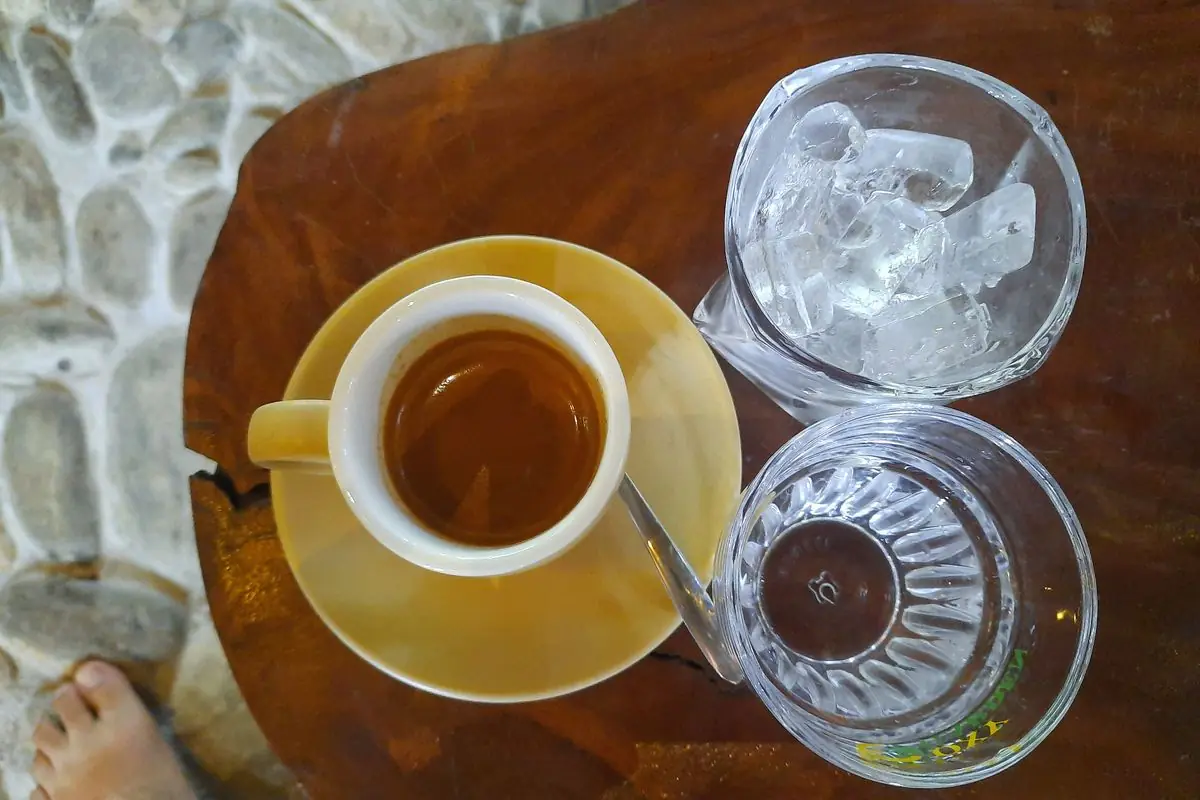
Photo: Lê Huỳnh Bộ
How to order: "Cho mình một cà phê đen đá, không đường."
Meaning: One iced black coffee without sugar, please.
Cà phê đen đá is one of the simplest Vietnamese coffee drinks. It consists of strong brewed coffee served over ice. Depending on the café, sugar may be included or added separately.
Without milk, the flavor of the beans becomes more noticeable. A dark-roasted Robusta coffee may have a strong bitter finish that stays on your palate for some time.
This is a good Vietnamese coffee for espresso or unsweetened Americano drinkers to try first, though traditional phin coffee can taste more concentrated than a typical Americano.
At a neighborhood café, your drink may arrive in a small glass, sometimes with a separate glass of iced tea. You can taste the coffee before stirring or allowing much of the ice to melt.
Order cà phê đen nóng for the hot version. In northern Vietnam, menus may simply say đen nóng for hot black coffee and đen đá for iced black coffee.
Choose this drink: In the morning, after breakfast, or whenever you want to taste the coffee without milk.
Skip it: When bitterness bothers you, caffeine affects you strongly, or you want a mild, sweet drink.
Another useful phrase is đen đá ít đường, meaning iced black coffee with less sugar. Bear in mind that every café interprets "less sugar" differently.
Cà phê sữa đá
Vietnamese iced milk coffee
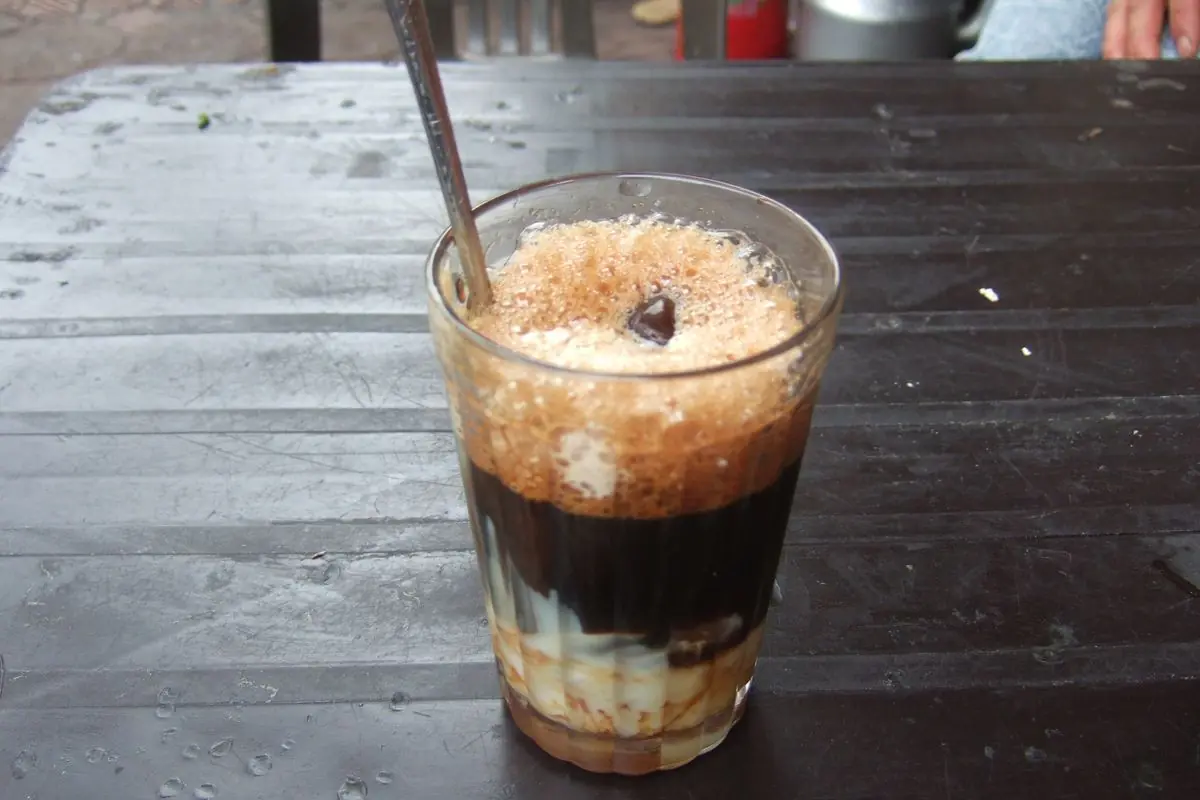
Photo: Clarin
How to order: "Một cà phê sữa đá, ít sữa đặc giúp mình."
Meaning: One iced milk coffee with less condensed milk, please.
Cà phê sữa đá is among the most recognizable drinks in Vietnamese coffee culture. The traditional method is straightforward: sweetened condensed milk goes into the bottom of a glass, strong coffee drips through a phin filter above it, the two are stirred together, and ice is added.
The finished drink is brown, rich, and sweet, with a clear coffee flavor.
In Hanoi and other parts of northern Vietnam, you will also hear people order cà phê nâu đá, or simply nâu đá. At many Hanoi cafés, ordering nâu đá will get you iced coffee with condensed milk. In Saigon, cà phê sữa đá is the more familiar name.
There is no single fixed recipe for the entire country, and cafés use different amounts of coffee and milk, but the balance holds: the coffee stays strong while the condensed milk softens its bitterness.
It works for coffee-with-milk fans who want something stronger than a typical latte. It also works well as a takeaway drink: once mixed, the coffee and milk can be poured directly over ice, unlike drinks with delicate cream layers that are best enjoyed immediately.
Asking for less condensed milk does more than reduce sweetness: it also reduces creaminess, making the coffee taste stronger.
Ask whether the café can replace some of the condensed milk with unsweetened fresh milk, which gives plenty of milk without too much sugar. Not every café offers this option.
Bạc xỉu
More milk, less coffee
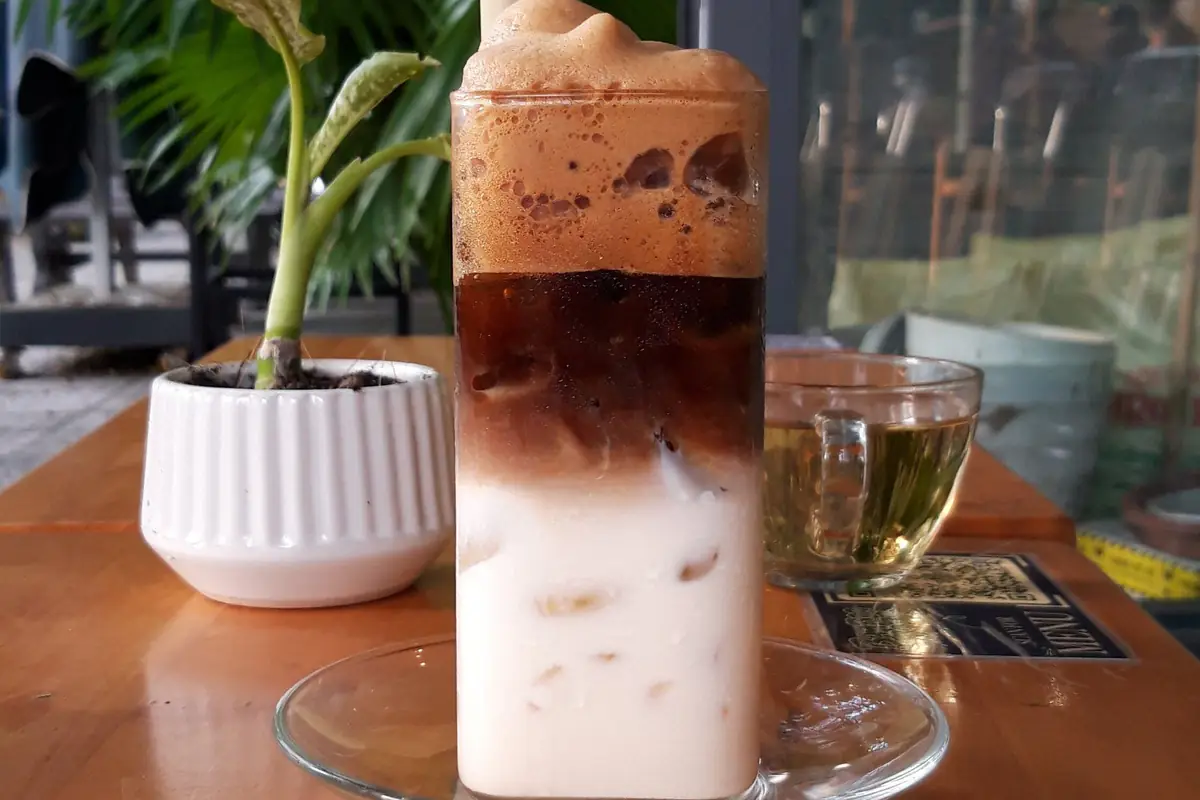
Photo: Klientos
How to order: "Cho mình một bạc xỉu đá, bớt ngọt được không?"
Meaning: One iced bạc xỉu, less sweet if possible, please.
Bạc xỉu has roots in the Chinese-Vietnamese coffee culture of Cholon, Saigon's historic Chinatown. Today, it appears on menus across Vietnam, including many national coffee chains.
The main difference between bạc xỉu and cà phê sữa đá is the ratio of milk to coffee. In cà phê sữa đá, coffee remains the dominant flavor. Bạc xỉu usually contains more milk and a smaller proportion of coffee, giving it a taste closer to sweet milk flavored with coffee.
Some cafés combine fresh milk, condensed milk, and coffee. Others use simpler recipes. Because of the higher milk content, bạc xỉu is often lighter in color and creamier than regular Vietnamese iced milk coffee.
It is one of the easiest choices for visitors not used to bitter coffee, and a friendlier pick than black coffee for a travel partner who prefers sweet drinks.
It still contains caffeine, though: the amount of coffee varies between establishments, and some versions contain more than you might expect. Ask "Bạc xỉu bên mình có giảm cà phê được không?", meaning "Can you make the bạc xỉu with less coffee?", to cut the coffee down to a hint.
A less sweet version has to be requested before ordering, since some cafés prepare their milk mixture in advance, which limits how much they can change. Reducing condensed milk may also make the drink less creamy.
Bạc xỉu is best for people who enjoy milk more than coffee. Anyone accustomed to drinking unsweetened black coffee may find it rather sweet.
Cà phê trứng
Hanoi egg coffee
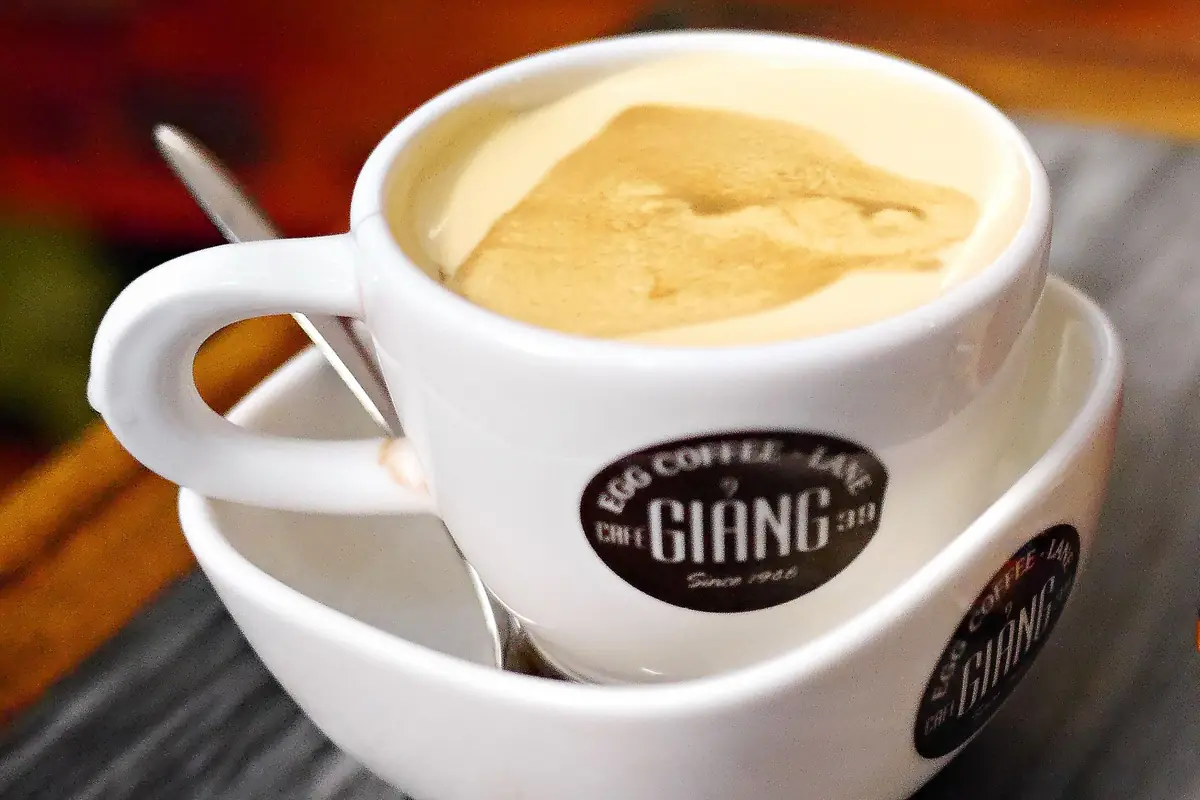
Photo: travel oriented
How to order: "Cho mình một cà phê trứng nóng."
Meaning: One hot egg coffee, please.
Egg coffee is one of Hanoi's most famous local specialties. Its history is closely associated with Nguyen Van Giang, who developed a coffee drink using whipped egg yolks in the 1940s, when milk was difficult to obtain.
A typical egg coffee has strong coffee at the bottom and a thick layer of whipped egg cream on top. The cream is usually made with egg yolks and sweet ingredients such as sugar or condensed milk, although individual recipes vary.
The upper layer is pale yellow, smooth, thick, and rich. Combined with the strong coffee underneath, it creates a contrast between sweetness and bitterness, and the overall result can feel closer to a dessert than an ordinary cup of coffee.
Many international visitors search for egg coffee Hanoi before arriving in Vietnam. But egg coffee is not identical everywhere: some cafés make a very thick cream that you can eat with a spoon, others prepare a lighter, more fluid version.
Hot egg coffee is especially appealing on a cool Hanoi morning. Some cafés place the coffee cup inside a small bowl of warm water to maintain the temperature.
When your drink arrives, there is no need to stir everything immediately. Try a small spoonful of the cream first, then sip the coffee together with the cream. This lets you experience the separate flavors before mixing them.
Drink a little deeper into the coffee beneath the cream for more bitterness, instead of only eating the topping.
Cà phê muối
Hue salt coffee
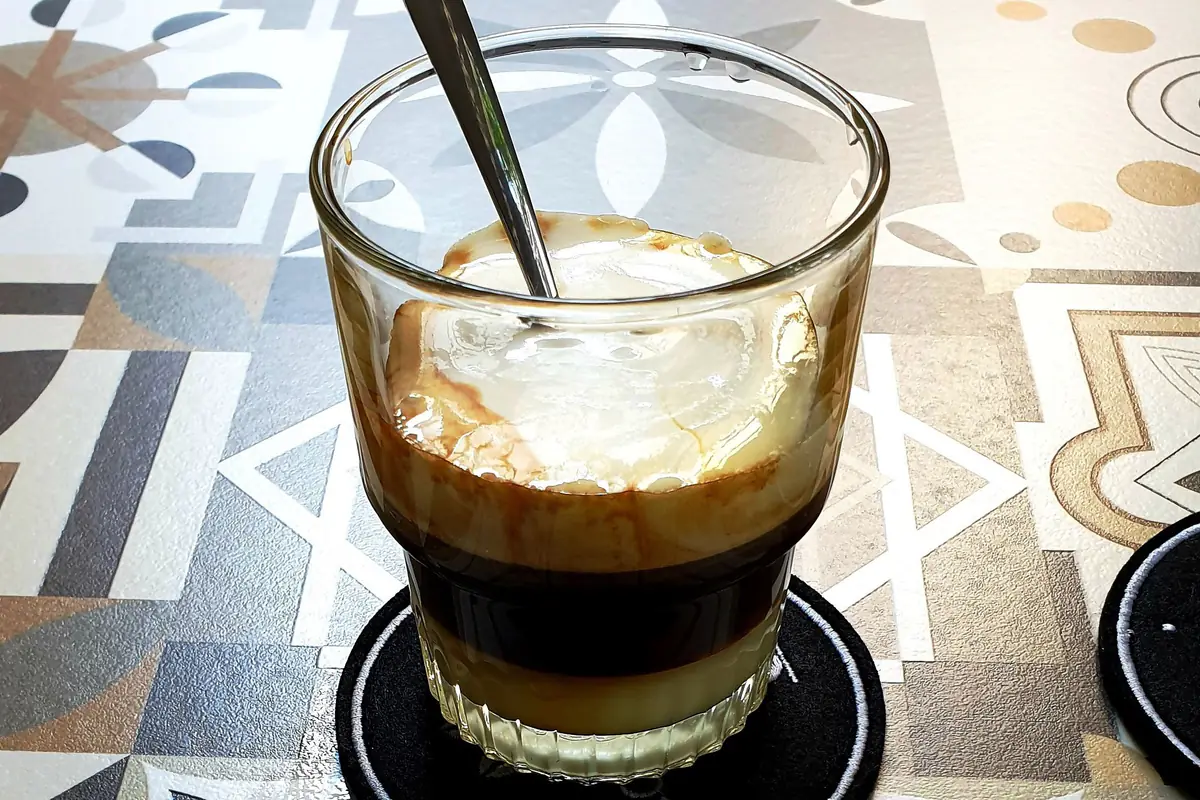
Photo: Phương Huy
How to order: "Một cà phê muối đá, cho mình ít kem muối được không?"
Meaning: One iced salt coffee with less salted cream, if possible.
Salt coffee became famous in Hue before spreading to other Vietnamese cities. The name sometimes surprises first-time visitors, who might imagine black coffee with a spoonful of salt stirred in. Most versions are not prepared that way: a common recipe combines strong coffee, sweetened condensed milk, and a layer of milk cream containing a small amount of salt.
The saltiness is usually subtle. You first notice the sweetness and creaminess, followed by the bitterness of the coffee and a slightly salty finish. The combination is somewhat similar to salted caramel, but with a distinct roasted coffee flavor.
In Hue, salt coffee may be served hot or iced, often in a relatively small glass, and the exact proportions depend on the café. Layered cream and coffee are best tasted a little cream first, then stirred gently until the flavors combine.
Salt coffee is worth trying for strong-coffee lovers who want something different from regular condensed milk coffee. It also works well as a mid-morning stop after visiting the Imperial City or walking around central Hue.
Despite its name, salt coffee can contain plenty of sugar from condensed milk and sweetened cream, so asking for less salt does not mean asking for less sugar. Ask whether the café can reduce the condensed milk or cream for a less sweet cup.
A version with a generous amount of cream may taste more like a rich dessert drink than black coffee, so anyone who dislikes creamy drinks or cannot consume dairy should choose something else.
Cà phê cốt dừa
Vietnamese coconut coffee
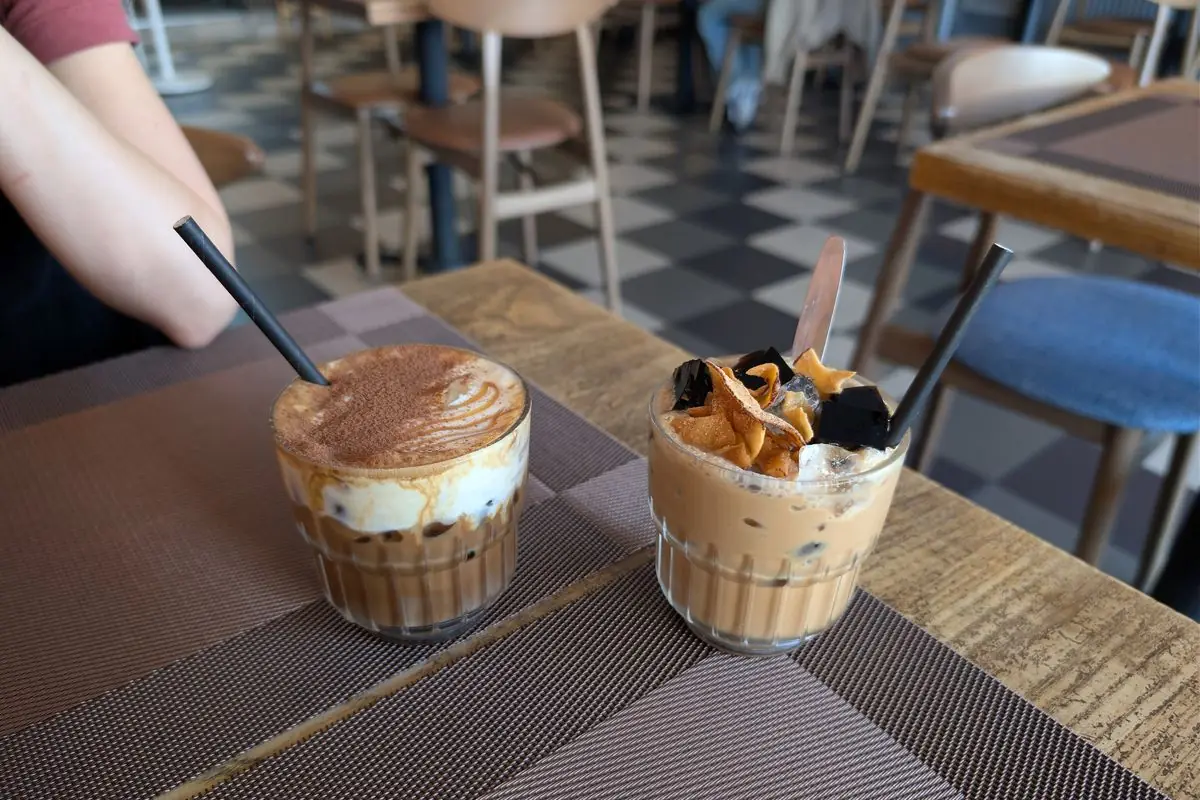
Photo: Andy Li
How to order: "Cho mình một cốt dừa cà phê, ít ngọt nếu làm được."
Meaning: One coconut coffee, less sweet if possible, please.
Coconut coffee combines strong coffee with a rich coconut mixture, usually blended with ice and milk. At many cafés, the coconut component has a thick, smooth, almost frozen texture, and some versions are easier to eat with a spoon than to drink through a straw.
Coconut adds a distinct tropical aroma, while the coffee prevents the drink from tasting entirely like a milkshake.
Cộng Cà Phê is one of the brands that helped make coconut coffee familiar to customers in many Vietnamese cities. Its coconut coffee combines creamy, sweet coconut with strong coffee and is generally served cold.
This drink is refreshing on a hot afternoon, especially after walking outdoors, but the sugar and fat content can be relatively high, depending on the recipe.
Coconut does not make the drink low in sugar: many versions also include condensed milk.
Request less sweetness when ordering. Some cafés prepare the coconut mixture in advance and may not be able to adjust it afterward.
Unlike Hanoi egg coffee or Hue salt coffee, coconut coffee is not strongly associated with a single city. You can find it at cafés throughout Vietnam.
Which Vietnamese coffee tastes best?
There is no single best Vietnamese coffee for everyone. The right drink depends on how much bitterness, sweetness, creaminess, and caffeine you enjoy.
If you like strong coffee
Start with unsweetened cà phê đen đá. Without condensed milk, you can taste the coffee more clearly. Let some ice melt or ask whether the café can add a little water when it is too strong.
Hot black coffee is another good option, especially early in the morning.
At cafés offering several types of beans, ask whether they serve Robusta or Arabica. Robusta gives a full-bodied, bitter flavor; Arabica gives more varied aromas and brighter acidity.
If you like strong coffee with a little sweetness
Cà phê sữa đá is the practical choice. Less condensed milk lets the coffee flavor stand out, and a smaller amount of milk still softens the bitterness without completely hiding the coffee.
It is a good starting point for visitors who normally drink espresso-based coffee with milk.
If you dislike bitter coffee
Try bạc xỉu. It is generally milkier and less bitter than standard Vietnamese iced milk coffee. The main concern is sweetness, so ask for a less sweet version where the café can prepare one.
Latte fans who want something distinctly Vietnamese will find bạc xỉu worth trying, though the type of milk and the brewing method differ, so it will not taste exactly like a latte.
If you prefer creamy drinks
Choose according to where you are traveling. In Hanoi, try hot egg coffee. In Hue, order salt coffee. Fans of coconut and cold desserts can choose coconut coffee.
Egg coffee is about the contrast between whipped cream and strong coffee. Salt coffee combines sweetness with a subtle salty finish. Coconut coffee is cold, rich, and aromatic.
Anyone who does not like dessert-like drinks can stick with black coffee or regular iced milk coffee.
How to order Vietnamese coffee in Vietnamese
Ordering coffee takes very little Vietnamese. Remember the drink name, whether you want it hot or iced, and how to request less sugar or milk.
| What you want | What to say in Vietnamese |
|---|---|
| Iced black coffee without sugar | Cho mình một cà phê đen đá không đường. |
| Iced coffee with condensed milk | Cho mình một cà phê sữa đá. |
| Less condensed milk | Cho mình cà phê sữa đá ít sữa đặc. |
| More condensed milk | Cho mình cà phê sữa đá nhiều sữa đặc. |
| Sweet, milky coffee | Cho mình một bạc xỉu đá. |
| Hot egg coffee | Cho mình một cà phê trứng nóng. |
| Salt coffee with less cream | Cho mình cà phê muối ít kem. |
| Coconut coffee, less sweet | Cho mình cốt dừa cà phê ít ngọt. |
| Takeaway | Cho mình mang đi nhé. |
| Drink at the café | Cho mình uống tại quán. |
These phrases are polite and natural in everyday café situations.
"Less sugar" and "less milk" are not the same
For black coffee, you can say ít đường for less sugar or không đường for no sugar. Many cafés can accommodate this easily because sugar is added separately.
With cà phê sữa đá and bạc xỉu, much of the sweetness comes from condensed milk, so asking for ít sữa đặc, meaning less condensed milk, is often more precise. However, less condensed milk also means a stronger coffee flavor. Asking whether the café can use unsweetened fresh milk keeps plenty of milk without much sugar.
Egg coffee, salt coffee, and coconut coffee often have sugar already in the cream or blended mixture, so asking for less may not make much difference. A useful question is: "Món này bên mình có làm ít ngọt được không?" It means, "Can you make this drink less sweet?"
How to order hot or iced coffee
The two words to remember are:
- Đá: Iced
- Nóng: Hot
You will commonly see đen nóng, đen đá, sữa nóng, sữa đá, bạc xỉu nóng, and bạc xỉu đá.
Hot egg coffee is the traditional version worth trying first. Salt coffee may be available hot or cold, depending on the café. Coconut coffee is usually served cold. A menu that lists only the drink name does not say hot or iced, so confirm when ordering.
What if you want less caffeine?
You can ask: "Món này có làm ít cà phê được không?" This means, "Can you make this with less coffee?"
But less coffee does not mean caffeine-free. Bạc xỉu, egg coffee, and coconut coffee may still contain a significant amount of caffeine. Anyone who needs to avoid caffeine altogether should ask whether the café offers decaffeinated coffee, which traditional phin cafés do not always have.
Where to drink egg coffee in Hanoi
Café Giảng, 39 Nguyen Huu Huan Street
Café Giảng is closely connected with the history of Hanoi egg coffee.
Café information:
- Address: 39 Nguyen Huu Huan Street, Hoan Kiem area, Hanoi.
- Opening hours: 7:00 AM-10:00 PM, Monday to Sunday.
- What to order: Hot egg coffee.
- Other locations: 57 Trang Tien Street and the third floor of Lotte Mall West Lake.
Loading map...
- Café Giảng: 39 Nguyen Huu Huan Street, Hoan Kiem
On Nguyen Huu Huan Street, look for number 39 and the Café Giảng sign. The entrance is relatively narrow, and the tables are not all on view from the street.
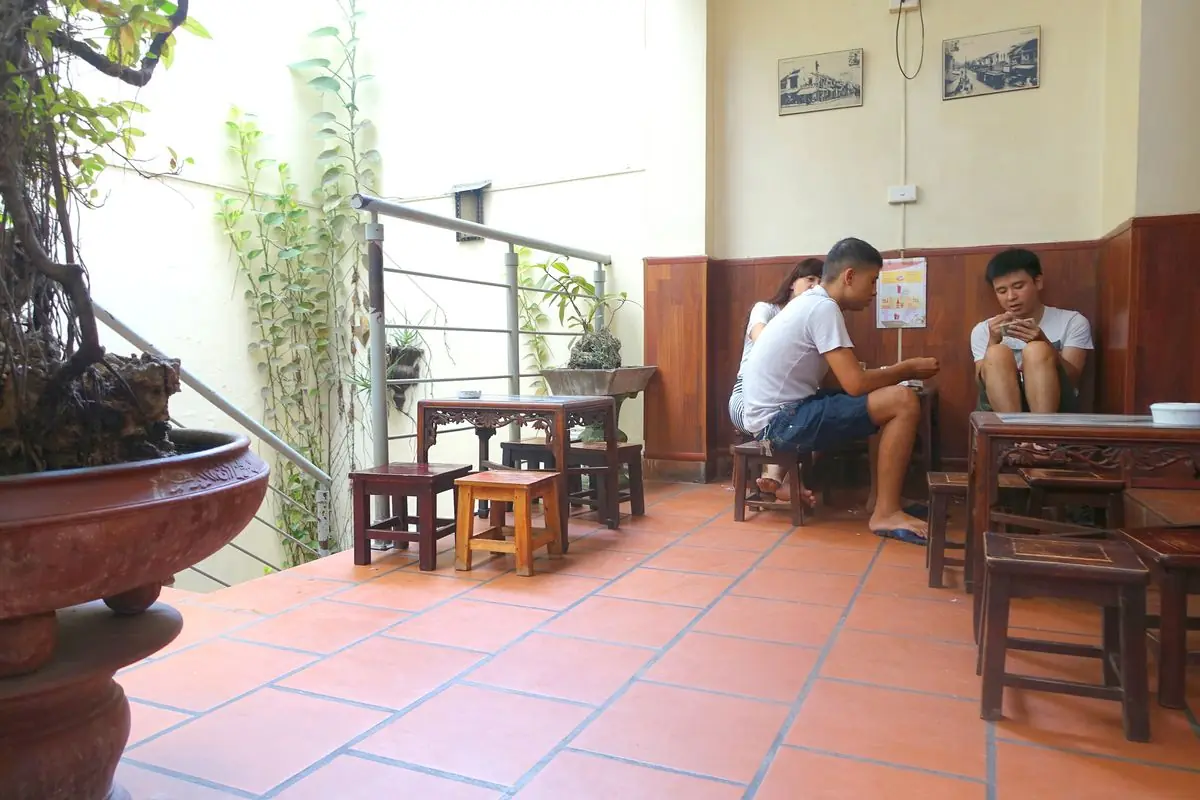
Photo: Daderot
Visitors usually come for the egg cream and coffee combination tied to the café's history; it is a weaker choice if your main priority is working on a laptop for several hours.
Morning is a convenient time to visit: arrive around 8:00-10:00 AM, enjoy an egg coffee, then continue exploring Hanoi's Old Quarter. The timing is a sightseeing suggestion, and the café can still be busy.
Evenings and weekends can be busy, so large groups should be ready to sit at separate tables or choose another time.
Should you order hot or iced egg coffee?
For your first experience in Hanoi, choose hot. The cream stays smooth and the coffee beneath it remains warm. You can also appreciate the contrast between the two layers before stirring.
Iced egg coffee may be more appealing in hot weather or when you do not enjoy warm cream. The texture and presentation vary between cafés.
The egg flavor may not be obvious, but the drink still contains egg ingredients, so anyone with an egg allergy should not order it.
Where to try salt coffee in Hue
One café closely associated with Hue salt coffee is Cà Phê Muối, with a location at 10 Nguyen Luong Bang Street.
The café has two locations:
- 10 Nguyen Luong Bang Street, Hue: The location associated with the development of the café's original salt coffee.
- 142 Dang Thai Than Street, Hue: A location near the Imperial City area.
Loading map...
- Cà Phê Muối, Nguyen Luong Bang: 10 Nguyen Luong Bang Street
- Cà Phê Muối, Dang Thai Than: 142 Dang Thai Than Street, near the Imperial City
Drinks cost around VND 20,000-30,000, and the café opens 6:30 AM-10:00 PM, Monday through Saturday. Hours may be split into morning and afternoon sessions, so confirm the current schedule before arriving around midday or on Sunday.
The Dang Thai Than location is more convenient for a coffee stop after a morning at Hue's Imperial City, while the Nguyen Luong Bang location may fit more naturally into a breakfast or walking itinerary for those staying in the central area south of the Perfume River.
For your first visit, order the café's standard salt coffee. Try the cream before mixing everything together. Once you understand the original flavor, you can decide whether you prefer stronger coffee or more cream on your next visit.
Salt coffee is now available in Hanoi, Da Nang, Ho Chi Minh City, and many other places, but Hue remains the destination to prioritize for the drink in its local setting.
How much does Vietnamese coffee cost in 2026?
Coffee prices in Vietnam vary according to the café, location, serving size, and recipe.
A small neighborhood café may charge less for traditional phin coffee than a national chain. Drinks containing egg cream, salted cream, or blended coconut often require additional ingredients and preparation.
The following 2026 prices come from named café menus. They are not nationwide average prices.
| Café or brand | Drink | Reference price |
|---|---|---|
| Highlands Coffee | Phin đen đá | VND 29,000 |
| Highlands Coffee | Phin sữa đá | VND 29,000 |
| Highlands Coffee | Bạc xỉu đá | VND 29,000 |
| The Coffee House | Cà phê đen đá | VND 39,000 |
| The Coffee House | Cà phê sữa đá | VND 39,000 |
| The Coffee House | Bạc xỉu | VND 39,000 |
| Cộng Cà Phê | Sữa đá Sài Gòn | VND 45,000 |
| Cộng Cà Phê | Bạc xỉu | VND 45,000 |
| Cộng Cà Phê | Nâu kem muối | VND 49,000 |
| Cộng Cà Phê | Cốt dừa cà phê, small | VND 59,000 |
| Cà Phê Muối Hue, 10 Nguyen Luong Bang | Price range at the café | VND 20,000-30,000 |
Prices at individual branches, on delivery platforms, during promotions, or for different cup sizes may vary.
The table shows bạc xỉu priced the same as regular milk coffee at all three chains, even though it commonly contains a smaller proportion of coffee. Milk, preparation, serving style, location, and the brand's pricing policy all play a role alongside the amount of coffee.
Do you need to visit a major chain for good coffee?
No.
Large chains are convenient when you want a clearly displayed menu, predictable choices, and several branches across a city. That can be helpful for international visitors or anyone unfamiliar with the area.
Traditional cafés are worth considering when you want to see the phin brewing process, experience local coffee habits, or visit a long-established neighborhood business.
Some small cafés have only a few drinks: black coffee, milk coffee, bạc xỉu, and iced tea. A short menu says nothing about whether the coffee is better or worse.
Ask before ordering when prices are not displayed: "Cà phê sữa đá bao nhiêu tiền một ly vậy?" This means, "How much is one iced milk coffee?"
How do Vietnamese people spend time in coffee shops?
In Vietnam, a café is more than a place to buy a drink: people also meet friends there, read the news, discuss work, or rest during the day.
The atmosphere changes considerably depending on the type of café. A sidewalk coffee stall, a traditional phin café, a specialty coffee shop, and a large chain do not follow exactly the same routine.
Morning: coffee before or after breakfast
In many Vietnamese cities, cafés start receiving customers early. Between roughly 6:30 and 9:00 AM, you may see people stopping for takeaway coffee before work, reading on their phones, or chatting with friends.
This is a good time for hot black coffee, iced black coffee, or iced milk coffee. Breakfast first is more comfortable than strong coffee on an empty stomach for anyone whose stomach reacts to caffeine.
In Hanoi, you might start the morning with pho or a bowl of noodles, then walk to a nearby café for egg coffee. In Ho Chi Minh City, bánh mì and iced milk coffee make a familiar combination.
Follow local habits at a relaxed pace: a café opening at 7:00 AM will still fit comfortably into most sightseeing schedules.
Midday: choose somewhere comfortable
Between approximately 11:00 AM and 2:00 PM, the weather can be hot in many Vietnamese cities, especially during the dry season. After walking outdoors, a café with air conditioning or indoor seating may be more comfortable than a sunny sidewalk table.
Coconut coffee, iced bạc xỉu, and iced milk coffee are popular cold options. Which one you should order still depends on how much sugar you want.
Look at the seating before ordering when you plan to rest for a while, since some cafés mainly serve takeaway customers and have only a few small tables.
Afternoon: stay longer, but be considerate
The period between approximately 2:00 and 4:00 PM can be convenient for finding a quieter café, though popular cafés near tourist attractions, schools, or busy streets can remain crowded throughout the afternoon.
In small cafés with low stools and narrow walkways, keep your bags beside or under your seat and avoid spreading belongings across several tables when the café is busy. Ask the staff before moving tables together, and do not block serving areas or walkways.
For laptop work, choose a café with proper tables, power sockets, and a suitable environment. Not every traditional Vietnamese café is designed for people working for several hours.
Sidewalk cafés versus coffee chains
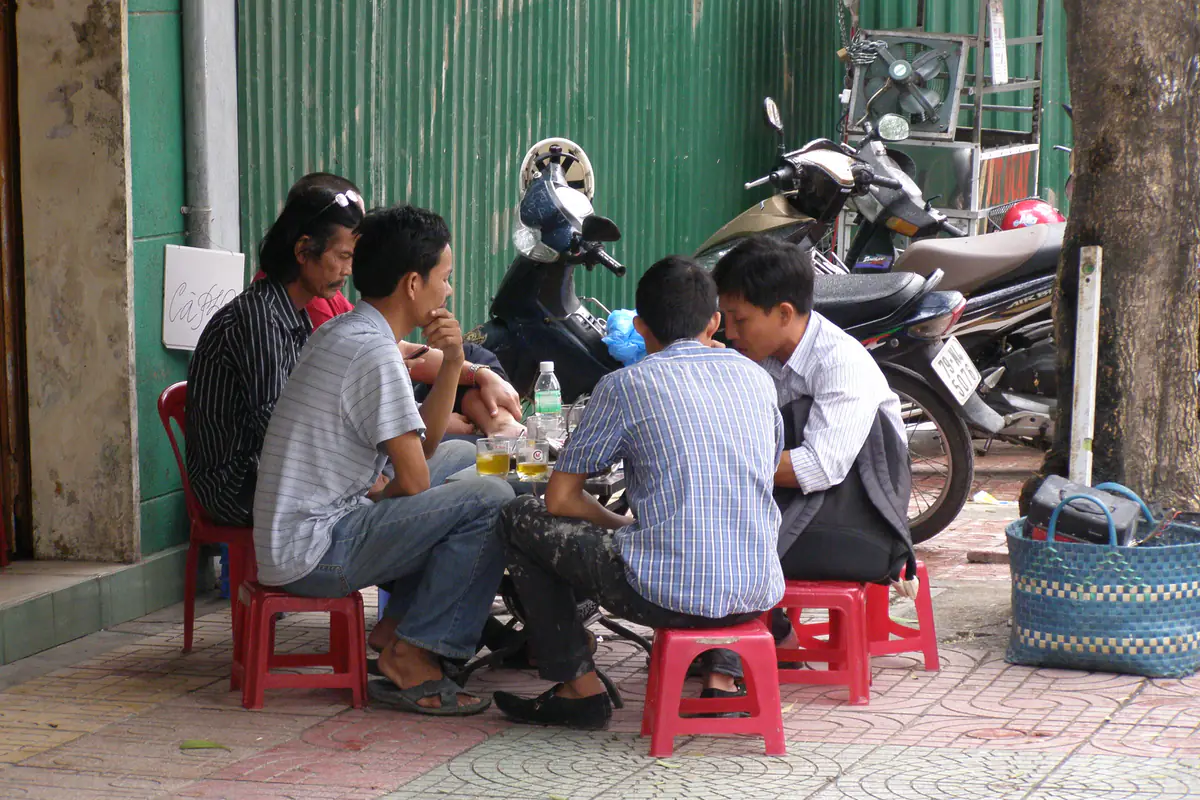
Sidewalk cafés commonly have small tables and low stools. Service is usually straightforward. At some places, a staff member comes to your table to take your order. At others, you order directly from the person preparing the coffee.
Depending on the café, you may pay when the drink arrives or before leaving. Ask "Mình thanh toán ở đâu?" when unsure. This means, "Where do I pay?"
At coffee chains, customers often order and pay at the counter, then collect their drinks using a name or order number. Some branches offer table service.
Tipping is optional when ordering coffee in Vietnam. You can leave a tip for good service, but it is not a required charge.
How long can you sit in a Vietnamese café?
There is no universal time limit.
At a quiet neighborhood café, you can often sit comfortably while drinking and talking. At a small, crowded café, it is considerate not to occupy unnecessary seats or remain for an excessive amount of time after finishing your drink.
Coffee chains may allow laptop work as long as it follows their policies. Cafés with time limits or minimum-order requirements normally communicate their own rules.
Avoid pointing your camera directly at other customers or clearly filming staff without asking. A photograph of your coffee phin on the table rarely requires disturbing anyone.
Small details that make Vietnamese coffee easier to enjoy
When a phin filter is still dripping
- 4-7 min
Let it drip
Do not lift the lid or press down on the filter when the coffee seems slow.
A typical phin may need around 4-7 minutes to finish brewing. The gradual dripping is part of the process.
- Nearly done
Take the phin off
Once the coffee has nearly finished, the staff may remove the phin, or you may be able to place it on a saucer provided by the café. Be careful, as the metal may still be hot.
- Last step
Stir, then add ice
A cup with condensed milk gets stirred with the coffee before ice goes in, unless the café serves the drink differently.
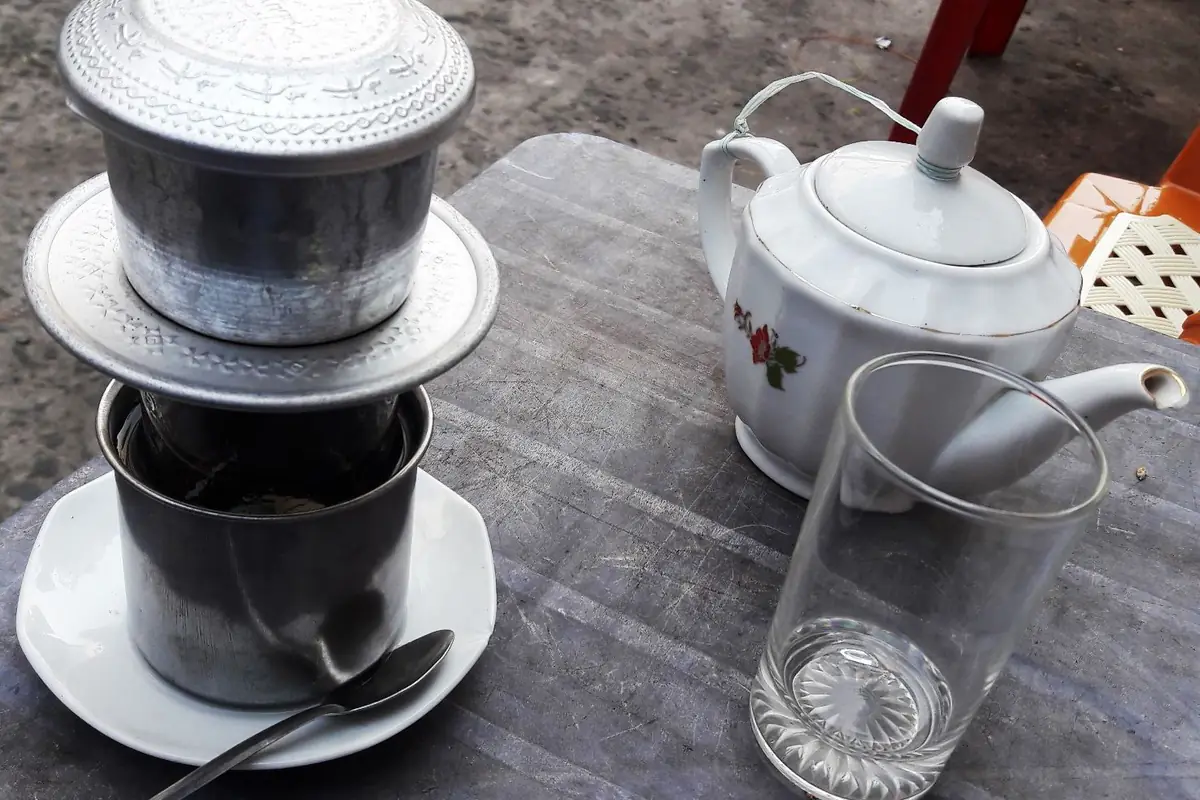
Photo: Phương Huy
When the café serves complimentary tea
Some traditional Vietnamese cafés bring out a glass of iced tea or hot tea alongside coffee. At some establishments, this is complimentary. Others charge separately.
Tea can be useful between sips of strong coffee, but it is not offered everywhere. To check whether it is free, ask: "Trà này có tính tiền riêng không?" This means, "Is there a separate charge for this tea?"
When you want less sugar
Ask before the drink is prepared. For black coffee, reducing sugar is often easy, and for iced milk coffee, reducing condensed milk may also be straightforward. With egg coffee, salt coffee, and coconut coffee, though, the cream or blended mixture may already contain sugar.
Extra ice does not remove sugar; it only dilutes the drink as it melts.
When you cannot drink dairy milk
Traditional Vietnamese milk coffee usually contains sweetened condensed milk made from cow's milk. Bạc xỉu, egg coffee, salt coffee, and coconut coffee may also contain dairy ingredients.
People with a milk allergy should ask about ingredients and possible cross-contact. If the café cannot confirm that a drink is suitable, choose something else.
When you are sensitive to caffeine
Avoid ordering several strong Vietnamese coffees in a short period just because the servings look small. Traditional phin coffee can be highly concentrated, and the caffeine content depends on the type and amount of coffee used, whatever the size of the cup.
For anyone whose sleep is affected by caffeine, strong coffee is better in the morning than late in the evening, and after dinner a caffeine-free tea or another non-coffee drink makes a better café order.
How to plan a Vietnamese coffee experience during your trip
There is no reason to try all six drinks in a single day: choose one or two types and explore the others during the rest of your trip.
In Hanoi
Have breakfast, then visit Café Giảng at 39 Nguyen Huu Huan Street after its 7:00 AM opening time. Order a hot egg coffee and taste the cream before mixing it with the coffee underneath.
A second coffee later in the day could be đen đá or nâu đá in the early afternoon, keeping your overall caffeine intake in mind. Those more interested in the original flavor of the coffee beans can skip egg coffee and find a traditional café serving hot or iced black phin coffee.
In Hue
Visit Cà Phê Muối on Nguyen Luong Bang or Dang Thai Than Street after checking the latest opening hours. Start with the café's regular salt coffee to understand its standard recipe.
On another day, try black coffee or iced milk coffee to compare the flavor without salted cream. Salt coffee works well as a short stop during a Hue sightseeing itinerary, and there is no need to reserve an entire morning for it.
In Ho Chi Minh City
Begin with cà phê sữa đá for a stronger coffee flavor or bạc xỉu for a milkier drink. Either one fits naturally into breakfast or a relaxed morning café visit.
Both are widely available, so the city's most famous café is optional.
In Da Nang, Da Lat, or Nha Trang
Black coffee, iced milk coffee, bạc xỉu, salt coffee, and coconut coffee are widely available in these destinations. In coastal cities with hot weather, iced milk coffee or coconut coffee can be refreshing. On a cool Da Lat morning, hot black coffee or hot milk coffee may fit the weather better.
Da Lat is also a good place to explore Arabica from the Cau Dat growing region and cafés specializing in alternative brewing methods.
In Nha Trang, choosing a café should depend on where you are staying, its opening hours, and the kind of atmosphere you enjoy. It is more useful to find a convenient local café than to copy a list of famous cafés from another city.
Common mistakes when ordering Vietnamese coffee
Mistake 1: Assuming black iced coffee never contains sugar.
Some cafés add sugar to their regular black coffee recipe. Say không đường if you want it unsweetened.
Mistake 2: Thinking bạc xỉu is just watered-down milk coffee.
Bạc xỉu usually has a higher proportion of milk than cà phê sữa đá. It is not simply milk coffee diluted with water.
Mistake 3: Imagining egg coffee contains a boiled egg.
Egg coffee uses whipped egg cream, not a boiled egg placed inside a cup of coffee.
Mistake 4: Expecting salt coffee to taste noticeably salty.
In many recipes, the salt is subtle and is used to balance sweetness and bitterness.
Mistake 5: Assuming coconut coffee contains no dairy.
Many cafés add condensed milk or fresh milk. Check the ingredients if you need to avoid dairy.
Mistake 6: Believing all Vietnamese coffee is Robusta.
Robusta dominates traditional production, but Vietnam also grows Arabica and produces specialty coffee.
Mistake 7: Assuming less bitterness means less caffeine.
Roasting, milk, and sugar all affect perceived bitterness. Caffeine depends on the beans, quantity, and brewing method.
How to choose the right café during your trip
The busiest or most famous café can be the wrong pick for your trip.
Before catching a bus or leaving for the airport, a coffee chain with a takeaway counter is more practical: the menu is usually easy to read, prices are displayed, and takeaway skips the hunt for a seat.
In Hanoi's Old Quarter, a small egg coffee café may be more interesting than a large chain. In Hue, choosing a salt coffee café near your sightseeing route can save an unnecessary journey across town.
People who need to work should prioritize cafés with spacious tables, Wi-Fi, and electrical outlets. Those who want to watch everyday street life may prefer a roadside café, provided the seating is permitted and does not obstruct the pavement.
When traveling in a group that includes people who do not drink coffee, check whether the menu also offers tea, fruit juice, or caffeine-free options. A café with several types of drinks may be easier for everyone.
For small independent cafés, confirm the opening hours before visiting, especially on holidays or around midday. Some cafés close between morning and afternoon sessions, and map applications do not always reflect those breaks accurately.
A small Vietnamese phin usually takes around 4-7 minutes to finish dripping, but choosing your drink can be much quicker: black iced coffee for bitterness, iced milk coffee for a strong sweet balance, and bạc xỉu when you prefer more milk. Hanoi egg coffee, Hue salt coffee, and coconut coffee are worth saving for the moments when you want to discover a different side of Vietnam's coffee culture.
FAQ
What is Vietnamese coffee made of?
Vietnamese coffee is not a single bean variety or recipe. Vietnam primarily grows Robusta, alongside Arabica, and serves many coffee drinks, including black iced coffee, iced milk coffee, bạc xỉu, egg coffee, salt coffee, and coconut coffee. Metal phin filters and sweetened condensed milk are especially common in traditional Vietnamese coffee culture.
Which Vietnamese coffee is best for beginners?
Bạc xỉu is often the easiest starting point because it contains more milk and has a milder coffee flavor. If you already enjoy coffee with milk, try cà phê sữa đá. If you prefer unsweetened coffee, choose đen đá không đường. Egg coffee, salt coffee, and coconut coffee are better suited to people who enjoy creamy or dessert-like drinks.
Where can I find famous egg coffee in Hanoi?
Café Giảng at 39 Nguyen Huu Huan Street is one of the best-known places associated with Hanoi egg coffee. This location opens daily from 7:00 AM to 10:00 PM. Hot egg coffee is a good choice for your first visit.
What makes Vietnamese coffee different from regular coffee?
Traditional Vietnamese coffee is known for its strong Robusta-based flavor, slow brewing through a metal phin filter, and frequent use of sweetened condensed milk. Vietnam also has distinctive variations such as Hanoi egg coffee, Hue salt coffee, bạc xỉu, and coconut coffee. However, modern Vietnamese cafés also serve Arabica and specialty coffee prepared using other methods.
Is Vietnamese salt coffee salty, and can I order it with less sugar?
Salt coffee usually has only a lightly salty finish from its salted milk cream. The coffee's bitterness and the milk's sweetness remain prominent. You can ask for less cream or condensed milk, but adjustments depend on the café's recipe. Salt coffee is not automatically low in sugar.
Related posts

Road trips
Hanoi to Sapa: choose the right bus or train and arrive on time
Compare five ways to travel from Hanoi to Sapa, including 2026 ticket prices, schedules and where to book.
Food
Where are the best cafes in Nha Trang for sea views?
A practical guide to Nha Trang cafes for sea views, remote work, dates and relaxed evenings.

Islands & beaches
Choose the right Nha Trang cruise: dinner or swimming?
Compare Nha Trang cruises by price, schedule, departure pier, meals, and onboard activities.