Famous Vietnamese Food: Start With Each Region’s Meals
On your first trip, choose a dish that fits the place and the meal; we suggest alternating soups, rice and shared dishes instead of ordering a whole list.
Written by Tụi mình mê biểnUpdated
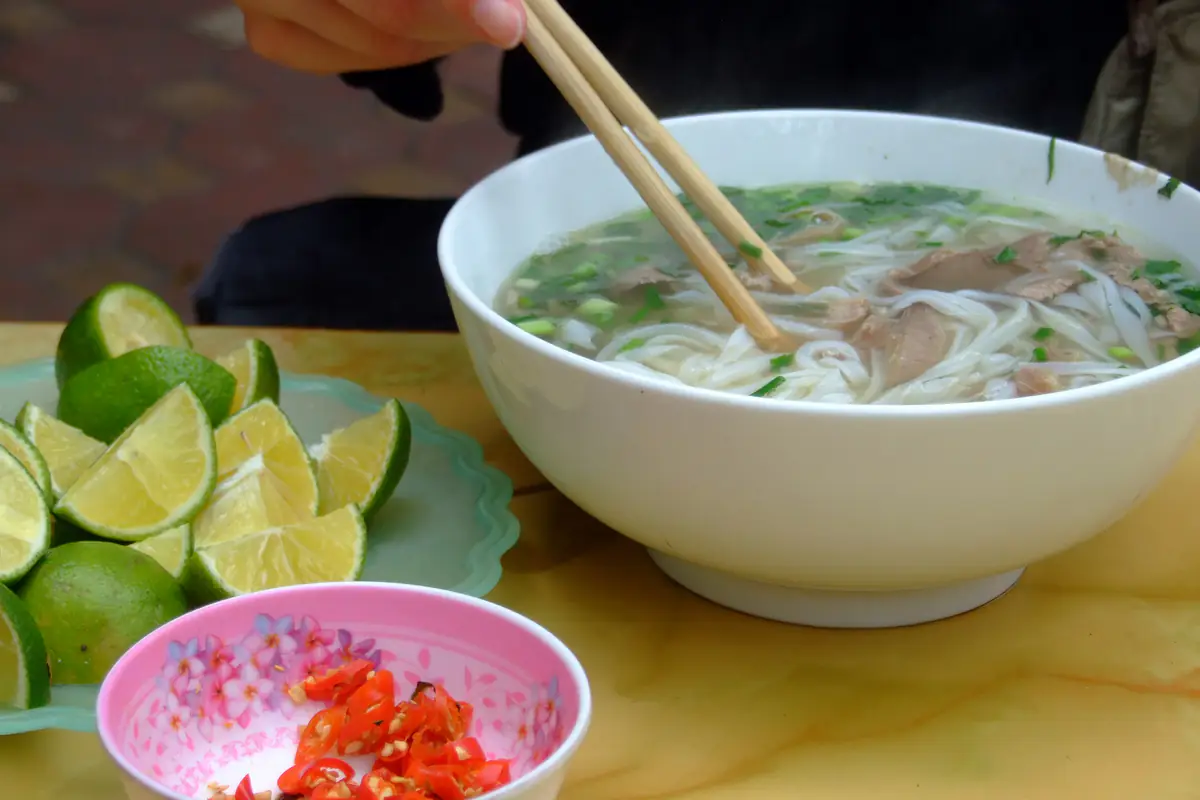
Photo: Codename5281
A Vietnamese menu is easier to navigate like a route map than a checklist. You get more from choosing a dish where it belongs in your trip than from collecting ten names at one sitting. A bowl of noodles in the north and a plate of broken rice in the south offer different textures, seasonings and ways to eat. We suggest starting with a familiar format, then trying something that needs a little more time at the table.
Choose a format you already enjoy
Decide between soup, rice, bread or a shared dish before worrying about the longest menu. If you dislike offal, raw meat or strong fermented sauces, say that when ordering. A clearly explained preference is more useful than asking for something “authentic.” For your first meal, we would choose cooked beef noodle soup, a rice plate or a freshly prepared sandwich with fillings you recognize.
Order one main dish first. Adding rolls, pancakes and dessert immediately can leave you full before the food you were most curious about arrives. Couples can share when the restaurant is comfortable with that arrangement, but ask rather than assuming one portion serves the whole table. Look for visible prices and food cooked hot, and let the staff explain what comes separately.
In the north, start with pho and grilled pork noodles
Pho
Flat rice noodles in broth
Pho is built around flat rice noodles, broth and beef or chicken. Taste the broth before adding lime, chili or sauces. That gives you a chance to notice the stock rather than turning every bowl into the same condiment mix. If you prefer fully cooked beef, request it explicitly instead of choosing rare slices and hoping the broth finishes them.
Bun cha (bún chả)
Grilled pork, noodles and dipping sauce
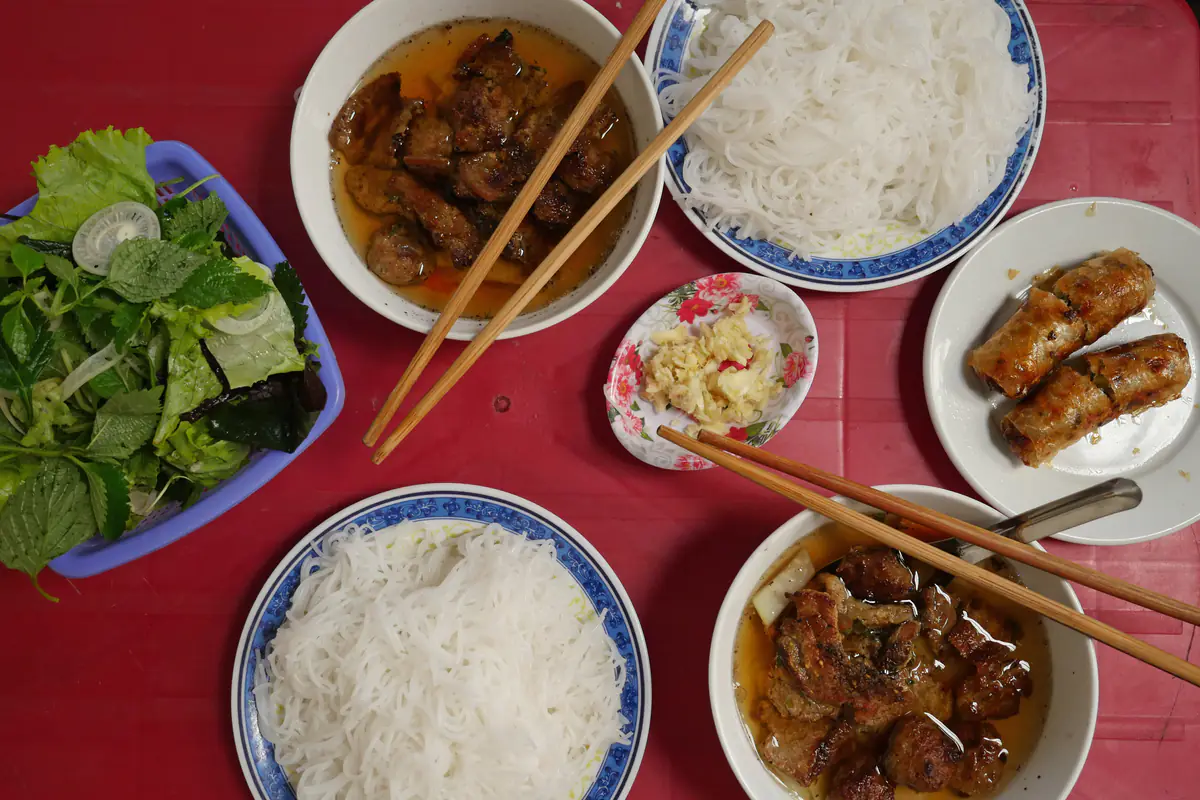
This is our pick for a relaxed lunch in Hanoi. Rice vermicelli comes separately from grilled pork in a bowl of diluted fish-sauce dressing, with greens alongside. Add small bundles of noodles as you eat. Fried rolls may be offered as extras, so check whether their price is per roll or per serving before accepting a plate.
Cha ca (chả cá), fish cooked with turmeric, dill and scallions, deserves a meal of its own if you enjoy fish. Ask about the accompanying sauces, especially fermented shrimp paste. For a lighter start, banh cuon (bánh cuốn) uses thin steamed rice sheets, commonly wrapped around pork and wood-ear mushrooms. Leaving out a side of sausage does not turn the filled rolls or their dipping sauce vegetarian.
Give central Vietnam more than one noodle meal
Bun bo Hue (bún bò Huế) has a lemongrass-scented broth and round rice noodles. The word for beef in its name does not mean every topping is beef: pork and sausage can also appear. Ask about the bowl before ordering if you avoid pork or offal. We suggest keeping chili paste on the side until you know how spicy the broth already is.
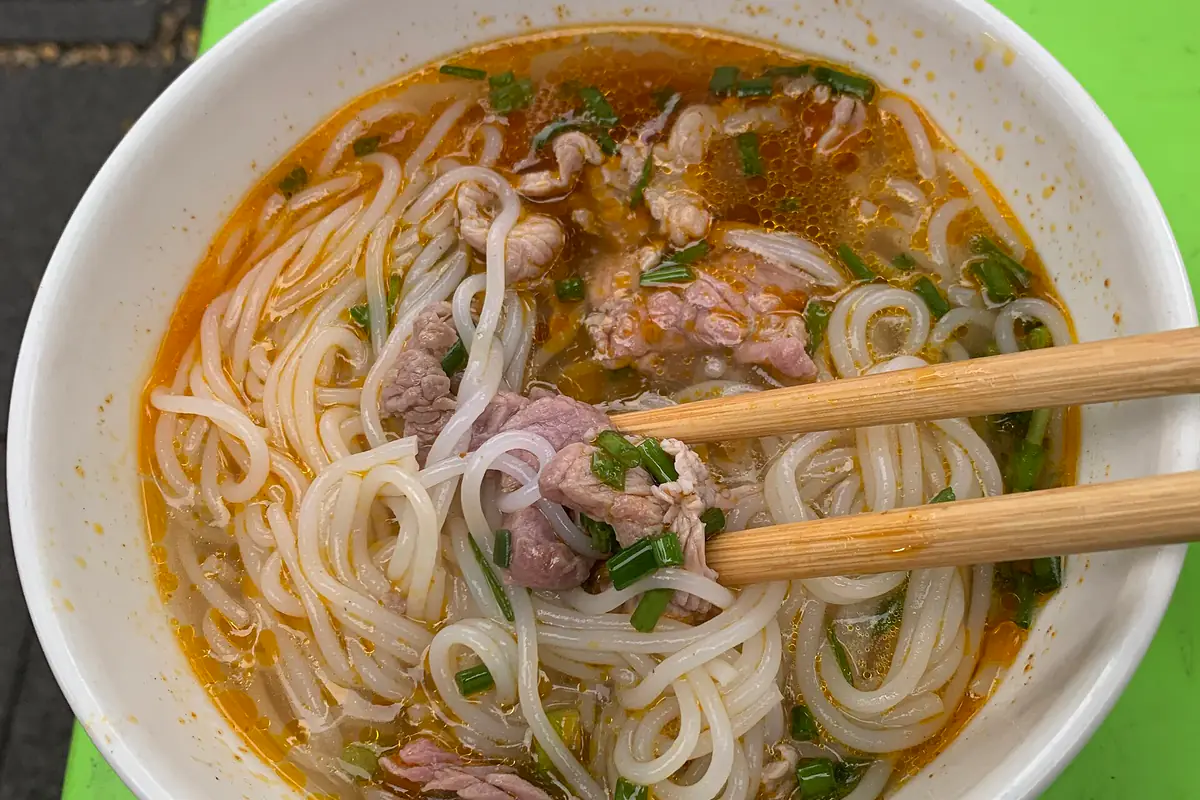
Photo: Chainwit.
Mi Quang (mì Quảng) uses much less broth than an ordinary noodle soup. Rice noodles come with toppings such as shrimp, pork or chicken, plus herbs, peanuts and a rice cracker. Break in a little cracker just before eating to keep the contrast between crisp and soft. Check the available filling and mention peanut allergies before the bowl is assembled.
Cao lau (cao lầu) is the dish we would save a meal for in Hoi An (Hội An): thick noodles, pork and crisp toppings with a small amount of liquid. It is substantial enough to be your main order. Along the coast, bun cha ca (bún chả cá), rice noodles with fish cakes, makes another useful choice. The cakes and broth differ between places, giving you a reason to try it beyond one city.
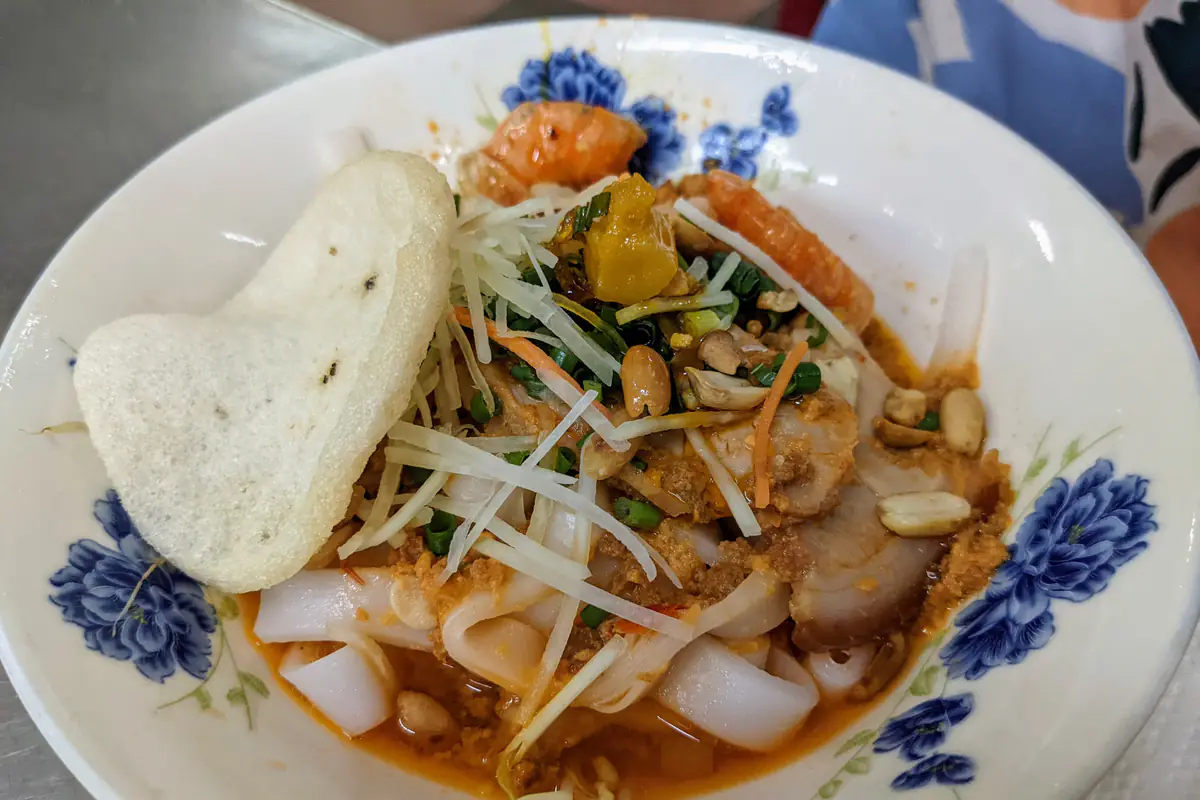
Photo: Jpatokal
If your route includes Nha Trang, leave room for its own meals instead of ordering the same dish at every stop. The selection of local dishes to fit around your day helps you spread noodle soups, rolls and smaller snacks across the visit.
Broken rice for a full meal, pancakes to share
Com tam (cơm tấm) means broken rice. A familiar plate pairs it with grilled pork, pickles, scallion oil and fish-sauce dressing, with egg or meatloaf available as additions. Start with the main topping you want rather than ordering every extra. We prefer a plate that stays balanced, with enough rice and vegetables to go with the meat.
Hu tieu (hủ tiếu) comes as a soup or dry noodles with broth alongside. The dry version is useful if you like mixing your own bowl. Hu tieu Nam Vang (hủ tiếu Nam Vang) commonly includes pork, shrimp and sometimes offal, so specify what you want left out. A name alone does not tell you every ingredient in the kitchen’s version.
Banh mi (bánh mì) is convenient when you want bread instead of another bowl of noodles. Fillings, pate and sauces differ between stalls; choose the filling before the vendor builds the sandwich. Banh xeo (bánh xèo), a savory rice-flour pancake, suits a shared meal. Order one first to see its size, then add another while it can still arrive crisp.
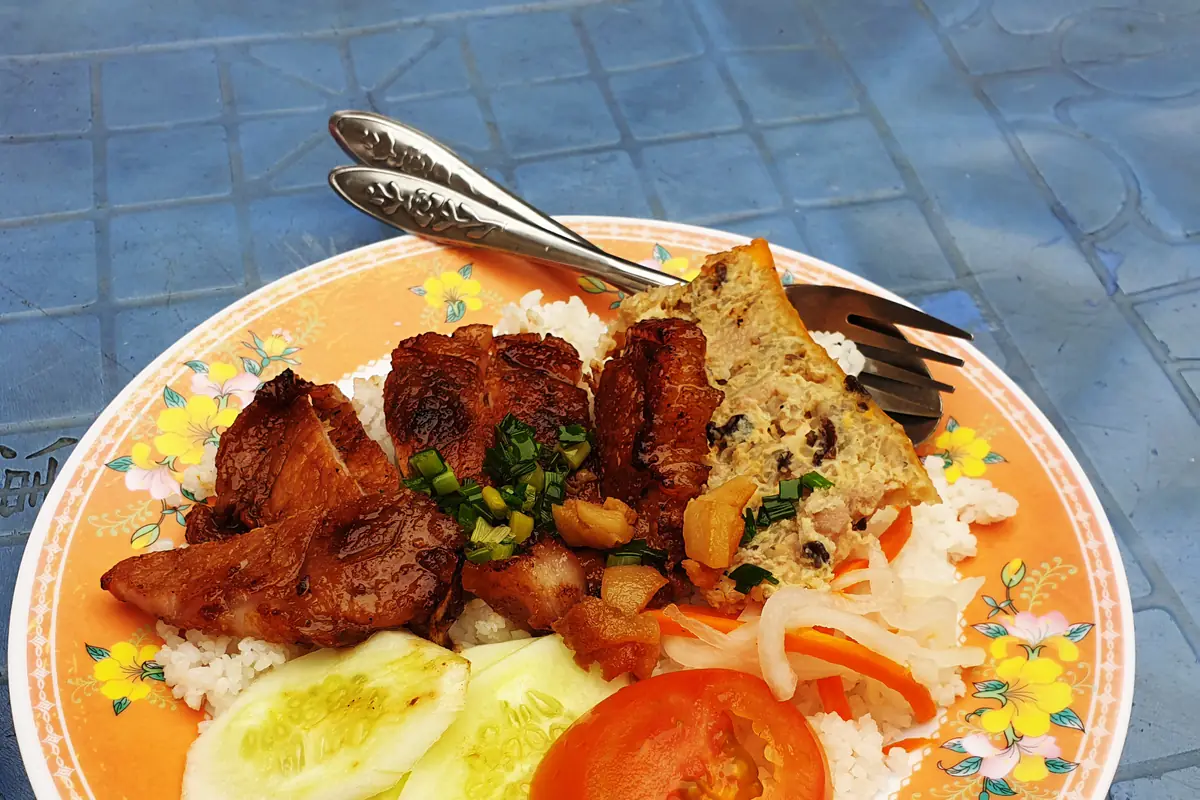
Photo: Phương Huy
Pancakes vary across southern and central Vietnam, both in size and filling. Shrimp, pork or squid may feature. Ask how the restaurant serves the wrappers and greens, and dip a small piece before adding sauce to everything. We would make this a sit-down meal with time to eat each pancake hot rather than treating it as a quick roadside snack.
Agree on the portion and extras
There is no useful single national price for a bowl of noodles. A market stall, an airport counter and an air-conditioned restaurant are different purchases. Read the displayed price for the main dish, then ask about extra meat, drinks and side dishes. If you have a fixed meal budget, calculate the complete order before choosing a bigger portion.
Simple requests work well: how many portions, which filling, chili separately and which ingredients to leave out. With a group, have one person repeat the order. Keep a photo of the menu if unfamiliar currency makes the bill hard to follow. Small water bottles, towels and additional sides should be checked against what you actually used.
A vegetarian kitchen makes the decision easier
A bowl with no visible meat can still contain bone broth, fish sauce or animal fat. We suggest a dedicated vegetarian restaurant when avoiding those ingredients matters. Chay is the useful Vietnamese term for vegetarian food, but vegans should also ask about eggs, dairy and sauces. Describe your requirements directly rather than relying on a dish looking plant-based.
Talk about the sauce as well as the main ingredient
Peanuts, dried shrimp, fish sauce and shrimp paste can appear in garnishes, fillings and dressings. With a serious allergy, carry a written Vietnamese explanation and speak to someone who can confirm kitchen ingredients and shared equipment. If the kitchen cannot confirm, choose another place. Removing the topping after preparation does not remove previous contact.
Travelers at higher risk from foodborne illness should favor food served thoroughly cooked and hot, and cooked vegetables over raw greens. Follow your clinician’s instructions for any prescribed emergency medication. Once you have chosen a suitable kitchen, eat at your own pace: taste the plain dish, add condiments gradually and order more only when you still want it.
FAQ
Should I photograph the menu?
It helps if you are splitting a bill or ordering more later. Keep the dish name and pricing unit visible in the photograph.
How should we order for children?
Ask about smaller portions and add food gradually. A large mixed plate is not automatically a better fit for a child.
What if I cannot use chopsticks?
Ask for a spoon, fork or another utensil the restaurant has. We favor a comfortable meal over struggling with an unfamiliar tool.
Related posts
Food
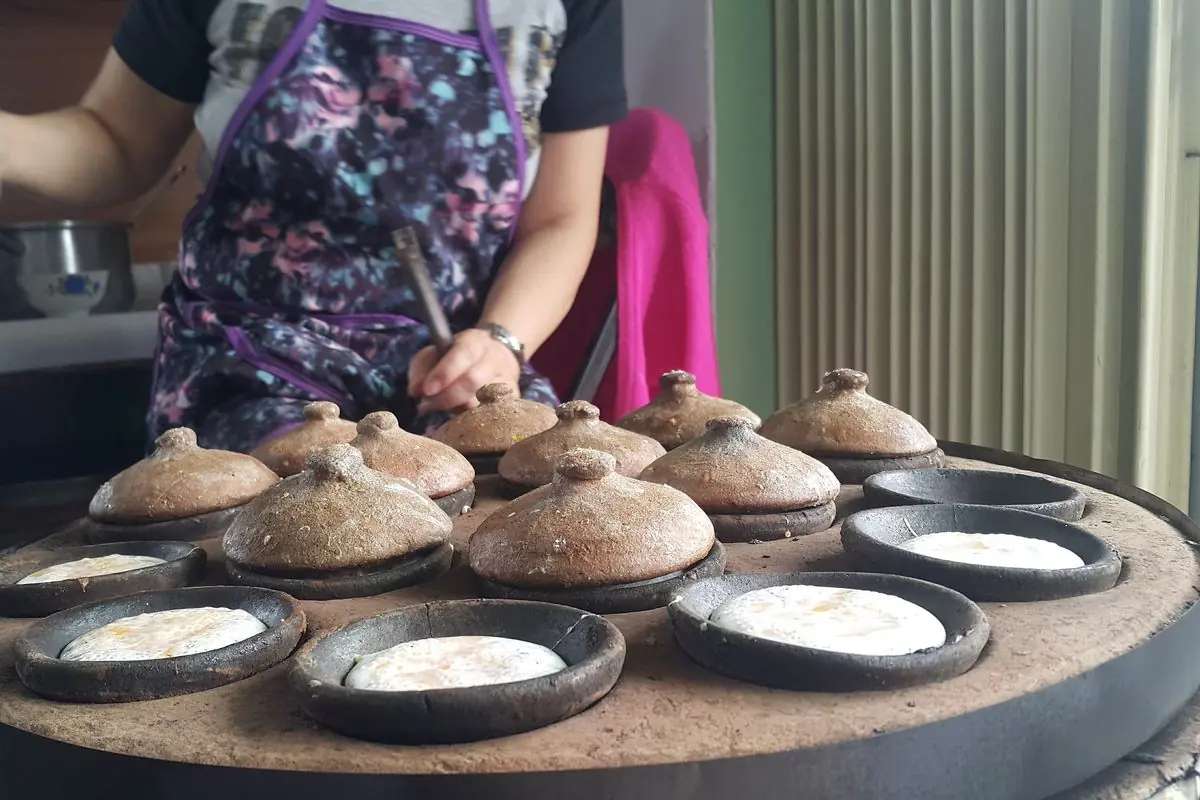
What to eat in Nha Trang in 2 days: try the best local dishes without wasting a meal
Plan your meals around Nha Trang's best local dishes, with restaurant suggestions and practical seafood ordering tips.
Food
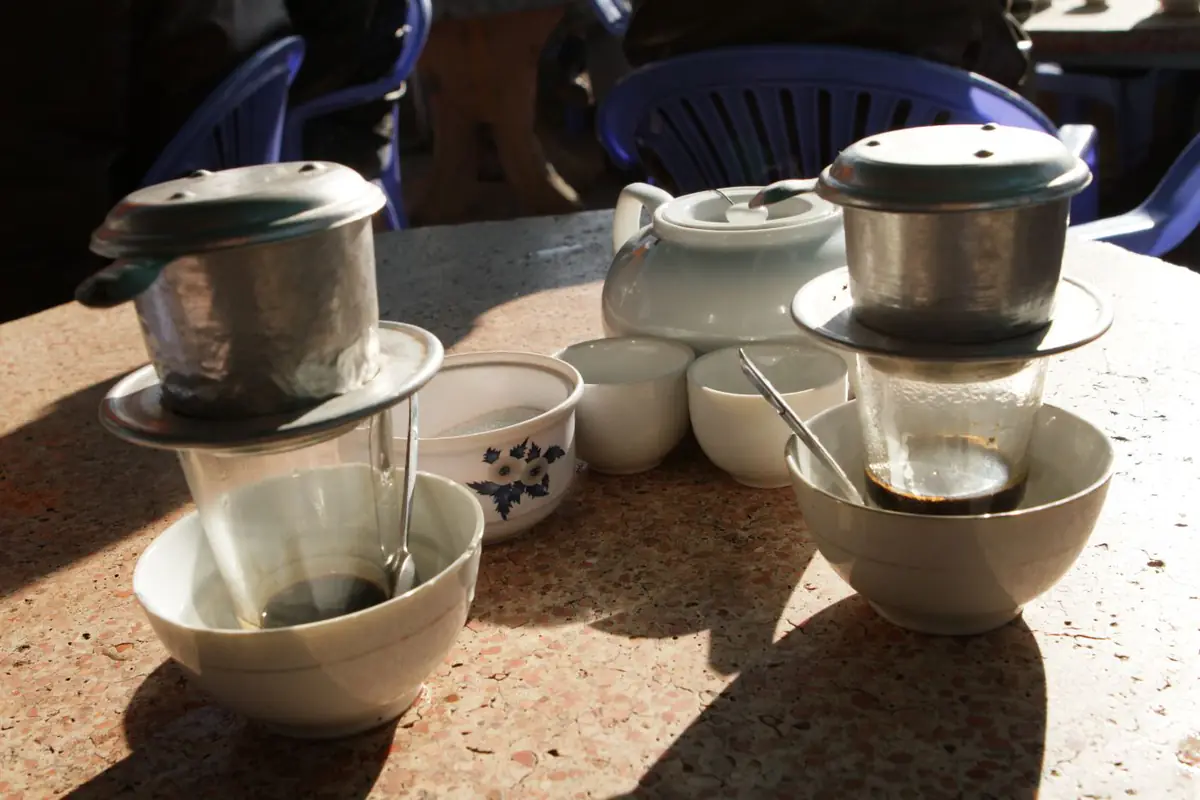
Vietnamese coffee guide: choose the right drink for your taste and order with confidence
Learn how to choose and order six popular Vietnamese coffee drinks with confidence.
Food
Find the best bun cha in Hanoi and learn how to eat it
Learn how to eat Hanoi bun cha and find five places worth visiting for lunch.