Banh canh Nha Trang is best tried as a fish cake breakfast before the seafood bowls
Start with fish cake banh canh if this is your first breakfast in Nha Trang. Choose a mantis shrimp or chive version when you know you want a stronger seafood or herb flavor.
Written by Tụi mình mê biểnUpdated
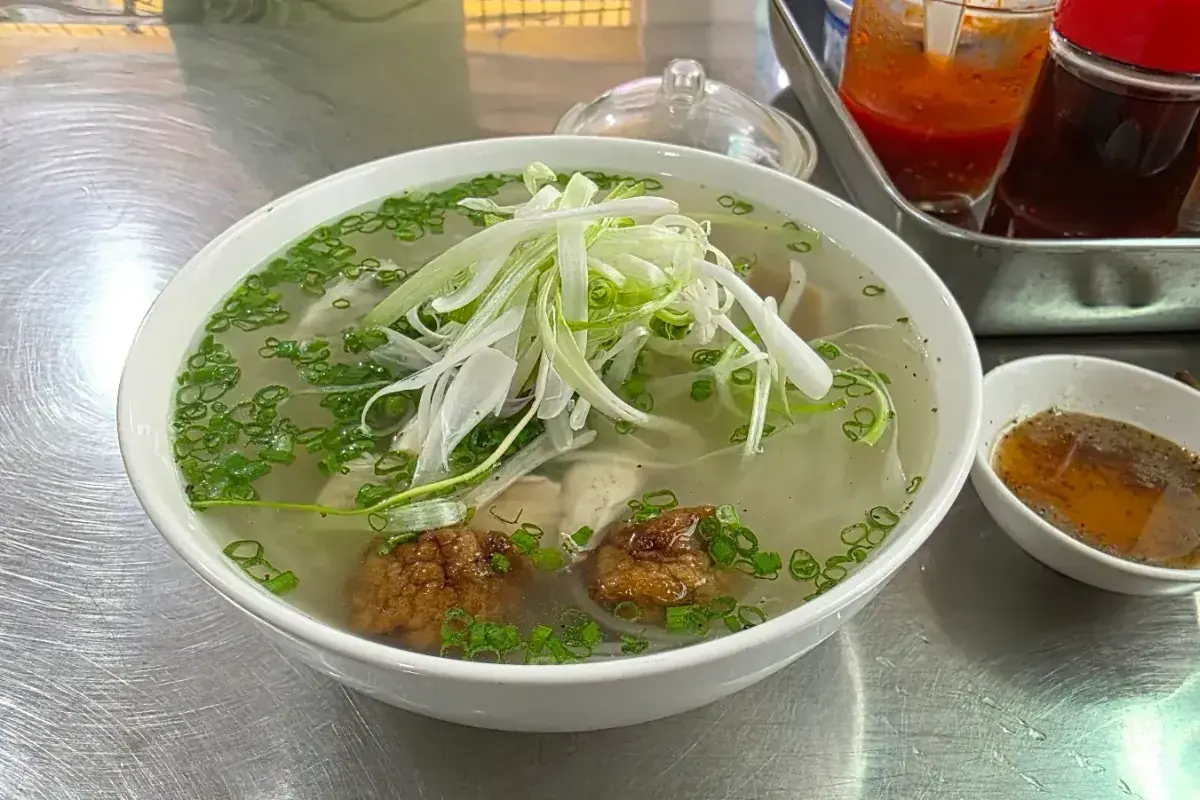
Photo: Nha Trang Guide
What is banh canh Nha Trang?
A bowl of banh canh cha ca contains thick rice-based or tapioca-based noodles, clear fish broth and slices of steamed or fried fish cake. A mantis shrimp bowl puts more emphasis on sweet, firm shellfish meat and may cost more. On your first breakfast in Nha Trang, the fish cake version is easier to find, simpler to order and a useful starting point for understanding the local style.
Banh canh is a type of Vietnamese thick noodle rather than one fixed recipe. Across Vietnam, you may encounter it in rich crab soup, pork broth or seafood dishes. In Nha Trang, one familiar version has a clear, relatively light fish stock and several pieces of fish cake on top. The broth is lighter than the dense, glossy soup some visitors associate with southern Vietnamese banh canh.
The bowl may arrive with chopped spring onion, fried shallots, strips of onion, fish pieces and an extra dipping sauce. Some shops have fish roe, fish innards or jellyfish. Others serve just noodles, broth and fish cake. None of those additional ingredients should be assumed from the name alone. Read the shop sign or ask what the standard bowl includes.
The dish is useful on a busy travel morning. The bowl is served hot, often in a modest portion, and does not require a long meal. Have it before visiting markets, taking a boat trip or walking along the seafront. The most important planning detail is not a fashionable ranking of restaurants. It is the opening time, the exact address and whether the topping you want is still available.
Understand the noodles before choosing your bowl
Rice flour noodles versus tapioca-rich noodles
The simplest description for international visitors is thick Vietnamese noodles made with rice flour, tapioca starch or a mixture of starches. Rice flour noodles tend to look more opaque and feel softer. Noodles with more tapioca starch can be slightly translucent and pleasantly springy. Shops may make them in different widths, from comparatively fine strands to much thicker noodles.
The texture matters more than the English name on a menu. If you like soft noodles that give way easily, start with the rice-heavy version. For a chewier bite, ask whether the kitchen has bột lọc, the expression commonly associated with tapioca-starch noodles. Not every shop offers a choice, and the cook may use a house blend instead of a single flour.
The noodles continue absorbing liquid after cooking. A bowl eaten immediately has a different texture from one left on a hotel table for twenty minutes. On takeaway orders, ask whether the noodles and broth can be packed separately. That small request is particularly useful when you plan to eat on a train, at a guesthouse or after a long taxi journey.
Some visitors expect the strands to resemble udon because both can look thick. The comparison helps with size but not necessarily with texture or ingredients. Banh canh is not a wheat noodle dish by default. Rice and tapioca are central to many versions, and the springy mouthfeel can be quite different from Japanese udon.
Why the fish broth tastes light
Fish cake banh canh in Nha Trang gets its taste from fish, with no thickened gravy. Fish bones and other cleaned fish parts can be simmered and strained to create a clear stock. Each kitchen seasons its stock differently, so some bowls taste saltier or sweeter than others. The relatively restrained broth allows the flavor of fish cakes and fresh herbs to remain noticeable.
Mantis shrimp soup is a different proposition. A kitchen may cook shrimp shells and heads for stock and combine them with fish or other seafood. The resulting broth can have a more pronounced shellfish flavor. A bowl containing crab and mantis shrimp may be different again. There is no single universal broth shared by every banh canh shop in Nha Trang.
Steamed fish cake, fried fish cake and different fish species
The Vietnamese term chả cá means fish cake or fish paste formed and cooked into pieces. In Nha Trang, fish cakes are commonly sliced and added to the bowl just before serving. Chả cá hấp is steamed fish cake. The steamed kind tends to be pale, moist and softer. Chả cá chiên is fried fish cake, with a lightly colored outside and a more pronounced aroma from cooking.
Ordering both makes sense for a first bowl. You get a direct comparison without having to buy two separate noodle soups. The fried pieces may soften after sitting in broth, so try one early in the meal. The steamed pieces usually keep their gentle texture. Shops often cut both into bite-sized strips or slices.
You may also see fish species mentioned in Vietnamese food writing. Cá thu means mackerel, and chả cá thu is mackerel fish cake. Cá mối refers to lizardfish, also used for fish cakes in coastal central Vietnam. Other species or blends may be used depending on the producer. The color of a sliced fish cake is not a reliable way to identify which fish it contains.
Ask before ordering whenever the species matters to you. A seller may know exactly what fish the kitchen uses, or may only be able to tell you that it is mixed fish cake. Even famous fish cake shops may use mixed fish instead of pure mackerel. The term chả cá names a prepared food and says nothing about the specific fish.
Another useful term is cá dằm, cooked fish separated into pieces rather than processed into a fish cake. Fish roe is trứng cá. Fish innards are often described as lòng cá. These can make a mixed bowl more substantial, but they are optional for a first-time visitor. Anyone wary of unfamiliar textures can ask for a normal fish cake bowl and say they do not want innards.
How is banh canh different from bun cha ca?
The most obvious difference is the noodle. Banh canh uses thicker rice-based or tapioca-based strands, while bún chả cá usually has slimmer rice vermicelli. Both dishes may contain fish broth and fish cakes, but the noodle texture changes the entire eating experience.
Choose banh canh when you want a thicker, more substantial noodle. Choose bun cha ca when you prefer finer noodles. You do not need to order both at breakfast to understand the distinction.
Seven places to eat banh canh in Nha Trang
The addresses below use the ward names established after the 2025 administrative reorganization. The hours below are opening times; some toppings can sell out before closing. Each shop below has its own price. Where no bowl price is given, confirm it with the shop before ordering.
| Shop | Address | Opening hours | Price per bowl |
|---|---|---|---|
| Banh canh Ba Thua 2 | 19 Cuu Long, Nha Trang ward, Khanh Hoa | 06:00-20:30 | VND 30,000-40,000 |
| Ba Thua (Teo Anh) | 27 To Vinh Dien, Tay Nha Trang ward, Khanh Hoa | 06:00-19:30 | About VND 30,000-40,000; special bowl VND 40,000 |
| Banh canh Co Ha | 14 Phan Chu Trinh, Nha Trang ward, Khanh Hoa | 07:00-20:00 | About VND 22,000-35,000 |
| Banh canh Co Thoa | 53A Van Don, Nha Trang ward, Khanh Hoa | 05:30-22:00 | About VND 20,000-30,000 |
| Chive banh canh Co No | 67 Van Don, Nha Trang ward, Khanh Hoa | 06:00-11:00; afternoon hours vary | Not posted |
| Mantis shrimp banh canh Thien An | 65 Ngo Gia Tu, Nha Trang ward, Khanh Hoa | About 06:00-19:30 | About VND 25,000-70,000 depending on toppings |
| Seafood banh canh Co Mom | 53 Ly Thanh Ton, Nha Trang ward, Khanh Hoa | 17:00-23:00 | Not posted |
Ba Thua 2
19 Cuu Long, the straightforward fish cake option
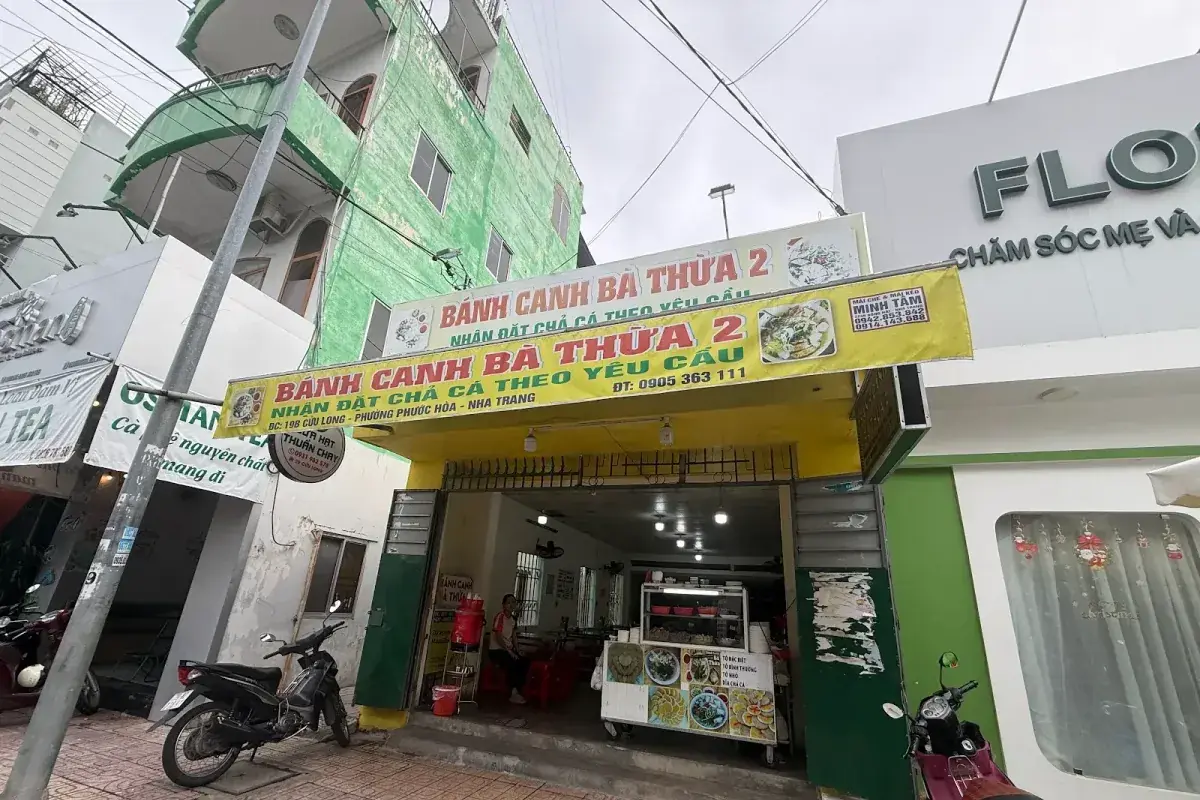
Photo: Nha Trang Guide
Ba Thua 2 is a sensible first stop for the classic version. A bowl can include steamed and fried fish cake and pieces of cooked fish, served in a light broth. A bowl costs VND 30,000-40,000. The shop is open from 06:00 to 20:30, although eating earlier in the day gives you a better chance of finding the full selection of ingredients.
The shop is convenient for visitors staying near Nha Trang railway station. It serves only banh canh, with no thin vermicelli, so there is little confusion about the noodle. Onion strips may be served on the side, but you should not expect a large plate of raw greens. Ask for một tô bánh canh đầy đủ if you want a complete bowl, then mention steamed and fried fish cake to make your preference clear.
The Ba Thua name appears at more than one local address. Do not select an old map result based only on the number of reviews. The shop described here is at 19 Cuu Long. An older Ba Thua location at 10A Phan Chu Trinh has closed permanently. Checking the street number matters more than matching the name alone.
Ba Thua (Teo Anh)
27 To Vinh Dien, add fish roe or innards
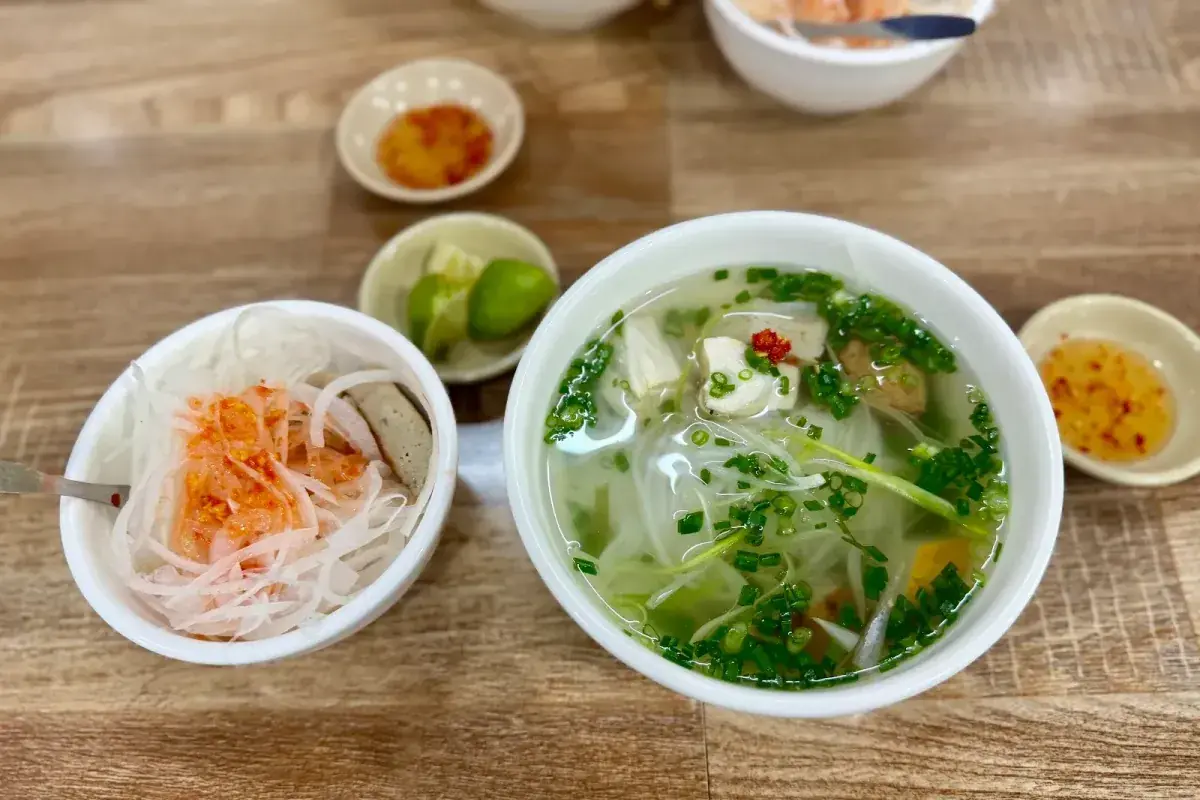
Photo: Nha Trang Guide
The To Vinh Dien branch is particularly useful if you would like to try a mixed fish bowl. You can add fish roe and innards to the ordinary fish cake here. The special bowl costs VND 40,000, and regular bowls run around VND 30,000-40,000. Closing time is around 19:30-20:00. Arrive before 19:30 to be safe.
The shop is in Tay Nha Trang ward, west of the main coastal hotel strip. Check the journey from your accommodation before setting off. The shop makes sense for travelers who have already tasted a basic bowl and want to try another ingredient.
You can say một tô đặc biệt có lòng cá, trứng cá to ask for a special bowl with fish innards and roe. Find out whether those additions are already included in the displayed price. The word đặc biệt, or special, does not have a standardized ingredient list across the city.
Co Ha
14 Phan Chu Trinh, a good choice for finer strands
Co Ha is well known among Nha Trang banh canh recommendations. Its noodles are fine, slightly springy and fairly thin. That makes the shop worth considering if you are unsure whether you will enjoy a heavy, chewy noodle. Opening hours are 07:00-20:00. A bowl costs around VND 22,000-35,000.
The address at 14 Phan Chu Trinh works well for a day exploring central Nha Trang or the Dam Market area. It is easier to plan around a street address than to follow old references to other possible branches. A regular fish cake bowl is a good first order. More fish or cake can be added later if the shop offers it.
Those set on transparent tapioca noodles should ask before ordering. The shop's small strands may be exactly what some people like about local breakfast, while visitors expecting very wide noodles may prefer another place. It comes down to texture preference.
Co Thoa
53A Van Don, very early breakfast and fish pieces
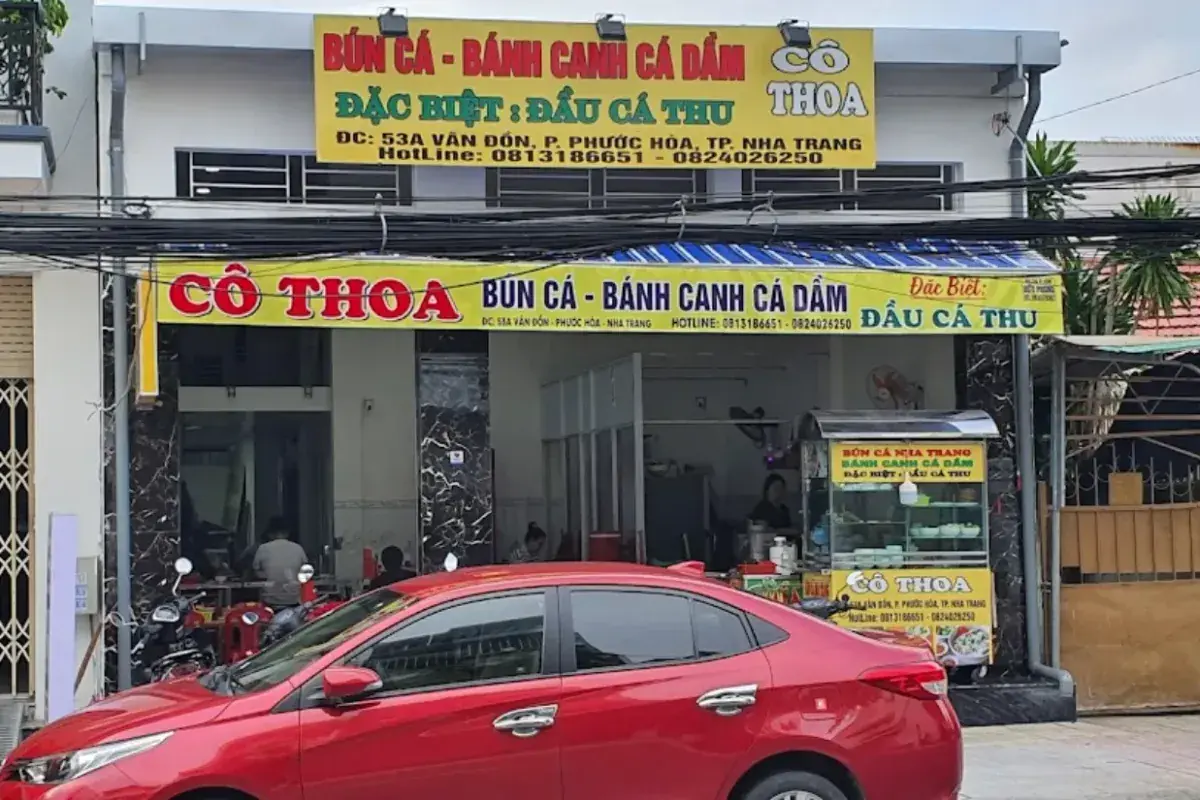
Photo: Khánh Hòa 360
Co Thoa is open 05:30-22:00. That makes it an option before an early excursion, as well as on an evening when you return after sightseeing. Its sign lists fish noodle soup and banh canh with cooked fish pieces. Bowls can include fish cakes, fish pieces, roe and innards. Basic bowls cost around VND 20,000-30,000; special fish head or mixed portions may be priced differently.
There has been confusion between address listings on Van Don street. The shop sign reads 53A Van Don, while one map entry shows 47C. Use 53A as your intended address. This matters because several noodle businesses operate in the same area.
Ask còn cá dằm không? to check whether cooked fish pieces are still available. Ask the price separately for mackerel head. Special toppings can run out well before the late closing time.
Co No
67 Van Don, a chive-heavy bowl in the Van Gia style
Co No serves bánh canh hẹ, a noodle soup with a generous amount of chopped chives. The sign names the Van Gia style, associated with the area farther north in Khanh Hoa. The bowl may contain fish cake and jellyfish in addition to the noodles and herbs. The chopped chives are central to the dish, not merely a garnish.
Co No is a good stop if you actively enjoy the flavor of chives. Ordering a chive-free version of the restaurant's signature meal here makes little sense. Co No is at 67 Van Don, near Co Thoa, so visitors staying in this neighborhood can choose between a fish-piece soup and a chive-heavy one without making two long journeys.
Opening information requires care. One map listing shows 06:00-11:00 and 15:00-20:30, but a notice at the shop lists morning service to noon and afternoon service ending at 19:30 from Monday to Saturday, with no Sunday afternoon service. Morning is the more predictable choice. The price per bowl is not posted clearly, so ask for the regular and jellyfish bowl prices before ordering.
Thien An
65 Ngo Gia Tu, for mantis shrimp
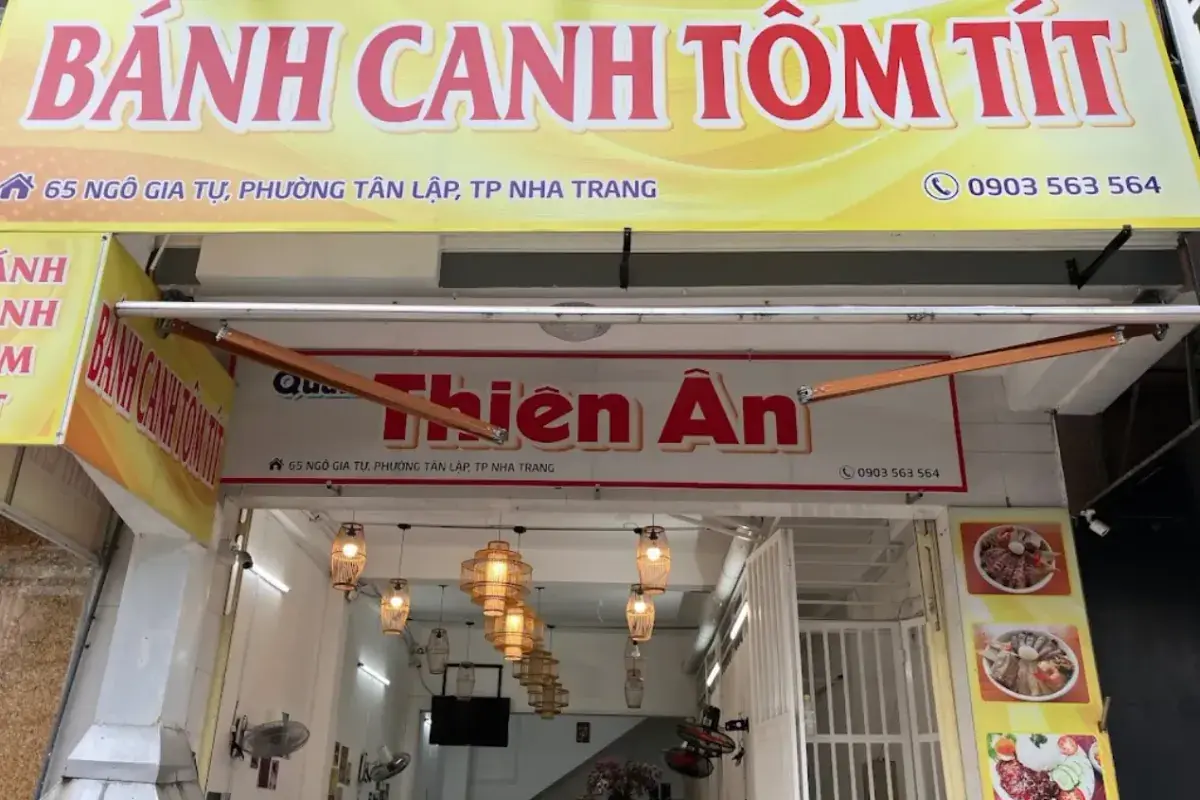
Photo: Khánh Hòa 360
Thien An is an option for travelers searching for bánh canh tôm tít Nha Trang. The shop is at 65 Ngo Gia Tu, open around 06:00-19:30. Prices run VND 25,000-70,000 across different options, so do not expect a generous mantis shrimp bowl at the minimum amount.
Mantis shrimp is known as tôm tít in southern and central Vietnamese usage and bề bề in parts of northern Vietnam. Its flesh is firm and naturally sweet. The sensation is unlike the smooth, seasoned texture of fish cake. A seafood bowl may also include crab or other additions, depending on what the kitchen is offering that day.
Ask một tô bánh canh tôm tít bao nhiêu tiền?, meaning “How much is one bowl of mantis shrimp banh canh?” You can also ask tôm đã bóc vỏ chưa? to find out whether the shrimp has already been shelled. Confirm both the price and the actual contents of the bowl, particularly when a menu lists several kinds of seafood at different prices.
Co Mom
53 Ly Thanh Ton, banh canh after dark
Co Mom fills a useful gap in a city where many traditional breakfast noodle shops start early. The kitchen runs 17:00-23:00. The shop sign lists seafood and mantis shrimp banh canh, along with fish cake, crab cake and bone-based options. Co Mom is the place on the shortlist to remember when you specifically want a noodle soup in the later evening.
The address is 53 Ly Thanh Ton in Nha Trang ward. No bowl price is posted clearly, so check the menu or ask before ordering. A sign that says “seafood” does not establish the quantity of mantis shrimp or crab in the bowl. The price can depend on the chosen topping.
Those wanting a simple meal can check whether a fish cake version is available that evening. If you want mantis shrimp, say một tô tôm tít, không cay for a bowl without chili, then confirm the exact price. Close to 23:00, check that the kitchen is still accepting orders before traveling across the city.
Which restaurant works best for breakfast, lunch or dinner?
- Before 07:00
Co Thoa opens earliest
For breakfast before 07:00, start by considering Co Thoa at 05:30, Ba Thua 2 at 06:00 or Teo Anh at 06:00. Co Ha opens later, at 07:00. The closest suitable restaurant may be the best choice if you have an early train, bus or scheduled pickup. Spending an extra half-hour traveling across town for a slightly different fish cake bowl rarely improves a tightly planned morning.
- After 07:00
Pick the main ingredient
For a relaxed breakfast after 07:00, decide on the main ingredient first. Ba Thua 2 suits a straightforward mix of steamed and fried fish cake. Co Ha suits people who like finer strands. Co Thoa is for fish pieces. Co No is for chives. Thien An is for mantis shrimp. This approach is simpler than searching for the single “best” restaurant in a city where different kitchens prepare distinctly different bowls.
- Lunch
Arrive well before closing
For lunch, the longer hours at Teo Anh and Co Ha make them easy starting points. A listed open business may still pause service or run out of the topping you want. Arriving well before closing gives you time to order and eat without rushing.
- Dinner
Co Mom runs latest
For dinner, Co Thoa, Ba Thua 2 and Co Ha stay open into the evening. Later at night, Co Mom is specifically useful, open until 23:00. If you are traveling with children or older relatives, consider the travel time, seating and heat rather than picking only by the latest closing time. Small local noodle shops are not automatically air-conditioned.
Location can also simplify your plan. Two options on Van Don street, Co Thoa and Co No, sit in the same neighborhood. Ba Thua 2 works for people near the railway station. Co Ha fits a central market outing. Co Mom is a useful evening stop on Ly Thanh Ton street. Whichever you pick, save the complete street number, not just the restaurant name.
How much does a bowl of banh canh cost?
Among these seven shops, a basic fish cake bowl often costs roughly VND 20,000-40,000. Ba Thua 2 charges VND 30,000-40,000. Teo Anh has a VND 40,000 special bowl. At Co Ha a bowl runs around VND 22,000-35,000, and at Co Thoa around VND 20,000-30,000. Each shop sets its own price, and there is no citywide rate.
VND 20,000-40,000
basic fish cake bowl
VND 25,000-70,000
Thien An, depending on the dish
Seafood versions have a wider range. At Thien An, prices run VND 25,000-70,000 depending on the dish and additions. The cheapest item in a restaurant's range may be a plain or simpler bowl rather than its mantis shrimp special. Check the exact line on the menu before assuming that the lowest price includes all the seafood you saw in a photograph.
Neither Co No nor Co Mom posts a clear price per bowl. Get the price from the server before ordering. The same applies to extra fish cake, roe, innards, mantis shrimp, drinks, bread or packaged wet towels. Small extras may be charged separately.
Two standard bowls are an easy way for a couple to keep spending predictable. In a group, let each person order the fish cake or seafood option they want and confirm the cost of the additional toppings. The English word “special” can hide quite different serving sizes from one restaurant to another. The Vietnamese phrase bao nhiêu tiền? is sufficient to ask the price.
How to order banh canh in Vietnamese
Ordering breakfast takes very little Vietnamese. Pointing to the menu and using a short phrase is generally more useful than trying to explain the entire recipe in English. First say the dish, then the topping, then any important restriction. A server can usually tell you whether the ingredients are available.
Here are the phrases worth keeping on your phone:
- Một tô bánh canh chả cá: one bowl of fish cake banh canh.
- Có chả hấp và chả chiên: with steamed and fried fish cake.
- Một tô bánh canh tôm tít: one bowl of mantis shrimp banh canh.
- Một tô bánh canh hẹ: one bowl of chive banh canh.
- Không lòng cá, không trứng cá: no fish innards or fish roe.
- Không cay, ớt để riêng: not spicy; chili on the side.
- Có sợi bột lọc không?: do you have tapioca-style noodles?
- Tô này bao nhiêu tiền?: how much is this bowl?
The measure word tô means a bowl in this context. Một means one. Change một to hai for two bowls. The word không is useful for exclusions, although you should make sure the server understands which ingredient you mean. A short written request is often clearer than repeating an unfamiliar phrase very quickly.
If you do not eat fish innards, say so before the food is prepared. With a shellfish or fish allergy, describe it clearly and ask whether the stock, cakes and cooking utensils contain or contact that ingredient. Simply ordering the “fish cake only” version may not be enough for a shellfish allergy if the kitchen uses shared seafood stock.
When you are handed an unfamiliar menu, ask what the standard bowl includes. Some restaurants display a low starting price and list extra items separately. Others have a complete bowl at one price. Đặc biệt means special, but does not explain which fish, crab or shrimp appears in that particular shop's version. Confirm the actual topping and total charge.
Should you try mantis shrimp or chive banh canh next?
Mantis shrimp is for people who want to taste a whole seafood ingredient rather than prepared fish paste. The meat is firmer and sweeter than ordinary fish cake. Some shops shell it before serving; others may have different presentations. Ask whether the shrimp is peeled and whether other shellfish are included. That makes a bigger difference to the eating experience than the English translation of the dish.
Chive banh canh is a different kind of choice. A substantial layer of chopped chives changes the aroma and balance of the soup. You may also encounter jellyfish, which adds a crisp texture. This version is suitable for diners who actively like green herbs. Someone who dislikes chives and plans to remove all of them should order something else.
These versions are not automatically better or more authentic than an ordinary fish cake bowl. They simply emphasize different ingredients. Fish cake is a convenient first introduction to Nha Trang's mild fish broth. Mantis shrimp foregrounds shellfish. Chives make the herbs a major part of the dish. Your second meal can follow whichever element appealed most in the first one.
Visitors from countries where mantis shrimp is uncommon may not recognize it immediately. It is a marine crustacean, not the same animal as the everyday prawns usually sold in supermarkets. Expect pieces of firm seafood rather than another kind of fish cake. That distinction helps when you are choosing between two photos on a Vietnamese-only menu.
What comes with a bowl, and how should you eat it?
Some bowls arrive fully assembled with onion, spring onion and fried shallot. Others come with a small dipping bowl for fish cake. You may see chili, fish sauce, pepper or calamansi on the table. A large platter of raw herbs is not universal at Nha Trang banh canh shops, especially those concentrating on fish cake rather than the finer vermicelli dishes.
Taste the broth before adding condiments. Pick up a slice of fish cake and try it on its own or with the dipping sauce provided. Add chili in small amounts. If you like acidity, squeeze a little citrus into the soup, but remember that not every cook intends the stock to taste sour. The first few spoonfuls without additions will tell you more about the kitchen's flavor.
The noodles are slippery, and the broth is usually served hot. Chopsticks are useful for lifting the strands, while a spoon makes the fish broth easier to enjoy. No special technique is required. Eat the fish cake and noodles together, or alternate them as you prefer. Fish cake left in the broth will soften slightly, particularly if it was fried.
Bread may be available at some seafood shops for dipping, but it is not an essential component. Ordering it is optional and may add a charge. The bowl can easily be a complete breakfast on its own. On a physically active day, choose a larger portion or an extra serving of fish instead of assuming every standard bowl is equally filling.
Ask for separate packaging on takeaway orders, if it is available. Keeping hot broth away from the noodles until you are ready to eat preserves more texture. Consume the food promptly and follow food-safety guidance for leftovers; do not leave seafood soup at room temperature for much of the day.
A short home recipe for Nha Trang fish cake banh canh
For about four servings, use 600-800g of banh canh noodles, roughly 300g of steamed and fried fish cake, cleaned fish bones or fish head for stock, shallots, spring onion, ginger, fish sauce, salt and pepper. Blanch and simmer the fish parts, skim the stock and strain carefully to remove bones. Season the clear broth, cook the noodles according to their package instructions, and finish each bowl with sliced fish cake and herbs. Mackerel or lizardfish cake can be used when a trusted seller identifies it clearly. Keep the broth relatively light; add separately cooked mantis shrimp at serving time if you want a seafood variation.
Mistakes that can spoil an otherwise easy breakfast
The first mistake is following an old restaurant address. Nha Trang's small food businesses sometimes move, and online listings can preserve former locations long after the sign has changed. More than one place may carry the same familiar name. Check the full street address and number. In particular, the old Ba Thua map result at 10A Phan Chu Trinh is no longer a working branch.
The second mistake is treating opening hours as a guarantee of ingredients. A restaurant may remain open after its fish roe, mantis shrimp or special mackerel has sold out. Go earlier for a specific topping or ask before traveling far. The third mistake is treating “from VND 25,000” as the price of every seafood bowl. The dish named in the price list, not just the restaurant's price range, determines what you should expect to pay.
The fourth mistake is choosing chive banh canh without liking chives. This is not an ordinary fish cake bowl with a decorative sprinkle of greenery. The fifth is assuming all banh canh noodles are made from the same flour. Rice-heavy and tapioca-heavy strands behave differently, especially after takeaway transport. Mention the texture you want if it matters to you.
Another common problem is ordering too much on the first attempt. A normal bowl already provides a good introduction to the broth and fish cake. Fish roe, innards, crab and extra shrimp are better chosen deliberately rather than added automatically because they appear in a photograph. A simpler first order also makes it easier to tell what you actually enjoy.
With only one breakfast to spare, order fish cake banh canh with both steamed and fried cake at Ba Thua 2, 19 Cuu Long. Leave mantis shrimp or chive banh canh for another meal, once you know whether it is the fish broth, the thick noodles or the toppings you want more of.
FAQ
Where should I eat fish cake banh canh in Nha Trang?
Ba Thua 2 at 19 Cuu Long is a straightforward choice for steamed and fried fish cake. Teo Anh at 27 To Vinh Dien is useful for fish roe and innards. Co Ha at 14 Phan Chu Trinh is an option for finer noodles, while Co Thoa at 53A Van Don suits an early breakfast with cooked fish pieces.
How much is a bowl of banh canh in Nha Trang?
Basic fish cake bowls at these shops cost about VND 20,000-40,000. Seafood bowls may cost more. Thien An charges VND 25,000-70,000 depending on the dish or toppings. Confirm the specific order price before buying.
Where can I find mantis shrimp banh canh in Nha Trang?
Thien An at 65 Ngo Gia Tu is a daytime option. For evenings, Co Mom at 53 Ly Thanh Ton is open 17:00-23:00. Ask whether mantis shrimp is available and how much the chosen bowl costs.
Which banh canh shops are open in the evening?
Co Mom stays open until 23:00. Co Thoa is open until 22:00, Ba Thua 2 until 20:30, and Co Ha until 20:00. Hours and topping availability can change, so check before heading out late.
What does banh canh he mean?
Bánh canh hẹ is thick noodle soup with plenty of chopped chives. Some versions include fish cake and jellyfish. At 67 Van Don, Co No serves the Van Gia style. Order it when you like the flavor of chives rather than expecting a plain fish cake soup.
Related posts
Food
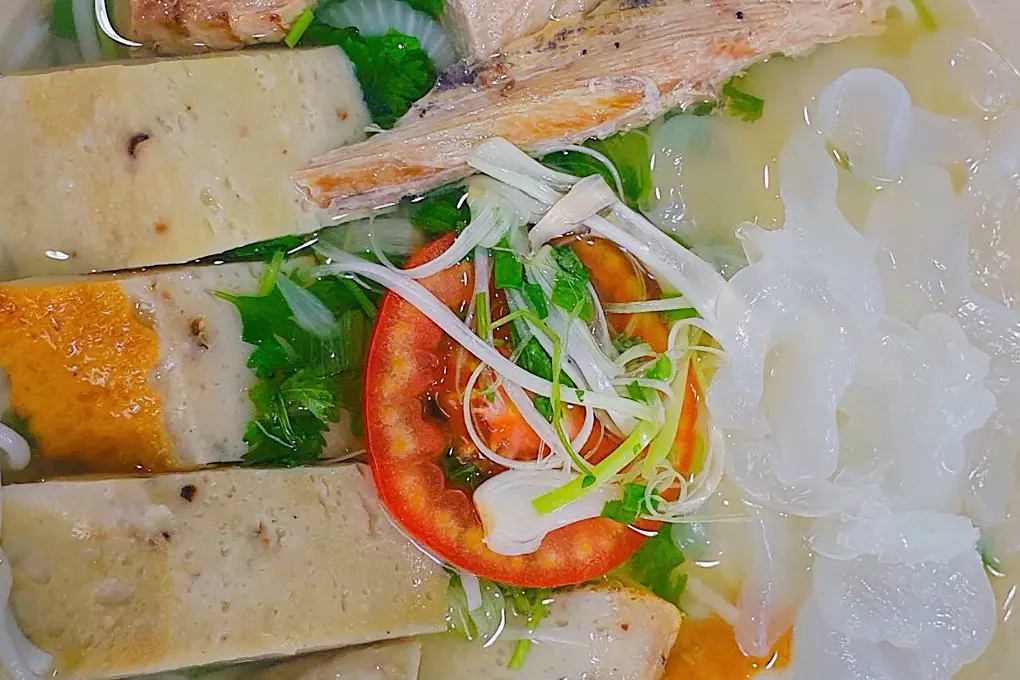
2 places for Nha Trang fish cake noodle soup at breakfast and lunch
Two ways to order Nha Trang fish noodle soup and two local restaurants worth visiting.
Food
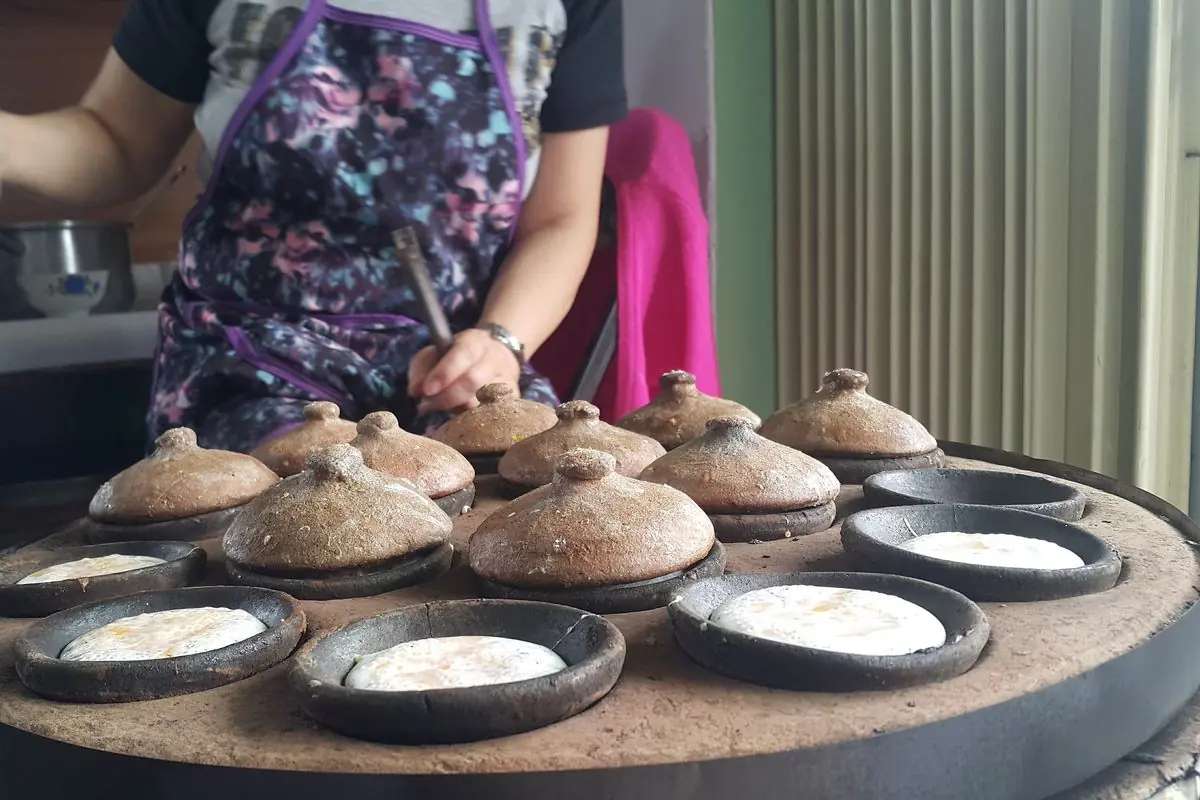
Nha Trang banh can is best fresh off the griddle, whatever the time of day
Find the right Nha Trang banh can shop for your location, schedule, and favorite toppings.
Food
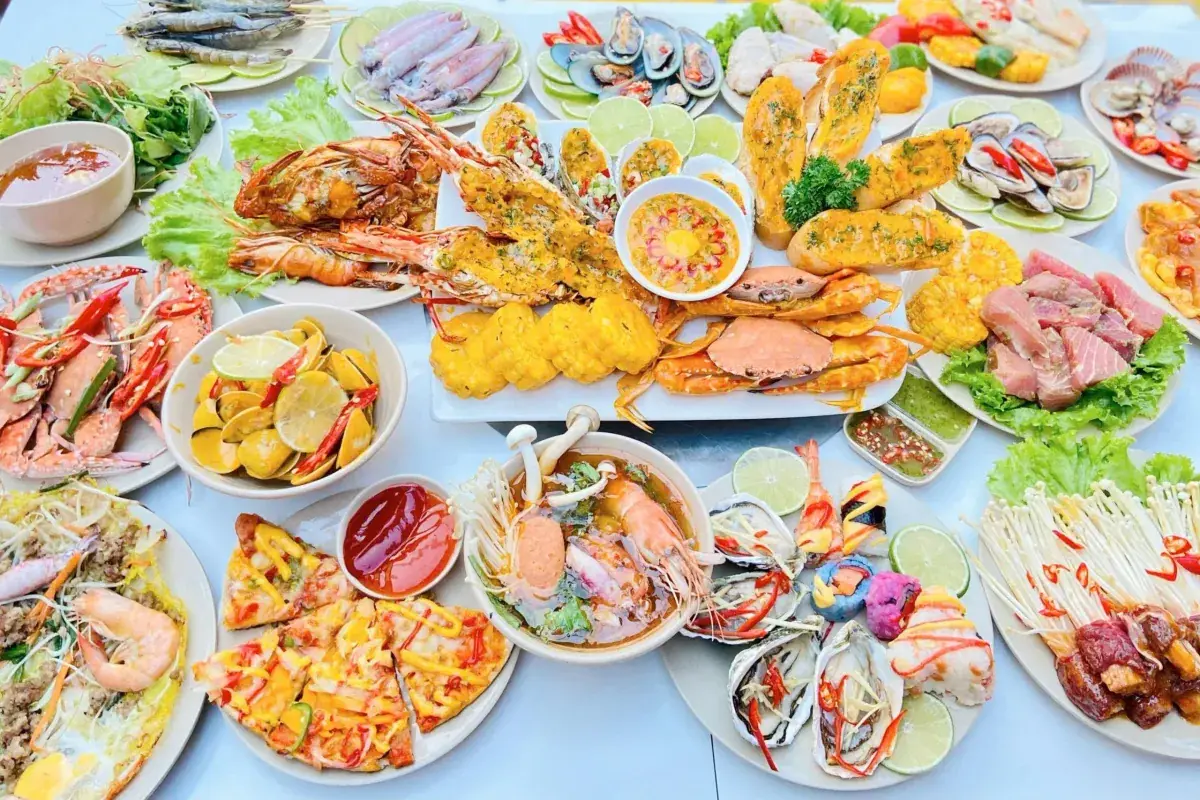
Where to eat seafood in Nha Trang without overspending
Find seafood restaurants in Nha Trang, compare prices, and learn how to order without overspending.