How to get to Ganh Da Dia on a day trip, when to go and what tickets cost
Choose Ganh Da Dia when you have a dry-weather morning and enough time to explore the coast north of Tuy Hoa. Skip the rushed out-and-back drive from Nha Trang if you want a relaxed day with several stops.
Written by Tụi mình mê biểnUpdated
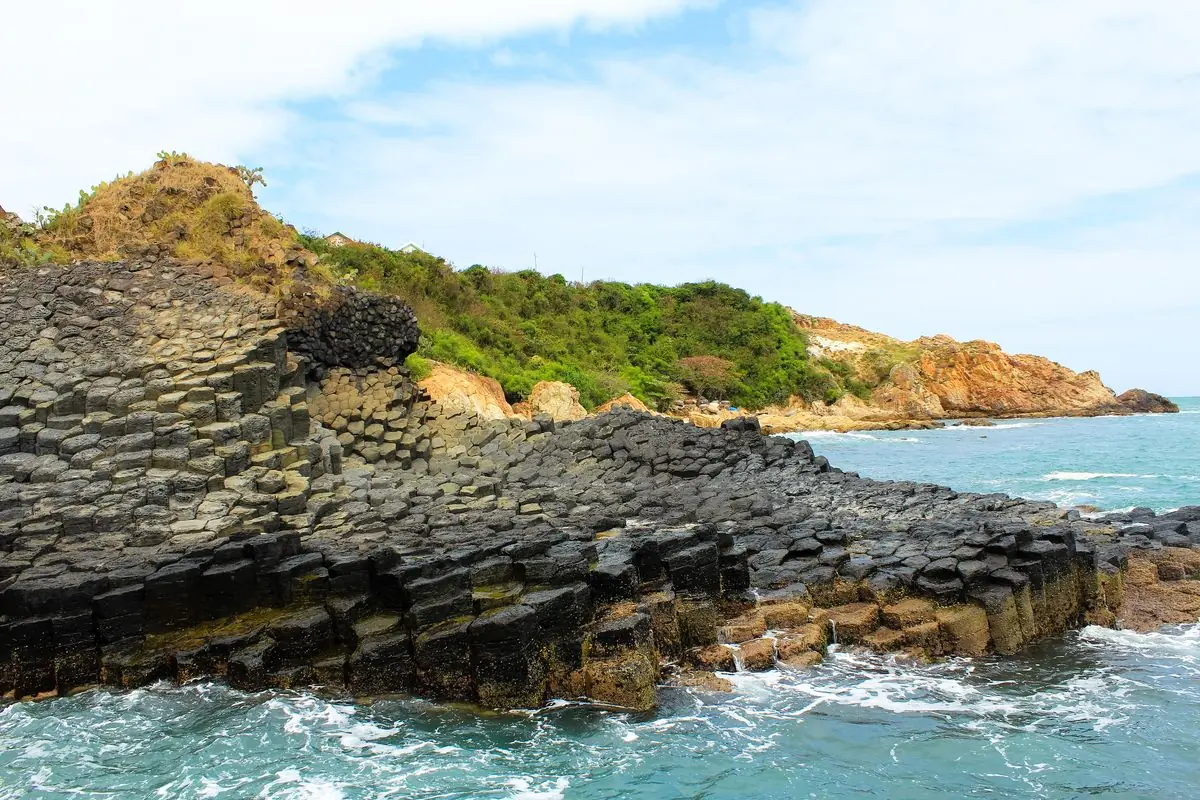
Photo: Đông Hồ
Where is Ganh Da Dia in Vietnam?
About 35 kilometers north of central Tuy Hoa is a stretch of coastline where dark volcanic rock has broken into remarkably regular columns. This is Ganh Da Dia, also spelled Ghenh Da Dia and often called Da Dia Reef in English. A car journey from Tuy Hoa generally takes about 50-60 minutes, and most visitors need another 60-90 minutes to explore the main rock formation without rushing.
The current administrative address is Tuy An Dong commune, Dak Lak province, Vietnam. That surprises travelers searching for “Ganh Da Dia Phu Yen.” The site has not moved. Phu Yen was merged with Dak Lak in Vietnam's 2025 administrative reorganization, and the former An Ninh Dong commune became part of Tuy An Dong. The old address, Phu Hanh hamlet, An Ninh Dong commune, Tuy An district, Phu Yen province, still appears in travel guides and hotel descriptions.
“Phu Yen” remains an easy way to describe the coast around Tuy Hoa, O Loan Lagoon and the rock formation. “Dak Lak” is the province you now use for formal administrative references. The landmark is on the coast, not in the inland city of Buon Ma Thuot. Searching only for “Dak Lak” on a map can therefore take you in the wrong direction.
Put the attraction itself into your map app as the destination. Save the destination pin before leaving Tuy Hoa, particularly if you plan to drive rural roads and may have an unreliable mobile signal. The route generally uses the main northbound road before turning east toward the coastal villages of the former Tuy An district. It is not a roadside attraction visible from Highway 1.
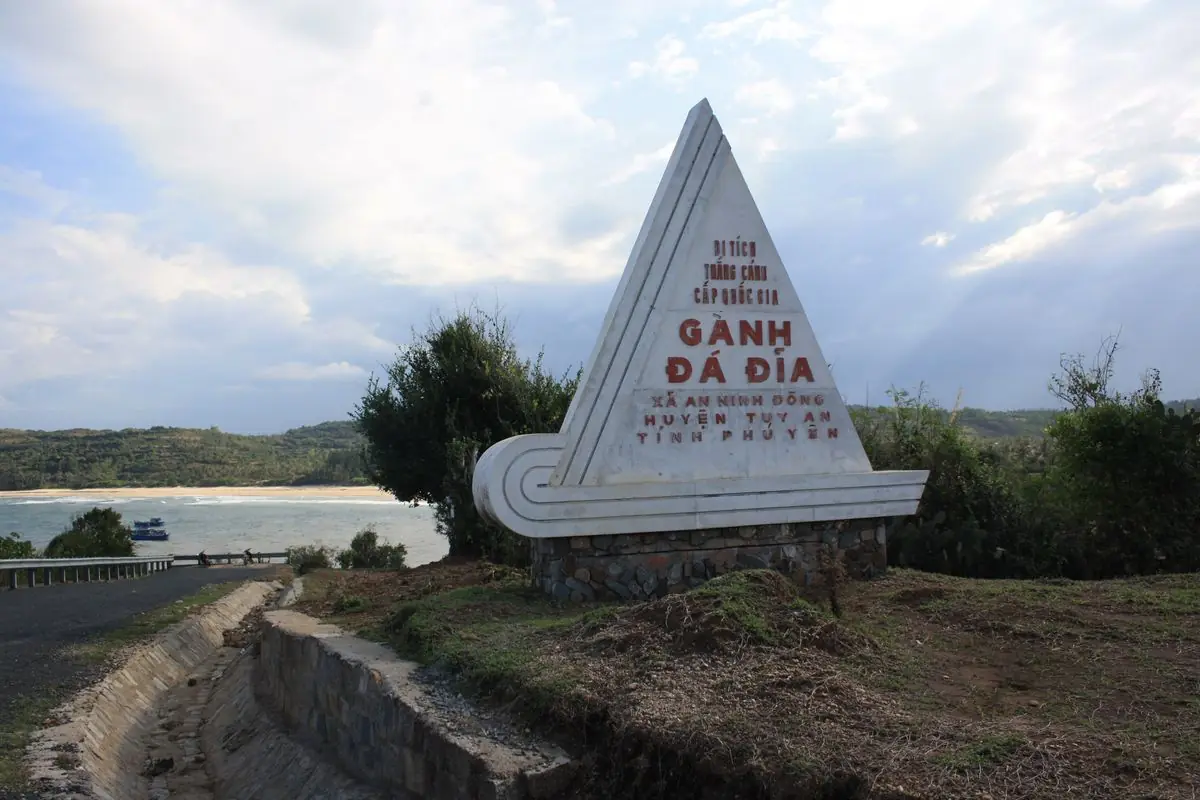
Photo: son do
Loading map...
- Ganh Da Dia: Tuy An Dong commune, about 35 km north of Tuy Hoa
- Ganh Den lighthouse: About 1-1.2 km from Ganh Da Dia
- Mang Lang Church: About 10-11 km from Ganh Da Dia
- An Hai bridge, O Loan Lagoon: Seafood lunch area by the lagoon
- Bai Xep: Sandy shore and grassy coast north of Tuy Hoa
- Tuy Hoa station: Train stop from Nha Trang
The site is a nationally recognized special scenic monument. Its appeal is not a long sandy beach, a boat trip or a large entertainment complex. You come to see a rare-looking rock structure, the surrounding sea and the way an entire section of shore appears to have been paved with natural geometric tiles.
What makes the basalt columns special?
At first glance the rocks look stacked by hand. Some columns stand like short pillars; others form flat, closely packed surfaces with five or six sides. Viewed from a slightly higher position, the pattern resembles a honeycomb. At sea level, the edges and cracks between individual columns are much easier to notice.
The shapes result from volcanic processes. Lava cooled and contracted, developing fractures that separated the rock into columns. Later geological changes and coastal erosion exposed them beside the sea. Not every column is a perfect hexagon. The mixture of pentagonal, hexagonal and less regular cross-sections is part of the natural structure.
Start with the broad view before going down to the water. Look down over the main platform to understand how the columns fit together. Then approach the accessible sections and examine the stone at close range. From one angle, the surface looks almost level. From another, you can see abrupt steps and columns rising above their neighbors.
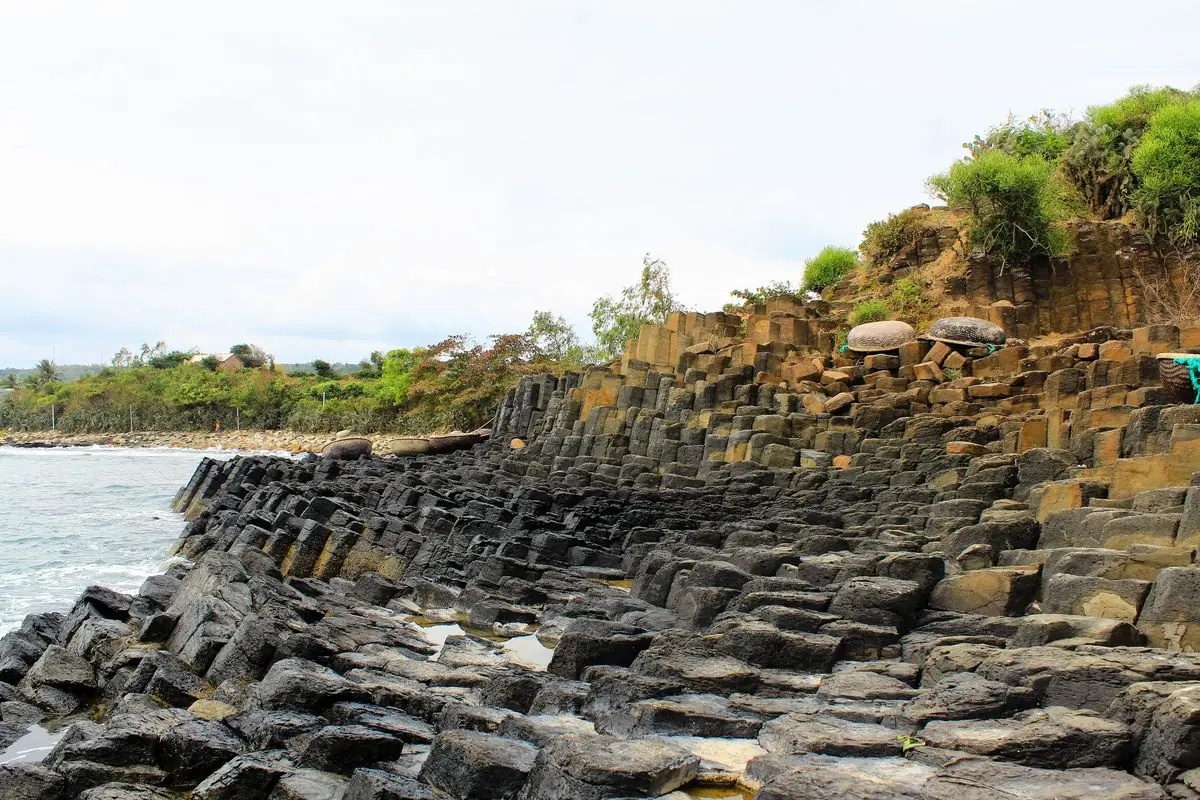
Photo: Đông Hồ
A phone does the job: its wide-angle setting captures the overall pattern, and its normal lens shows the edges of the columns without making the scene look too distant. For a photo with a sense of scale, include a person standing on an accessible, stable section of rock, with the sea behind them. The dark stone also works as a strong foreground for a coastal landscape.
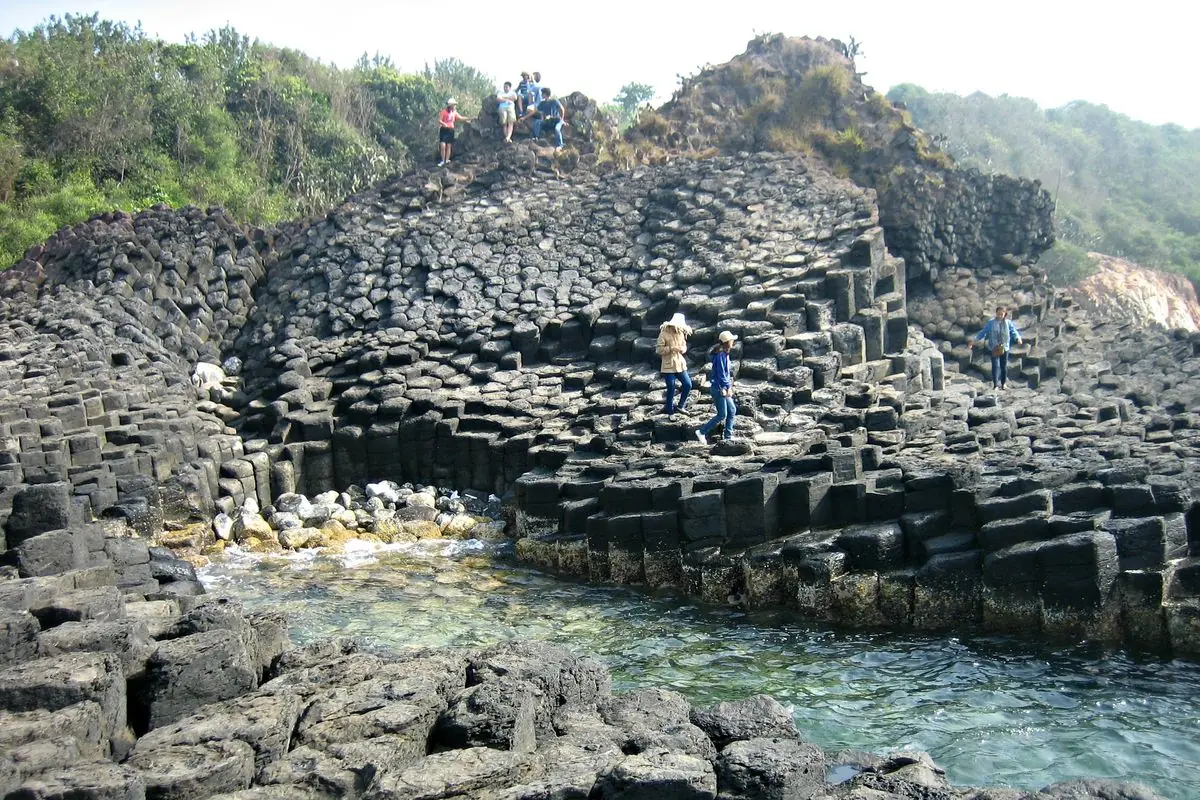
Photo: Prince Roy
Do not mistake an impressive viewpoint for permission to climb everywhere. The low platforms closest to breaking waves are often wet, and the gaps between columns can catch a foot. A photo made from a stable upper area is better than one that requires stepping onto a slippery ledge.
Unlike a conventional beach stop, Ganh Da Dia is best treated as a short geology and landscape visit. Swimming is not the main purpose here. Keep any beach time separate from exploring the basalt, and use a designated swimming area elsewhere if that is what your group wants to do.
Ganh Da Dia tickets and admission fees
The standard Ganh Da Dia admission fee is VND 40,000 per paying visitor per entry. The fee includes insurance. After the merger, the former Phu Yen fee rules still apply across the old Phu Yen area.
Older travel articles often list VND 20,000 for adults, which is no longer correct. Some also give children's rates by height or age. Children are exempt, and further exemptions and reductions apply to eligible visitors. Under Vietnam's legal definition, a child is someone under 16. Age decides the exemption; bring a document that shows it.
Other fee provisions cover visitors aged 80 and over, some qualifying disability and national-service categories, and a 50% reduction for certain other eligible groups, including people aged 60 to under 80. Each category has conditions, and not every senior pays half automatically. Confirm your category at the ticket counter.
Parking, private transport and any optional service should be budgeted separately. Parking has no single set price, so check the posted sign before assuming a quoted amount covers everything. The same applies to any shuttle service offered inside or near the attraction. A tour operator may include the admission ticket, but that must be clear in the package description.
Independent visitors can go in without a tour: for a couple already staying in Tuy Hoa, a car or motorbike and a standard entrance ticket are enough. A tour becomes more useful when it solves the larger problem: reaching several rural stops, arranging a driver to wait, and returning to the city without negotiating separate rides.
Opening hours and the best time to visit
Ganh Da Dia has no single confirmed operating schedule: you may come across 6:00 am-6:00 pm, 7:00 am-5:30 pm or 8:00 am-6:30 pm. Aim to reach the ticket area at about 8:00-9:00 am for a straightforward morning visit, and check directly with the site operator before any unusually early or late visit.
The 8:00-9:30 am slot gives photographers an attractive balance of daylight, comfort and enough time to continue to other places. 3:30-4:30 pm is another useful photographic window on a clear day, especially if you are staying nearby.
The least comfortable period is typically late morning through early afternoon. Between around 11:00 am and 2:00 pm, there is little shade on the dark rock platform. Heat, glare and reflected light can make a short walk feel much longer. Arriving at midday on a road trip is fine if you keep the visit short and skip the hour in the sun waiting for fewer visitors.
The drier part of the year, especially roughly February through August, generally makes outdoor visits easier. Late-year months can bring more rain and rougher seas along this stretch of coast. Conditions on the day matter more than a seasonal label. A wet rock surface can remain slippery long after a rain shower ends, and a clear sky does not always mean calm surf.
If strong waves are reaching the upper steps of the rock platform, stay back. You can still enjoy a broader coastal view from an appropriate area, or move the visit to another day. For families and visitors who are uneasy on uneven surfaces, the upper viewpoints are often enough to see what makes the formation distinctive.
Getting to Ganh Da Dia from Tuy Hoa
Tuy Hoa is the easiest base for an independent visit. Depending on where you start in the city, expect approximately 35-36 km to the attraction. Allow about 50-60 minutes by car, plus time to find parking and enter the site. A motorbike ride may take longer, especially if you stop for photographs or take the smaller coastal roads.
From the city, follow the northbound route selected by your navigation app, usually connecting with National Highway 1 before turning east toward Tuy An's coastal settlements. Keep the attraction pin as your final destination. A route that ends at a commune center or a village with a similar name can leave you several kilometers short of the ticket entrance.
A rented motorbike makes sense for confident riders traveling light. You can leave when you want and connect the rock formation with O Loan Lagoon, Bai Xep or Mang Lang Church. Wear a proper helmet, closed footwear and sun protection. Rural roads can narrow unexpectedly, so slow down when passing houses, intersections and vehicles coming in the opposite direction.
A private car with driver is the better option for families, travelers with limited mobility, and people who do not want to navigate independently. Agree on a full route before paying: pickup point, number of stops, waiting time, return destination and possible additional charges. A car booked for a half day is particularly convenient if your plan includes Ganh Da Dia and nearby Ganh Den lighthouse only.
On a full-day coastal loop, a single driver who waits between stops is generally less troublesome than booking ride-hailing cars one by one. The last few kilometers are outside central Tuy Hoa, and you should not rely on finding a return car immediately at the gate. Arrange the pickup location or take the driver's number before entering.
Ganh Da Dia from Nha Trang: day trip or overnight?
A trip from Nha Trang to Ganh Da Dia is possible, but it is much longer than the distance from Tuy Hoa suggests. Nha Trang to Tuy Hoa is roughly 120-130 km by the usual road route. Add the run north to the attraction and the trip via Tuy Hoa comes to about 155-165 km one way. Your hotel location and the road selected will affect the final distance.
120-130 km
Nha Trang to Tuy Hoa by road
155-165 km
one way to Ganh Da Dia
3-4 hours
each way by private car
2-3 hours
train to Tuy Hoa
Allow approximately three to four hours each way by private car, including a practical margin for traffic and slowing down on local roads. A same-day round trip can consume six to eight hours of travel before you count sightseeing, meals or rest stops. That is a substantial amount of driving for an attraction where the main visit may last only 90 minutes.
There are three reasonable ways to structure this journey. The first is a direct day trip by private car with Ganh Da Dia as the main goal and perhaps Ganh Den added. The second is an overnight stay in Tuy Hoa, followed by the northern coastal route the next morning. The third is a one-way journey: leave Nha Trang, stop at the rock formation, then continue north and skip the return to the same hotel.
With more than one stop in mind, one night in Tuy Hoa is the better choice. Arrive from Nha Trang, have dinner and sleep in the city, then visit the coast after breakfast. You avoid spending the middle of the day in a car when you could be walking around the columns or eating beside the lagoon.
The train between Nha Trang station and Tuy Hoa station is useful for the overnight version. Travel time is generally around two to three hours, depending on the service. The train does not take you to Ganh Da Dia; once you reach Tuy Hoa, there is still a 35 km road transfer. Plan that extra transfer before deciding whether rail is more convenient than a private vehicle.
In 2026, for example, the SE8 leaves Nha Trang at 2:03 pm and reaches Tuy Hoa at 4:07 pm, with soft seats from VND 85,000. That timing works for arriving the afternoon before your visit. Train times, seat availability and prices change, so check them for your actual travel date.
The road option gives more flexibility with luggage and sightseeing stops, but ask a bus or shared-car operator exactly where passengers are dropped off in Tuy Hoa. A roadside stop on Highway 1 is not the same as being delivered to your hotel. For travelers new to Vietnam, arriving in town before dark makes the next day's arrangements much easier.
Doc Let beach lies north of Nha Trang and can be a separate coastal outing. Combining it with Ganh Da Dia, several Tuy An stops and a return to Nha Trang makes for an overpacked schedule. Save nearer Nha Trang sights for a shorter day and treat the former Phu Yen coast as its own destination.
The best places to combine with Ganh Da Dia
Ganh Den lighthouse
About 1-1.2 km from Ganh Da Dia

Photo: datn
Ganh Den lighthouse is the obvious first addition. It is only about 1-1.2 km from Ganh Da Dia, so there is little reason to drive back toward Tuy Hoa before seeing it. The red-and-white lighthouse stands among irregular coastal rocks, giving you a different landscape from the neat basalt columns. Allow roughly 20-40 minutes, depending on the weather and the access available that day.
Mang Lang Church
Gothic-influenced, about 10-11 km away

Photo: Đông Hồ
Mang Lang Church is approximately 10-11 km from the basalt formation by common local routes. Its Gothic-influenced architecture makes it a useful cultural stop between coastal viewpoints and lunch. It is an active religious site, so wear suitable clothing, keep voices down and respect any areas closed during services. A church stop usually requires less physical effort than another rocky headland.
O Loan Lagoon
Lunch stop, roughly 12-16 km away

Photo: Đá Đĩa Beach House
O Loan Lagoon is the practical lunch stop. Depending on the part of the lagoon or the restaurant you choose, it is roughly 12-16 km from Ganh Da Dia. Its brackish waters and fishing communities provide a completely different setting from the exposed coast. Decide on a restaurant near the An Hai bridge area before driving there, since “O Loan Lagoon” on a map covers a broad area with no single convenient parking spot.
Bai Xep and Ganh Ong
Sandy shore and grassy coast
Bai Xep, with the nearby Ganh Ong area, works as an optional final stop as you travel south toward Tuy Hoa. It offers a sandy shoreline and grassy coastal scenery instead of a geometric rock platform. It makes sense if the weather is good and your group still wants to walk. When everyone is tired after lunch, skip it.
Hon Yen
Depends on tides and weather
Hon Yen is another coastal attraction to consider, but the experience depends on tides, weather and permitted access. Do not plan to walk toward exposed reef areas just because the tide appears low. For a simple itinerary with children, O Loan Lagoon or Mang Lang Church is easier to fit into a predictable schedule.
A useful rule is to choose attractions with different purposes. Ganh Da Dia gives you the basalt. Ganh Den gives you the lighthouse and open sea. Mang Lang gives you architecture, while O Loan provides lunch and a slower stop. Four similar viewpoints can feel repetitive; three distinct places make a more satisfying day.
A relaxed one-day itinerary from Tuy Hoa
- 7:00-9:45 am
Breakfast and the basalt
Start with breakfast in Tuy Hoa at about 7:00 am. Leave the city around 7:20 am, allowing sufficient time to reach the Ganh Da Dia entrance around 8:15-8:30 am under normal conditions. Buy tickets and spend about 75-90 minutes on the accessible viewing and walking areas. Take your wide landscape shots first, then move closer for detailed pictures of individual basalt columns.
- 10:00 am
Ganh Den lighthouse
At approximately 10:00 am, move to the nearby Ganh Den lighthouse. Spend 20-40 minutes enjoying the sea view and different rock formations. This is a natural place to shorten the visit if the day is already hot. You will have seen the two defining coastal sights before the harshest part of the day.
- 11:00 am
Mang Lang Church
Continue to Mang Lang Church around 11:00 am. A short stop is enough to appreciate the building and its grounds, provided public access is permitted. Keep the visit flexible around services. The next destination is lunch near O Loan Lagoon, ideally reaching your selected restaurant around noon to 12:30 pm.
- 12:30-2:00 pm
Lunch by O Loan Lagoon
Order lunch and allow time to rest in the shade. There is no advantage in trying to fit another exposed rock viewpoint into the hottest hour. The afternoon can remain open: return directly to Tuy Hoa around 2:00 pm, or make a final stop at Bai Xep if the weather, energy levels and time permit.
Back in Tuy Hoa, there is still time for a walk along Doc Lap Street or the coastal promenade. Travelers staying overnight can have an unhurried dinner. Those returning by train should check the departure time before the morning excursion and leave a margin for getting back to the station, retrieving luggage and boarding.
Photographers chasing late-afternoon light on the basalt can reverse part of the route: use the morning for Mang Lang and O Loan, then plan the rock formation for the afternoon. Confirm the latest gate and admission hours first, since the plan falls apart if the site closes before you reach the columns.
If you have an older relative who does not enjoy rough surfaces, simplify the day to Ganh Da Dia, Ganh Den if accessible, and lunch at O Loan. A short, well-paced visit is preferable to rushing through five attractions with little time for rest.
A two-day route from Nha Trang
On day one, travel from Nha Trang to Tuy Hoa. A daytime train or road transfer leaves room to check into a hotel, walk by the sea and get dinner. Staying in the center also means you can buy water, snacks or any missing essentials before leaving for rural Tuy An the following morning.
On day two, leave your hotel after an early breakfast and follow the Ganh Da Dia, Ganh Den, Mang Lang and O Loan sequence. Return to Tuy Hoa in the afternoon for luggage and onward transport. If your next destination is Quy Nhon or somewhere farther north, arrange a one-way transfer and skip the trip back to Nha Trang.
Travelers following Vietnam's north-south railway can use Tuy Hoa as a break between longer train journeys. Keep luggage at the hotel or agree on secure storage with your driver. The attraction's uneven stone surface is no place for suitcases, and the site does not function as a convenient short walk from a railway station.
A different route suits a small group with a hired driver: depart from Nha Trang, visit the basalt formation, eat near the lagoon, and continue north to an overnight stop. Ask for a quote covering the actual drop-off location, all kilometers driven, waiting periods and any tolls. A one-way route can avoid retracing the entire journey, but only when the transport arrangement is agreed beforehand.
Avoid putting two important reservations close together. A Ganh Da Dia visit should not finish just minutes before a train departure or hotel transfer. Rural approach roads, ticket queues and meal service can all add time to an otherwise short itinerary. A 30-60 minute buffer is more useful than one extra photo stop.
Where to eat along the route
Quan Hai San Tuan, near An Hai bridge on O Loan Lagoon, is one to look up for a meal by the water. Confirm the menu, availability and prices with the restaurant on the day. Do not treat a photo of a menu from a previous year as today's quotation.
For a lighter meal back in town, try banh canh he, a hot noodle soup with fish cake and plenty of chopped chives. Banh Canh He Thanh Tam at 53 Dien Bien Phu Street charges about VND 30,000 a bowl in 2026 and usually serves from early afternoon into the evening. It is a useful stop after a long day outdoors, particularly if you would rather not order more seafood.
Tuy Hoa also has chicken rice, everyday rice dishes and small noodle shops, which may be easier for travelers with specific dietary preferences. Eat breakfast in town before leaving; there may be no suitable cafe right at Ganh Da Dia's entrance.
If someone in your group is allergic to shellfish, mention it clearly when ordering at a seafood restaurant and ask about shared cooking equipment. Vegetarian visitors should choose a place where the ingredients and cooking broth can be explained, rather than assuming that a vegetable-looking dish contains no fish sauce or seafood stock.
Where to stay for Ganh Da Dia
Central Tuy Hoa is the most practical base for a visitor arriving by train, traveling with luggage or staying only one night. You have more choices for dinner, a straightforward route to the railway station, and access to the city's beach area. Whether you stay near the station or the sea, expect roughly an hour by road to Ganh Da Dia the next morning.
On the seafront, Sala TuyHoa Beach Hotel is at 51 Doc Lap Street, Tuy Hoa ward, Dak Lak province. It suits people who want to walk near the beach after returning from the day's trip. Stelia Beach Resort, at Block C1, Doc Lap Street, Tuy Hoa ward, is a different choice for visitors prioritizing resort facilities and a slower stay.
Rates at both properties depend on the exact nights, room category, occupancy and inclusions. Check the property's own booking quotation for your travel dates rather than relying on a generic annual price. A hotel that seems affordable on a weekday may have a different rate during a holiday weekend.
You can also look for a smaller guesthouse or homestay near the rock formation if your main goal is to stay in a quieter coastal village. The trade-off is less choice for late meals and return transport. Before committing, ask whether dinner is available, whether a car can reach the property, and how to arrange a ride back to Tuy Hoa.
The overnight recommendation is especially relevant for Ganh Da Dia from Nha Trang. Rather than using up a whole day on a return drive, travel north, sleep in Tuy Hoa, and see the basalt columns when you are rested. A second night is only necessary if you want a slower holiday with additional stops along the former Phu Yen coast.
Safety and what to pack
Wear shoes or sandals with reliable grip. Flat-looking basalt columns may have gaps, edges and changes in height. Wet patches, algae and spray from breaking waves make the lower areas slippery. Move slowly when crossing from one column top to another, and keep young children close on the accessible walking sections.
Bring water, sunscreen, a hat and a small bag that leaves your hands free. A large suitcase or bulky camera equipment is inconvenient on uneven stone. The exposed platform is not shaded like a forest trail; even a visit of just over an hour can be tiring on a hot day.
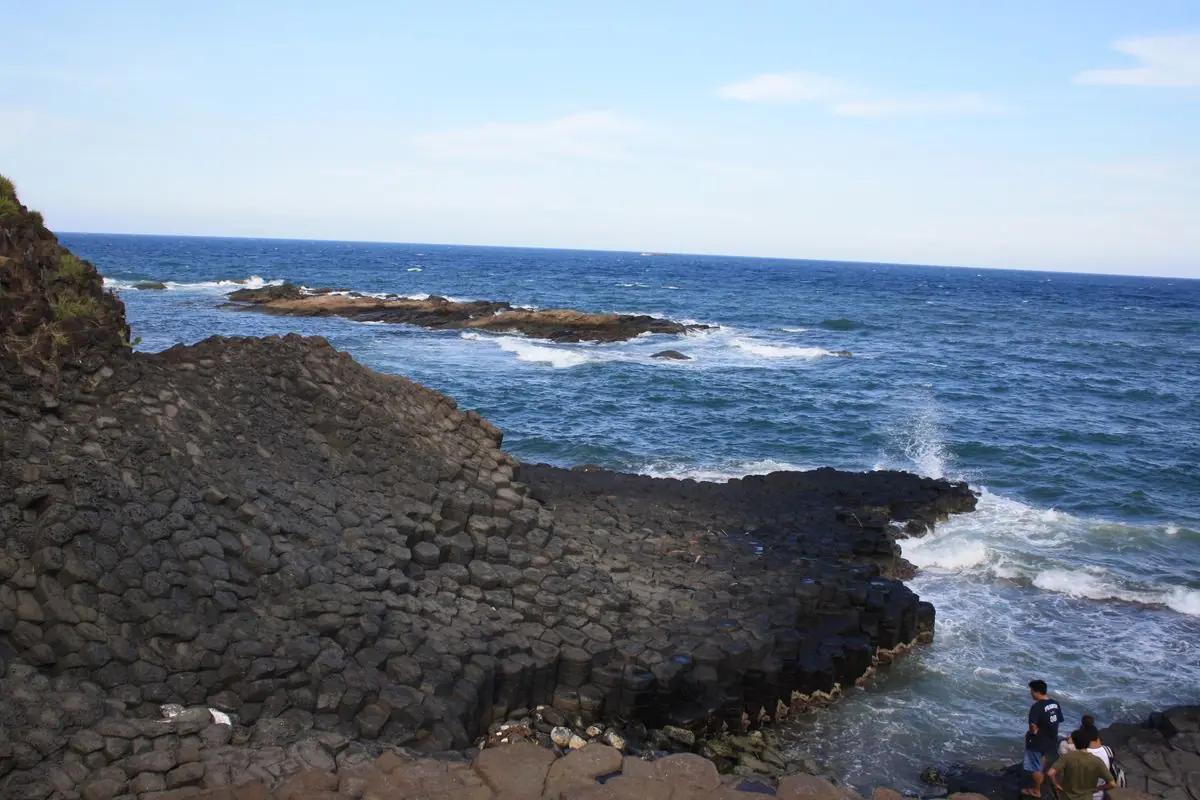
Photo: son do
Rain requires a change of expectations. Even after the sky clears, the stones may remain slick. You can shorten the visit, use an appropriate upper viewpoint or move the coastal stop to a different day. Mang Lang Church and a sheltered lunch are easier alternatives than trying to force an exposed shoreline walk in poor conditions.
For a motorbike outing, account for heat and fatigue on the return to Tuy Hoa. Drink water before leaving the attraction, avoid riding when exhausted, and allow more time after sunset if you are unfamiliar with local roads. For visitors traveling from Nha Trang, choosing a driver or overnight stop can remove the pressure of a long return journey.
Common planning mistakes
The first mistake is confusing the current province name with the location. Dak Lak is correct administratively, but Ganh Da Dia is still beside the sea in the former Phu Yen area. For accommodation and transport, Tuy Hoa is usually the useful place name. A search for hotels in inland Dak Lak will not put you near the attraction.
The second is building a schedule around an unverified 6:00 am entry time. That time may describe the broader tourist area rather than a staffed ticket gate. Arriving around 8:00-9:00 am is easier to plan, while very early access should be checked directly. The same caution applies to late-afternoon gate times.
The third is treating Ganh Da Dia Tuy Hoa as a stop in the city itself. It is a road trip of around 35 km each way. The distance matters when arranging a taxi, returning to the station or trying to catch a northbound bus later in the day.
The fourth is adding every nearby attraction to one itinerary. Ganh Da Dia, Ganh Den, Mang Lang, O Loan, Bai Xep and Hon Yen may all appear on the same regional tourist map, but walking, parking, meals and minor detours take real time. Pick three main stops and make anything extra optional.
The last mistake is focusing only on the VND 40,000 admission fee. Transport, driver's waiting time, lunch, accommodation and onward travel can cost far more than the entrance ticket. Compare the whole journey rather than a small difference in sightseeing fees, and confirm what any tour package actually includes.
For a simple Ganh Da Dia visit, base yourself in Tuy Hoa, see the basalt in the cooler part of the day, and add Ganh Den plus one lunch or cultural stop. The same approach works well for other stretches of Vietnam's central coast: give exposed coastal places the better light, and save the hottest hours for food and rest.
FAQ
Where is Ganh Da Dia, and is it still in Phu Yen?
Since the 2025 administrative merger, Ganh Da Dia has been in Tuy An Dong commune, Dak Lak province. It is in the former Phu Yen area, approximately 35-36 km north of central Tuy Hoa. “Ganh Da Dia Phu Yen” remains a common search term for the same place.
How much is the Ganh Da Dia entrance ticket?
Standard admission is VND 40,000 per paying visitor, including insurance. Children and certain eligible groups are exempt, while some categories receive a reduction. Ask at the ticket counter about parking and any optional service charges.
What is the best time of day to visit Ganh Da Dia?
A morning visit around 8:00-9:30 am is convenient for softer light and a full-day itinerary. Late afternoon around 3:30-4:30 pm can be good for photographs when access remains open.
How do I reach Ganh Da Dia from Tuy Hoa?
Travel north from Tuy Hoa and turn toward the coastal area of Tuy An using the attraction pin on your map. The journey is usually around 50-60 minutes by car. A booked car or motorbike is more practical than relying on a highway bus to reach the entrance.
Can I visit Ganh Da Dia from Nha Trang in one day?
Yes, by private car, but allow approximately three to four hours each way and keep the itinerary short. An overnight stay in Tuy Hoa is better if you also want Ganh Den lighthouse, Mang Lang Church and lunch beside O Loan Lagoon.
Related posts
Islands & beaches
What is there to do on Hon Tam Island in Nha Trang, and how much does it cost?
Ticket prices, departure piers, activities, and the best way to visit Hon Tam Island as a couple or family.
Places
Yang Bay or Ba Ho? Which waterfall day trip is better?
Compare two waterfall trips, with current Yang Bay tickets and a realistic day plan.
Places
Visit Ba Ho Waterfalls in Nha Trang and hike safely to the right pool
How to reach Ba Ho Waterfalls, choose the right hiking route and recognize unsafe conditions.