Da Nang in November: 486 mm of rain, is it worth visiting?
November is worth considering if you enjoy food, city sightseeing and a flexible itinerary. If your holiday revolves around swimming, island tours or outdoor activities every day, another month will probably suit you better.
Written by Tụi mình mê biểnUpdated
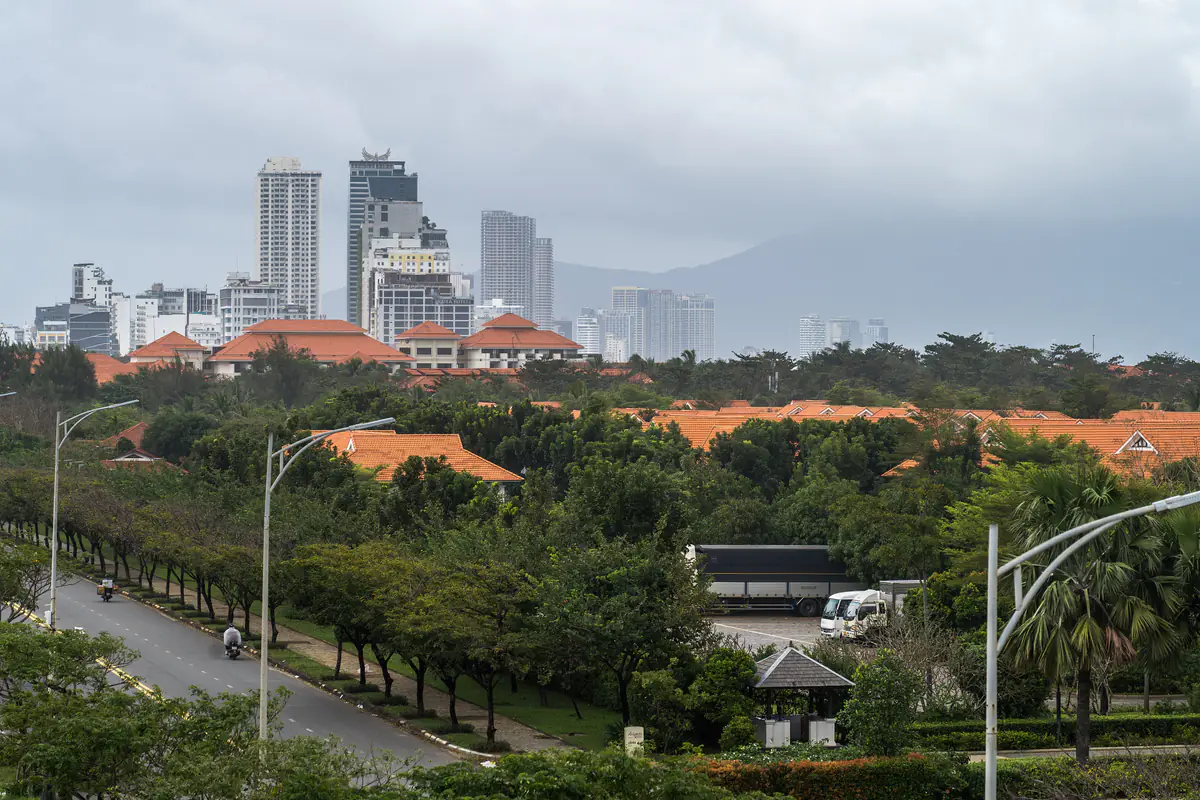
Photo: Alexkom000
Da Nang receives an average of approximately 486 mm of rain in November, based on climate data from 1991-2020. Average daytime highs are around 27-28°C, while nighttime lows are about 22-23°C, so the weather is warm rather than cold. You can still visit, but swimming every day or expecting clear skies for outdoor sightseeing would be unrealistic.
486 mm
average rain for the month
21 days
with at least 0.1 mm of rain
22-28°C
from the nightly low to the daytime high
Is November a good time to visit Da Nang?
November can be a good time to visit Da Nang if you enjoy exploring the city, trying local food, visiting museums and spending some quiet time at your hotel. Temperatures are more comfortable than during the hottest summer months, and you are less likely to deal with intense midday heat.
On days without heavy rain, you can still walk along the Han River, visit My Khe Beach or take a trip to Hoi An.
The main drawback is the unpredictable weather. A morning may begin with bright skies and a light breeze, only for rain to arrive in the afternoon. Sometimes, several wet days come together and make outdoor activities difficult.
November is a reasonable choice if:
- You are more interested in food, culture, museums and city sightseeing than beach activities.
- Your itinerary is flexible, and you do not mind changing plans.
- You choose a comfortable hotel with indoor facilities, a restaurant or a suitable swimming pool.
- Flights and accommodation are genuinely cheaper on your intended travel dates.
- You can leave one day open for Hoi An or other weather-dependent activities.
Consider another month if:
- Swimming, paddleboarding, snorkeling or island tours are the main reasons for your visit.
- You want to spend most of your time at Ba Na Hills, Son Tra Peninsula, Hai Van Pass or other outdoor attractions.
- You are traveling with young children or older relatives and need a predictable schedule.
- You only have a two-day weekend and cannot extend or rearrange your trip when severe weather is forecast.
Visitors from Hanoi or Ho Chi Minh City may find Da Nang's November temperatures quite comfortable. For international travelers looking for a sunny tropical beach holiday, however, the dry season is a better bet.
A beautiful photograph of My Khe Beach taken in November is a poor reason to book. One clear afternoon does not represent the weather for the entire month.
Da Nang weather in November: rainfall and temperatures
Climate data for 1991-2020 show that Da Nang receives approximately 486 mm of rainfall in November, with 21 days recording at least 0.1 mm of rain.
That is a substantial amount of rainfall, although it is lower than October's average. The average daily maximum temperature is 27.7°C, and the average daily minimum is 22.5°C.
Here is how November compares with nearby months and a typical dry-season month.
| Month | Average daily low | Average daily high | Average rainfall | Rainy days |
|---|---|---|---|---|
| October | 23.7°C | 29.6°C | 658 mm | 21 |
| November | 22.5°C | 27.7°C | 486 mm | 21 |
| December | 20.5°C | 25.3°C | 272 mm | 21 |
| April | 24.0°C | 30.9°C | 50 mm | 7 |
Figures are climate averages for 1991-2020. A rainy day is counted when precipitation reaches at least 0.1 mm. These are historical averages, not a forecast for a particular year.
Does it rain a lot in Da Nang in November?
Yes. November is part of the wet season in central Vietnam, and Da Nang receives considerable rainfall.
A useful reference is roughly 450-500 mm of rain during the month, based on the city's long-term climate records. Different climate datasets may show slightly different figures depending on their observation stations and calculation methods.
But 21 rainy days does not mean 21 days of nonstop rain.
A day with a brief, light shower still counts as a rainy day. On the other hand, a few days of particularly heavy rain can account for a large proportion of the month's total.
That distinction matters when planning your holiday.
Rainfall may come as intermittent showers, but prolonged periods of moderate or heavy rain are also possible. These often develop when cold air from the north interacts with tropical disturbances or other weather systems affecting central Vietnam.
During light rain, getting a taxi to a museum or restaurant is usually manageable. In widespread heavy rainfall, flooded streets, poor visibility and restrictions on outdoor activities can make getting around more difficult.
A forecast issued several weeks before departure is a general indication, not a fixed schedule. Make your final sightseeing decisions closer to the travel date.
Is Da Nang cold in November?
No, not by northern Vietnam's winter standards.
During the day, temperatures are generally comfortable for T-shirts, lightweight trousers and casual summer clothing. You may still feel hot while walking around when the sun comes out.
Evenings are slightly different. Coastal winds, high humidity and damp clothing can make the air feel cooler than the thermometer suggests.
A lightweight jacket is usually enough for evenings in the city. Bring a long-sleeved top if you get cold easily or plan to sit outside after dark.
Ba Na Hills is a different story. Its higher elevation means temperatures can be noticeably lower than in central Da Nang.
The forecast for the airport or beachfront says little about what to wear for an entire day in the mountains.
Is late November drier than early November?
In a typical year, October and November are among Da Nang's wettest months. Rainfall generally decreases in December, although rainy days remain common.
That does not guarantee that the last week of November will be better than the first.
Cold air interacting with disturbances over the sea can still produce heavy rainfall toward the end of the month. In other years, the middle of November may have several pleasantly clear days.
Picking November 25-30 simply because you assume the rainy season will be over is risky. Check the forecast for your actual travel dates rather than relying on a fixed weekly pattern.
Can you swim in Da Nang in November?
Swimming is possible on days when the sea is calm, conditions are safe and lifeguards allow people into the water. However, November is not a reliable month for a beach-focused holiday.
Air temperature is not the main problem.
At 26-28°C, the weather can still feel warm enough for swimming. The bigger concerns are seasonal winds, large waves, coastal currents and periods of severe weather.
What is My Khe Beach like in November?
My Khe Beach runs along Vo Nguyen Giap Street and is convenient for visitors staying in beachfront hotels.
On dry days, you can walk along the sand, enjoy the sea views or sit at one of the cafés near the coast.
Dry weather is not the same as safe swimming conditions.
Some days have little or no rain while large waves continue breaking along the beach. Rip currents can also be difficult to recognize, particularly if you are unfamiliar with local sea conditions.
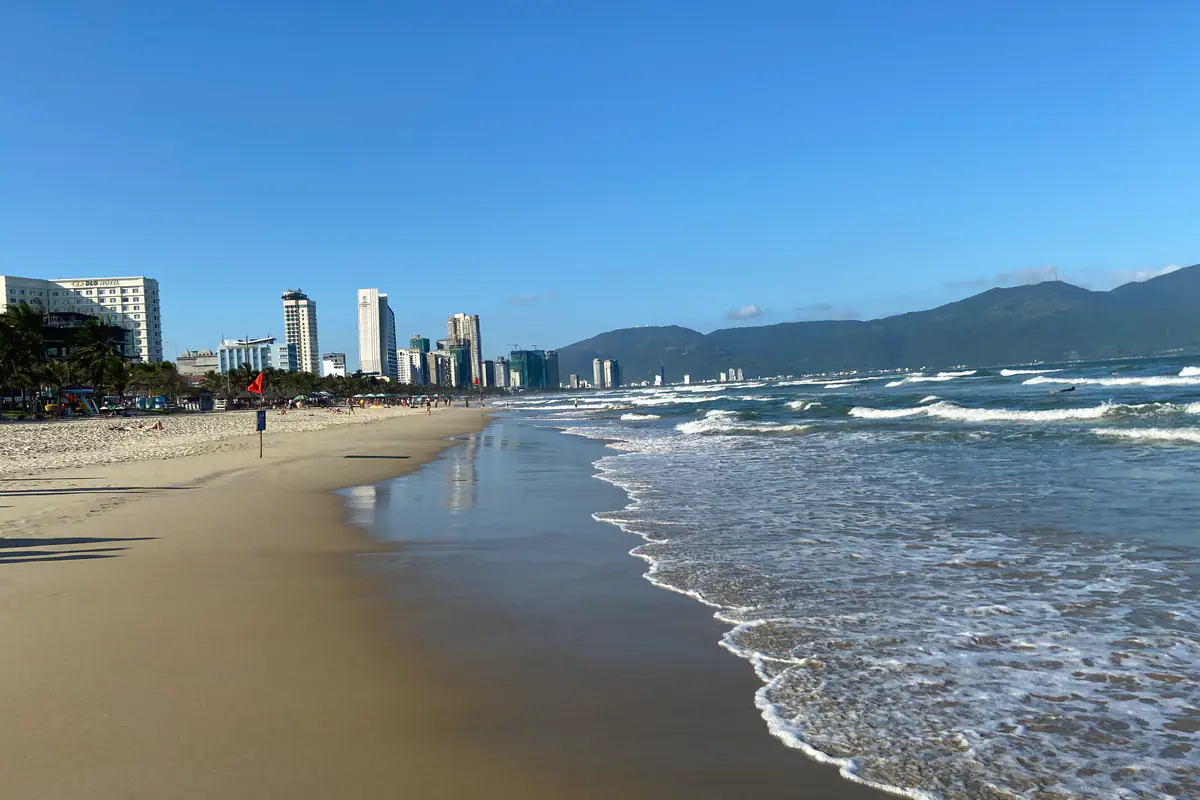
Photo: Kuroczynski
After heavy rainfall, river runoff may make coastal water murkier. Avoid swimming when water quality is uncertain or the area has not been confirmed safe.
Are My An and Non Nuoc beaches any better?
My An is close to My Khe and convenient for visitors staying around the beachfront hotel area. Non Nuoc Beach lies farther south, near the Marble Mountains.
The scenery and number of visitors may differ, but both beaches are affected by central Vietnam's seasonal weather patterns.
There is no reason to assume that Non Nuoc will automatically be safe for swimming when My Khe has dangerous waves.
Sea conditions need to be assessed at each beach on the day.
A hotel near My Khe or My An works well when your main goal is to enjoy the view. You can walk to the beach during a break in the rain without spending much time traveling.
For regular swimming, look for accommodation with an indoor or temperature-controlled swimming pool.
Ask the hotel whether its pool operates during the rainy season. Outdoor pools may also close during thunderstorms, lightning or other unsafe weather conditions.
Should you book island tours or snorkeling trips?
Avoid booking non-refundable boat trips, snorkeling excursions or island tours on fixed dates during November.
Speedboats and other vessels may be unable to operate because of strong winds, large waves or restrictions on departures.
This can happen even when there is no typhoon.
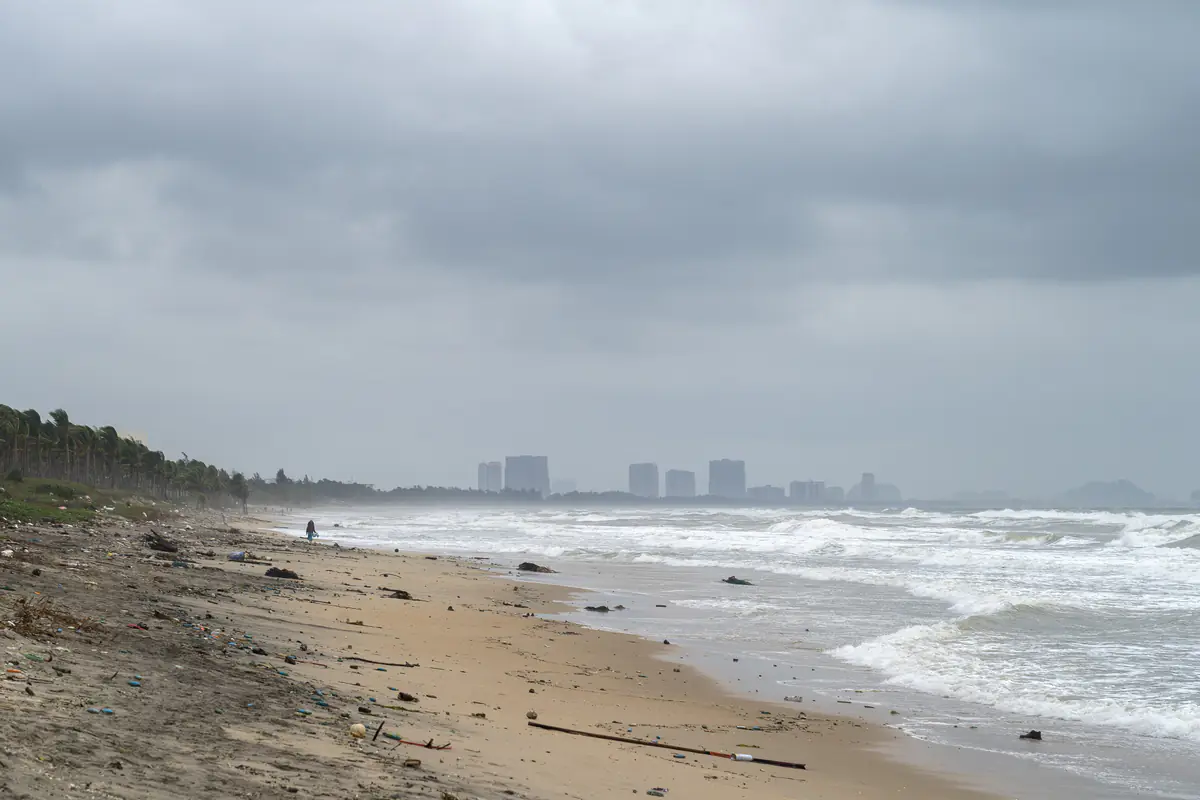
Photo: Alexkom000
Before booking a marine activity, ask the operator about three things: the conditions required for departure, how cancellations are communicated, and whether you can receive a refund or change the date.
There is little point traveling to a departure pier only to discover that the service has been suspended, especially when strong winds have already been forecast.
For visitors whose main priorities are swimming, relaxing on the beach and enjoying water sports, March through August is generally more favorable.
March to May suits travelers who want to avoid the strongest summer heat.
Are there typhoons and floods in Da Nang in November?
Typhoons and tropical depressions can still develop over the East Sea, also known internationally as the South China Sea, during November. Some may affect central Vietnam.
That does not mean Da Nang will experience a typhoon during your visit.
A typhoon does not have to make direct landfall for the city to experience heavy rain or flooding.
Northeasterly monsoon winds, tropical convergence zones and other weather systems can combine to produce prolonged rainfall.
Rising river levels, overloaded drainage systems and low-lying terrain can then lead to localized flooding.
What about November 2026?
Vietnam's meteorological agency forecasts above-average temperatures across the country for November 2026.
Rainfall in many parts of central Vietnam is expected to be approximately 20-40% below the long-term average.
Typhoon and tropical depression activity over the East Sea is also forecast to be lower than average.
The agency still warns that widespread periods of moderate to heavy rain could affect central Vietnam.
The regional hydro-meteorological station for central Vietnam also points to the possibility of heavy rainfall episodes between late October and late November.
These forecasts are useful for travelers visiting in 2026, but they do not replace short-term warnings.
Even when monthly rainfall is below average, a few days of very heavy rain can still cause serious disruption.
Which areas are most vulnerable to flooding?
Flood risk is not uniform throughout Da Nang.
Low-lying streets, areas with insufficient drainage and neighborhoods near rivers may experience flooding during prolonged heavy rainfall.
Contact the property and ask about flooding during recent storms, especially when your hotel is on a low street, has basement facilities or is reached through a narrow road that collects water.
Mountain areas present different risks.
Wet roads, fallen trees and landslides can make steep roads and mountain passes dangerous.
Do not ride a motorbike on mountain roads during heavy rain or when landslide warnings are in effect.
Hoi An also needs particular attention. Its historic center lies near the Hoai River and the wider Thu Bon River system.
When river levels rise, low-lying streets near the waterfront may flood, affecting pedestrian access, restaurants, hotels and transport.
When should you postpone or change your plans?
Postpone outdoor activities and consider changing your trip when official warnings indicate a serious risk from typhoons, severe flooding, flash floods or landslides in the areas you plan to visit.
If local authorities issue evacuation instructions, close attractions or restrict travel, follow those instructions. A prepaid ticket is not a reason to enter a dangerous area.
International visitors who do not speak Vietnamese should ask their hotel to explain local warnings and confirm road conditions before arranging long-distance transport.
A rain symbol on a weather app does not provide a complete picture of river flooding or landslide risks.
Best things to do in Da Nang in November when it rains
A practical November itinerary puts indoor attractions first and saves beaches, mountains and Hoi An for periods of more stable weather.
A rainy day does not have to be a wasted day.
Da Nang has museums, restaurants, cafés, exhibitions and other indoor spaces that can keep you occupied without long journeys through the rain.
Museum of Cham Sculpture
A good rainy-day stop near Dragon Bridge
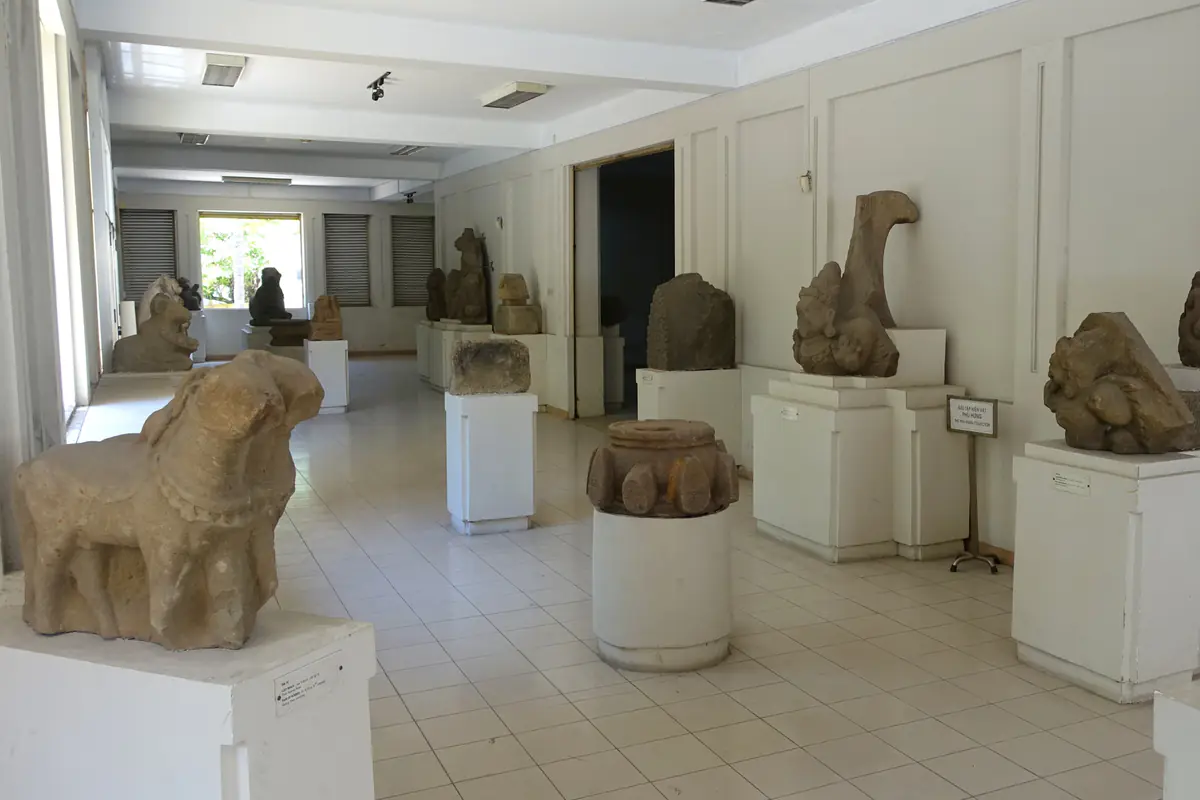
Photo: Daderot
The Museum of Cham Sculpture is located at 2 September 2 Street, close to Dragon Bridge.
It houses an important collection of Cham sculptures and artifacts, including many sandstone works.
It is a good choice if you want to learn about central Vietnam's history and culture without spending too much time outdoors.
Hours and admission for 2026:
- Opening hours: 7:30 a.m.-5:00 p.m.
- Standard admission in 2026: VND 60,000 per person.
- Different rates or exemptions apply to certain eligible groups.
Information and interpretation are available to help international visitors understand the collection.
Allow approximately one to two hours, depending on how interested you are in the exhibits.
On a rainy day, take a taxi or ride-hailing car directly to the entrance and skip the wet helmets and raincoats of a motorbike.
Da Nang Museum
Discover the city without going far, near the Han River

Photo: Linhcandng (thảo luận)
Da Nang Museum has its entrance at 31 Tran Phu Street in the Hai Chau area, near the Han River.
Its exhibitions cover local history, culture, people and the development of the city.
For first-time visitors, especially international travelers, it provides useful background on the destination beyond its beaches and resorts.
Hours and admission for 2026:
- Opening hours: 8:00 a.m.-5:00 p.m. daily.
- Standard admission in 2026: VND 50,000 per person.
- Free or discounted admission is available to certain eligible groups.
Visit the Cham Sculpture Museum in the morning and spend part of the afternoon at Da Nang Museum.
Both are in the central area, so there is no need to hire a car for the entire day.
Check the museum's current opening arrangements before visiting, during special events or severe weather.
Da Nang Fine Arts Museum
Another indoor option at 78 Le Duan Street

Photo: Linhcandng (thảo luận)
The Da Nang Fine Arts Museum is at 78 Le Duan Street.
It is worth considering if you enjoy painting, modern art and local cultural exhibitions.
The museum is relatively manageable in size, making it easy to combine with lunch or a café stop.
Standard entry in 2026 costs VND 20,000 per person, and the museum is open 8:00 a.m.-5:00 p.m.
Two of the three museums are enough for a relaxed itinerary, particularly if you want time for meals and a break at your hotel.
Spend more time exploring Da Nang's food
November's cooler, rainy weather suits hot dishes such as mi Quang, fish cake noodle soup, banh canh and bun bo.
For mi Quang, consider Mi Quang Ba Mua at 19-21 Tran Binh Trong Street.

Photo: Christopher Crouzet
This branch is open approximately 6:30 a.m.-9:00 p.m. Options include noodles with chicken, shrimp and pork, or snakehead fish.
Another place to consider is Bun Cha Ca Hon at 113/3 Nguyen Chi Thanh Street, in a small alley.
A bowl of bun cha ca comes with hot broth and fish cakes, often steamed or fried. You can choose additional fish depending on the menu.
Loading map...
- Museum of Cham Sculpture: 2 September 2 Street, close to Dragon Bridge
- Da Nang Museum: 31 Tran Phu Street, near the Han River
- Da Nang Fine Arts Museum: 78 Le Duan Street
- Bun Cha Ca Hon: 113/3 Nguyen Chi Thanh Street, in a small alley
Spending the day traveling across the city just to visit several restaurants is not worth it.
When it rains, choosing somewhere close to your museum or hotel is usually more convenient.
Food prices depend on the dish, toppings and portion size. Check the menu at the restaurant rather than relying on figures from old travel articles.
Should you visit Ba Na Hills, Son Tra Peninsula and Marble Mountains in November?
All three attractions involve outdoor activities, but weather affects them in different ways.
Ba Na Hills is located high in the mountains, where temperatures are typically lower than in central Da Nang.
Dense fog, heavy rain and strong winds can significantly reduce the views. Weather conditions may also affect the operation of certain attractions and facilities.
Keep Ba Na Hills for the day with the most favorable forecast, provided your ticket or itinerary allows a date change.
Before leaving, confirm the opening schedule, cable car operations and available services with the operator.
Son Tra Peninsula has steep roads, sharp bends and areas vulnerable to landslides during periods of heavy rainfall.
Do not rent a motorbike for a mountain ride during heavy rain or when road safety warnings have been issued.
Even after the rain stops, check whether the route is open. Never pass a road closure or enter a restricted area.
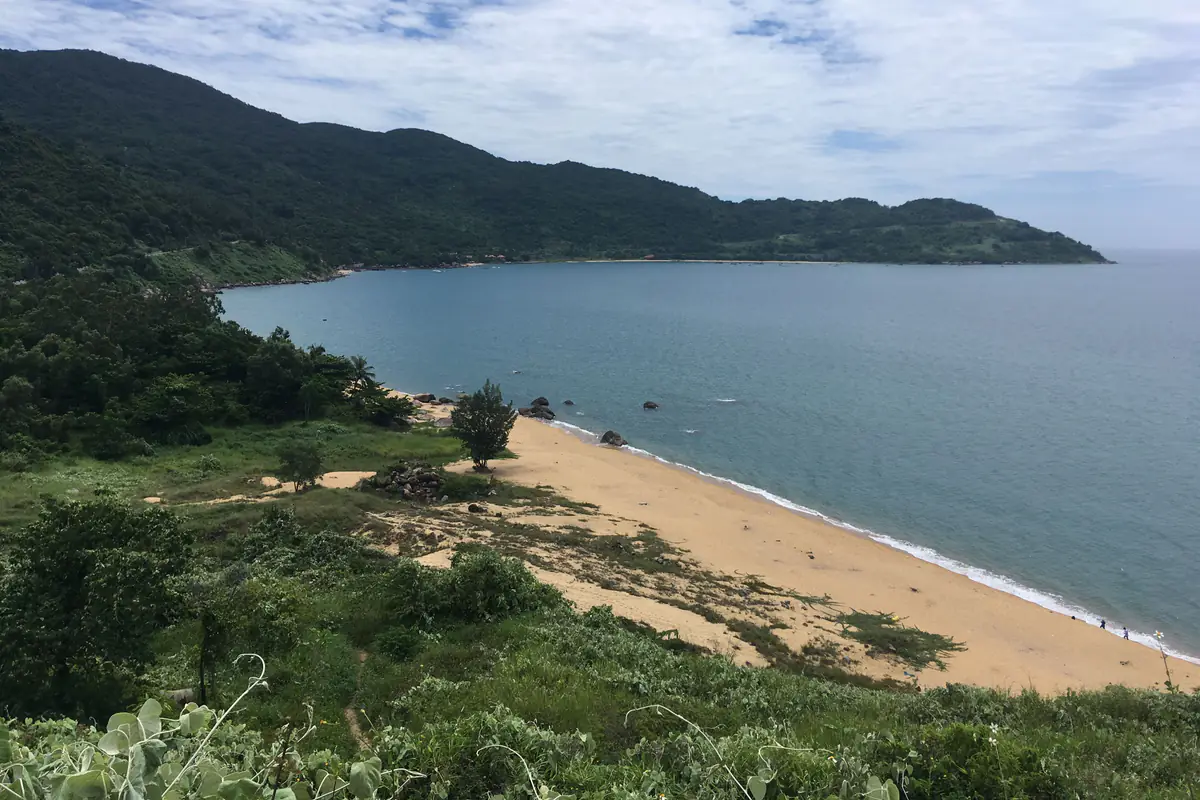
Photo: Christophe95
Marble Mountains, known locally as Ngu Hanh Son, has numerous stone steps and cave passages.
Stone surfaces can become slippery after rain.
Older visitors, young children and anyone with mobility difficulties should consider the climbing involved before deciding to visit.
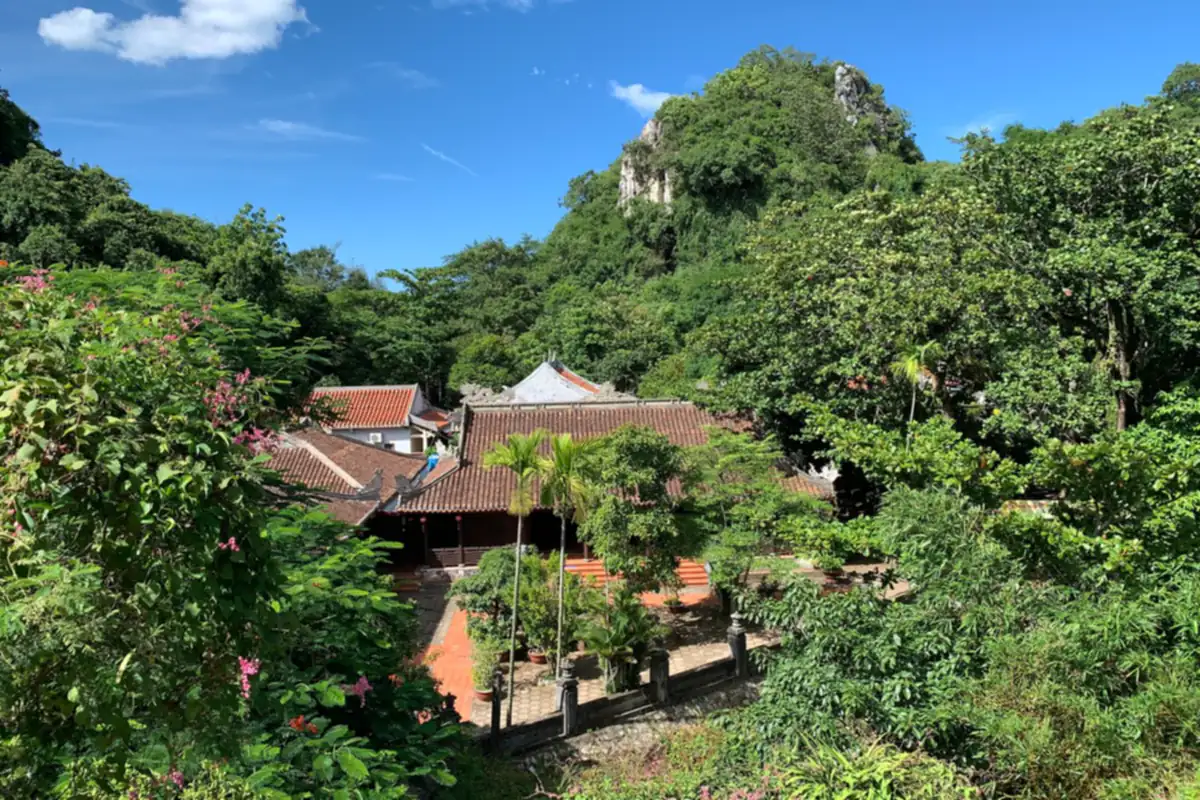
Photo: Chainwit.
Light rain does not close every attraction. But when your plans involve steep roads, slippery stone paths or cable cars, safety notices from the attraction operators matter more than a general weather forecast on your phone.
Can you visit Hoi An from Da Nang in November?
Yes, but do not make Hoi An a compulsory stop on one fixed day.
The distance from central Da Nang to Hoi An Ancient Town is approximately 30 km, depending on your starting point.
A car journey normally takes around 45-60 minutes in ordinary traffic conditions. It can take longer during heavy rain, flooding or congestion.
Hoi An is known for its historic houses, assembly halls, cafés and pedestrian streets.
Much of the experience involves walking outdoors.
When is the best time to visit Hoi An?
Choose a day with a relatively dry forecast, no flood warnings and safe road conditions.
You could leave Da Nang in the late morning, have lunch in Hoi An, visit an old house or assembly hall, and explore the streets in the late afternoon.
Ancient Town sightseeing tickets in 2026 come in VND 80,000 and VND 120,000 categories, covering different sets of attractions.
Confirm the applicable ticket category and conditions at the official ticket counter.
To visit several heritage buildings, begin sightseeing in the early afternoon. Many attractions operate primarily during daytime hours.
When should you skip Hoi An?
Avoid traveling to Hoi An when there are flood warnings for the Thu Bon River, rising water in the Ancient Town or official restrictions on road access.
Low-lying waterfront streets, including sections of Bach Dang Street and nearby areas, can be affected during river floods.
The extent of flooding varies between events and cannot be predicted from November's average rainfall alone.
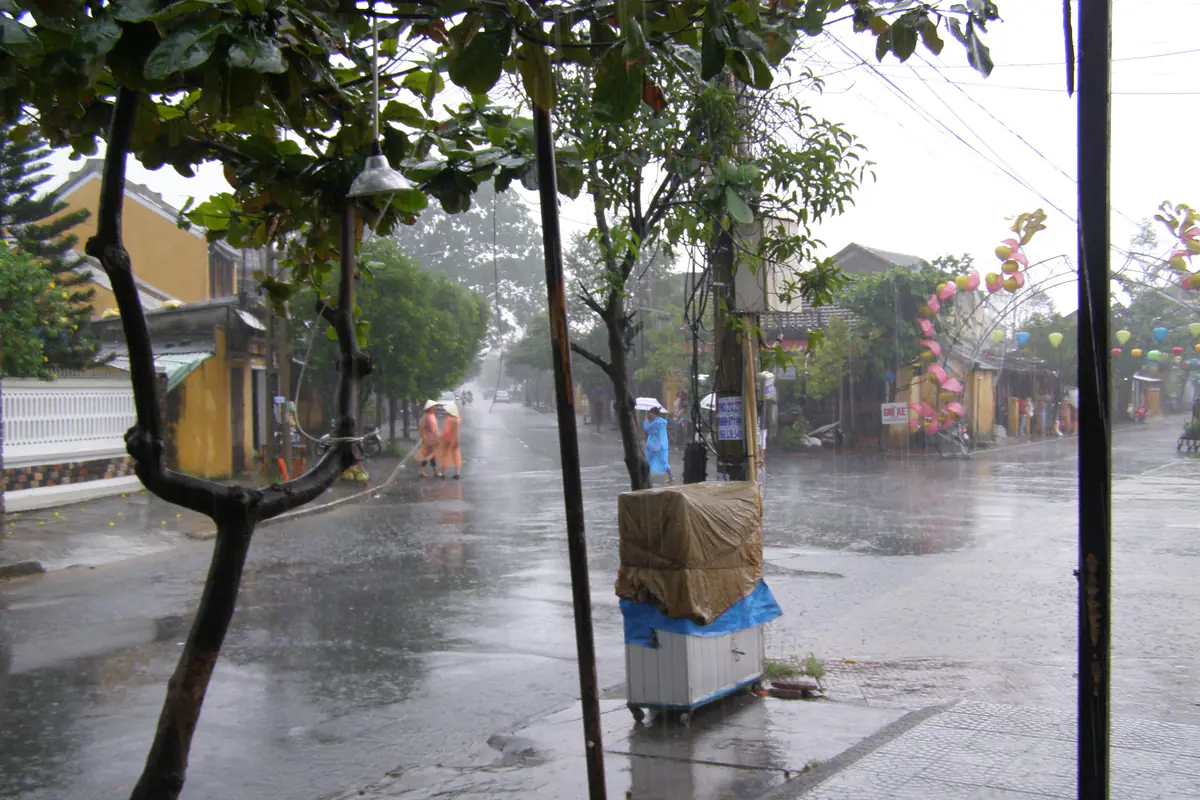
Photo: RG72
When the weather deteriorates while you are in Da Nang, remain in the city and skip Hoi An; there is little point traveling just to see flooded streets.
Hoi An can wait for another trip.
Before staying overnight in Hoi An during the wet season, ask about the hotel's location, room access and what happens if floodwater rises.
Ground-floor rooms and accommodation close to the river deserve extra consideration.
A practical 3-day, 2-night Da Nang itinerary for November
For November, it is worth having two versions of your itinerary: one for reasonably stable weather and another for rainy days.
Do not fill every day with outdoor attractions and simply hope for sunshine.
- Day 1
Arrive and explore the city center
A morning arrival leaves time to drop your luggage at the hotel and have lunch before sightseeing.
From approximately 1:30 p.m. to 3:30 p.m., visit either the Museum of Cham Sculpture or Da Nang Museum.
Both are suitable for a first afternoon without traveling far.
Later, if the rain stops, walk along the Han River.
If it continues raining, return to the hotel or spend some time in an indoor café.
Have dinner near your accommodation. There is no need to cross several bridges or travel to the beachfront when the wind is strong.
- Day 2
Choose Hoi An or stay in Da Nang
Keep this day as flexible as possible.
If the weather is good: Visit Hoi An, explore the Ancient Town and enjoy local food. For evening photographs, check the rainfall forecast and road conditions before committing to a late return.
With moderate rain: Visit the Fine Arts Museum, try local dishes and spend time in cafés. You can still have a satisfying day without traveling far.
With heavy rain or a flood warning: Limit unnecessary travel, stay at your accommodation and follow instructions from local authorities or your hotel.
Ba Na Hills or Son Tra is no automatic replacement for a rainy Hoi An. Mountain conditions may be even worse.
- Day 3
Breakfast, a safe beach walk and the airport
With no dangerous weather warnings, spend the morning having fish cake noodle soup or mi Quang, then explore the area around your hotel.
Near My Khe, you might take a short beach walk during a dry period.
Do not enter the water unless swimming conditions have been confirmed safe.
Return to collect your luggage and travel to Da Nang International Airport.
During the rainy season, allow extra time for transport and airport procedures.
A distant attraction scheduled immediately before your flight is risky, since heavy rain can make journeys take longer than expected.
What to wear in Da Nang in November
You do not need heavy winter clothing for everyday sightseeing in central Da Nang.
Packing only the clothes you would wear in June is not ideal either.
A practical November packing list includes:
- T-shirts and lightweight trousers: Suitable for days around 25-28°C and comfortable for restaurants and sightseeing.
- A light jacket: Useful in the evening, in air-conditioned vehicles or when the coastal wind picks up.
- A compact raincoat: Helpful for short walks between transport and attractions.
- Shoes or sandals with good grip: Choose non-slip soles and avoid materials that take a long time to dry.
- A waterproof pouch: For your phone, travel documents and valuables.
- A spare change of clothes: Useful when you plan several activities in one day.
- Personal medication and essentials: Pack according to your needs, especially if traveling with children.
A camera needs its own waterproof bag or protective cover. Avoid changing lenses outdoors in the rain.
International visitors who expect to walk extensively should choose comfortable footwear that dries quickly.
Large rain boots are unnecessary for most city trips unless you have a specific reason to bring them.
For Ba Na Hills, pack an additional warm layer.
The coastal temperature does not tell you what the mountains will feel like all day.
An umbrella works for light rain in the city, but it is less useful in strong winds. During severe weather, seek proper shelter rather than trying to continue sightseeing.
Where to stay in Da Nang in November
Your hotel's location can make a considerable difference during the rainy season.
A convenient property with good indoor facilities may be more useful than a beautiful beachfront room far from the places you plan to visit.
Hai Chau: best for food and city sightseeing
Hai Chau is a practical area for visitors who want easy access to restaurants, museums, central attractions and everyday services.
Consider hotels around Tran Phu Street, Bach Dang Street and neighboring parts of the city center.
Check the hotel's exact location, ground level, entrance road and drainage conditions rather than assuming every central street is equally safe from flooding.
The main advantage is convenience.
If rain forces you to replace an outdoor activity with a museum or restaurant, you will not have to travel far.
Hai Chau suits business travelers extending their stay or international visitors interested in urban life and local culture.
My Khe and My An: best for staying near the beach
Hotels around Vo Nguyen Giap Street, An Thuong and My An are suitable for travelers who still want sea views, beach walks and resort-style facilities.
Staying beside the beach does not guarantee that swimming will be possible.
For a November booking, pay attention to indoor lounges, restaurants, swimming pools and cancellation policies.
A room with a beautiful sea view but few other facilities may be less appealing after several consecutive rainy days.
Should you book a resort outside the city?
A resort can work well if your goal is to relax without going out much.
But you should check which facilities and activities depend on the weather.
A private beach does not make swimming safe when the waves are large. Outdoor pools, beach restaurants and recreational activities may all be affected by rain or strong wind.
A holiday spent mostly inside the resort calls for somewhere with enough indoor amenities.
A package built around beach activities that may have to be canceled is not worth paying substantially more for.
Should you move your Da Nang trip to another month?
Changing your dates is sensible if your trip depends heavily on good beach weather or predictable outdoor conditions.
November is not a bad month for every kind of travel, but a flexible schedule opens up more reliable options.
| Travel period | Typical weather | Best suited for |
|---|---|---|
| November | Heavy rainfall, milder temperatures, possible rough seas | Food lovers, city breaks, museums and relaxing |
| December | Cooler, less total rainfall on average, but still many rainy days | Travelers who prefer cooler weather and flexible plans |
| February-April | Significantly less rain and comfortable temperatures | Outdoor sightseeing, Hoi An and photography |
| May-August | Hotter, generally more favorable for beach activities | Families, swimmers and summer resort holidays |
For a beach holiday, March to May is a good balance between sunshine, comfortable temperatures and opportunities for outdoor sightseeing.
June to August is often suitable for swimming and beach activities, but the weather is hotter, and domestic summer holidays can bring more visitors.
Reasonably priced flights already bought for November do not need to be canceled immediately.
First, consider whether you have enough alternative activities, whether your bookings allow changes and what the forecast indicates closer to departure.
If official warnings indicate dangerous weather during your travel dates, changing your plans should take priority over keeping a holiday that is no longer practical.
How to check Da Nang's weather before your November trip
Rather than checking the forecast once and forgetting about it, review the weather at three useful points before and during your holiday.
- 7 days before
Check the outlook and change terms
Check the general outlook for rain, temperature, wind and severe weather warnings.
This is a good time to review the change and cancellation conditions for your flights, hotel and any tours you have booked.
A forecast showing rain is not, by itself, a reason to cancel everything.
Look for warnings about prolonged heavy rainfall, typhoons or other conditions likely to affect travel safety.
- 48-72 h before
Read the updated bulletins
Check updated bulletins from Vietnam's National Center for Hydro-Meteorological Forecasting and announcements from local authorities.
Hoi An visitors should look at river conditions and road access, not just rainfall in central Da Nang.
For Ba Na Hills, boat tours or mountain attractions, confirm operating arrangements and weather-related cancellation policies directly with the provider.
- Every morning
Look at the hourly forecast
Check the hourly forecast, official warnings and updates from your hotel.
You might replace a beach day with a museum visit or move an outdoor excursion to a better-weather day.
Do not assume that all hazards disappear as soon as the rain stops.
Large waves, high river levels, damaged roads and landslide risks can remain after the weather appears to improve.
For Hoi An, confirm river levels and whether the Ancient Town is accessible before leaving Da Nang.
Reliable sources include Vietnam's national meteorological authority, Da Nang's official government and tourism portals, and announcements from attraction or transport operators.
Da Nang has around 21 rainy days in November according to long-term climate records, but that does not mean 21 days of continuous rain. A trip can still be worthwhile if you make room for museums, hot bowls of local noodle soup and at least one flexible day in case heavy rain or rough seas change your plans.
FAQ
Does it rain every day in Da Nang in November?
November is one of Da Nang's rainiest months. Climate averages for 1991-2020 put the city at approximately 486 mm of rain and around 21 rainy days. However, a rainy day does not mean rain continues from morning to evening. Some days have dry periods, while others experience prolonged heavy rain. A flexible itinerary with indoor alternatives is the best approach.
Is Da Nang cold in November? Do I need warm clothes?
Da Nang is generally warm in November, with average daily temperatures ranging from a low of approximately 22.5°C to a high of 27.7°C. Evenings can feel cooler because of rain and coastal winds, so a lightweight jacket is useful. If you are visiting Ba Na Hills, bring an extra warm layer because temperatures in the mountains are lower.
Can you swim at My Khe Beach in November?
Swimming is possible on calm days when beach conditions are safe and lifeguards permit it. However, November's seasonal winds and rough seas can make swimming dangerous, even when it is not raining. Always follow warning flags and lifeguard instructions. For a holiday mainly focused on swimming and water sports, the dry season is a more reliable choice.
Are there typhoons or floods in Da Nang in November?
Yes, typhoons, tropical depressions and periods of heavy rainfall can still affect central Vietnam in November. Low-lying parts of Da Nang may experience flooding, while Hoi An can also be affected when water levels rise in the Thu Bon River system. Historical climate averages cannot predict whether a specific travel date will be affected. Follow official warnings and postpone activities when conditions are unsafe.
Is November a good time to visit Da Nang and Hoi An?
November can work well for travelers who enjoy food, museums, cafés and relaxed city sightseeing. You may also be able to visit Hoi An during a dry period, provided river levels and road conditions are safe. However, it is not the most reliable month for beaches, island excursions or long outdoor itineraries. March to May is generally a better option if you want sunnier weather and more opportunities for outdoor activities.
Related posts
Weather
4 Days in Nha Trang in November: Leave Room for Rain
Keep a November stay flexible enough to move the sea day and shorten travel in heavy rain.
Weather
Is Nha Trang Weather in February Good for a Beach Trip?
We suggest a February plan that leaves space for the beach without making every day depend on a boat.
Weather
Nha Trang Weather in October: 265 mm of Rain on Average
Plan October around an adjustable sea day and land outings you actually want.