Bai Dai Beach Cam Ranh: public beach or resort stay?
Choose a public beach access for a half-day swim and seafood lunch on your way to or from Nha Trang. Stay at a beachfront resort when the beach itself is the holiday; avoid planning a swimming day when rough surf or red flags close the water.
Written by Tụi mình mê biểnUpdated

Photo: L.K.Phung
Bai Dai Beach lies roughly 25-35 km south of central Nha Trang, depending on which entrance you use. This is the long sandy beach in the Cam Lam area of Khanh Hoa, near Cam Ranh International Airport, not Bai Dai Beach on Phu Quoc Island. You can visit for a swim and a seafood lunch or spend several nights in one of the beachfront resorts.
Where is Bai Dai Beach Cam Ranh?
The beach runs along the eastern side of the Cam Ranh peninsula, beside the coastal route linking Nha Trang with Cam Ranh International Airport. You will see it called Bai Dai Beach, Bai Dai Beach Nha Trang, Long Beach Cam Ranh and sometimes simply Long Beach. Those names usually refer to the same resort coastline in Khanh Hoa. They do not refer to the Long Beach on Phu Quoc, which is on a different island much farther south.
The road to navigate by is Nguyen Tat Thanh Boulevard. Driving south from Nha Trang, you pass the Cu Hin coastal hills before reaching the resort area. Driving north from Cam Ranh Airport, you encounter several large hotels and beach properties along the way. Entering Cam Ranh city center as your destination sends you too far: the accommodation and public beach areas discussed here sit farther north, along the road to Nha Trang.
The administrative address can look inconsistent across hotel sites and map listings. Older descriptions say Cam Hai Dong commune, Cam Lam district. The current commune name for much of this stretch is Cam Lam, Khanh Hoa province, following administrative changes in 2025. A business may still appear under its older address in a booking confirmation. Its actual map pin and the name on its entrance sign matter more for finding the correct turn.
Bai Dai is not one compact attraction with a ticket gate. It is a long coastline divided by resort grounds, access lanes, local restaurants and stretches with few facilities. Two hotels both on Bai Dai can be several kilometers apart. The airport can be roughly 5-15 km away, or around 10-25 minutes by car, depending on the exact property. From central Nha Trang, allow around 35-50 minutes by road, and more if traffic is slow or you stop along the way.
Loading map...
- Eo Gio Bai Dai Seafood Restaurant: Plus Code 458W+V8, former Cam Hai Dong area
- Cam Ranh Surf Camp: Surf school on N2 Road, Golden Bay area
- Alma Resort Cam Ranh: Water park, children's activities, pools
- Radisson Blu Resort Cam Ranh: Blu Lobster seafood restaurant
- Cam Ranh International Airport: Airport code CXR, south of the resort corridor
- Dat Moi bus route 18 stop: 19/8 Stadium, 10 Yersin Street, Nha Trang
Is Bai Dai Beach better than Nha Trang's city beach?
Bai Dai wins on space. Much of the coast has broad pale sand, a more open horizon and fewer tall buildings immediately behind the beach than the central Tran Phu waterfront. On a sunny, calm day, the gently shelving shore and blue water are the main attraction. You can spend an hour walking along the water without needing a boat, an entrance ticket or a full sightseeing itinerary.
Nha Trang city beach wins on convenience. From many city hotels you can reach the sand on foot, cross back to your room to shower, find coffee nearby and have several choices for dinner. At Bai Dai, a restaurant might be inside a resort or reached by a separate access road. The coastline is more spread out, and the next usable public access point may not be within a convenient walk.
The word “quiet” also needs context. Bai Dai's accessible restaurant sections can attract day-trippers, especially on weekends and holidays. Resort-front stretches are often quieter because fewer people arrive through the hotel grounds. A windy afternoon may look almost empty for a different reason: the sea can be too rough for swimming. A beach without swimmers is not automatically a safe swimming beach.
Choose Bai Dai when you can spend at least half a day getting there, changing, swimming or walking, eating and returning. Choose central Nha Trang when your schedule is tight, you have no transport arranged or you want to walk between the beach and city restaurants. Both choices are good; they serve different kinds of days.
Which sections have public beach access?
There is no single ticket for the entire Bai Dai coastline, because no single entrance controls the whole beach. Public access exists in some sections between developed properties, and certain beachfront restaurants receive visitors who are not hotel guests. That does not make resort gardens, pools, sun loungers or internal access roads public facilities. Hotels can restrict entry through their premises to registered guests or visitors using an authorized service.
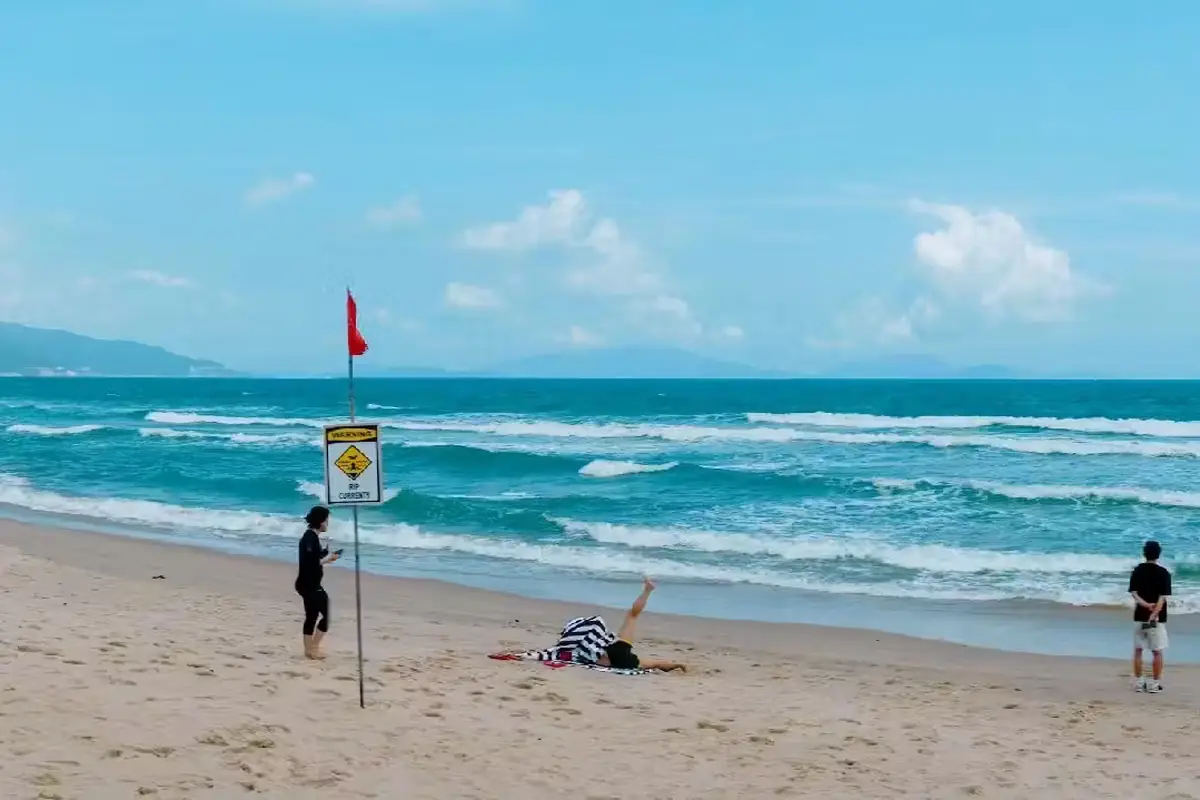
Photo: 위리
Once you arrive, check the actual entrance and the beach conditions before settling in. A section with clear signage, managed parking and an identified swimming area is easier to use than an unmarked track leading to an isolated part of the sand. An empty stretch may have no toilet, no shade, no lifeguard and nowhere reliable to arrange your return ride. Those practical details matter more to families than finding the least photographed part of the coastline.
Public beach access should not be confused with free services. Parking, showers, a chair, a parasol or the use of a restaurant's facilities may be charged separately. Ask what is included before sitting down. A public path also does not imply that all the water directly in front of it is open for swimming. Beach flags, safety notices and lifeguard instructions determine where you can enter the sea on that day.
Is the beach in front of a resort private?
A beachfront resort usually provides a controlled route from the accommodation to the sand, along with managed facilities for staying guests. The pool, sun loungers, beach towels, changing areas and on-site dining make it easier to spend a full day close to your room. These are hotel services, not a guarantee that the sea will be calm. Even a large five-star resort may restrict swimming during rough conditions.
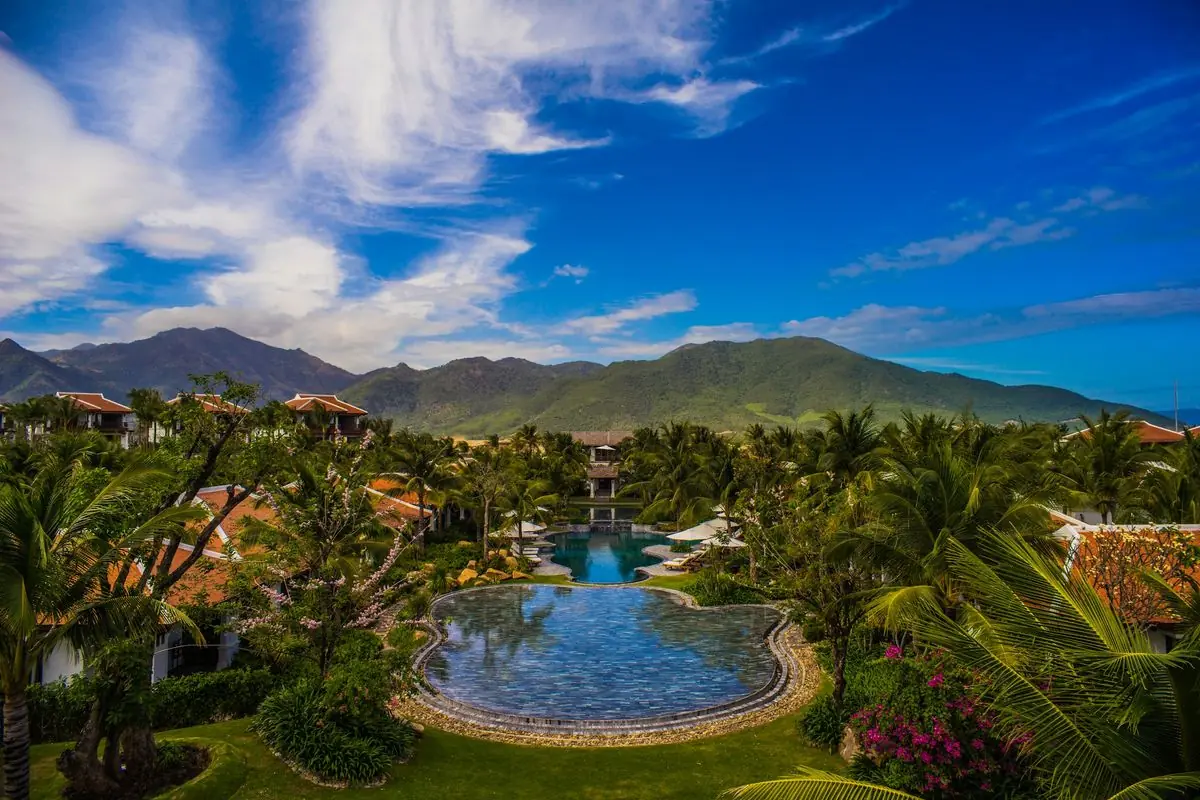
Photo: The Anam
If you are not staying there, confirm any day-pass policy before traveling to the gate. Buying lunch at a resort restaurant does not cover a pool day or every beach facility. Some properties may accept restaurant reservations from outside guests while limiting access to other areas. There is no useful single rule that covers every hotel on Bai Dai.
This distinction helps you choose your day. Two hours on the sand followed by lunch needs only a known public access point and a nearby restaurant. For two or three days of swimming whenever the conditions allow, spending time by a pool, and returning to an air-conditioned room in the afternoon, the resort arrangement is substantially easier.
When is Bai Dai Beach good for swimming?
March through August is generally the more reliable window for a swimming-focused visit. Days tend to be sunnier and the water is more often calm enough for recreational swimming. January and February can also bring good beach weather, although residual northeast winds and surf can still affect exposed stretches. From roughly September through December, rain, wind and rougher sea conditions become more likely along this part of Vietnam's south-central coast.
Arriving around 7-10 am makes for a relaxed beach morning. It is usually easier to avoid the strongest midday sun, and you can finish swimming before a late lunch. This is only a suggested visiting window; the public beach has no official opening time. Around 11 am-2 pm, shade can be limited outside the restaurants and resorts. After about 3:30-4 pm, the light is softer for walking and photographs, but you still need to judge the sea before entering it.
Bad weather changes the plan rather than just the photographs. A red no-swimming flag, lightning, strong wind or a coastal hazard warning means staying out of the water. In the windy season, Bai Dai can still be worth visiting for a walk along the sand or a meal facing the surf. It is less attractive when the only reason for traveling there is to swim and the sea is closed.
How to get to Bai Dai from Nha Trang
The straightforward road trip follows the southern side of Nha Trang, crosses towards Nguyen Tat Thanh Boulevard and continues past the Cu Hin area along the coast. Measure from your actual hotel. The drive from central Nha Trang commonly takes about 35-50 minutes to a Bai Dai access point, but your chosen restaurant or resort can be farther along the road.
A taxi or app-booked car is the simplest option for two or more people carrying towels, a change of clothes and beach bags. Enter the full name of the restaurant, school or hotel as the destination. Get a return quote or arrange a pickup time, especially if you plan to leave from a quiet section. A car that drops you on Nguyen Tat Thanh Boulevard may still leave a walk down an access lane to reach the actual shore.
A motorbike gives you flexibility, but the road is exposed to sun and wind, and traffic moves faster than on many small city streets. Ride only with the correct valid license for the vehicle, wear a helmet and avoid alcohol before riding. Travelers unfamiliar with motorbike traffic in Vietnam will generally have an easier day in a car. Saving on transport is less useful if you have to navigate an unfamiliar coastal road after dark.
A pre-booked car with a driver can make sense for a family or small group going to the beach and then the airport. Agree on the precise beach entrance, waiting period, pickup point, parking charges and final destination. A driver asked merely for “Long Beach” has to guess; even local drivers need to know which access lane or property you mean.
Can you stop at Bai Dai on the way from Cam Ranh Airport?
Yes. Cam Ranh International Airport, airport code CXR, sits south of the resort corridor. Many Bai Dai hotels are much nearer to the terminal than a hotel in central Nha Trang. An airport-to-resort transfer can take around 10-20 minutes for a conveniently placed property, while the ride into central Nha Trang is commonly 45-60 minutes. A public restaurant farther north may take longer to reach than a southern resort.

On departure day, the better sequence is a morning visit, lunch, a freshwater shower, collecting your bags and then a reserved transfer to the airport. Leave enough time for the airline's check-in and baggage deadlines. The airport may be close, but a short road transfer is not a reason to arrive just before the counter closes. International passengers should also allow for immigration and security screening.
If your flight leaves early in the morning, skip the beach stop. A resort close to the airport can still be convenient for the night before, but rushing through a swim with your flight hanging over the schedule rarely improves the day.
Can you take a bus to Bai Dai Beach?
Dat Moi bus route 18 connects Cam Ranh Airport and Nha Trang by the Nguyen Tat Thanh corridor, which passes the Bai Dai resort area. The 2026 fare is VND 75,000 per person for the regular full-route service and VND 100,000 for the operator's VIP limousine. The airport-to-city ride takes about an hour. The fare for getting off partway, and whether your exact stop is permitted, should be checked with the ticket counter or driver.

Photo: MIA.vn
On the Nha Trang side, the route serves the area by 19/8 Stadium, 10 Yersin Street, and several streets used by visitors staying near the beach. The timetable can be adjusted according to flights and demand. A scheduled departure time is not a guarantee that the same vehicle will serve your preferred intermediate stop every day. Ask where to board in your direction and where the driver can let you off.
This option works best when you have a small bag, do not mind walking from a marked stop and are flexible about the return journey. It is less convenient with a stroller, several suitcases, surf equipment or a tight flight deadline. The bus follows the main road rather than bringing guests directly to a parasol on the sand. Do not cross the boulevard at an unsafe place just because the beach is visible beyond it.
What is there to do at Bai Dai besides swimming?
The main attractions are simple: a long walk on the sand, a swim when permitted, a seafood meal and time without a full sightseeing schedule. You can photograph the open coastline early in the morning or later in the afternoon. Some visitors come only for lunch with a sea view. Others arrive as a small group and spend several hours reading or letting children play on the sand where it is allowed.
Water sports depend on the operator, season and conditions. Some properties organize stand-up paddleboarding, bodyboarding or motorized activities. An activity in a hotel photograph may not be bookable every day of the year. Ask for the meeting point, minimum age, equipment, safety instructions, cancellation terms and full cost before committing.
Public beach access is enough for photography. For an organized activity, reverse that process: select the school or operator first, then go to the exact location they specify. Wandering the length of Bai Dai looking for a surfboard rental desk is not a reliable plan.
Bai Dai Beach surf: when are the waves, and where can you rent a board?
Bai Dai's better surfing conditions often arrive during the northeast monsoon, roughly October to March. Wind, swell direction and tide make individual days different, so the calendar alone does not predict a good surf session. The quieter swimming season and the more consistent wave season overlap only partially. Waves suitable for a lesson may make casual swimming unwise at the same stretch of shore.
There is no single permanent surf peak that works equally well for beginners and experienced surfers along the entire beach. Schools choose where to teach according to the conditions. Booking a lesson is more dependable for a beginner than choosing an empty stretch from a map and hiring a board without guidance.
Cam Ranh Surf Camp is based on N2 Road in the Golden Bay area, near Bai Dai. The camp is open 7 am-7 pm, with lesson sessions generally scheduled between 7 am and 3 pm according to the weather. A session lasts about 2.5 hours. Try-surf prices are VND 1,100,000 per person in a group of four, VND 1,400,000 per person in a group of two, and VND 1,800,000 for a private one-to-one session. These are the school's lesson prices; board rental is a separate matter.

Photo: Cam Ranh Surf Camp
For independent board hire, contact Cam Ranh Surf Camp at +84 945 830 101 and confirm whether a board can be rented on its own that day, what sizes are available, where you collect it and whether a deposit is needed. The camp offers beach equipment rentals, but there is no single fixed price for a standalone surfboard. Nha Trang Local Surf also runs lessons at Bai Dai when conditions suit; its separate two-hour board rental is at Hon Chong Beach, so do not expect a rental stand waiting on Bai Dai.
Surfing and kitesurfing should not be treated as the same activity. Ordinary surfing uses the breaking wave for propulsion. Kitesurfing uses a powered kite and requires different gear, space and training. This open Cam Ranh coastline can attract wind-sport visitors, but a windy beach is not an invitation for beginners to experiment with a kite or surfboard without suitable instruction.
Where can you eat seafood at Bai Dai?
Eo Gio Bai Dai Seafood Restaurant is one specific option for visitors arriving through a public-facing business. It sits near the beach at 458W+V8, in the former Cam Hai Dong area, with a contact number of +84 769 999 188. It is open 6 am-11 pm, although kitchen hours and beach-service access may be different. Phone ahead to check what is running that day.
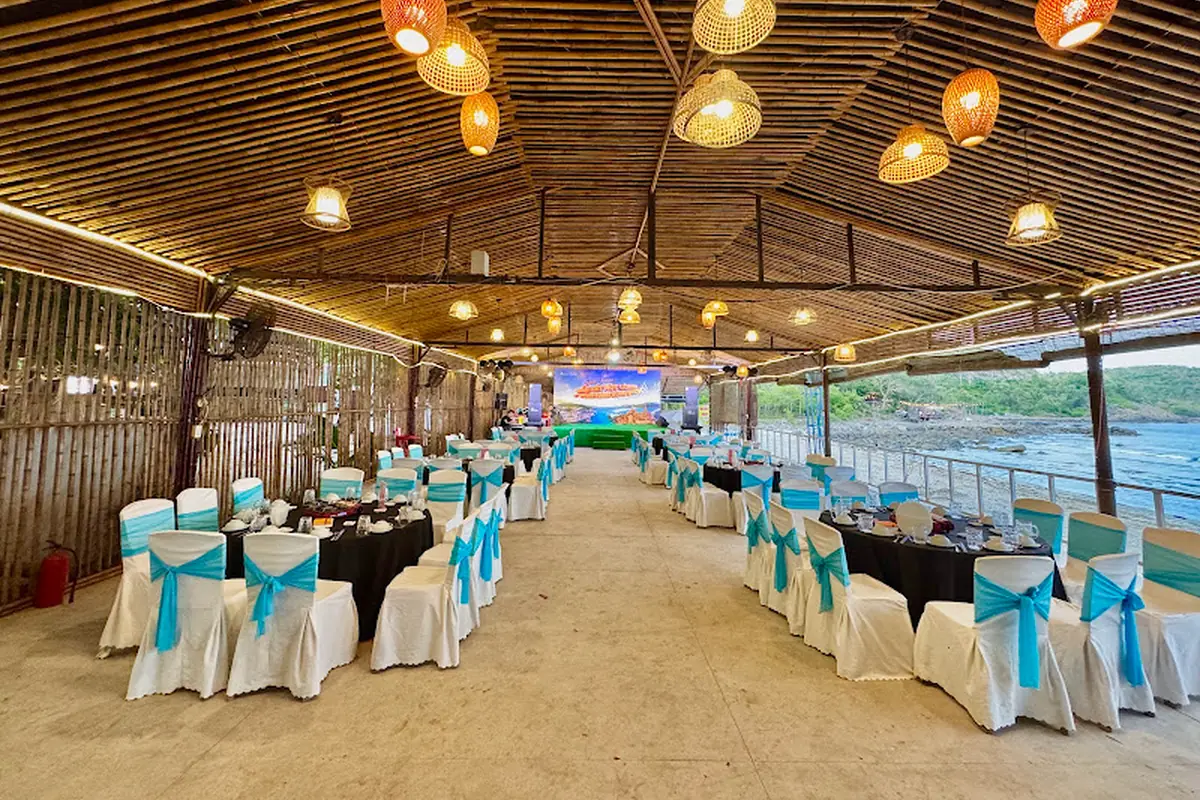
Photo: Tôi Đi Đâu
You can expect seafood dishes such as fish, squid, shrimp, crab and shellfish, alongside rice or vegetables. The useful question is not whether a restaurant has seafood but exactly how it sells it. Ask whether the stated price is per kilogram, per portion or per animal. Check the weight before cooking and whether sauces or preparation carry a separate charge. One seafood main, vegetables and rice may be enough for a couple. A larger group can add a shared hotpot after asking its size and total price.
There is no single reliable seafood price that applies to every Bai Dai restaurant. Seafood types, size and availability change. A figure quoted in an old review may no longer describe what is in the tanks today. Read the menu, confirm the price and ask for an estimate before the kitchen begins preparing the meal. Also ask whether parking, a parasol or freshwater showers are included with your restaurant spending.
Resort guests have more controlled dining options without arranging another transfer. At The Anam Cam Ranh, Lang Viet Restaurant & Bar serves Vietnamese food from 11 am to 10 pm. The resort's Beach Club normally opens 11 am-10 pm and is closed on Mondays. Radisson Blu Resort Cam Ranh has Blu Lobster for seafood, open 4 pm-9:30 pm. These are especially convenient when you already stay at the respective hotel; outside guests should confirm reservations and entry policies in advance.
Which Bai Dai Beach hotels and resorts make sense?
A beachfront resort makes sense when you want the resort itself to be the main destination. It is less useful as a base for spending every evening in Nha Trang city, because each trip back from dinner adds road time and transport costs. Travelers who want markets, city cafés, island-trip departures and nightlife close to their room should stay in Nha Trang and visit Bai Dai for a day instead.
Alma Resort Cam Ranh is a practical property to compare for families. Its facilities include a water park, children's activities, pools and several dining options. A family can divide the day between beach time and resort activities without needing transport every few hours. Before booking, check age conditions for activities, room occupancy, meal inclusions and whether the selected category is close to the facilities you will use.
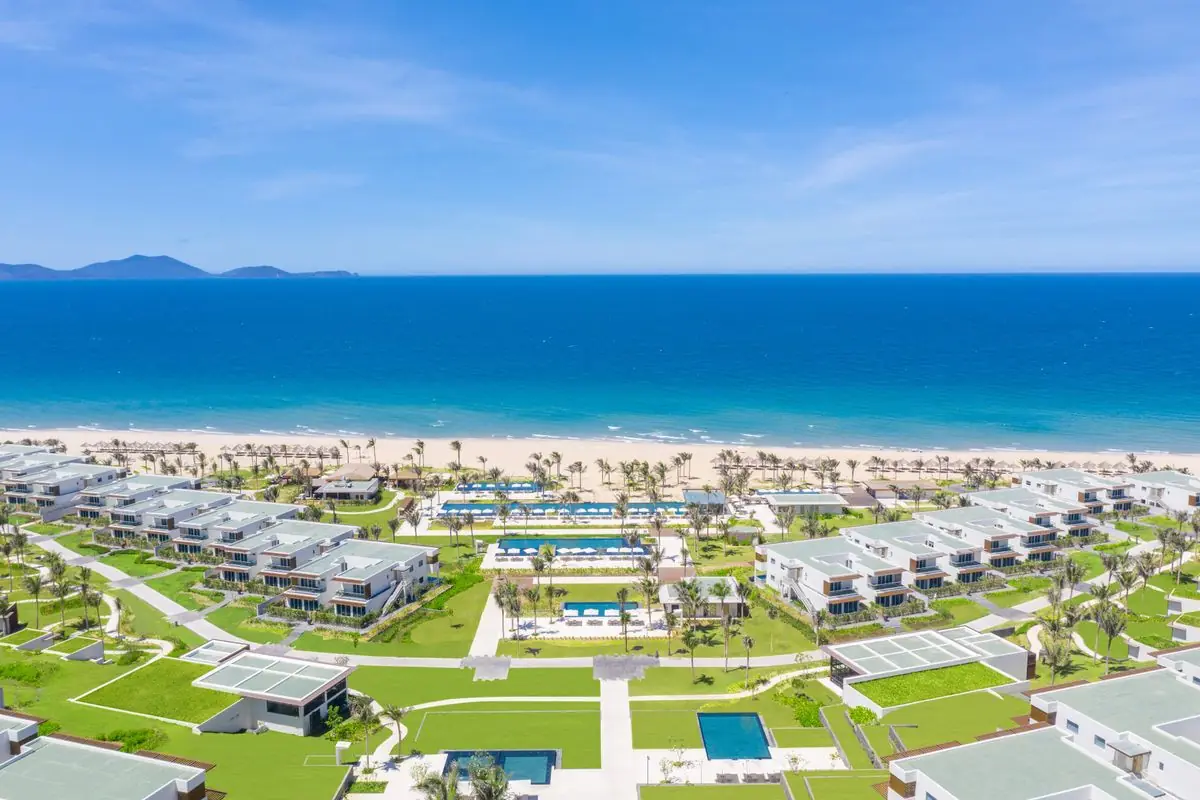
Photo: Alma Resort
The Anam Cam Ranh suits visitors looking for a quieter stay with extensive gardens, on-site restaurants and direct beachfront access. Its beach lifeguard arrangements and pools are relevant to families as well as couples. Radisson Blu Resort Cam Ranh offers another beachfront option with ocean-facing rooms, pools and multiple restaurants and bars. These hotels serve different preferences and can have very different total rates for the same dates.
The first room price you see is not a reliable comparison. Enter the actual number of adults and children, check the final total including taxes and fees, and look at breakfast, extra beds, cancellation rules and airport transfers. “Ocean view” means a view towards the sea, which is different from a room that opens directly onto the beach. When traveling during the windy months, check pool access and supervised swimming facilities instead of choosing solely from the beach photograph.
One specific transport detail can affect the calculation. The Anam runs a city shuttle departing the resort at 9:30 am for free and 11 am for VND 85,000 per person. Its return services from town leave at 4 pm for free and 9 pm for VND 85,000 per person. A scheduled airport transfer costs VND 75,000 per person, with booking at least 48 hours ahead. Some direct-booking packages include a complimentary airport return transfer under their offer terms. Check the conditions attached to your own reservation; transfer benefits vary between rates.
Is Bai Dai worth a day trip?
Yes, when you have around four to six hours available for the outing and want a quieter beach than the central waterfront. A straightforward plan includes a road transfer, a swim or beach walk, lunch and the return journey. A public access point is all you need for that, no hotel room required. Nor do you need to fill the day with jet skis, boat trips and several photo stops.
The day trip is less attractive when you have only an hour or two spare, the forecast shows thunderstorms, or your group wants easy access to Nha Trang's shops and food streets. Central Nha Trang suits those plans better. The cost of two taxi rides can also matter for someone traveling alone. Split among several adults, a private car may be a reasonable way to keep the day simple.
Families with a toddler do best choosing one location with a toilet, shade and food, then staying put. Older travelers will want to know how far the parking place is from the sand. With a late flight, arrange baggage storage and a return car before deciding whether to swim. These small decisions matter more than an ambitious list of activities.
A practical half-day itinerary from Nha Trang
- 7:30 am
Leave Nha Trang
Leave your hotel around Tran Phu Beach in a prearranged car. Bring swimwear, a dry change of clothes, sunscreen, water and your chosen access-point address. Show the driver the exact business or school on the map; “Bai Dai” alone is too vague.
- 8:15-10 am
Swim or walk
Reach the beach, confirm where swimming is allowed and check the flags. Swim if the conditions permit, or stay on the sand and walk if the surf is too rough. Keep belongings with someone in the group or use a secure storage arrangement that has been confirmed in advance.
- 10:30 am-noon
Shower and lunch
Shower, change and order lunch. Check seafood weight and prices before cooking. Midday is a good time to get out of the strongest sun.
- 12:30-1:30 pm
Rest and head back
Rest under cover, settle any chair, parking or shower charges, then head back to Nha Trang. Afternoon photographers can move the visit later and reserve return transport accordingly. The times here are only one possible schedule.
A surf lesson replaces the free-swimming part of the itinerary. Follow the coach's meeting time and chosen location. Families with small children should shorten unshaded beach time instead of trying to complete every slot in the schedule.
How should you fit Bai Dai around a flight?
Arrival day: When you are staying at a Bai Dai resort, go there first, drop your bags and ask whether swimming is permitted. If your hotel is in Nha Trang, a stop at Bai Dai works only when your landing time, transport and luggage arrangements leave enough space for it. A morning arrival is much easier than arriving after sunset.
Departure day: Check out, arrange baggage storage, spend the morning near the sea, have lunch, change and go to the airport. Do not take a suitcase onto the sand just to squeeze in a short swim. Confirm the correct domestic or international terminal and follow your airline's required check-in time. A nearby airport does not remove the need for a comfortable buffer.
Longer holidays: Dividing the stay between two nights at Bai Dai and a few nights in central Nha Trang gives you beach-rest days and city evenings. It also means one extra checkout, transfer and unpacking session. On a short two-night visit, choosing one base is usually less tiring than moving hotels just to sample both locations.
Is Bai Dai suitable for children and non-swimmers?
Non-swimmers should remain in designated shallow water only when the beach authorities or lifeguards allow entry. Do not copy people who appear to be standing far offshore; the seabed and currents are not uniform. During a rough spell, use the sand for walking or a resort pool that is open and supervised. A traveler with limited mobility needs to ask about steps, slopes and access from the car park before choosing the beach entrance.
These precautions are not reasons to avoid Bai Dai. They are reasons to choose the managed section that suits your group instead of assuming the prettiest stretch is also the easiest place to swim.
What should you budget and pack?
For a public beach visit, allow money for transport, food and whichever services you use. There is no blanket entry ticket for the whole coastline, but a chair, shower, parking or a restaurant service may have a separate charge. Request your taxi quote for both directions rather than relying on a city-to-airport fare as a substitute. The Dat Moi route 18 regular full-route fare is VND 75,000 per person in 2026, with intermediate fares and stops to be confirmed.
A surf lesson is a different expense. An introductory session at Cam Ranh Surf Camp starts at VND 1,100,000 per person for a four-person group. One-to-one instruction costs more, and equipment-only rental needs separate confirmation. Resort costs should be compared for your actual dates, guests and room categories. School holidays and weekends can change the total significantly, so quoting an attractive “from” price without dates is not useful.
Pack a towel, dry clothes, a bag for wet swimwear, sun protection, sandals, drinking water and some cash for small local services. Keep your phone charged and your return driver or hotel contact available. A light cover-up helps when moving between a restaurant and the sand. If your group separates for photographs or a walk, agree on a meeting point; people are hard to spot along a long beach.
Common mistakes to avoid
The first mistake is searching for “Bai Dai Beach” without the words Cam Ranh or Khanh Hoa. That can produce results for Phu Quoc or lead to an imprecise pin along the Cam Ranh coast. Save the exact restaurant, resort or surf-school entrance instead.
The second is assuming that all empty stretches of sand are suitable for swimming. Some are simply far from facilities, and others may be empty because the surf is rough. Choose a supervised swimming zone and respect local warnings, even when you have traveled specifically to reach the water.
The third is treating the main boulevard as if it were a beachfront promenade. A bus or taxi can drop you on Nguyen Tat Thanh while the sea is still beyond a separate access lane. Verify that lane and the pickup arrangement. Do not improvise a crossing on a fast road.
The fourth is booking a remote beachfront resort while planning dinner in Nha Trang every night. Add up the return journey time and costs first. Bai Dai works best either as a simple day on the sand or as a genuine resort stay; as a base for commuting to the city again and again, it wears thin.
What to do before leaving
Open your map and save the exact pin for Eo Gio Bai Dai Seafood Restaurant, your booked resort or Cam Ranh Surf Camp, depending on the purpose of your visit. On a public-access day, call the venue to confirm the route to the sand, showers, parking and swimming conditions before you set off.
FAQ
Where is Bai Dai Beach, and how far is it from Nha Trang?
Bai Dai Beach Cam Ranh is in the Cam Lam area of Khanh Hoa, along Nguyen Tat Thanh Boulevard near Cam Ranh Airport. Depending on which entrance you use, it is approximately 25-35 km from central Nha Trang, usually around 35-50 minutes by car.
Is Bai Dai Beach open to the public?
Some parts are accessible without a resort reservation, and there is no single admission ticket for the whole coast. Public access routes, parking, showers and managed swimming sections vary by location. Resort grounds and pool facilities remain subject to the hotel's own entry rules.
Is Bai Dai Beach Nha Trang good for swimming?
It can be, especially on calmer days from roughly March through August. Northeast monsoon winds around October through March can bring stronger surf. Always follow beach flags, weather warnings and lifeguard instructions rather than relying on the month alone.
Can I surf at Bai Dai Beach, and where can I rent a board?
Surf schools use Bai Dai when conditions suit, often during the northeast monsoon period. Cam Ranh Surf Camp near Golden Bay offers lessons and advertises beach equipment rental; contact the school to confirm standalone board availability and the exact teaching beach. Do not assume every restaurant rents surfboards.
Should I book a Bai Dai Beach hotel or visit from Nha Trang?
Stay at Bai Dai when you want two or more days of beach and resort facilities. Visit from Nha Trang when you want one swim, a beach walk and a seafood meal without moving hotels. Staying in the city is easier for markets, nightlife and restaurants you can reach on foot.
Related posts
Islands & beaches
Vinh Hy Bay: Glass-bottom boat or speedboat?
A practical guide to the drive, boat choices, costs and weather at Vinh Hy Bay.

Islands & beaches
Doc Let Beach is better as a day trip, unless you want a quiet morning by the sea
Most visitors need one day at Doc Let Beach, while an overnight stay is for those who want a quieter morning.
Guides
Nha Trang resorts for families: Hon Tre Island or Cam Ranh?
Find the right Nha Trang resort for your family based on children's ages, beach access, facilities, and travel time.